Lipari Cruise Port: Tenders, Volcanoes and the Aeolian Islands
Lipari is the largest of the Aeolian Islands and a rewarding small-ship or tender call north of Sicily. Its appeal comes from a compact waterfront town, an elevated citadel with an important archaeological museum, and an island landscape shaped by volcanism.
The first planning rule is to separate your cruise tender operation from Lipari’s regular ferry network. Your ship may anchor offshore and use a designated landing, while scheduled hydrofoils and ferries use their own harbor facilities and timetables.
My quick take
Choose the citadel and Bernabò Brea museum for the strongest independent visit. Choose an organized island drive or boat excursion when you want viewpoints, villages, pumice landscapes, or the coast beyond town.
Do not try to visit another Aeolian island on a tight call unless it is a ship-operated excursion. Public ferries are useful for normal travel, but a delay or schedule change can leave you separated from the vessel.
Lipari quick facts
- Country: Italy
- Region: Sicily
- Archipelago: Aeolian Islands
- Typical cruise access: Tender from an anchored ship, subject to the vessel and conditions
- Harbor landmarks: Marina Corta and Marina Lunga
- Best central sight: Lipari Castle complex and the Luigi Bernabò Brea Archaeological Museum
- Good island options: Scenic road tour, Canneto, Quattropani, or a ship-operated boat trip
- Currency: Euro
- Best first check: Tender landing, last tender time, and whether tickets are distributed
Getting ashore: tenders and landing points
Lipari is often operated as a tender port for cruise passengers, but procedures differ by vessel. Attend the onboard briefing for the actual landing location, ticket system, mobility rules, and last return boat.
Sea state matters because the exposed transfer between ship and tender can move even when the harbor looks calm. A captain may delay, relocate, or cancel tendering when conditions are not safe.
Keep both hands free while boarding and use the crew’s instructed grip. Secure phones, cameras, hats, and loose bags before stepping across the gap.
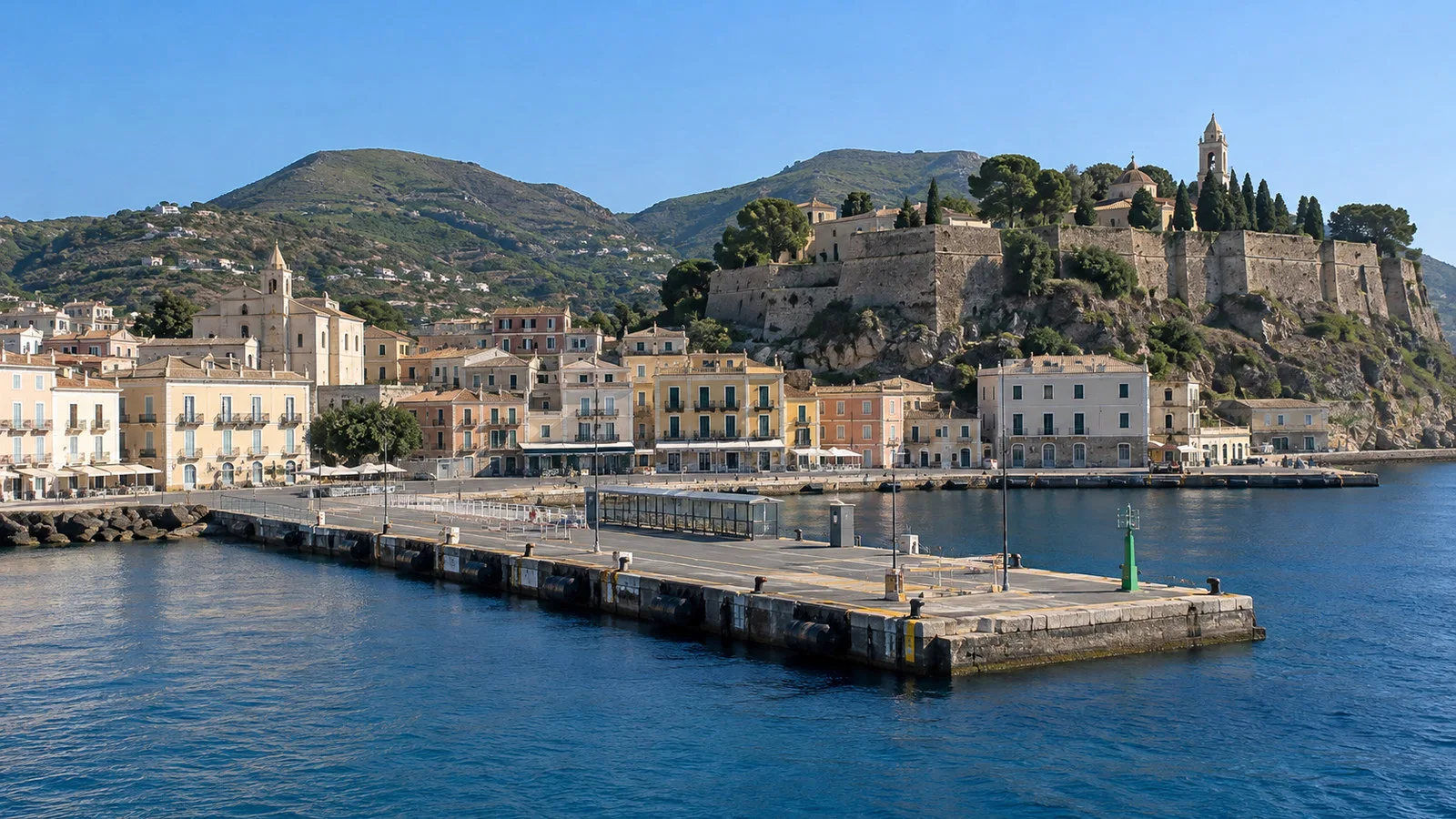
Do not assume the first harbor name on a map is your tender pier. The official Sicily tourism page distinguishes Marina Corta for small craft, Marina Lunga for ships and hydrofoils, and Pignataro for fishing and pleasure craft.
Your cruise line may have a specific arrangement that does not match a public ferry passenger’s route. Photograph the tender landing and note any pier name before walking into town.
Marina Corta, Marina Lunga, and the town center
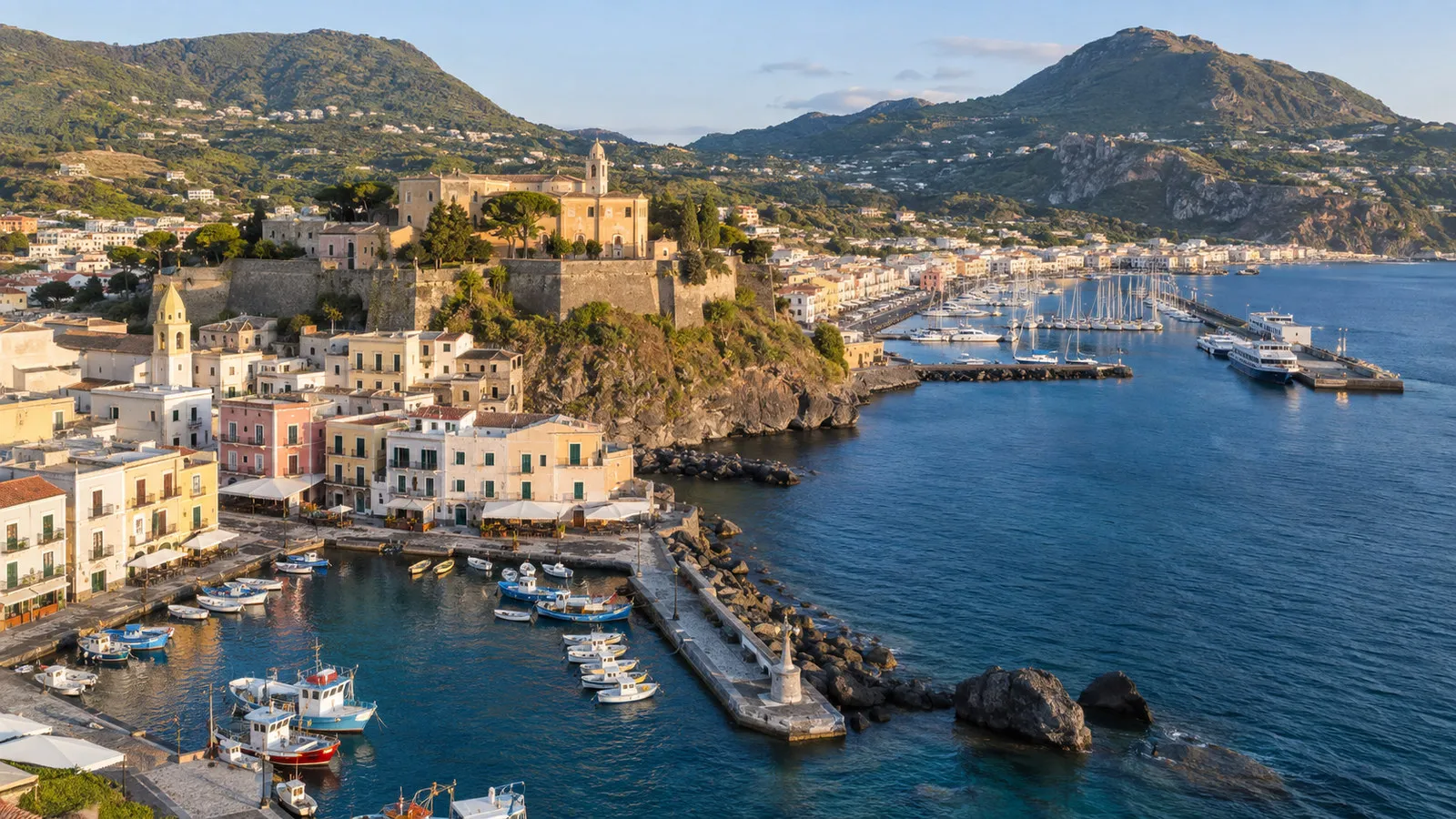
Marina Corta is the picturesque small harbor associated with fishing boats, a waterfront square, cafes, and the approach to the old center. Marina Lunga handles scheduled ferry and hydrofoil traffic and sits along a busier transport corridor.
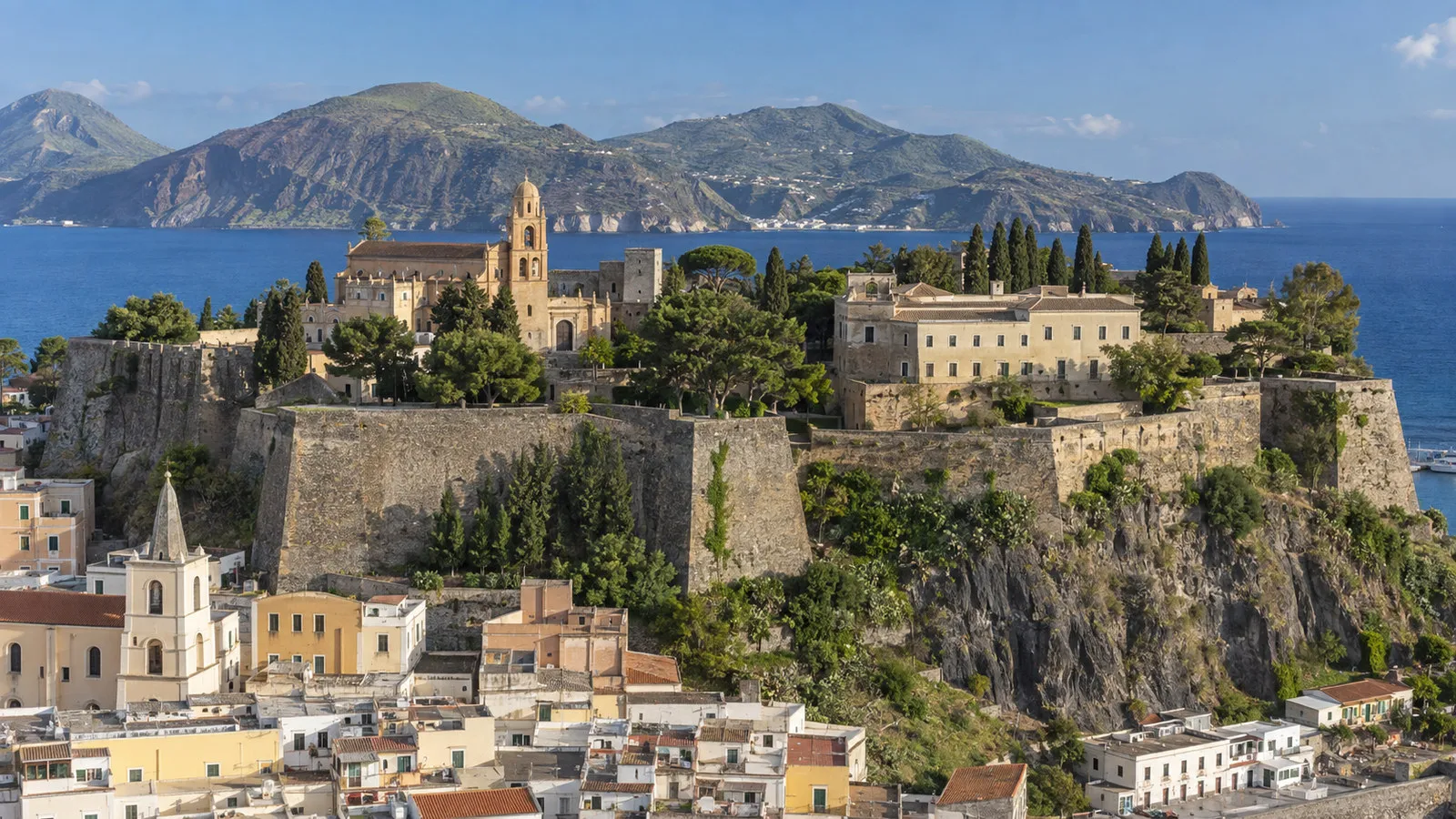
The historic center links the harbor areas through shops, cafes, and narrow streets. The exact walk to the citadel changes with your landing, but the elevated complex is a clear visual reference.
Expect slopes and steps as you approach the castle area. Allow more time than the short map distance suggests, especially in midday heat or when the lanes are crowded.
A taxi or local minibus can make sense for an island circuit, but it is unnecessary for a simple town and museum plan. Agree on the route, price, duration, and return point before leaving the harbor.
The citadel and Bernabò Brea museum
The fortified acropolis above town is Lipari’s cultural centerpiece. It brings together the archaeological museum, excavated areas, the cathedral, historic churches, and viewpoints over the harbors.
The regional Aeolian Islands Archaeological Park lists Lipari Castle, the Luigi Bernabò Brea museum, and the Contrada Diana archaeological area among its sites. Check its current timetable and ticket information before your sailing because hours can change seasonally or for maintenance.
The museum is especially strong for visitors who want context for the archipelago rather than only a scenic walk. Collections connect prehistoric settlement, Greek and Roman material, underwater archaeology, theater masks, and the islands’ long maritime story.
Do not rush every room if your tender window is short. Pick the sections that interest you most, step outside for the setting, and begin the descent while you still have a comfortable return margin.
The cathedral and cloister may follow different access rules from the museum. Dress respectfully, observe service notices, and never assume an interior is open because the outer complex is accessible.
Why the Aeolian Islands are a UNESCO site
The UNESCO inscription covers the Aeolian Islands for their outstanding record of volcanic island building, destruction, and continuing geological processes. The scientific importance is regional, not a claim that every visitor should approach an active vent or climb a volcano.
The official UNESCO listing explains the islands’ role in the development of volcanology, including the terms Vulcanian and Strombolian. Lipari’s landscape and museum help make that story understandable without requiring a strenuous hike.
Follow civil protection notices, local closures, and guide instructions around any volcanic area. Conditions on Vulcano or Stromboli can change, and an old travel report is not a safety clearance for your visit.
Seeing more of Lipari island
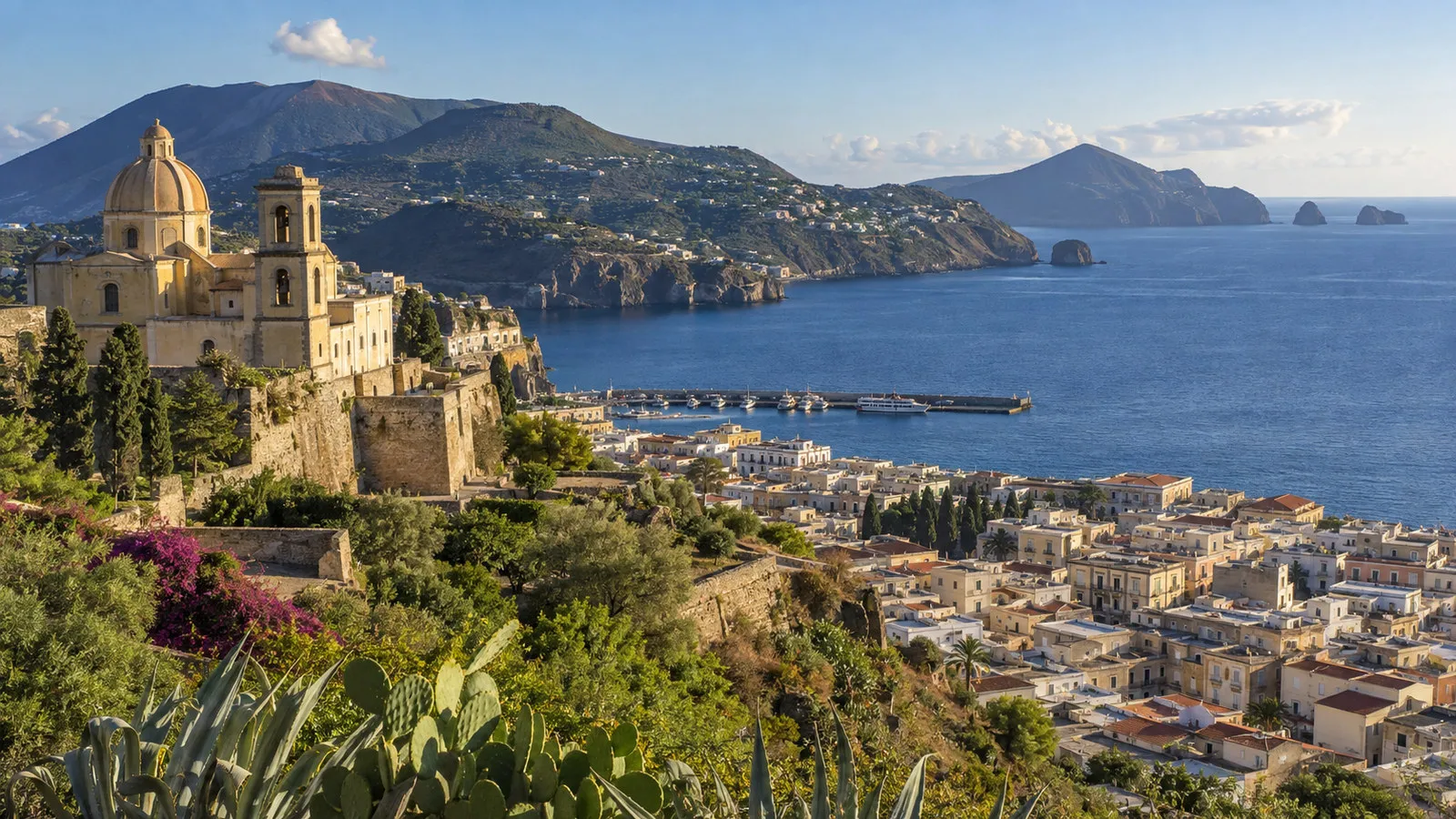
Lipari is too large to cover well on foot during a cruise call. The official Visit Sicily guide to Lipari highlights villages and viewpoints including Canneto, Quattropani, Acquacalda, Porticello, and the pumice and obsidian landscapes.
A road tour works best when the driver understands your tender deadline. Ask which viewpoints require steps, how long each stop lasts, and whether the route returns directly to the tender landing.
Canneto offers a seaside setting beyond Lipari town and can be reached by local transport or taxi when schedules align. Beach time should remain secondary to the return plan because traffic and waiting time can use more of the call than expected.
Quattropani is valued for wide views across the archipelago. It is a vehicle stop for most cruise visitors rather than a practical walk from the harbor.
The old pumice working landscape is visually distinctive, but access conditions and permitted routes can change. Stay out of closed industrial or unstable areas and use a guide for any route that is not clearly public.
Boat trips and other islands
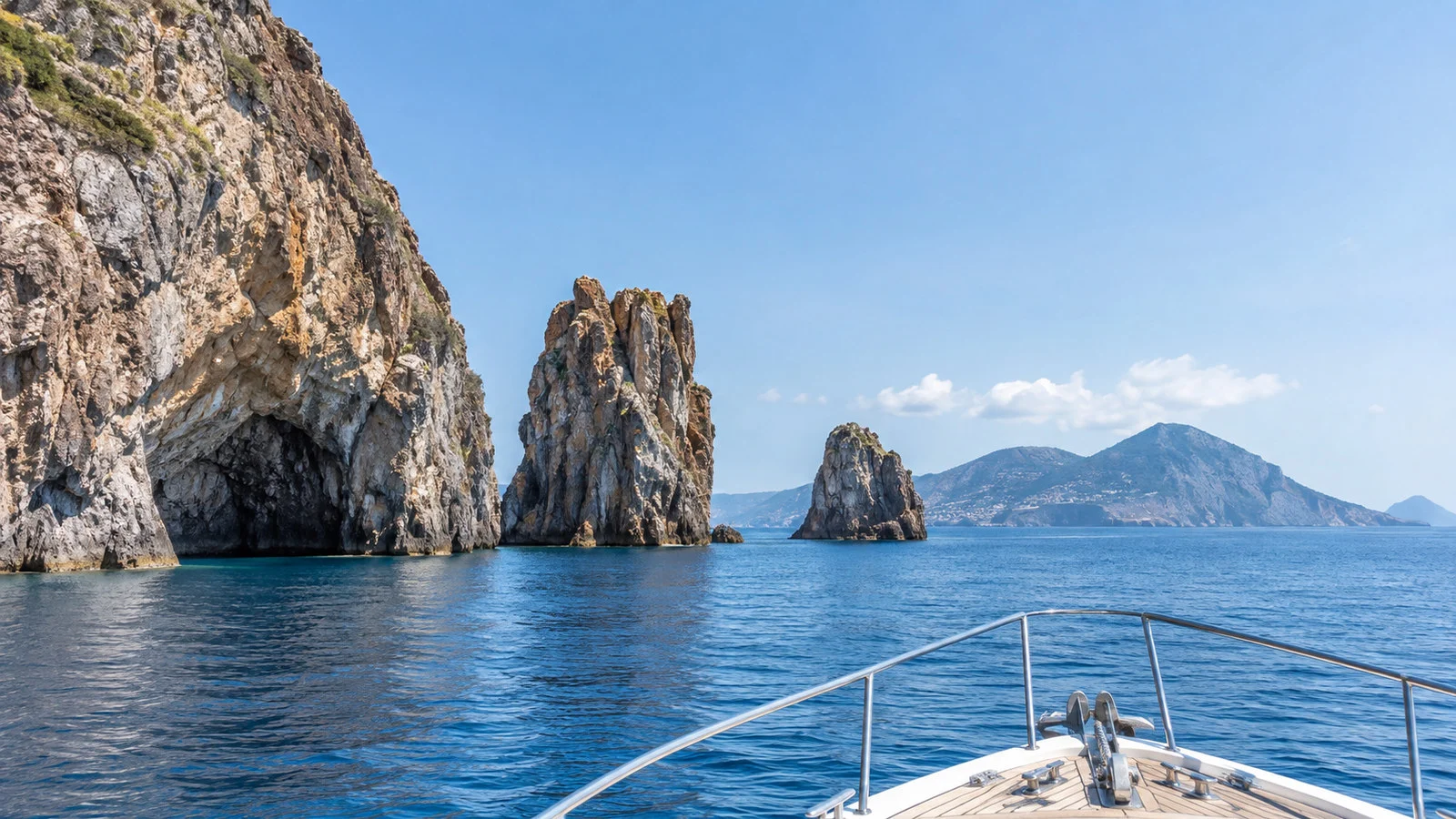
A coastal boat trip can reveal sea stacks, coves, cliffs, and the scale of Lipari better than a town walk alone. Choose an excursion whose return is coordinated with the ship, especially when the cruise call is tendered.
Public services connect Lipari with Milazzo and other Aeolian islands, and operators such as Liberty Lines publish current schedules. Those timetables are designed for transportation, not for guaranteeing a cruise passenger’s connection to the last tender.
Vulcano may look close enough for an easy independent hop, but even a short crossing creates two additional schedule risks. Stromboli, Salina, Panarea, Filicudi, and Alicudi require still more careful coordination.
If another island is your priority, use the ship’s excursion or a private operator that explicitly guarantees a safe return plan for your vessel. Confirm the cancellation and fallback arrangements before paying.
A simple independent plan
From the tender landing, orient yourself between Marina Corta, Marina Lunga, and the citadel. Walk to the castle complex first so the museum and archaeological area receive your freshest hours.
Descend to the historic center for a granita, coffee, or light lunch. Finish with the waterfront closest to your actual tender pier rather than crossing town for one last photograph.
If the museum is closed, use the citadel exterior, churches that are open, harbor views, and old-town streets as the core. Do not replace a closed central attraction with an unplanned island crossing.
Travelers who prefer scenery can reverse the priorities and take a prearranged island drive. Ask to end near the tender landing with enough time to absorb traffic or a queue.
Food, water, and practical purchases
Granita with brioche is an easy Sicilian pause, and Lipari’s capers and local seafood appear on many menus. Choose a place that can serve within your available time instead of committing to a long meal without asking.
Carry water before climbing to the citadel or joining an exposed road tour. Shade can be limited, and the reflected heat from stone makes the walk feel harder than the elevation alone suggests.
Small businesses may prefer cash or have a card minimum, so a modest amount of euros is useful. Keep enough flexibility for a tender queue and avoid shopping far from the landing near the end of the call.
Accessibility
The tender transfer is the main accessibility barrier. It usually requires stepping across a moving gap, using a crew-assisted grip, and managing stairs or a platform on the ship.
Ask the cruise line before sailing whether your wheelchair, scooter, walker, or other mobility device can be carried in the tender. The final decision can still depend on sea conditions and the captain’s safety assessment.
Lipari town has smoother waterfront sections, but the citadel approach includes grades, uneven paving, and possible steps. Contact the archaeological park for the current accessible entrance, lift availability, restroom access, and which museum sections can be reached.
A taxi tour can provide a valuable alternative to a long walk, although vehicle entry does not guarantee step-free access at every viewpoint. Ask the driver to describe each stop and remain with the vehicle when a surface is unsuitable.
Weather and safety
Summer heat is the most obvious challenge, but wind and swell can matter more to the tender operation. Bring sun protection, water, a secure hat, and a light layer for the boat ride.
Wear shoes with grip for polished stone, steep lanes, and the tender platform. Sandals that feel comfortable on a cafe terrace may be less reliable on a moving transfer.
Do not swim near harbor traffic or from an unapproved shoreline. Use recognized beach areas, follow local warnings, and keep enough dry time before boarding the tender.
Earthquake, volcanic, and marine conditions are managed by Italian authorities and local operators. Follow current closures immediately rather than comparing them with what another traveler was allowed to do in a previous season.
Return timing for a tender port
The last tender time is usually earlier than the ship’s departure time. Photograph it and ask whether it means you must be in line or already aboard the boat.
Build a larger buffer if your excursion ends away from town. Road delays, ferry traffic, a ticket queue, and a tender line can all affect the final part of the return.
I would avoid the last planned tender when traveling independently. An earlier boat leaves room for a temporary pause in operations if wind or harbor traffic changes.
Confirm that you are at the cruise tender landing, not simply at a public ferry queue. Marina names are close enough to cause confusion when time is short.
How Lipari fits a Sicily itinerary
Lipari feels more intimate and geologically focused than many Italian cruise ports. The tender arrival and island scale create a different rhythm from a city berth.
It pairs naturally with eastern Sicily calls such as Catania or Giardini Naxos. Those ports may point toward Mount Etna, while Lipari places you inside the volcanic archipelago itself.
Routes through the Strait of Messina add another geographic contrast. Lipari’s strongest day is not about covering Sicily, but about understanding one island and the wider Aeolian story.
Quick answers
Is Lipari always a tender port?
Many cruise calls use tenders, but the operation depends on the vessel, berth arrangements, and conditions. Follow your cruise line’s instructions rather than treating a general port guide as confirmation.
Where will the tender land?
The exact landing must be confirmed onboard. Marina Corta and Marina Lunga are useful town landmarks, but public harbor functions do not determine your ship’s passenger arrangement.
What is the best short visit?
Walk to the citadel, explore the Bernabò Brea museum if open, and return through the historic center. This plan gives you archaeology, views, and local atmosphere without depending on an island vehicle.
Can I visit Vulcano or Stromboli?
Use a ship-operated excursion if another island is essential to you. Independent ferry connections add too much schedule risk for many tender calls, and volcanic access can be restricted.
Is Lipari accessible?
The waterfront has easier sections, but tender boarding and the uphill historic complex create real barriers. Discuss the transfer with the cruise line and confirm the archaeological park’s current accessible route.
Do I need cash?
Cards are common in many businesses, but a modest amount of euros is useful for small purchases. Public transport and seasonal vendors may not handle every payment method smoothly.
The last word
Lipari is at its best when the plan respects the tender and the island’s scale. Start with the citadel or a well-timed island tour, leave other islands to an organized excursion, and return before the final boat.
If a harbor arrangement or access rule changes after your call, our editorial policy explains how to send a correction. Current instructions from the ship, port, and local authorities always take priority.