Angkor Ban River Cruise Stop: Village Landing and Mekong Etiquette
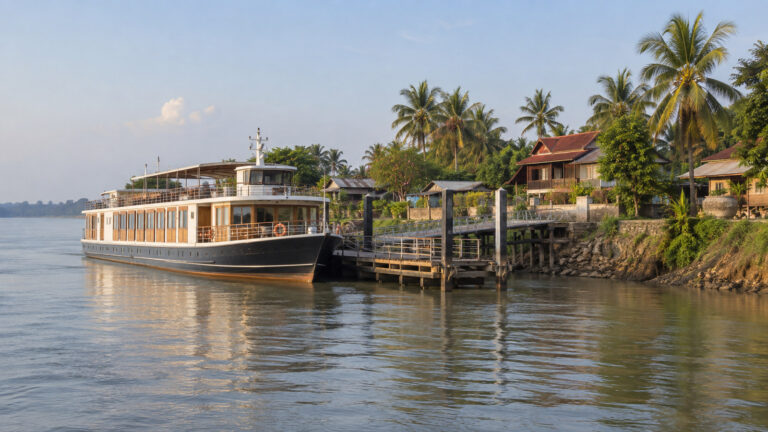
Angkor Ban is a small Mekong community in Cambodia’s Kampong Cham area, not a conventional port with a terminal and independent tours. The visit is usually a guided village walk shaped by the river level, the landing available that day, and the arrangements made by your cruise operator.
The draw is everyday place rather than spectacle: timber houses, family compounds, a pagoda if access allows, village lanes, and the river that organizes life here. Arrive curious, keep your camera polite, and let your guide explain where visitors are welcome.
Angkor Ban at a Glance
Quick Facts
- Setting: Rural Mekong community in Kampong Cham Province
- Arrival: Riverbank landing or small boat transfer arranged by the cruise operator
- Visit style: Guided walk rather than independent sightseeing
- Main interest: Village architecture, local life, river culture, and a possible pagoda visit
- Currency: Cambodian riel, with some businesses also accepting United States dollars
- Time zone: Indochina Time, UTC plus 7
- Key challenge: An uneven riverbank and unpaved walking surfaces
Confirm the Landing Before Going Ashore
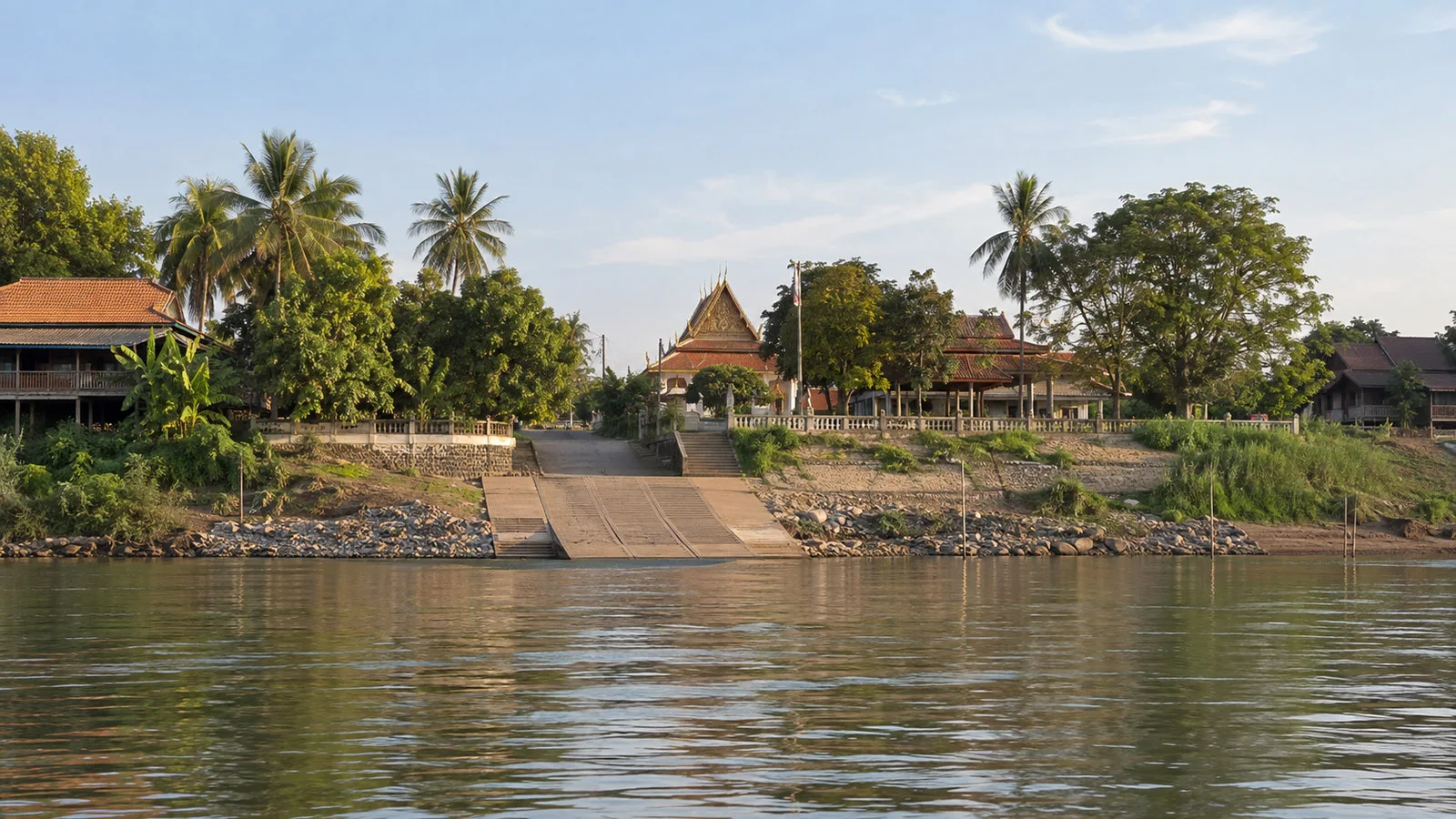
Angkor Ban does not have the fixed infrastructure of a city cruise terminal. Your vessel may use a riverbank landing, a gangway, or a transfer in a smaller boat according to the operator and current conditions.
The height and firmness of the bank can change with the Mekong. Ask the cruise director about steps, slope, mud, sand, handrails, and the amount of walking before deciding whether the landing suits you.
Wear closed shoes with grip and keep both hands free during the transfer. A dry day can still leave loose soil, while recent rain can make the path slick.
Why the Mekong Level Matters
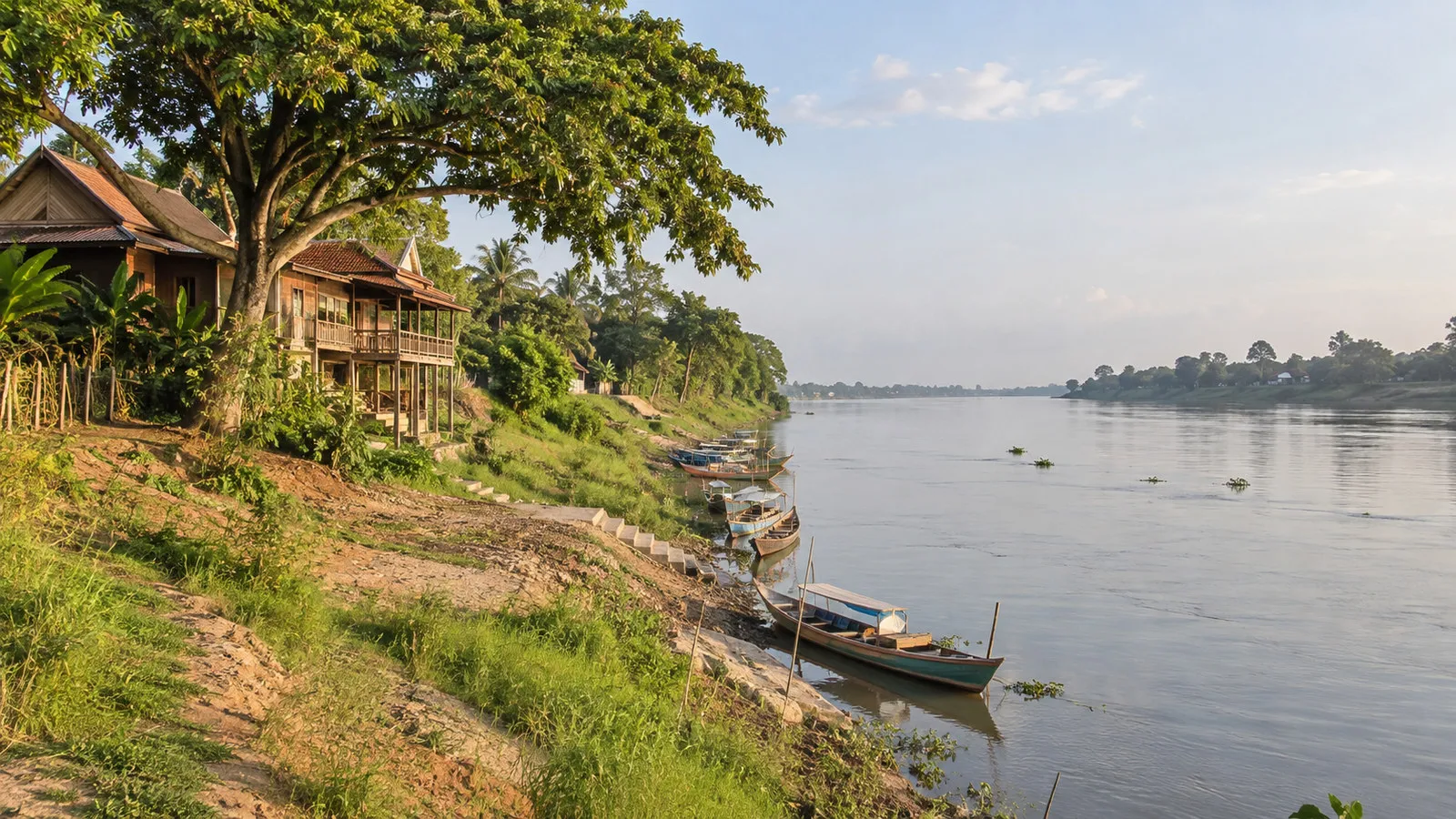
The Lower Mekong follows a strong seasonal cycle, and navigation conditions can alter how ships reach smaller communities. A published itinerary remains provisional until the operator confirms that the route and landing are suitable.
The Mekong River Commission maintains basin monitoring and flood and drought information for the region. Those public tools provide context, but the captain and local team make the decision that controls your visit.
There is no credible public percentage for how often Angkor Ban calls change. Avoid planning around a generic missed port estimate and follow updates for your actual sailing.
What the Village Walk Is Like
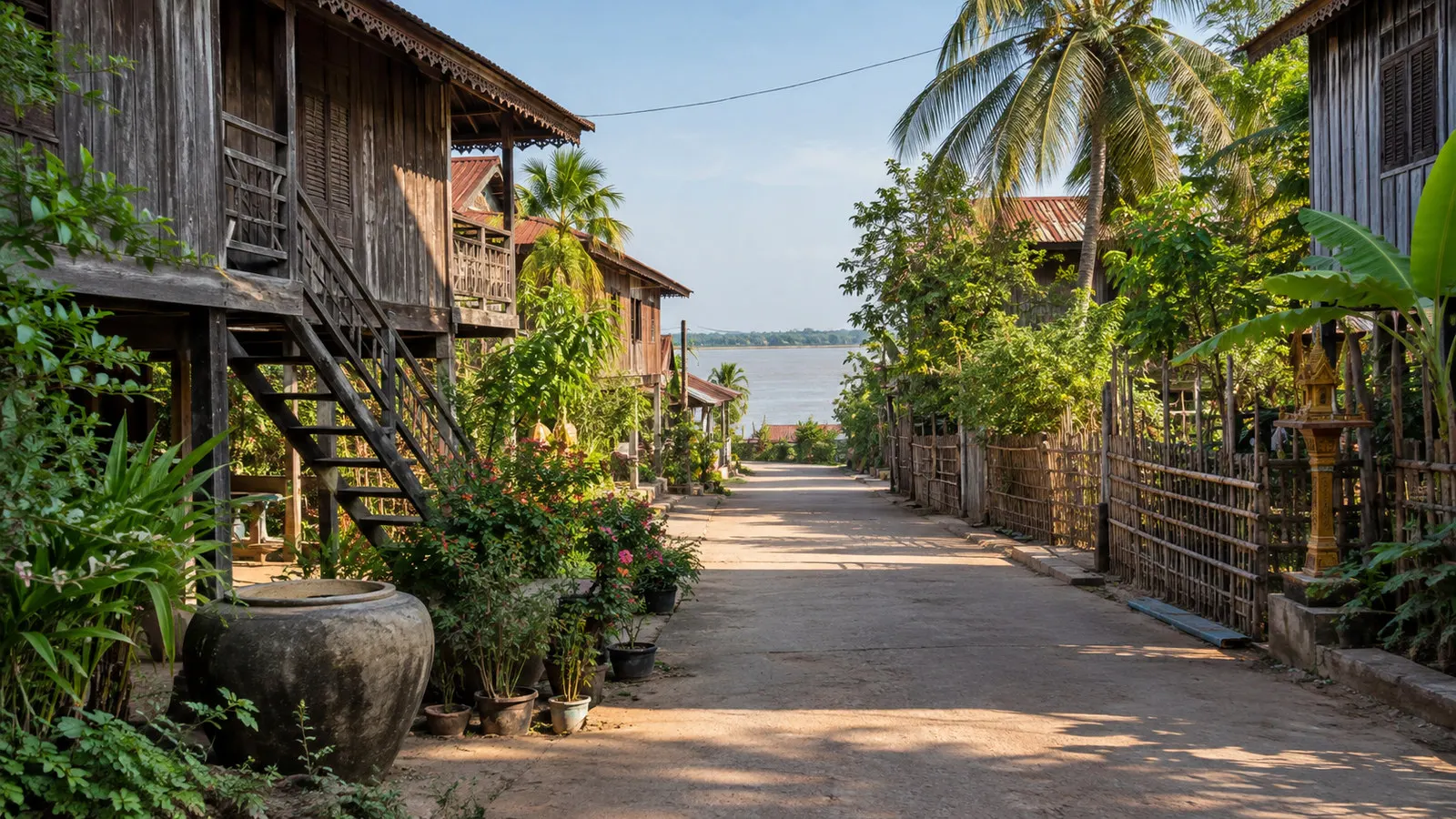
A local guide normally leads the group from the river into the community. The route can pass homes, shaded work areas, gardens, village lanes, and a pagoda, but the exact sequence depends on permission and what is happening that day.
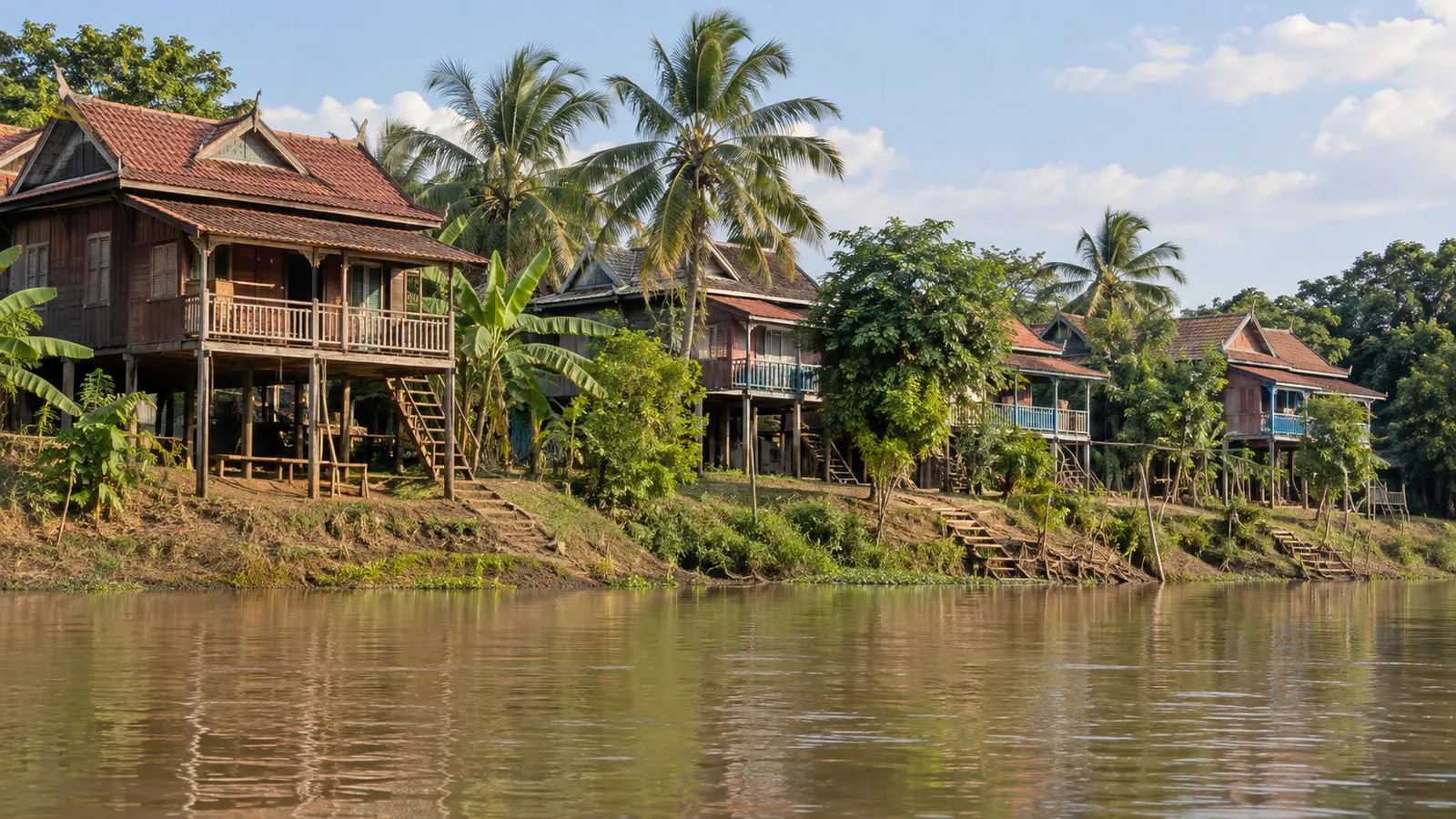
Angkor Ban is known for traditional timber houses raised above the ground. Notice how the open area below a house can support storage, work, rest, and family life, but remember that these are lived in homes rather than an outdoor museum.
The stop may feel informal, yet it is still organized tourism in someone else’s neighborhood. Stay with the guide, keep to the agreed route, and do not step into yards, houses, schools, or religious buildings without an invitation.
Photography and Respect
Ask before taking a close portrait or photographing someone inside a private space. Your guide can translate the request and help you recognize when a person is uncomfortable or simply busy.
Be especially careful around children. Do not direct, touch, hand out money, or turn a school interaction into a photo session unless the community and operator have clearly organized it.
Wide scenes of the river, paths, and architecture may feel less intrusive, but privacy still matters. Put the camera down when the guide is explaining local history or a resident is speaking to the group.
Visiting the Pagoda
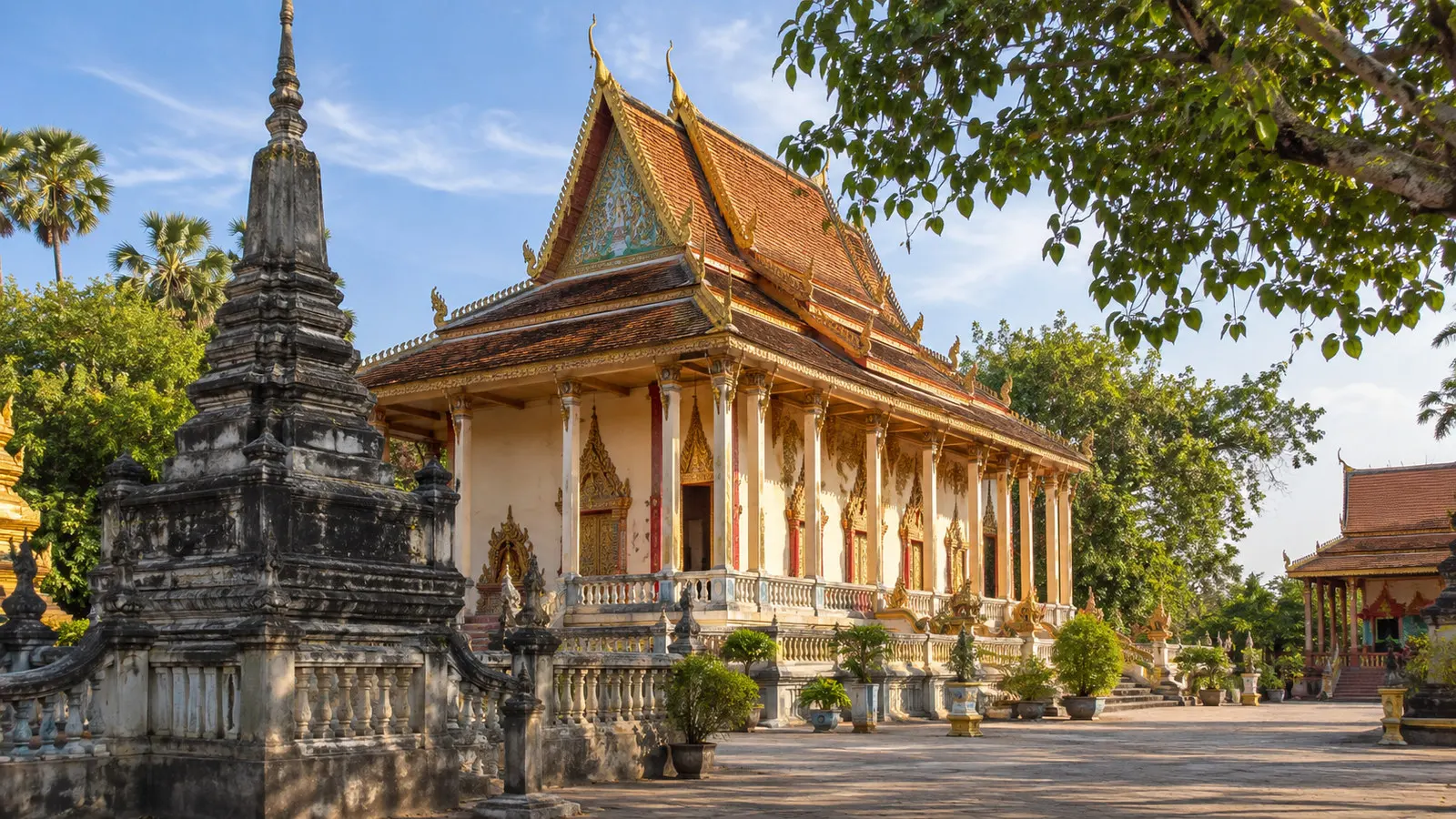
If the day includes a pagoda, cover shoulders and knees and remove shoes where directed. Keep your voice low, avoid blocking worshippers, and ask before photographing monks, ceremonies, shrines, or people making offerings.
A religious site may close to visitors or limit access during a service. Treat that change as normal community life rather than a failed attraction.
Follow the guide’s instructions about donations instead of handing cash to individuals at random. A coordinated contribution is easier for the community to manage and less likely to create an uncomfortable exchange.
Why a Guide Improves the Visit
Angkor Ban has little visitor signage, and the meaning of the stop comes from context. A good guide can explain house design, seasonal river life, agriculture, religious customs, and how the community prefers groups to move through shared spaces.
I would stay with the included walk even if the route looks simple on a map. Independent wandering adds little and makes it easier to cross an invisible boundary between a public lane and private family space.
Questions about work, education, family life, or the river can open a thoughtful conversation when asked respectfully. Avoid treating one household or one guide as a spokesperson for every rural Cambodian community.
A Sensible Short Visit
Begin with the landing briefing and walk into the village with your assigned group. Focus on the houses and river setting, join the pagoda visit if offered, and leave time for the return across the bank.
Do not rush ahead looking for an extra sight. The quality of this call comes from understanding a small area, not covering distance.
If the operator adjusts the walk because of heat, rain, a ceremony, or village activity, accept the shorter route. Flexibility protects both residents and passengers.
Accessibility and Physical Demands
This can be a difficult call for travelers with limited mobility. The transfer may include a moving boat, an angled gangway, a dirt bank, steps without rails, or a climb before the village path becomes easier.
Village lanes may be packed earth, gravel, grass, or other uneven surfaces. Wheelchairs and walkers can be hard to use, especially after rain, and there may be no practical step-free alternative.
Ask the cruise line for the actual landing plan and its minimum mobility requirement before the trip. If going ashore is not safe, ask whether a deck briefing, river viewing, or another onboard option will be available.
Heat, Rain, and What to Carry
Cambodia is warm and humid for much of the year, and a short walk can feel demanding in direct sun. Carry water, wear a hat, use sun protection, and choose light clothing that still covers you appropriately for a pagoda.
Seasonal rain can arrive heavily and make the bank slippery. A compact rain layer is more practical than an umbrella when you need a hand for the boat or gangway.
Bring insect repellent and any personal medication you may need during the call. Keep everything in a small bag that leaves your hands free for boarding assistance.
Money and Shopping
Cambodian riel is the national currency, and United States dollars are also accepted in parts of the visitor economy. Do not assume every small purchase in a village can be made in dollars or by card.
There may be no ATM, exchange counter, or reliable card terminal near the landing. Carry only small amounts in good condition and follow the guide’s advice about any purchase or donation.
Do not treat the absence of a tourist market as evidence that the visit has no economic impact. Ask the operator how local guides, hosts, or community programs participate in the excursion.
Food, Water, and Health
Check the CDC Cambodia guidance before departure, then use drinking water supplied or approved by the ship. Do not accept food unless the guide confirms that it is part of the organized visit and appropriate for guests.
The vessel’s medical team is the practical first contact during a short rural call. Tell the guide immediately if heat, balance, or illness makes the return to the landing difficult.
Wash or sanitize your hands after touching shared surfaces and before eating. Simple precautions matter more than trying to diagnose the safety of every food or water source from appearance.
Returning to the Ship
Stay with the group and return when the guide calls the walk to an end. River conditions can change the boarding setup, and the crew may need everyone ready before the vessel can move.
Keep your watch on ship time and do not use a quiet final few minutes to explore another lane alone. The last transfer depends on the group, the small boat or gangway, and the captain’s navigation plan.
Secure phones, cameras, hats, and loose items before descending the bank. A dropped object can create a safety problem where footing is already the main concern.
Angkor Ban Is Not Angkor Wat
The similar name causes unnecessary confusion. Angkor Wat is the vast temple complex near Siem Reap, while this Angkor Ban is a riverside community in Kampong Cham Province.
Do not book this stop expecting monumental archaeology. Its value is the scale of the village and the insight a respectful local guide can add.
How It Fits a Mekong Cruise
Angkor Ban often appears within a wider Cambodia and Vietnam river itinerary, sometimes around a call at Kampong Cham. The town and village can complement each other, but the exact pairing and timing depend on the operator.
Farther along the route, larger calls such as Phnom Penh and Tân Châu bring different logistics and a busier pace. Angkor Ban works best as a deliberate pause between them.
The Mekong cruise ports guide explains why water conditions and border logistics can reshape the final schedule. Read the booked itinerary as a framework and let the captain adjust the smaller calls when needed.
My Take
I would choose the guided village walk, ask fewer but better questions, and spend more time looking at how the houses meet the river. Angkor Ban does not need to be called untouched or perfectly preserved to be meaningful.
The visit works when passengers remember that they are guests in a living community. Respect the route, the residents, and the changing Mekong, and the stop can become one of the most human moments of the cruise.
How this guide was researched: This guide uses current Mekong River Commission data, CDC Cambodia travel guidance, and current river-cruise operating information. Logistics and time-sensitive details were reviewed on September 12, 2026; follow the instructions for your sailing and see our Editorial Policy.