Tân Châu River Cruise Port: Landings, Workshops and Border Guide
Tân Châu introduces river cruisers to the upper Mekong Delta through silk, woven mats, local transport, and life along the Tiền River. It is a working border-region town rather than a polished terminal destination, which is exactly why the call can feel so memorable.
The day is easiest when you follow the operator’s landing and excursion plan. Moorings can vary with water conditions, while a northbound itinerary may also involve coordinated Vietnam and Cambodia border formalities after the visit.
Quick Facts
- Country: Vietnam
- Region: An Giang Province in the upper Mekong Delta
- River: Tiền River, part of the Mekong system
- Arrival: Ship-assigned river mooring or landing, sometimes followed by a local boat transfer
- Signature experience: Tân Châu silk and local weaving workshops
- Currency: Vietnamese đồng
- Time zone: Indochina Time, UTC+7
- Best plan: Use the organized outing when the ship has border processing or a variable reboarding point
Is Tân Châu an Active River Cruise Stop?
Yes. AmaWaterways currently includes Tân Châu on its Charms of the Mekong itinerary between the Vietnamese delta and Phnom Penh, with remaining 2026 and 2027 departures listed.
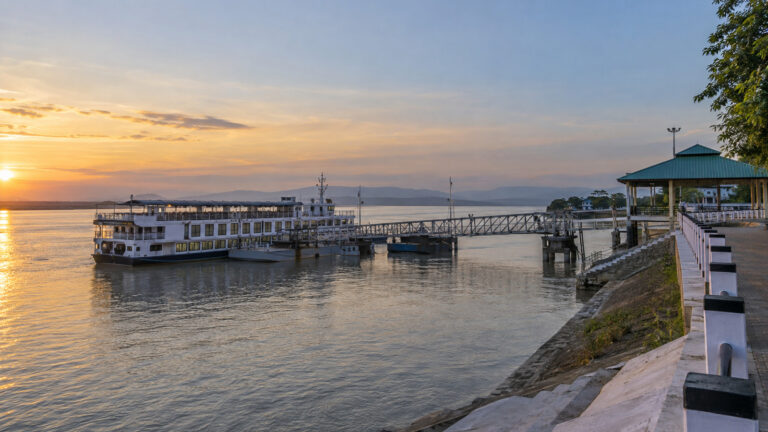
A published itinerary confirms the destination, but it does not promise one universal berth. River ships may use a simple pontoon, bank landing, or local mooring selected for the vessel and water level.
The cruise director’s briefing is the practical source for your sailing. Listen for the gangway arrangement, excursion departure method, passport instructions, and whether the ship will remain in place.
Do not plan around a map pin saved before the trip. The Mekong rewards flexibility, and it is perfectly capable of rearranging a tidy spreadsheet with one change in river conditions.
Where the Ship Stops
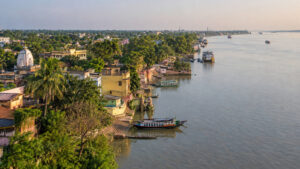
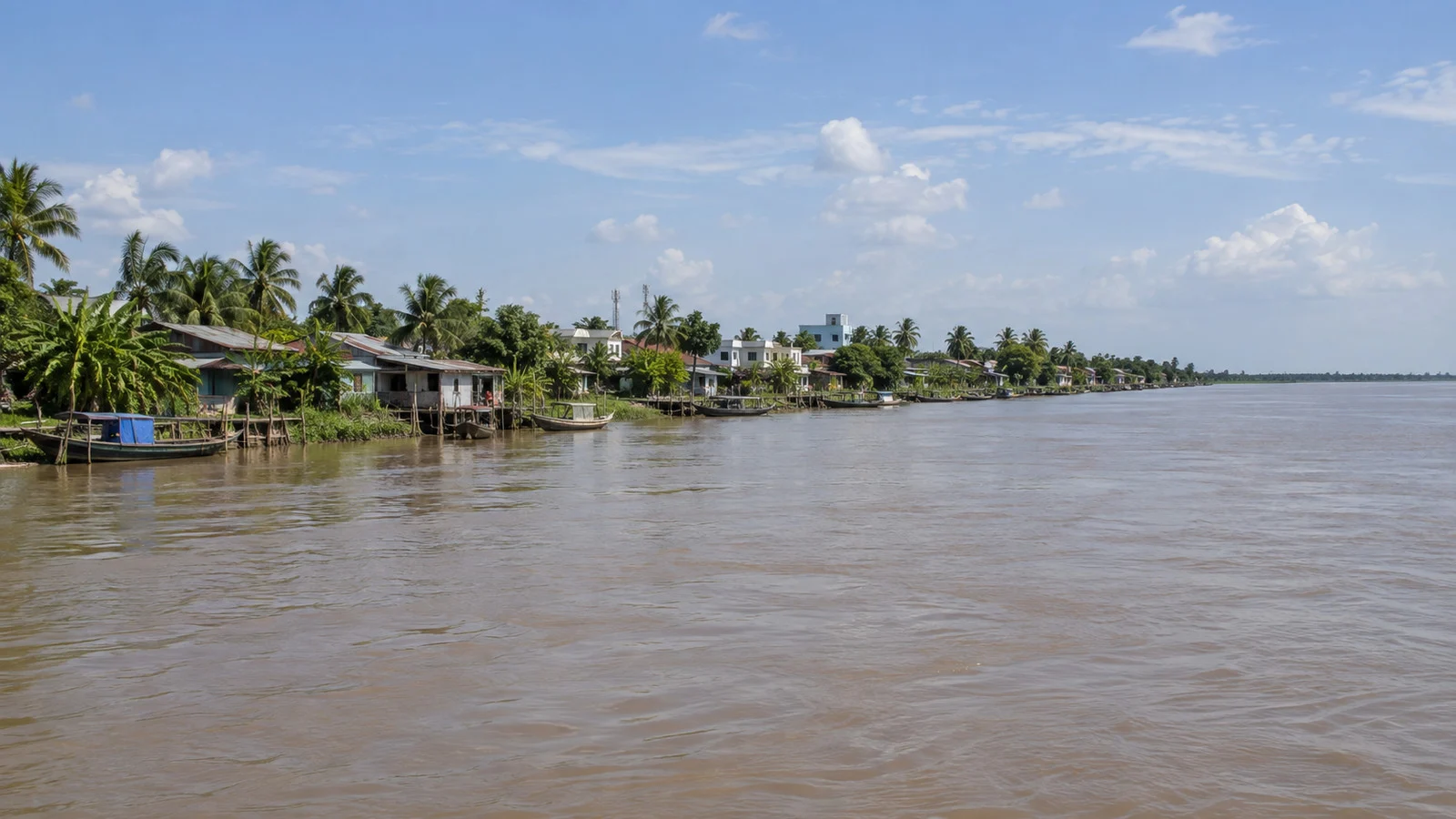
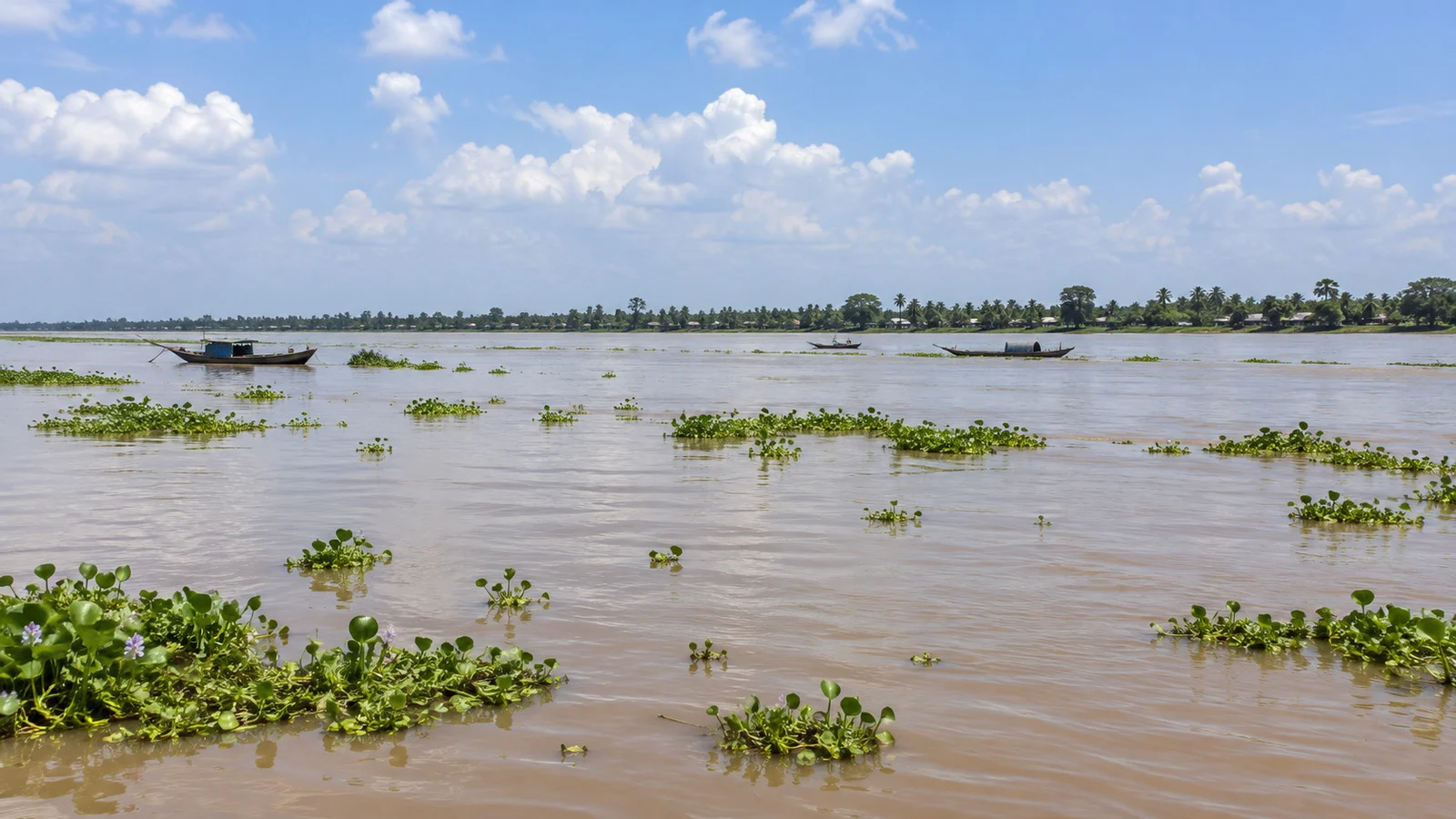
Tân Châu lies near Vietnam’s border with Cambodia on the Tiền River. The surrounding waterway carries ferries, fishing boats, cargo craft, and river traffic serving communities on both banks.
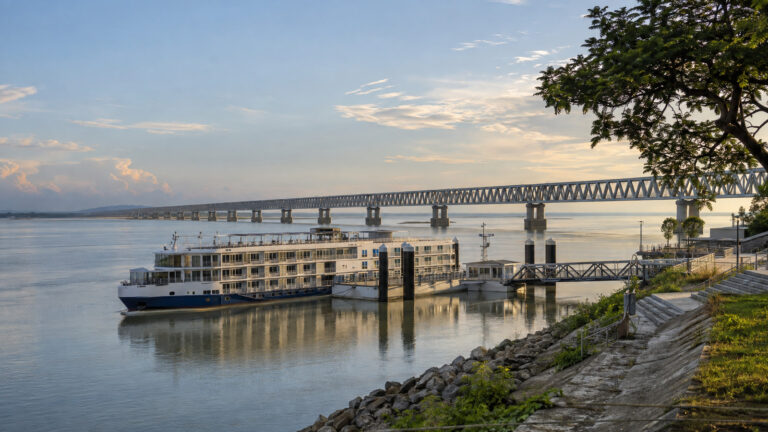
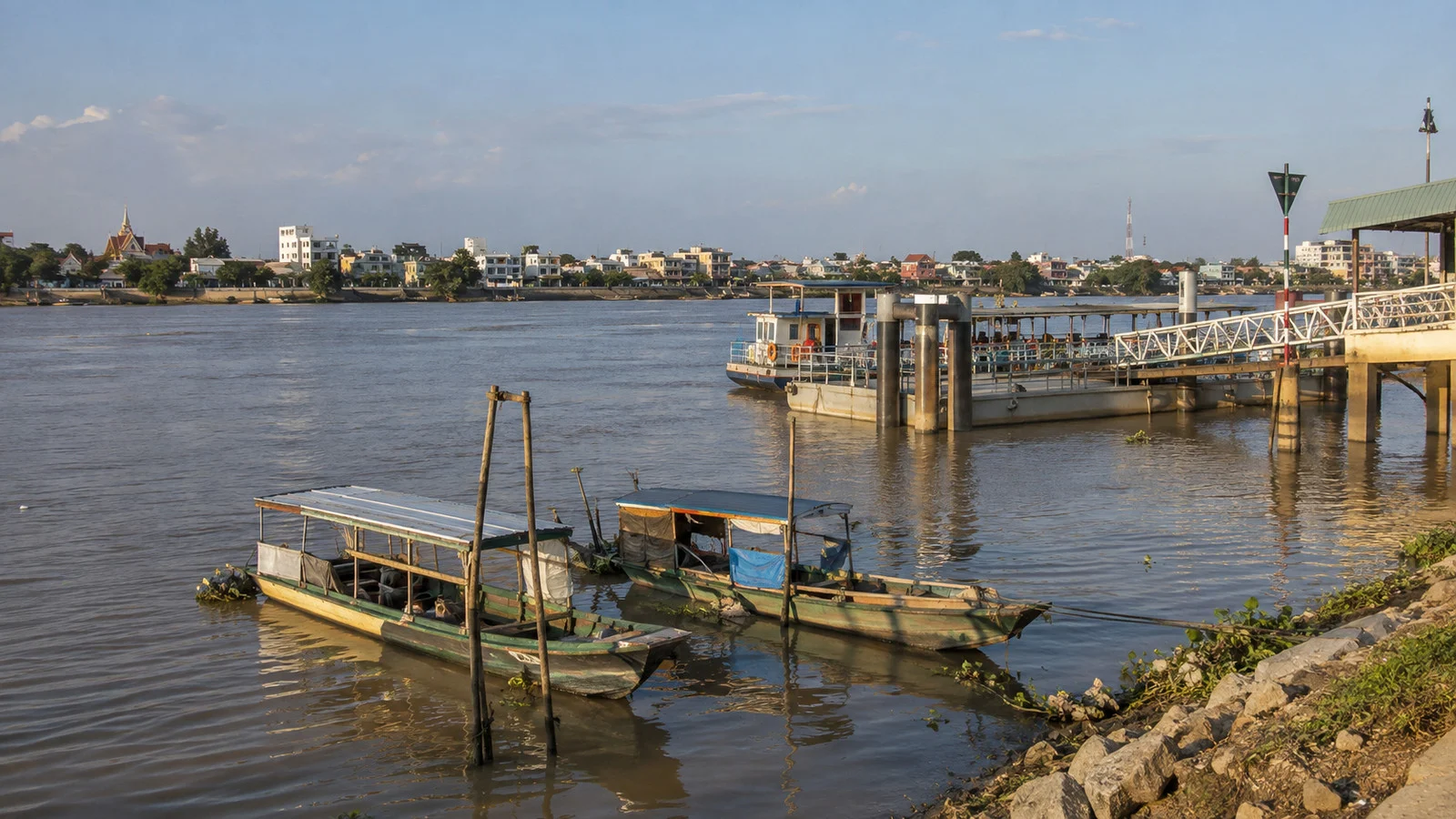
There is no single large cruise terminal used by every line. Expect a functional arrival with a gangway, a small local boat, or direct transfer into excursion transport, depending on the day’s plan.
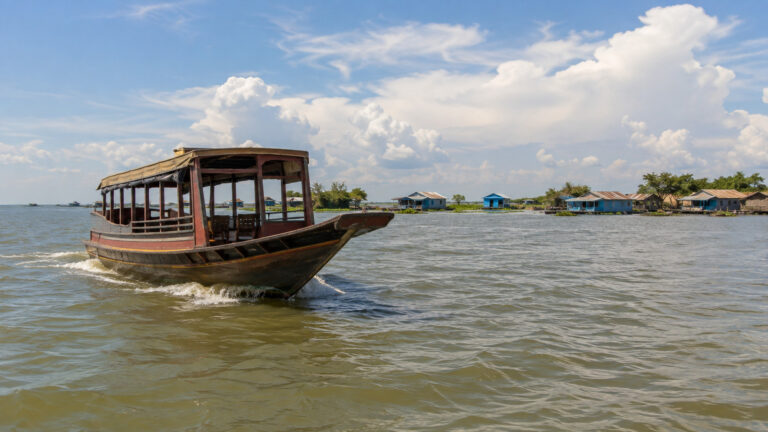
A sampan mentioned in an itinerary may be part of the sightseeing experience rather than a tender required for every passenger. The crew will explain whether you walk ashore first or board a smaller boat from the river ship.
Water height influences bank access, gangway angle, and the ease of stepping between vessels. Rain can add mud and slick surfaces, so closed shoes with reliable grip are more useful than dressy sandals.
Can You Explore Independently?
Independent time may be possible when the landing is close to town and the ship remains there. It should never be assumed before the cruise director confirms the route and return deadline.
Most cruise programs connect several experiences with local transportation, so simply walking away from the gangway can miss the point of the call. Workshops and island communities may sit beyond a practical pedestrian route.
Border-day timing makes improvisation especially risky. Passport processing, sailing windows, and a possible change of mooring leave less room for a long taxi ride or an uncertain return.
If free time is offered, keep the ship card, local contact number, and landing name with you. Ask the crew to mark the location clearly in Vietnamese if you might need to show it to a driver.
The Classic Town and Workshop Visit
The standard Tân Châu experience often combines a ride through town with small weaving or craft workshops. It is a close look at daily work rather than a procession of monumental attractions.
Some programs use a xe lôi, a local passenger cart generally pulled by a motorbike. The ride is open to the air and can be bumpy, with a step and narrow seat that deserve consideration for anyone with limited balance.
Workshop spaces may be family homes or active businesses rather than purpose-built museums. Follow the guide, stay clear of moving equipment, and ask before photographing workers at close range.
Purchases are optional, though a small item can be a direct way to support the maker. Carry modest notes and ask for the price before accepting a package or customization.
Tân Châu Silk and Lãnh Mỹ A
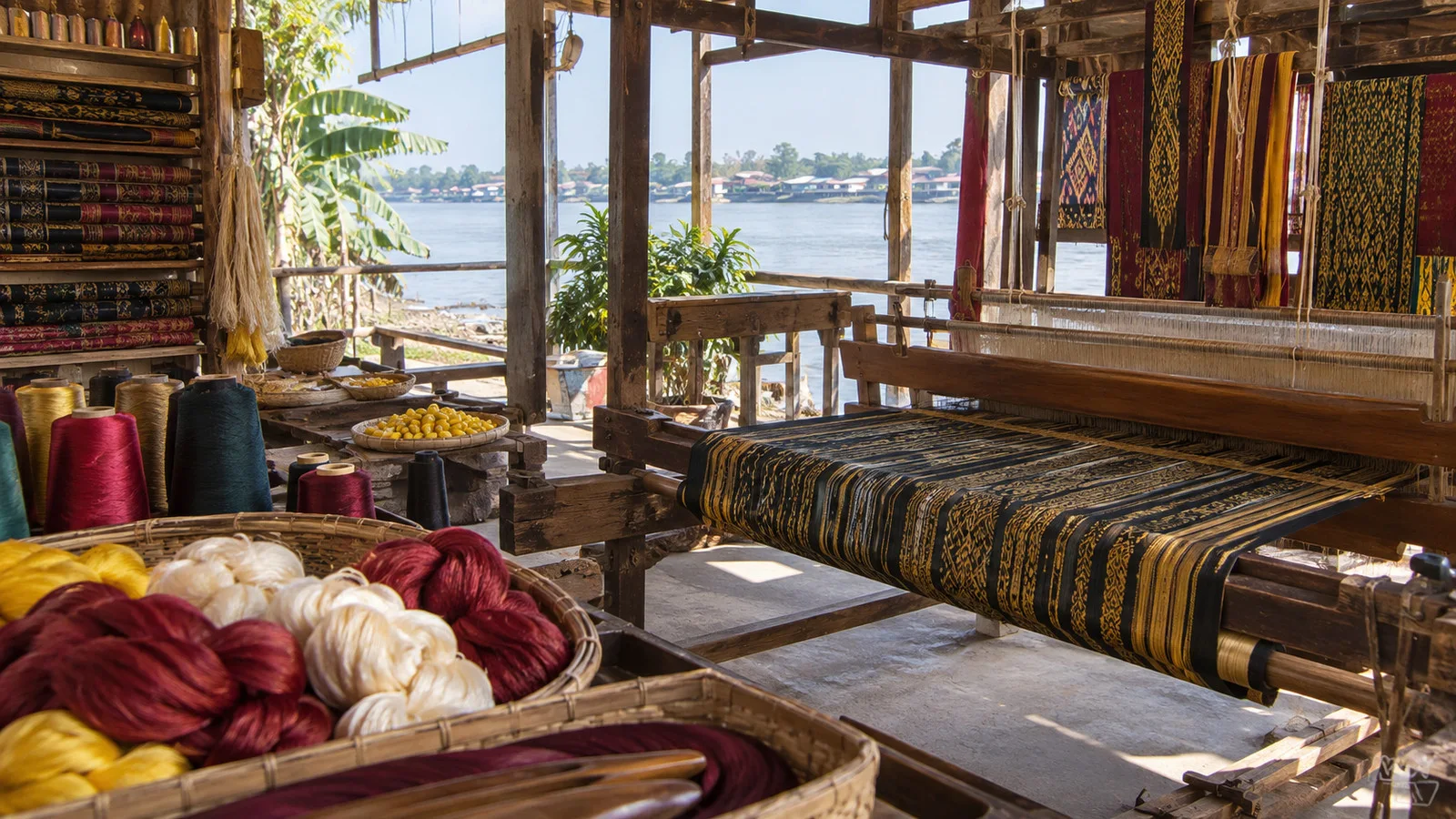
Tân Châu is closely associated with silk weaving, especially the glossy black fabric known as Lãnh Mỹ A. Vietnam Tourism describes the local tradition as one passed through generations, with softness, durability, and absorbency among the fabric’s notable qualities.
The traditional dark color comes from fruit of the mặc nưa tree. Repeated dyeing, washing, and drying require substantial labor, which helps explain why authentic fabric is not a throwaway souvenir.
The official Vietnam Tourism guide to silk villages also notes that producers now create other colors alongside the traditional black. A workshop visit can therefore show both heritage techniques and modern adaptation.
If you are considering a purchase, ask about the fiber, dye, care instructions, and where the piece was made. A specific explanation matters more than an enthusiastic label that simply says silk.
Scarves and smaller textiles pack more easily than large lengths of cloth. They are also less likely to spend the rest of the cruise draped over the cabin chair while you wonder what customs will make of them.
Mat Weaving and Other Crafts
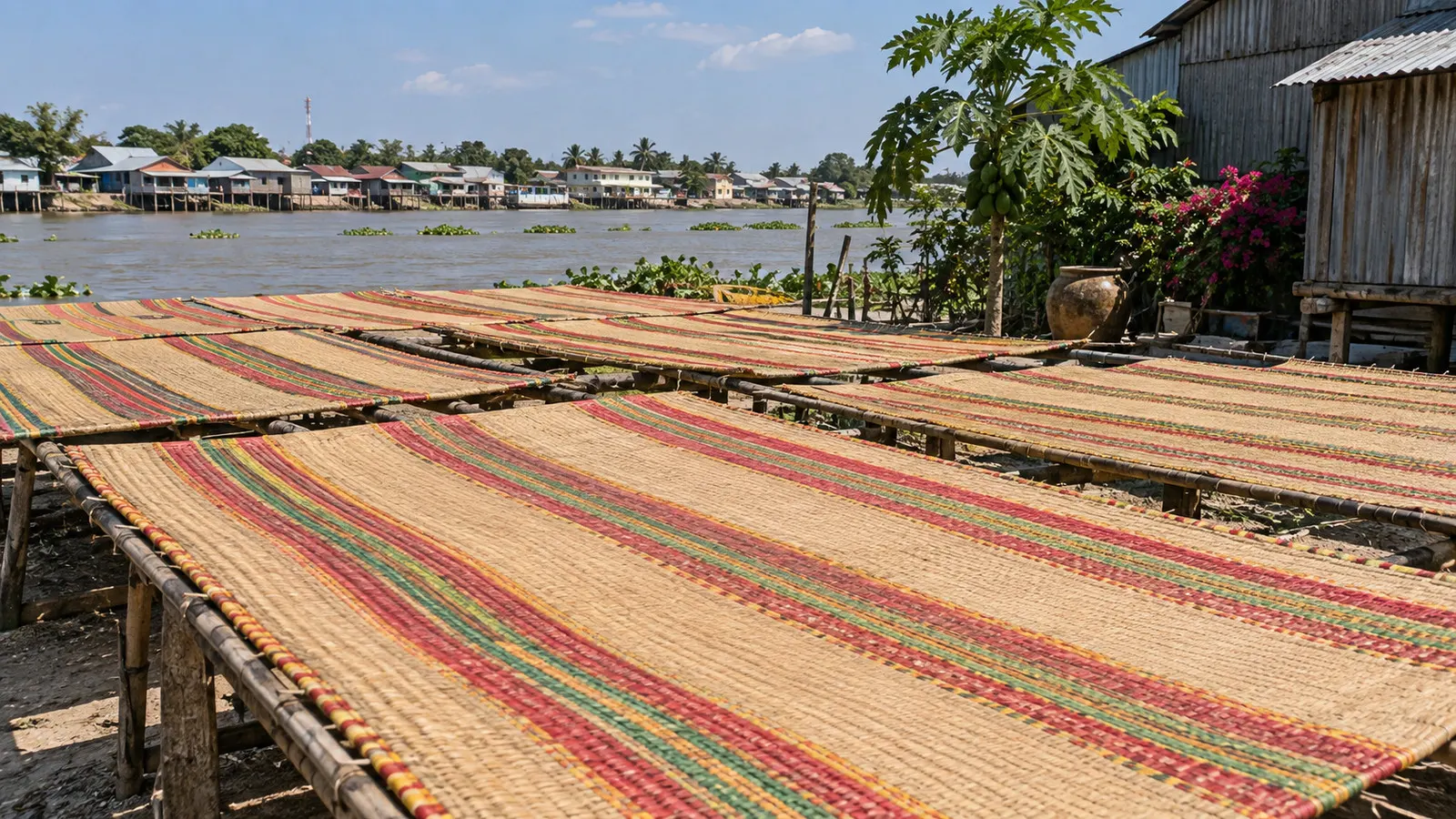
Mat-weaving demonstrations can be another part of the town route. The guide may describe the plant fiber, preparation, loom, and pattern used by the workshop you actually visit.
Listen to the local explanation instead of assuming every woven mat uses the same material. Cruise descriptions sometimes simplify craft names, while the maker can distinguish the plants and methods used in that household.
The rhythm of the loom is often more interesting than a rushed shopping stop. Watch how the strands are aligned and tightened, then ask whether the design has a household or regional meaning.
A compact coaster, pouch, or other small woven piece is easier to carry than a full floor mat. Your suitcase will appreciate this rare moment of travel wisdom.
Trà Sư Forest as an Alternative
Some itineraries offer Trà Sư cajuput forest as a nature-focused alternative to the town workshops. The excursion typically requires a road transfer and small-boat travel through wetland habitat.
This option suits travelers who prioritize birds, water landscapes, and photography. It also involves more transfers, so confirm steps, handholds, seating, and walking surfaces before choosing it.
Availability can be limited, and the experience changes with season and water conditions. Reserve through the cruise line early if it is central to your plans.
The town route remains the stronger choice for a first visit centered on Tân Châu itself. Trà Sư is a broader An Giang nature outing rather than a quick walk from the river landing.
Understanding the Cambodia Border Day
Northbound Mekong itineraries often place Tân Châu before the ship enters Cambodia. Border formalities are coordinated by the operator, and the crew may collect passports well before officials complete the process.
Follow the cruise line’s written visa instructions for your nationality, sailing direction, and pre-cruise plans. Government rules and accepted entry points can change, while requirements can differ for cruise-only guests and travelers adding land stays.
Do not assume that an electronic visa accepted at an airport is automatically valid at a river checkpoint. Check the official Vietnam and Cambodia immigration portals, then reconcile that information with the operator’s instructions before travel.
Keep digital and paper copies of important approvals, but expect the crew to manage the physical passport during part of the crossing. Tell the cruise manager early if you need access to it for another documented reason.
Be back aboard at the stated time even if the ship appears stationary. Border schedules involve officials, manifests, and sailing plans that are not visible from the souvenir table.
Water Levels and Seasonal Conditions
The Mekong River Commission monitors flows and water levels across the basin, including stations relevant to the Vietnamese delta. Tân Châu is affected by seasonal river changes as well as daily tidal variation.
Higher or lower water does not automatically mean the call will be canceled. It can instead change the landing, gangway slope, small-boat step, excursion order, or distance to road transport.
The Mekong River Commission flow-monitoring system is useful regional context, but guests should follow the ship’s operational decision. A public gauge cannot account for every vessel, bank condition, or local mooring.
The wetter season brings lush scenery and a greater chance of rain, while hotter, drier conditions change paths and riverbanks. Pack for heat and sudden showers rather than attaching the entire day to one forecast icon.
Accessibility and Mobility
Tân Châu can be a demanding call for travelers with limited mobility. A variable gangway, simple riverbank, local boat, xe lôi step, uneven threshold, and tropical heat can all appear in one outing.
Ask whether a sampan is mandatory and how many steps separate the ship from the first vehicle. Also confirm whether a folding wheelchair can travel in the xe lôi or whether a road vehicle alternative is available.
Workshop access can include narrow doors, raised thresholds, compact workspaces, and limited seating. The Trà Sư option may add small-boat transfers and walking on surfaces affected by water and rain.
Crew assistance is valuable, but it does not make every transfer step-free. Request a route-specific answer for your sailing and mobility device before choosing the excursion.
Heat, Rain, and What to Carry
Tân Châu is hot and humid for much of the cruising season. Workshops and local vehicles may not be air-conditioned, so lightweight clothing and steady hydration are important.
Bring sun protection, insect repellent, and a compact rain layer. Closed shoes protect against slick steps and are more stable when boarding a boat or cart.
A small crossbody bag keeps both hands available for rails and transfers. Carry only what you need, since tight vehicles and workshops make a large daypack awkward.
Use modest Vietnamese đồng notes for small purchases when cash is accepted. Keep valuables discreet and do not leave a phone or camera loose on a xe lôi seat.
Photography and Workshop Etiquette
Ask before taking close portraits or recording video inside a family workspace. A guide’s general permission does not always mean every person wants a camera pointed at them.
Stay behind any line set by the host and keep hands away from looms, dye, tools, and drying textiles. Working equipment can move quickly even when the demonstration feels informal.
Photograph the river landscape from a stable position and secure your device during boat transfers. A wrist strap is less glamorous than a new camera, but much more useful when the boat shifts.
Shopping should remain voluntary and courteous. Thanking the maker and listening carefully are meaningful forms of respect even when you do not buy.
A Practical Plan for the Morning
Choose the standard town and workshop outing if this is your first visit and you want the clearest connection to Tân Châu. Select Trà Sư only if the extra transfers suit your mobility and nature is the day’s priority.
Prepare before the departure announcement so you are not searching for sunscreen while the group boards. Bring water, secure shoes, small cash, and the ship’s contact details.
Follow the guide through the transport sequence and remain aware of the return time. If passports are being processed, do not split from the group without explicit permission from the cruise director.
Leave room to notice the ordinary details between stops, including ferries, river homes, market traffic, and the changing banks. Those scenes often explain the upper delta better than one staged photograph.
The Final Take
Tân Châu is a compact introduction to the upper Mekong Delta, with traditional silk, working workshops, local vehicles, and a river border shaping the visit. Its appeal comes from people and processes rather than grand monuments.
Let the cruise line coordinate the landing, transport, and border formalities, then give the town your full attention. This guide was checked September 12, 2026 against current AmaWaterways information, Vietnam Tourism, and the Mekong River Commission, but live moorings, excursions, and entry requirements must be reconfirmed for your sailing.