Matiari River Cruise Port: Landings, Brass Workshops and Village Walk
Matiari is a small riverbank call where the excursion leads directly into a working brass and bell metal village. There is no conventional cruise terminal to navigate, but the landing, village lanes, active workshops, heat, and return timing all deserve careful attention.
The appeal is wonderfully specific. You can watch household metalware take shape through a chain of specialized tasks, then meet the people whose hammering, cutting, heating, and finishing keep the craft alive.
Matiari river cruise port quick facts
- Port type: Operator arranged riverbank landing for a guided village walk, not a permanent passenger terminal.
- Main experience: Home workshops producing brass and bell metal pots, platters, bowls, and other useful objects.
- Currency: Indian rupee, with small notes useful for modest purchases.
- Language: Bengali is the local language, while Hindi and some English may also be used.
- Time zone: India Standard Time, UTC+5:30 throughout the year.
- Accessibility: A launch transfer, sloped bank, temporary gangway, uneven lane, or raised workshop threshold may be part of the route.
- Missed calls: No official missed call rate is published, and river or bank conditions can change the landing.
- Best plan: Join the operator’s guided walk, carry little, wear closed shoes, and return with the group.
The best way to visit
Take the included or operator arranged village walk rather than trying to reach Matiari independently. The cruise team knows the day’s landing, transfer method, local route, workshop access, and sailing schedule.
Wear closed shoes, bring a small amount of rupee cash, and keep both hands available for boarding. A light bag is easier to manage around tools, narrow entrances, and a moving launch or gangway.
The visit is compact, but it is not necessarily effortless. Noise, heat, uneven surfaces, smoke, workshop thresholds, and limited public facilities may matter more than the walking distance.
Matiari is an active river cruise call
Antara’s official 2026 brochure includes Matiari on its Kolkata to Varanasi program. The itinerary describes an overnight approach to the shoreside village followed by an early walk to see craftspeople making pots and platters in home workshops.
The same program continues toward Murshidabad after the visit. That sequence places Matiari within a longer river journey, so the ship’s navigation plan and departure window shape the time ashore.
Operators may use different vessels, directions, and schedules. Treat any published itinerary as evidence of the experience, then rely on your own voyage documents for the final timing and access method.
Which river is Matiari on?
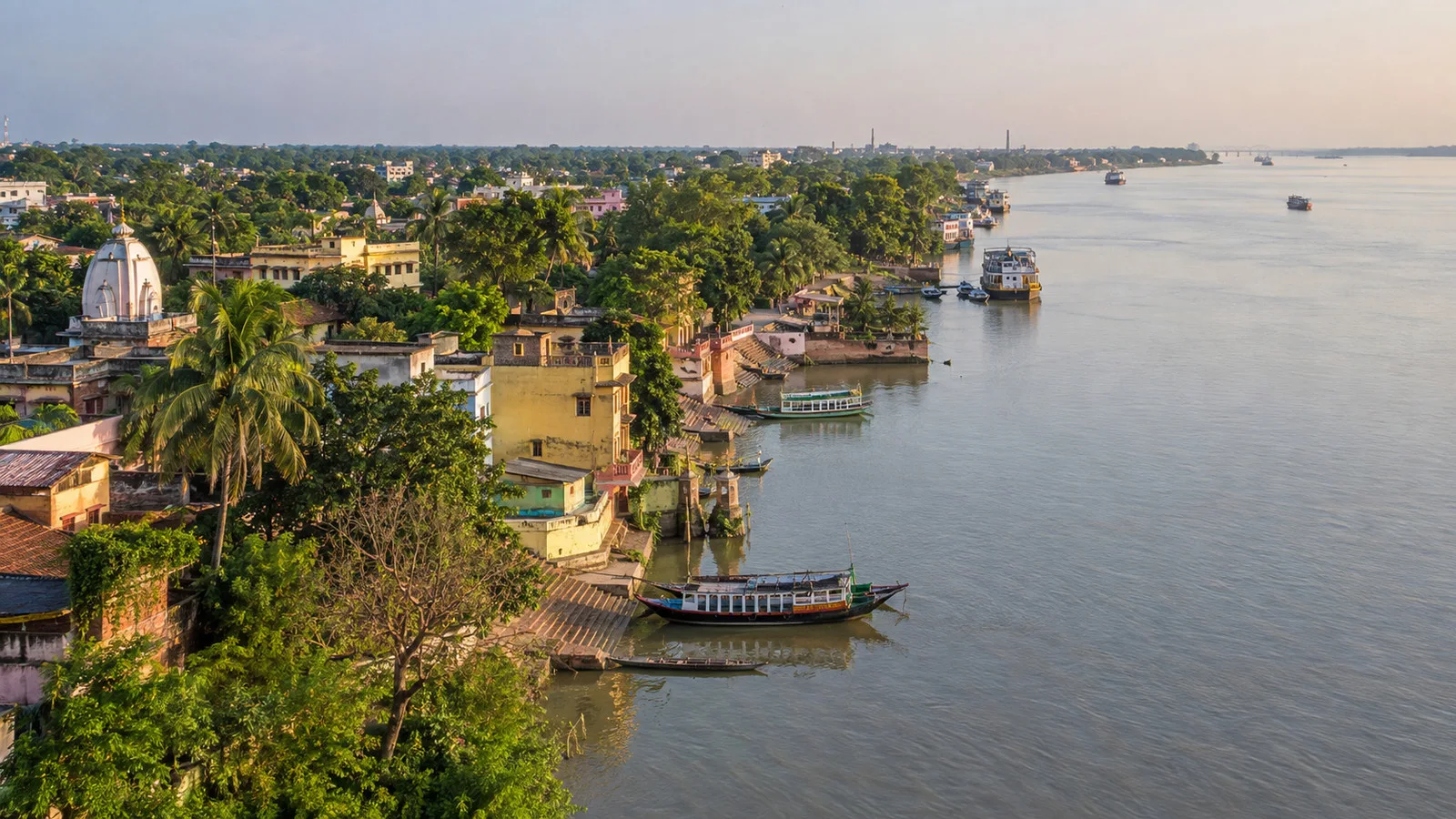
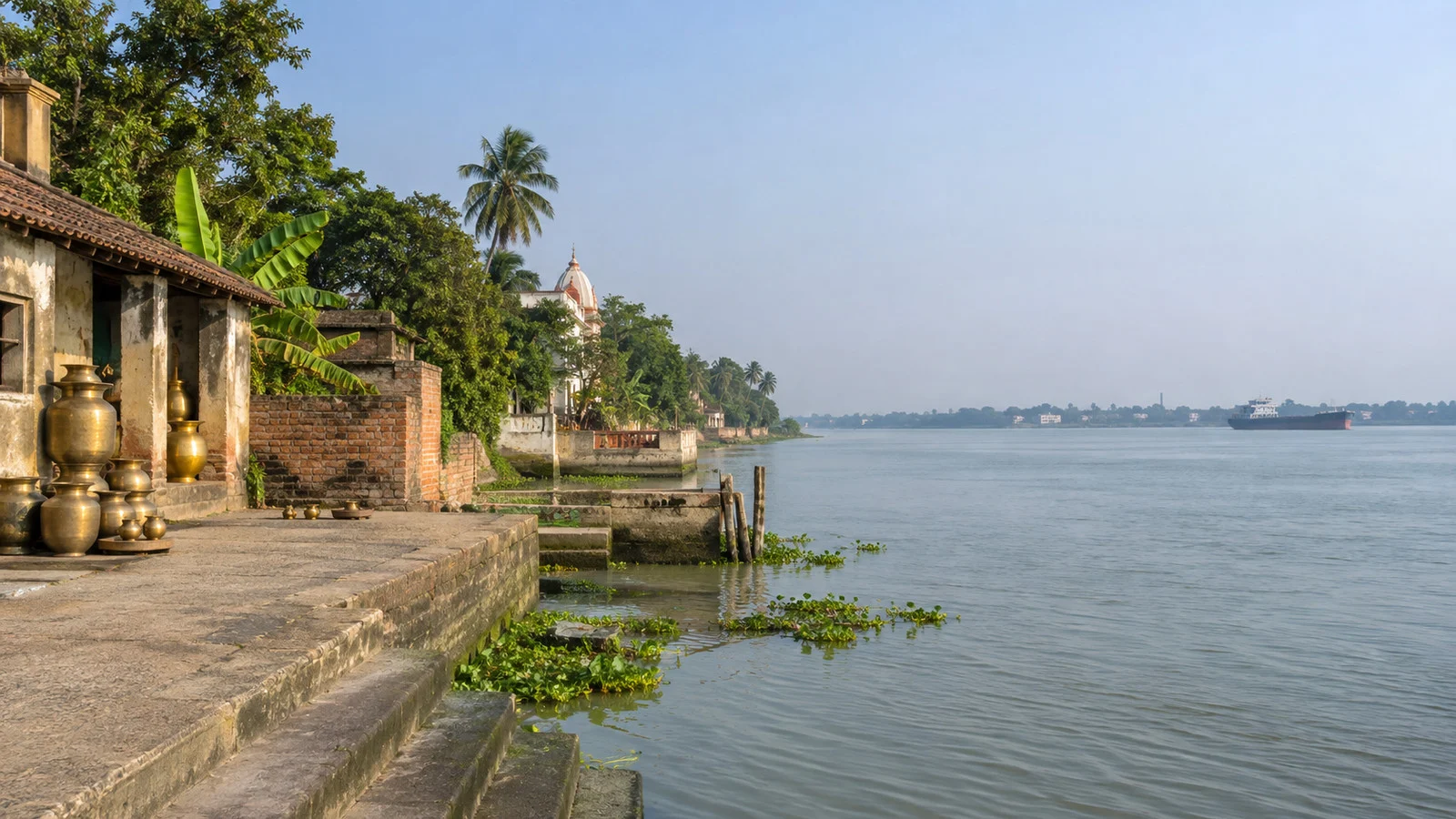
The Nadia district government lists the locality as Matiary, while cruise operators commonly use Matiari. It lies in West Bengal beside the Bhagirathi, part of the connected Ganga, Bhagirathi, and Hooghly navigation system.
The Inland Waterways Authority of India identifies the Ganga, Bhagirathi, and Hooghly route as National Waterway 1. Cruise marketing often calls the journey a Ganges cruise even when the local channel has another name.
That distinction is useful for understanding maps, but it does not change the passenger plan. Follow the crew’s instructions for the actual landing instead of searching for a fixed terminal pin.
Where the ship lands
No official source documents a permanent cruise terminal or universal passenger jetty at Matiari. Operators sell a village visit, not a guaranteed piece of waterfront infrastructure.
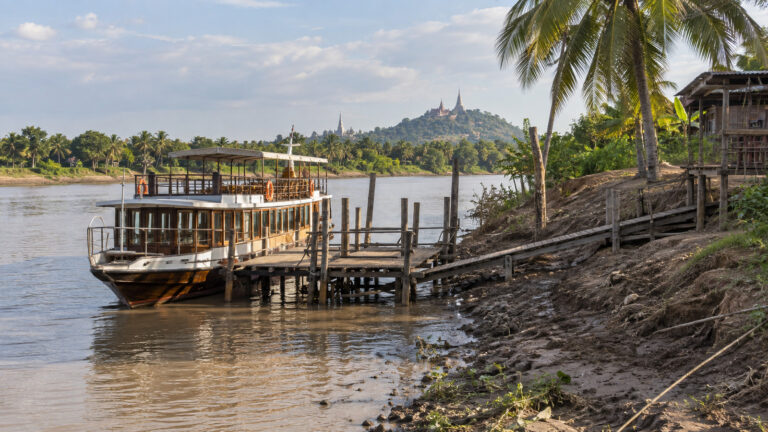
A vessel may use a gangway to a suitable bank, a carried launch, or another temporary arrangement selected for the conditions. River depth, current, silt, bank stability, and local activity can all change the safest place to step ashore.
Listen closely to the evening or morning briefing. Confirm whether the transfer involves a small boat, steps, a steep ramp, loose earth, or mud, and ask whether both hands must remain free.
Do not assume the ship will stay in exactly the same position throughout the visit. Return with the group because crew may adjust the landing or timing while passengers are ashore.
How the village walk works
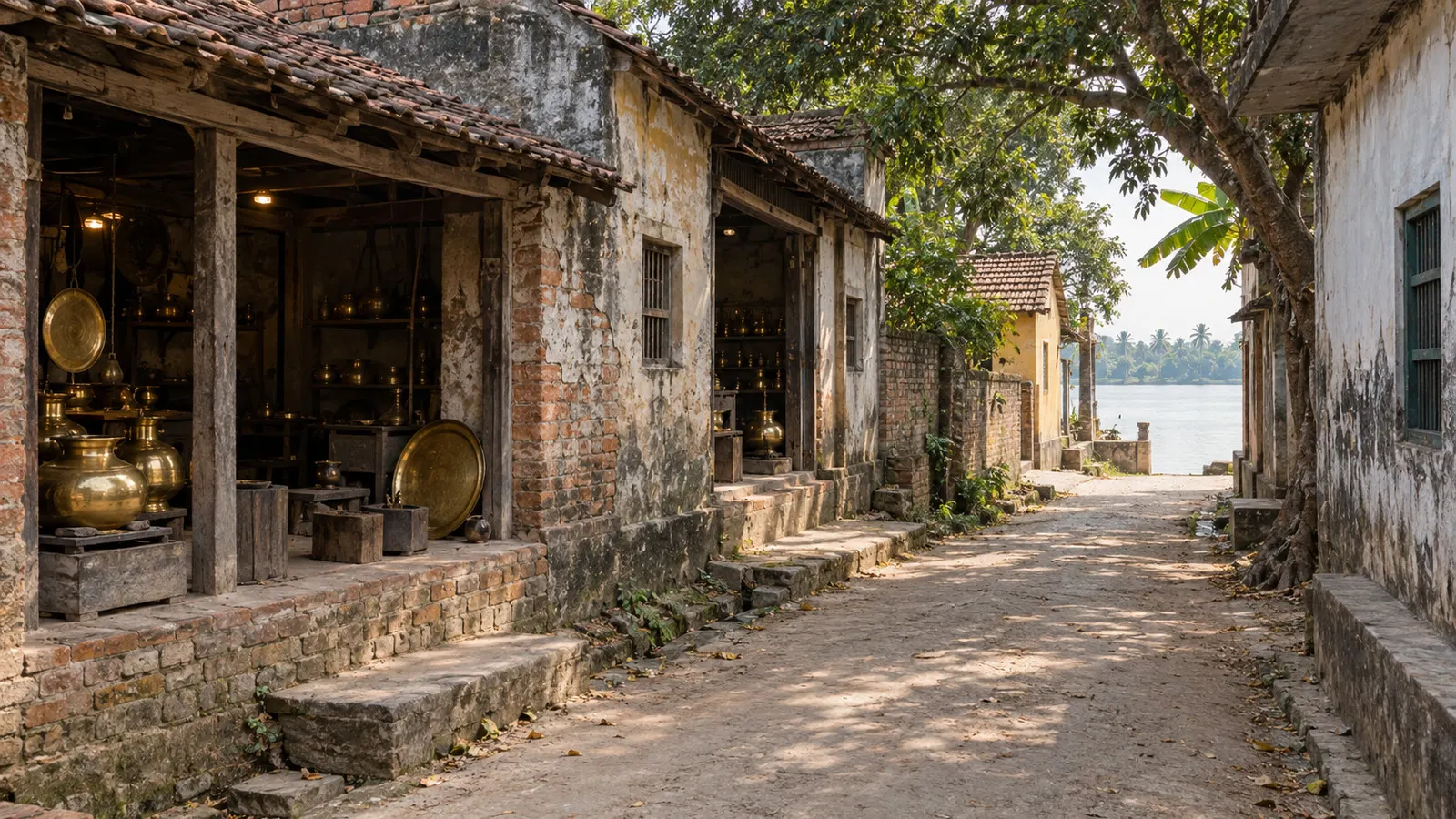
The organized experience normally begins close to the river and moves through the village on foot. The exact route can change with the landing, weather, workshop activity, and local events.
Antara’s program places the walk before breakfast and has guests return to the ship afterward. That confirms a focused visit, but it is not a universal duration for every operator or sailing.
Stay close enough to hear the guide without crowding doorways. Home workshops can be small, so groups may need to rotate while other passengers wait in the lane.
Watch where you step when moving between homes. Drainage edges, broken paving, tools, metal scraps, bicycles, animals, and everyday household activity may share the same space.
Why Matiari is known for metalwork
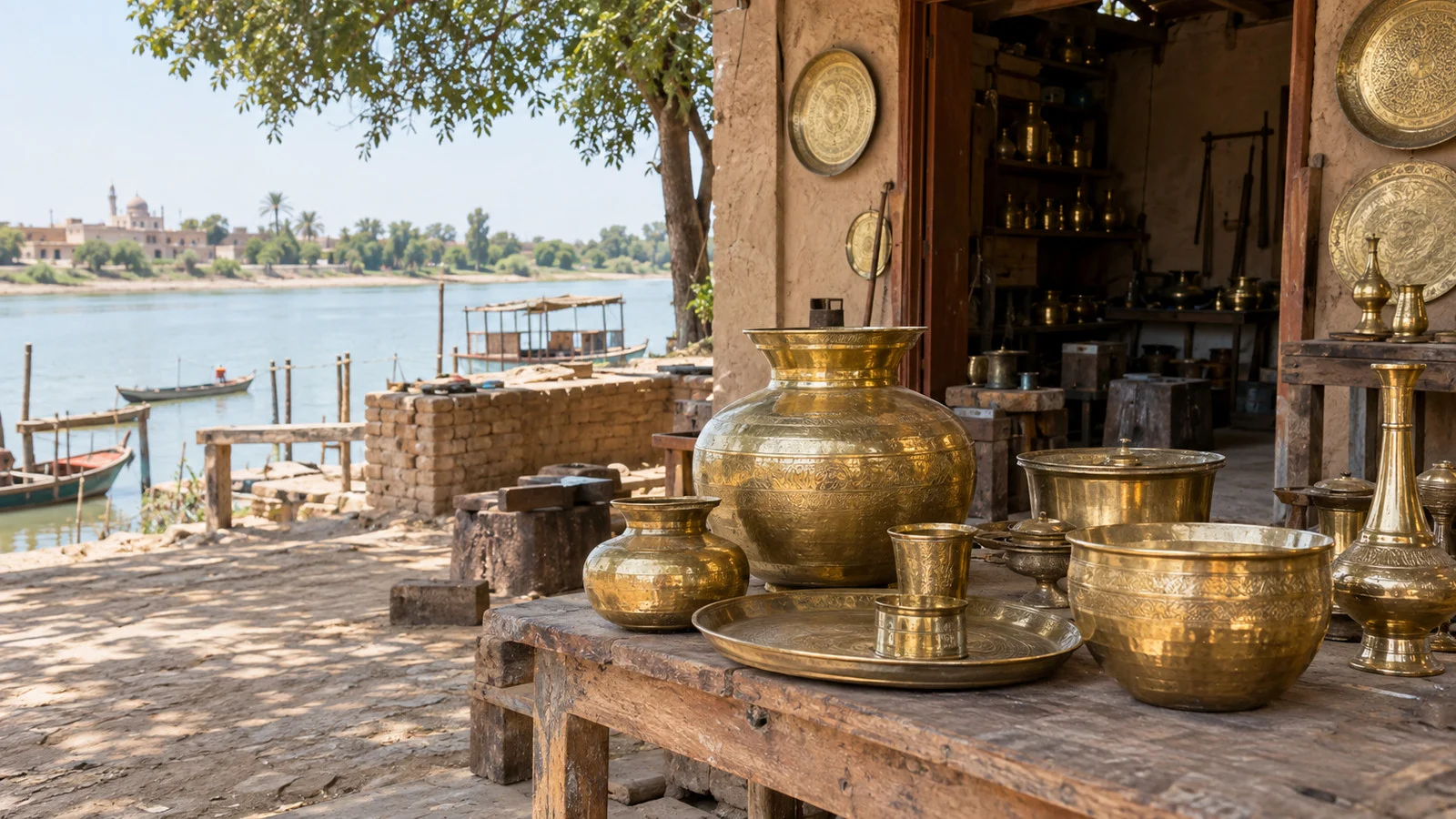
West Bengal’s official small industry resources identify a brass and bell metal utensil cluster in Matiari. This is an active production community rather than a single demonstration created for cruise guests.
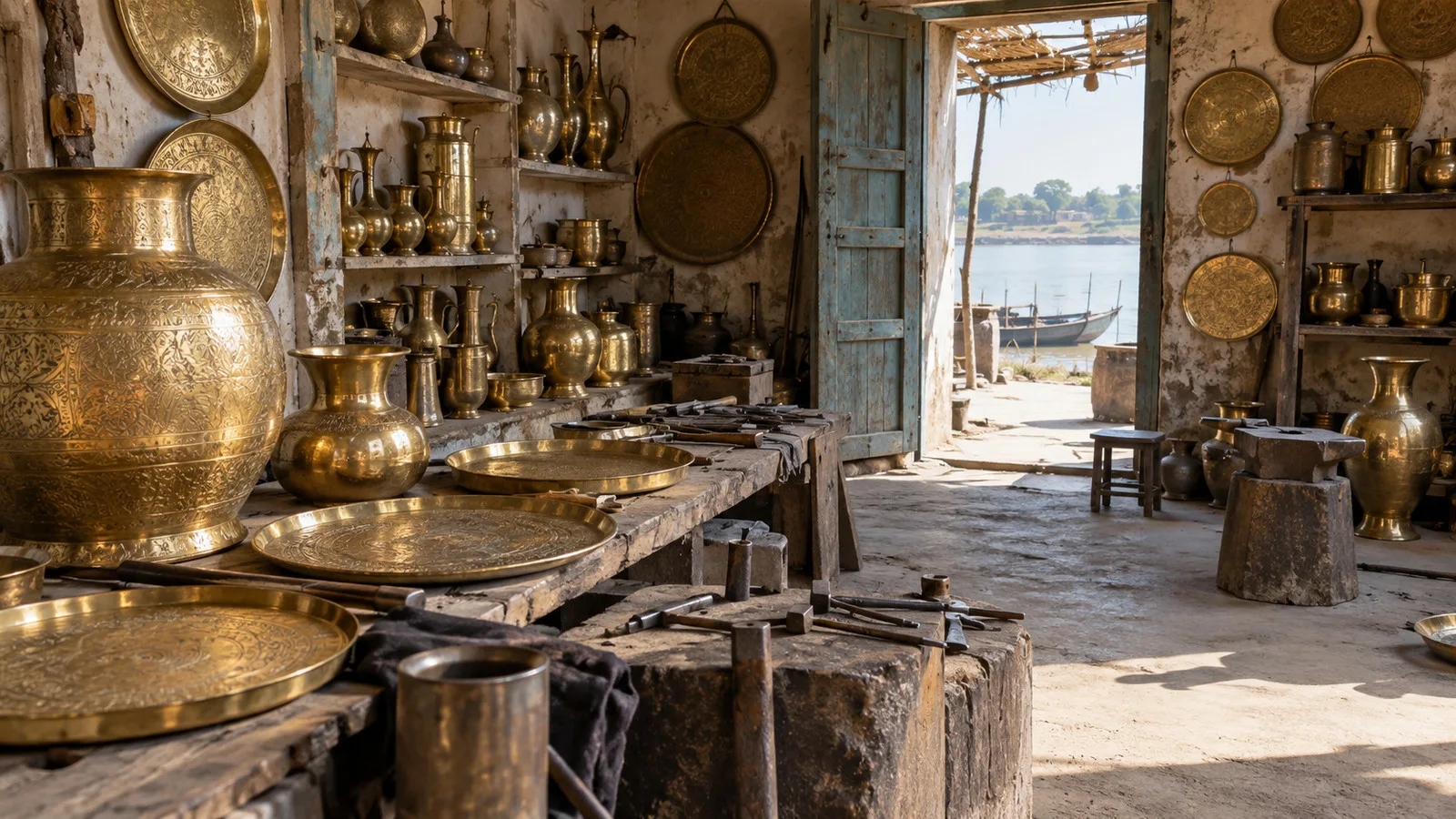
Different workers may specialize in different stages. Metal can be prepared, cut into blanks, heated, shaped, hammered, patterned, polished, and finished across several home workshops.
That division of labor is the most interesting part of the visit. Follow one object’s progress through the explanations rather than expecting every stage to happen in front of one artisan.
The repeated hammering creates both the shape and the recognizable surface of many pieces. It also creates a loud environment, so travelers with sound sensitivity should ask whether hearing protection or a quieter viewing position is appropriate.
Brass and bell metal are not the same
Brass is generally an alloy of copper and zinc, while bell metal is a type of bronze made from copper and tin. Guides, sellers, and translated descriptions may use the terms broadly when discussing a mixed craft cluster.
Ask what a specific piece is made from before buying it. Color alone does not establish the alloy, and practical information about finish, care, weight, and intended use is more valuable than a romantic label.
Food contact requires another question. A decorative vessel should not automatically be used for cooking, drinking, or serving unless the maker or a reliable seller confirms that purpose and explains its care.
Respectful workshop behavior
These are workplaces and often family homes. Ask before photographing people, children, interiors, or close details of the production process.
Never step into a worker’s swing, reach toward a tool, or cross between a furnace and the person handling hot metal. Wait for the guide to show where the group can stand safely.
Keep conversation low enough that artisans and guides can communicate over the hammering. If a room is crowded, step back rather than holding a doorway for the perfect camera angle.
Buying can support a workshop, but do not assume every sales arrangement distributes money in the same way. Ask who made the piece, whether the price is fixed, and who receives the payment if that matters to you.
What to buy and how to pack it
Possible purchases include bowls, water pots, trays, platters, lamps, vases, and decorative objects. Stock depends on the homes visited, and practical household ware may be more common than small souvenirs.
Check the base and rim for rough edges, then ask whether the finish will darken or tarnish. Confirm cleaning instructions before choosing a piece that you hope to use rather than display.
Metal becomes heavy quickly, and broad platters are awkward in luggage. Choose a size that can be wrapped in clothing without pressing a sharp edge against the suitcase wall.
Carry Indian rupees in small denominations because card terminals and international digital payments should not be assumed. Follow the guide’s advice about bargaining since a workshop sale may not follow the same custom as a general market.
Seasonal water and weather
River landings change with both high and low water. High water can strengthen current or cover a familiar bank edge, while low water can expose silt and make the usual approach too shallow.
The monsoon also affects the walk itself. Rain can turn bare ground muddy, make temporary surfaces slippery, and increase the difference between a short route and an easy one.
Cooler season visits may still be warm by the time the group returns. Carry drinking water if the operator permits it, use sun protection, and tell the guide early if you need shade or a slower pace.
Fog can affect winter navigation and timing on parts of the river system. A delayed landing or shorter walk is an operational decision, so listen for announcements rather than relying on the printed itinerary.
Accessibility and mobility
Matiari is not documented as step free from ship to workshop. A small boat transfer may require stepping between moving surfaces, while a direct landing can involve a sloped gangway, temporary plank, dirt bank, mud, or steps.
Village lanes can be narrow and uneven, and home workshops may have raised thresholds. Reliable seating, shade, and accessible restrooms are not documented along the full route.
Ask whether a launch is mandatory, how many steps are involved, and whether crew can safely assist with your exact mobility device. Also ask whether any portion of the experience can be reached by vehicle if the walking route is unsuitable.
A cane may help on the lanes, but both hands may be needed while boarding. Discuss where the cane can be passed to crew and whether a companion can remain beside you throughout the transfer.
Heat, noise, and personal comfort
The combination of heat, metalwork, tight rooms, and loud hammering can become tiring. Stand near an exit when possible, pace yourself, and skip a crowded interior if you begin to feel unwell.
Closed shoes protect against hot surfaces, sharp scraps, and uneven ground. Lightweight clothing that covers the skin can help with sun and workshop dust without becoming too warm.
Carry essential medication in a small protected bag. If the walk happens before breakfast, follow your normal medical plan and ask the ship about an early snack when needed.
A practical plan for the call
Attend the ship’s briefing and confirm the landing method, footwear, meeting time, and return point. Bring only water, necessary medication, a phone or camera, and a modest amount of cash.
At the workshops, begin by watching from the position chosen by the guide. Move closer only when invited, then focus on how a piece passes through several skilled hands.
If you buy something, agree on the price and material before payment. Wrap the object securely after returning to the ship rather than opening your main luggage in the village lane.
Leave with the group even when the vessel appears close. A changing current, revised sailing window, or repositioned launch cannot be solved by finding independent road transportation.
Quick answers
Is Matiari a conventional port?
No. It is an active river cruise call built around an operator arranged bank landing and guided village walk.
What is Matiari known for?
The village is known for brass and bell metal utensils made through specialized work in home workshops. Cruise visits focus on seeing that craft process.
Can you explore independently?
Independent exploration is impractical for most cruise passengers because the landing and return are operator controlled. Stay with the arranged walk unless the cruise director clearly provides free time.
Is a small boat always required?
No universal transfer method is published. The vessel may use a launch, gangway, or another safe arrangement based on the day’s river and bank conditions.
Can you buy directly from artisans?
Purchases may be offered during the workshop visit, but stock and payment arrangements vary. Ask who made the item, what it is made from, how to care for it, and whether the price is fixed.
Is the visit wheelchair accessible?
It is not reliably accessible from end to end. The transfer, bank, lanes, thresholds, toilets, and any alternate vehicle option must be confirmed for the specific sailing.
The last word
Matiari earns its place on an itinerary through work that is still part of everyday village life. The most memorable moment is often not a finished bowl, but the realization that many practiced hands helped create it.
Use the ship’s landing and guide, give the artisans room to work, and ask thoughtful questions before buying. A careful visit respects both the craft and the community that sustains it.
How this guide was researched: No firsthand Matiari visit is claimed. This guide was independently checked September 12, 2026 against current Antara cruise material and official information from Nadia district, West Bengal industry resources and the Inland Waterways Authority of India.