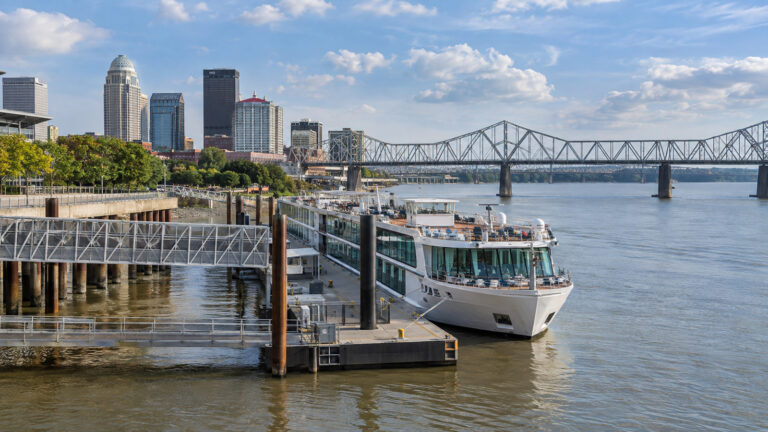
Brahmaputra River Cruise Ports: Pandu to Dibrugarh Guide
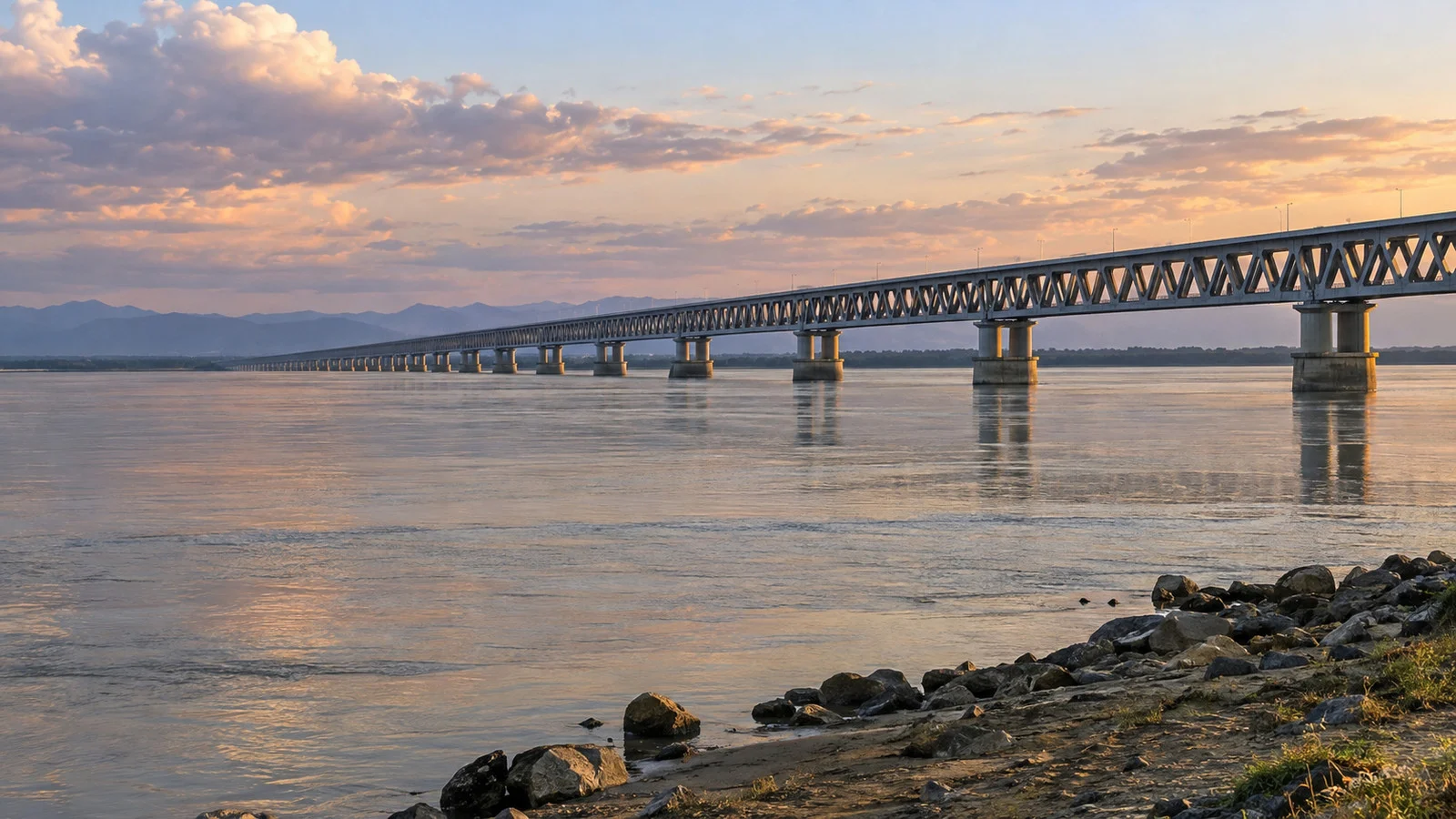
The Brahmaputra does not respect the travel industry’s fondness for permanent addresses. It braids around sandbars, moves channels, rises dramatically with monsoon rain, and occasionally turns yesterday’s perfect landing into today’s very attractive patch of water.
That is part of the adventure, but it makes precise port language essential. Guwahati usually means Pandu, Jorhat usually means Neamati or Nimati Ghat, Majuli may mean a ferry ghat or sandbank, and Dibrugarh can involve a substantial road transfer to the ship.
Brahmaputra River cruise ports quick facts
- Into Town: Pandu is outside central Guwahati; other calls may use pontoons, ferries, launches, or sandbanks. Organized transfers are the norm.
- Currency and Language: Indian rupee. Assamese is widely spoken; Hindi and English are common in tourism, with many local and Indigenous languages across Assam.
- Time Zone: India Standard Time, UTC+5:30, year-round. India does not observe daylight saving time.
- How Often the Call Is Missed: Medium (about 15%): Shifting channels, sandbars, fog, water levels, or monsoon restrictions can change an individual landing.
The 15% figure is a CruisePorts.co editorial planning estimate, not a published cancellation rate. On this river, a changed landing or substituted village is more common than abandoning the entire voyage.
Brahmaputra Ports at a Glance
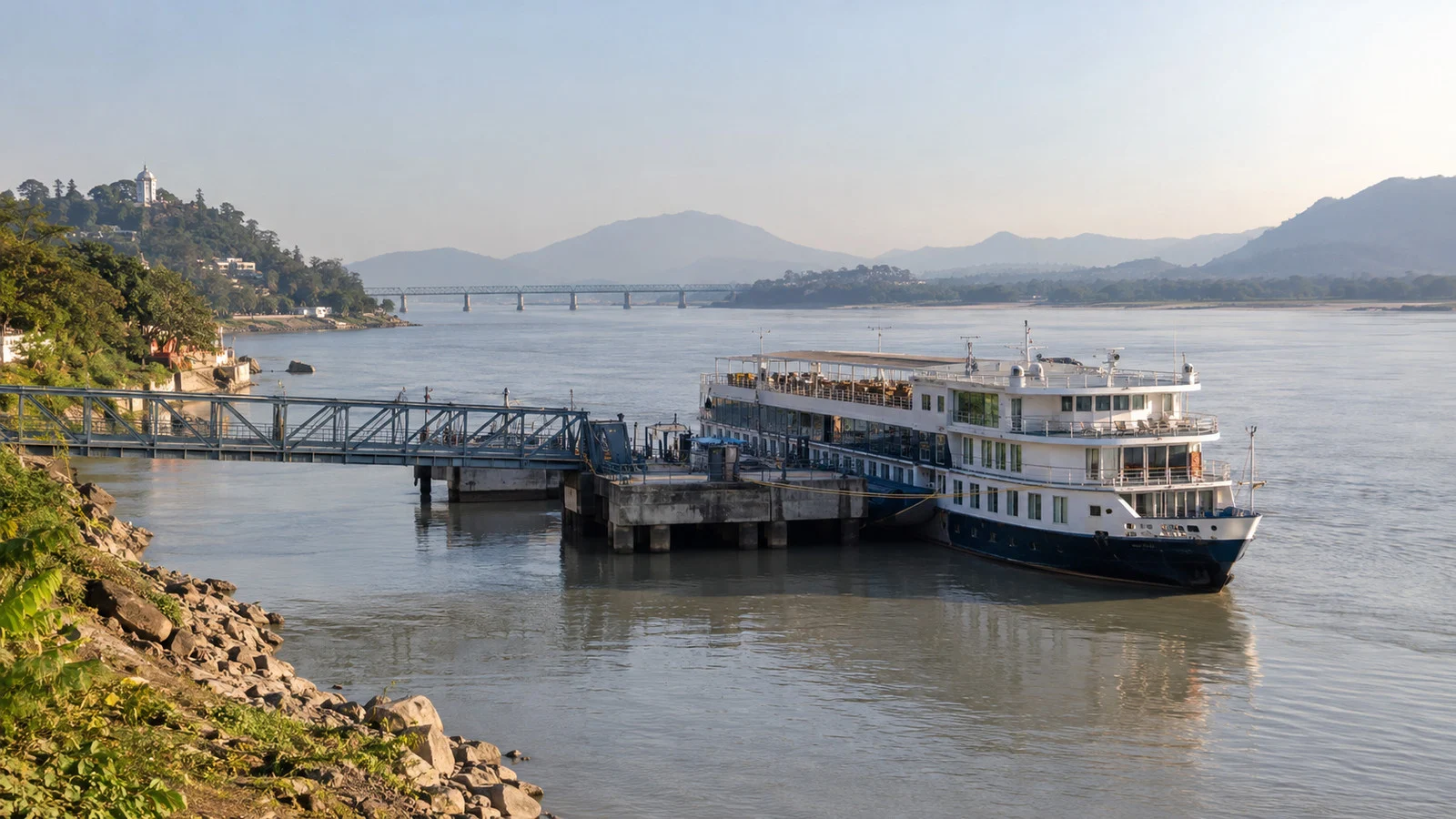
- Guwahati: Expect Pandu Port or another operator-assigned city ghat. It serves airport transfers, Kamakhya Temple, and city touring.
- Silghat: Access may use the IWAI floating terminal or a seasonal nearby landing. The stop primarily serves Kaziranga and tea-country excursions.
- Majuli: Arrival can involve an island ghat, local ferry connection, launch, or sandbank. The value is in the satras, villages, crafts, and island culture.
- Jorhat: Neamati or Nimati Ghat follows a road transfer from the city. It serves the airport, tea estates, and Sivasagar connections.
- Dibrugarh: The operator may use Dibrugarh, Bogibeel, or another upper-river landing. This is the gateway for the airport, tea country, and upper Assam.
These are port zones, not guaranteed gangway coordinates. Cruise directors and pilots may change the landing to match the usable channel, bank condition, ferry traffic, and the day’s excursion route.
Is the Brahmaputra an Active Cruise River?
Yes. India’s Inland Waterways Authority identifies Dhubri to Sadiya as National Waterway 2 and lists overnight cruise circuits from Guwahati to Silghat, Neamati, and Dibrugarh as operational.
The official 2026 IWAI river-cruise presentation names current vessels and terminals across this corridor. Assam’s tourism directorate also maintains a current list of river-cruise operators, reviewed in January 2026.
Operations are highly seasonal. The Assam Tourism river-cruise page says long cruises generally operate from October through April and are not permitted during the swollen summer and monsoon period.
August 20 therefore sits in the normal off-season for long itineraries, not proof that the route is defunct. Published operators market the next dry-season departures while pilots, terminals, and vessels prepare for navigation to resume.
Why Landings Move on the Brahmaputra
The Brahmaputra is a wide, sediment-heavy braided river whose navigable channel shifts between and within seasons. Sandbars called chars emerge, erode, and move, while bank edges can be too soft, steep, or exposed for the same landing arrangement every week.
IWAI maintains day marks, navigation lights on some reaches, pilotage, depth information, and floating terminals. Its April 2026 river notice made pilots mandatory throughout the route and limited the Silghat-to-Neamati and Neamati-to-Sadiya reaches to day navigation.
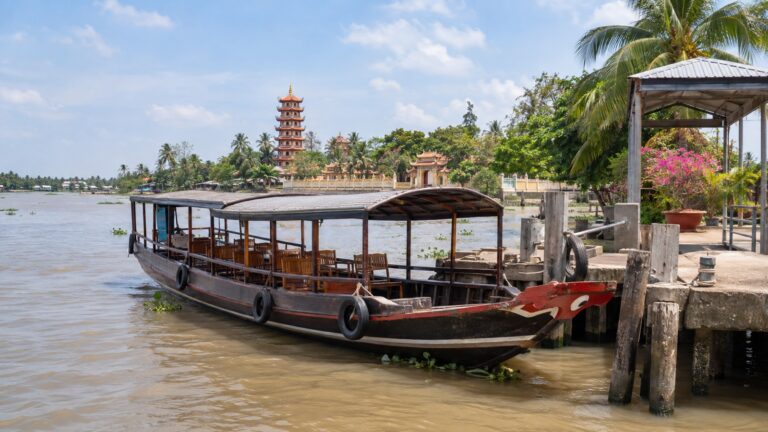
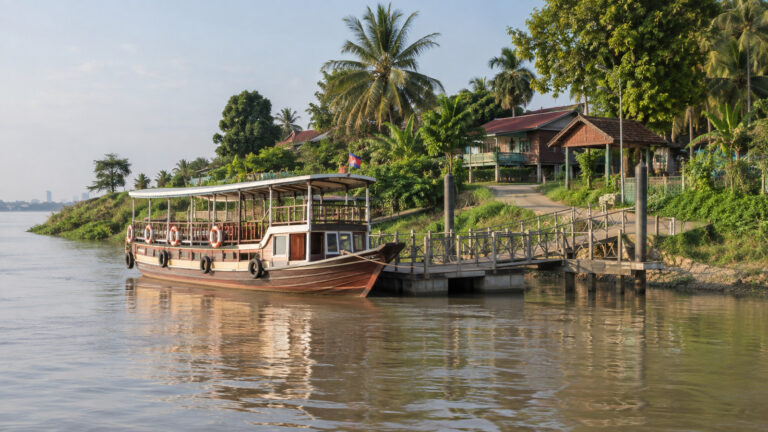
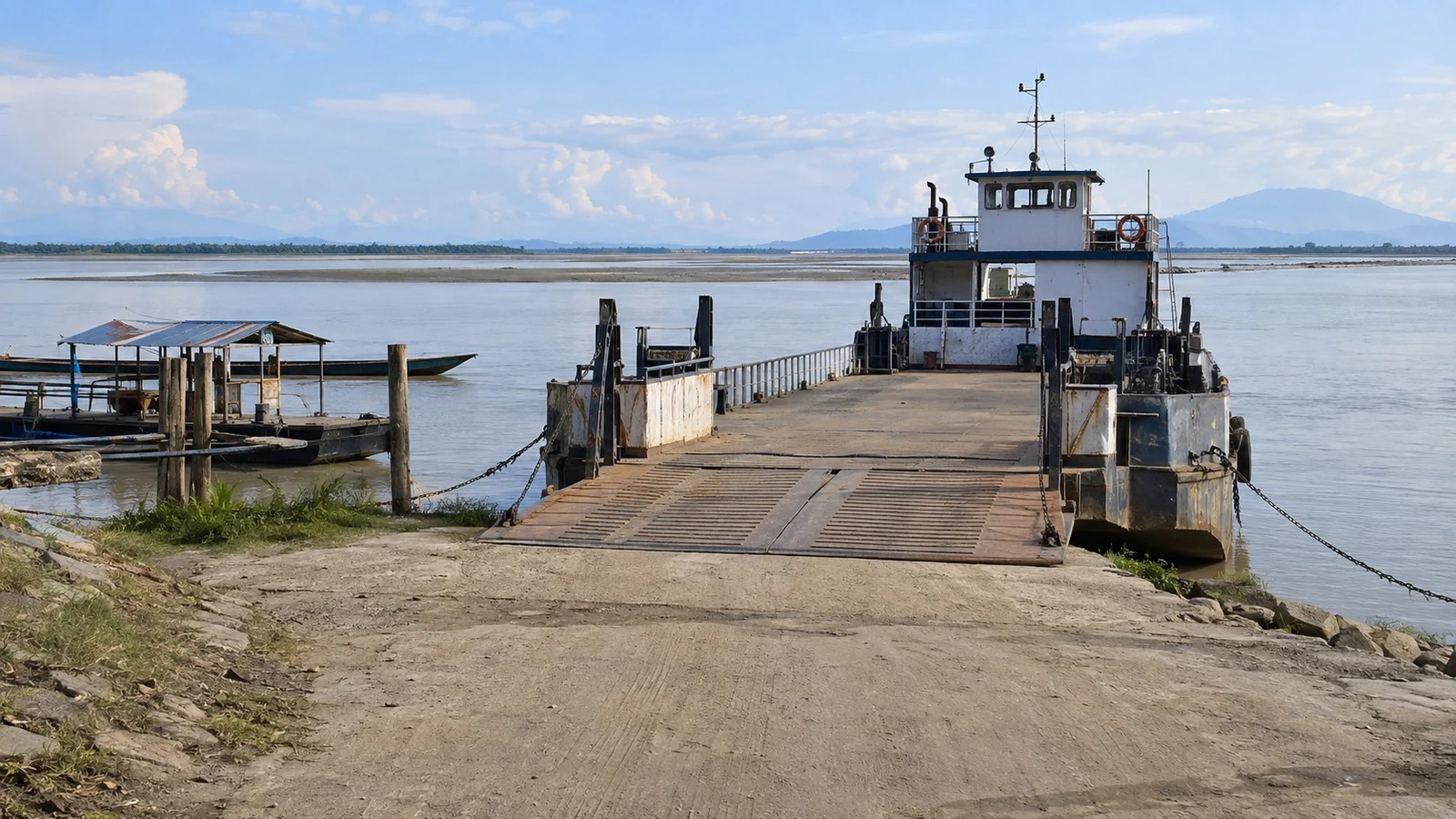
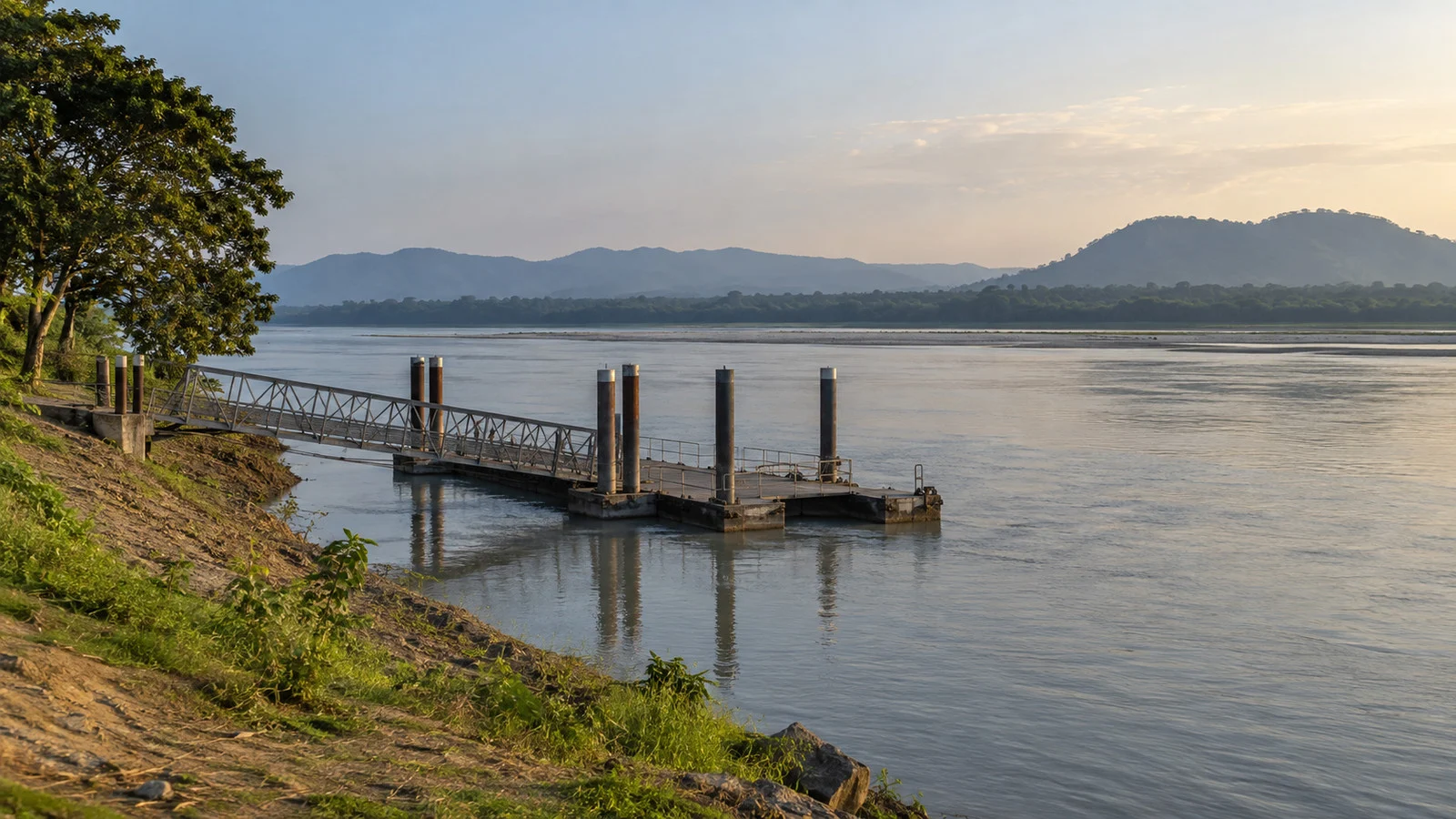
A floating pontoon is still not a European stone quay. Guests may cross a gangway, board a smaller launch, walk on uneven sand, climb a natural bank, or step onto temporary matting before reaching a vehicle.
Ships also use sandbanks for safe, planned activities when conditions allow. These can be magical, but they are expedition-style landings, not places to expect taxis, shops, handrails, or a recognizable street address.
Guwahati and Pandu Cruise Port
Pandu is the Brahmaputra’s principal fixed terminal in Guwahati and the clearest embarkation point in this guide. IWAI lists high- and low-level jetties, road and rail connections, cargo infrastructure, and an operational low-level vessel berth.
The official IWAI terminal directory also lists floating facilities at Pandu and a developing tourist jetty. That does not mean every leisure vessel uses the same structure, so the operator’s transfer instructions remain decisive.
Pandu lies west of central Guwahati near the Saraighat bridges, not beside the main hotel and shopping districts. Allow roughly 30-60 minutes to the central city and 30-50 minutes to Lokpriya Gopinath Bordoloi International Airport, editorial estimates that expand with traffic.
Kamakhya Temple is a common organized excursion, but it is a busy active pilgrimage site with security, lines, steps, and religious etiquette. Dress modestly, remove shoes where instructed, and do not promise yourself a quick interior visit on a festival day.
For embarkation, use the cruise-arranged airport or hotel transfer whenever available. A driver who knows “Pandu” may still need the exact gate, jetty, vessel, and phone contact, which is a lot to negotiate while watching the departure clock.
Silghat Cruise Port and Kaziranga
Silghat is an established National Waterway 2 floating-terminal location on the south bank. IWAI describes a steel pontoon used for cargo and local ferry service, while cruise operators use Silghat as an embarkation, disembarkation, or excursion gateway.
Current Assam Bengal Navigation itineraries run between Guwahati and Silghat, explicitly connecting the river with Kaziranga. The operator’s Brahmaputra cruise page confirms active four- and seven-night programs, but also makes clear that Silghat is near the park rather than inside it.
A Kaziranga safari requires a road transfer, assigned range, vehicle, and current forest permission. Depending on the landing and park gate, allow roughly 90 minutes to three hours each way or as part of an overnight excursion, an editorial range rather than a scheduled promise.
Assam’s Forest Department calls November through April the best season for Kaziranga, broadly matching the cruise calendar. Park ranges may reopen gradually after monsoon damage, so one gate or safari type can be unavailable even after the general season begins.
UNESCO describes Kaziranga as a major refuge for one-horned rhinoceros, elephants, tigers, wild water buffalo, and birds. Wildlife remains wild, so no responsible guide can guarantee a tiger sighting before lunch.
Majuli and Nimati Ghat
Majuli is a river island district with villages, agricultural land, and satras, the Assamese neo-Vaishnavite monastic institutions central to the island’s culture. It is not one compact attraction arranged around a cruise pier.
A ship may land directly at an operator-selected island bank, use a smaller launch, or coordinate with the public ferry network. Local geography and water level determine which ghat is useful, and vehicles may meet guests on the island.
The Majuli district government says travelers from Jorhat cross from Nimati Ghat to Kamalabari or Afalamukh and recommends advance passenger and vehicle booking through the inland-water-transport system. Its official Majuli visitor page publishes seasonal ferry guidance, but ferry times can change with river and weather conditions.
“Nimati” and “Neamati” are both used in official and tourism materials for the mainland ghat near Jorhat. Keep the operator’s spelling and map pin together rather than assuming two similar names mean two interchangeable terminals.
At satras, dress modestly, remove shoes where requested, speak quietly, and ask before photographing worship, people, masks, or performances. Buying directly from island craftspeople can support local skill without turning someone’s home into an unannounced photo studio.
Roads and paths may be dusty in the dry season, muddy after rain, and uneven year-round. A village walk that sounds gentle can include sand, bamboo steps, narrow boats, low seating, and limited accessible restrooms.
Jorhat and Neamati Cruise Port
Jorhat is the inland city and airport reference, while Neamati is the river terminal. IWAI lists Neamati as a floating steel-pontoon location for cargo and local ferry service, including the Majuli connection.
Some cruise brochures simply say a “river ghat at Jorhat,” which is useful for regional orientation but not for booking a taxi. Confirm whether embarkation is at Neamati, a nearby temporary bank, or another operator-selected point.
The road transfer from Jorhat city or airport to the ghat can take about 45-90 minutes, an editorial estimate that varies with traffic, road condition, and landing position. Build more time during fog, rain, festivals, or ferry congestion.
Neamati can also anchor excursions to tea estates or Sivasagar, the Ahom kingdom’s historic center. These are vehicle excursions, not walks from the pontoon, and a Sivasagar day can involve several hours of road time.
In March 2026, India announced new cruise-terminal development at Neamati, but a foundation ceremony is not a completed passenger terminal. Describe the current operation as a floating or assigned landing until the new facility actually opens.
Dibrugarh and Upper Brahmaputra Landings
Dibrugarh is a real operating cruise zone, yet the itinerary name can cover Dibrugarh, Oakland, Bogibeel, or another upper-river landing. IWAI lists floating facilities at Dibrugarh and Bogibeel, plus local ferry and cargo use.
The same 2026 government presentation identifies Guwahati-to-Dibrugarh overnight cruising and Dibrugarh day cruising as operational. It also lists fixed or enhanced facilities at Bogibeel, but exact leisure-ship assignments remain seasonal.
Dibrugarh Airport and the city are often the practical beginning or end of an upper-river cruise, followed by a road transfer to the ship. Allow roughly 45-120 minutes depending on the actual landing, an editorial estimate with intentionally wide shoulders.
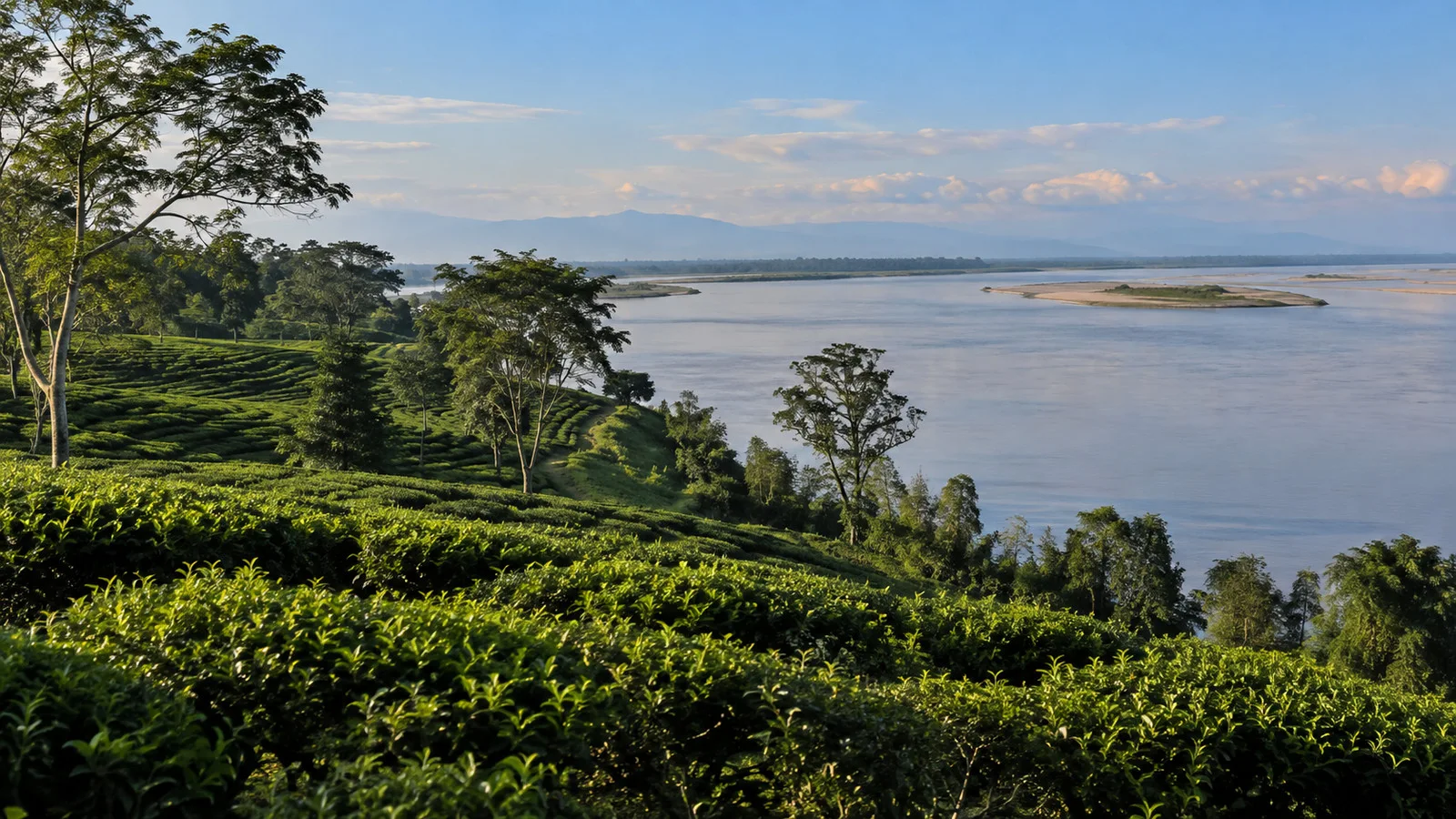
Tea estates are the signature excursion, while some programs add Sivasagar or villages farther west. Estate visits should respect work areas, machinery rules, photography permissions, and the fact that tea production follows an agricultural calendar rather than a cruise brochure.
Accessibility and Mobility
Brahmaputra cruising can be rewarding but physically demanding. Gangways, launches, soft sand, eroded banks, uneven village paths, ferry steps, basic restrooms, and high-clearance safari vehicles can each create a barrier.
Ask the operator for the expected transfer method at every stop, including whether crew can safely handle a wheelchair or scooter. “Assistance available” is not the same as step-free access, and carrying a guest or heavy device may be unsafe.
Pandu offers the most substantial fixed infrastructure, while floating terminals still move vertically with the river. Our river cruise accessibility guide provides questions to ask before paying a nonrefundable deposit.
Weather, Health, and Practical Safety
Dry-season mornings can be cool or foggy, while afternoons become warm and sunny. Pack layers, sun protection, insect repellent, sturdy closed shoes, and a lightweight rain layer even outside the monsoon.
Drink sealed or properly treated water and follow the operator’s food guidance. Consult a travel-health professional well before departure about routine vaccines, mosquito-borne illness prevention, and personal medical needs.
Never swim from a sandbank or village landing unless the operator explicitly declares a supervised activity safe. Currents, soft drop-offs, shifting channels, vessels, and wildlife make the broad river less gentle than it looks.
Mobile coverage and card acceptance can be inconsistent away from cities, so carry small rupee bills without displaying a large cash bundle. Save the ship’s contact, guide number, and landing pin offline.
For wider planning, use our India cruise ports guide and compare this expedition-style river with our Ganges river cruise ports guide.
Visas, Flights, and Embarkation Timing
Many foreign visitors need an Indian visa before travel, and eligibility depends on nationality, passport type, purpose, and arrival airport. Use only the Government of India’s official e-Visa portal, since imitation sites can look impressively bureaucratic while adding fees and confusion.
Guwahati and Dibrugarh have the most useful flight connections for opposite ends of the river, while Jorhat Airport can serve Neamati embarkations. Domestic schedules can change, so arrive at least one night before boarding and avoid a tight same-day international connection.
Send the operator your flight number, passport details, dietary needs, and mobility information by its stated deadline. Ask for the exact hotel meeting point, transfer time, baggage limit, emergency phone number, and plan if fog delays the flight.
River ships may reposition before guests arrive, particularly when depth or bank conditions change. The supplied driver and cruise manager are therefore much more reliable than asking an airport taxi for “the Brahmaputra cruise port.”
Research note
This guide was researched from Inland Waterways Authority of India navigation and terminal material, Assam government tourism and district pages, UNESCO, and current operator itineraries, checked September 10, 2026. It distinguishes cities, fixed terminals, floating pontoons, ferry ghats, and seasonal landings because those terms are not interchangeable.
Transfer times and the missed-call percentage are labeled editorial estimates, and we do not claim a firsthand visit where none occurred. Our sourcing and correction standards appear in the CruisePorts.co Editorial Policy.