Hoorn River Cruise Port: Markermeer Harbor Guide
Hoorn is a river cruise port with one small geographic confession: there is no river at the gangway. Ships approach across the Markermeer, the southern lake in the wider IJsselmeer system, then deliver passengers into a harbor town that gets interesting almost immediately.
This is not an Amsterdam substitute wearing a prettier hat. Hoorn has its own seafaring history, compact lanes, working harbor and enough excellent brickwork to make a camera feel underprepared.
Quick Facts
- Arrival area: Assigned Buitenhaven cruise berths near the historic harbor
- Walk to Roode Steen: An estimated 5 to 15 minutes, depending on the berth and walking pace
- Currency: Euro
- Language: Dutch, with English widely spoken in visitor-facing settings
- Time zone: Central European Time, UTC+1 in winter and UTC+2 during daylight saving time
- Best for: Harbor walks, Dutch maritime history, compact museums, and brick-lined streets
- Planning priority: Confirm the assigned pier, gangway arrangement, and all-aboard time
No port authority or cruise line publishes an audited Hoorn missed-call rate. Wind, visibility, waterway restrictions, harbor traffic, and itinerary changes can still move, shorten, or replace a call.
Quick take
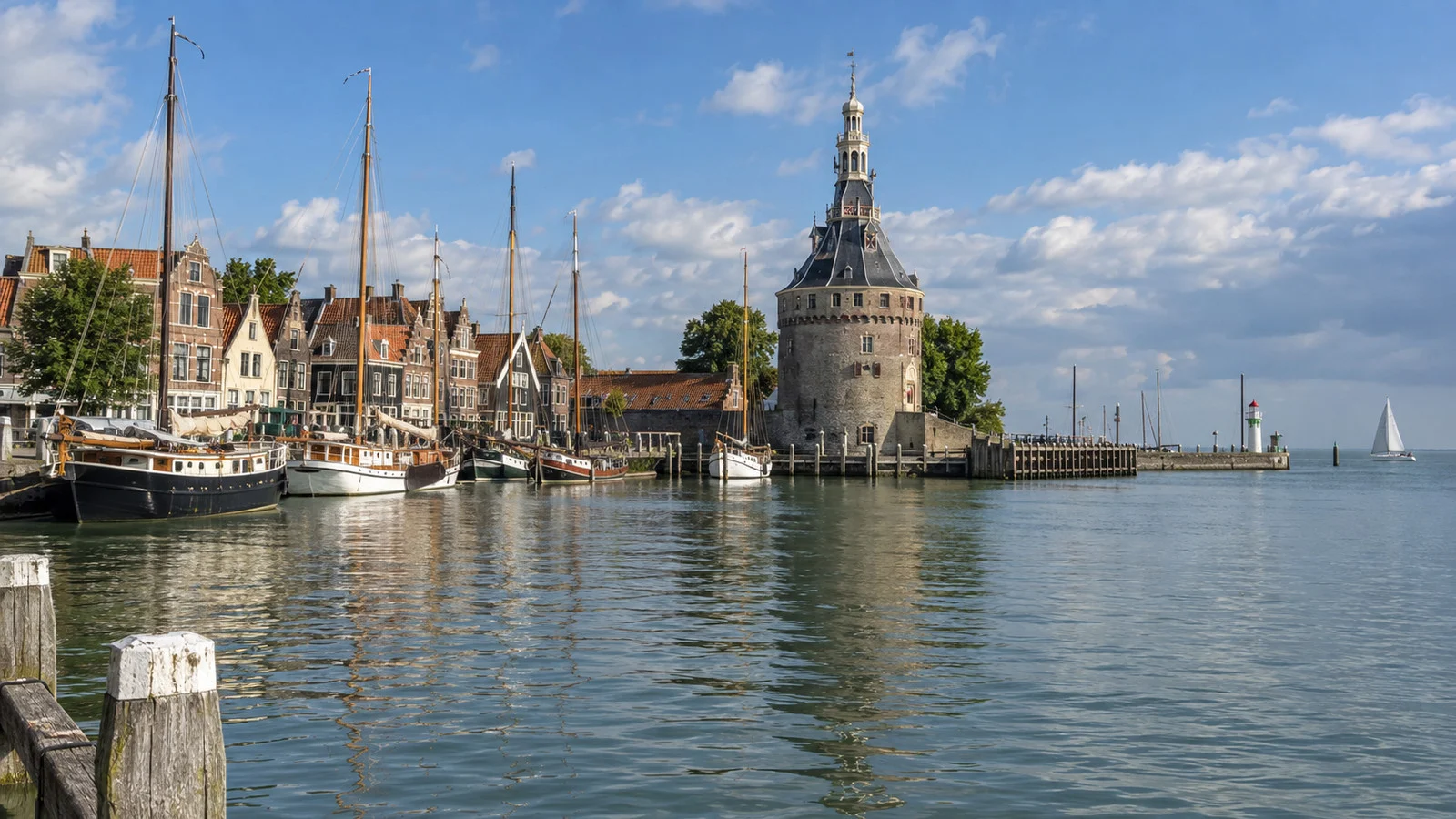
Walk the harbor, Hoofdtoren and Roode Steen before committing to anything with wheels. The core is close enough that even a short call can feel satisfying rather than like a race against an aggressively cheerful tour paddle.
The Museum of the 20th Century is the easiest major indoor attraction from the usual cruise landing area. The heritage steam tram is delightful, but its fixed departures make it a planning project rather than a spontaneous ten-minute detour.
Is Hoorn on the IJsselmeer or Markermeer?
Hoorn stands on the northwest shore of the Markermeer. The Markermeer is separated from the IJsselmeer by the Houtribdijk, although cruise lines and travel material often use “IJsselmeer” for the broader Dutch lake itinerary.
That loose marketing label is understandable, but geography still deserves its coffee. A ship sailing directly into Hoorn’s harbor is on the Markermeer within the larger IJsselmeer lake system.
Hoorn is therefore a lake port included on river cruises through Dutch waterways. Current 2026 programs from Viking, CroisiEurope, A-ROSA and Saga confirm that this is an active passenger call, not a historical itinerary ghost.
Where do river cruise ships dock in Hoorn?
The municipality says charter and cruise ships use the Buitenhaven, or outer harbor, protected behind a dike. Its official harbor page also makes clear that the harbor master assigns available space.
Hoorn’s current rules designate two piers on the east side of Oostereiland for river-cruise vessels. The 2026 municipal harbor regulations allow up to two river ships at each pier, so rafting and a walk through another vessel may be part of the arrival.
Do not treat one map pin as a guaranteed gangway. The assigned side, pier and neighboring ship can change, while a harbor master’s instructions and the day’s traffic take priority over screenshots saved at home.
The Binnenhaven is the picturesque inner harbor beside the old center, but it is not the default promise for a large cabin vessel. If an itinerary says only “Hoorn,” expect the managed cruise area around Buitenhaven and Oostereiland unless the ship announces otherwise.
How far is the historic center?
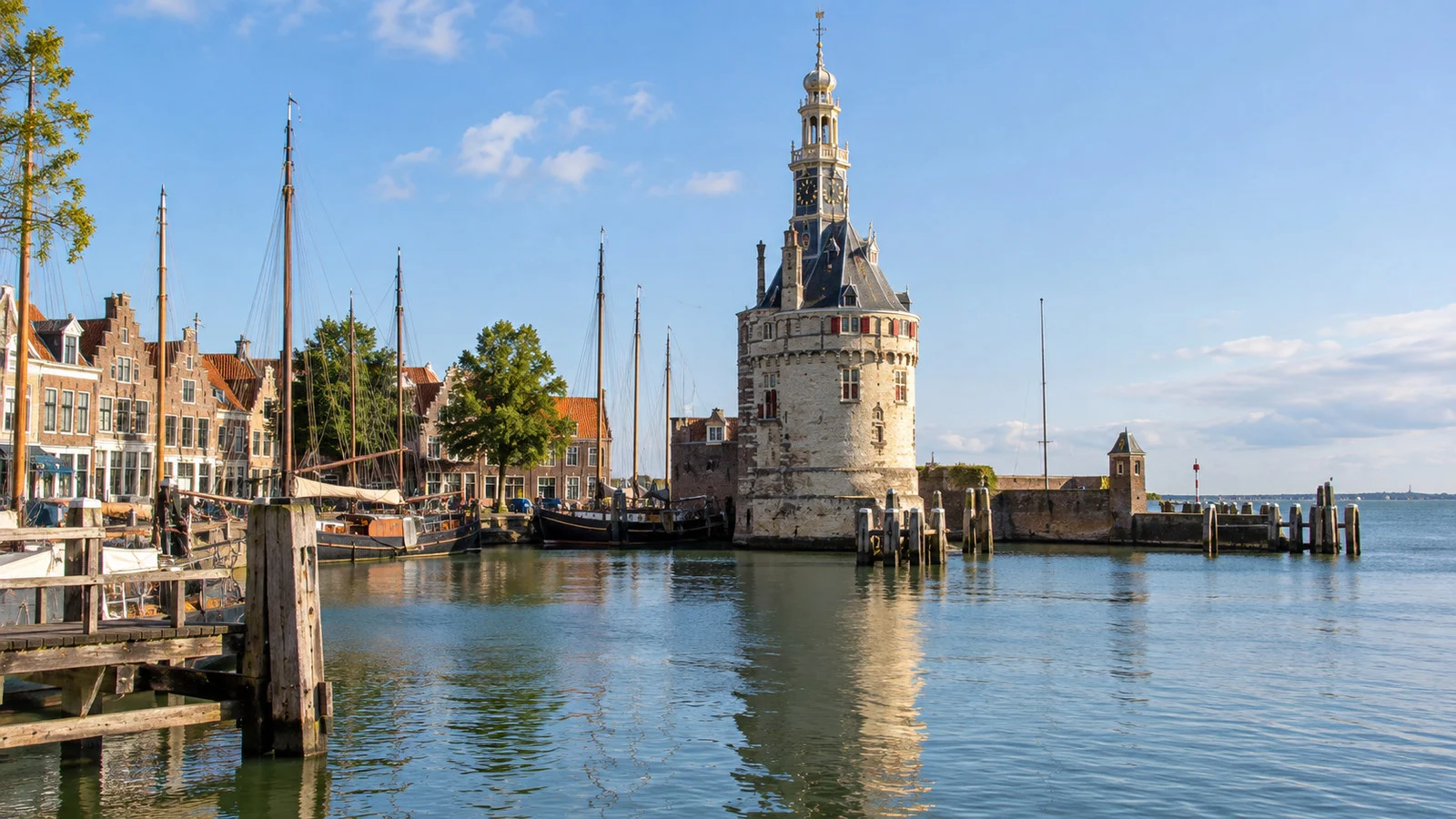
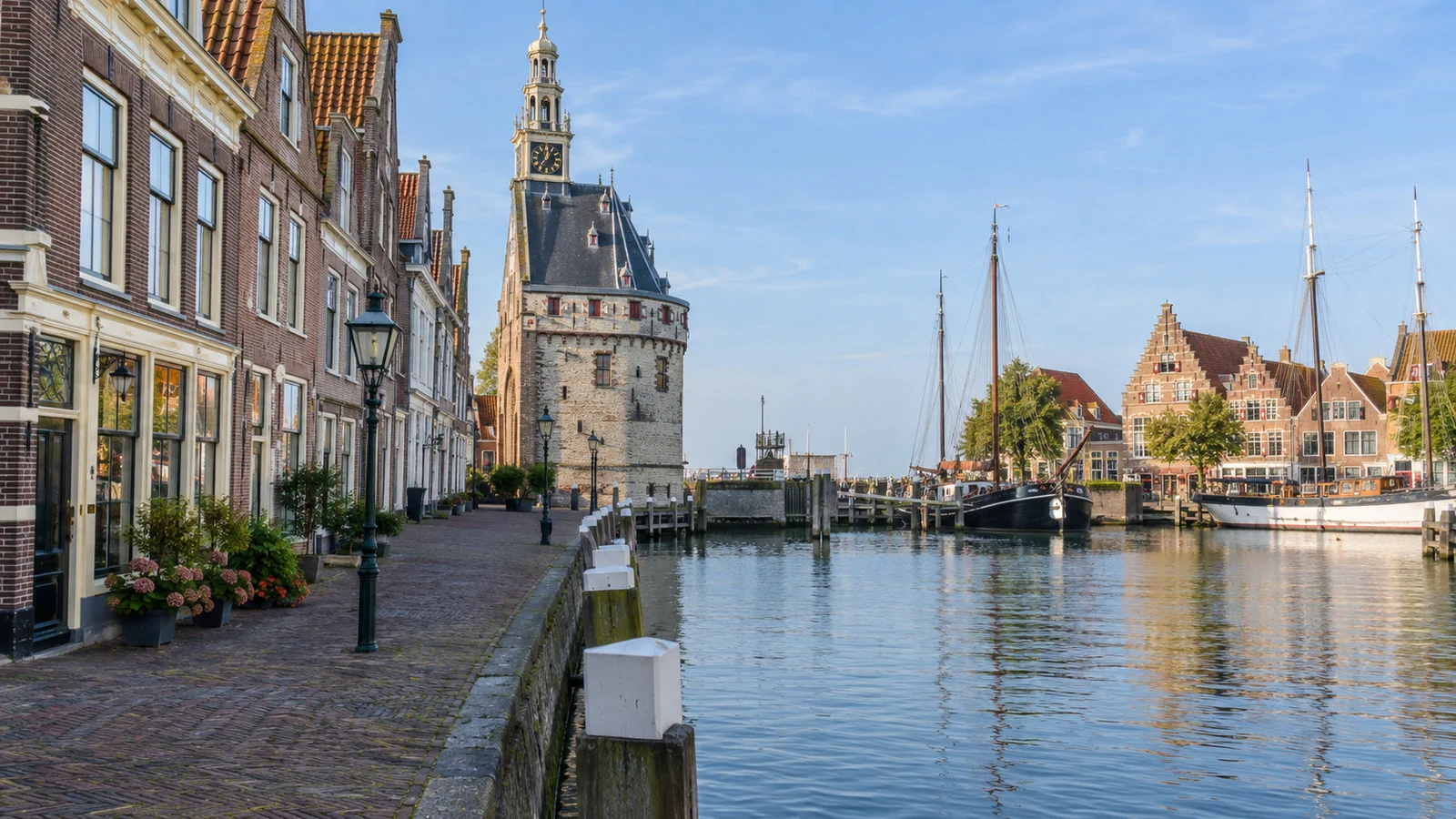
From the usual Oostereiland cruise area, Hoofdtoren and the harbor quays are only a short walk away. Allow an estimated 5 to 15 minutes to Roode Steen, depending on the exact pier, double-docking and your pace on historic paving.
The route is broadly level and intuitive: leave Oostereiland, follow the harbor inward, then continue toward the old-town streets. This is the sort of compact call celebrated in the site’s guide to walkable cruise ports, with one important footnote about gangways and uneven brick.
Hoorn railway station is farther inland beyond the main shopping streets. Allow an estimated 20 to 30 minutes from the usual cruise area, and check the live route because the station is not visible from the ship.
A first-hour harbor walk
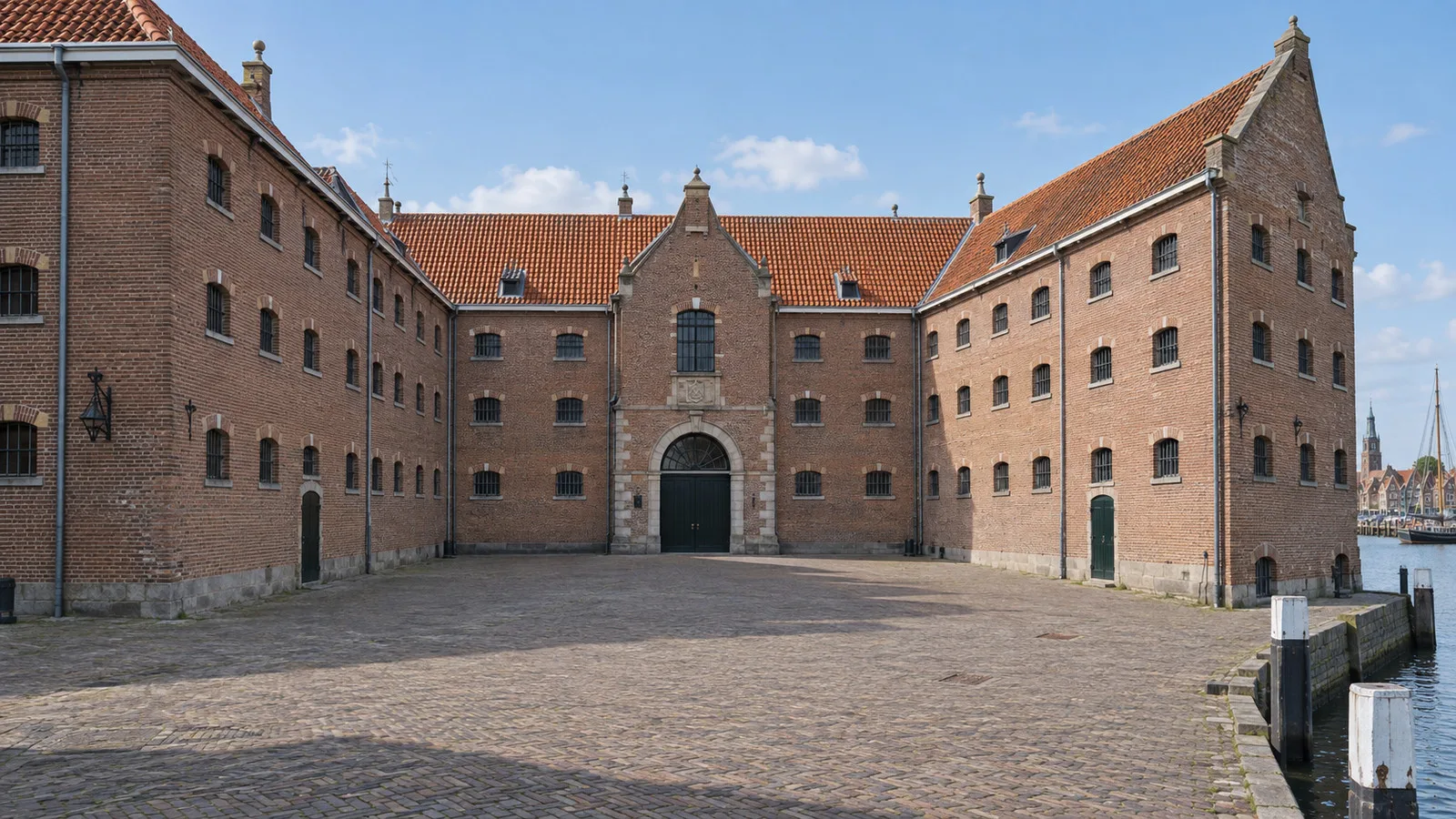
Begin on Oostereiland, once part of Hoorn’s maritime and penal landscape. The former prison complex now houses the Museum of the 20th Century, a hotel and other uses, proving that even stern brick buildings can have an unexpectedly sociable second act.
Cross toward the historic harbor and find the Hoofdtoren, the stout 16th-century defense tower at the harbor entrance. Its waterside position makes it a useful landmark for both photos and getting yourself pointed back toward the ship.
Continue along the quays toward Roode Steen, Hoorn’s historic central square. Monumental facades, the Waag and cafe terraces give the square plenty of visual reward even when you do not enter a building.
Grote Noord is the natural shopping-street extension from the square. A relaxed harbor, Roode Steen and Grote Noord loop takes an estimated 60 to 90 minutes before stops for coffee, cake or a suspiciously photogenic cheese display.
Westfries Museum: closed, but not entirely absent
The Westfries Museum’s grand Roode Steen building is closed for restoration and renovation until mid-2027. Any guide promising a normal 2026 visit to its permanent galleries has missed a rather large locked door.
The museum instead presents “Discover the story of Hoorn” in the Statenpoort on Nieuwstraat. The official museum update describes a multimedia show, podwalks and walking guides that use the city itself as the exhibition space.
This temporary experience is a useful starting point for travelers who want context rather than a long object-by-object museum visit. Confirm same-day hours before leaving the harbor because seasonal schedules, events and the renovation program can change access.
Hoorn’s prosperity is tied to Dutch maritime trade and the Dutch East India Company, but that story also includes colonial exploitation and violence. The museum’s current interpretation is designed to present the period from more than one viewpoint, which is worth seeking out rather than treating the 17th century as an uncomplicated parade of gables.
Museum of the 20th Century
The Museum of the 20th Century sits on Oostereiland, potentially only minutes from the cruise gangway. Its rooms use household objects, interiors, photographs, film and sound to show how Dutch daily life changed across the last century.
Expect rotary telephones, period kitchens, radios, schoolrooms and the occasional object that causes someone to say, “That cannot already be in a museum.” Time is rude like that.
The museum’s official English visitor page lists an elevator and facilities for disabled visitors. Its more detailed accessibility information also notes wide routes, an accessible toilet and one loan wheelchair that should be reserved.
Allow an estimated 60 to 90 minutes for a focused visit. Check current hours and temporary exhibitions on the museum site because its English summary may not reflect every same-day program change.
Can you ride the Hoorn-Medemblik steam tram?
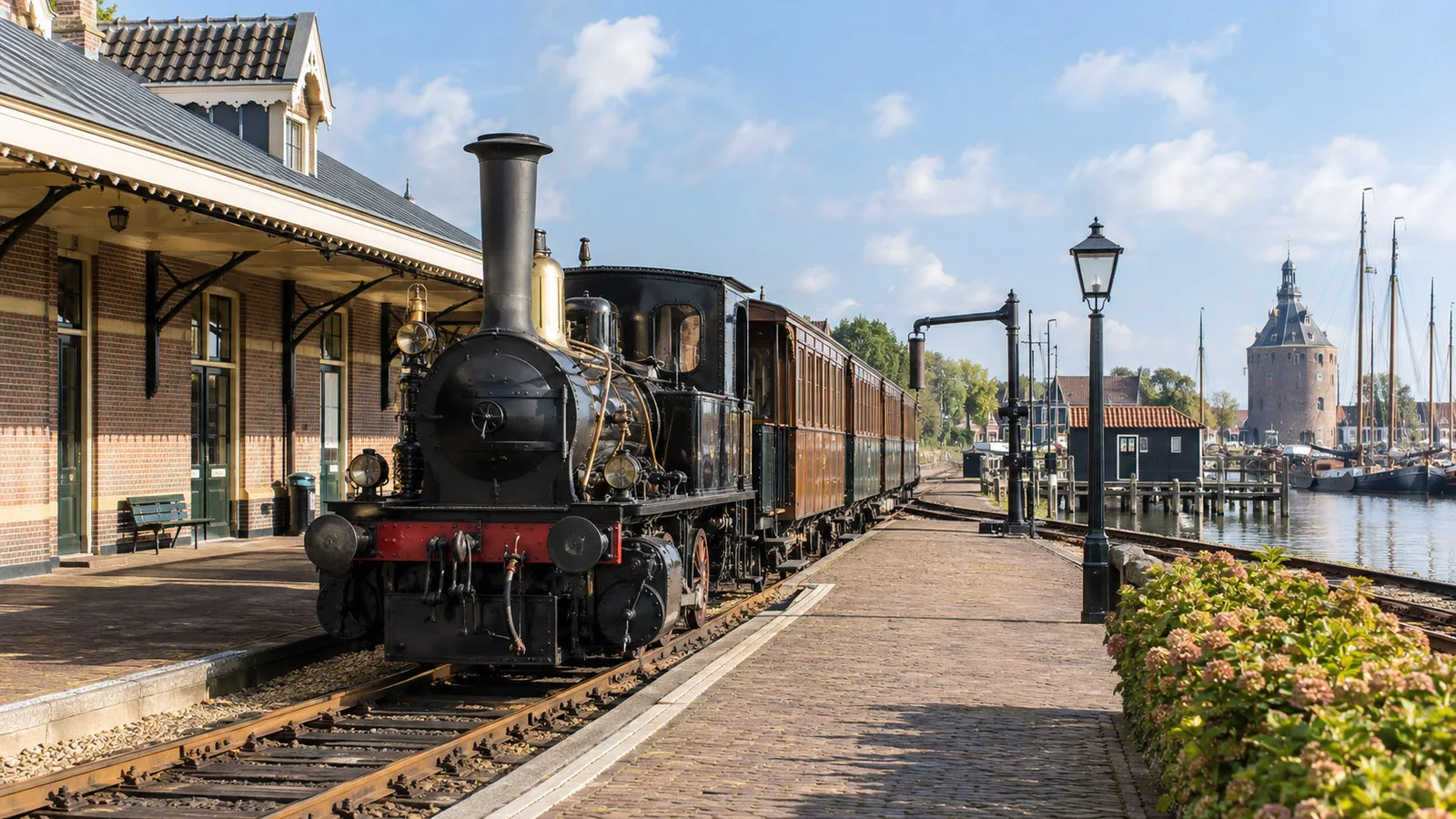
Yes, if the published timetable fits the ship’s call with a generous buffer. The Museum Steam Tram departs from its own Hoorn tram station near the main railway station, not from the cruise pier.
The full heritage journey can combine a steam tram to Medemblik, a museum ship to Enkhuizen and a regular train back to Hoorn. It is a lovely time-travel triangle, but it is far too ambitious for many short port calls.
The official Museum Steam Tram site publishes operating days, tickets and current 2026 schedules. Some days have one principal departure, while special-event and high-season days can use different patterns.
Allow an estimated 20 to 30 minutes to walk from the common cruise landing area to the tram station. Use the ship’s stated return margin after the published arrival because transport schedules and all-aboard time do not negotiate with each other.
A shorter out-and-back tram ride may work on selected operating days, but verify the return before boarding. Never assume there will be another train simply because the locomotive looks friendly.
Steam tram accessibility
The operator says heritage coaches require three or four boarding steps. Wheelchair users must be able to leave the chair for boarding, the chair must fold and electric wheelchairs cannot be accommodated.
The museum ship has a chairlift, but that does not make the entire tram and boat circuit step-free. Confirm the exact vehicle, boarding arrangement and return connection before buying a ticket.
Travelers using the regular Dutch railway can check accessible journeys and request assistance through the official NS planner. This is separate from accessibility aboard the museum tram.
A practical half-day in Hoorn
Start with the harbor and Hoofdtoren, then walk to Roode Steen before shops and cafes become busier. Continue to the Statenpoort multimedia experience if its opening fits, or simply follow the old streets around Grote Noord.
Return toward Oostereiland for the Museum of the 20th Century. This sequence keeps the last major stop near the likely cruise landing, which is a pleasant little gift to your future clock-watching self.
Allow an estimated three to four hours for the loop with one museum. Without an indoor visit, two relaxed hours can cover the harbor, square and principal streets.
Choose the steam tram only when the ship’s published time in port safely contains the complete transport plan. A current operator such as Viking lists Hoorn on active voyages, but each sailing’s arrival and departure times still control what is realistic.
Wind, water and itinerary changes
Hoorn’s sheltered outer harbor does not remove the open-water approach across the Markermeer. Strong wind can build waves, affect maneuvering and push water toward one side of the lake system.
Rijkswaterstaat explains that wind, rain and wider water-management conditions can change levels across the IJsselmeer and Markermeer. Water is actively managed, but it is not held at one perfectly obedient height.
In dry periods, wider Dutch waterways can also face navigation restrictions or itinerary changes even if Hoorn’s own harbor still looks calm. The cruise line may shorten the call, change arrival time, use another port or revise excursions.
Hoorn has substantial managed cruise facilities, but the ship must still reach them through a connected network of lakes, locks, canals and rivers. No audited local missed-call percentage is published.
Accessibility in port
The old center is mostly flat, and the distance from the common cruise area is short. Brick paving, narrow historic sidewalks, bridge transitions and curb edges can still make a five-minute walk feel longer.
Gangway slope changes with vessel position and water level. Double-docking may require crossing another ship, so ask the cruise director about steps, handrails and whether the shore route changes before departure.
The Museum of the 20th Century is the clearest documented indoor option for step-free planning. The Westfries Museum’s temporary Statenpoort experience and individual heritage buildings should be confirmed directly for the date of the call.
For a more useful checklist, read the site’s river cruise accessibility guide. Short distance is helpful, but the full chain from cabin to gangway to historic street matters more than a cheerful map icon.
Use the live harbor and the museums that are actually open
Hoorn cruise vessels can use assigned harbor positions rather than one universal river terminal, and wind or Markermeer conditions can change access. Photograph the gangway and confirm the return route because a similar-looking quay or a second ship can make the harbor more confusing than the map.
The main Westfries Museum building remains closed for renovation until the announced 2027 reopening period, while its smaller Statenpoort experience and walks use current schedules. Check the official site rather than promising yourself the old permanent galleries from an outdated guide.
The Museum of the 20th Century is the dependable indoor alternative, while the Hoorn-Medemblik steam tram is a separate timed journey. Take the tram only when its full schedule fits the ship’s stated return margin, since a heritage railway cannot improvise around your final boarding.
The Netherlands is in the Schengen Area, and entry requirements depend on nationality and travel date. Cobbles, harbor ramps, museum access, and the steam tram each need separate mobility checks, while strong wind and rain make the compact town route the safest recommendation.
Quick answers
Is Hoorn an active river cruise port in 2026?
Yes. Current 2026 itineraries from several major operators include Hoorn on Dutch waterways and lake cruises.
Where do ships dock?
River-cruise ships use managed Buitenhaven berths, with current municipal rules designating two piers on Oostereiland’s east side. The harbor master assigns the actual position.
Can two ships use the same pier?
Yes. Current harbor rules permit up to two river-cruise vessels at each designated Oostereiland pier, so passengers may cross another ship.
Can I walk from the ship into Hoorn?
Usually, yes. Roode Steen is an estimated 5 to 15 minutes from the normal cruise area, depending on the assigned gangway.
Is the Westfries Museum open in 2026?
Its main Roode Steen building is closed until mid-2027. A smaller multimedia experience and city walks operate from the Statenpoort, subject to current hours.
Is the steam tram close to the port?
It is near Hoorn railway station, an estimated 20 to 30 minutes on foot from the common cruise berths. The timetable must fit the call.
Is Hoorn wheelchair accessible?
Parts are manageable and mostly level, but gangways, rafting, brick surfaces and heritage thresholds vary. The Museum of the 20th Century publishes useful accessibility facilities.
The last word
Hoorn works because the port day begins before you have time to wonder whether you need a shuttle. Harbor towers, old warehouses and Roode Steen arrive in a compact sequence, while Oostereiland keeps a genuinely fun museum close to the gangway.
Check the assigned pier, respect the lake weather and give the steam tram the timetable attention it deserves. For comparison with a classic riverbank call, the Cologne river cruise port guide shows how different the arrival geography can be.
How this guide was researched: No firsthand visit is claimed. Current berth rules, harbor access, museum closures, steam-tram planning, and itinerary details were checked against the Municipality of Hoorn, the official 2026 harbor regulations, the Westfries Museum, Museumstoomtram Hoorn-Medemblik, and current cruise-operator information.
Operational and time-sensitive details were reviewed September 12, 2026; confirm the live berth, daily program, accessibility, and cancellation terms before travel.
See our Editorial Policy.