Ghent River Cruise Port: Grootdok Berth and Historic Center Guide
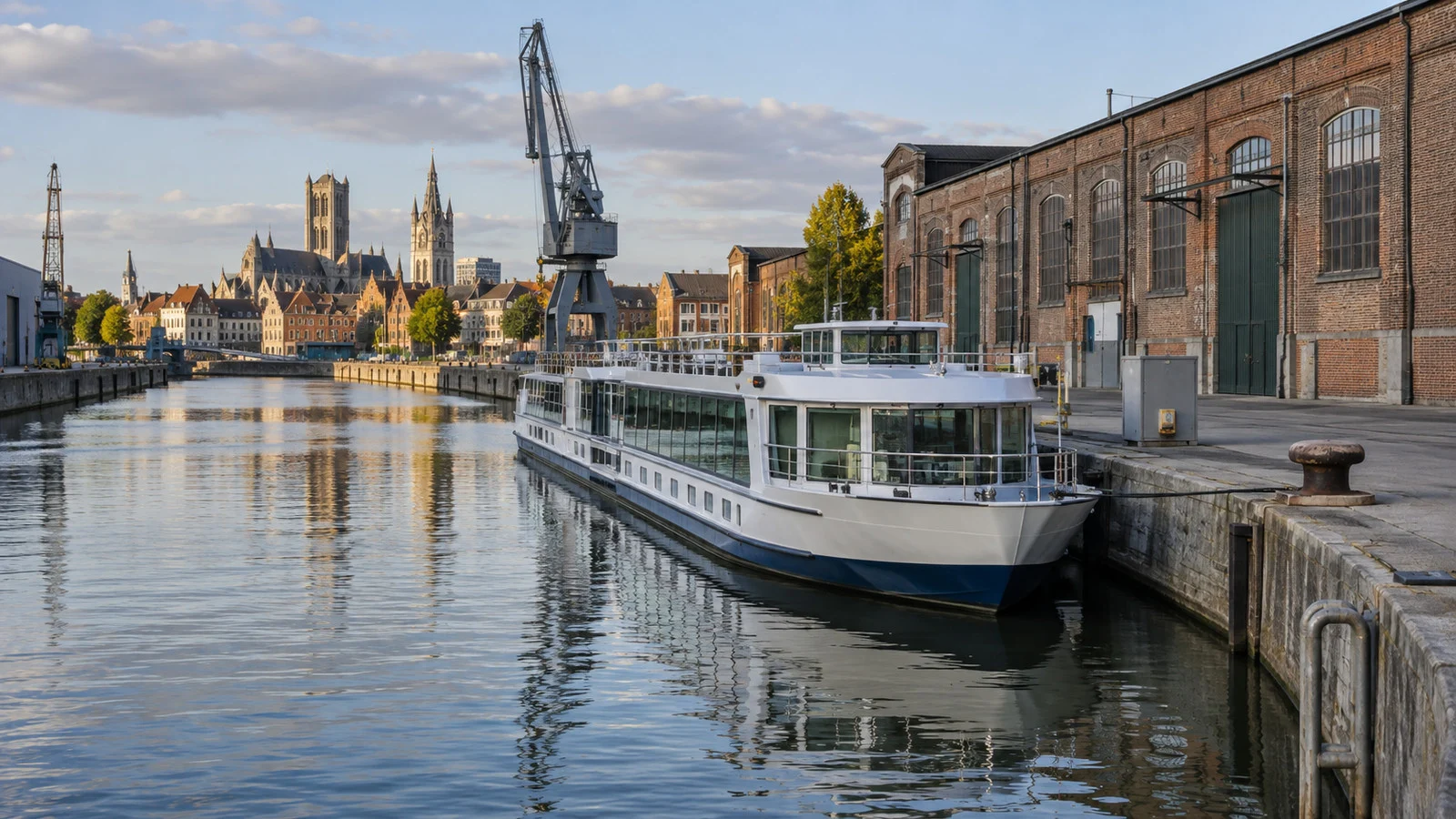
Ghent is one of those port days that becomes easier once you stop picturing the ship beside the medieval center. River cruise vessels now use a working port berth at Grootdok, then passengers continue into town for the Ghent Altarpiece, castle, towers, and waterfront.
I would treat the transfer as part of the itinerary, reserve the one sight that matters most, and leave room to wander. Ghent feels best when you can notice the city around its monuments instead of racing between them.
Ghent River Cruise Port at a Glance
Quick Facts
- Current berth: The shore power pier at the head of Grootdok
- Into the center: Use the transfer described in your ship’s daily program or arrange a confirmed ride
- Best first booking: A timed ticket for the Ghent Altarpiece
- Historic center: Compact, scenic, and crossed by cobbles, bridges, tram tracks, and busy shared streets
- Currency: Euro
- Emergency number: 112
- Return priority: Confirm the coach stop and final departure before sightseeing
Where River Cruise Ships Dock
North Sea Port opened the Grootdok river cruise pier on March 20, 2025. The port says river cruise ships bound for Ghent are required to dock there and connect to shore power.
The pier can handle as many as four vessels, with two on each side. When several ships are present, your position may affect the route from the vessel to the coach, so ask about steps, gangways, and any need to cross another ship.
Portus Ganda is an attractive city marina, but it is not the berth to assume for a scheduled river cruise. Old reviews and map results may still point toward earlier locations, which is why the final daily program matters.
Getting from Grootdok to Central Ghent
Start with the transportation your cruise line has actually arranged. Confirm the coach departure, city dropoff, last return, mobility support, and whether the vehicle can carry a wheelchair or scooter.
If you need a taxi, ask the ship to arrange it rather than expecting a line of cars at the pier. Save the berth name, a map pin, and the ship’s contact number offline so a driver does not take you to a better known but outdated cruise location.
Once you are in the historic center, the headline sights fit into a sensible walking route. Trams and buses are useful for selected trips, and Visit Gent’s current transport guide explains advance ticketing and contactless payment.
Start with the Ghent Altarpiece
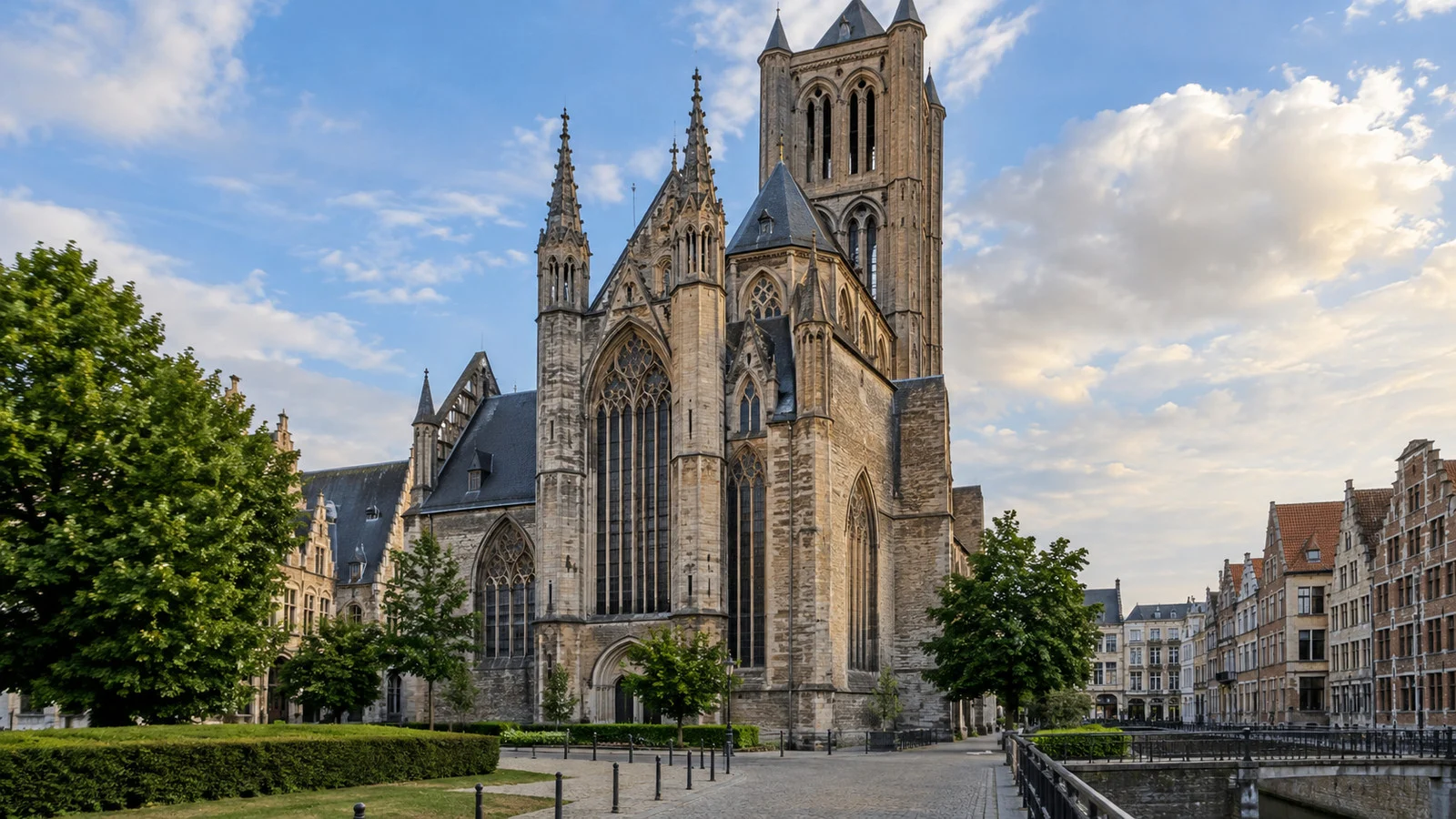
The Adoration of the Mystic Lamb, usually called the Ghent Altarpiece, is the city’s essential advance booking. General entry to Saint Bavo’s Cathedral is free, while the visitor center and Altarpiece require a ticket.
Visit Gent recommends booking online when you want a particular time. The official page also notes that the upper register of the inner panels is being restored at the Museum of Fine Arts, where the conservation workshop can be viewed on designated weekdays.
The cathedral, visitor center, and Altarpiece are listed as fully wheelchair accessible. That makes this the easiest major interior to prioritize when steps or uneven surfaces limit your options elsewhere.
Walk the Three Tower Route
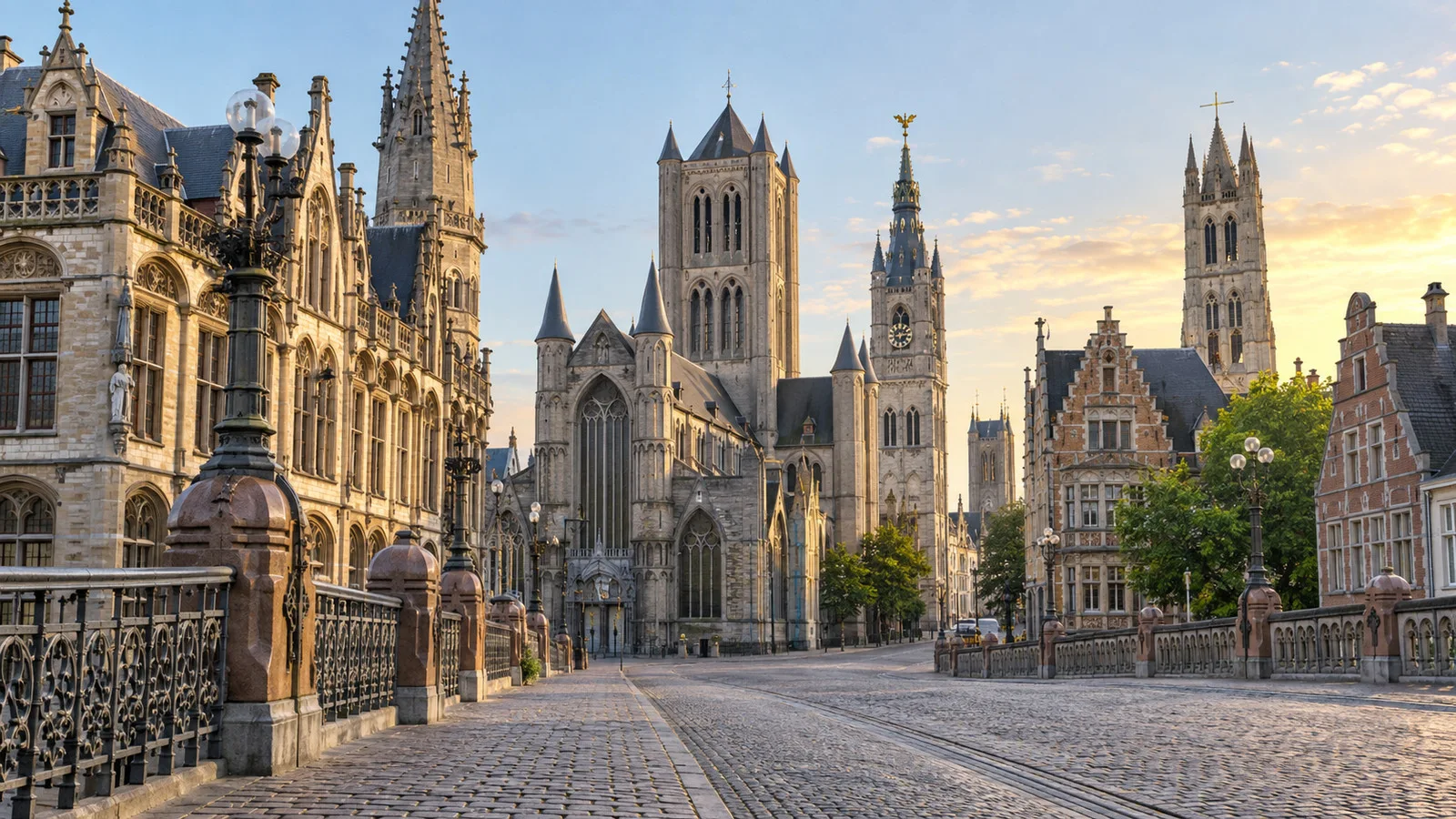
From Saint Bavo’s, continue past the Belfry and Saint Nicholas’ Church toward Saint Michael’s Bridge. This short route gives you the classic three tower skyline and a natural entrance to the Graslei and Korenlei waterfront.
The Belfry is part of the UNESCO listed Belfries of Belgium and France. Street level views are already rewarding, while a tower visit should be added only after you confirm current hours, ticketing, elevator operation, and the time left before your return.
Choose Gravensteen or More Time Outside
Gravensteen, the Castle of the Counts, is a dramatic medieval fortress close to the waterfront route. The official attraction page provides current ticket and opening information, so check it before treating the castle as a spontaneous final stop.
The historic route contains steps and uneven areas, and the full experience is not a simple accessible circuit. If mobility is a concern, confirm the exact route directly or enjoy the exterior and spend the saved time along the water.
Graslei and Korenlei are not just filler between ticketed attractions. The guildhall facades, bridges, cafes, and river traffic give Ghent much of its character, and I would protect at least a little unstructured time here.
Canal Cruises
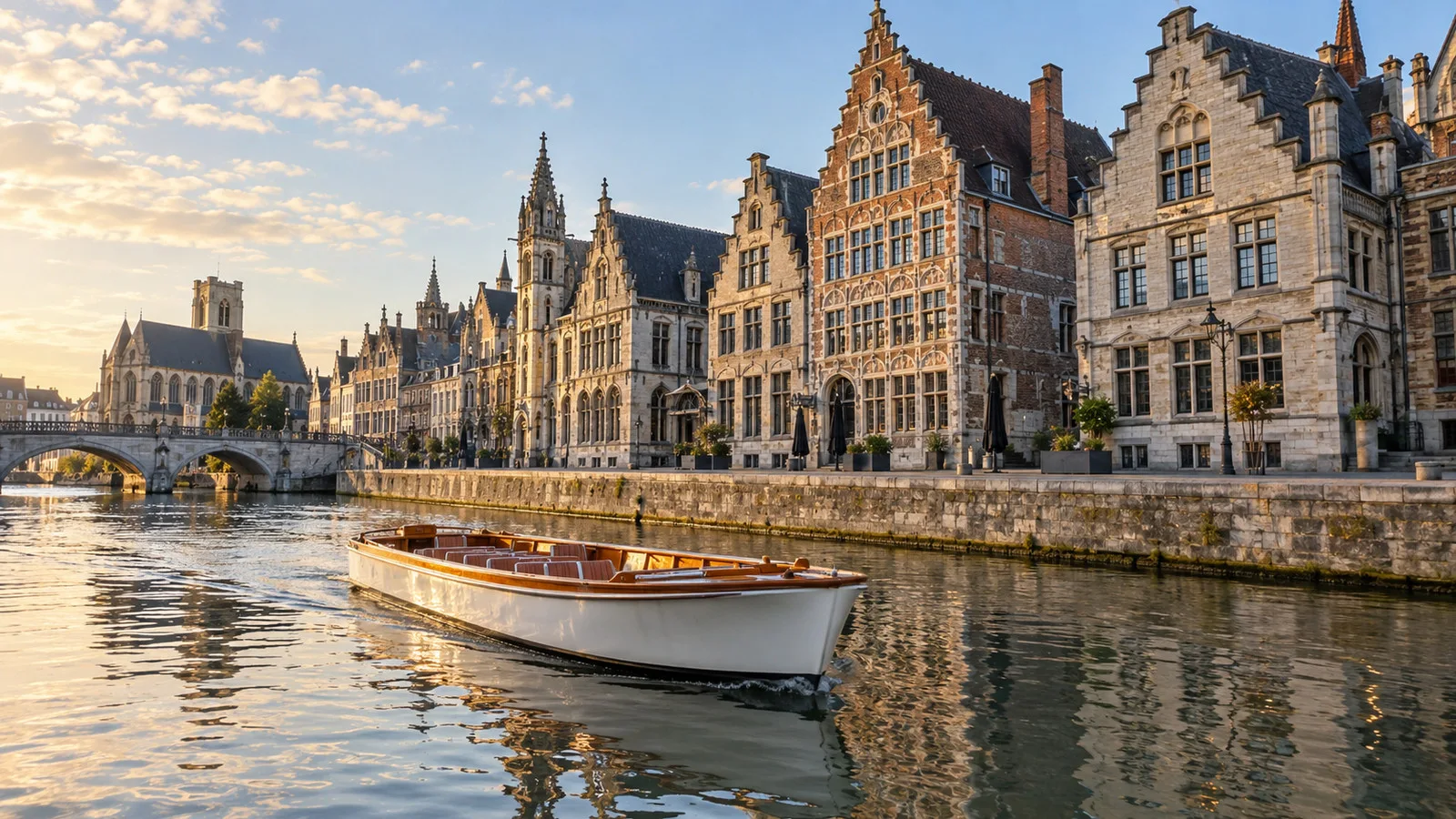
A canal cruise can connect the city’s architecture into one clear story and give tired feet a break. Before paying, verify the route, trip length, boarding steps, wheelchair policy, language, and whether the return time still works with your coach.
Do not add a boat ride simply because there is an open seat. On a short call, the Altarpiece and an unhurried waterfront walk may be more satisfying than stacking another timed activity into the day.
A Realistic Half Day
Use the ship’s transfer into the center and begin with your Altarpiece ticket. Walk the three tower route to Saint Michael’s Bridge, follow the waterfront toward Gravensteen, and see the castle from outside unless your schedule comfortably supports an interior visit.
Finish with a local lunch or a canal cruise, not both by default. Begin the trip back with enough time for a missed tram, a slow taxi, an event barrier, or confusion at the pickup point.
A Comfortable Full Day
With more usable time, add either Gravensteen or the Belfry after the cathedral. Lunch near the central route, then choose a canal cruise, a museum, or relaxed neighborhood wandering according to your interests.
A full day still does not justify ignoring the transfer schedule. Finish your final timed attraction before the last sightseeing window so the journey to Grootdok is never dependent on everything going perfectly.
What to Eat in Ghent
Waterzooi is the signature local dish, commonly prepared with chicken or fish in a creamy broth. Ghent is also known for cuberdons, the purple cone shaped candy, and the assertive mustard from Tierenteyn Verlent.
Choose a restaurant close to your sightseeing route instead of crossing the center for a famous address. If your call coincides with a festival, reserve lunch or keep the plan flexible because crowds and event controls can change normal movement.
Accessibility and Walking Conditions
Ghent’s center is compact, but cobbles, bridge approaches, tram tracks, and old thresholds can make a short distance tiring. A wheelchair user may find the accessible cathedral much simpler than the castle or a boat with stepped boarding.
Ask exactly where the transfer vehicle sets down and collects passengers. The distance between a landmark and the coach stop can matter more than the distance between the landmarks themselves.
For any canal cruise, confirm the boarding arrangement for the specific boat rather than accepting a general accessibility label. For Grootdok, ask the cruise line about gangway slope, rafting, steps, handrails, and assistance on your sailing.
Weather, Money, and Everyday Details
Ghent can be mild, damp, breezy, and changeable during the same port call. Bring a light waterproof layer and shoes with grip, then check the short range forecast before leaving the ship.
Belgium uses the euro, and cards or contactless payment are widely useful. Keep a small cash backup for an occasional purchase or payment system that does not accept your card.
Download the berth pin and return instructions in case mobile service becomes unreliable. Keep valuables secure in crowded squares and on transit, but there is no reason to approach Ghent as unusually dangerous.
Getting Back to the Ship
Photograph the coach schedule and save the exact return stop before you begin sightseeing. Do not substitute a familiar downtown landmark for the pickup point printed in the ship’s instructions.
Use the all aboard time given for your sailing, since there is no universal cutoff that applies to every operator. Add more buffer when roadwork, an event, limited mobility, or an independently arranged ride increases uncertainty.
If spare time remains, spend it along Graslei rather than starting one last attraction. Ghent is a much better memory when the day ends beside the river instead of in a panicked taxi.
Ghent or Bruges
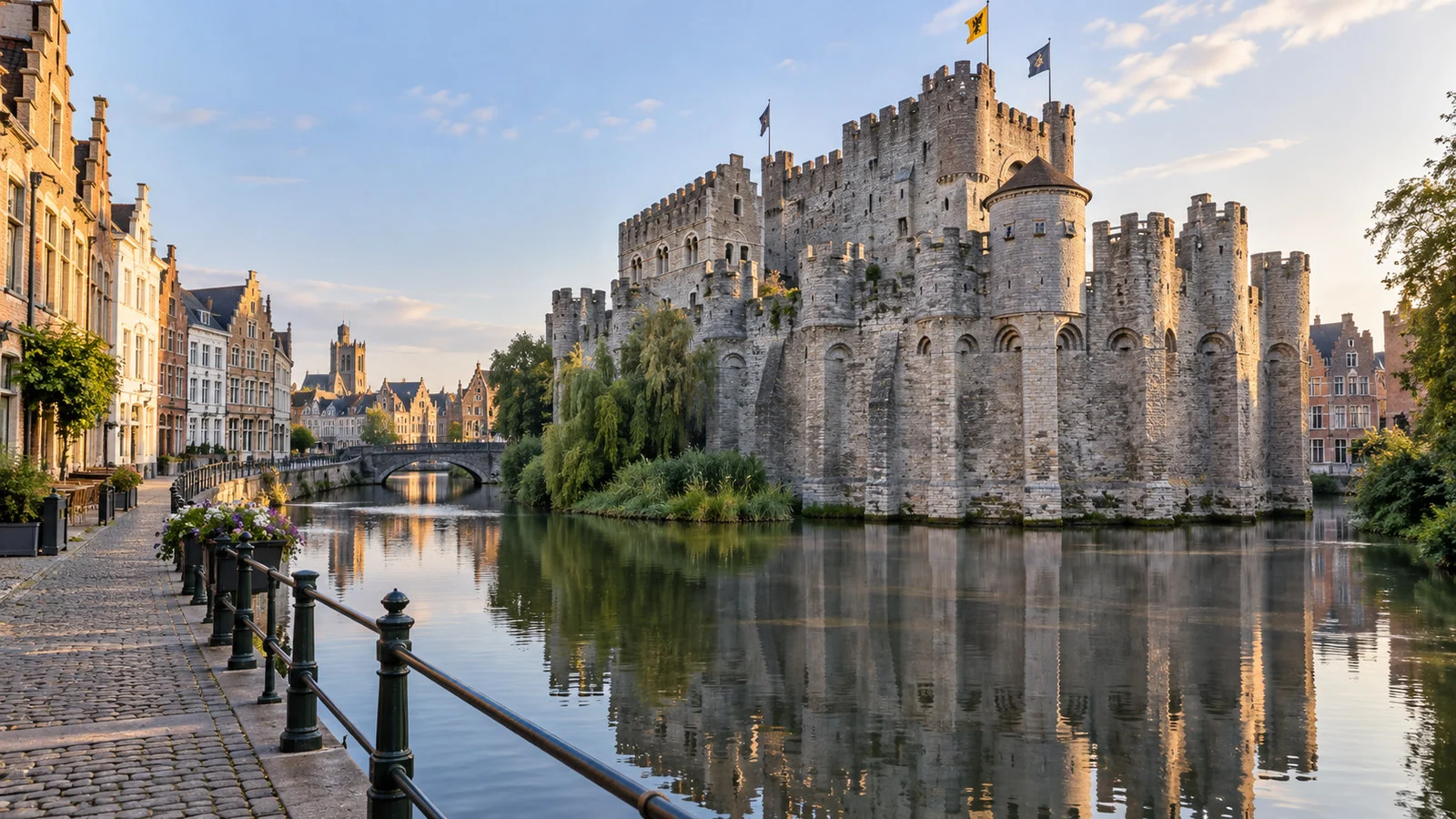
Ghent does not need to defeat Bruges to justify a visit. Choose Ghent for the Altarpiece, Gravensteen, and a lively historic center that still feels woven into a working city.
Choose Bruges when its smaller postcard core and canal landscape are the main reasons you came to Belgium. If the itinerary includes both, keep both because the experiences are complementary rather than interchangeable.
An ocean call for Bruges usually begins at Zeebrugge, which creates a different transfer problem from a Ghent river call. Our independent Bruges guide covers that route in detail.
How Ghent Fits a Benelux Cruise
Ghent may appear with Antwerp, Kinderdijk, Dutch cities, and seasonal garden calls. The exact combination varies by operator and sailing, so compare actual hours ashore and included transfers instead of relying on a standard route.
The Belgium cruise ports guide helps separate river calls from North Sea gateways. Spring travelers can also use the Benelux tulip season guide to understand how city days fit around floral stops.
My Take
I would reserve the Altarpiece, confirm the transfer in both directions, and choose only one additional major interior. That leaves enough time for the three tower route and the waterfront, which is where Ghent starts to feel like more than a collection of famous sights.
The Grootdok berth adds logistics, but it does not diminish the city once you arrive. Plan the edges of the day carefully, then let the middle breathe.
Research note: Port details were checked against North Sea Port’s current Grootdok notice, while attraction, accessibility, and transit information was checked against official Visit Gent pages. Berths, transfers, opening conditions, restoration work, and access arrangements can change, so confirm the details that affect your sailing before leaving the ship.