St. Paul River Cruise Port: Lambert’s Landing, Downtown and Embarkation Guide
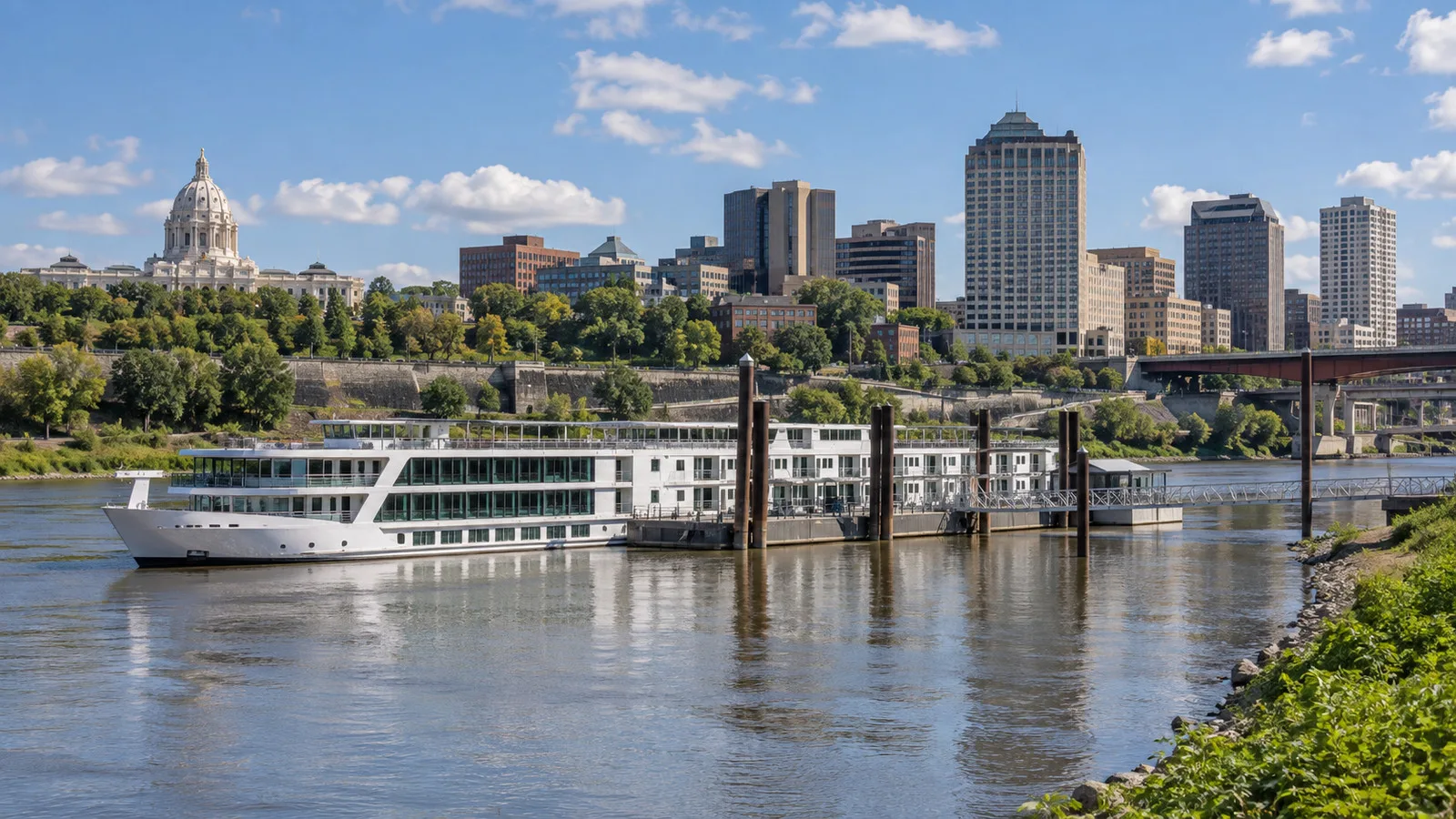
St. Paul is where the Mississippi becomes an urban grand finale. Limestone bluffs frame the river, downtown rises just above the bank, and your ship reaches a point that generations of steamboat travelers treated as the practical head of navigation.
The name most likely to confuse cruise guests is Upper Landing. It describes a riverfront neighborhood and park, but the documented large passenger landing is farther east at historic Lambert’s Landing in Lower Landing Park.
My quick take
St. Paul is an active 2026 Upper Mississippi embarkation, disembarkation, and port city. Viking and American Cruise Lines both sell current itineraries using St. Paul, while city material documents Viking ship calls at Lambert’s Landing.
The downtown riverfront is close enough to feel convenient and steep enough to punish casual assumptions. Lowertown is the easiest independent district from Lambert’s Landing, while the Science Museum, Minnesota History Center, Summit Avenue, and Cathedral usually work better by shuttle, taxi, or organized tour.
Arrive a day early if your cruise begins here. A hotel-based check-in and luggage transfer are much more likely than a carefree stroll straight from the airport to the gangway.
Quick facts
- Into Town: Lambert’s Landing sits east of downtown; Upper Landing Park is farther west, but city rules prohibit public docking there.
- Currency and Language: US dollar and English. Cards are widely accepted, but small cash remains useful for tips and small purchases.
- Time Zone: Central Time, UTC-6 standard and UTC-5 daylight time, observed from March to November.
- Operational caution: High or low water, flooding, lock delays, weather, or berth constraints can move, shorten, or replace the call.
No city, river authority, National Weather Service office, or cruise line publishes an audited St. Paul missed-call rate. Because St. Paul is often an endpoint, a substitute berth, hotel night, or motorcoach transfer may preserve the journey even when the ship cannot use its planned dock.
Is St. Paul an active river cruise port in 2026?
Yes. American Cruise Lines’ current Upper Mississippi itinerary offers 2026 voyages between St. Paul and the St. Louis or Alton area, and explicitly warns that fluctuating river conditions can affect the route.
Viking’s 2026 America’s Great River and Mississippi River Odyssey programs also begin or end in St. Paul. Its current city extension includes a St. Paul hotel stay, touring, Fort Snelling, and a later transfer to the ship.
City event material lists Viking Cruise Ship Docking at Lambert’s Landing on dates in August 2026. Visit Saint Paul likewise directs ship-watchers to Lower Landing Park and areas upstream or downstream from the dock.
The Mississippi River cruise ports guide places St. Paul at the northern end of major overnight itineraries. Red Wing is commonly the next or previous call, but schedules vary.
Where do river cruise ships dock in St. Paul?
The strongest current evidence points to Lambert’s Landing in Lower Landing Park, 200 Warner Road. The City of Saint Paul says the historic dock is still used by tows and passenger steamboats.
Lambert’s Landing sits along the north bank just east of central downtown, where the river turns beneath the bluff. A large ship may occupy an assigned secured area, and streets or trail sections can be restricted while it is alongside.
No public source guarantees Lambert’s Landing for every operator, ship, or date. River stage, vessel size, dredging, dock work, competing traffic, and local instructions can force another berth or transfer plan.
Why Upper Landing is not your berth answer
Upper Landing Park is a real and attractive riverside park west of downtown near the Science Museum of Minnesota. It is a useful map reference and a fine walking destination, but the city’s park rules say boaters may not dock at Upper Landing Park.
That distinction matters because some travel descriptions use “Upper Landing” loosely for the broader riverfront. An address near Upper Landing does not prove your cruise ship will moor there.
Another public dock exists at Harriet Island across the river, but city rules prohibit overnight docking there. A cruise operator working under specific arrangements may use facilities differently from a recreational boater, yet guests should never infer a berth from the presence of a dock.
The final cruise documents and same-day transfer instructions are the authority. If they name a hotel rather than a pier, go to the hotel.
Can you walk into downtown?
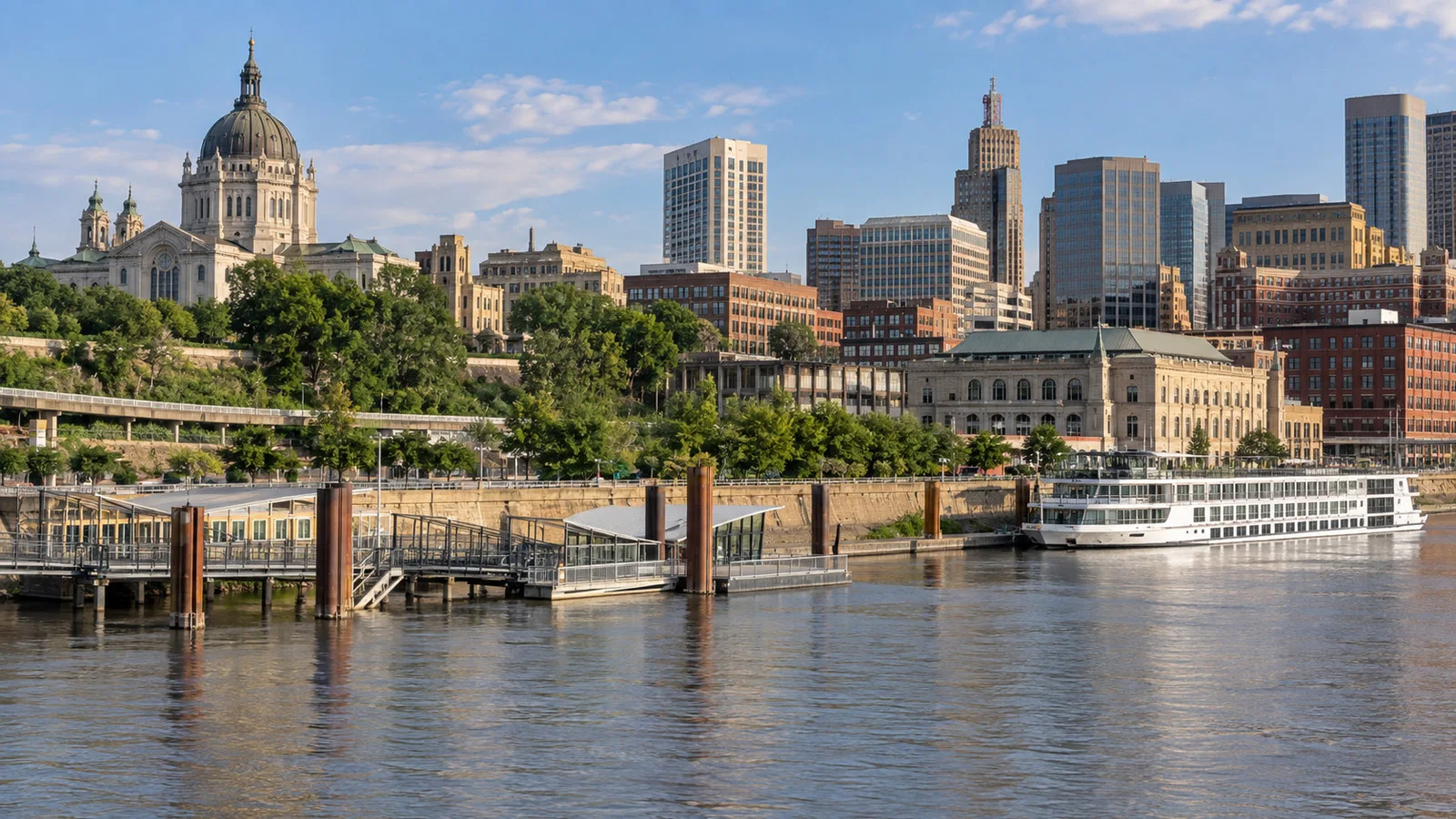
From Lambert’s Landing, Lowertown is the closest practical urban district. Allow an estimated 10 to 20 minutes to reach streets around Union Depot, depending on the exact gangway, security route, construction, and personal pace.
The first stretch can involve trail, road, rail, and bluff-edge infrastructure rather than a polished terminal concourse. Use the route designated by the crew instead of following a phone across a restricted work area.
Central downtown, Rice Park, and the Saint Paul Hotel area are an estimated 20 to 35 minutes on foot. Those are editorial estimates, and elevation matters more than the mileage suggests.
The Science Museum near Upper Landing is roughly 1.5 to 2 miles west of Lambert’s Landing by the riverfront or downtown street network. That is a reasonable bike or taxi trip, but a long walk if you also plan several hours inside.
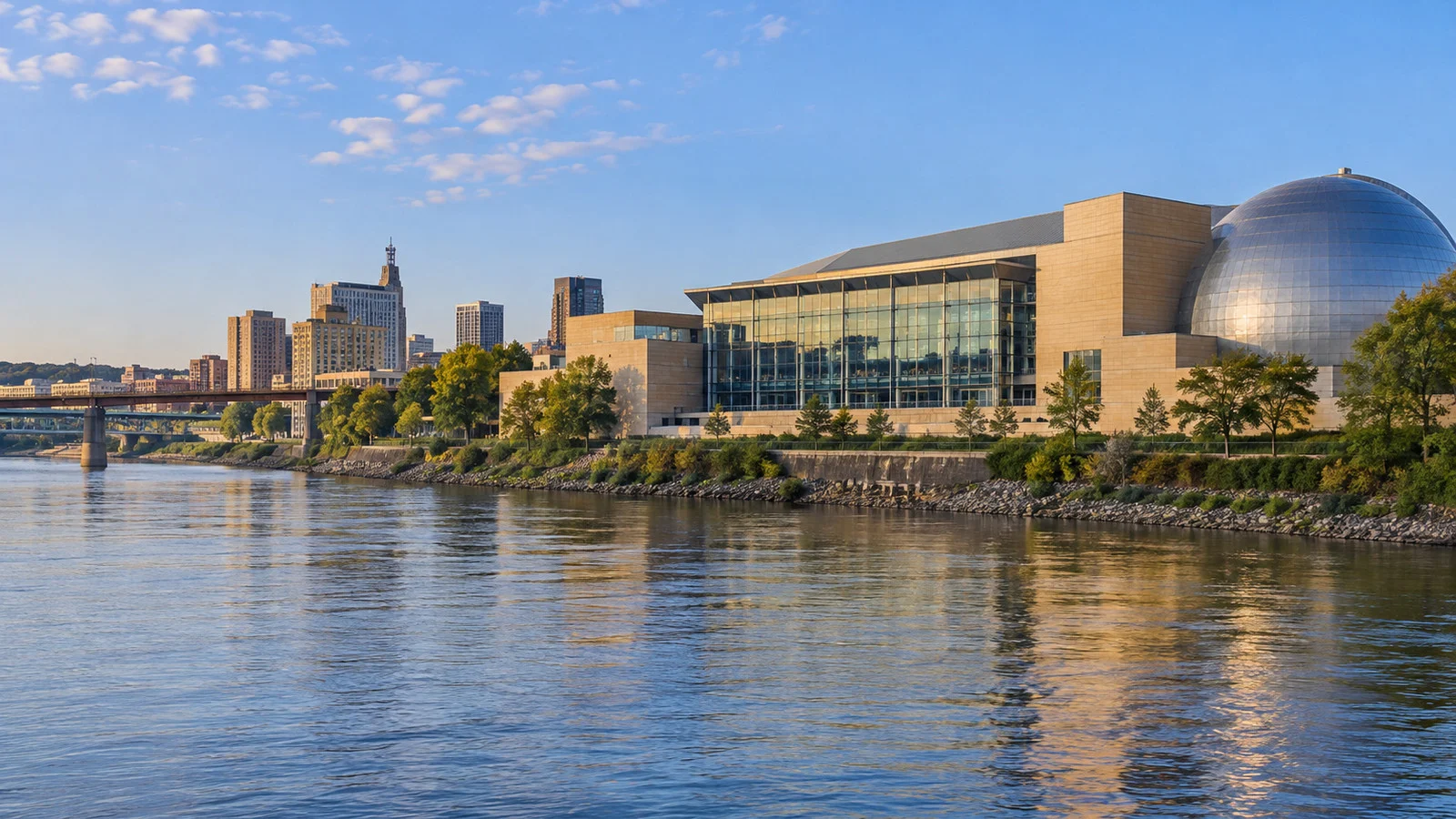
Lowertown, Union Depot, and the easiest independent loop
Lowertown mixes restored warehouses, restaurants, public art, Mears Park, and transportation history. Union Depot is its architectural centerpiece and still functions as an intercity rail, bus, and local transit hub.
Walk only as far as your return buffer allows, because downtown construction and rail crossings can alter the obvious route. The city had active Lowertown floodwall and street work in 2026, including changing restrictions around Jackson Street and Shepard Road.
CHS Field, home of the St. Paul Saints, sits in Lowertown and can add baseball atmosphere even without a game. A full game is risky unless your ship is overnight and the operator confirms the all-aboard time.
For a short independent outing, pair Union Depot with Mears Park and one meal. That gives you a genuine city visit without treating St. Paul like a collection of boxes to tick.
Science Museum of Minnesota
The Science Museum stands at 120 West Kellogg Boulevard above the river near Upper Landing. It is especially strong for families, curious adults, and anyone prepared to lose track of time inside an exhibit about dinosaurs, the human body, engineering, or the Mississippi.
The museum’s current visitor page lists 10:00 a.m. to 5:00 p.m. hours Tuesday through Thursday and Sunday, with 10:00 a.m. to 8:00 p.m. hours Friday and Saturday. It says the museum will be closed September 14 through 18, 2026, and closed Mondays starting September 14.
Plan about two hours for the exhibits plus an additional hour for a film, consistent with the museum’s own first-visit guidance. On a shorter call, choose one or the other rather than buying ambition in ticket form.
The building offers accessible parking, wheelchair-accessible exhibits, loaner wheelchairs, captioning, interpreter arrangements, quiet spaces, and an adult changing facility. Its accessibility does not solve the separate ship-to-street route from Lambert’s Landing.
Minnesota History Center
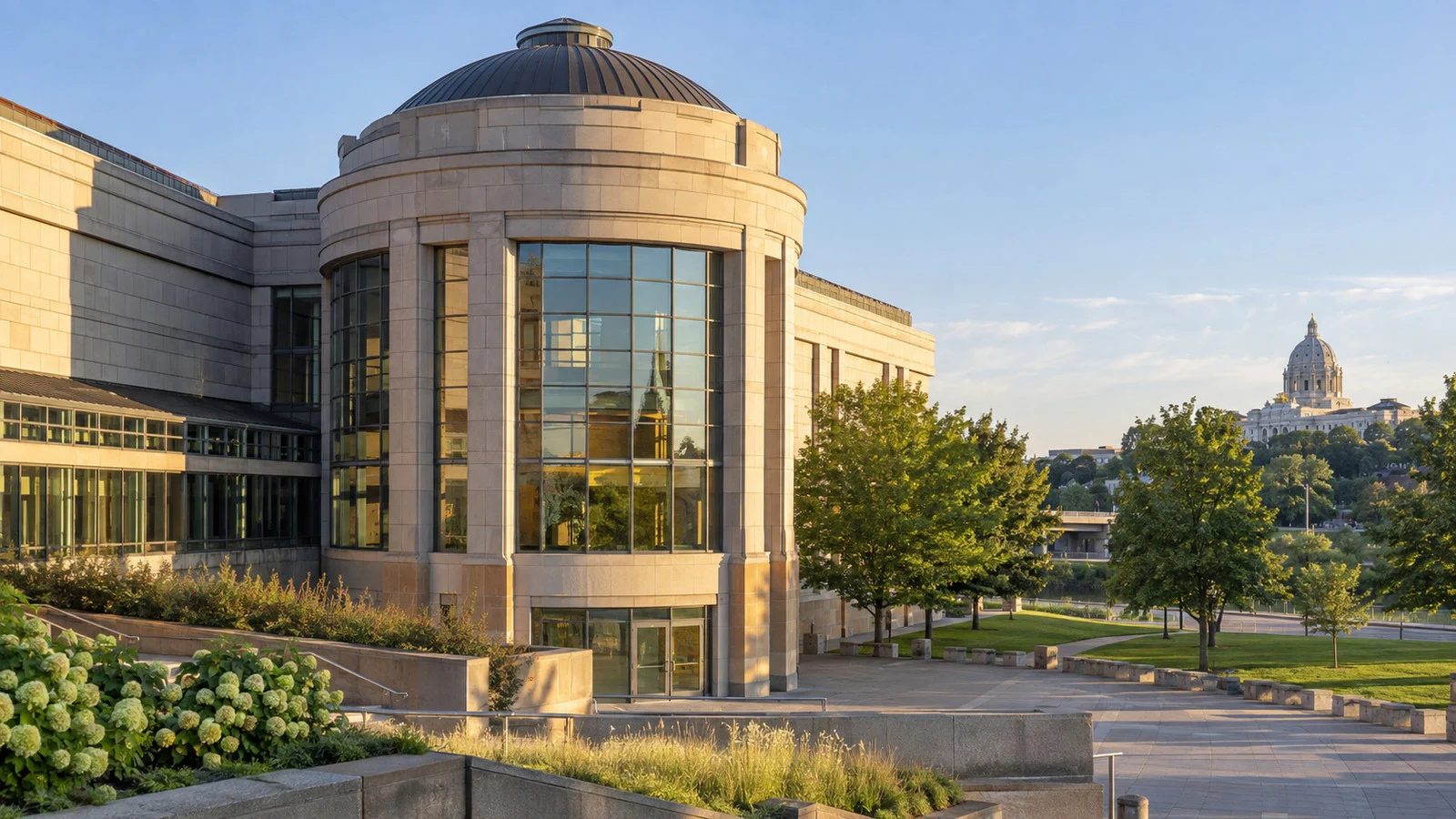
The Minnesota History Center is west of downtown at 345 West Kellogg Boulevard, near the State Capitol and Cathedral. Its exhibitions address Minnesota’s Indigenous nations, migration, industry, politics, communities, and changing identities with far more depth than a city highlight reel.
Current 2026 hours have the museum closed Monday and Tuesday, open Wednesday and Friday through Sunday from 10:00 a.m. to 4:00 p.m., and open until 8:00 p.m. Thursday. Holiday exceptions make a same-day check essential.
The building has ramps and elevators throughout public areas, seating in most exhibit zones, accessible restrooms, and free loaner wheelchairs. The walk from the river involves distance and uphill grade, so an accessible taxi or cruise shuttle is the sensible connection.
Allow 90 minutes to two hours for a focused visit, an editorial estimate rather than a museum limit. It is a better choice than the Science Museum for travelers primarily interested in regional history.
Cathedral of Saint Paul and Summit Avenue
The Cathedral crowns the bluff west of downtown and is one of the city’s defining landmarks. Its dome is visible from many river approaches, which is architectural advertising of a very effective sort.
The cathedral’s current visitor information lists church hours from 7:00 a.m. to 7:00 p.m., subject to holiday and liturgical changes. Weekday guided tours require advance arrangements, last about an hour, and include some steps with railings.
This remains an active place of worship. Dress respectfully, lower your voice, avoid sightseeing during Mass, and accept that a wedding, funeral, holy day, or service can limit access.
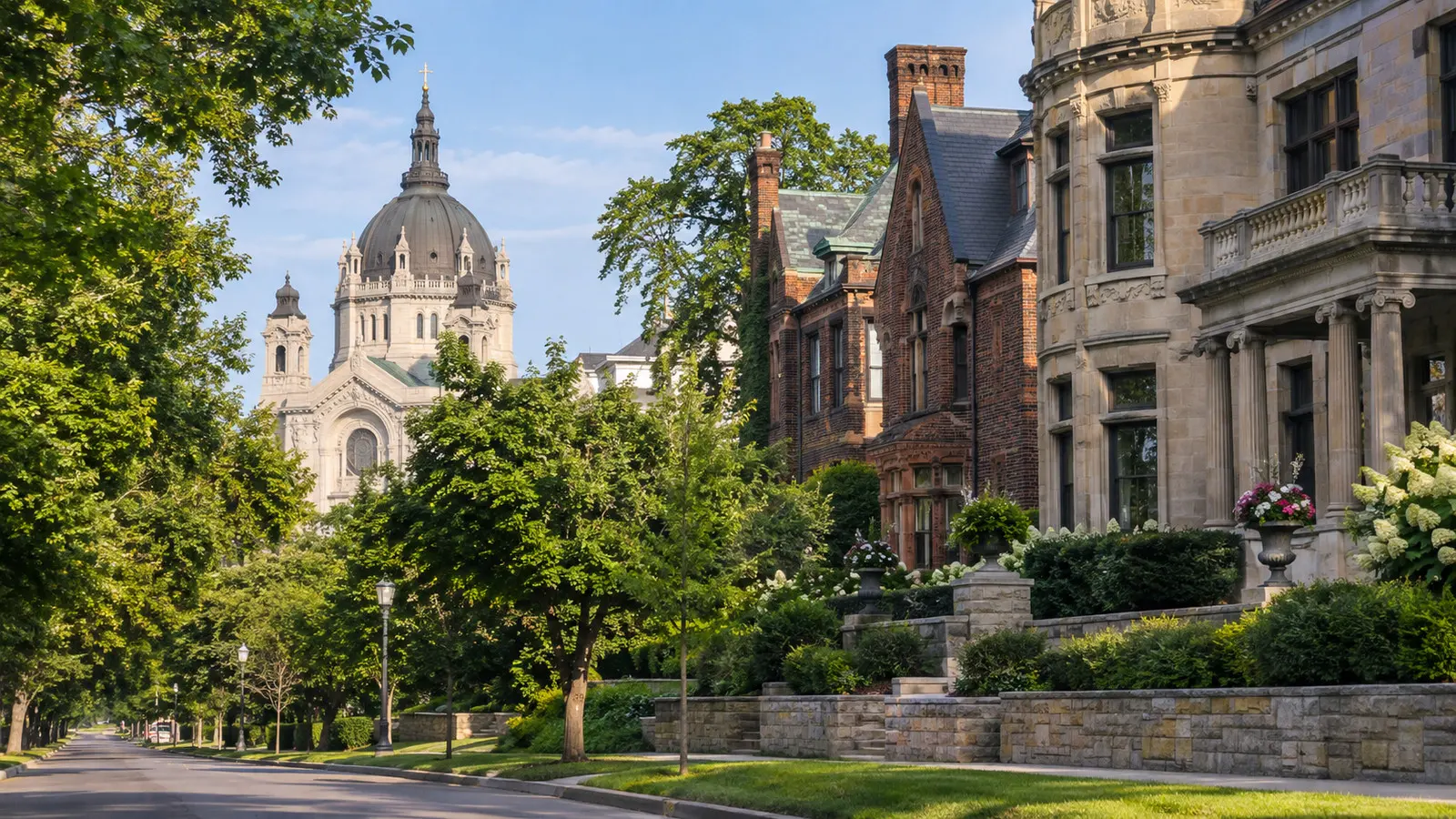
Summit Avenue begins nearby and displays an exceptional concentration of late nineteenth-century homes. An operator tour is better than an ambitious walk from the ship because the avenue stretches for miles and the climb from the river is substantial.
Accessibility at the landing
Published city pages confirm Lambert’s Landing is an active passenger-steamboat dock, but they do not provide a complete cruise-gangway accessibility specification. Gangway angle, landing surface, distance to a motorcoach, rail crossings, and temporary security routing can all change.
Ask the cruise line whether the transfer motorcoach has a lift, whether mobility devices ride with the guest, and how many feet separate the ship from level pavement. Also ask whether high or low water creates stairs, a steep ramp, or an alternate landing.
Downtown museums are generally well equipped once you arrive, but St. Paul’s bluff topography makes the connection the difficult part. The river cruise accessibility guide provides a specific prebooking checklist.
Flooding and Upper Mississippi operations
St. Paul monitors Mississippi stages closely because riverfront roads, trails, parks, and docks sit low beneath downtown. The city’s flood information page identifies 14 feet as minor flood stage, 15 feet as moderate, and 17 feet as major.
A 2024 city flood response closed Lambert’s Landing Dock, Kelly’s Landing, trail sections, and other riverfront facilities before the forecast crest reached minor stage. That event is evidence of how access can change, not a permanent automatic closure threshold for every future rise.
High water can increase current, cover trails, close approach roads, or remove the planned dock. Low water can affect channel depth, landing geometry, lock scheduling, and whether the ship can reach the northern endpoint on time.
The Upper Mississippi also involves multiple locks, tow lines, fog, thunderstorms, maintenance, and seasonal limits. Our river cruise low-water guide explains why an endpoint sometimes becomes a motorcoach transfer rather than a traditional arrival.
Embarking in St. Paul
Expect a hotel-centered process unless your final documents say otherwise. Viking’s current St. Paul extension uses two hotel nights, city touring, Fort Snelling, and a later transfer to the ship, with accommodations subject to change.
American Cruise Lines may also designate a downtown hotel for check-in, luggage, and group transportation. The brand, ship, and sailing date determine the arrangement, so do not borrow instructions from another passenger’s departure.
Minneapolis-Saint Paul International Airport serves both Twin Cities and is not downtown St. Paul. Allow roughly 20 to 35 minutes by taxi or rideshare in ordinary traffic, an editorial estimate that can expand during rush hour, road work, snow, or major events.
Public transit is possible, but routes and transfers change and are awkward with cruise luggage. Use Metro Transit’s live trip planner rather than an old blog, and never assume the cruise line collects guests from an airport platform without written confirmation.
Arrive one day before the official cruise program if the line does not already include a precruise hotel. That buffer protects against flight disruption and gives you time for the Cathedral, History Center, or a civilized dinner without watching the clock.
Disembarking in St. Paul
A St. Paul itinerary end may involve breakfast, luggage collection, motorcoach transfers, and staggered departures. Confirm whether transportation ends at the airport, a downtown hotel, or another meeting point.
Book flights only after reviewing the line’s earliest recommended departure time. River arrival, baggage handling, traffic, and airport security all have opinions about your optimistic schedule.
If staying overnight, ask whether the hotel accepts bags before check-in and whether the cruise transfer includes you. Independent postcruise arrangements often begin the moment you identify your suitcase ashore.
Three realistic plans
Short call: Lowertown without stress
Follow the designated route from Lambert’s Landing to Union Depot, Mears Park, and a Lowertown cafe. Return with at least 30 minutes beyond your normal walking estimate.
Full day: museum and cathedral
Use a shuttle or taxi to the Minnesota History Center, then continue to the Cathedral and a short stretch of Summit Avenue. This plan avoids repeatedly climbing the bluff on foot.
Families and accessibility: Science Museum
Arrange an accessible vehicle from the landing to the Science Museum and spend two to three hours there. Confirm the ship-to-motorcoach surface separately, because the museum’s excellent access begins at its own entrance.
Quick answers
Do ships dock at Upper Landing Park?
City rules prohibit public docking at Upper Landing Park. Current city and tourism evidence instead identifies Lambert’s Landing in Lower Landing Park for large passenger ships.
Can I walk downtown from Lambert’s Landing?
Yes, especially to Lowertown. Allow an estimated 10 to 20 minutes to Union Depot and longer for central downtown, subject to security routing and construction.
Can I walk to the Cathedral?
It is possible for strong walkers, but the route is long and uphill from the river. A shuttle, taxi, or organized tour is more efficient for most cruise guests.
Is the landing wheelchair accessible?
No public source guarantees every ship-to-shore configuration. Ask the cruise line about the specific gangway, surface, distance to transportation, and lift-equipped motorcoach for your sailing.
Will flooding cancel St. Paul?
Not necessarily. The city may close Lambert’s Landing or riverfront routes, while the operator can substitute another berth, hotel night, motorcoach transfer, or schedule before canceling the destination.
The last word
St. Paul makes a fitting top note to a Mississippi cruise because the river, bluff, rail city, immigrant landing, and modern capital remain visibly layered. It is also a port where one word, “Landing,” can send an unprepared traveler to the wrong end of downtown.
Trust Lambert’s Landing only when your current instructions confirm it, use vehicles for the bluff-top sights, and give embarkation a hotel-day buffer. Your reward is a handsome, thoughtful city rather than an anxious tour of its curbside addresses.
How we researched this guide
This guide was researched and fact-checked on September 12, 2026, using City of Saint Paul landing, park-rule, flood, and construction information; current Viking and American Cruise Lines itineraries; Visit Saint Paul; and official museum and cathedral visitor guidance. Walking and airport-transfer times are clearly labeled editorial estimates because no authority guarantees one berth or publishes a St. Paul cancellation rate.
We have not claimed a personal visit or invented a gangway experience. For how CruisePorts.co evaluates changing port operations, accessibility, and source quality, read our Editorial Policy.
How this guide was researched: This guide was independently checked on September 12, 2026, against American Cruise Lines, Viking, City of Saint Paul, Science Museum of Minnesota, and the official sources linked in the article. Reconfirm the landing, transfer plan, river conditions, road and trail access, attraction hours, accessibility, costs, and reboarding time because live operations can change. See our Editorial Policy.