Paros Cruise Port: Parikia Tender, Villages and Beaches
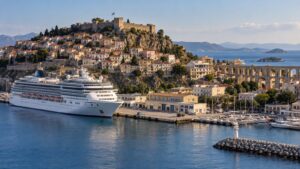
Paros delivers the Cyclades almost immediately: whitewashed lanes, blue water, fishing boats, warm stone, and a breeze that can turn from welcome relief to the day’s main logistical issue. Most cruise visitors begin in Parikia, the island capital, where a tender landing can put you close to old-town sights, cafes, and the waterfront.
The island is easy to love but not wise to overplan. Naoussa, Lefkes, beaches, and small villages are tempting, yet buses are seasonal, taxis can be scarce, and the Meltemi wind may affect tender operations and boat trips.
Quick Facts
- Island: Paros, in Greece’s Cyclades
- Usual cruise gateway: Parikia, the island capital and ferry port
- Arrival: Often by tender for cruise ships, subject to the vessel’s confirmed plan
- Easy on-foot sights: Parikia old town, waterfront, Kastro area, and Panagia Ekatontapiliani
- Popular trips: Naoussa, Lefkes, beaches, and island drives
- Public transport: KTEL Paros buses, with seasonal timetables
- Currency: Euro
- Main weather issue: Strong northerly Meltemi winds in summer
- Accessibility: Variable because of tenders, cobbles, steps, and beach surfaces
- Return rule: Treat the last-tender time as the firm deadline
How cruise arrivals work in Paros
Parikia is a busy island port for ferries, while cruise ships commonly anchor offshore and bring passengers in by tender. The exact landing and procedure depend on port operations, weather, and the cruise line’s arrangements that day.
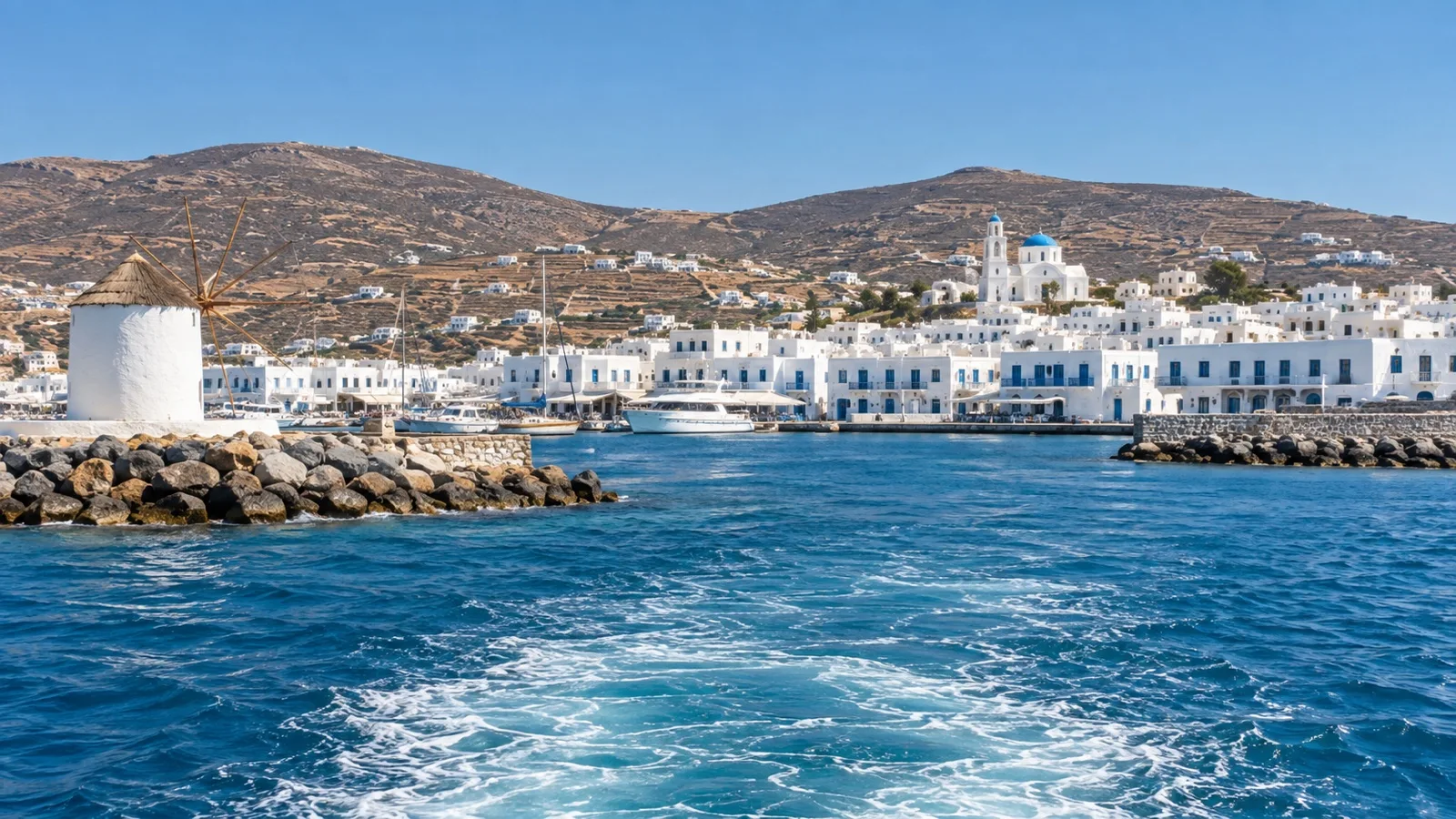
Tendering adds a moving boat transfer, steps, and possible waiting at both ends of the visit. It can also reduce the usable time ashore if sea conditions slow boarding or if the ship needs to adjust operations.
Read the daily program for tender-ticket rules, meeting points, last-tender time, and identification requirements. If you have a timed independent tour, tell the operator that your arrival depends on tender clearance rather than a guaranteed walk-off time.
Guests using wheelchairs, scooters, or walking aids should discuss transfer eligibility with the cruise line before the port day. Crew members make the final decision based on equipment, sea state, and their ability to move a passenger safely between vessels.
Parikia is the best low-stress plan
Parikia rewards travelers who want to step ashore and begin exploring without another vehicle. The waterfront and old town sit close together, allowing you to adjust the route according to heat, energy, and the tender schedule.
Start by noting the exact return landing, because the active ferry harbor can feel busy and similar from different angles. Take a photo of a nearby landmark and save the ship’s instructions offline.
The old town is a maze of narrow lanes, small squares, shops, chapels, and whitewashed houses. Getting pleasantly turned around is part of the experience, but keep an offline map handy when the return clock matters.
Stone and marble surfaces can be polished, uneven, or slippery near wet areas. Shoes with grip are more useful than delicate sandals, even if the walking distance looks modest.
Panagia Ekatontapiliani
Panagia Ekatontapiliani, often translated as the Church of a Hundred Doors, is Parikia’s most important historic landmark. The Orthodox complex preserves layers of early Christian and Byzantine history and remains an active place of worship.
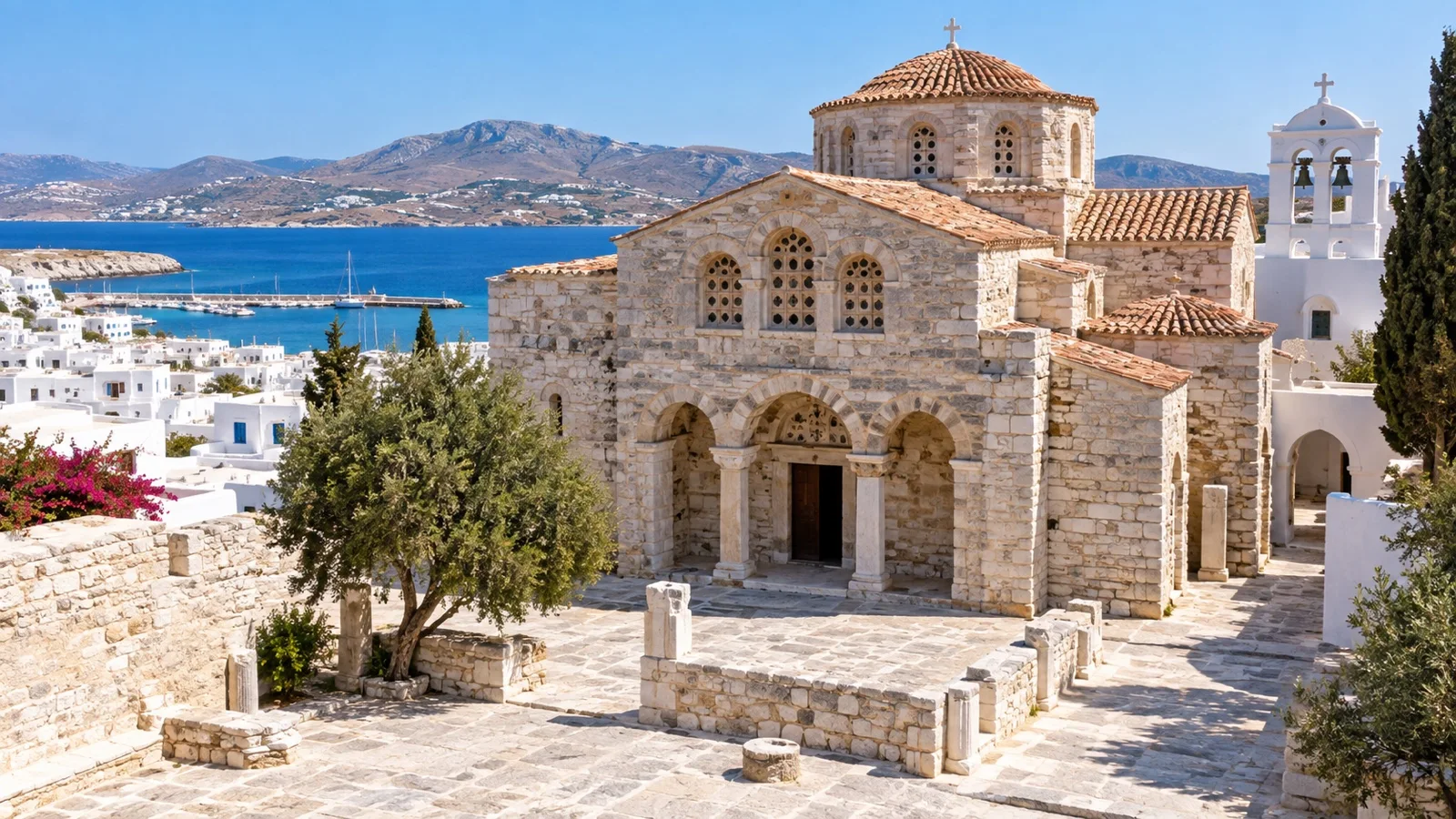
Visit quietly, dress respectfully, and follow current photography rules. Shoulders and knees should be covered, and services or religious observances take priority over sightseeing.
The church is within practical walking range of central Parikia for many visitors, but the route and heat still matter. Check current access and opening information locally rather than assuming every part of the complex is open throughout the day.
Nearby cultural stops may include the Archaeological Museum of Paros, depending on current hours. The museum can add context about Parian marble, island sculpture, and the long history hidden beneath the resort image.
Kastro lanes and the waterfront
Parikia’s Kastro area grew around the remains of a Venetian-era fortification that reused ancient stone. The pleasure comes from noticing fragments, doorways, chapels, and glimpses of the sea rather than finding one grand intact castle.
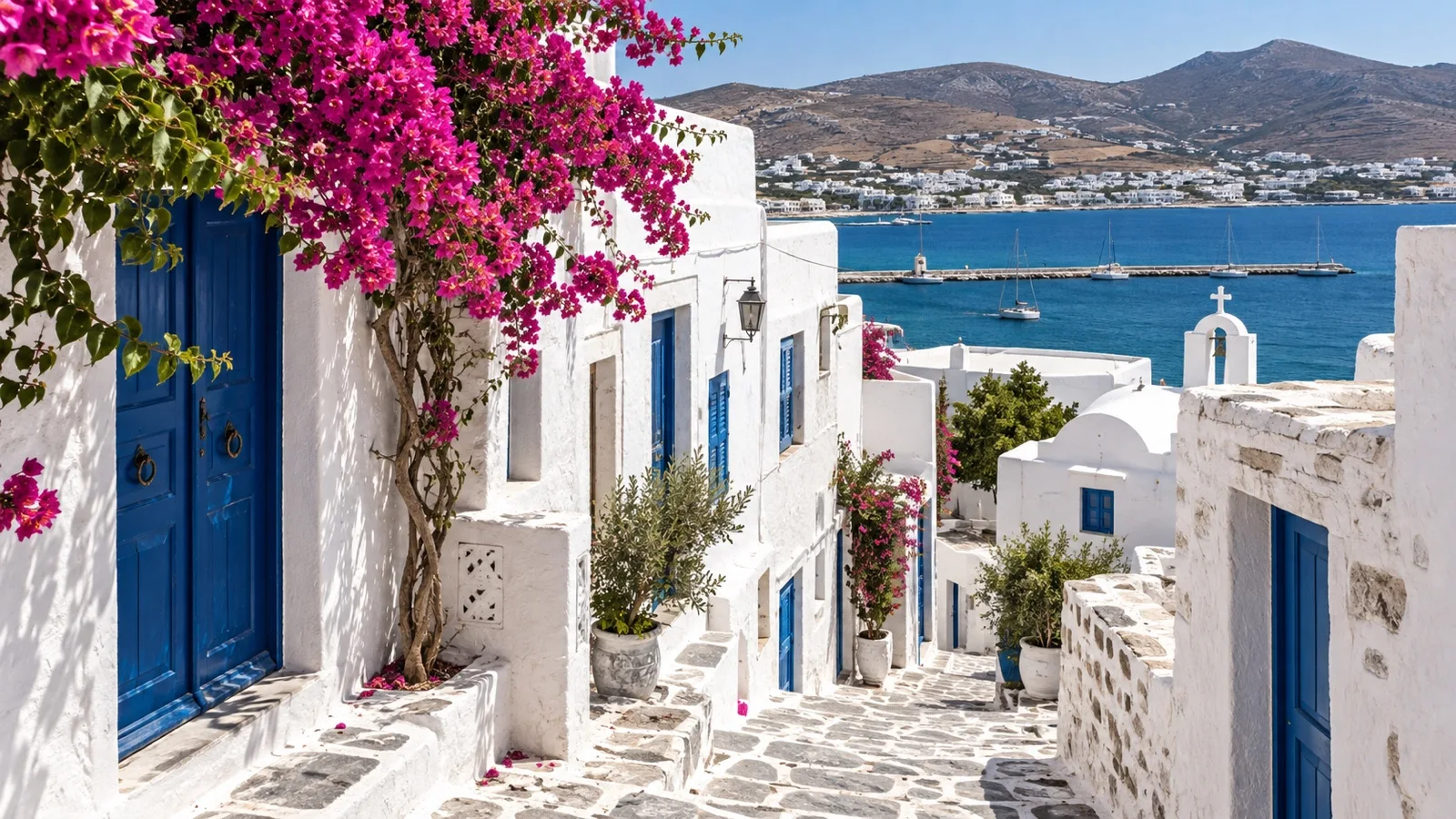
Allow time to wander slowly and step aside for residents, delivery vehicles, and scooters in the narrow lanes. This is a living neighborhood, not an outdoor museum arranged only for visitors.
The waterfront is ideal for a coffee, a light meal, or simply watching ferries and fishing boats. Choose a table only after checking how long service may take, particularly when the port is busy.
A town-only day can still feel complete if you pair the church and lanes with a relaxed lunch or swim. It also gives you the easiest possible recovery if wind or a tender announcement shortens shore time.
Naoussa as a half-day trip
Naoussa, on the north side of Paros, is known for its compact harbor, whitewashed lanes, restaurants, and the remains of a Venetian fort at the water’s edge. It is polished and popular, with a different energy from Parikia.
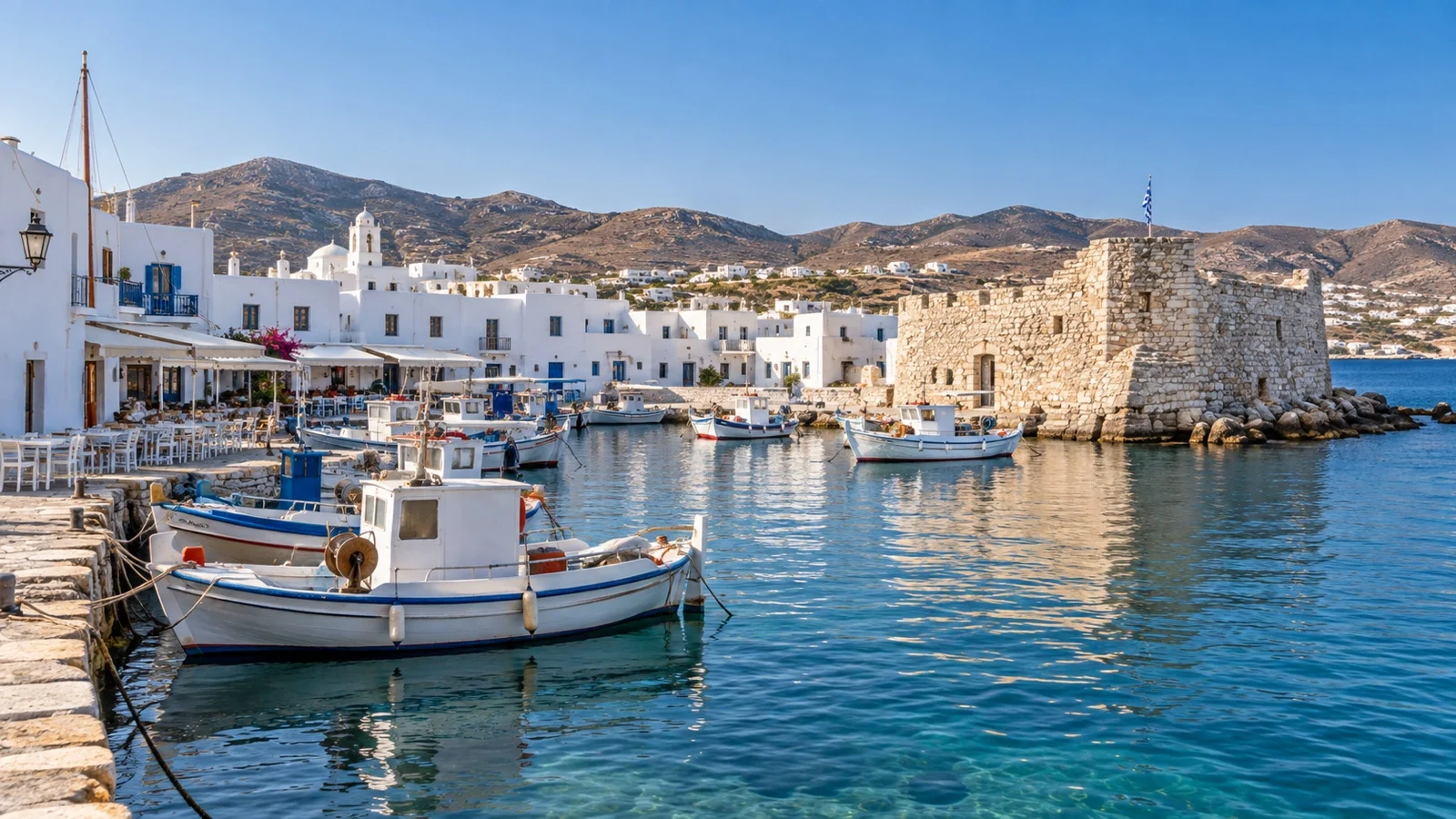
Reaching it requires a bus, taxi, rental vehicle, or organized tour. Travel time is only one part of the calculation because waiting, traffic, parking, and the return connection can use more of the day than expected.
KTEL Paros publishes the island’s official bus schedules, and service changes by season. Check the timetable for your actual date, identify the correct departure point, and plan around an earlier return than the last technically possible bus.
Do not rely on finding a taxi immediately at the busiest summer hour. If the ship’s call is short, reserve round-trip transport or use a tour designed around the tender schedule.
In Naoussa, stay close to the harbor if your time is limited. A slow loop through the lanes, a look at the old port, and a drink with a view can be more satisfying than rushing to add a distant beach.
Lefkes and the island interior
Lefkes reveals the quieter interior of Paros, where traditional houses, lanes, churches, hills, and broad views replace the busy waterfront. The village’s charm depends on walking, so it deserves more than a five-minute photo stop.
Buses to inland villages may run less often than the main Parikia to Naoussa route, especially outside peak season. Confirm the same-day timetable in both directions before leaving Parikia.
The lanes include slopes, steps, and irregular paving. Travelers with mobility concerns should ask where a vehicle can stop and how much climbing is required to reach the central viewpoints.
An island tour may combine Lefkes with smaller villages, coastal viewpoints, or Naoussa. Read the route carefully because a long list of stops often means very little independent time in each place.
Choosing a beach
Paros has beaches around the island, but the best cruise-day choice is not always the most famous one. Distance, transport reliability, wind direction, shade, facilities, and the tender deadline matter more than a perfect photograph.
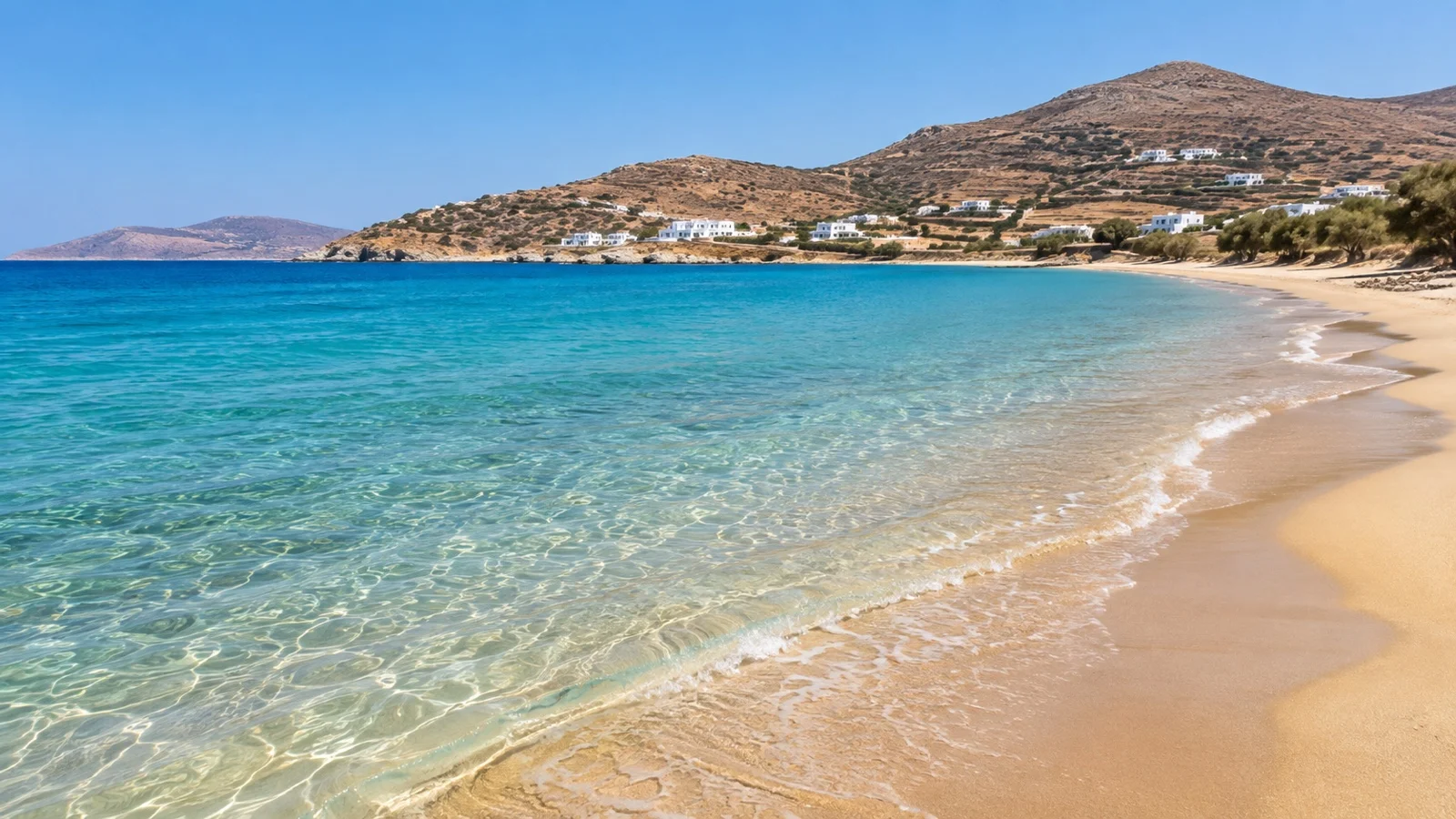
A beach near Parikia can support a simple swim without committing you to a cross-island journey. More distant choices, including those near Naoussa or on other coasts, require a clear outbound and return plan.
Ask about current bus service, road access, sunbed policies, and whether facilities are operating. Seasonal businesses may not match an old review, and a beach can feel very different when wind pushes waves onto that shore.
Bring water, sunscreen, a hat, and secure storage for your cruise card and phone. Use marked swimming areas, watch for boat traffic, and follow local flags or lifeguard directions.
Leave time to dry off, change, and reach the landing without rushing. Wet feet, sand, and heat slow the walk more than people expect.
The Meltemi changes the plan
The Meltemi is a seasonal northerly wind that can become strong in the Aegean, particularly during summer. It may cool a hot day, but it can also make tender transfers rougher and affect beach comfort or small-boat excursions.
Your cruise line and local boat operators decide whether conditions are safe. A bright blue sky does not mean the sea will be calm enough for the original operation.
Check the Hellenic National Meteorological Service for current forecasts and marine warnings. Then follow the ship’s announcements because the captain and port team are working with local conditions at your anchorage.
If wind cancels a boat trip, switch to Parikia rather than trying to force another water-based plan. The church, old town, museum if open, cafes, and waterfront provide a strong backup within a compact area.
Boat trips and Antiparos
Local boat trips may visit coves, swimming areas, or nearby islands, and Antiparos is a frequent temptation. These outings can be wonderful when they are designed around cruise hours and the sea cooperates.
Confirm the exact departure harbor, boarding time, route, safety equipment, swim access, cancellation policy, and guaranteed return. A trip leaving from another part of Paros may require a road transfer before the boat even begins.
Antiparos normally involves additional transport and a ferry crossing rather than a single effortless step from the cruise tender. Treat it as a planned excursion, not a spontaneous add-on to a short Parikia walk.
If snorkeling or swimming is included, ask whether equipment and flotation aids are provided. Cold water, wind, and boat ladders can make the activity more demanding than the tour description suggests.
Renting a car, scooter, or ATV
A rental vehicle offers flexibility, but it also creates responsibilities that are easy to underestimate on a short call. Availability, licensing rules, insurance, fuel, parking, road conditions, and the return deadline all need attention.
Confirm that your license is accepted and ask exactly what the insurance excludes. Photograph the vehicle before departure and understand the procedure for breakdowns or damage.
Scooters and ATVs expose riders to sun, wind, dust, and unfamiliar traffic. They are not a sensible shortcut for an inexperienced rider, especially when the day is governed by a last tender.
Never surrender your passport as informal security if another accepted arrangement is available. Use an established company, keep the contract, and protect enough time for refueling and inspection on return.
Walking and hiking
Paros has old paths and appealing village walks, including routes around the island interior. A cruise day is not the time to begin an unverified trail based only on a short online description.
Check current waymarking, heat exposure, distance, elevation, and transport at the finish. A route that looks easy in cooler weather can become exhausting under strong summer sun.
Carry water, use proper shoes, and turn back early if signs are unclear. Dry-stone walls, farm tracks, and private access should be respected.
For most short calls, walking in Parikia or Lefkes provides enough atmosphere without the risk of a point-to-point hike. Save a longer trail for a land stay unless the excursion includes a guide and cruise-safe transport.
Food and drink
Paros is a lovely place to slow down over Greek food, but lunch timing needs discipline. A waterfront table can be hard to leave when the view is good and service follows an island rhythm.
Look for salads, grilled fish, local cheeses, vegetables, pies, and simple meze. Ask about market price before ordering seafood sold by weight and check whether bread or water carries a separate charge.
Tap water guidance can vary by island infrastructure and season, so follow current local advice. Bottled water is easy to carry when you are moving between villages or beaches.
Cards are widely used in established businesses, but a little cash is useful for small purchases, buses, or a temporary connection problem. Greece uses the euro.
Accessibility and mobility
Tendering is the first accessibility question, not the final one. Even if a guest can transfer safely, Parikia’s cobbles, curbs, polished stone, heat, and occasional steps may shape the practical route.
The waterfront is generally the most manageable area, while Kastro lanes and traditional villages can be more difficult. Ask local staff for the smoothest route to the church or a suitable cafe rather than following the prettiest lane by default.
Accessible taxis and adapted vehicles should be reserved in advance. A standard bus or last-minute taxi may not accommodate a large mobility device.
Beach accessibility varies widely, including the distance over sand and the availability of ramps, mats, changing rooms, or assisted sea access. Confirm the exact facility for your visit date before traveling across the island.
Heat and standing time can matter as much as steps. Build in shade and seated breaks, and keep the return plan shorter than the maximum you think you can manage.
Paros with children
Parikia works well for families because the main sights can be approached in short segments. A church visit, lane walk, snack, and swim create natural breaks without a long coach ride.
Children should be watched closely around ferry traffic, quays, beach roads, and the water. The working port can be busy, and a low wall is not a substitute for supervision.
For Naoussa or Lefkes, choose one destination and protect time for food and rest. A full island circuit may sound efficient but can leave younger travelers spending most of the day in a vehicle.
Pack hats, refillable water bottles, sunscreen, and familiar snacks. A light long-sleeved layer helps with sun and with respectful dress at churches.
Shopping and local etiquette
Parikia and Naoussa offer boutiques, jewelry, ceramics, food products, and tourist souvenirs. Compare quality and avoid letting shopping time erase your transportation margin.
Parian marble has a distinguished artistic history, but that does not make every modern marble item locally quarried or handmade. Ask questions if origin and craftsmanship matter to you.
Inside churches, keep voices low and do not photograph worshippers without permission. Follow signs, cover shoulders and knees, and step aside when a service is taking place.
In residential lanes, respect doorways and avoid blocking passage for a photo. The whitewashed alleys are homes and working spaces as well as visitor attractions.
How to protect your return
Treat the last-tender time as the real deadline and plan to reach the landing well before it. The ship’s advertised sailing time is not the time to begin walking back.
On a bus trip, choose an earlier return service than the final one that appears possible. Full buses, traffic, a missed stop, or a schedule change are easier to absorb when another option remains.
For taxis or private tours, confirm the pickup point and return time in writing. Keep the driver’s number, but do not make your plan dependent on having a strong mobile signal.
Carry the cruise card, required identification, daily program, and port-agent contact details. A screenshot and a small paper note provide useful backup if the phone battery fails.
Simple plans by port-call length
Short call
Stay in Parikia and combine the church, old-town lanes, waterfront, and a relaxed food stop. This keeps the day flexible if tender service is slow.
Medium call
Choose Naoussa, Lefkes, or a suitable beach as one main trip, then return to Parikia with time to spare. Do not combine destinations unless the transport schedule leaves a comfortable buffer.
Long call
A guided island circuit or carefully planned Antiparos outing may become practical. Protect the final part of the day from optional stops and monitor any tender updates.
Common Paros planning mistakes
The first mistake is treating a tender arrival like a fixed pier arrival. Wind and boat loading can change the usable time ashore.
The second is relying on an old bus timetable. KTEL Paros changes schedules seasonally, so check the official version for your date.
The third is trying to see Parikia, Naoussa, Lefkes, Antiparos, and a beach in one call. Pick one main excursion beyond the port town.
The fourth is ignoring the Meltemi because the sky is clear. Wind can affect tenders, small boats, beaches, and driving comfort even on a beautiful day.
Frequently asked questions
Do cruise ships dock in Paros?
Cruise ships commonly use tenders near Parikia, though the final arrangement is operational and can vary. Follow your cruise line’s instructions for the actual call.
Can I explore Parikia on foot?
Yes, many central sights are within a compact area for travelers comfortable on uneven surfaces. Heat, cobbles, and the route from the tender landing still deserve attention.
Can I take the bus to Naoussa?
KTEL Paros operates island buses, including service between major communities, but schedules change by season. Check the official timetable and choose an early return.
Is Lefkes worth the trip?
Yes, if you want a traditional inland village and are comfortable with slopes and uneven lanes. Give it enough time to wander rather than squeezing it into a rushed island circuit.
Can I visit Antiparos independently?
It is possible with coordinated road and ferry transport, but it requires more moving parts than a Parikia day. Attempt it only when the current schedules and tender deadline leave a generous buffer.
What if strong wind affects the call?
Follow the ship’s announcements because tender operations may be delayed, changed, or canceled for safety. Keep a compact Parikia plan ready if you get ashore with less time than expected.
What should I wear?
Choose breathable clothing, strong sun protection, and shoes with grip. Carry a light cover for churches and a layer for windy tender rides.
My take on Paros
Paros is at its best when you stop trying to conquer the island. Parikia alone can deliver history, atmosphere, food, and sea views, while one well-chosen trip adds a village or beach without turning the day into a transport exercise.
I would let the wind, tender timing, and current bus schedule make the final decision. A flexible day here does not feel like compromise; it feels perfectly Cycladic.
Planning sources include KTEL Paros, the Greek National Tourism Organisation, the Hellenic National Meteorological Service, and current information from the cruise line and local port authorities. Confirm tender procedures, bus schedules, church and museum access, marine conditions, and the last-tender deadline close to your visit.