Alexandria Cruise Port: Pyramids, Cairo & the City
Alexandria is Egypt’s Mediterranean gateway, and for most cruisers it is really two ports in one: the ancient seaside city itself, and the long day trip to the Pyramids of Giza and Cairo. Here is how I would plan it.
A quick word on safety and current travel advisories
The U.S. State Department lists Egypt at Level 2, Exercise Increased Caution, because of terrorism, crime, and health concerns. The current advisory was issued July 15, 2025, and checked again for this guide on September 10, 2026.
Alexandria, Cairo, and Giza are outside the named Level 4 areas, which include Northern and Middle Sinai, the Western Desert except for licensed-tour access to specified oases, and Egyptian border areas. Follow current official advice, avoid demonstrations, and do not photograph military, police, or sensitive infrastructure.
In practice, most cruise lines run Alexandria as an organized-tour port with vetted guides and transport. If you are new to this kind of stop, my first-timer cruise ports guide is a gentle primer.
Alexandria often sits on itineraries that also transit the canal, and our guide to the Suez Canal transit explains how that day runs.
My quick take
If it is your first time in Egypt, book the guided Cairo and Giza excursion and accept that it eats the whole day. If you have seen the Pyramids before, stay in Alexandria: it is walkable, atmospheric, and far less exhausting.
Alexandria anchors our wider Africa cruise ports and Mediterranean cruise ports collections if you are mapping out the rest of your itinerary.
The quick facts
- Where you land: the Port of Alexandria passenger terminal in the Western Harbour, run by the Alexandria Port Authority, on the west side of the city.
- Dock or tender: Ships come alongside here, so there is no tender.
- Into town: This is a controlled working port, so use the ship transfer or an authorized vehicle from the designated pickup area.
- Currency and language: The Egyptian pound (EGP) and Arabic; small notes help with tips and minor purchases, while major attractions may require card or electronic ticketing.
- Time zone: Eastern European Time (EET, UTC+2) through the winter and spring cruise season, moving to daylight saving (UTC+3) between late April and late October.
- How often the call is missed: Medium (roughly 3 to 7%): strong winds can make the approach unsafe.
Entry documents and the port exit
Egypt requires a visa for U.S. tourists, but cruise-passenger processing and shore-pass arrangements can differ by nationality and itinerary. Confirm the exact process with the cruise line before sailing, carry the passport or approved document it specifies, and never assume an airport visa-on-arrival procedure applies at the cruise berth.
The passenger facilities sit within a working port, so meet tours only at the gate or pickup area named by the ship. Save your guide’s local number and a photo of the return point, and do not bring a drone because Egypt restricts drone import and use without authorization.
Getting around Alexandria
Alexandria is spread along the coast, so you will want wheels for anything beyond the immediate waterfront. Here is how I would weigh the options.
- Guided tour or private driver: the easiest way to string together the scattered sites and get back to the ship on time. This is what I would book for Cairo without a second thought.
- Taxi: plentiful at the gate. Meters are rare, so agree a price first, and consider hiring one driver for a few hours.
- Ride-hailing apps: apps like Uber operate in Alexandria and take the haggling out of the fare.
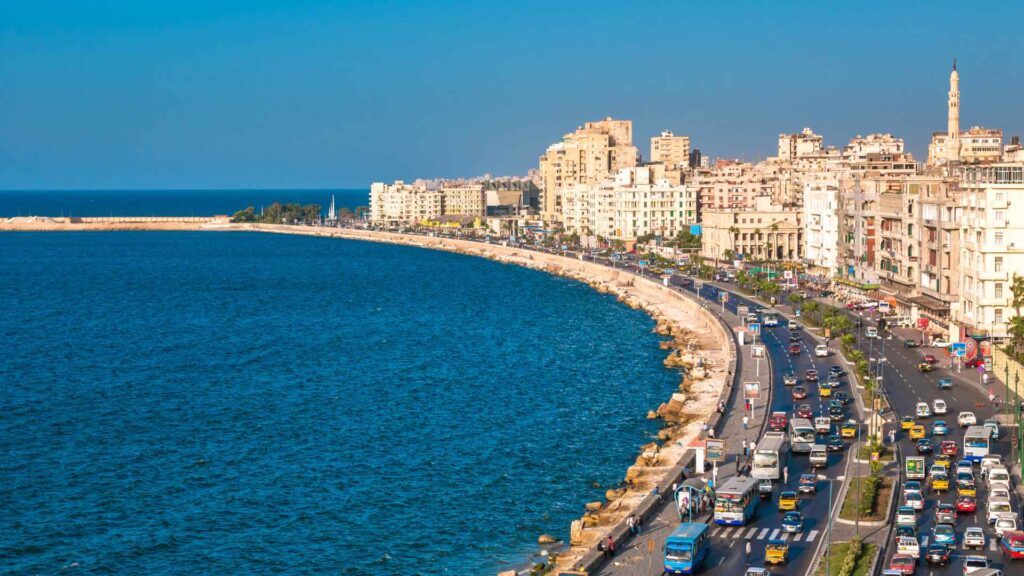
- On foot: the Corniche, Qaitbay area, and downtown are pleasant to walk once you are dropped nearby. See my walkable cruise ports roundup for how it compares.
The big decision: Cairo and Giza, or stay in Alexandria
The Pyramids of Giza and the Sphinx
The Giza plateau is roughly 140 miles from the port, and the drive commonly needs about 3 to 3.5 hours each way once traffic and stops are included. A ship-sanctioned excursion is the sensible choice because it coordinates port access, site tickets, and a protected return.
Fun fact: the Great Pyramid was the tallest human-made structure on Earth for nearly 4,000 years. Give yourself buffer time; traffic on the return is the main threat to making the all-aboard.
The Grand Egyptian Museum
The long-awaited Grand Egyptian Museum (GEM) fully opened on the Giza plateau on 1 November 2025, about 1.25 miles from the Pyramids.
It now displays the complete Tutankhamun collection together for the first time. Most modern Cairo tours pair the Pyramids with the GEM rather than the older downtown Egyptian Museum, so confirm which your excursion includes.
The stops I’d actually spend time on in Alexandria
If you skip Cairo, Alexandria more than fills a day. These are the named sights I would prioritize, all close enough to link by taxi or a half-day tour.
Bibliotheca Alexandrina
A striking modern library and cultural center echoing the ancient Great Library of Alexandria. The tilted, sun-disc reading room alone justifies the visit, alongside its museums and galleries.
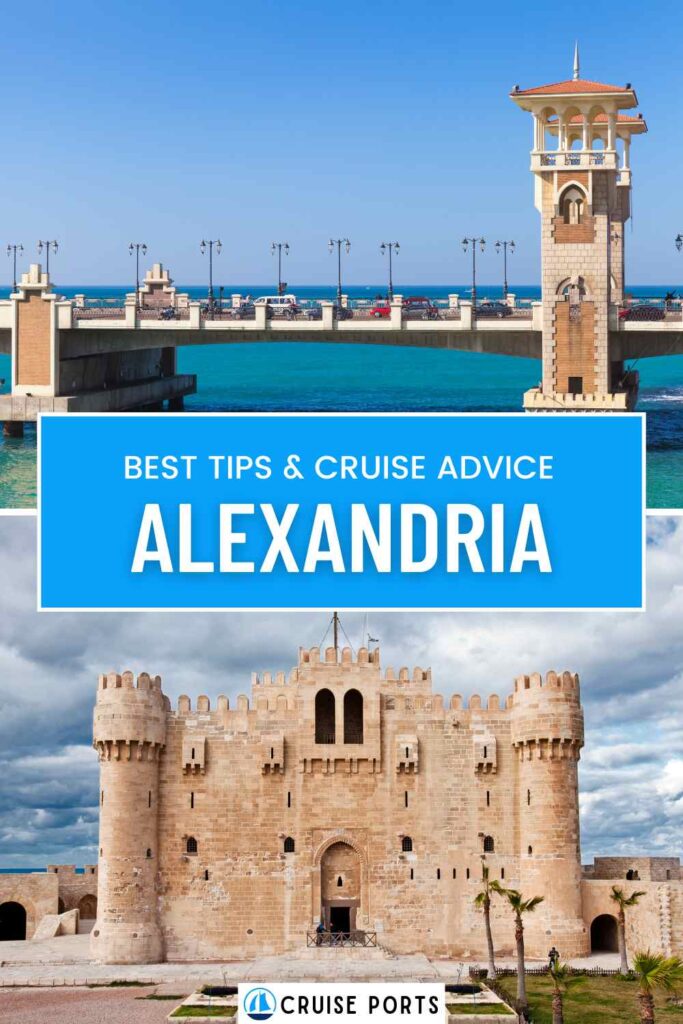
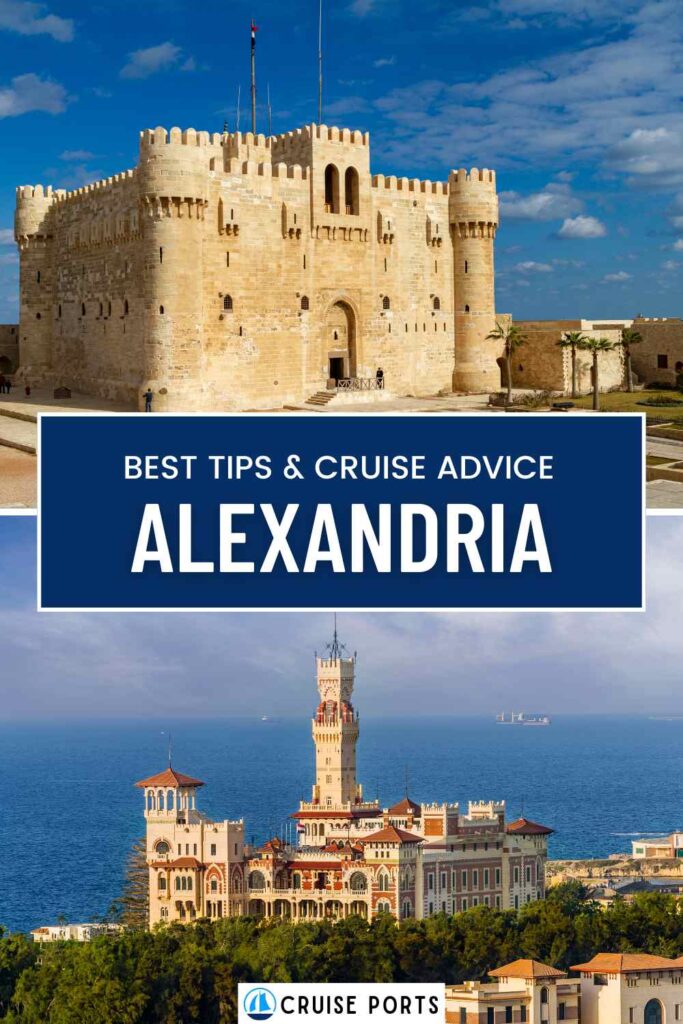
Citadel of Qaitbay
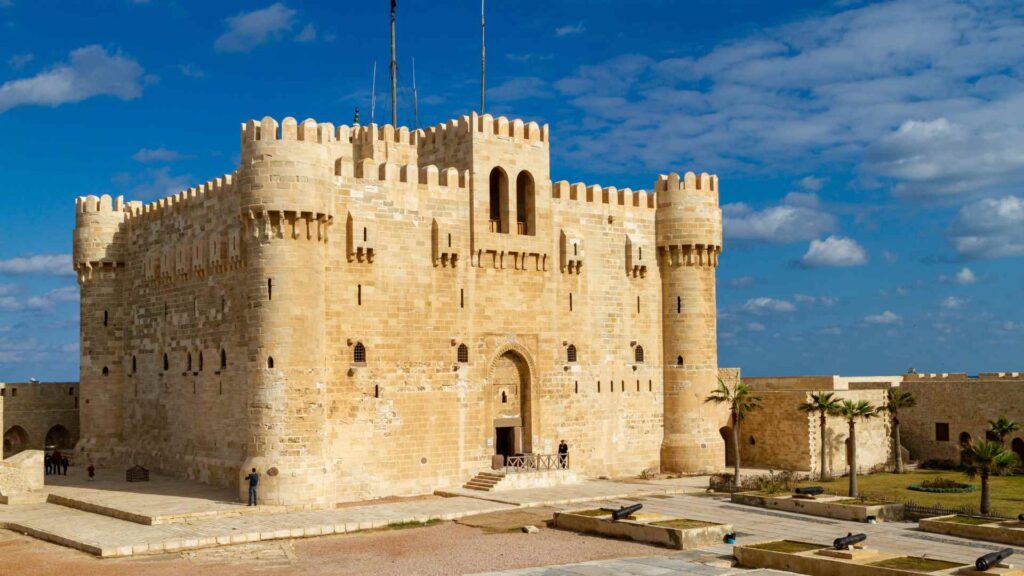
This 15th-century harbor fortress stands on the exact site of the ancient Lighthouse of Alexandria, one of the Seven Wonders of the ancient world. Some of its fallen stone is thought to have been reused in the walls, which is a lovely thread of history to stand on.
Catacombs of Kom El Shoqafa
An extraordinary Roman-era necropolis carved deep underground, blending Egyptian, Greek, and Roman styles in one dizzying spiral descent. The complex was discovered in 1900 and descends through multiple underground levels, although the lowest areas can be inaccessible when groundwater is high.
Pompey’s Pillar and the Serapeum
A single towering red-granite column, one of the largest of its kind ever raised, marking the ruins of the ancient Serapeum temple. It sits close to the catacombs, so the two pair naturally.
Kom El Dikka Roman Theater
This is Egypt’s only known Roman theater, with tiered marble seating inside the wider Kom El Dikka archaeological site. Excavations also revealed baths, lecture halls, and mosaic floors, so allow more than a five-minute photo stop.
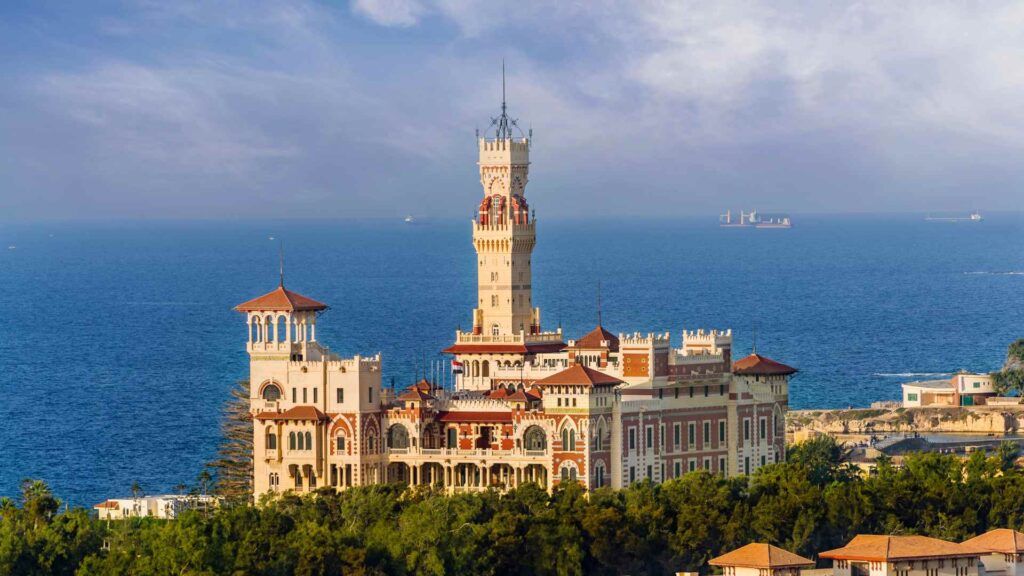
Montaza Palace Gardens
Sprawling royal gardens on the eastern seafront, wrapped around a former summer palace of Egypt’s kings. A calm, green counterpoint to the ancient-stone sightseeing.
Alexandria National Museum
A well-curated collection in a restored villa, walking you through Alexandria from Pharaonic to modern times. A good option if the weather turns or you want context before the sites.
Abu al-Abbas al-Mursi Mosque
Alexandria’s grandest mosque, an elegant landmark of the Anfushi district with soaring domes and minarets. Visitor access can change around prayers and religious observance, so dress modestly and ask your guide or the mosque attendant before entering.
The Corniche
The long seafront promenade is the city’s spine and its social heart. Even a short stroll, ideally toward late afternoon, gives you the real feel of Alexandria.
Heads up: some links below are affiliate links. If you book through one, I may earn a commission at no extra cost to you. It never changes which hotels or tours I recommend. Full disclosure.
How I’d plan the day
- Full day, first-timer: the guided Cairo and Giza excursion (Pyramids, Sphinx, Grand Egyptian Museum). Expect a very long day and lean on your ship’s tour for the return timing.
- Full day in Alexandria: choose either the western cluster around Qaitbay Citadel or the inland catacombs and Serapeum first, then add the Bibliotheca and a Corniche stop. Trying to clear every listed attraction leaves too much time in traffic and too little at each site.
- Half day: pick two or three close-together sites, such as Qaitbay, the Bibliotheca, and the Corniche, and keep a generous buffer before all-aboard.
When to go, and the weather
Spring (March to May) and fall (September to November) bring the mildest, most comfortable sightseeing weather. Summer is hot and busy; winter is cooler and can be wet but stays walkable.
A realistic word on accessibility
I will be honest with you: this is a tough port if stairs and uneven ground are a struggle. The ancient sites lean hard on rough stone, sand, and steps, from the spiral descent into the Catacombs to the climbs around Qaitbay and the sandy, uneven Giza plateau.
The Cairo and Giza day also means roughly 3 to 3.5 hours each way on a motorcoach that may have high steps, which is a lot of boarding and sitting for anyone with limited mobility. If that worries you, I would stay in Alexandria, lean on the flat Corniche and the Bibliotheca, and hire a private driver so you can go at your own pace.
Quick answers
Can I see the Pyramids on a day trip from Alexandria?
Yes, but it is a full day with roughly 3 to 3.5 hours each way by road in normal planning. A ship excursion is strongly recommended because Cairo traffic and port security can lengthen the return.
Is Alexandria safe for cruise passengers?
Egypt sits at Level 2 (Exercise Increased Caution) with the U.S. State Department, and the main tourist areas are outside the Do Not Travel zones. Stick to organized tours or reputable drivers and take normal city precautions.
What currency do I need?
The Egyptian pound (EGP). Bring small bills for tips and cash-only stalls; ATMs and exchange are available near the port and in the city.
For more Mediterranean planning, browse our Greek cruise ports guides and the wider cruise ports in Europe hub.
How this guide was researched: Unless a first-hand visit is explicitly identified above, this guide is based on independent research using official port, tourism, transit, government, and attraction sources where available. Logistics and time-sensitive details were reviewed on September 10, 2026; see our Editorial Policy.