River Cruise Bikes: What Ships Carry and Where You Can Ride
River-cruise bikes can turn a short port call into a wonderful ride, but the brochure photo rarely explains the rules. Some lines run guided cycling excursions, some release onboard bikes for independent use in selected ports, and some make no fleet-wide promise at all.
The winning move is to verify the exact itinerary, ship, date, and type of ride before booking. Then choose a route with flat paths close to the berth and enough time to return comfortably before all-aboard.
The quick take
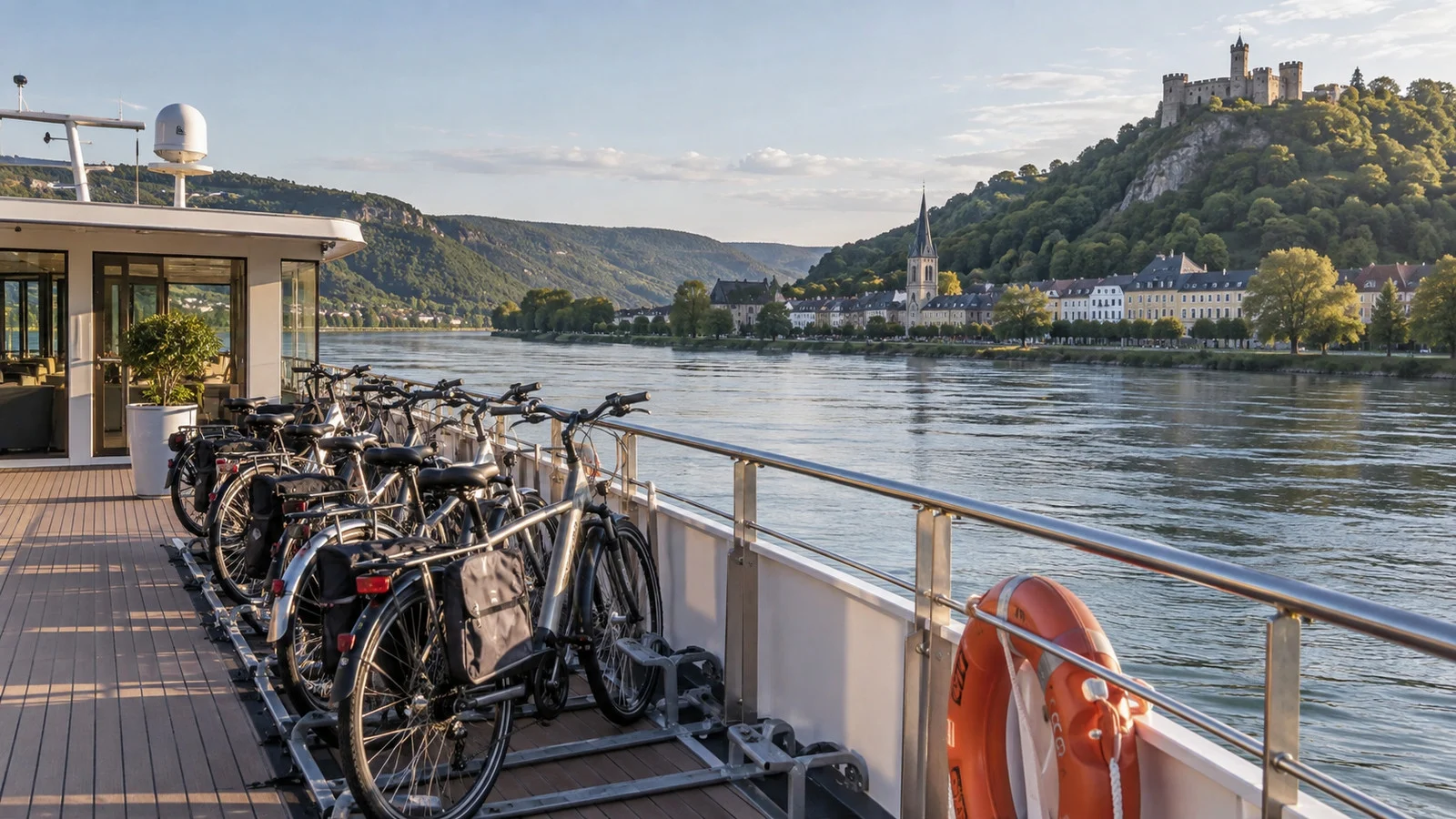
Emerald Cruises currently gives the clearest published description: bicycles are used for guided tours and may also be available for independent exploring on selected days. AmaWaterways promotes guided bike rides and bicycles for exploring ashore, while Avalon advertises free bicycles in select ports.
None of that guarantees a bike on your sailing or a specific model, size, or number. Ask for written confirmation if cycling is a major reason for choosing the cruise.
The quick facts
- Emerald Cruises: its current EmeraldACTIVE page says Star-Ships carry bikes for guided cycling tours and independent exploration on selected days. It also lists a guided 23-mile Melk-to-Dürnstein ride of about four hours.
- AmaWaterways: its current wellness page promotes guided rides, bicycles for exploring ashore, and a guided cycling experience at Passau’s three-river confluence. Availability still depends on the ship and itinerary.
- Avalon Waterways: its official amenities page lists free bicycles for use in select ports. “Select” is the important word, so verify the day and reservation process.
- Other lines: silence on a general website is not proof that a bike will or will not be aboard. Check the itinerary’s excursion list and ask the cruise line for the current ship-specific policy.
- Best easy settings: Kinderdijk, the Wachau, Passau, and parts of the Rhine and Danube have useful riverside paths. Berth location, construction, flooding, and local events can change access.
- Equipment: do not assume an e-bike, step-through frame, child seat, adaptive cycle, phone mount, or particular helmet size. Request what you need before final payment.
- Your own bike: do not bring one without written approval that covers size, storage, batteries, transfers, and liability. A folding bike is still luggage the line may refuse.
What “bikes onboard” can actually mean
A guided cycling excursion
The line or a local partner provides the bike, guide, route, timing, and usually a helmet. This is the simplest option because the operator knows the berth and coordinates the ride with the ship.
Guided does not mean easy. Read the mileage, surface, hills, traffic, pace, and minimum riding ability, then ask whether the group has a support vehicle or a way to leave the ride early.
Independent use of the ship’s bikes
You sign out a bike, follow the line’s permitted area and return time, and navigate on your own. The ship may release bikes only in ports it considers suitable, even if a rack is visible onboard.
Ask whether reservations open before the cruise, the evening before, or only after docking. Also ask what identification, waiver, deposit, app, or emergency number is required.
A local rental
A shop ashore can provide more sizes, e-bikes, panniers, or child equipment than a ship’s small fleet. The tradeoff is time spent reaching the shop, completing paperwork, and returning the bike before the ship’s deadline.
Reserve only after confirming the berth and cancellation terms. River ships can change docks or ports because of traffic, water levels, lock delays, and local operations.
Which lines publish a bike promise?
Emerald’s published wording is the most specific of the major pages checked for this guide. It says guests have access to bicycles for guided cycling tours and for independent exploration on selected days, but it does not promise unlimited access in every port.
AmaWaterways pairs bicycles with its wellness program and promotes included guided bike rides from relaxed city routes to more demanding trails. Its current page highlights Passau, but the exact excursions appear on each itinerary and departure.
Avalon uses the concise phrase “free bicycles for use in select ports.” That is enough to put it on the shortlist, not enough to assume the bikes will come out on the one day you care about.
For Viking, Uniworld, Scenic, Tauck, and any smaller operator, use the same test: find a current itinerary or ship page that names the ride, then confirm it directly. A partner-branded cycling departure is different from a general-use rack on every ship.
Why the bikes may stay locked
- Short call: the crew may require a return well before departure, leaving too little useful riding time.
- Unsafe access: a busy road, steep gangway, temporary berth, construction zone, or flood barrier can make the first mile unsuitable.
- Weather: heavy rain, heat, wind, ice, or flooding can cancel a guided ride or independent release.
- Operational change: a delayed lock or berth swap can remove the planned cycling window.
- Maintenance: the available bikes may shrink when a tire, brake, battery, or frame needs service.
- Local restriction: the line may decide that traffic, an event, or route closure makes independent use unwise.
River schedules include daytime sailing, nighttime sailing, and split port calls, so there is no reliable continent-wide rule. The river cruise sailing-schedule guide explains why a generous-looking day can tighten after a lock delay.
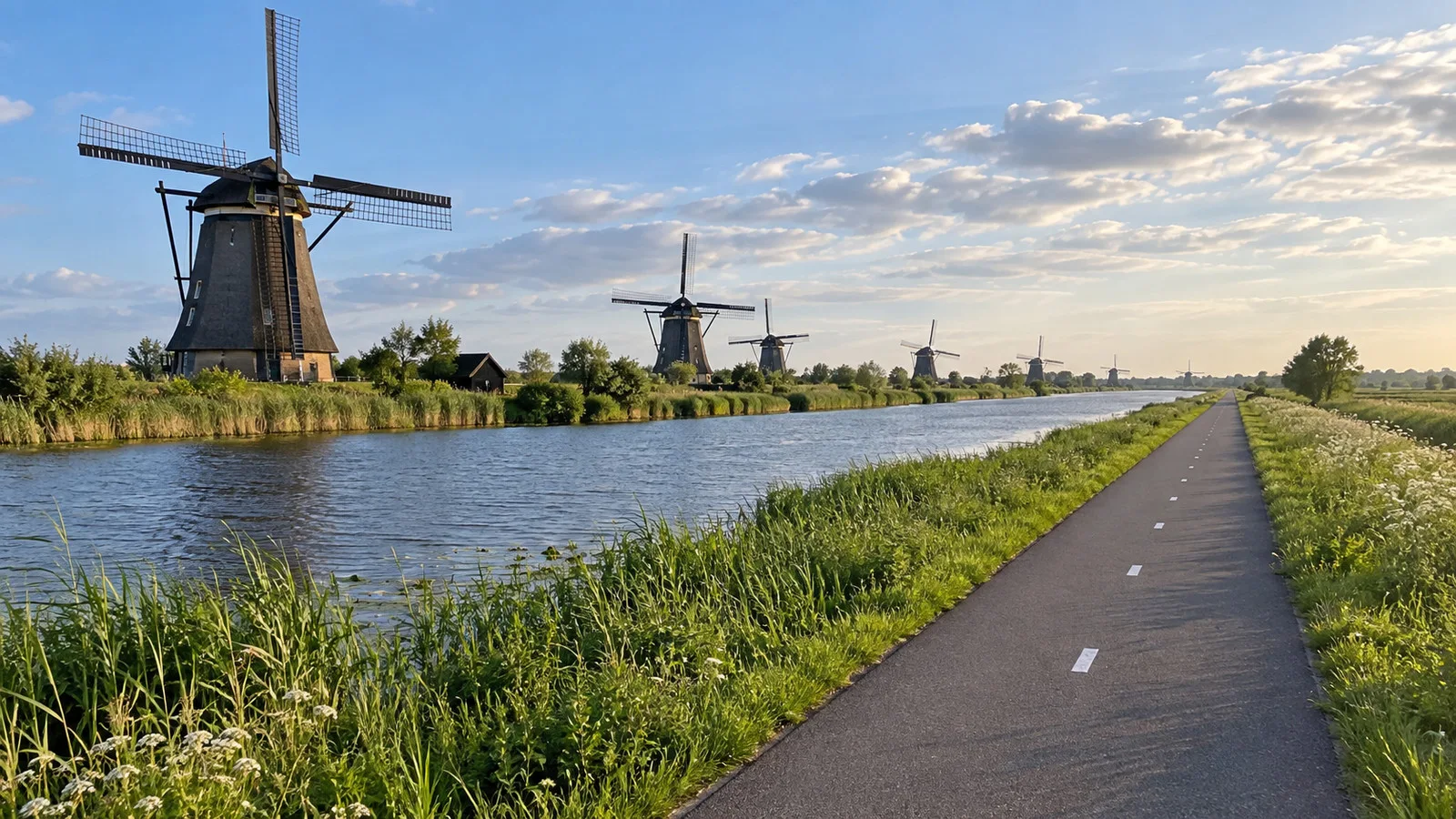
Kinderdijk: flat, scenic, and easy to understand
Kinderdijk sits in excellent cycling country, with dikes, polders, windmills, and good paths near the World Heritage site. Its official visitor information encourages arriving by bike and says the WaterShuttle from Rotterdam can carry bicycles.
A ship that docks at Kinderdijk puts you close to the windmills, but the paths can be busy with pedestrians and local riders. Slow down at narrow points, do not stop across the path for photos, and use the designated bike parking before entering buildings.
If the itinerary lists Rotterdam instead, do not assume the same simple ride. Check the ship’s actual berth, WaterShuttle schedule, bike rules, and all-aboard time before combining boat and bicycle.
The Kinderdijk river cruise port guide explains where the landing sits and how much time the windmill visit needs without a bike.
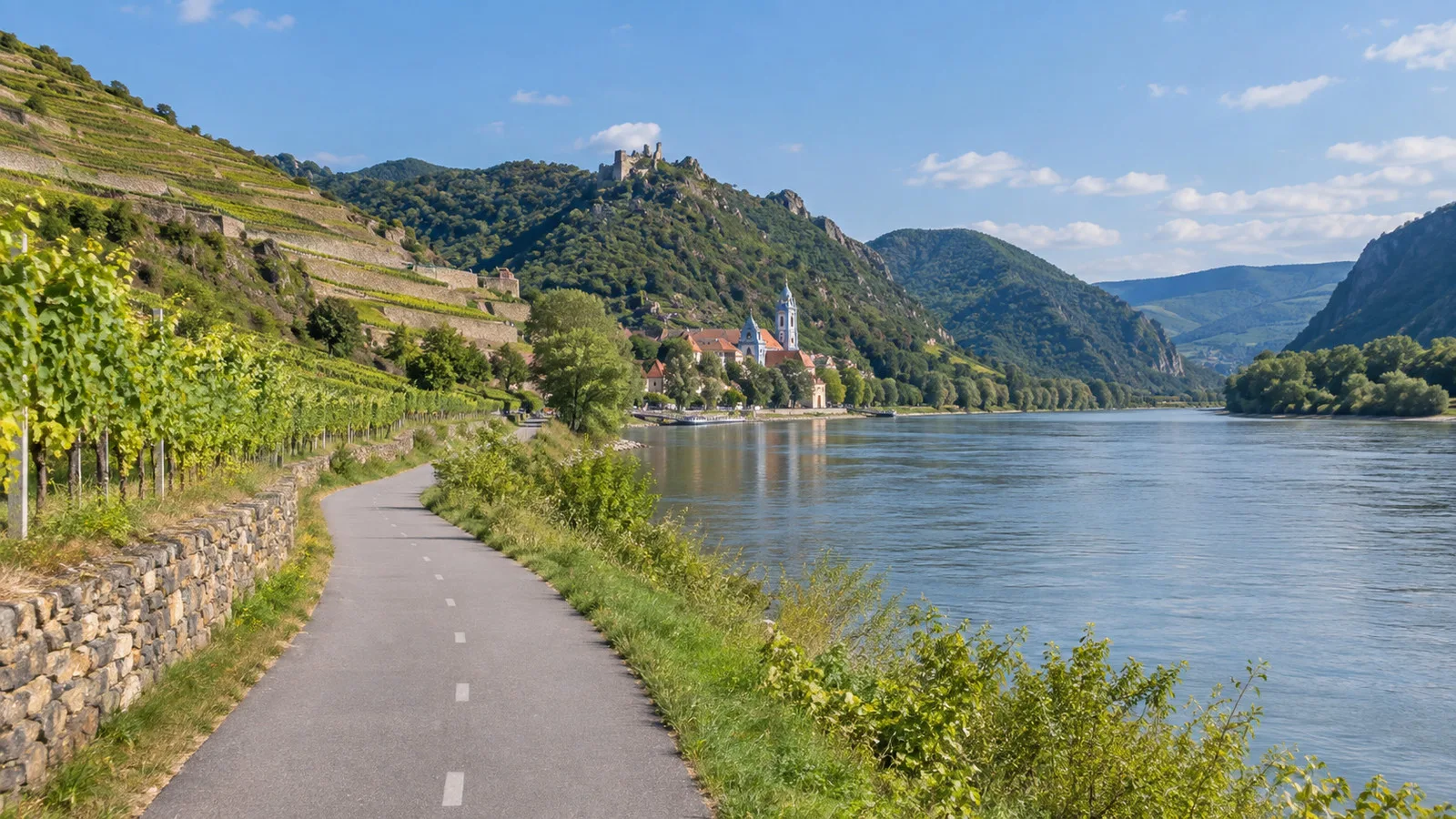
The Wachau: the signature guided ride
Emerald currently advertises a 23-mile guided ride from Melk to Dürnstein through the Wachau, lasting about four hours over relatively flat terrain. The ship can sail onward while the cycling group follows the river, which is why this works better as an organized excursion than an improvised rental.
Twenty-three miles is still a real ride, especially on an unfamiliar bicycle and in warm weather. Confirm the bike type, pace, elevation, stops, support plan, and whether the excursion ends at the same place it begins.
Independent cyclists should verify which bank, ferry, bridge, and dock the day’s route uses. The Wachau river cruise ports guide helps sort Melk, Dürnstein, Krems, and the smaller landings.
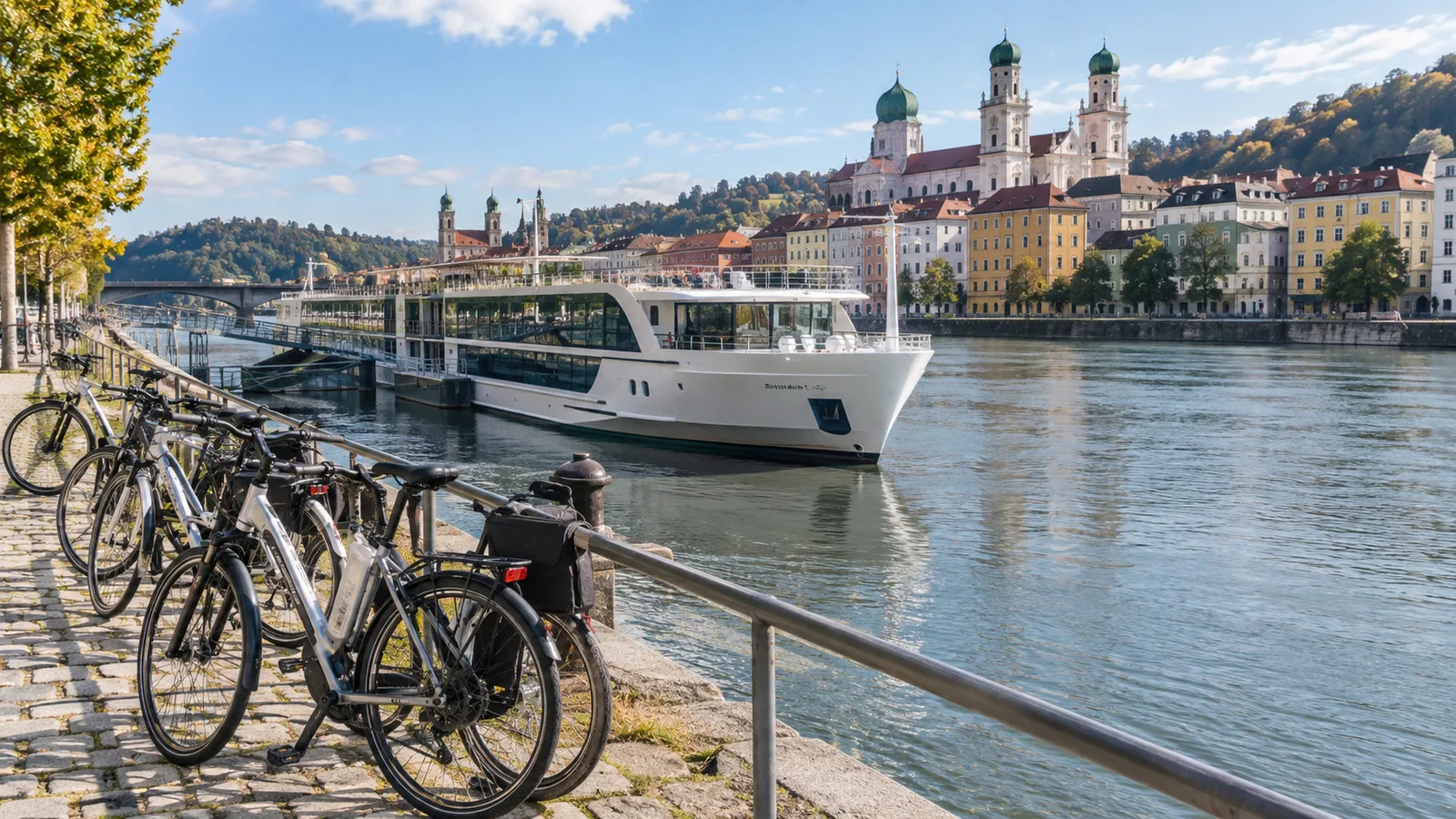
Passau: three rivers and a verified guided option
AmaWaterways’ current wellness page highlights a guided cycling tour around the meeting point of the Danube, Inn, and Ilz. That makes Passau a strong port to search for when comparing active-excursion lists.
The center is compact, but bridges, riverbanks, and flood defenses can complicate a route. Use a marked cycle path and leave the steep climb to Veste Oberhaus for a walk or a tour unless the excursion explicitly includes it.
Check the berth before reserving anything independently because ships can use different stretches of the Danube. The Passau river cruise port guide maps the practical walk-off choices.
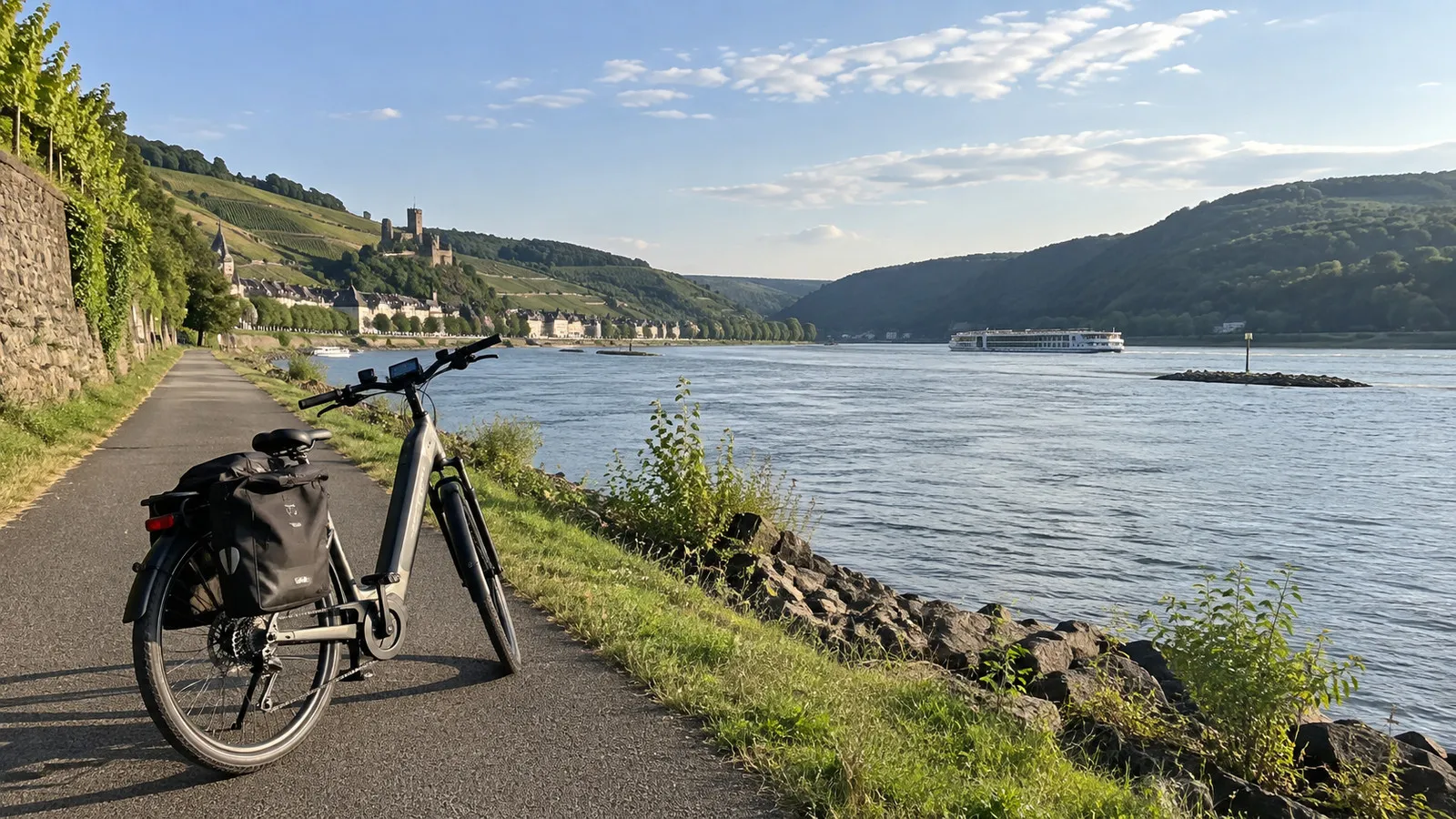
Rüdesheim and the Rhine: easy beside the river, steep above it
Rüdesheim has a level Rhine promenade and access to longer riverside cycling, while the vineyards rise sharply behind town. A standard city bike can be pleasant along the water and punishing on the vineyard lanes.
Choose an e-bike or guided route for climbing, and confirm that the return does not depend on a ferry with a tight seasonal schedule. Wine tasting and cycling also make a poor pairing unless someone else handles the riding afterward.
The Rüdesheim river cruise port guide covers the waterfront, town, cable car, and likely walking distances. Use it to decide whether a bike adds value or merely adds paperwork.
Vienna and Bratislava: good networks, busy city riding
Vienna has excellent cycling areas along the Danube Island and canal, but cruise berths at Handelskai and Nussdorf do not create the same route. City traffic, tram tracks, one-way streets, and pedestrians demand more attention than a rural dike path.
Do not plan to put a full-size bicycle on public transportation without checking the operator’s current time and space restrictions. The simpler cruise-day plan is a guided ride or an out-and-back route that never depends on a train.
Use the Vienna river cruise port guide to identify the likely berth before choosing a direction. Central sightseeing may still be better on foot and transit.
Bratislava’s Danube paths can lead west toward Devín or east along the river, but the full ride may exceed a short call. Turn around based on time, not mileage, and leave a generous cushion for wind on the return.
The Douro and Rhône need more caution
The Douro’s terraced vineyards look glorious from a bike and often involve steep, narrow roads with traffic and limited shoulders. Treat cycling near Pinhão as a supported guided excursion unless you have verified a suitable independent route.
The Rhône offers flatter riding in some towns and harder, wind-exposed or traffic-heavy links between them. A line’s named excursion is more useful evidence than the river name alone.
If daily cycling is the real goal, compare a bike-and-barge trip with a conventional river cruise. A bike-and-barge program is built around riding, while a river ship treats bikes as one optional way to explore.
Safety rules that matter
- Wear the helmet: follow the cruise line’s rule and local law even if other adults ride bareheaded.
- Test the bike: check brakes, tire pressure, saddle height, gears, lights, and battery range before leaving the quay.
- Carry the ship details: photograph the daily program, berth, ship name, emergency number, and all-aboard time.
- Navigate offline: download the map before riding and carry a small power bank.
- Ride predictably: use marked cycle paths, signal turns, keep right where required, and walk through crowded pedestrian areas.
- Leave a cushion: turn around early enough to absorb a wrong turn, flat tire, headwind, ferry wait, or closed path.
Do not count on the ship waiting because you borrowed its bike. Independent use remains independent, and a missed all-aboard can become an expensive train or taxi chase.
Alcohol rules vary, but the safe choice is simple: finish the ride before wine tasting. The river cruise alcohol guide can wait until the bicycle is back on the rack.
Fit, e-bikes, and accessibility
Ask for the rider-height range and bike style, not just whether bicycles exist. A frame that is too large, an unfamiliar coaster brake, or a heavy upright bike can turn a flat ride into a wobbly one.
An e-bike helps with hills and headwinds but adds weight and a different control feel. Confirm that the guided ride includes an e-bike, that its battery suits the distance, and that you can start and stop it confidently.
Adaptive bikes, trikes, handcycles, tandem options, child seats, and trailers should never be assumed. Ask whether the line or local operator can source the exact equipment, deliver it to the berth, and fit it before the ride.
A cycling excursion may also include a steep gangway, cobblestones, mounting without a curb, and no accessible support vehicle. Request the full transfer and route details in writing if balance, joint movement, or mobility equipment is a concern.
Weather and season
Spring and fall often bring comfortable riding temperatures, but rain, wind, high water, and short daylight can change the plan. Summer offers longer days and may bring heat, crowded paths, and little shade.
A riverside ride can feel cooler outbound and much harder when the return turns into a headwind. Carry water, a light waterproof layer, sunscreen, and any medication you need even for a short loop.
Winter sailings are poor candidates for counting on independent bikes because of darkness, cold, ice, and seasonal services. If riding matters, ask the line to confirm a named excursion rather than trusting a generic amenity page.
How to choose a bike-friendly sailing
- Start with an operator that publishes guided rides or independent-use bicycles.
- Open the excursion list for your exact date, not a sample itinerary from another year.
- Identify at least two ports with flat paths close to the likely berth.
- Check port hours, sailing time, and whether the ship relocates while a guided group rides.
- Confirm bike type, size range, e-bike availability, helmet policy, cost, reservation method, and cancellation rules.
- Keep a walking or transit backup for weather, maintenance, or a last-minute berth change.
If the answers stay vague, treat cycling as a possible bonus rather than a booked feature. That keeps a good river cruise from feeling like a broken promise when the rack never opens.
Quick answers
Do all river cruise ships carry bikes?
No. Policies vary by operator, ship, region, itinerary, and sometimes the individual port day.
Are the bikes free?
Emerald says its named EmeraldACTIVE experiences are available at no extra cost, and Avalon describes its select-port bikes as free. Paid upgrades, local rentals, and other operators may work differently.
Can you reserve a bike before sailing?
Sometimes for a guided excursion, while independent bikes may use an onboard sign-out process. Ask when reservations open because availability can be limited.
Are helmets provided?
Do not assume the full size range or that independent use includes one. Confirm directly, then follow the operator’s safety rules and applicable local law.
Can you bring your own bicycle?
Only with written approval from the line. Storage, transfers, lithium batteries, and berth handling can make even a folding or electric bike unacceptable.
Which port is best for a first ride?
Kinderdijk is a lovely easy setting when the ship docks nearby and releases bikes. A guided Wachau or Passau ride is the better choice if you want the route and timing handled for you.
The last word
Ship bikes are a bonus with conditions, not an unlimited amenity. Verify the exact sailing, grab the right-sized bike, choose a simple route, and return with enough time to enjoy the gangway instead of sprinting toward it.
For the best odds, pair a line with published cycling options and a Danube, Rhine, or Dutch-waterways itinerary with known paths near the port. If you want to ride every day, book a trip designed around cycling rather than asking a river cruise to become one.
Current planning sources
- Emerald Cruises EmeraldACTIVE program
- AmaWaterways wellness and cycling program
- Avalon Waterways onboard amenities
- Kinderdijk official cycling and transportation guidance
Checked September 2026. Bike fleets, excursion rosters, berths, routes, laws, and operating conditions can change, so verify them for your sailing.
See the CruisePorts editorial policy.
More on this topic: browse every guide on river cruise planning.