Passau River Cruise Port: The Three Rivers Walk-Off
Passau is one of the most naturally legible river-cruise ports in Europe. The old town occupies a narrow peninsula between the Danube and Inn, the Ilz joins nearby, and many ships berth along a promenade that puts the cathedral and historic center within a comfortable walk.
The complication is that not every ship receives a central position. An old-town berth, a rafted outside position, Lindau downstream, or Racklau upstream can produce four very different arrival mornings under the same itinerary label.
A practical plan
When the ship is on the Altstadt waterfront, Passau is an easy and rewarding independent day. A practical plan is to walk to the three-river confluence, climb gently through the old town, visit the cathedral around its worship and concert schedule, then choose the Veste Oberhaus view only if time and mobility allow.
If Passau is your embarkation or disembarkation point, arrive a night early and confirm the actual landing before arranging a taxi. The city also becomes an important transfer point when upper-Danube water conditions disrupt the planned vessel or route.
Quick Facts
- Main berths: Old-town Danube waterfront, known as the Donaulände or Altstadt landing area
- Other landing areas: Lindau about 3 kilometers downstream and Winterhafen Racklau just under 2 kilometers upstream
- Dock or tender: River ships berth alongside and use gangways, sometimes while rafted to other vessels
- Walk to old town: Short from a central berth, but dependent on the assigned landing and rafting arrangement
- Currency: Euro
- Language: German, with English commonly used in visitor-facing settings
- Time zone: Central European Time with seasonal clock changes
- Signature sights: Saint Stephen’s Cathedral, the three-river confluence, old town, Veste Oberhaus, and Inn waterfront
- Main operational risks: High water, low water elsewhere on the route, bridge clearance, berth changes, and rafting
- Best planning rule: Ask for the live landing name before setting out or ordering transportation
Where your river ship may berth
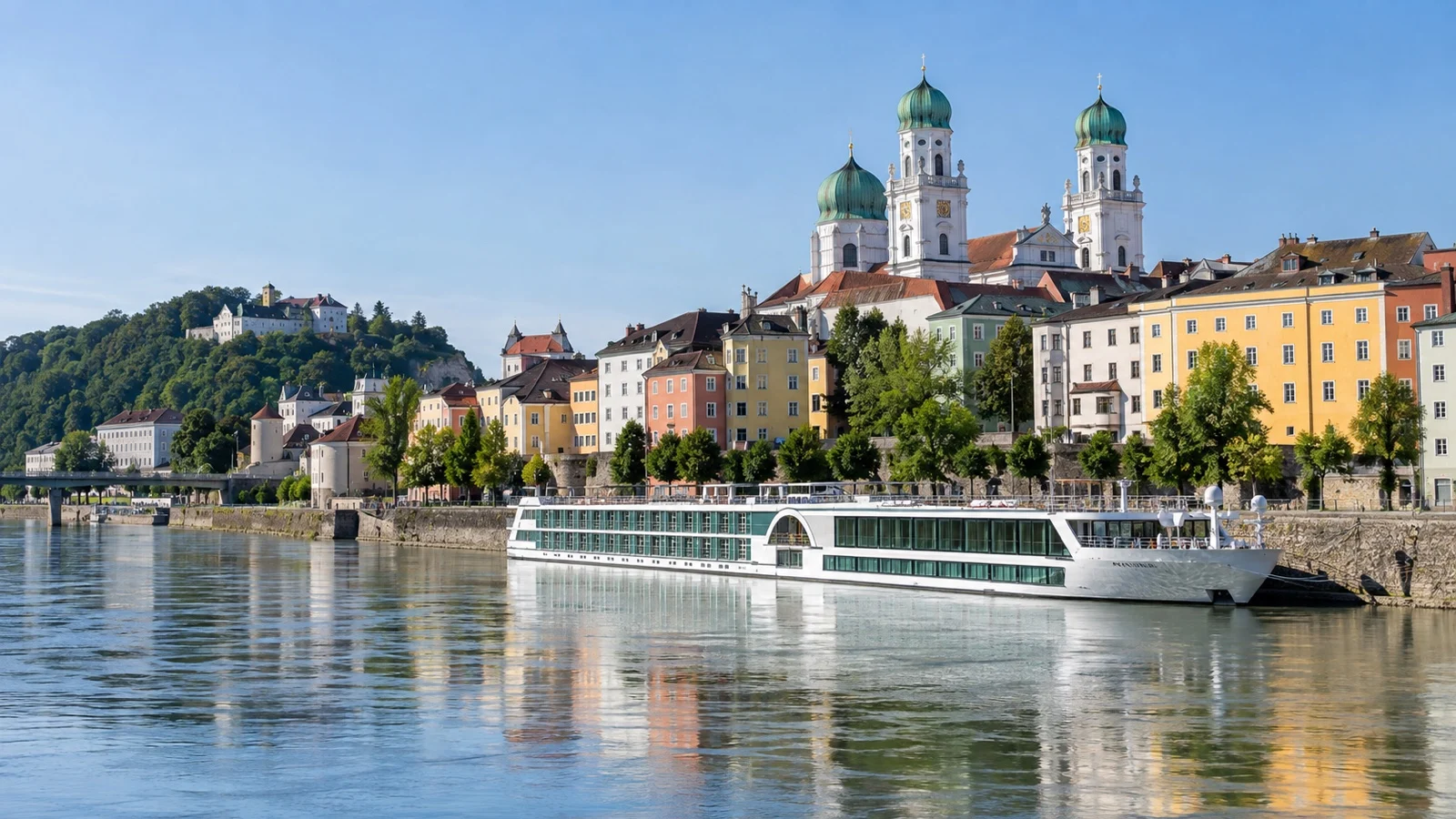
Passau Tourism describes central landing stages along the old-town Danube waterfront, with convenient access to the historic center. A berth near the main promenade places you within minutes of riverside sights and the pedestrian streets.
The specific stage matters because the old-town line extends along the peninsula. A ship near the city center creates a shorter cathedral walk than one toward the confluence, even though both may be described simply as Passau Altstadt.
Lindau sits about 3 kilometers downstream and outside the city boundary, according to the official cruise information. Local bus route 3 serves the Lindau area, though a cruise line may arrange its own shuttle or coach.
Winterhafen Racklau is just under 2 kilometers upstream, and the tourism office identifies bus routes 8, 9, and 11 with a remaining walk from the Stelzhammer Straße stop. A working-harbor location is not suitable for casual wandering, so follow the operator’s transfer plan.
Use the official Passau Tourism cruise page for landing maps and transportation context. Then confirm the final assignment onboard because local berth allocation can change close to arrival.
Rafting can change an easy walk-off
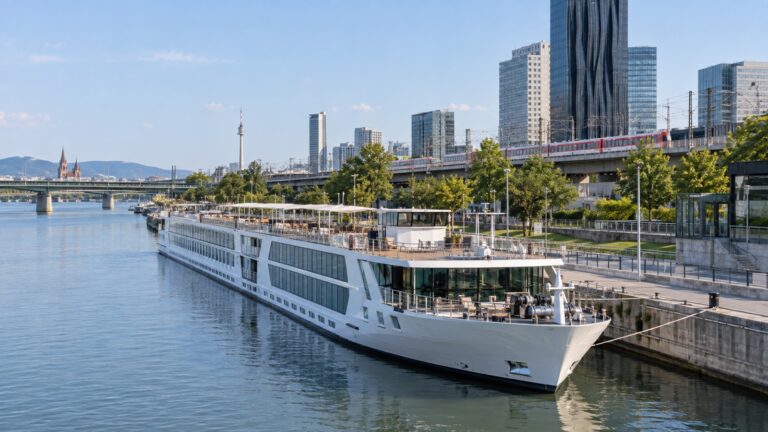
Passau is busy enough that river ships may moor side by side. Guests on an outside vessel then cross through or over the ships between them and the quay.
Aligned lobby decks can make the crossing quick, while different deck heights can introduce steps, thresholds, narrow temporary bridges, or an outside route. The arrangement can change during the call as another vessel arrives or departs.
Allow extra time whenever several ships share the wall, especially near the all-aboard rush. If you require step-free access, ask the cruise line how the current rafting arrangement affects your route before leaving the ship.
No operator can promise months ahead that its vessel will always be against the quay. Get a practical explanation of assistance limits rather than accepting a general assurance that Passau is walkable.
Walking into the old town
From a central landing, the riverfront promenade provides the easiest orientation. Keep the Danube behind or beside you as you work toward the old streets, then use the cathedral towers and elevated Domplatz as landmarks.
Passau’s historic center is compact but not uniformly flat. The peninsula rises through lanes and squares, with cobbles, steps, and short grades that matter more to some travelers than the total distance.
Save the ship’s position on an offline map and photograph the gangway area. Several nearly identical vessels can line the promenade, and a changed rafting order makes the correct entrance less obvious on return.
The three rivers and the Ortspitze
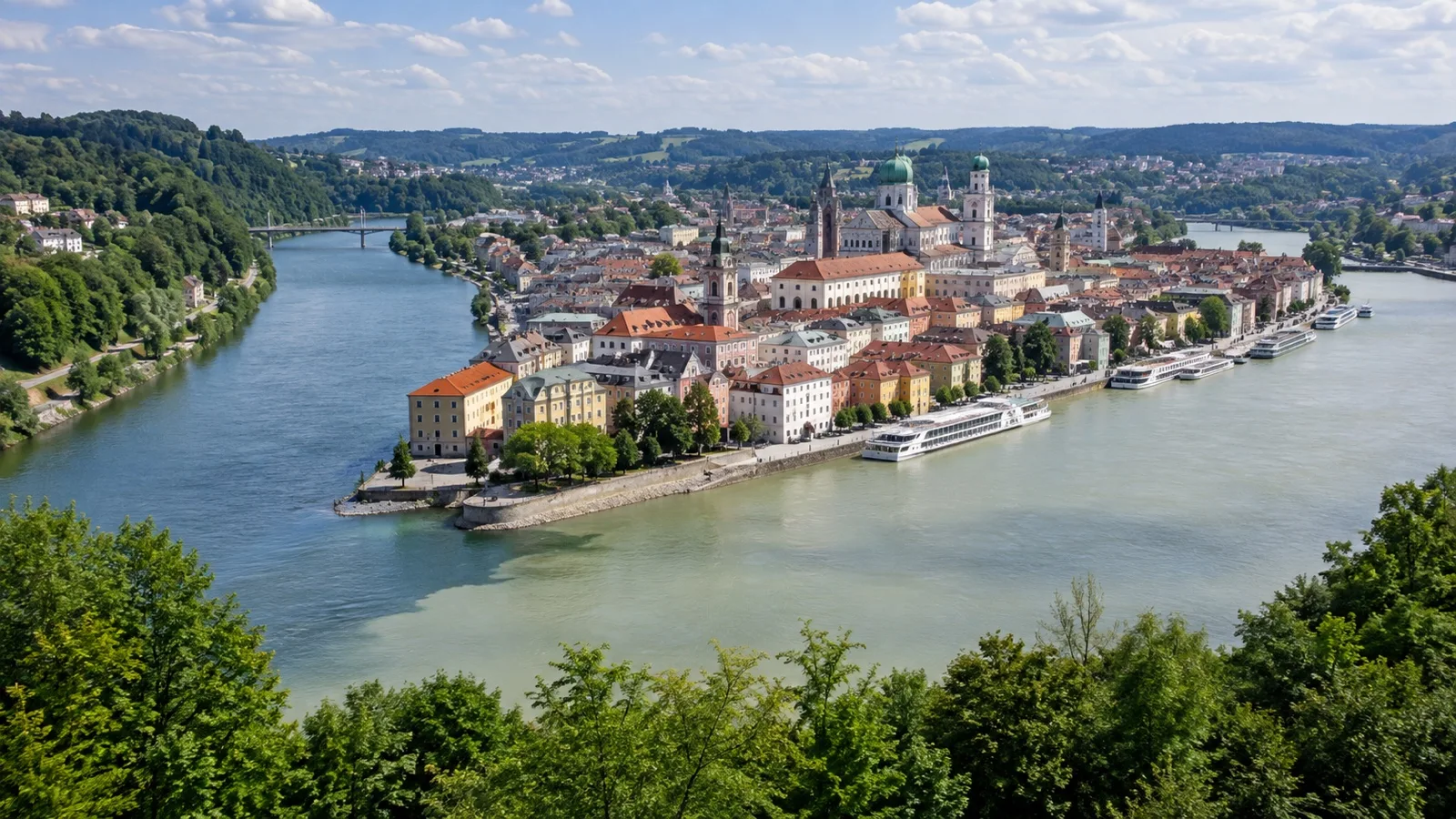
At the eastern tip of the old town, the Danube, Inn, and Ilz come together. The point is called the Ortspitze and offers the clearest view of the geography that shaped Passau.
The Inn often appears lighter and more alpine, while the Ilz can look darker, but color separation varies with flow, sediment, light, and weather. Enjoy the contrast when it appears without treating a three-color photograph as a daily guarantee.
The confluence route is relatively gentle from many central berths and works well as an early or late walk. It also keeps you close to the ship when the call is short or the forecast uncertain.
Saint Stephen’s Cathedral
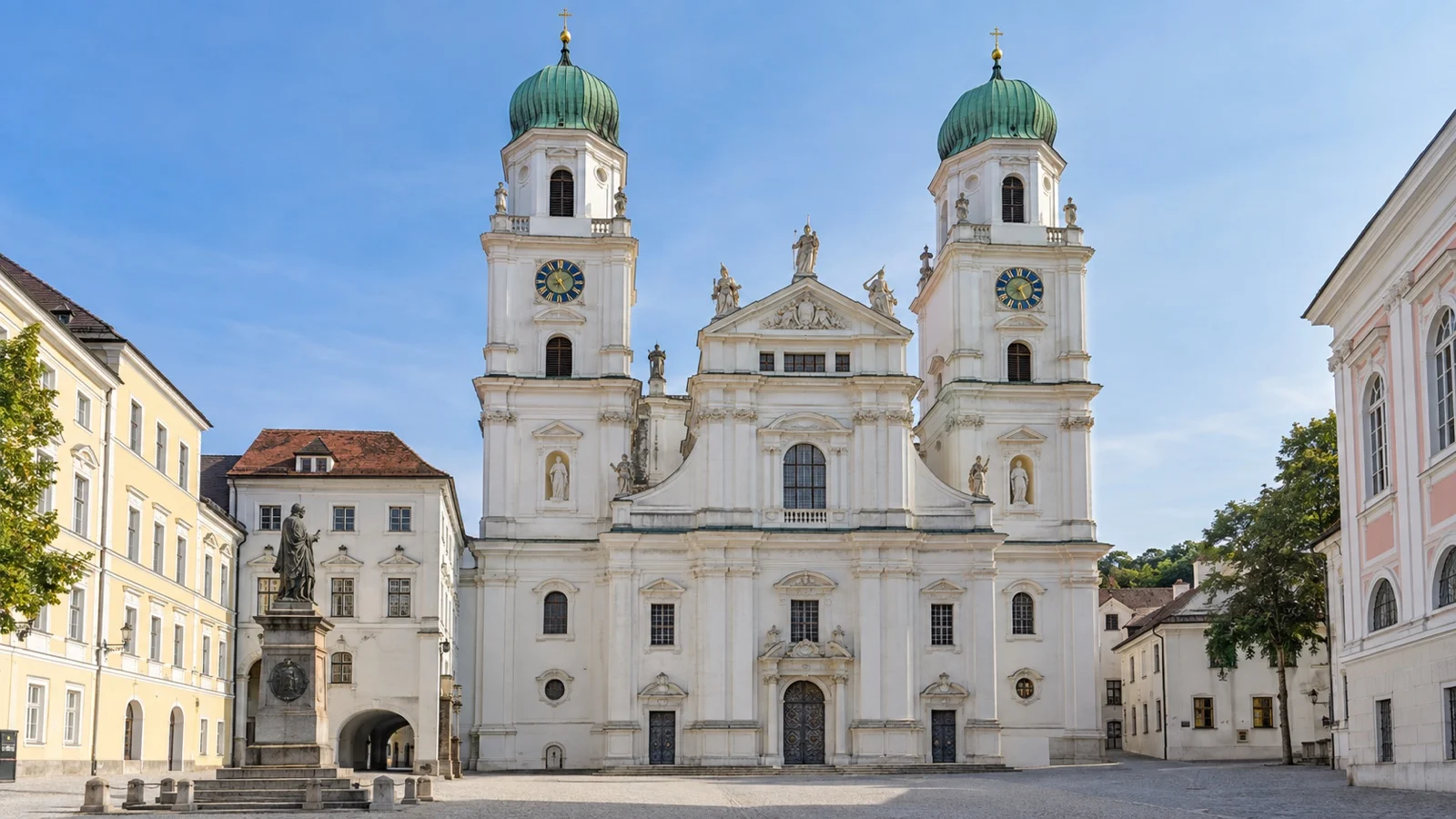
Saint Stephen’s Cathedral dominates the old town with a baroque interior rebuilt after the seventeenth-century fire. It remains an active place of worship, so liturgy, concerts, restoration, and special events always take priority over sightseeing.
The cathedral’s organ complex is famous for its scale, with the Diocese of Passau describing 17,974 pipes, 233 stops, and five component organs. An extensive restoration is underway and the diocese now expects completion in 2028, so not every part of the instrument is available at every performance.
Dress respectfully, keep voices low, and obey photography restrictions. Check the cathedral’s official information on the morning of your visit because visitor access can change around services and construction.
The midday organ concert in 2026
The Diocese of Passau lists midday organ concerts at noon from May 2 through October 31, excluding Sundays and public holidays. The performance lasts about half an hour, and current ticket prices are €6 for adults and €3 for eligible reduced admission.
Tickets are sold in limited numbers on the day from 10:00 until noon at the ticket office in the cathedral courtyard. Entry begins at 11:20, while the cathedral closes from 10:45 to 11:20 for concert preparation.
Use the official Diocese of Passau concert page for the current schedule and restoration notice. Do not build the entire day around an old cruise newsletter because holidays, services, and special concerts can alter access.
Buy a ticket early, explore nearby squares, and return before admission begins. If no concert operates that day, visit the cathedral during the published sightseeing window and use the extra time for the confluence or fortress.
Old town squares and lanes
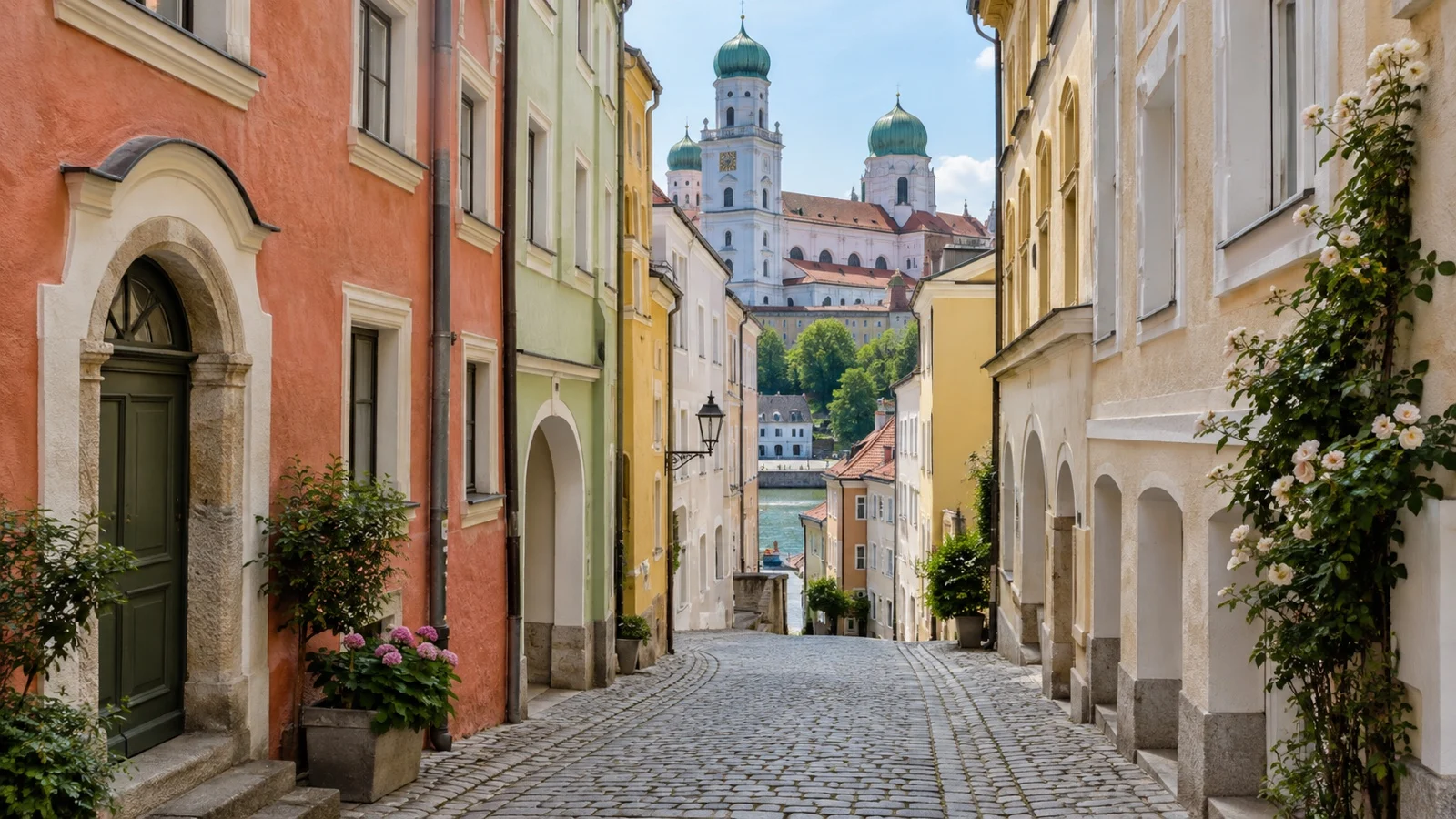
Domplatz and Residenzplatz give Passau its grander face, with pale facades, church architecture, and the former prince-bishops’ setting. The lanes descending toward the rivers feel more intimate and make the old town worth more than a single cathedral stop.
Rathausplatz near the Danube is useful for orientation and transportation, especially if you plan to reach Veste Oberhaus. Flood marks around the old town also show how dramatically the rivers have shaped daily life.
Do not rush through with your eyes on a checklist. Passau’s pleasure lies in the relationship between narrow ground, tall facades, church domes, water, and the steep opposite banks.
Veste Oberhaus
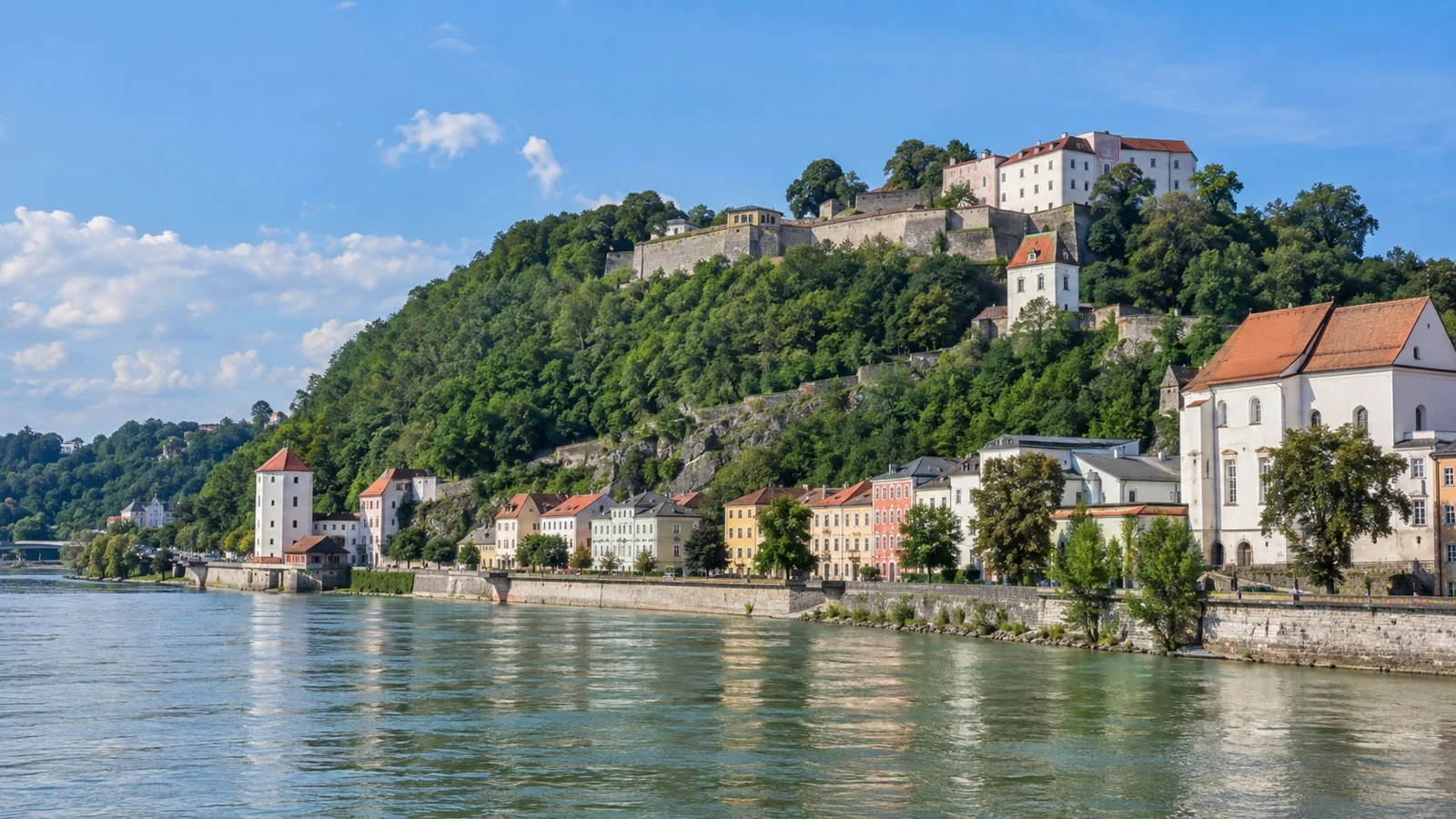
Veste Oberhaus rises above the Danube opposite the old town and gives the broadest view over the peninsula and confluence. The fortress houses the Oberhausmuseum, with exhibits tied to Passau and the region.
Reaching it on foot involves a real climb, and historic surfaces continue inside the complex. Travelers with limited time or mobility should investigate current shuttle or taxi access rather than treating the fortress as a quick extension of the cathedral walk.
Opening dates, tower access, transportation, and weather restrictions change seasonally. Check the official Oberhausmuseum site before committing, and leave enough time to descend or ride back to the ship.
Across the Inn
Crossing the Inn toward the Innstadt provides one of the best views back to the cathedral and old-town skyline. This side feels more residential and can offer a calmer meal or coffee away from concentrated tour groups.
Mariahilf pilgrimage church sits above the district and is associated with a long covered stairway. The climb is part of the experience, which also makes it a poor spontaneous choice for anyone conserving energy or watching a short call.
A simple bridge crossing and riverside pause can be enough. You do not need to climb every hill to appreciate how closely Austria, Bavaria, and the three-river landscape meet here.
Passau as an embarkation or disembarkation port
A river-cruise booking that says Passau may use a central berth, Lindau, Racklau, a hotel meeting point, or a motorcoach connection. Final travel documents and same-week operator messages control the address.
Arrive at least one night early when beginning the cruise. That buffer protects against flight or rail delays and gives the operator room to redirect you if water conditions require another vessel or landing.
Keep medication, identification, chargers, and one change of clothes with you when bags move separately. A coach transfer and ship swap are much easier to manage when essential items are not inside luggage you cannot reach.
At the end of a cruise, avoid a tight independent flight or train connection. River operations, traffic, berth changes, and baggage release can move the practical disembarkation time.
Why water levels affect Passau itineraries
Passau sits near a crucial transition on upper-Danube routes. The free-flowing German Danube farther upstream can become restrictive during low water, while high water can affect bridge clearance, current, and safe access elsewhere.
When a planned route becomes impractical, a cruise line may use Passau or nearby Vilshofen as a transfer point. Guests might move by motorcoach to another ship, hotel, or embarkation location even when Passau itself looks perfectly navigable.
A local gauge reading does not translate into one universal cancellation threshold. Vessel draft, waterway restrictions, forecasts, bridge clearance, and the captain’s assessment determine what the named ship can do.
Read the operator’s contract and disruption policy before booking. Then follow same-week messages rather than relying on a social-media photograph of a gauge from another date or location.
Kachlet and navigation context
The Kachlet barrage and double lock lie on the Danube near Passau and are part of the engineered navigation environment around the city. They should not be confused with the shallower free-flowing section that can constrain travel farther upstream.
Passengers do not need to become river engineers to prepare well. The important distinction is that a ship can reach Passau while the onward route or original boarding point requires a different plan.
Official German waterway notices provide operational context, but the cruise line remains responsible for communicating the passenger itinerary. Ask what changes in hotels, transfers, luggage, excursions, and final arrival rather than focusing only on whether the ship moves.
Accessibility in Passau
A central quay and the riverside promenade can be relatively manageable, but rafting may insert stairs before you even reach shore. Confirm the actual ship-to-quay route on the day.
The old town includes cobbles, slopes, curbs, and historic thresholds. A route described as a short walk may still require more strength or balance than its distance suggests.
Ask whether the transport from Lindau or Racklau is lift-equipped, where a wheelchair is secured, and how far the stop lies from the ship. Local public buses and cruise coaches may not offer identical features.
The cathedral, fortress, museum rooms, tower, confluence, and Mariahilf route each have different access conditions. Choose the experience that fits the complete route rather than relying on a general claim that Passau is accessible.
Weather and when to visit
Passau’s river-cruise season stretches from spring into the Advent period, with different rewards and risks. Spring brings fresh landscapes and possible high-water concerns, summer brings the heaviest berth demand, and fall often combines comfortable walking weather with changing river conditions.
Summer can be warm, but rain and thunderstorms remain possible. The rivers and stone streets make a light waterproof layer and shoes with reliable grip sensible in every season.
December adds Christmas-market atmosphere around the cathedral and old town, along with cold air, early darkness, and potentially slick paving. Confirm daylight against the port schedule if the confluence or fortress view is a priority.
No month eliminates water-level disruption. Choose the season for temperature and atmosphere, then buy insurance and plan travel buffers for operational changes.
Food, money, and practical details
Passau uses the euro, and cards are common, though small purchases and ticket desks may still reward carrying some cash. Keep coins or a small note rather than depending entirely on a phone wallet.
Bavarian dishes can be substantial, and a long seated lunch easily consumes a short call. Eat after the cathedral or choose a quick cafe stop unless the port day is generous.
German is the local language, with English commonly used in major attractions and cruise-facing businesses. Save translated allergy information if a dietary issue requires precise communication.
Public restrooms may charge a small fee or require a purchase. Use ship facilities before leaving and identify another option near the cathedral or museum if needed.
Common Passau cruise-port mistakes
The first mistake is assuming every berth labeled Passau sits beside the old town. Lindau and Racklau require different transportation and timing.
The second is reaching the cathedral during a closure before the midday concert. Check the official schedule, buy the ticket early, and understand that restoration continues through 2028.
The third is climbing to Veste Oberhaus without budgeting the return. The view is excellent, but the hill and seasonal access make it more than a casual detour.
The fourth is underestimating rafting. Crossing neighboring ships can add time and stairs to an otherwise easy central landing.
The final mistake is reading an upstream low-water change as evidence that Passau’s quay is dry. River constraints can sit elsewhere while the city becomes the transfer solution.
Quick answers
Can I walk from my ship into Passau?
Yes, from many old-town berths. Lindau and Racklau sit outside the immediate center, so check the live landing before choosing a walking plan.
Do Passau river ships tender?
No, they normally berth alongside and use a gangway. Rafting may require guests to cross one or more neighboring vessels to reach the quay.
When are the organ concerts?
For the 2026 season, the diocese lists midday concerts at noon from May 2 through October 31 except Sundays and public holidays. Check the official page because construction, worship, and special events can change access.
Is the famous organ fully available?
No. The Diocese of Passau says restoration continues with expected completion in 2028, so the full collection of component organs may not be heard at every concert.
What are the three rivers in Passau?
The Danube, Inn, and Ilz meet around the old-town peninsula. Visible color differences depend on current conditions and are not guaranteed.
Why did my cruise change to Passau?
Low water farther upstream, high water, bridge clearance, or another navigation issue can make Passau a practical transfer point. Follow the operator’s revised instructions for the ship, hotel, luggage, and coach.
An ideal Passau port day
From a central berth, walk first to the Ortspitze, then return through the old town toward the cathedral. During concert season, buy the noon ticket at 10:00, explore nearby squares, and be back for the 11:20 admission.
After the concert, choose either Veste Oberhaus or a relaxed Inn crossing, depending on the time and your energy. Return to the riverfront with a generous buffer for rafting and security rather than trying to squeeze in one last hill.
The last word
Passau is compact enough to feel effortless and complex enough to reward planning. Its three rivers, cathedral, old-town quays, and fortress create a complete port day without any long excursion.
Learn the actual berth, respect the concert schedule, and understand why water conditions elsewhere can redirect the cruise here. Those three details turn Passau from a confusing transfer label into one of the upper Danube’s best walk-off ports.
How this guide was researched: This guide is based on independent research using official Passau Tourism cruise information, Diocese of Passau cathedral and concert guidance, Oberhausmuseum visitor information, German waterway sources, and current operator materials. Berths, rafting, water levels, transportation, concert access, restoration, prices, and accessibility can change, so confirm time-sensitive details before travel and see our Editorial Policy.