River Cruise Cabin Noise on Lock-Heavy Nights: What to Book
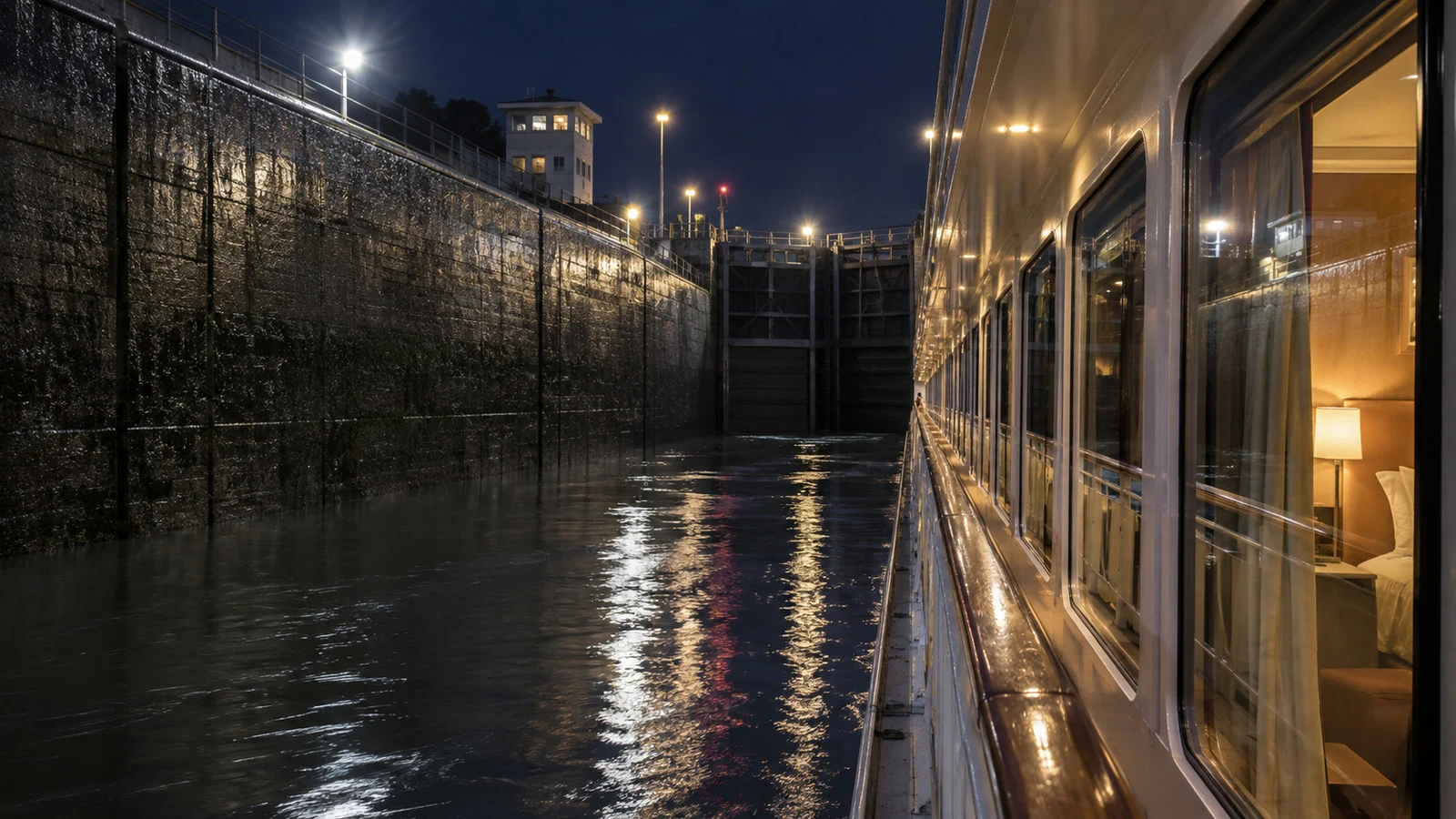
Lock-heavy nights can bring short bursts of propulsion noise, vibration, water movement, crew activity, and doors opening on deck. The loudest cabin is not universal because machinery and public spaces sit in different places on different ships.
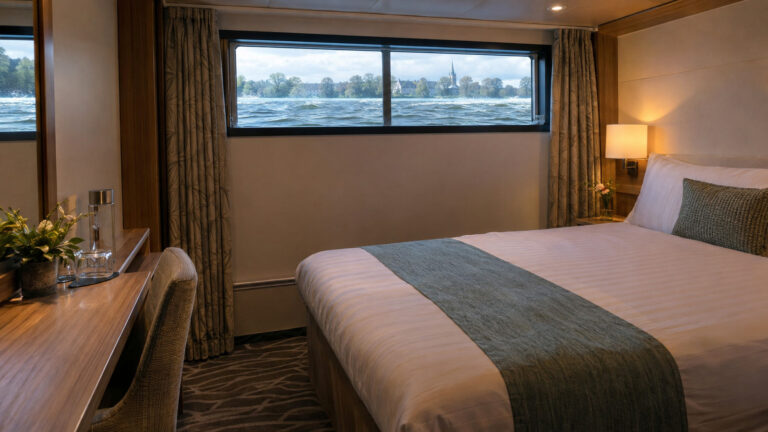
Your best chance of a quieter room is to compare the exact deck plan, avoid known machinery and service zones, and ask the operator about the named cabin. “Midship and middle deck” is a useful starting point, not a guarantee.
My quick take
First identify the cabins nearest the bow and stern machinery, mooring stations, stairwells, elevators, lounge, galley, and crew doors. Then choose the best compromise for your mobility, budget, view, and sleep sensitivity.
Do not pay for the highest deck on the assumption that it buys silence. Upper cabins may be farther from some machinery but closer to sun-deck footsteps, retractable equipment, public rooms, or crew work during low-clearance sections.
If a lock-heavy segment matters, ask which locks the itinerary normally transits overnight and whether the answer can change. Water levels, traffic, berth timing, and operational delays can move a planned lock passage from day to night.
The quick facts
- There is no universally loudest cabin: thrusters, propulsion, generators, mooring stations, service doors, public rooms, and cabin layouts vary by vessel. Use the exact ship and room number.
- Lock noise is often intermittent: maneuvering and position corrections can create stop-and-start sound or vibration. Intermittent noise may disturb some sleepers more than a steady background hum.
- Forward and aft cabins deserve extra checking: the ends of a ship are common locations for maneuvering or propulsion equipment and deck operations. That does not prove every cabin at either end is noisy.
- The Main-Danube Canal has 16 locks: Germany’s federal waterways information identifies a lock-intensive route between the Main and Danube. The number does not tell you how many your sailing will pass while you are asleep.
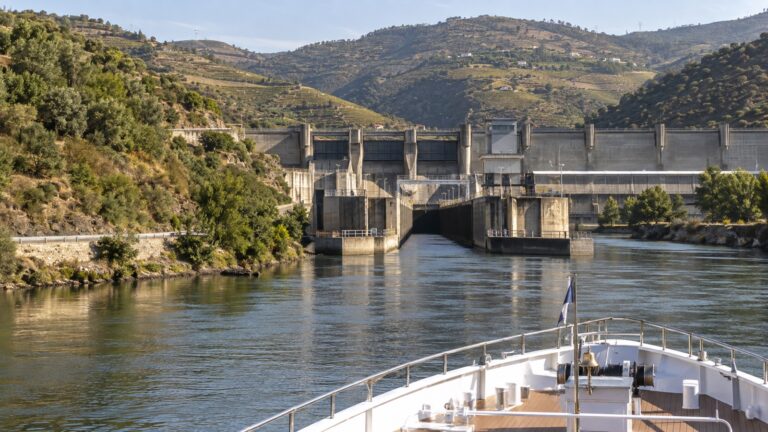
- The Upper Danube is also lock-heavy: viadonau says 16 of the Danube’s 18 power plants with locks lie between Kelheim and Gönyű. Your itinerary, direction, and daily schedule determine the timing.
- Deck height trades one noise source for another: lower cabins may be closer to machinery, while upper cabins may sit beneath the sun deck or beside public areas. Read what is above, below, and beside the room.
- Noise tools have limits: earplugs or white noise can reduce airborne sound but may not remove structure-borne vibration. Never use anything that prevents you from hearing alarms or crew instructions.
What you may hear in a lock
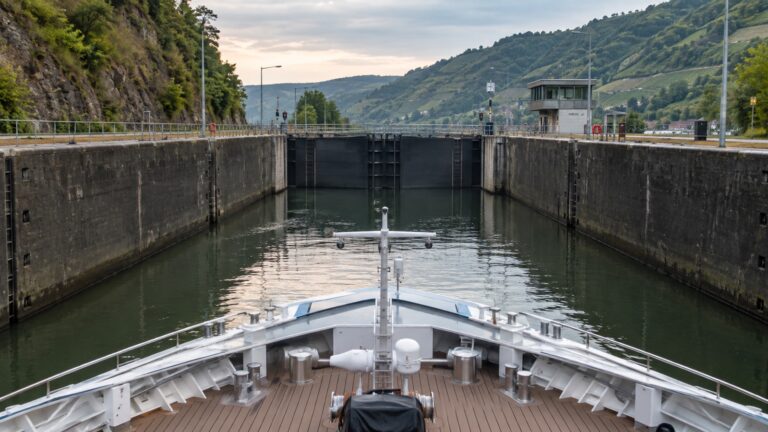
A ship must enter a chamber, hold or secure its position, rise or fall with the water, and leave when the gates and traffic permit. Passengers may hear propulsion changes, thrusters, lines or equipment, water turbulence, gates, alarms, radio traffic, and crew movement.
Not every vessel uses the same machinery in the same way. Some designs use tunnel thrusters, some use steerable propulsion units, and operating choices depend on the chamber and conditions.
Sound can travel through the air, while vibration can travel through the hull and structure. That distinction explains why closing a window may help with voices or water noise but do less for a low-frequency pulse.
Locks are also working infrastructure rather than attractions built around hotel quiet hours. Commercial traffic, water management, and lock availability can require a cruise vessel to pass at night.
Why stop-and-start noise wakes people
A steady engine or ventilation sound can fade into the background for some sleepers. A sudden burst, followed by silence and another burst, is harder to ignore because the sound pattern keeps changing.
Sensitivity varies greatly. One guest may sleep through maneuvering, while another notices a door latch or rolling cart far from any thruster.
Reviews can reveal repeated reports about a specific room, but they need a vessel name and cabin number to be useful. A review of a sister ship or a similarly named cabin category may describe a different layout.
Do not turn one complaint into a fleet-wide rule. Look for several recent, consistent reports and compare them with the operator’s current deck plan.
How to read the deck plan for noise
Start with the cabin number, not only the category. Locate the bow, stern, stairs, elevator, reception, lounge, restaurant, galley, bar, exterior doors, gangways, and any unlabeled mechanical or crew space.
Then check the deck above and below. A blank area may be a machinery, storage, service, or crew zone, so ask the line what it contains rather than assuming blank means quiet.
Cabins beside stairs or elevators can pick up conversation and door noise even when the elevator mechanism is quiet. Rooms near a lounge, bar, or galley may hear cleaning and setup after passengers leave.
Upper-deck cabins can sit below walking areas, movable railings, awnings, or a wheelhouse that lowers for bridge clearance. The crew may need to handle that equipment at any hour.
Lower-deck cabins may sit closer to propulsion or utility machinery, but the exact position matters more than the label “lower deck.” The guide to aquarium-deck cabins covers the separate view, daylight, and window tradeoffs.
The Main-Danube Canal is a useful stress test
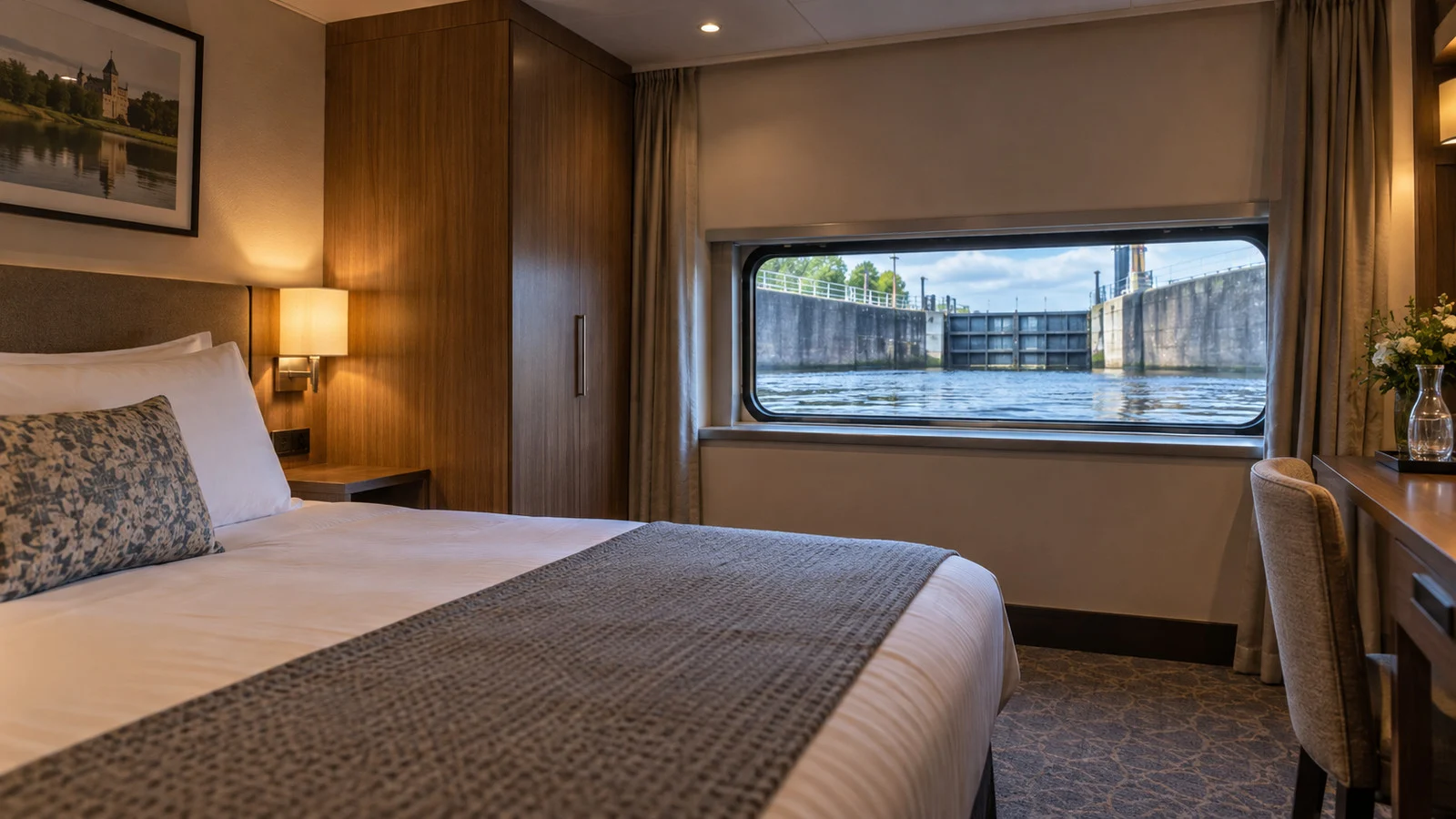
The Main-Danube Canal is useful for planning because it has 16 locks over a relatively compact route. Several chambers have large lifts, so a through itinerary can spend meaningful time entering, waiting, locking, and leaving.
That still does not justify the promise of “one lock every hour from dinner to breakfast.” Cruise schedules vary, and ships may wait for traffic or cross part of the canal in daylight.
Consecutive Nuremberg and Regensburg calls can signal that the canal lies between two itinerary days. They do not prove the exact passage time, especially when the ship’s berth or schedule changes.
Use the daily program and cruise director’s briefing for the latest expected timing. Treat it as an estimate because inland navigation remains operationally flexible.
The Nuremberg river-cruise guide explains its canal-side port context, while the Regensburg guide covers the Danube side of the route.
Other lock-heavy sections
The Main and Upper Danube contain many locks and barrages, so itineraries across the Rhine-Main-Danube corridor have more opportunities for nighttime lock activity. The exact count between your ports is more useful than a whole-river total.
DoRIS lists the Austrian locks individually, including Aschach, Ottensheim, Abwinden, Wallsee, Persenbeug, Melk, Altenwörth, Greifenstein, Nußdorf, and Freudenau. A sailing may not use every listed facility in the same night or even the same itinerary segment.
Viadonau reports 18 power plants with locks on the Danube from Kelheim to Sulina, with 16 on the Upper Danube and two at the Iron Gates. That official infrastructure count should not be confused with a passenger noise rating.
Parts of the Upper Rhine and other European rivers also use locks, while other stretches are comparatively free-flowing. Review European river-cruise locks for route context and then match the count to your actual overnight legs.
Sailing direction can shift which itinerary day contains a lock-heavy reach. The guide to choosing upstream or downstream explains the wider timing tradeoffs.
Forward cabins
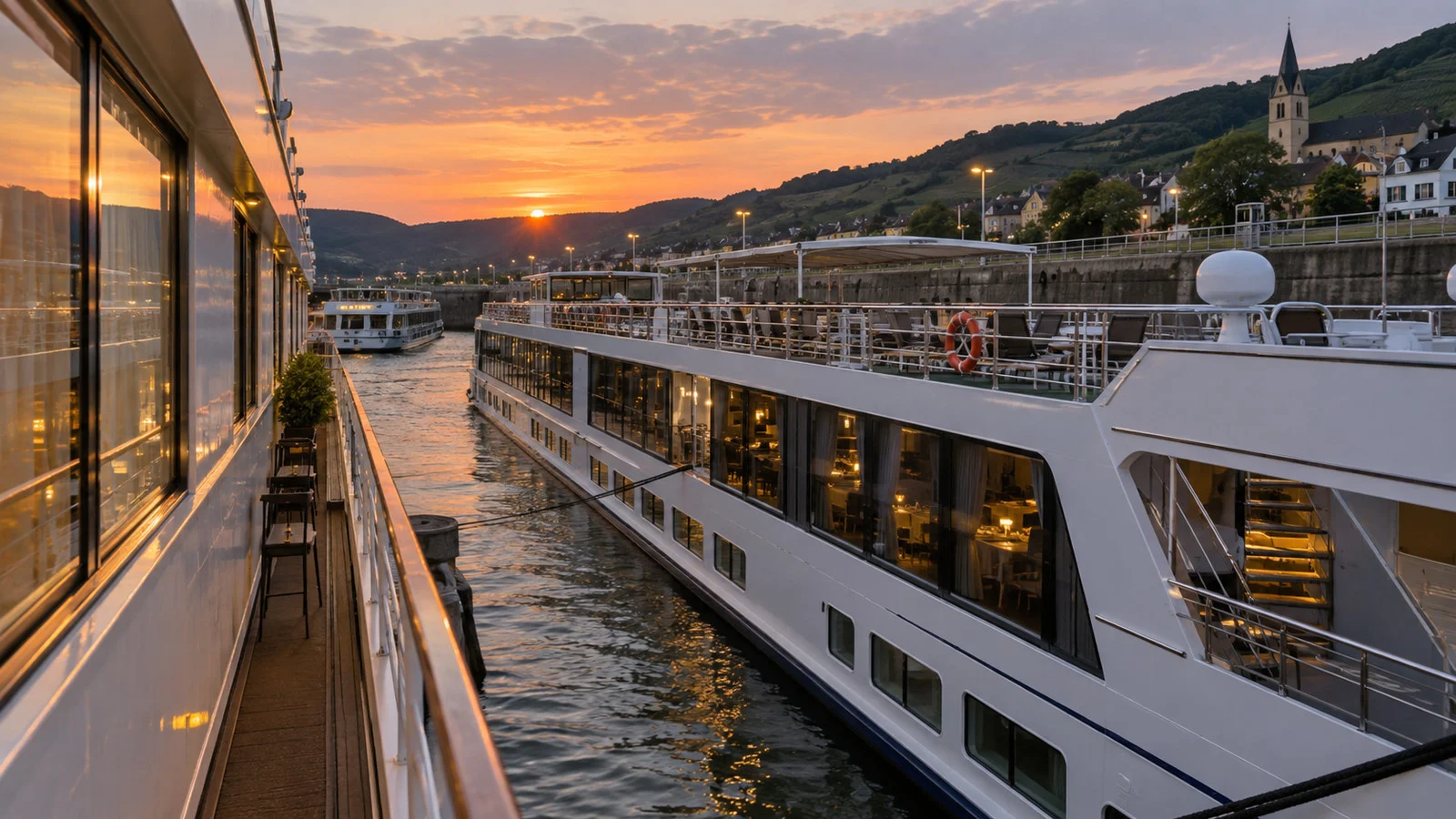
Forward rooms deserve questions about bow maneuvering equipment, anchors, mooring work, exterior crew access, and the wheelhouse. The lowest room at the bow is not automatically the loudest on every design.
Ask whether the cabin is above, beside, or separated from the relevant equipment. A corridor, crew space, or tank can change how much sound and vibration reaches the room.
Forward upper cabins may also be close to wheelhouse or sun-deck operations during bridge and lock sections. A premium category can therefore improve space or view without solving every noise source.
Aft cabins
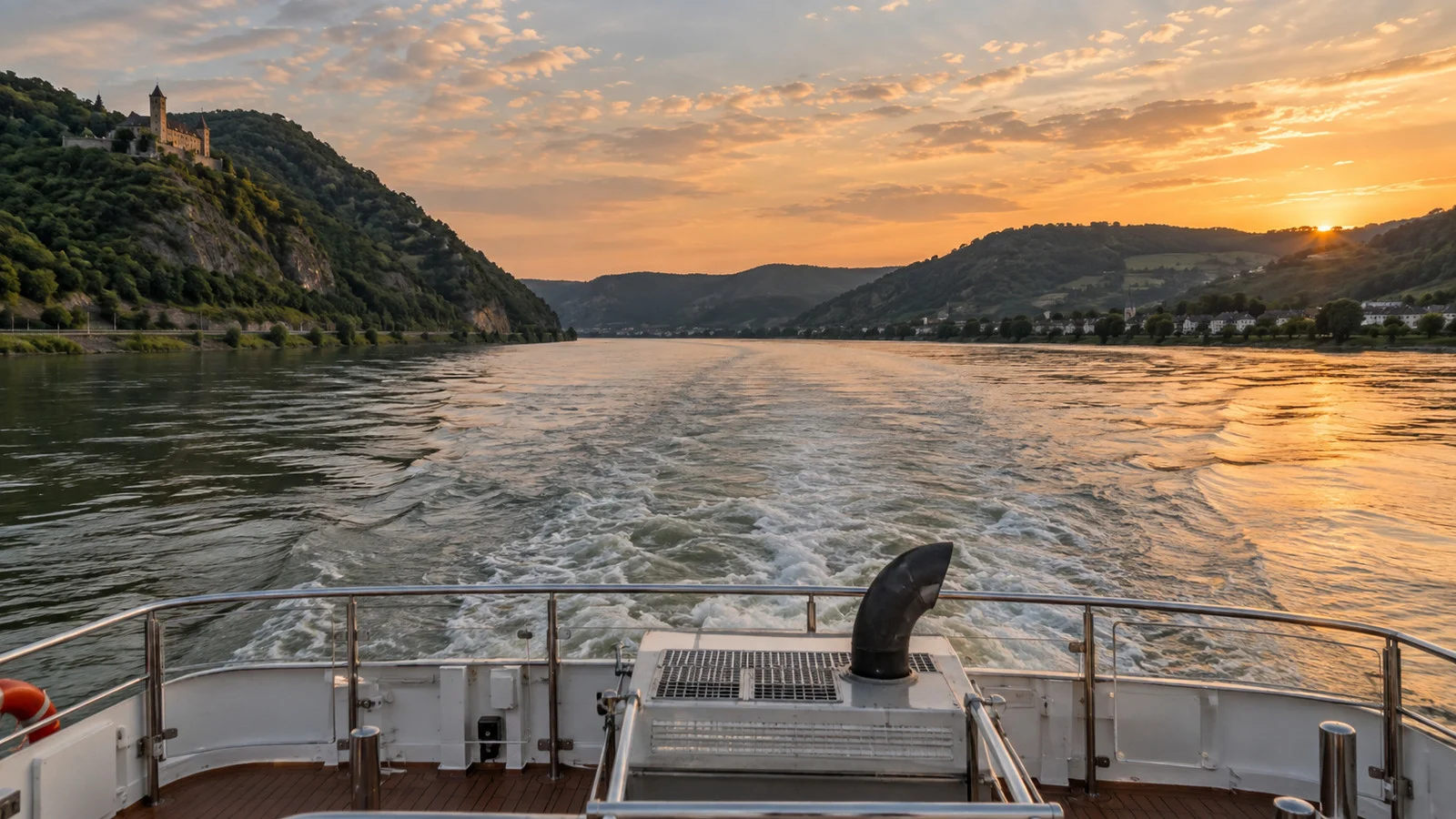
Aft rooms may be closer to main propulsion, generators, steering gear, or stern maneuvering equipment. The sound may be steady underway, intermittent during docking, or both.
Some travelers tolerate a steady hum better than voices or sudden impacts, while others are sensitive to low-frequency vibration. Your own noise pattern matters as much as a broad quiet-or-loud label.
Suites are sometimes placed aft, but there is no fleet-wide rule. Check the actual deck plan and recent reports for the same vessel and cabin.
Midship cabins
Midship rooms are often a sensible first place to look because they can be farther from equipment at the ends. They may still sit beside reception, stairs, elevators, service areas, or a busy gangway.
A middle-deck room can reduce some machinery exposure while avoiding direct sun-deck traffic. It remains a compromise rather than a universal quiet zone.
If the operator will identify a historically quieter room in your category, ask for the number in writing. Also ask whether the booking guarantees that room or merely records a preference.
A practical booking checklist
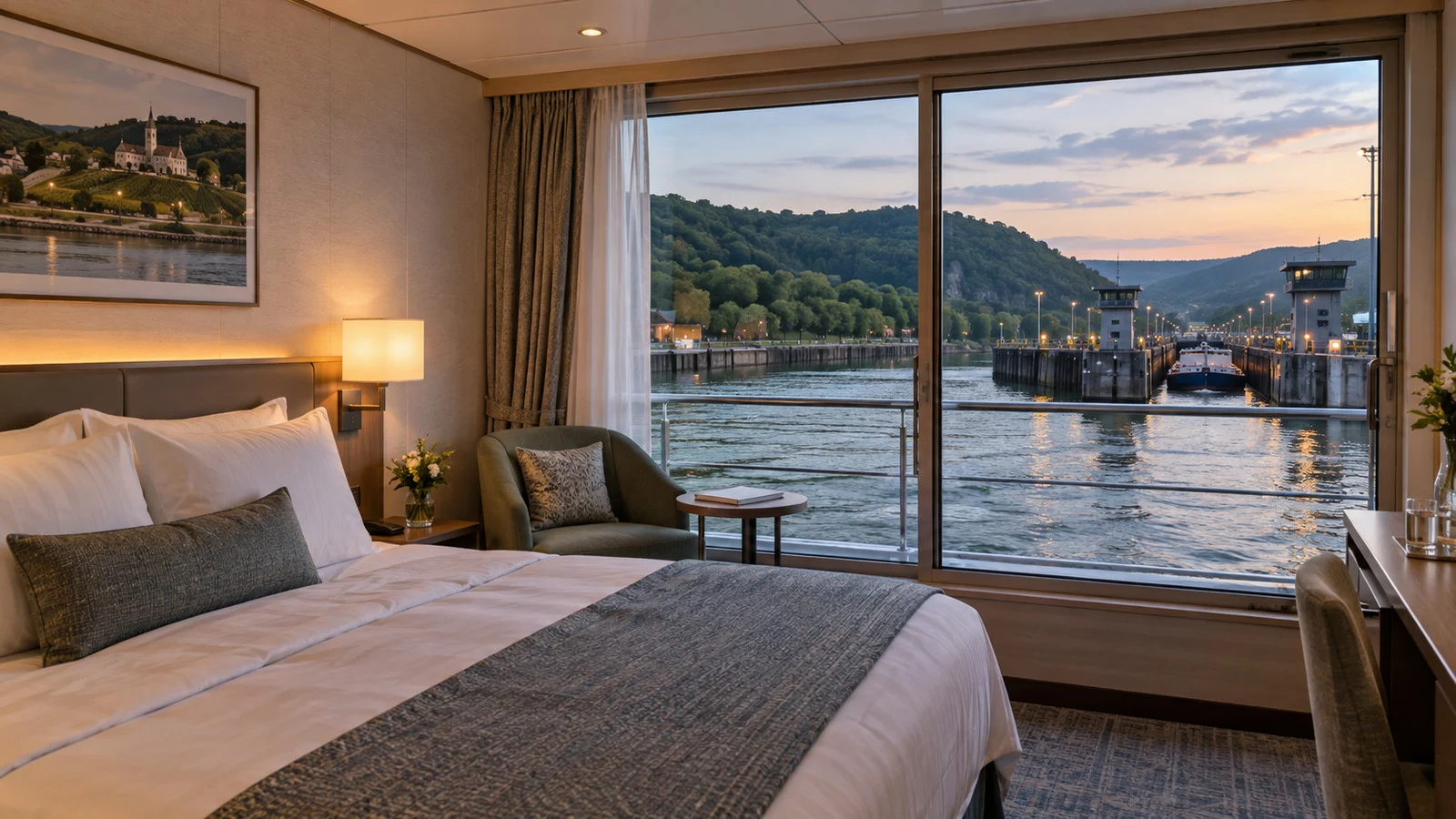
- Name the ship and cabin: get the vessel, room number, and deck plan before comparing reviews. A category guarantee can leave the final location unknown.
- Check every adjacent space: look above, below, across, and beside the cabin. Ask what any unlabeled area contains.
- Ask about machinery: request the locations of propulsion, generators, maneuvering equipment, anchors, and mooring stations. The representative may need to ask the marine or hotel team.
- Ask about night operations: find out which itinerary legs normally include overnight sailing or locks. Accept that the schedule can change.
- Prioritize your trigger: choose distance from public rooms for voice sensitivity, or distance from machinery for vibration sensitivity. No single cabin avoids every possible sound.
- Review the assignment terms: confirm whether the room number is guaranteed and what happens after a vessel substitution. Recheck the deck plan if the operator changes ships.
Fun fact: the Danube’s lock infrastructure is concentrated upstream. Viadonau says 16 of the 18 power plants with locks from Kelheim to Sulina are on the Upper Danube, while the remaining two are at the Iron Gates.
What to pack for sleep
Soft foam earplugs can help with airborne sounds such as voices, doors, or water echo. Test them at home and make sure you can still respond to emergency alarms or an in-cabin alerting device.
A white-noise app or small permitted sound machine can soften sudden changes in background sound. Download the app or audio before sailing because onboard Wi-Fi may be unreliable.
Keep loose objects from tapping against glass or furniture. If a vibration appears, a bottle, hanger, or cabinet door may amplify it more than the ship itself.
Tell reception promptly if a new mechanical noise, alarm, leak, smell, or severe vibration seems abnormal. Do not assume every sound at 3 a.m. is merely a lock.
If sleep is medically important, discuss appropriate strategies with your clinician before travel. Do not use alcohol, sedating medicine, or an untested sleep aid as a cabin-noise solution.
How to choose when the quietest room costs more
Pay for location only after the line confirms what the upgrade changes. A higher category may buy a balcony, larger floor area, or suite service while leaving you beside a stairwell or machinery zone.
When the price difference is large, compare a carefully placed lower-category room with a poorly placed suite. Cabin number can matter more than category name for noise.
If all remaining rooms are near a possible noise source, ask about assignment flexibility and the line’s cabin-change process onboard. Do not count on an empty room being available after departure.
A short itinerary may make one imperfect night acceptable, while a long through-cruise can repeat lock exposure. Count the lock-heavy or overnight-sailing segments rather than treating the entire river alike.
Accessibility and hearing needs
An accessible cabin may be near an elevator or reception because that shortens the onboard route, but placement varies by ship. Do not trade away necessary access based on a generic noise rule.
Ask for the cabin’s measurements, doorway and bathroom configuration, elevator coverage, gangway policy, and distance to dining and the lounge. Then ask the separate noise questions for that exact room.
Guests who are Deaf or hard of hearing should confirm whether visual or vibrating emergency-alert equipment is available. Earplugs, headphones, or white noise must not block the safety-alert method you rely on.
If stairs prevent you from watching a lock from the sun deck, ask where an interior viewing area is available. Sun-deck access can be restricted during low bridges or crew operations, regardless of mobility.
The river-cruise accessibility guide covers the broader ship and shore decision. Reconfirm every critical feature if the vessel changes.
Season, water levels, and schedule changes
Lock machinery does not become predictably quieter in one cruise month. Seasonal temperature, open windows, passenger use of the sun deck, and ventilation may change what you notice, but they do not create a reliable booking calendar for noise.
High or low water can change sailing speed, berth plans, bridge clearance, waiting, or even vessel use. Those operational changes may shift when a ship reaches a lock.
Do not book spring expecting air conditioning to be silent or summer expecting its fan to mask other sound. Cabin climate systems and guest preferences vary too much for that promise.
The most useful seasonal step is to pack for sleeping with the window closed when required. Then use the latest daily schedule rather than the original brochure to anticipate overnight movement.
Quick answers
Which cabin is loudest on a river cruise:
There is no universal answer. Cabins near propulsion, thrusters, mooring stations, public rooms, service doors, stairs, or overhead deck work are the main candidates.
Whether the aft is noisy:
It can be when propulsion, generators, steering, or maneuvering equipment is nearby. Verify the layout for the named vessel.
How many locks are on the Main-Danube Canal:
The canal has 16 locks. Your itinerary and current schedule determine how many occur during sleeping hours.
Whether earplugs work in a lock:
They can reduce airborne sound but may not remove vibration transmitted through the hull. Use them only with an emergency-alert method you can still perceive.
Whether locks operate at night:
Commercial inland navigation can continue overnight, and cruise ships may transit locks while passengers sleep. Check the daily program because timing can change.
The last word
The best quiet-cabin advice is specific, not absolute. Match the exact room to the machinery, public spaces, decks, and overnight route on the exact ship.
Midship on a middle deck is a reasonable place to begin, but accessibility and the surrounding spaces may point elsewhere. Get the cabin number in writing and recheck it after any vessel change.
The guide to the Main river ports explains the lock-heavy approach, while the guide to river-cruise sailing schedules shows why some movement happens at night. Those route details turn a vague fear of noise into a cabin question the cruise line can answer.
How this guide was researched: This guide is based on official inland-waterway information and ship-specific planning principles. Danube lock totals and locations were checked against viadonau and DoRIS, while canal context was checked against Germany’s federal waterways information; details were reviewed in September 2026 under our Editorial Policy.
More on this topic: browse every guide on river cruise planning.