River Cruise Ship Size: Why Almost Every Ship Is Identical
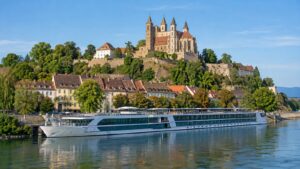
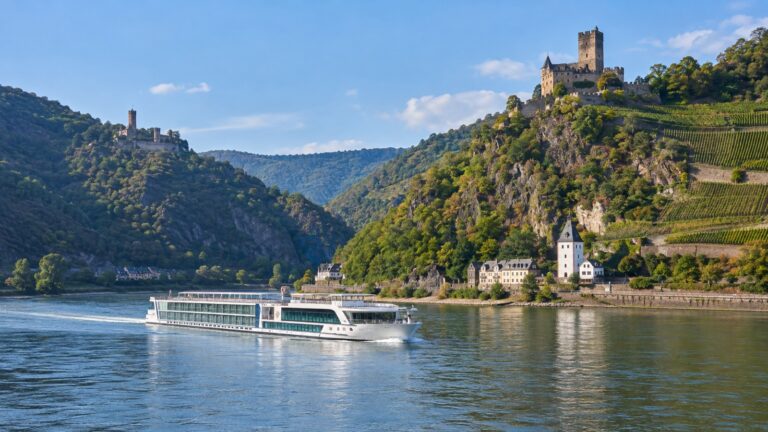
Stand on a busy quay in Amsterdam, Cologne, or Budapest and the repetition is impossible to miss. Ship after ship arrives at roughly the same length, width, and height, even when the names, colors, and cabin promises are completely different.
That sameness is not a failure of imagination. European river ships are shaped by the waterways they must cross, and the tightest locks, bridges, channels, and berths influence nearly every decision above and below deck.
My quick take
For a Rhine, Main, or Danube cruise, hull dimensions rarely decide which line I would book. Most modern vessels serving the full connected route occupy a similar 135-meter by 11.4-meter envelope, so service, cabin layout, passenger count, dining, and disruption policies matter far more.
Dimensions become much more important on the Douro, Elbe, Seine, Nile, Mekong, Mississippi, and other river systems with different infrastructure. A ship designed for one network may be too long, too wide, too deep, or too tall for another.
Quick Facts
- Common European length: About 135 meters, or 443 feet
- Common European beam: About 11.4 to 11.45 meters, or roughly 37.5 feet
- Main-Danube Canal locks: The 16 locks have about 190 meters of usable length and 12 meters of usable width
- Tightest everyday fit: Beam, because only about 0.55 meter remains across a 12-meter chamber around an 11.45-meter ship
- Height solution: Retractable wheelhouses, masts, railings, canopies, and movable deck furniture
- Important exception: Wider ships can operate on roomy river sections but cannot pass every connecting canal
- Safety framework: European inland vessels are certified under inland-navigation technical rules, including ES-TRIN where applicable
- Best booking comparison: Cabin area, passenger count, elevator reach, outdoor access, and the line’s response to water disruption
The 135-meter pattern
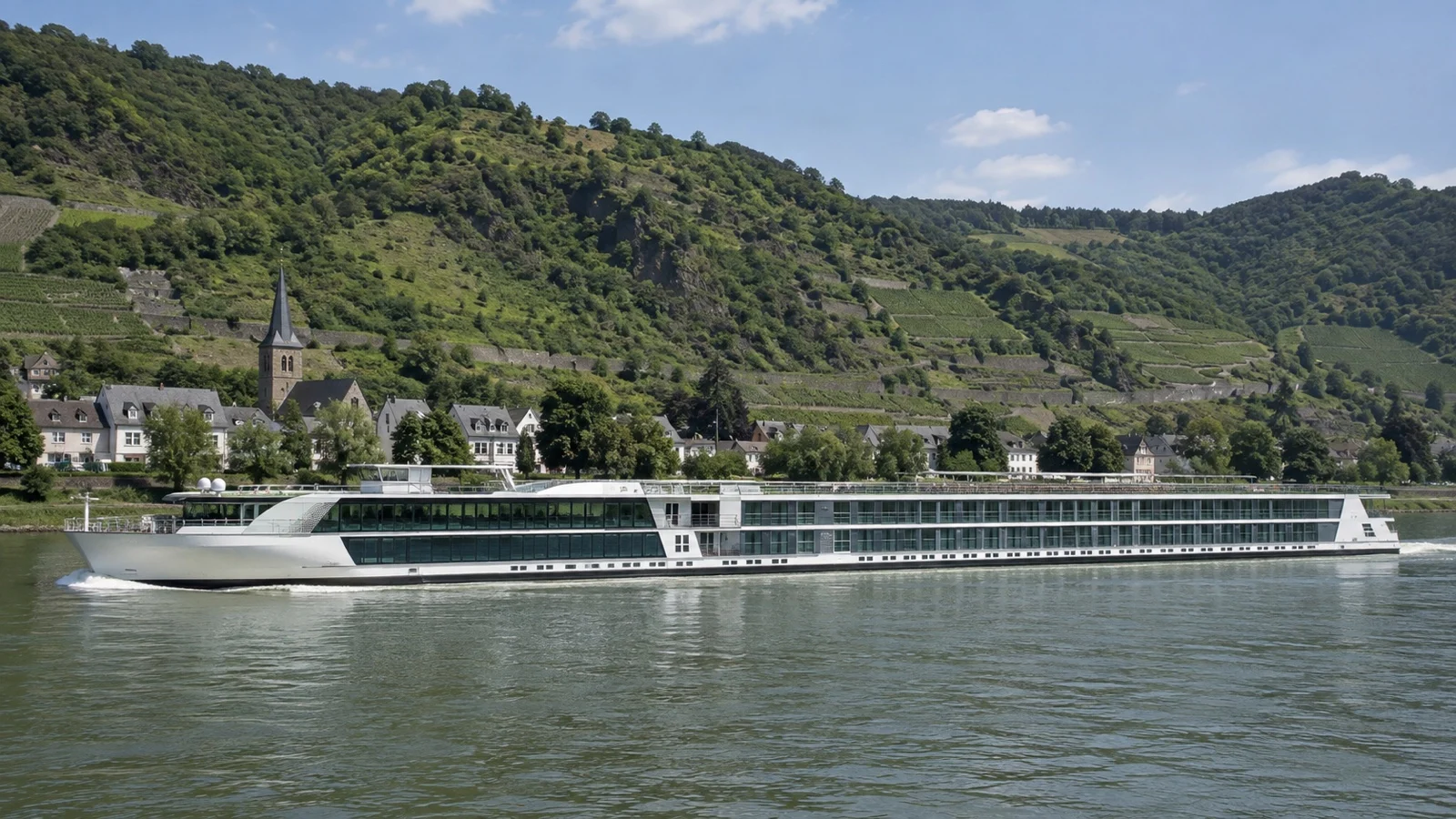
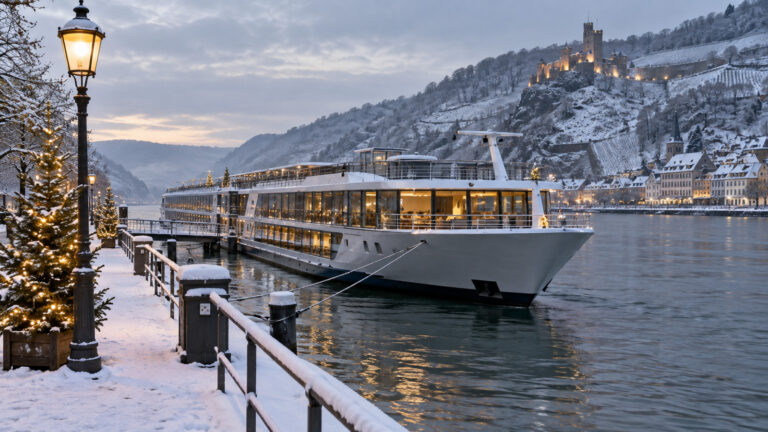
The number that appears again and again in European brochures is 135 meters, about 443 feet. AmaWaterways currently lists AmaSofia at 443 feet, while Avalon publishes the same length for several Suite Ships, including Avalon Passion and Avalon View.
Their interiors and passenger counts differ, but the outside envelope is familiar. That is the useful lesson: similar hull size does not create an identical onboard experience.
Width is the sharper constraint
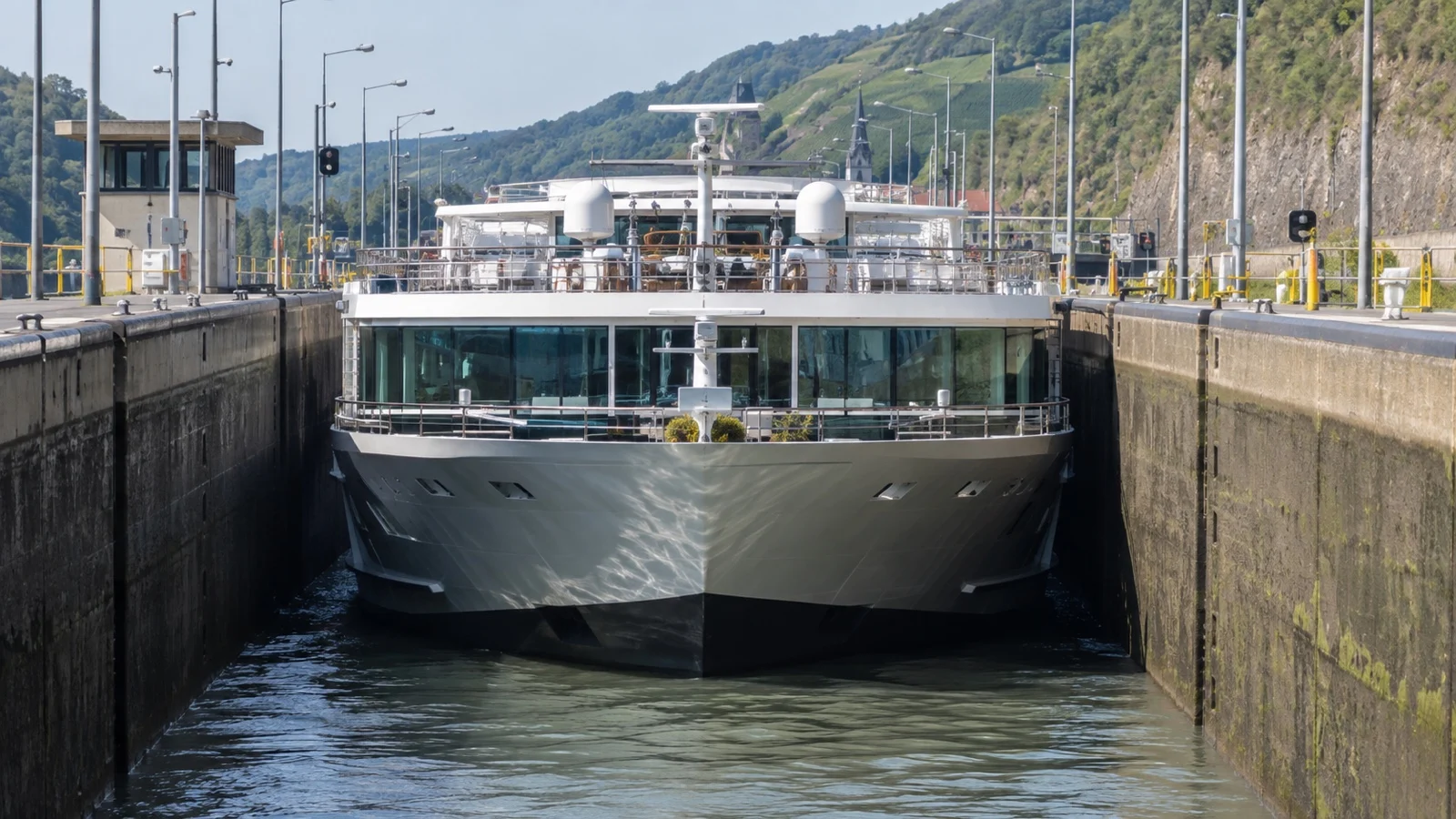
A typical beam is about 11.4 to 11.45 meters, close to 37.5 feet. The locks of the Main-Danube Canal provide roughly 12 meters of usable width, leaving only about 55 centimeters across the entire chamber when an 11.45-meter ship is centered.
That is approximately 27.5 centimeters, or just under 11 inches, on each side. Watching the crew and lock operators manage that gap explains why river captains approach slowly and why passengers sometimes hear or feel minor contact with protective fenders.
Why the lock chamber is not the whole answer
The Main-Danube Canal’s chambers have about 190 meters of usable length, much longer than a 135-meter passenger ship. So it is misleading to say that one concrete box alone dictates every centimeter of a modern river cruise vessel.
The real design envelope comes from the network as a whole. Navigation rules, approach geometry, bridge clearance, turning space, channel width, draft, mooring capacity, and commercial flexibility all work together.
A ship is designed for an itinerary map
Cruise companies want a vessel that can serve many profitable routes rather than one short stretch of river. A ship that can travel from the Rhine through the Main and Main-Danube Canal to the Danube can be moved between more itineraries and seasons.
That flexibility has enormous commercial value. It also encourages operators and shipyards to converge on an envelope that the connected network already handles well.
What happens inside a lock
A lock moves a vessel between two water levels by closing it inside a chamber, then adding or releasing water. The ship does not climb a mechanical ramp, and the chamber does not carry it like an elevator platform.
Lines are managed carefully, engines or thrusters may be used as instructed, and the crew monitors clearance from walls and gates. Passengers usually experience a controlled rise or fall, sometimes with little more drama than a changing view of concrete.
Why lock passage takes time
A complete cycle includes entering, positioning, closing a gate, changing the water level, opening the other gate, and exiting. Traffic, direction of travel, maintenance, water management, and priority rules can all create waits.
Cruise schedules include many lock passages, but no timetable can eliminate operational variation. A delay at one chamber can echo through the rest of the day without indicating a safety problem.
The Main-Danube Canal as a design test
The Main-Danube Canal connects the Main near Bamberg with the Danube near Kelheim and contains 16 locks. Its chambers offer about 190 meters of usable length and 12 meters of usable width, while the canal crosses Europe’s main watershed.
For cruise travelers, the crucial figure is the 12-meter chamber width. It is one reason the familiar 11.4-meter beam dominates ships meant to cross between the Rhine and Danube systems.
Length still matters beyond the chamber
A vessel must do more than sit inside a lock. It must approach safely, clear gates, navigate bends, pass other traffic where permitted, use assigned berths, and comply with limits on each waterway segment.
That is why a chamber long enough for a freight convoy does not automatically make the same length sensible for a single passenger ship. Network compatibility is a complete operating problem, not a one-measurement puzzle.
Bridge clearance shapes the top deck
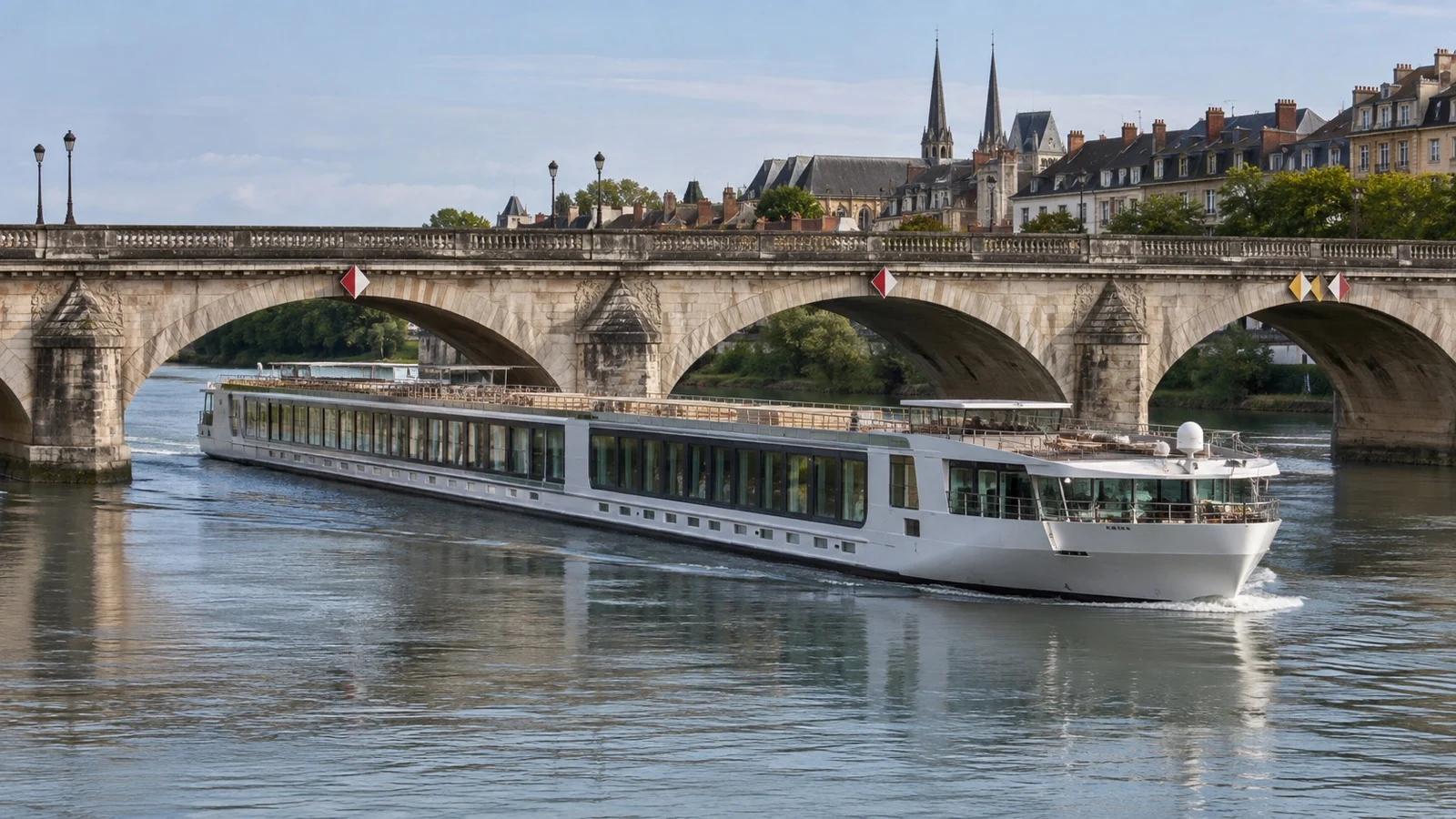
Air draft is the height from the waterline to the ship’s highest point. Unlike length and beam, the effective clearance beneath a bridge changes with water level, so a route that clears comfortably one week may require more caution the next.
Modern European river ships are designed to lower what they can. Wheelhouses retract, masts fold, railings collapse, canopies come down, and loose furniture is secured or moved.
Why the sun deck closes
When a low bridge approaches, the crew may close the sun deck because there is not enough safe headroom for standing passengers. The restriction can last minutes or hours depending on the river section and the sequence of bridges.
This is not merely a line being fussy about rules. A bridge that clears the flattened vessel may still sit dangerously close to a person, camera pole, raised umbrella, or piece of furniture.
High water and low water create different problems
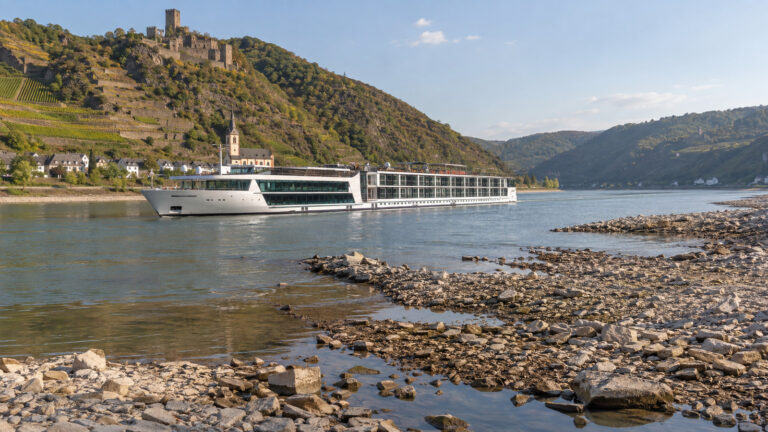
High water raises the ship closer to bridges and can reduce air clearance even when there is plenty of depth beneath the hull. Low water increases concern about draft, underkeel clearance, channels, and whether the ship can reach a berth.
A ship’s folding superstructure helps with bridges, but it cannot solve every extreme. Depending on the operator, contract, and circumstances, responses may include revised sailing times, another vessel, an overland transfer, a different embarkation point, or a changed itinerary.
Why cabins feel narrow
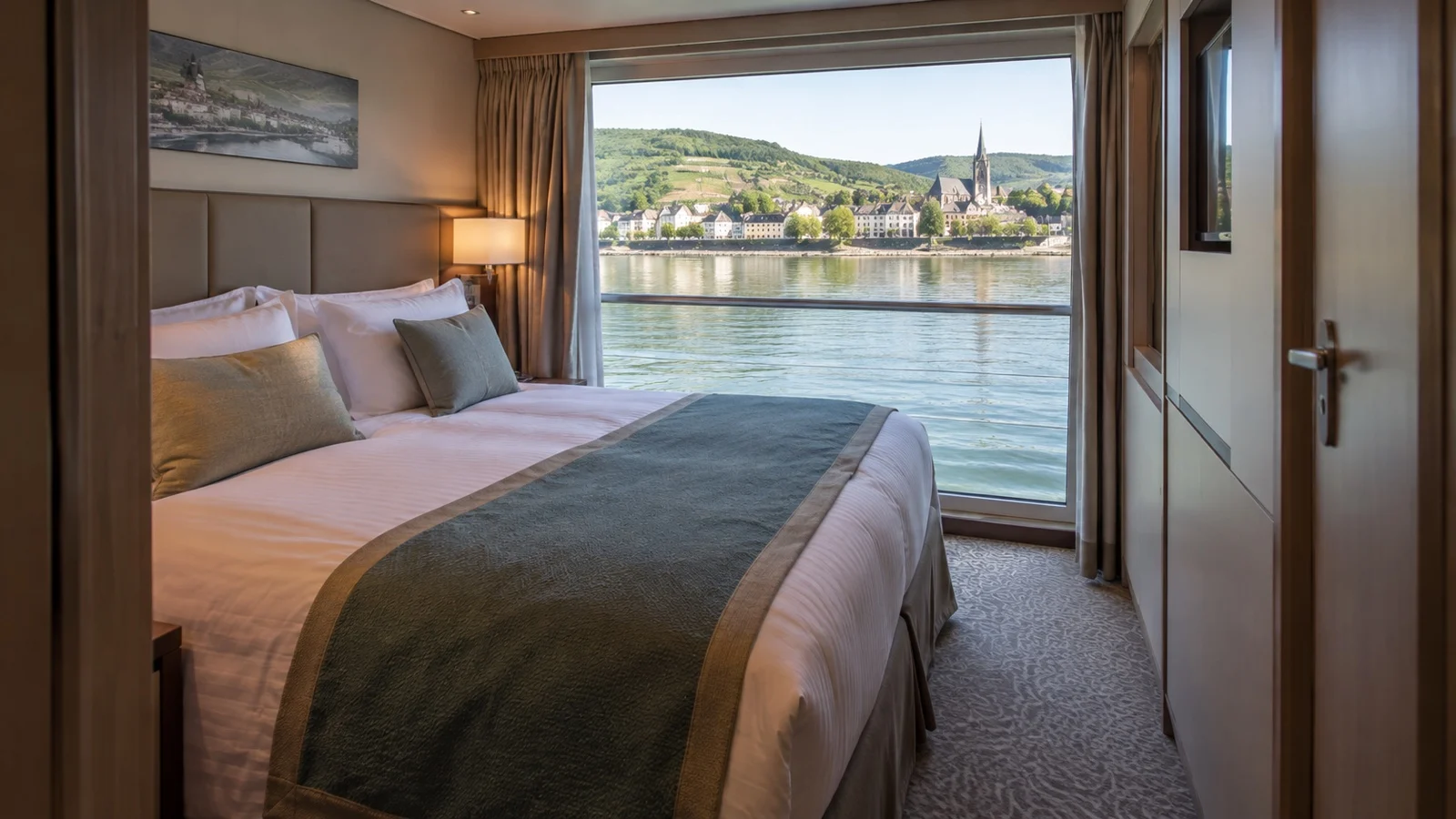
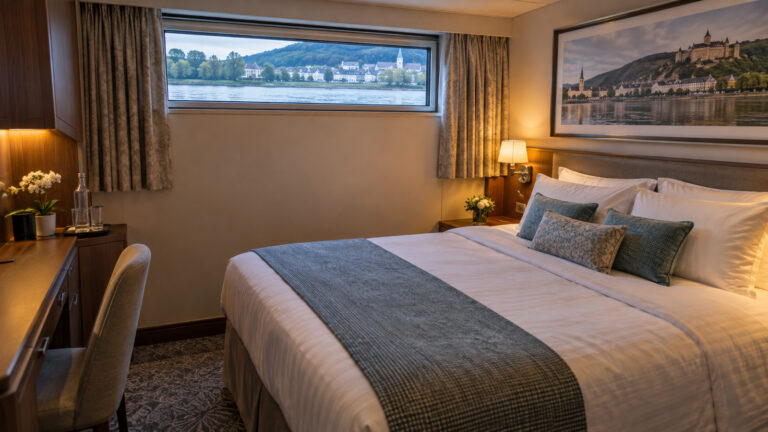
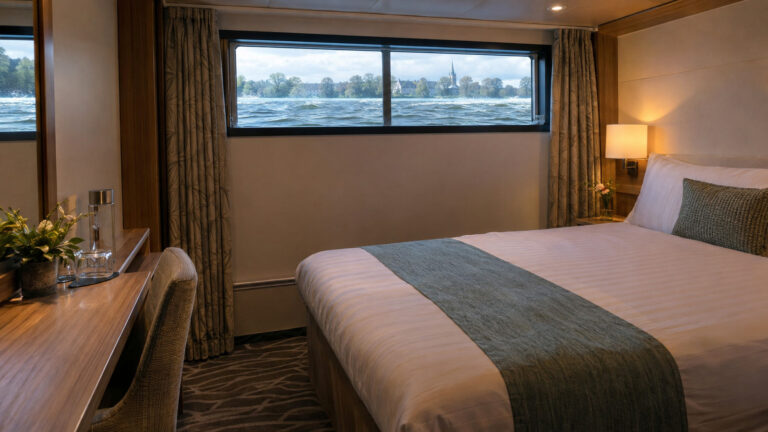
A beam near 11.4 meters has to contain two rows of cabins, a central corridor, structure, insulation, pipes, wiring, and service spaces. Naval architects cannot simply widen the ship to create ocean-style rooms if the vessel must pass a 12-meter lock.
Designers instead compete over how to use the same width. Some favor French balconies, some push beds toward panoramic windows, and some reduce passenger count to create larger suites or more public space.
Length does not tell you spaciousness
Two ships can both measure 443 feet and feel completely different. Passenger count, the proportion of suites, furniture placement, lounge volume, and how much hull is devoted to machinery or crew areas matter.
Compare the square footage of the exact cabin category, not the ship’s overall length. Also check whether a balcony is an inset outdoor space, a drop-down window, or a French balcony with no floor area outside.
The famous wide-ship exception
AmaWaterways describes AmaMagna as 443 feet long and 72 feet wide, about twice the width of a conventional European river ship. It can offer substantially more interior volume because it is not intended to cross the narrow Main-Danube Canal locks.
AmaMagna operates on the Danube, where major locks on its route can accommodate the extra beam. Its existence proves the rule rather than disproving it: remove a narrow network link and designers can choose a different hull.
Why every line does not copy it
A wider ship sacrifices route flexibility. It cannot simply move to the Rhine through the connecting canal when demand, maintenance, or itinerary planning changes.
The economics therefore differ from those of a standard vessel that can serve a broader connected market. More space can be wonderful for passengers, but it comes with a geographic boundary.
Where the standard breaks
Europe does not have one universal river gauge. The Douro, Seine, Elbe, Rhône, Saône, Po, and smaller French canals each present their own combinations of lock size, depth, current, bridge clearance, and navigation rules.
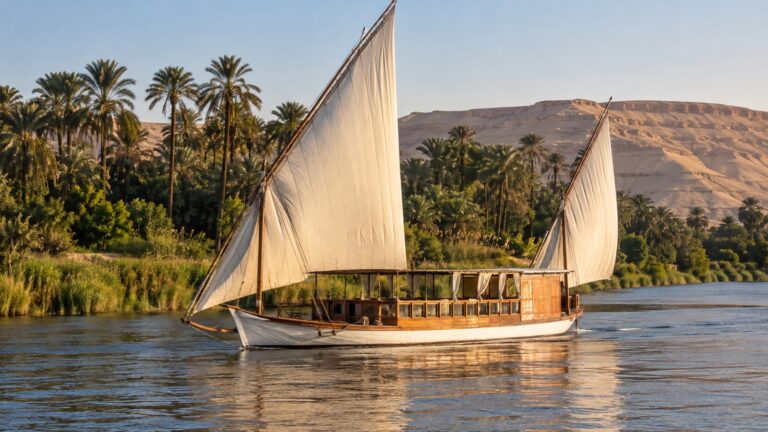
Beyond Europe, the Mississippi, Nile, Mekong, Ganges, Brahmaputra, Magdalena, and southern African waterways are different again. Even vessels sold by the same cruise brand can share almost no meaningful dimensions.
Douro ships
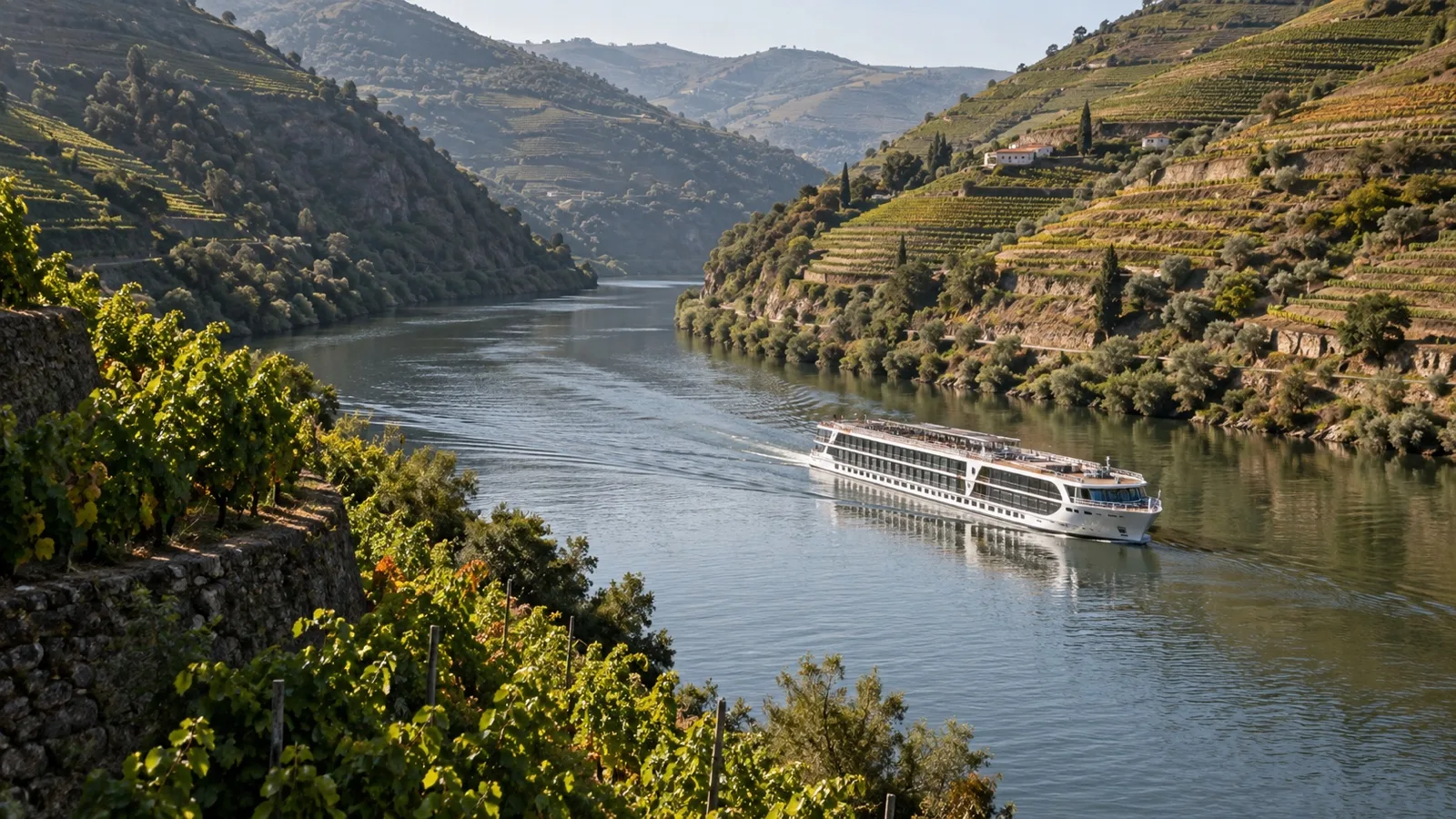
Douro vessels are generally shorter than the 135-meter Rhine and Danube standard because the Portuguese waterway and its locks impose a different operating envelope. They often carry fewer guests and have deck plans designed specifically for that river.
Do not interpret smaller as automatically less comfortable. A lower passenger count, thoughtful cabin plan, and itinerary-specific outdoor space can matter more than raw length.
Elbe ships
The Elbe is particularly sensitive to depth in dry periods, so shallow draft can matter more than maximizing length. Ships designed for it may be shorter, lighter, and more specialized than vessels on the Rhine.
That specialization does not eliminate low-water risk. It simply gives the operator a hull better matched to the river’s recurring constraints.
Seine and French waterways
Ships that need to reach central Paris or navigate narrower French routes may follow other dimensional limits. A vessel that fits the Rhine standard is not automatically suitable for every Seine itinerary or canal connection.
Look at the actual ship assigned to the departure rather than assuming a brand’s flagship design appears everywhere. Sister ships within one fleet may belong to different river-specific families.
Rafting is another consequence of the envelope
Popular river cities often have more ships than individual berth faces. Vessels tie side by side, and guests on the outer ship cross one or more neighboring ships to reach land.
Similar deck heights can make some cross-ship routes easier to arrange, but crews must assess the actual vessels and conditions. Water level, loading, ship design, and gangway position can still create steps or slopes between decks.
What rafting means for privacy
Your balcony or panoramic window may face directly into another cabin while ships are rafted. Curtains become essential, and an advertised river view can temporarily become a close view of another vessel.
Rafting also matters for mobility because the route ashore may cross unfamiliar thresholds and stairs. Do not assume a particular inside or outside position because local berth assignments and the order of ships can change.
Safety rules are different from ocean cruising
European inland vessels operate under inland-navigation certification rather than simply copying the ocean-ship model. CESNI publishes ES-TRIN, a technical standard covering construction, equipment, certificates, and special requirements for passenger vessels.
CESNI notes that vessels operating on European Union waterways or the Rhine must carry the relevant inland navigation or Rhine inspection certificate. The details of life-saving appliances and evacuation arrangements depend on the vessel, route, certificate, and applicable law.
Do not use lifeboats as the only safety test
Many European river ships do not carry large enclosed lifeboats on davits like ocean liners. That visible difference does not mean the vessel has no safety equipment or plan.
Attend the briefing, locate your lifejacket and assembly point, and ask how assistance works if you cannot use stairs. The correct question is how this ship evacuates and protects passengers on this waterway, not why it does not look like an ocean vessel.
Accessibility consequences of a narrow hull
A narrow beam limits corridor width, cabin geometry, elevator placement, and space for turning. A ship may have an elevator while still leaving the sun deck, split-level lounge, or some cabins reachable only by stairs.
Gangways add another variable because their angle changes with water level and berth height. Rafting can then introduce a second or third vessel whose accessible route is different from your own.
Questions to ask before paying
Ask whether the elevator reaches every passenger deck, whether the sun deck requires stairs, and whether your mobility device fits the cabin door and can be stored safely. Request measurements and written answers for any feature essential to travel.
Also ask what happens if a steep gangway or rafted berth cannot be crossed independently. A general statement that a ship is accessible is not a substitute for matching the route to your actual needs.
How dimensions affect itinerary changes
A river ship cannot always sail around a blocked lock, low bridge, or shallow reach. Roads and railways may offer detours, but the vessel remains confined to connected navigable water.
If one segment closes, the operator may use coaches, hotels, a second ship on the other side, or a changed port. The available response depends on where compatible vessels and berths exist at that moment.
Read the disruption terms
Before booking, read what the contract allows the company to change and what compensation, if any, applies. Then leave breathing room around separate flights or rail tickets because a changed embarkation city can create additional travel.
No hull dimension guarantees a disruption-free cruise. Better questions concern communication, transportation quality, accessibility during transfers, and how the line handled comparable events.
What I compare instead of hull size
On a standard Rhine, Main, or Danube ship, I compare cabin area, window design, passenger count, elevator reach, dining flexibility, noise risk, and forward-view access. Those differences affect every day while the shared hull dimensions mostly stay invisible.
I also look at the outdoor plan. A beautiful sun deck is less valuable if the itinerary includes long low-bridge sections and the ship has no comfortable indoor forward lounge.
When ship size should influence the booking
Size matters when one ship carries materially fewer people inside the same envelope, when a wider ship stays on one river, or when a shorter shallow-draft design is purpose-built for a difficult route. It also matters whenever mobility needs turn centimeters into real barriers.
For the common 135-meter fleet, however, brochure claims about being unusually spacious need evidence. Ask for the cabin square footage and passenger count, then judge the layout you will actually use.
Common questions
How long is a typical European river cruise ship?
Many modern ships on the Rhine, Main, and Danube are about 135 meters, or 443 feet, long. Shorter 110-meter ships and many river-specific designs also remain in service.
Why are so many ships about 11.4 meters wide?
That beam works within the roughly 12-meter usable width of the Main-Danube Canal locks and other parts of the connected network. It preserves route flexibility while leaving a very small operating margin in the chamber.
Why does the wheelhouse lower?
The ship must reduce its air draft for low bridges. Folding masts, railings, and deck equipment serve the same purpose.
Does a longer lock mean a longer cruise ship could use it?
Not necessarily. The ship must comply with every relevant rule and navigate approaches, bends, bridges, channels, and berths, so chamber length is only one constraint.
Are all 443-foot ships equally spacious?
No. Passenger count, cabin sizes, public-room allocation, machinery layout, and balcony design can make identical-length vessels feel very different.
My last word
The near-uniform river ship is a clever response to a complicated network. Its dimensions represent a compromise among locks, bridges, depth, berths, safety rules, and the cruise company’s need to deploy one vessel across many routes.
Once you understand that, comparison shopping becomes easier. On the Rhine and Danube, stop admiring the same 443-foot number and start asking what each line does with the space inside it.
Technical context was checked against the official CESNI explanation of ES-TRIN, German federal waterway information for the Main-Danube Canal, and current ship specifications published by AmaWaterways and Avalon Waterways. Exact vessel assignment, dimensions, accessibility, sun-deck closures, navigation conditions, and disruption terms should always be confirmed with the cruise line before travel.
Logistics and time-sensitive details were reviewed on September 12, 2026.
More on this topic: browse every guide on river cruise planning.