Cruise Ports Where the Shuttle Is Not Optional (and What to Check)
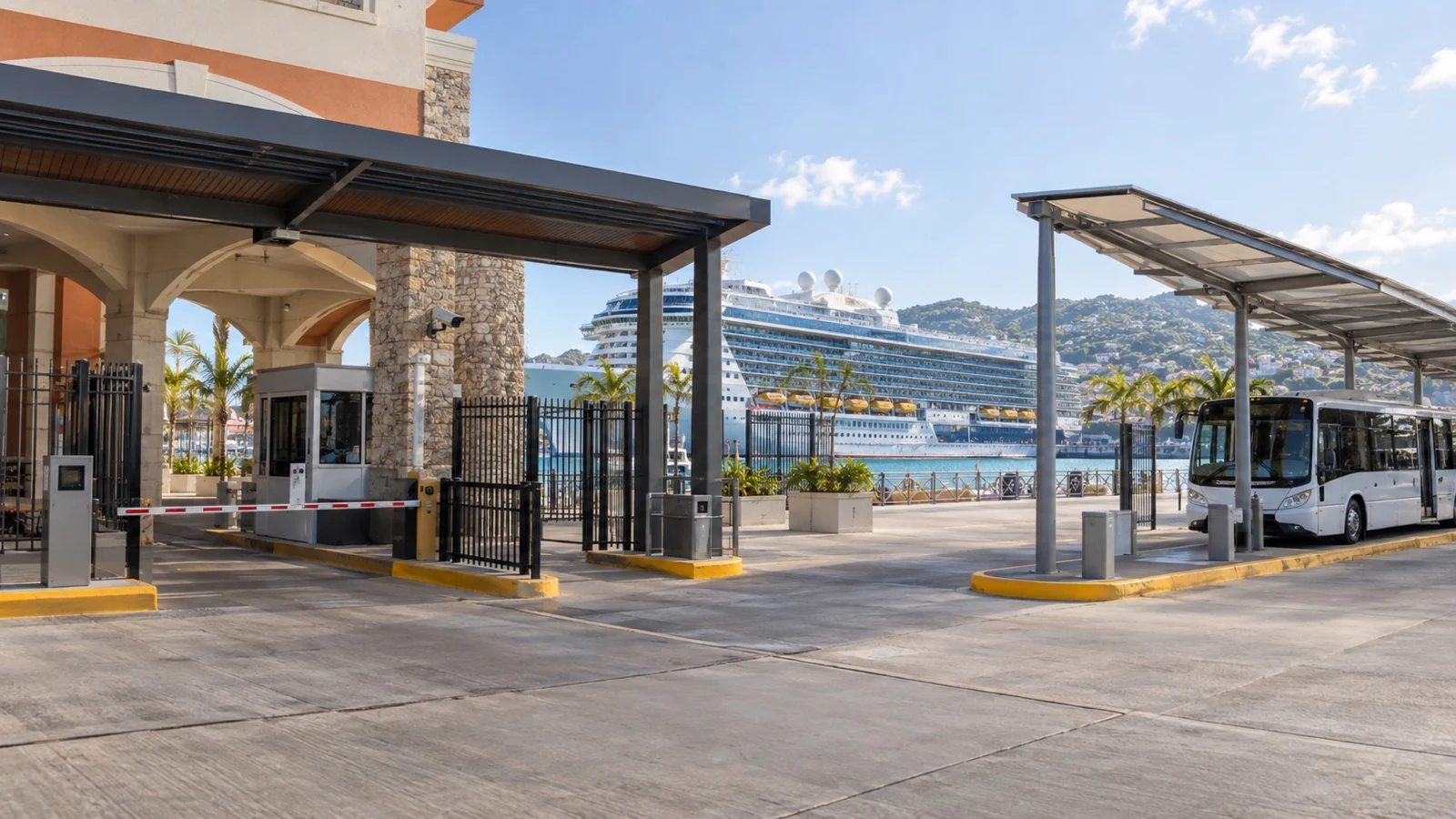
Sometimes the town looks close enough to touch, but the route from ship to gate crosses a secured working port. If port staff say the shuttle is required, treat it as part of the gangway rather than an optional sightseeing bus.
The short answer
There is no dependable worldwide list of permanently shuttle-only cruise ports. The rule can change with your terminal, berth, ship, construction, and that day’s security plan, so the answer for your sailing matters more than an old port review.
A compulsory internal shuttle usually carries passengers through a restricted port area to an approved exit or cruise terminal. A bus from that point into town may be a separate, optional service, and the distinction can save you money and confusion.

The quick facts
- Why it exists: The assigned route may cross a restricted port area or lanes used by heavy vehicles.
- Who runs it: The port, terminal operator, ground handler, or cruise line may provide the service.
- Cost: An internal security shuttle may be free or bundled into port charges, while a town shuttle may have a separate fare.
- What to check: The exact drop-off, accessibility, payment method, frequency, and final return for your sailing.
- The trap: Assuming a town-center shuttle is compulsory when only the short ride to the port exit is required.
Which cruise ports require a shuttle?
Civitavecchia is a current, confirmed example of a large port with an internal shuttle system. Its official Port Mobility site says the free service moves passengers around the port, normally runs from 5:30 a.m. to 11 p.m. every 15 minutes, and includes at least one accessible vehicle.
Check the live Civitavecchia shuttle information before relying on those details, because routes and ship-day arrangements can change. The internal shuttle is not the same thing as transportation from Civitavecchia to Rome.
Barcelona and Livorno are better treated as berth-check ports, not permanent mandatory-shuttle entries. Official port information shows multiple cruise terminals or berths, so advice for one ship’s location may not fit another.
Use the Port of Barcelona cruise information or Livorno cruise terminal information alongside your cruise line’s daily program. If either source does not name your terminal or berth, ask on board rather than assuming you can walk.
The same caution applies at mixed-use cargo ports worldwide. A previous passenger’s walkable call proves only what happened at that berth on that date.
The rule comes from the port, not a universal shuttle law
The International Maritime Organization’s ISPS Code overview explains the security framework for ships and port facilities. It requires security assessments, plans, and proportionate measures, but it does not declare that every cruise-port pedestrian must use a bus.
The port facility’s own security plan and operating conditions decide whether your route is open to walking. Container equipment, trucks, rail crossings, construction, and access-control zones can all make a passenger shuttle the safe option.
Three services that get called a port shuttle
- Internal port transfer: Takes you through the controlled port area to a terminal or approved exit, and may be compulsory.
- Town shuttle: Runs between the port or exit and a central drop-off, and may be optional and separately priced.
- Destination transfer: Takes booked passengers to a station, airport, attraction, or tour meeting point and is normally optional.
Ask, “Is walking prohibited from the ship, or is this simply the recommended ride into town?” That one sentence usually separates a security requirement from a sales pitch.
What to check before you step ashore
- Walking: Is pedestrian access permitted from this berth today?
- Route: Does the bus stop at the port exit, cruise terminal, train station, or town center?
- Price: Is it free, one-way, round-trip, or charged again after a return to the ship?
- Payment: Is the fare charged to the cabin, or do you need a card, local currency, or a ticket bought on board?
- Schedule: What are the first departure, usual interval, and final return from town?
- Accessibility: Can the exact vehicle take a wheelchair, scooter, walker, or stroller, and must space be reserved?
- Alternatives: Where may licensed taxis, private drivers, and ride-hailing vehicles legally collect passengers?
The ship’s daily program, an announcement at the gangway, and signs at the stop are the best day-of sources. Screenshot the schedule and photograph the return stop before you walk away.
Build the shuttle into your return buffer
All aboard is the deadline at the ship, not permission to join a bus line in town at that time. Work backward from all aboard using the posted ride time, likely wait, walking time to the stop, and a cushion for traffic or a full vehicle.
Do not rely on a generic rule such as “always take the second-to-last shuttle,” because service intervals and capacity differ. Choose a return that still leaves another workable option if the first bus is full, delayed, or inaccessible.
Use the timing method in this guide to how early to return to your cruise ship, then add the shuttle as another transport leg. If your only backup is an authorized taxi from the port gate, confirm that pickup point before leaving.

When several ships are in port
More ships can mean longer lines, but schedules and bus fleets do not scale the same way at every port. Check the port’s ship schedule if one is published, then leave extra slack instead of guessing how many buses will appear.
On a short call, a mandatory transfer can take a meaningful bite out of the advertised time in port. This guide to planning a six-hour port call helps keep the rest of the day realistic.
Taxis, ride-hailing, and public transit
A taxi is only an alternative if the driver is authorized to enter your terminal or can meet you at the shuttle drop-off. Compare the total group fare, waiting time, accessibility, and approved pickup point before deciding.
Ride-hailing geofences and port-access rules vary, and the app may place its pin outside the gate. Check the practical steps in the guide to using Uber and other ride-hailing services at cruise ports.
Public transit can be excellent once you reach the port exit, but it is not a substitute for a compulsory internal transfer. Confirm the stop, direction, fare, return frequency, and service alerts before depending on it.
Accessibility and mobility devices
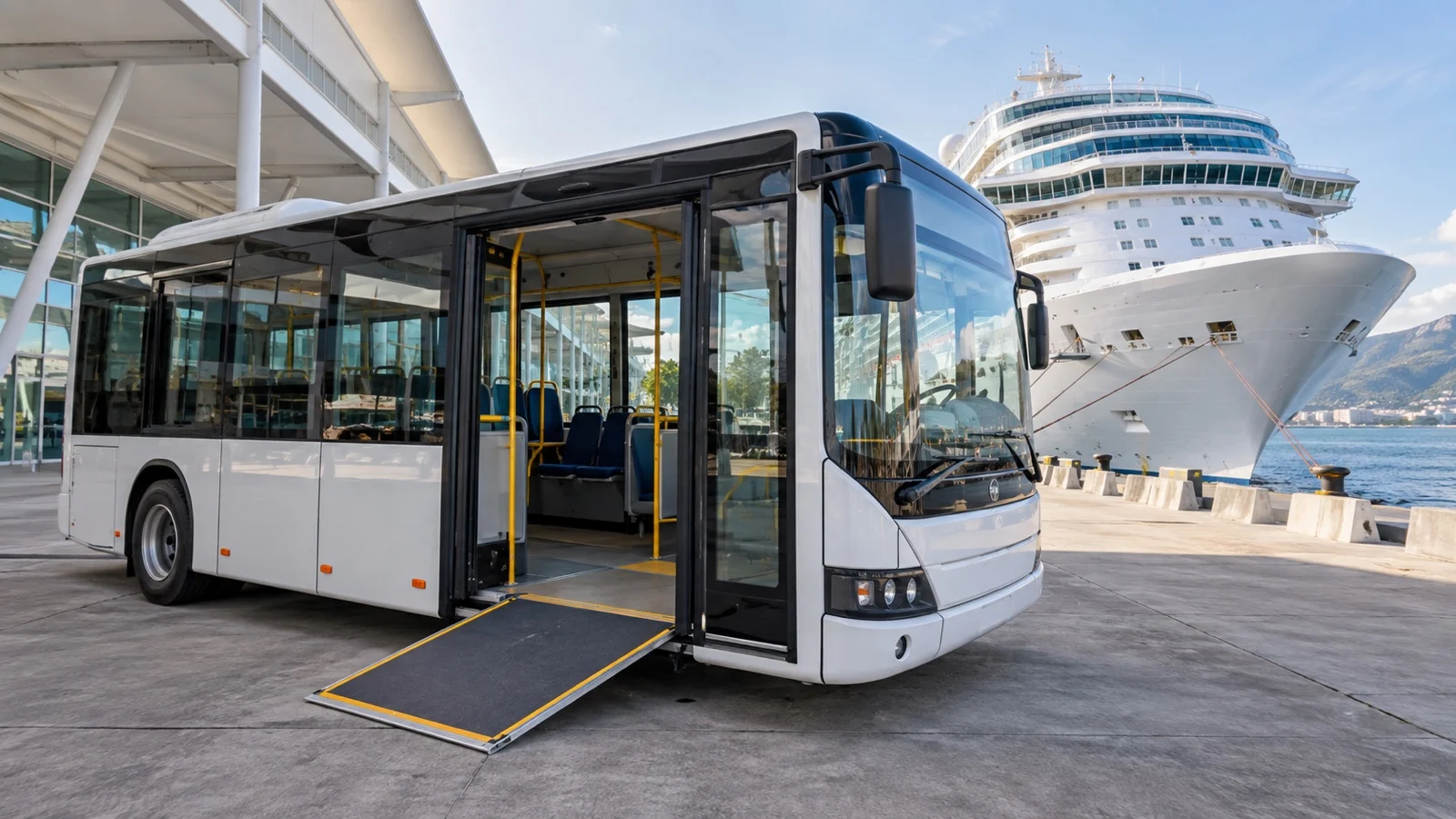
Never assume a coach has level boarding, a lift, securement space, or room for a scooter. Ask the cruise line’s accessibility team before sailing and confirm the arrangement with guest services before the port day.
Give the device type, dimensions, weight, whether it folds, and whether the user can climb steps or transfer to a seat. Ask what accessible alternative the port will provide if the compulsory vehicle cannot carry it.
For a lower-walking plan beyond the gate, use this guide to planning a cruise-port day when someone cannot walk far. Keep medication, mobility aids, and essentials with you rather than in a bus luggage hold when possible.
Tender plus shuttle
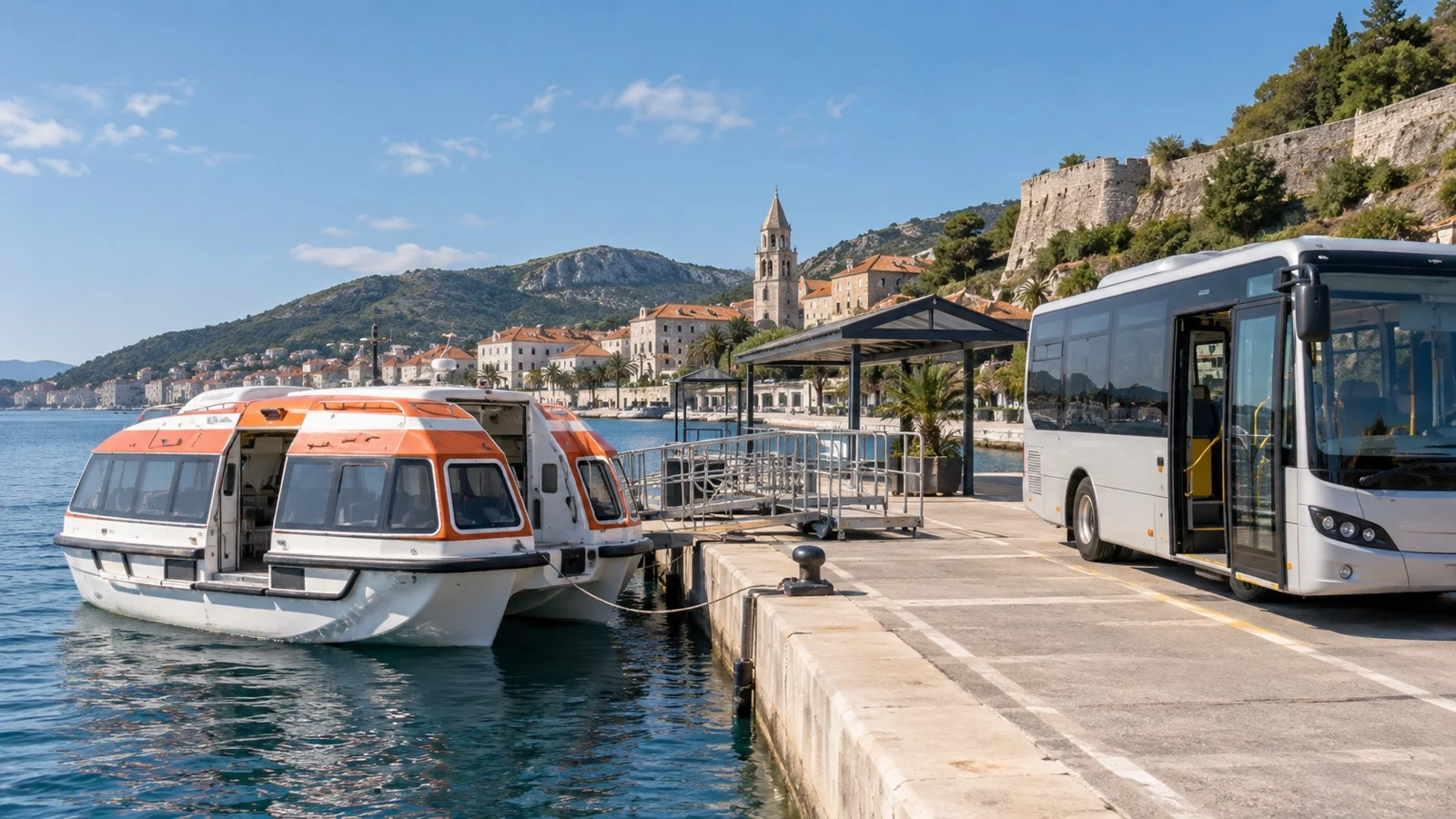
Some calls add a bus after the tender ride, creating two queues in each direction. Ask whether the published shuttle time starts at the tender landing or elsewhere, and include both transfers in your plan.
Tender priority, sea conditions, and bus capacity can all shrink the useful day ashore. The guide to how tendering changes your time ashore covers that first layer.
A 60-second plan for the night before
- Find your terminal or berth in the daily program.
- Confirm whether the internal shuttle is compulsory and where it ends.
- Record the fare, payment method, interval, final return, and accessibility arrangement.
- Pin the outbound drop-off and the exact return stop on your phone.
- Set a leave-now time that includes a backup ride and your normal ship-return buffer.
Quick answers
Why can I not walk out of the cruise port?
Your assigned route may cross a restricted or operational area where pedestrians are not allowed. That is a local port-facility decision, not a universal rule for every port covered by the ISPS Code.
Are mandatory port shuttles free?
Some internal transfers are free, but cost is set locally and a longer town shuttle may be a separate paid service. Confirm what each ticket covers before buying it.
Can I walk if I sign a waiver?
Do not count on it. If the port closes the route to pedestrians, a passenger waiver does not create access through a restricted area.
Will a shuttle wait if my independent tour is late?
Do not assume it will. Get the last return time in writing or photograph the sign, and arrange a legal backup that still reaches the ship before all aboard.
Does a paid shuttle guarantee the ship will wait?
A shuttle ticket alone is not a promise that the ship will delay departure. Ask the cruise line what protection, if any, applies to that specific product instead of treating it like a cruise-line excursion.
Final word
The shuttle becomes easy once you know which ride is compulsory, where it ends, and how you will get back with time to spare. Verify those three things for your exact berth, then enjoy the port without turning the last bus into a cliffhanger.
How this guide was researched: This guide was checked in September 2026 against the IMO’s ISPS Code overview and current official information from Civitavecchia, Barcelona, and Livorno. Rules, routes, fares, and timetables can change by berth and sailing, so verify the day’s arrangement with the port and cruise line before going ashore; see our Editorial Policy.
More on this topic: browse every guide on port logistics and timing.