Tipping Ashore: What to Give Guides, Drivers and Tender Crew
The guide finishes the tour, the driver opens the van door, and everyone reaches for a wallet at the same time without knowing the number. Here is what to hand over ashore, region by region, and where handing over anything at all is a mistake.
My quick take
Tipping ashore is not one rule with a few local exceptions. It is a dozen different rules, and the ship hands you exactly none of them at the gangway.
My habit is to carry a fixed stack of small bills, settle on the number before the tour ends, and then stop thinking about it. Shorting a guide who worked hard bothers me far more than being three dollars generous, and I have never regretted having too many singles in my pocket.
The quick facts
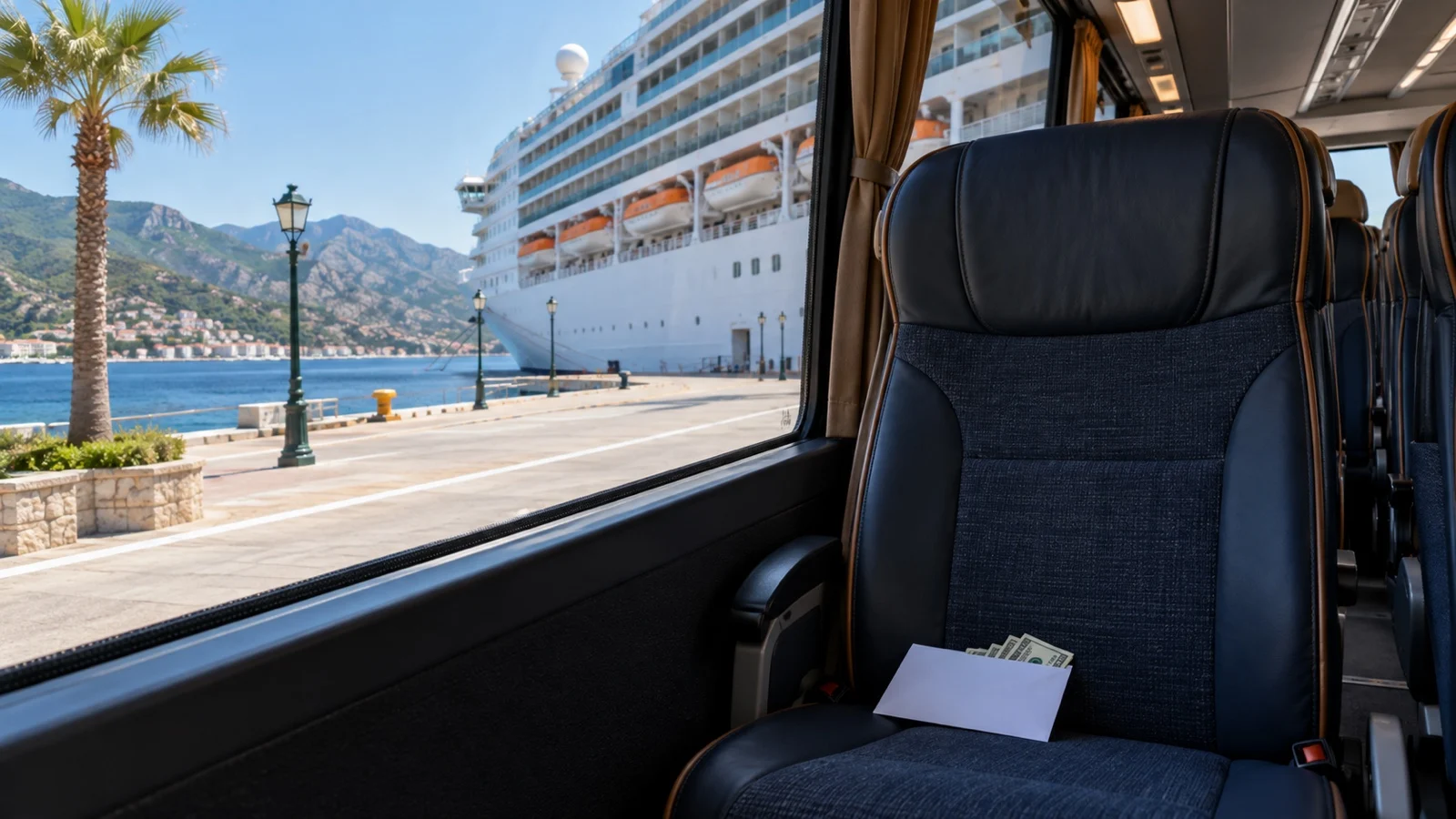
- Full day group tour: Usually around 5 to 10 dollars per person for the guide, with the driver a few dollars less.
- Half day group tour: Roughly half that, so about 3 to 5 dollars per person for the guide.
- Currency: US dollars work across most of the Caribbean, and local currency is better nearly everywhere else.
- No tip zones: Japan, South Korea, Australia and New Zealand do not expect a tip and will not miss it.
- Ship excursions: The price covers the tour and the entrance fees, not usually a gratuity for the guide in front of you.
What the excursion desk will actually tell you
Ask whether the tip is included in a ship excursion and you will get a carefully worded answer. Terms typically say the fare covers transportation, entrance fees, and gratuities tied to any meal or refreshment the tour description promises.
That is not the same thing as a tip for your guide and driver. Read those clauses side by side and the gap is obvious, which is why desk staff tend to say it is at your discretion and leave it there.
So budget for it separately. If you are still weighing the ship tour against something you arrange yourself, my breakdown of ship excursions against local tours and DIY days is worth reading before you book.
The half day and full day numbers I actually use
For a full day group tour, 5 to 10 dollars per person for the guide is the range that keeps coming up, and it holds reasonably well across the Americas. The driver usually lands at 2 to 5 dollars per person, more if the roads were rough or the van waited on stragglers.
Halve it for a half day. A three hour city walk with one guide and no vehicle is closer to 3 to 5 dollars a head.
These are norms, not invoices. A guide who kept twelve strangers dry, on time and genuinely entertained is worth more than the range, and a guide who read a script and pointed at a parking lot is worth less.
Caribbean days, where the dollar does the work
The Caribbean is the easiest region to get right, because tipping is expected and US dollars circulate almost everywhere. Several islands use the dollar outright, and most of the rest take it happily at the tourist end of town.
Restaurants often add a service charge of roughly 10 to 15 percent, and it will be printed on the bill. Check before you add anything, then round up a little in cash if the server earned it.
Taxi drivers at the pier expect something, usually a dollar or two per person on a short run and more if they hauled beach chairs. Bartenders at a beach club run on singles, so bring a stack.
Europe: round up, do not calculate
Europe is where American cruisers overtip most reliably. Service is generally built into menu prices across the continent, so nobody is working out a percentage after lunch.
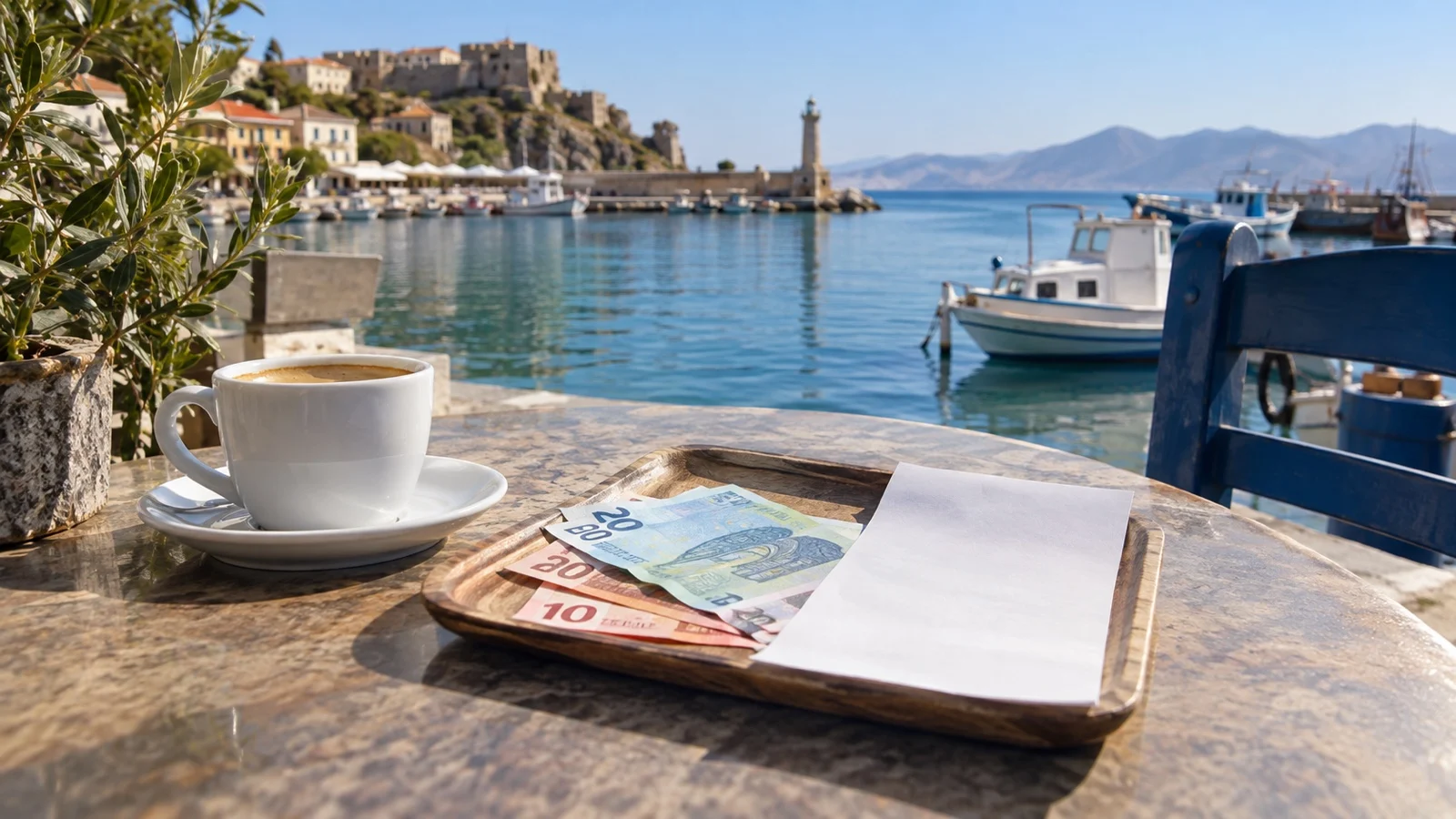
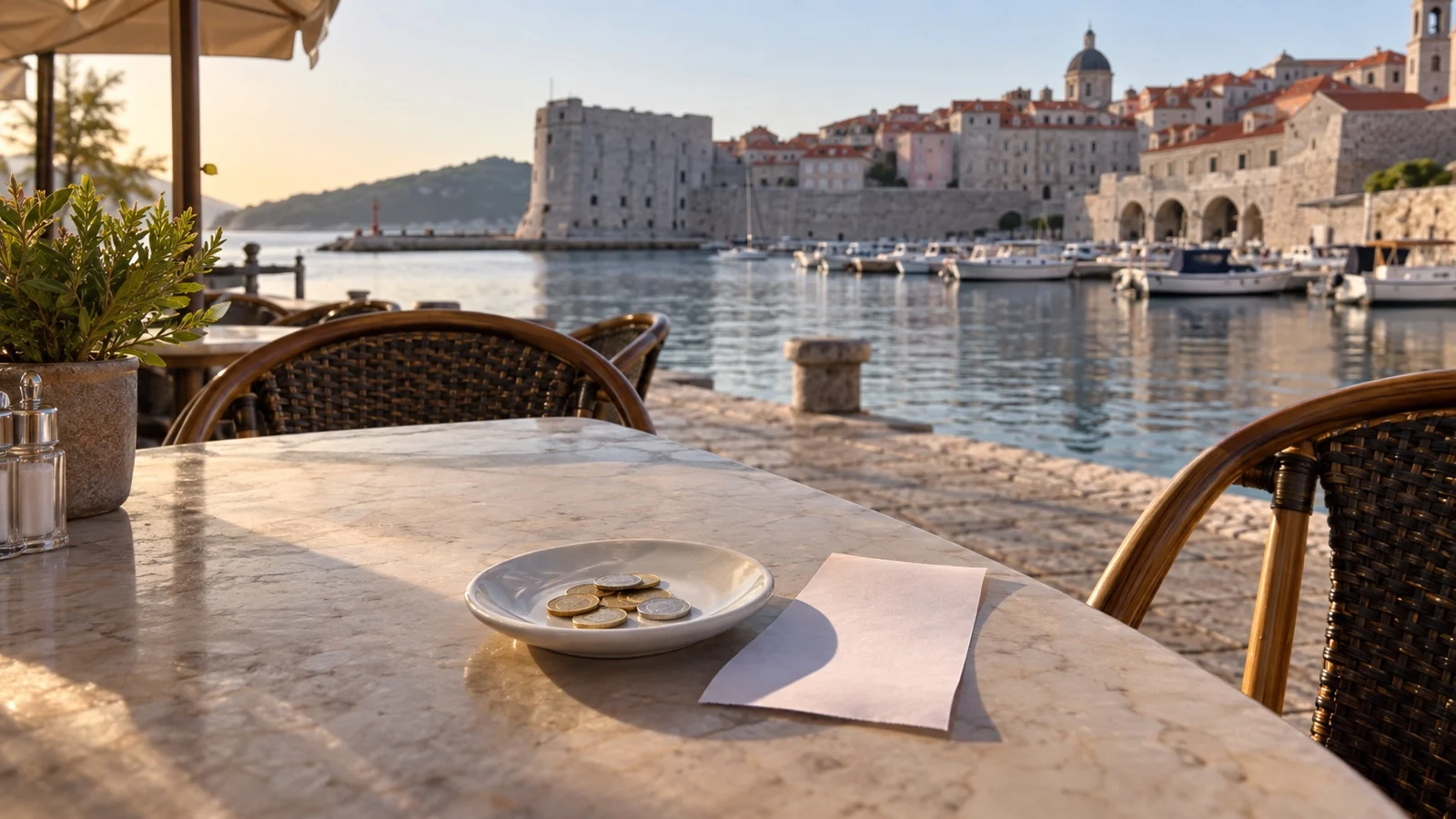
The normal move is rounding. You leave the coins, or push the bill up to the next round number, and in a nicer place you might land somewhere near 5 to 10 percent.
Central and eastern Europe run a little higher, often around 10 percent in a restaurant, and cash is preferred over adding it to a card. In Iceland and much of Scandinavia tipping is close to a non event, and rounding up is already generous.
Tour guides in Europe are a separate question from restaurants. A few euros per person for a walking tour is normal and welcome, and nobody is counting.
The places where a tip is an insult rather than a kindness
Japan is the clearest case. Tipping is not customary in restaurants, taxis or hotels, and pressing cash on someone usually produces a polite chase down the sidewalk to return it.
Good service in Japan is the baseline rather than an upsell. If you truly want to thank a private guide, the local convention is cash in a small envelope handed over quietly, and even then it is never expected.
South Korea works much the same way. Hotels and larger restaurants may add a service charge, staff will generally decline a cash tip, and declining is the courteous response rather than a rude one.
The workaround in both countries is words. Say thank you properly, leave a review with the guide’s name in it, and skip the envelope entirely.
Australia and New Zealand, where nobody is waiting for it
Wages in both countries are structured so that tips are not part of the pay. Hotels and restaurants in New Zealand do not add service charges to the bill, and nothing is expected on top of it.
Australia reads the same. Tipping there is always your choice, and around 10 percent in an upmarket restaurant is the outer edge of what anyone does.
Cruise guides in Sydney or Auckland will not be offended by a few dollars, because they meet enough American passengers to understand the impulse. They will also be completely fine if you hand over nothing, which is the part that takes Americans a day or two to believe.
Egypt, baksheesh, and the fat stack of small notes
Egypt generates more tipping questions than anywhere else on a cruise itinerary, and the honest answer is that baksheesh is a whole social system rather than a bonus. It covers the guide and the driver, and also the man who steadies you into a felucca, the attendant outside the restroom, and the person who appears to point at something you had already seen.
Small amounts, repeated often, is the shape of it. A few Egyptian pounds handles the little interactions, restroom attendants included, and the guide and driver get a proper tip at the end of the day.
Local currency works better here than dollars, partly because it is easier to spend and partly because it stops you handing over five times the going rate by accident. Get a wad of low denomination notes before the tour starts, because breaking a big bill mid day is not a thing that happens.
One thing worth accepting in advance: a photo request usually comes with a tip attached. Decide whether you want the picture before the camel is involved.
Latin America and the ten percent habit
Across most of Latin America, 10 percent in a restaurant is the working default. Many places print a suggested service line on the bill, and in some countries you are asked out loud whether you want it included.
For guides, the same 5 to 10 dollars per person on a full day holds up well, with drivers a notch below. In Santa Marta and Callao I tipped in local currency without any friction, and it seemed easier for the guides than dollars would have been.
Specialist guides earn more. A naturalist who spends the day finding wildlife for you sits well above a city bus guide, and multi day expedition staff are their own category entirely.
Southeast Asia, where the service charge is already on the bill
Singapore and Malaysia mostly settle this for you, since a service charge of around 10 percent is standard and extra tipping is not customary. Adding more is harmless, just unnecessary.
Thailand, Vietnam and Cambodia are softer. Tipping is not obligatory, though a guide on a private day tour commonly receives something in the range of 5 to 10 dollars per day, with drivers lower, and taxi fares simply get rounded up.
Local currency is genuinely better across this region. Small dollar bills are awkward for a driver to use, and a torn or aging note can be refused outright at a bank counter.
Tender crew, boat hands and the people who get forgotten
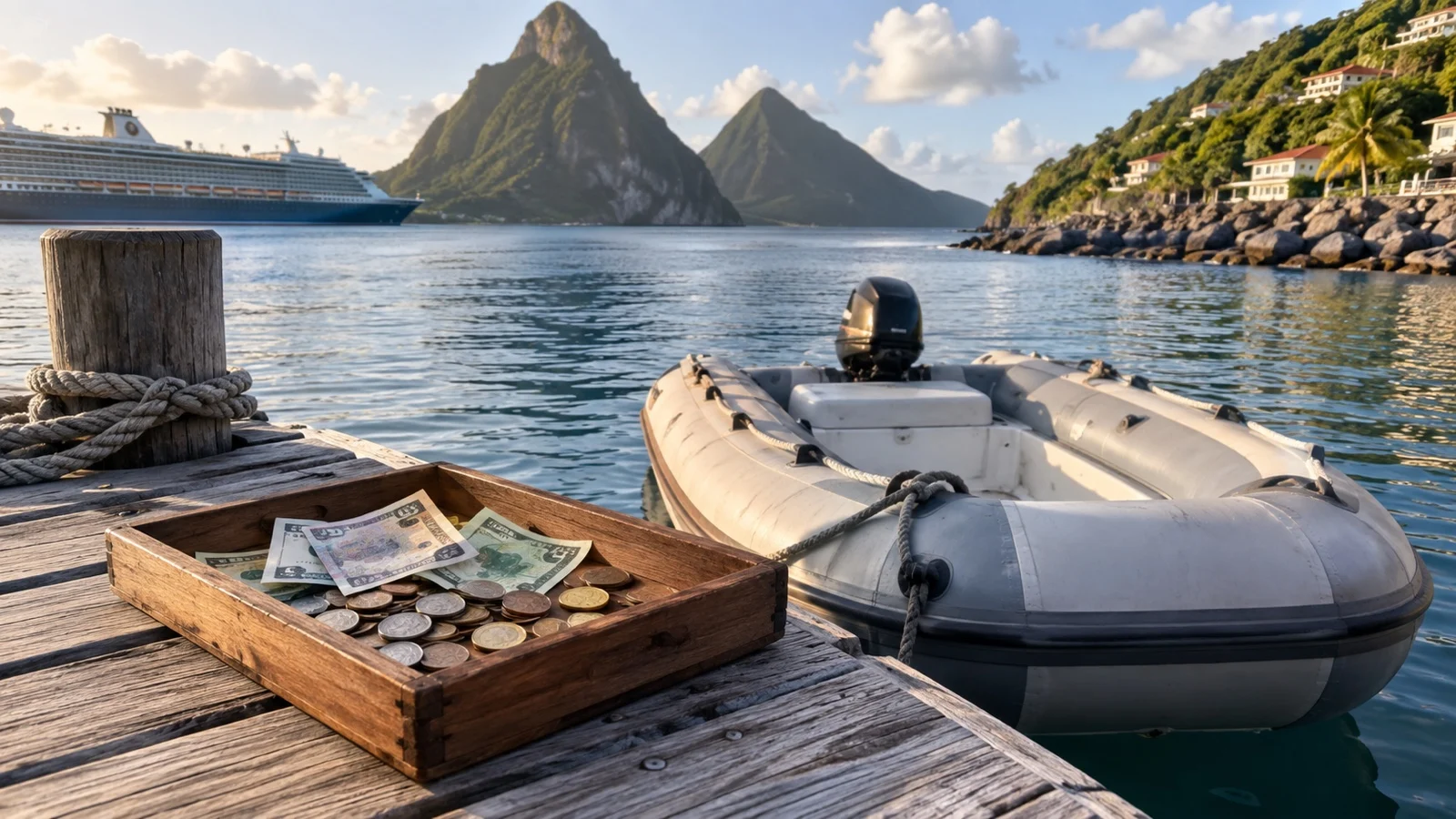
The ship’s own tender crew are your crew, already covered by the daily gratuity you pay onboard, so you do not need to tip them at the gangway. A local tender or water taxi contracted for the day is a different arrangement, and a dollar or two per person as you step off is a decent gesture.
Excursion boat crews are the group most often skipped. On a snorkel or catamaran trip the deckhands handling gear, drinks and the ladder usually split a pooled tip, and 2 to 5 dollars per person is the ordinary amount.
Look for a jar near the bar or the exit ladder, because that is the pooled one. On a very small operation, hand it to the skipper and say who it is for.
Tender ports also eat your time, which changes how rushed the end of the day feels. My guide to how tendering changes your time ashore explains why you do not want to be counting out bills in the tender line.
The small bills problem, and the bills that get refused
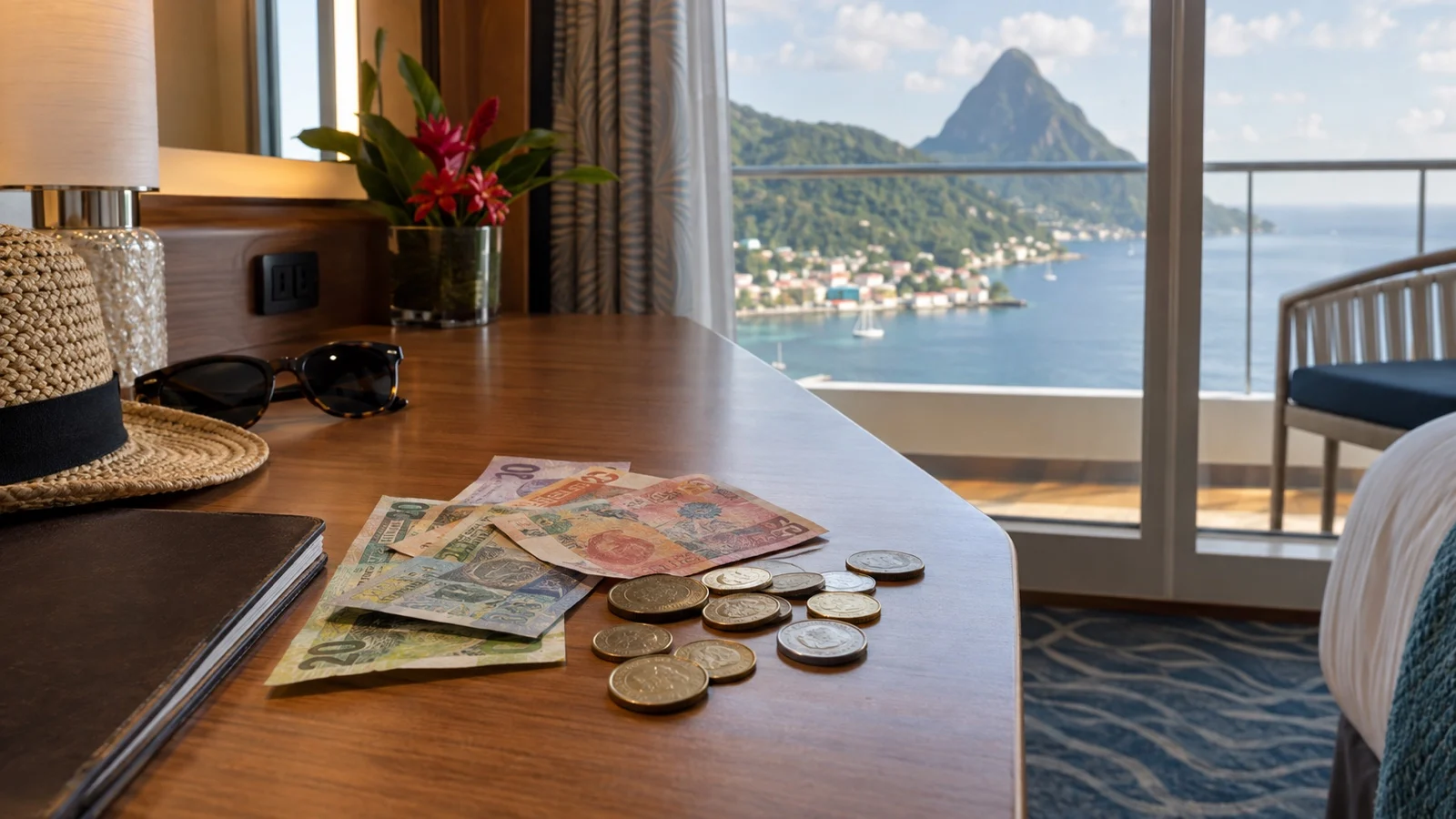
The single most common failure on a port day is arriving with two fifties and nothing else. You cannot tip a driver with a fifty, and nobody at the pier is making change out of kindness.
Condition matters far more abroad than it does at home. Every design of US currency stays legal tender no matter when it was issued, and yet a torn, taped or heavily worn note gets waved away in plenty of countries.
Older large denominations cause the most trouble. In parts of the Caribbean, Latin America, Africa and Asia, exchange counters and shops prefer newer series notes and will refuse an older hundred without explaining why.
My rule is boring and it works. Crisp singles and fives, requested from the bank before I leave home, and my guide to carrying cash and cards in port covers how much of it to bring.
Private tour versus forty people on a bus
A private tour you booked yourself is where the number climbs. You have one guide and one driver working for your group alone, and a common approach is something like 15 to 25 dollars for the group on a half day and 30 to 50 on a full day, for each of them.
A big bus tour spreads the effort across forty passengers. Per person amounts stay low precisely because the total adds up, and a full coach tipping five dollars each is a good day for the guide.
The awkward middle is a small group tour of eight to twelve people. I treat those like a private tour and tip toward the top of the per person range, since the guide is doing individual work for each of you.
What I actually carry off the ship
This is the part that takes five minutes the night before and saves the whole day. I split the cash into two pockets so the tip money never comes out as one visible wad.
- Singles: Ten to fifteen of them, in good condition, for drivers, boat crew and restroom attendants.
- Fives: Four or five, which covers your guide tip and your margin for error.
- Local currency: A modest amount from an ATM in town, essential in Egypt, most of Asia and much of Europe.
- A decided number: Settled before the tour ends, so you are not doing math with a line behind you.
It all lives in the same pouch every single time. The rest of what goes in there is in my port day bag list, and the cash is the thing I check last before I walk off.
Quick answers
How much do you tip a shore excursion guide?
Around 5 to 10 dollars per person for a full day group tour, and roughly half that for a half day. The driver typically gets a few dollars less than the guide.
Is the tip included in a cruise line shore excursion?
Usually not for the guide and driver, even though gratuities tied to an included meal often are. Budget for it separately and assume the answer at the desk will be that it is at your discretion.
Can you tip in US dollars in cruise ports?
Across most of the Caribbean yes, and small clean bills are welcome. Nearly everywhere else, local currency is easier for the person receiving it and less likely to be refused.
Do you tip in Japan on a cruise stop?
No, and attempting it tends to create an awkward moment rather than a nice one. A clear thank you and a good review are the appropriate versions of a tip there.
How much cash should I carry ashore for tips?
For two people on a full day tour, 30 to 50 dollars in small bills covers guide, driver, boat crew and incidentals in most regions. Carry it in small denominations, because the mix matters more than the total.
Final word
Tipping ashore is not a test you can fail badly if you are paying attention. Learn the two things that actually matter for your itinerary, the local expectation and the right currency, and the rest is a rounding error.
Sort the cash before you sail rather than on the pier, and remember that onboard gratuities are a separate conversation covered in my breakdown of what each line expects for crew tips. Ashore, small bills and a decided number will handle almost every port you visit.
How this guide was researched: Regional tipping customs, official tourism guidance for Japan, Australia and New Zealand, shore excursion terms and US currency rules were all checked in September 2026. Local expectations, service charges and exchange rates shift, so confirm the current norm for the countries on your own itinerary before you sail. See our Editorial Policy.
More on this topic: browse every guide on port logistics and timing.