
CRUISE PLANNING
Port Logistics and Timing
Plan around tenders, walkability, return times, short port calls, and the details that shape your day ashore.
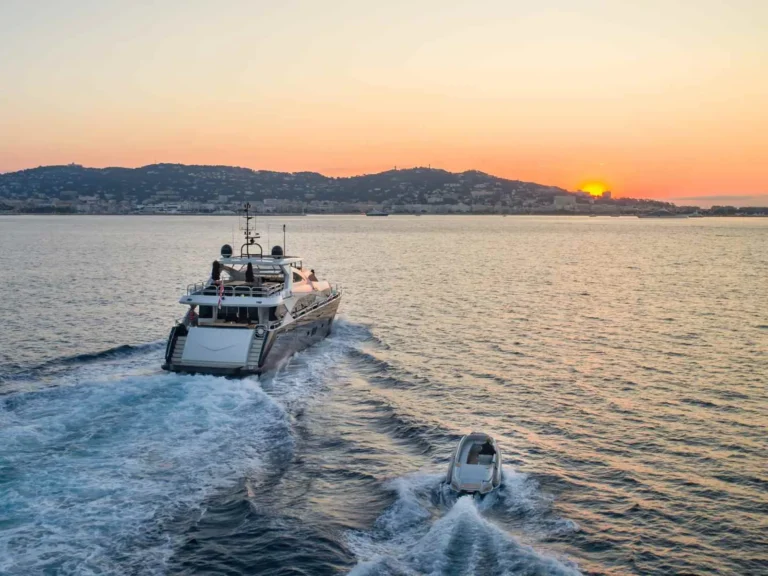
Build a Port Day That Fits the Clock
A good plan starts with where the ship docks, how long transportation takes, and how much buffer you need. Use these guides to protect the experience you care about without rushing the return.
Start With These Questions
Where Does the Ship Dock?
Confirm the terminal, tender point, or river berth before making transportation plans.
How Much Time Is Usable?
Subtract tendering, transfers, lines, and a comfortable return buffer from the scheduled call.
Can You Explore Independently?
Compare walkability, public transportation, taxis, and the distance to the main sights.
What Actually Eats Your Day Ashore
The scheduled hours in your itinerary are not the hours you get. Clearing the ship takes time at the start, the all-aboard buffer takes time at the end, and the transfer takes time twice. A nine-hour call twenty minutes from the center is closer to six usable hours, and at a tender port it is closer to five. Every plan that goes wrong goes wrong because someone budgeted from the wrong number.
Docking or tendering is the single biggest variable. A docked ship puts you on a pier and you walk off when you like. A tendered ship anchors offshore and ferries you in by small boat, which means a line in both directions and the real possibility of cancellation if the seas get rough. The same port can dock one sailing and tender the next, so this is worth confirming rather than assuming.
The second variable is the gap between the port name and the place you actually want to see. Rome means Civitavecchia. Florence means Livorno. Beijing means Tianjin. That gap is where most of the day disappears, and it is the first thing every port guide here spells out.
The third is your return plan. Not the outbound journey, which is easy to research when you are relaxed, but the way back at the worst possible moment: a train replaced by a bus, a taxi stand with a line, a tender line in rough water. Knowing the fallback is what lets you actually enjoy the day rather than watching the clock.
If you want somewhere to start, Mediterranean Ports You Can Explore Independently explains the mechanics, and Tender Cruise Ports That Still Feel Easy and Relaxed shows what it looks like in practice.
Frequently Asked Questions
How early should I be back at the ship?
Aim to be at the pier thirty minutes before all-aboard, not at all-aboard itself. All-aboard is already ahead of the sailing time, and the buffer you are protecting is the one that covers a delayed train or a tender line you did not expect.
Does the ship ever wait?
For its own excursions, yes. For independent travelers, essentially never. Ships do occasionally hold for a small number of passengers when the port agent knows exactly where they are, but that is a courtesy and not something to plan around.
Latest Guides
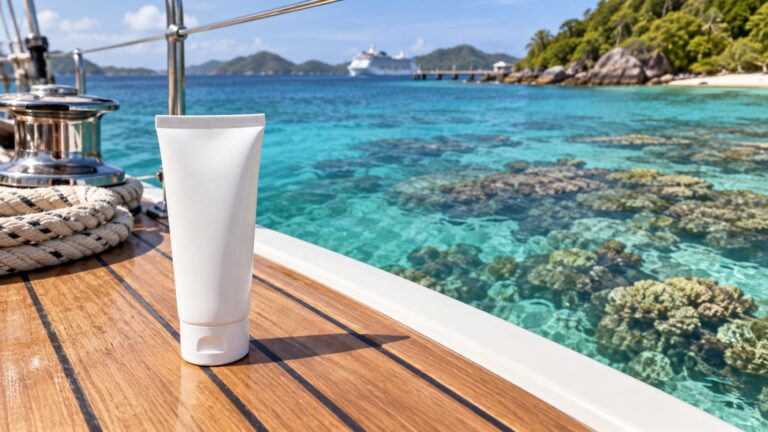
Reef Safe Sunscreen Rules: The Ports That Will Take Yours
Hawaii, Palau, Bonaire, Aruba, the Virgin Islands and Thailand all restrict sunscreen. Here is what each rule bans, what gets confiscated and what to…
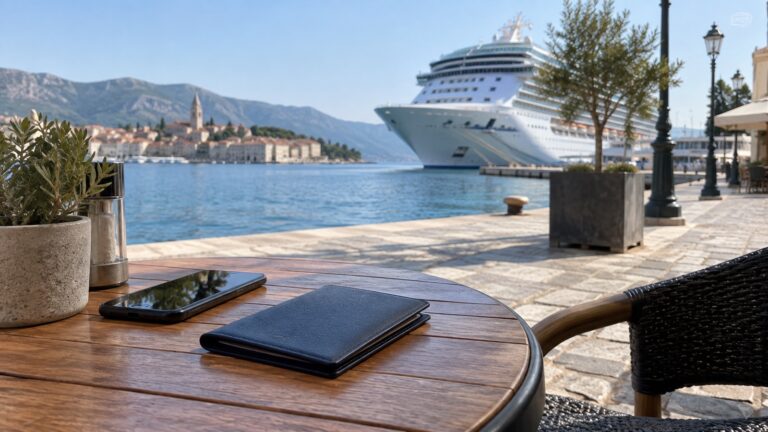
Lost Wallet or Passport Ashore: What to Do in the Next Hour
Lost your wallet or passport ashore? Work the first hour in order: reach the port agent, freeze every card, file a police report, then…
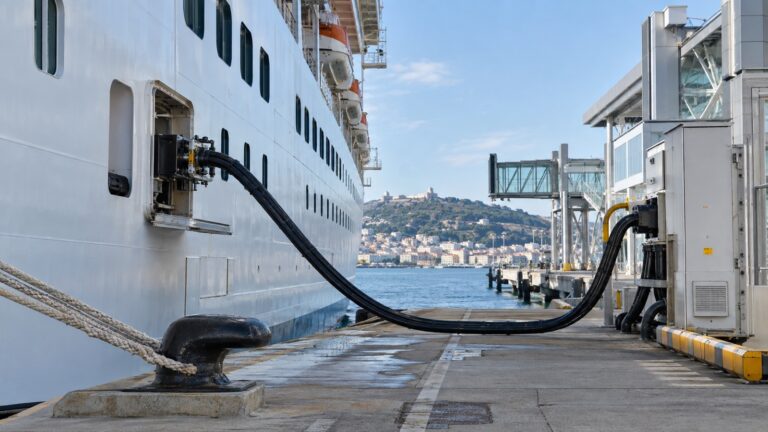
Shore Power at Cruise Ports: The Plug That Is Changing Port Days
Shore power lets a docked cruise ship shut its engines down and run on the local grid. Here is what changes on your port…
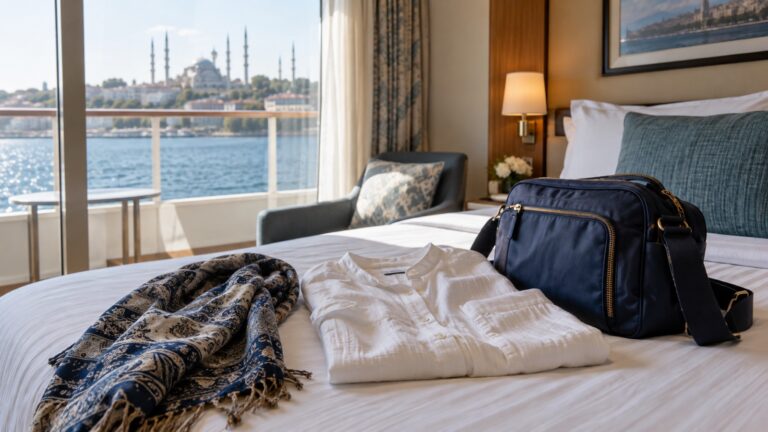
What to Wear Ashore: Dress Rules for Mosques, Churches and Temples
Covered shoulders and knees get you into almost every church, mosque and temple on a cruise itinerary. Pack one scarf, and know where the…
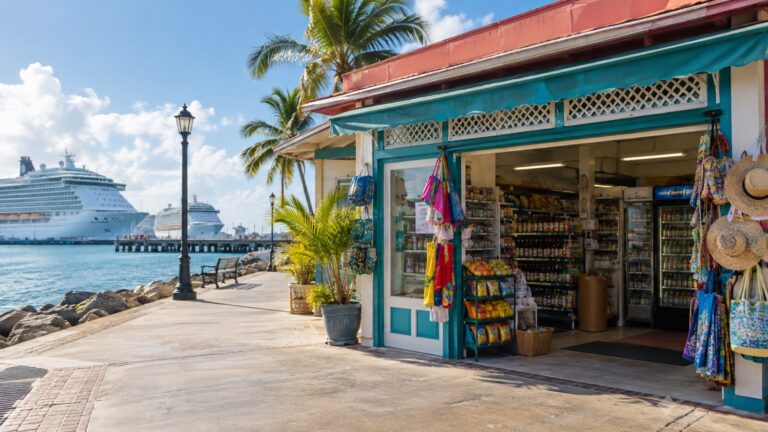
The Grocery Store Near the Pier: Cheaper Water, Snacks and Better Souvenirs
The supermarket near the pier beats the terminal gift shop on price and taste. Here is what ships let you carry back, what customs…
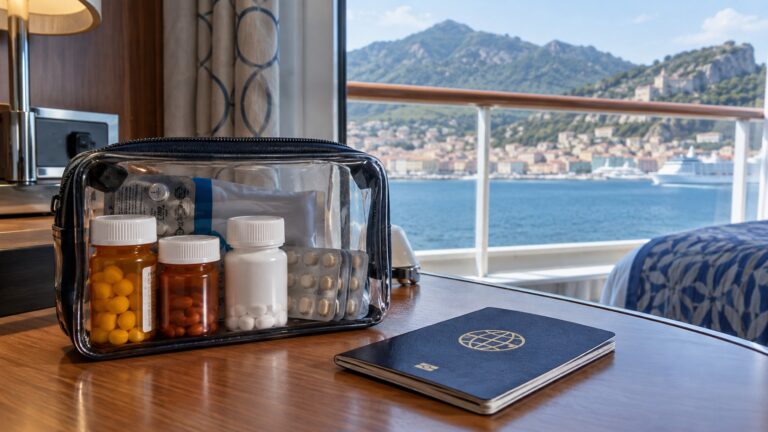
Prescription Medications in Foreign Ports: The Countries That Can Take Yours
Japan, the UAE and Singapore restrict common US prescriptions. Learn what to carry ashore, what to leave onboard, and the paperwork to file before…
Keep Planning
Find terminal details, transportation, maps, and realistic plans for individual destinations.