Renting a Scooter or Golf Cart in Port: Where It Works
A scooter is the cheapest way to ruin a cruise. Road rash, a night in a clinic and a ship that sails without you all start with the same ten second signature at a pier kiosk, which is why I only rent in a handful of ports.
My quick take
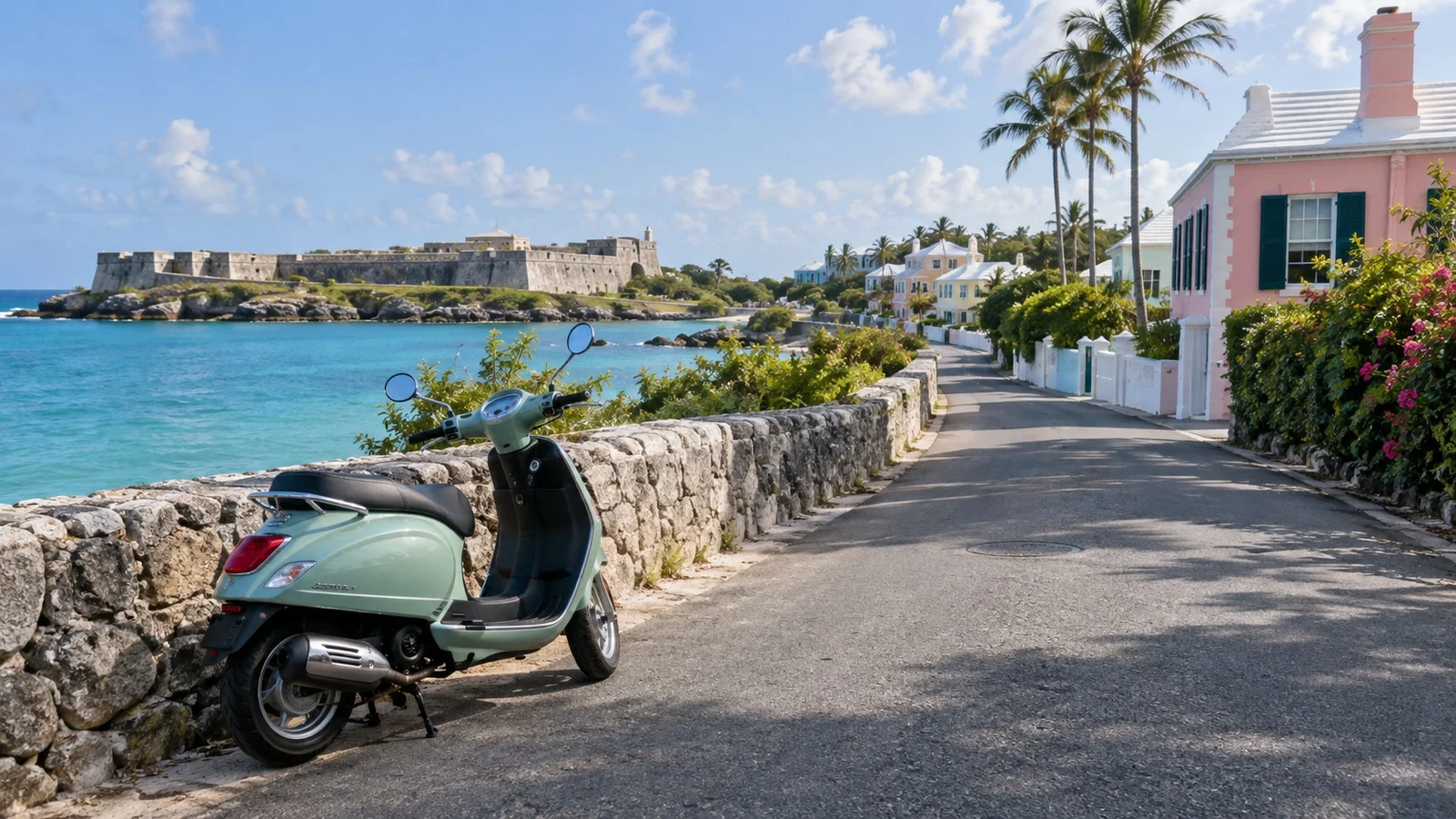
I rent two wheels in exactly one kind of port, the kind where there is no better option and the roads are genuinely slow. Bermuda is the clearest example, because the island does not let visitors rent cars at all.
Everywhere else, a scooter is an expensive way to buy risk you did not need for a six hour port call. A golf cart is a different animal, slower and much harder to hurt yourself on, and in three or four ports it is the thing that makes the whole day work.
The quick facts
- Bermuda: Visitors cannot rent or drive most cars, so scooters, tiny two seat electric cars, ferries and buses are your entire menu.
- Licenses: Several islands make you buy a temporary local driving permit before you are allowed behind any wheel.
- Helmets: Required for scooter riders in Bermuda, and worth wearing anywhere the shop hands you one.
- Insurance: Travel policies and credit card benefits usually treat two wheelers as excluded vehicles, which is not obvious until you claim.
- Golf carts: Street legal carts are capped at low speeds and low speed roads, so they widen your range less than you expect.
Why this is the one port day decision I get nervous about
I am relaxed about most port day choices. I am not relaxed about this one, because road crashes are the leading cause of non natural death for Americans traveling overseas, and a rented moped puts you into that statistic with no seat belt and no metal around you.
Ship medical centers see scooter injuries constantly, and the pattern is boring and repeatable. A first time rider, an unfamiliar side of the road, a wet patch of asphalt, and a low speed spill that still takes the skin off a forearm and a knee.
Bermuda is the whole reason this question exists
Bermuda is the one major cruise destination where the usual advice does not apply, because non residents are not permitted to own, rent or drive most cars on the island. This is not a shortage of rental agencies, it is deliberate policy to keep the number of vehicles down on a small island.
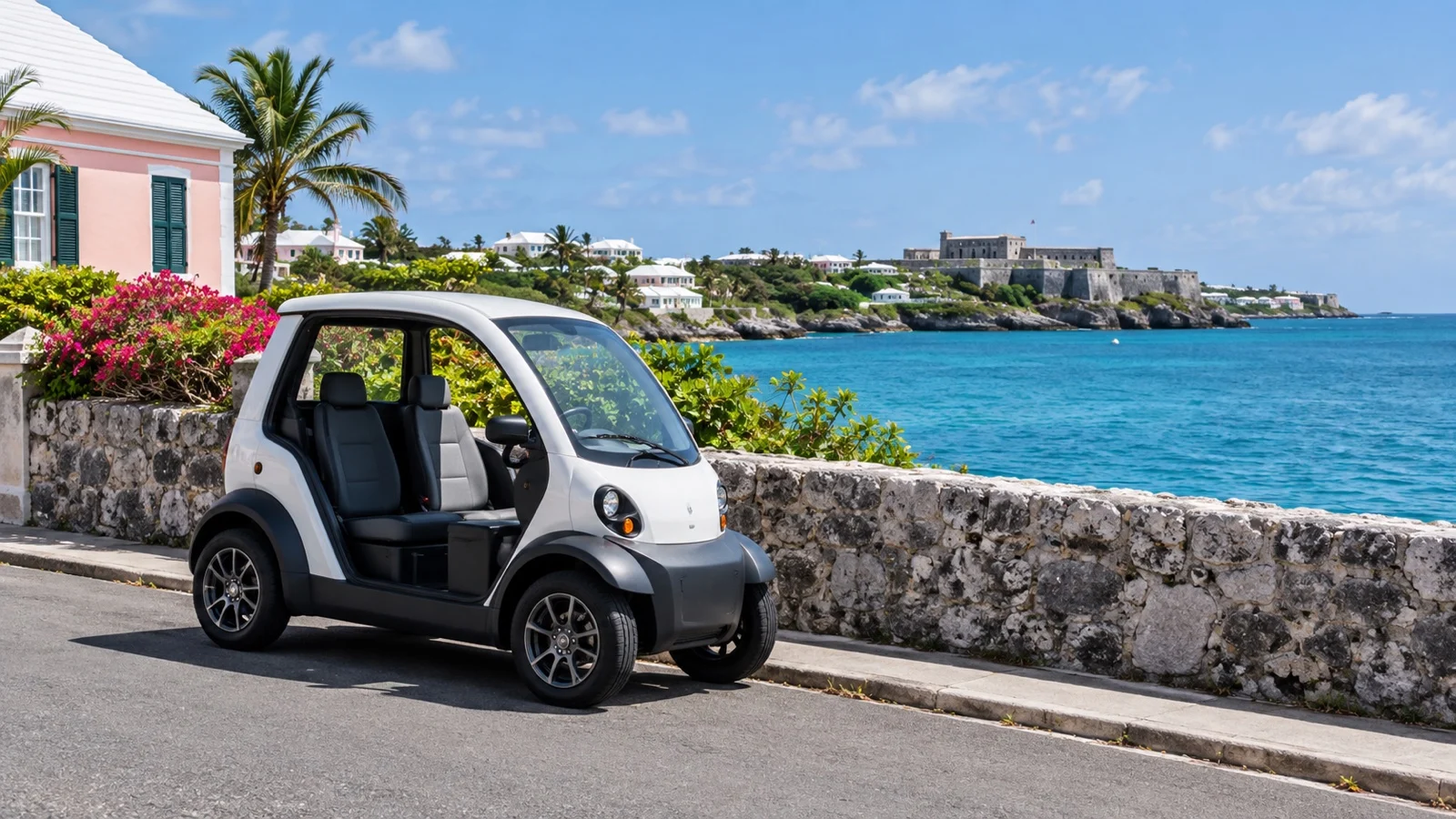
What visitors can rent is a scooter, which is why you see so many of them buzzing between the Dockyard and the beaches. The other exception is a very small two passenger electric car, which a handful of operators rent out.
Before you assume you need either one, look at the ferry. My guide to the Bermuda cruise port lays out how the Dockyard to Hamilton run takes roughly 15 to 20 minutes on the water against about an hour by bus, and for a lot of people that solves the whole day without a helmet.
What a Bermuda scooter actually asks of you
You ride on the left. Speed limits are low by American standards, 15 miles per hour (24 km/h) in the City of Hamilton and 21 miles per hour (34 km/h) on the rest of the island, and those numbers exist because the roads are narrow and walled.
Bermuda roads often have no shoulder and no sidewalk, just coral wall on one side and a bus coming the other way. Add tourists who have never ridden anything, plus rain that turns painted road markings slick, and you have the reason motorbike crashes are a well known local problem.
The minicar loophole, and who it suits
The small electric two seaters are the compromise Bermuda offers to people who want four wheels. They are narrow, slow and enclosed, which is exactly right for the roads and exactly wrong for a family of four.
If you want a car day in the way you would have one in Europe, Bermuda is not that port. My separate piece on renting a car on a cruise port day covers the destinations where four wheels genuinely pay off, and Bermuda is not on that list for a reason.
Golf carts in Key West, and why I usually walk instead
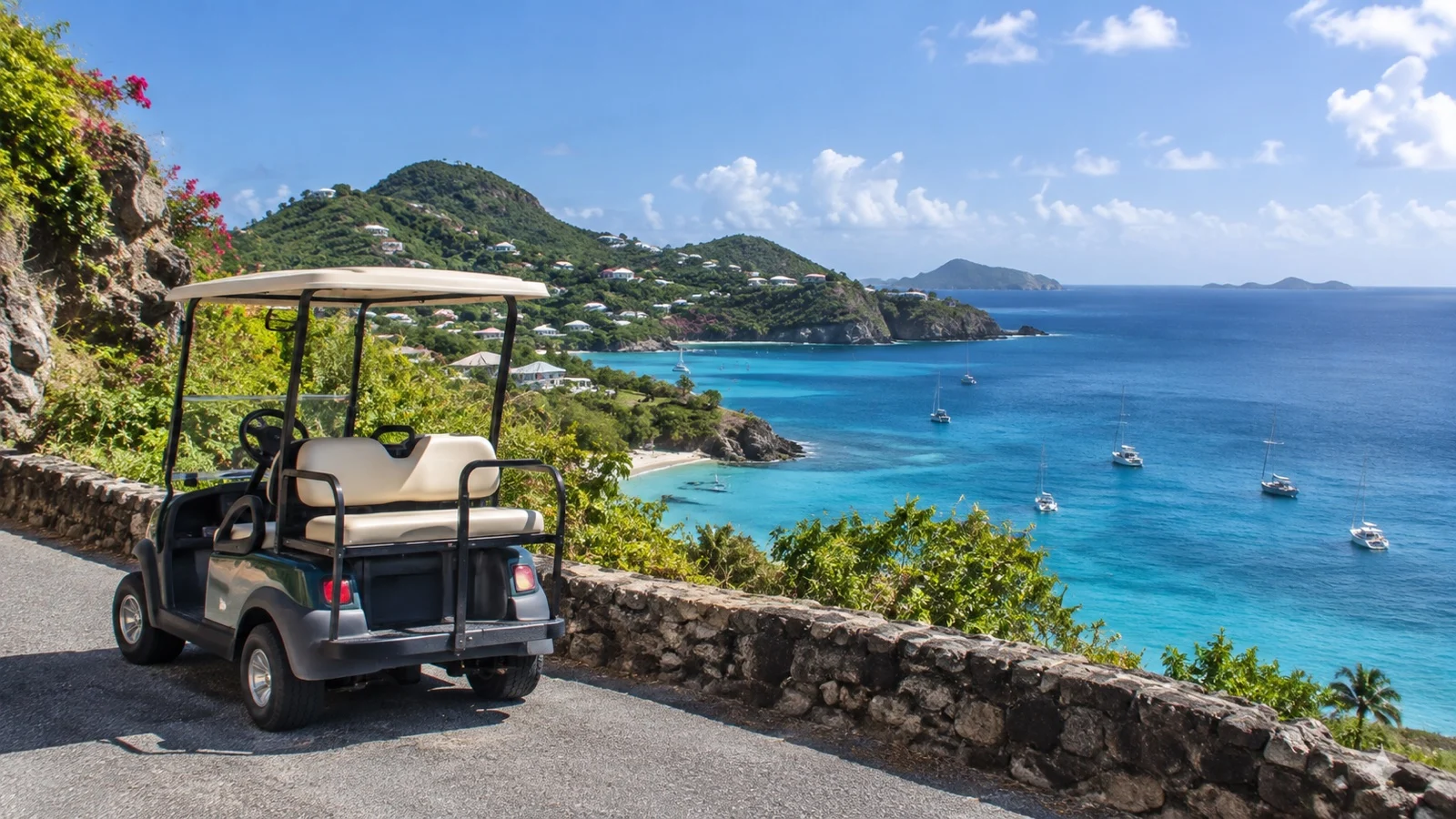
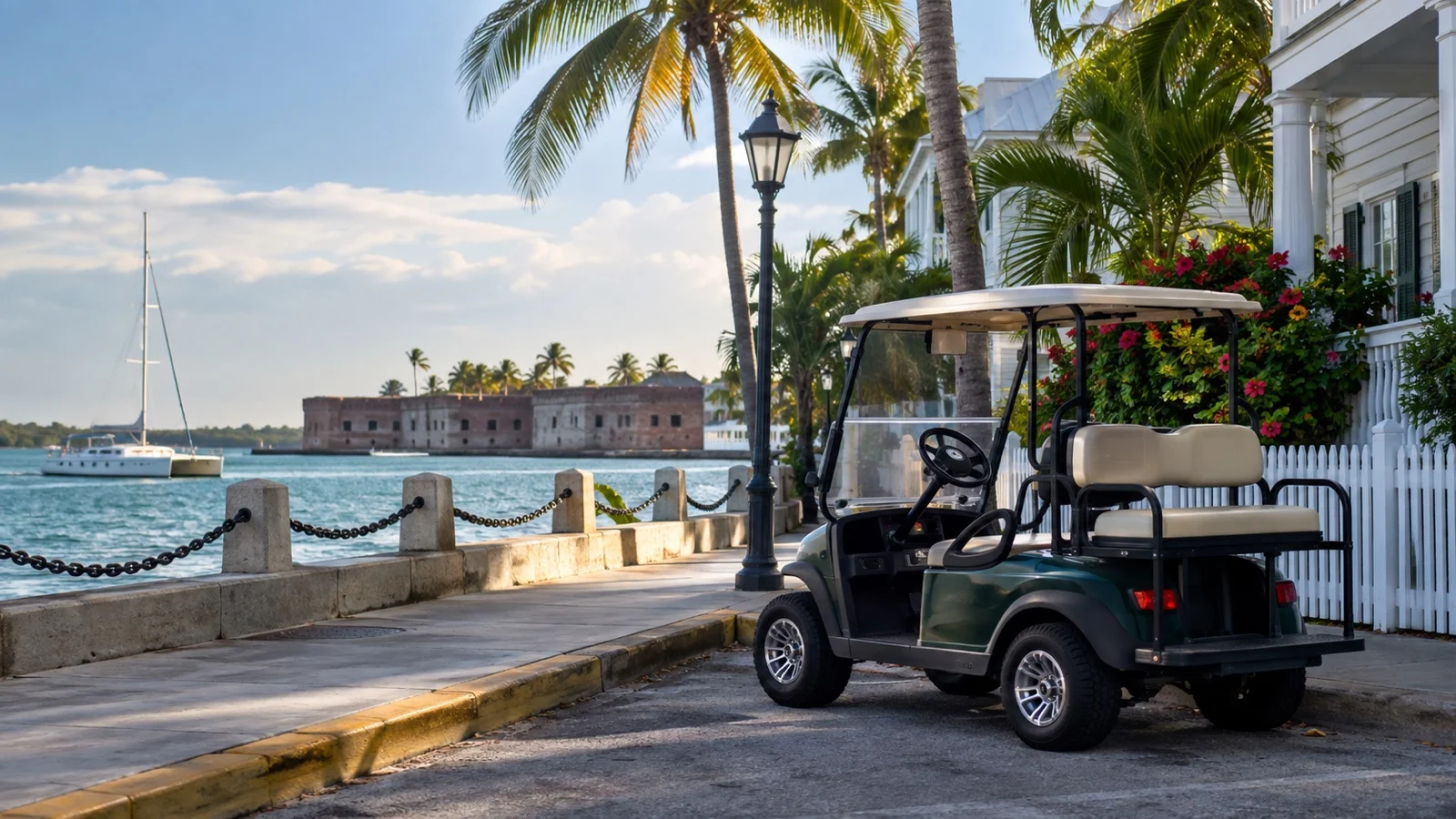
Key West is where cruise passengers most often rent a cart, and it is also where a cart is least necessary. Ships tie up within about a mile (1.6 km) of nearly everything in Old Town, on flat streets, which is covered in my Key West cruise port guide.
Florida draws a hard line between a golf cart and a street legal low speed vehicle, and the difference decides where you may drive. Under the state rules for low speed vehicles, an LSV tops out between 20 and 25 miles per hour (32 to 40 km/h) and may only use roads posted at 35 miles per hour (56 km/h) or less, while a plain golf cart is limited to designated routes posted at 30 miles per hour (48 km/h) or less.
You need a valid driver license to operate an LSV, and the vehicle has to be registered, titled and insured. That is the rental company’s problem rather than yours, but it is worth confirming that what you are handed is actually street legal and not a course cart with a sticker.
The practical killer in Key West is parking. You will spend a chunk of your port call circling for a legal space, which is a strange way to spend a day in a town you could cross on foot in twenty minutes.
The islands where a cart is the right answer
There are ports where the cart is not a novelty, it is the local transport system. Bimini is the clearest one, where the resort pier sits well away from Alice Town and a cart or a water taxi is how you bridge the gap, as my Bimini port guide explains.
Avalon on Catalina Island is the other one I would actually pay for. The waterfront is walkable, but the switchback roads up to the viewpoints are not, and a cart turns a flat harbor stroll into an island day.
Both of those come with rules that vary by operator, and they are stricter than people expect. Age minimums, a valid license for the person driving, a passenger count that is enforced, a deposit, and a route you are not allowed to leave.
- Bring the actual license: A photo of it on your phone is not accepted at most counters.
- Ask about the route: Some cart rentals are legally confined to a defined loop, and leaving it voids everything.
- Count the seats: A four seat cart means four people, including the small ones.
The paperwork that stops people at the counter
Several islands require you to buy a temporary local driving permit before you may legally drive anything, and the rental office normally sells it to you on the spot for a modest fee. In St. Lucia, for example, a temporary local license is required and is sold at rental offices.
An International Driving Permit is a separate thing, and it is not a license. It is a translation booklet that has to be issued in the United States before you leave, and no shop abroad can produce one for you.
I check both of these before I sail, not at the counter. Discovering that you needed a permit you cannot buy on a Sunday is the version of this that costs you the day.
Driving on the left, and the two moments it catches you
Most of the ports in this conversation drive on the left. Bermuda does, and so do the Bahamas, Jamaica, the Caymans, the Turks and Caicos and most of the eastern Caribbean including Antigua, St. Lucia, Barbados and St. Kitts.
Straight roads are not the problem, because you follow the car in front and the geometry does the work. The two moments that get people are pulling out of an empty parking lot or driveway with no traffic to copy, and the first roundabout, where instinct sends you the wrong way around.
On two wheels there is a third one, which is looking the wrong way before you cross a lane. Say “left, left, left” out loud at every junction for the first hour and it stops being a problem.
Helmets are not a formality
Bermuda requires helmets for riders and passengers, and the rental price includes them. Wear the thing properly, with the strap done up, because a helmet resting on the back of your head is decoration.
The numbers on this are not subtle. Correct helmet use cuts the risk of dying in a crash by more than six times and the risk of brain injury by up to 74 percent, which is a better return than any other decision you will make that day.
Insurance, briefly and honestly
This is the part people skip and then regret. Your US auto policy generally does not follow you abroad, and the rental coverage built into a credit card almost always excludes motorcycles, mopeds and similar vehicles outright.
Travel medical policies are a second trap. Many limit or exclude claims from riding a motorized two wheeler, and some will only pay if you were both properly licensed for that vehicle and wearing a helmet, which is a condition worth reading before you sign anything.
The number that matters is not the damage waiver, it is medical evacuation. My guide to what cruise travel insurance actually covers goes through why the evacuation limit is the line I compare first, and a scooter day is exactly the scenario that tests it.
The damage deposit is the part they do not explain
Scooter and cart shops hold a deposit on your card, and the definition of damage is broader than you would guess. Scuffed panels, a cracked mirror, a scratched windshield and a bent kickstand all get itemized at a price you have no way to argue with while your ship is boarding.
Photograph the whole vehicle before you leave the lot, including the underside of the front panel and both mirrors. Do it with the staff member standing there, and take a picture of the fuel or charge gauge too.
The return leg is what you are really betting on
A rented vehicle removes the one thing a taxi gives you, which is somebody whose job is getting you back. If a scooter will not start at a beach parking lot at 3pm, the recovery is a phone call, a wait and a ride you did not plan.
I build the return around the rental shop, not the pier. The vehicle has to be back, checked over and released before you start walking, and that inspection can take fifteen minutes if there is a line.
Give yourself a real buffer on top of that, well beyond what you would leave on a taxi day. Independent transport is the one case where I pad the schedule hardest, because nobody is coming to look for you.
How I decide, port by port
My test is simple. Would the day be meaningfully worse without the rental, and are the roads slow enough that a mistake is embarrassing rather than serious.
Bermuda passes the first half of that test and only sometimes the second, which is why I would take the ferry unless I already ride at home. Bimini and Avalon pass both, and a golf cart there is money well spent.
Key West fails the first half, because the town is already at your feet. Everywhere else, I ask whether a shared taxi or a ship tour gets me the same view with a driver who knows the road.
Quick answers
Can you rent a car in Bermuda as a cruise passenger?
No, visitors are not allowed to rent or drive most cars in Bermuda. Your options are a scooter, a small two seat electric car, or the ferry, bus and taxi network.
Do you need a license to rent a golf cart on a cruise stop?
Usually yes, and you should assume you need the physical license rather than a photo of it. Street legal low speed vehicles require a valid driver license, and most island operators require one too.
Does travel insurance cover a scooter accident in port?
Often not, or only under conditions. Many policies exclude motorized two wheelers, and those that cover them tend to require that you were licensed for that vehicle and wearing a helmet.
Is a golf cart worth it in Key West?
For most cruise passengers, no. The piers put you within walking distance of Old Town, and parking a cart eats more of your port call than it saves.
Which cruise ports actually need a rented scooter or cart?
Bermuda, Bimini and Avalon on Catalina Island are the ones where a rental genuinely changes the day. Most other ports are better served by a taxi, a shuttle or your own feet.
Final word
I am not against renting. I am against renting because the kiosk is there and the line is short, which is how most scooter rentals on a cruise day actually happen.
Pick the two or three ports where it earns its place, sort the license and the insurance before you sail, and wear the helmet properly. Everywhere else, the taxi rank is right there and it has never once failed to exist.
How this guide was researched: Vehicle rental restrictions, licensing and helmet requirements, low speed vehicle rules and road safety guidance for these ports were checked in October 2026. Rental terms, permit fees, speed limits and insurance exclusions change without much warning, so confirm the details that apply to your own sailing before you sign anything. See our Editorial Policy.
More on this topic: browse every guide on port logistics and timing.