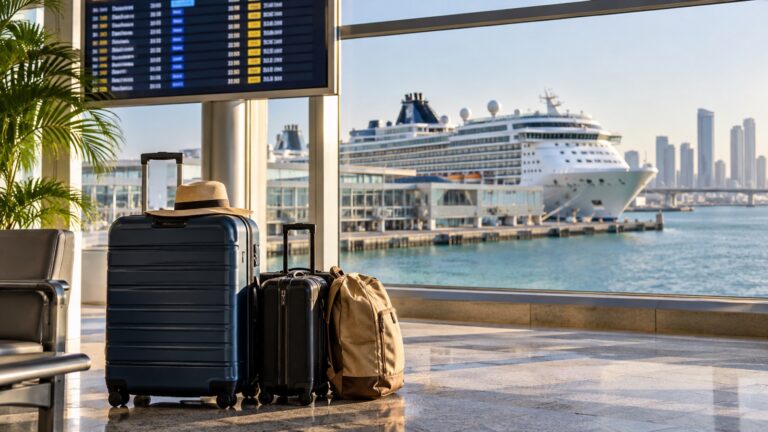
How Much Time Should You Leave for Returning to Your Cruise Ship?
The ship’s departure time is not a personal challenge. I build a return cushion around the least reliable part of the route, then add enough breathing room that one slow taxi does not become the plot of the afternoon.
Quick Facts
- Walkable town beside the ship: Target the terminal 45 to 60 minutes before all aboard because there are few transportation variables.
- Short taxi ride: Target 60 to 90 minutes because traffic, pickup delays, and port congestion can add up.
- Urban train or metro: Target 75 to 120 minutes because service problems and station time can erode the cushion.
- Long road transfer: Target 2 to 3 hours because congestion, breakdowns, and distance reduce your backup options.
- Inter-island ferry: Target 2 to 3 hours because both the marine schedule and road transfer must work.
- Tender return: Follow the ship’s last-tender instruction and arrive earlier because lines and sea conditions can slow boarding.
- Ship excursion: Follow the operator’s meeting instructions because the cruise line coordinates that tour’s return.
These are conservative planning ranges, not cruise-line rules. Your ship’s daily program and gangway signs control, and unusual port security or immigration can require more time.
All aboard is not the same as sailing time
The scheduled departure shown on your booking is when the ship plans to sail. All aboard is the earlier time by which passengers are instructed to be back, and it must be verified onboard for each port.
Royal Caribbean says all aboard is generally around 30 minutes before sailing, while warning independent guests that they are responsible for returning on time. Other lines and specific ports can use different timing, so never calculate from a generic rule.
Set three separate times
Official all aboard: the ship’s mandatory deadline.
Personal terminal target: when you intend to reach the port area.
Leave-attraction time: your personal target minus realistic return travel and delay allowance.
Most missed-ship stories begin when travelers treat those three times as one. Writing them separately turns a vague promise to “leave early” into an actual plan.
How to choose the right buffer
A buffer should reflect how many independent things must go right. Walking ten minutes along a waterfront has one risk profile, while a taxi to a ferry, an hourly boat, and a cross-island drive has several.
Count connections, frequency, traffic exposure, weather sensitivity, distance, payment friction, and the group’s pace. Add more margin when a missed departure forces a long wait or removes the only backup route.
Walkable ports
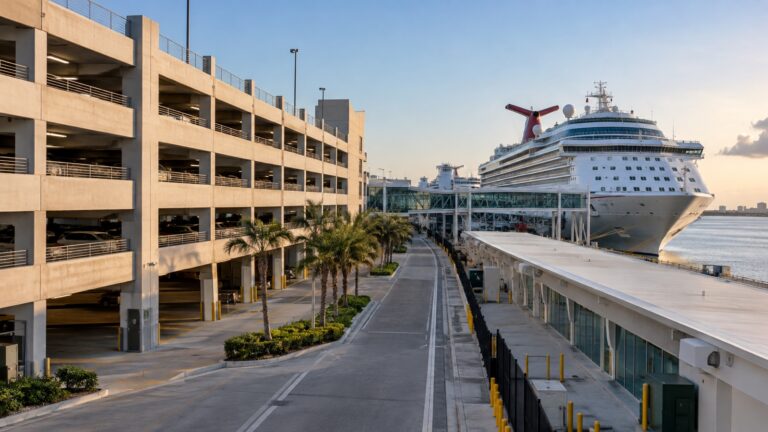
In a center beside the ship, 45 to 60 minutes before all aboard is a sensible personal terminal target for many travelers. That leaves room for a wrong turn, a shop checkout, a restroom, port security, and the walk from the gate to the gangway.
Do not spend this buffer inside a final attraction. Use it near the terminal, where a coffee or souvenir stop can be abandoned instantly.
Taxi and rideshare returns
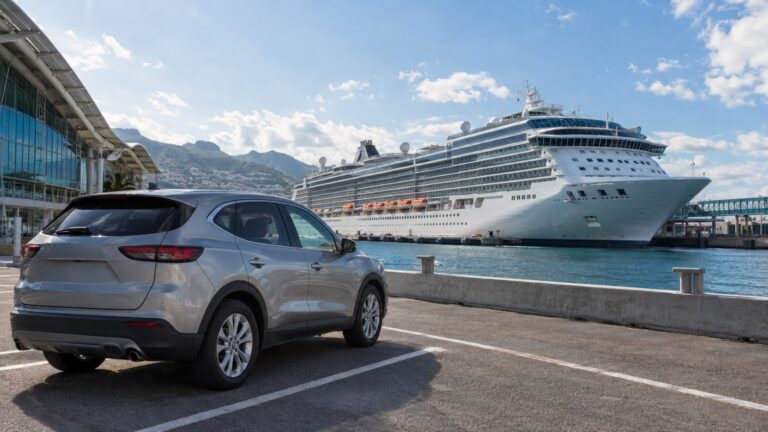
A ten-minute drive on a map can become a 40-minute process after requesting a vehicle, finding the pickup point, loading the group, and encountering port traffic. Busy beaches and attractions may also have taxi lines or weak data service.
For a short local taxi ride, target the port 60 to 90 minutes before all aboard. Arrange pickup in advance when supply is limited, but keep enough cash or payment flexibility for a backup vehicle.
Trains, metros, and buses
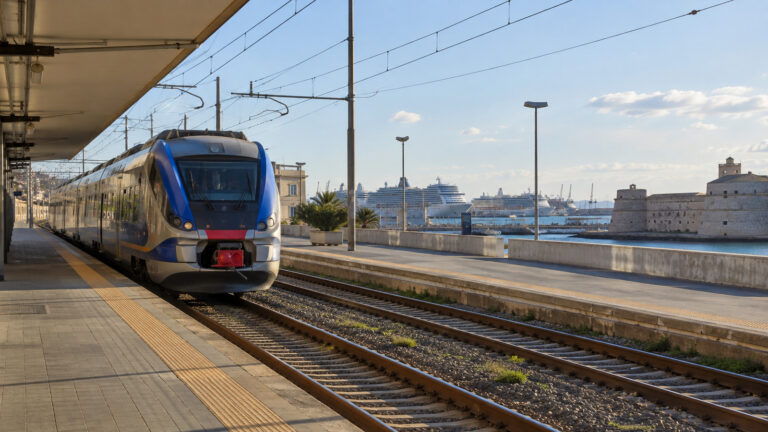
Frequent urban transit can be reliable, yet platforms, ticketing, wrong-direction errors, strikes, maintenance, and station walking add uncertainty. Choose a return service that allows at least one later departure while still meeting your personal target.
For an infrequent regional train, build around the second-to-last practical service rather than the last possible one. If missing one train would mean missing the ship, the plan does not have a buffer.
I treat a comfortable early return as part of the outing, not time stolen from it.
Long road transfers
Distant cities require the largest margins because congestion can appear far from the terminal and there may be no alternate route. Paris from Le Havre and Florence from Livorno are classic examples where a short delay becomes meaningful.
Aim to be back in the port area two to three hours before all aboard when touring independently over a long distance, adjusting for the route and local advice. A ship excursion may be the better fit when that margin leaves too little time at the destination.

Ferries and island-hopping
A ferry itinerary includes ticketing, boarding, crossing, unloading, and usually land transport on one or both sides. Wind and mechanical issues can affect service even when the day looks pleasant from the beach.
Choose a ferry that returns you to the ship’s island several hours before all aboard, not the final sailing that works in perfect conditions. Saint John from Saint Thomas is rewarding precisely when travelers respect this full chain.
If that is a concern on your sailing, Port Days That Land on a Holiday goes into it properly.
Tender ports
At tender ports, the cruise line controls boat operations between shore and ship. The daily program will state a last tender or other return procedure, and that instruction matters more than a generic buffer.
Reach the landing earlier when multiple ships, bad weather, or long lines are present. Being in line may or may not satisfy the cruise line’s rule, so listen to onboard announcements rather than relying on assumptions.
Ship excursions
A ship excursion uses a coordinated schedule, but you still need to report to its meeting point on time and follow the guide’s instructions. Do not wander away during free time believing the ship’s relationship with the operator protects an absent passenger.
Keep the daily program and port-agent details with you. If the tour is disrupted, follow the operator and cruise line’s communication rather than arranging a separate return without telling anyone.
Ship time versus local time
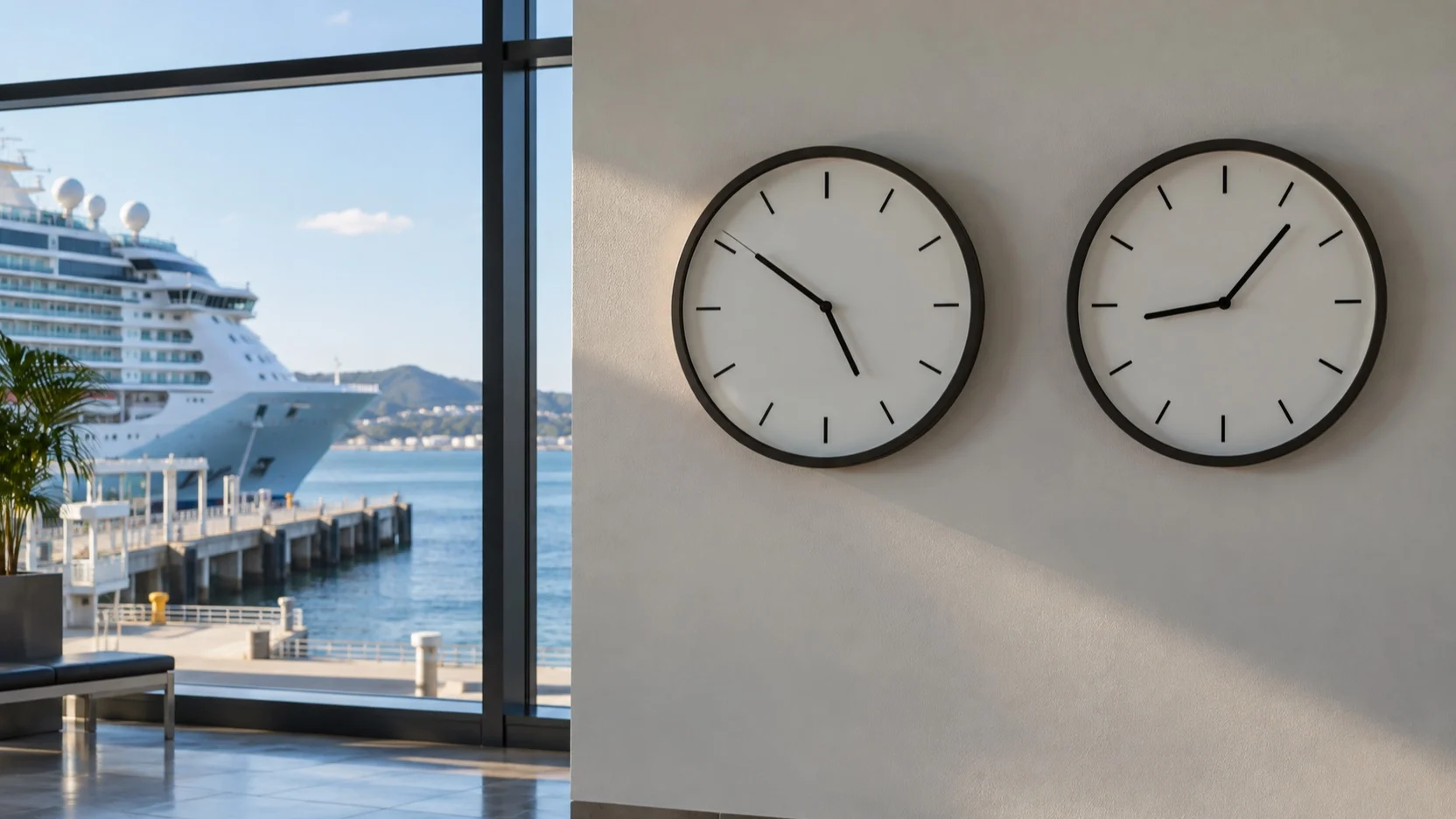
Some ships remain on a designated ship time even when local clocks differ, while others adjust during the voyage. Phones may update automatically after connecting to a local network, which can create a dangerous mismatch.
Before leaving, ask which clock governs all aboard and photograph the gangway sign. Set a manual alarm labeled with the time standard, and make sure everyone in the group uses the same one.
We cover that separately in our guide to What Can You See During a Short Afternoon Call in Santorini.
Traffic is not a single number
Map estimates reflect current or modeled conditions, not cruise-bus surges, road closures, bridge openings, events, weather, or a collision that occurs after you leave. Look at the route structure and ask what alternatives exist.
A journey with two parallel roads deserves less extra margin than a mountain road with no bypass. Local operators should be able to explain the normal cruise-day bottlenecks without promising certainty.
Add margin for your group
A family with a stroller, a wheelchair user, or a group of eight may need more time to board transport, use restrooms, and pass through security. Build for the actual group rather than a solo traveler’s best-case pace.
Medication, heat breaks, and mobility needs are not inefficiencies to erase. A humane buffer keeps the day enjoyable and prevents one ordinary delay from becoming a crisis.
What to carry in case the plan slips
Photo of the ship’s daily schedule and gangway sign.
Port-agent name and phone number from the onboard program.
Ship name, berth or terminal, and next-port information.
Required identification, cruise card, medication, and payment backup.
Charged phone, operator details, and an offline map.
Travel insurance information for serious disruption.
The port agent is not a substitute for returning on time, but that contact matters if an emergency occurs. Notify the appropriate people as soon as a true problem develops rather than waiting until all aboard.
A backward-planning example
Imagine all aboard is 4:30 p.m. and your personal terminal target is 3:15. If the normal taxi ride takes 35 minutes, allow perhaps 60 minutes including pickup and traffic, which puts the leave-attraction time around 2:15.
If I am choosing between one more stop and a calm walk through security, calm wins beautifully.
Now add time to settle a bill, use the restroom, and walk to pickup, making 2:00 the practical stop time. This is why an attraction advertised as “only 35 minutes away” can require leaving two and a half hours before all aboard.

When the buffer feels too large
If a safe margin consumes most of the day, the destination is probably mismatched to the call. Choose a closer attraction or a ship excursion instead of shrinking the buffer until the plan looks attractive.
The point of a port day is not to travel the greatest distance. A nearby neighborhood, beach, museum, or meal often creates more real experience than a hurried photo after hours in traffic.
What if the ship arrives late?
Confirm whether departure and all aboard changed, then recalculate from the new official time. Cut the farthest stop first and contact any operator before leaving the terminal.
A late arrival does not justify a late return. It simply makes the original itinerary too large for the day that remains.
Quick answers
Is 30 minutes before sailing enough?
No generic 30-minute rule should be your personal target. Verify all aboard and return earlier based on the port’s risks.
Will the ship wait if traffic is bad?
Do not assume it will wait for independent guests. Choose margins that account for ordinary traffic uncertainty.
How early is too early?
There is no universal answer, but returning so early that the port day loses its value signals a poor destination choice. Stay closer or use a coordinated excursion.
What if I miss the ship?
Contact the port agent and cruise line immediately, follow immigration and local-authority instructions, and contact your insurer. Costs and logistics can be substantial.
Should everyone in my group return together?
Set a clear meeting plan and never let one person hold everyone’s documents or only phone. If separating, agree on individual return targets and contingencies.
How this guide was researched: This guide was checked on September 11, 2026 against current official Royal Caribbean, Norwegian Cruise Line, and United States Department of State guidance, plus primary transport and attraction sources for the destination examples. Your onboard program and gangway notices remain the authority for each sailing, and policies, schedules, accessibility, pickup details, and operating conditions can change; see our Editorial Policy.
More on this topic: browse every guide on port logistics and timing.