What You Cannot Bring Back Onboard: Fruit, Alcohol, Coral and Customs
A souvenir can pass a shop counter and still fail the ship’s security rules or US import rules. Check both before you buy, especially for food, alcohol, plants, wildlife products, medication, weapons, and cash.
My quick take
There are two separate rulebooks here, and mixing them up is what gets people in trouble. The ship has its own rules about what comes back onboard, and your home country has completely different rules about what comes off at the end.
Sealed packaging can make an item easier to inspect, but it does not make it legal. Keep receipts, leave questionable natural products behind, and declare every food or agricultural item when you return.
The quick facts
- Two rulebooks: Ship policy at the gangway, national customs law at the end of the cruise.
- Fresh produce: Most fresh fruits and vegetables from abroad cannot enter the United States, with limited origin-specific exceptions.
- Alcohol: Many lines hold bottles bought in port until the end of the cruise, but limits and handling vary by line.
- Duty-free allowance: An eligible returning US resident commonly receives an $800 personal exemption, with different rules for short trips and certain US insular possessions.
- The golden rule: Declare all purchases, food, plants, animal products, and other required items. Properly declared prohibited agricultural goods can usually be surrendered without an agriculture penalty.
Rulebook one: getting back onboard
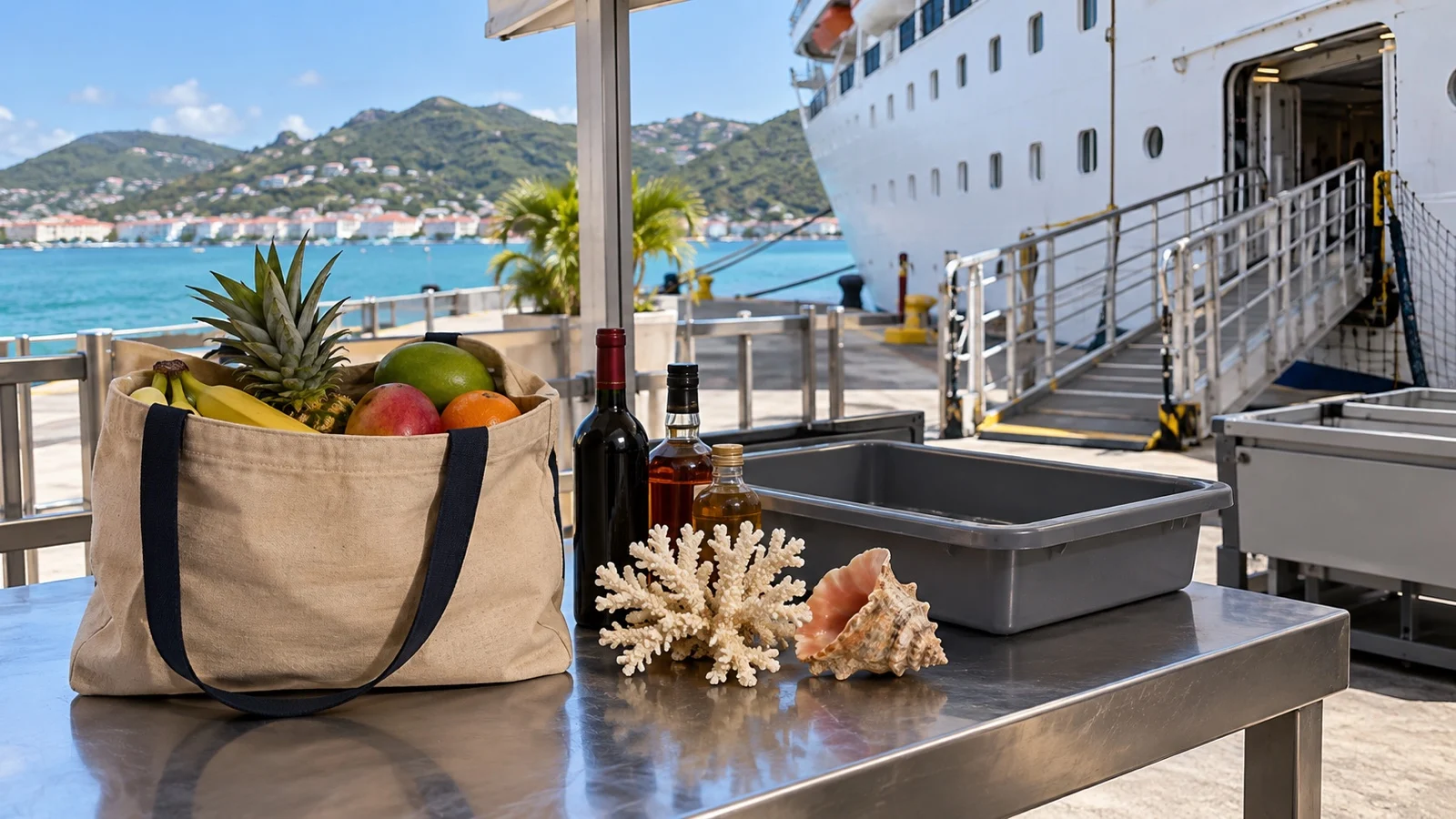
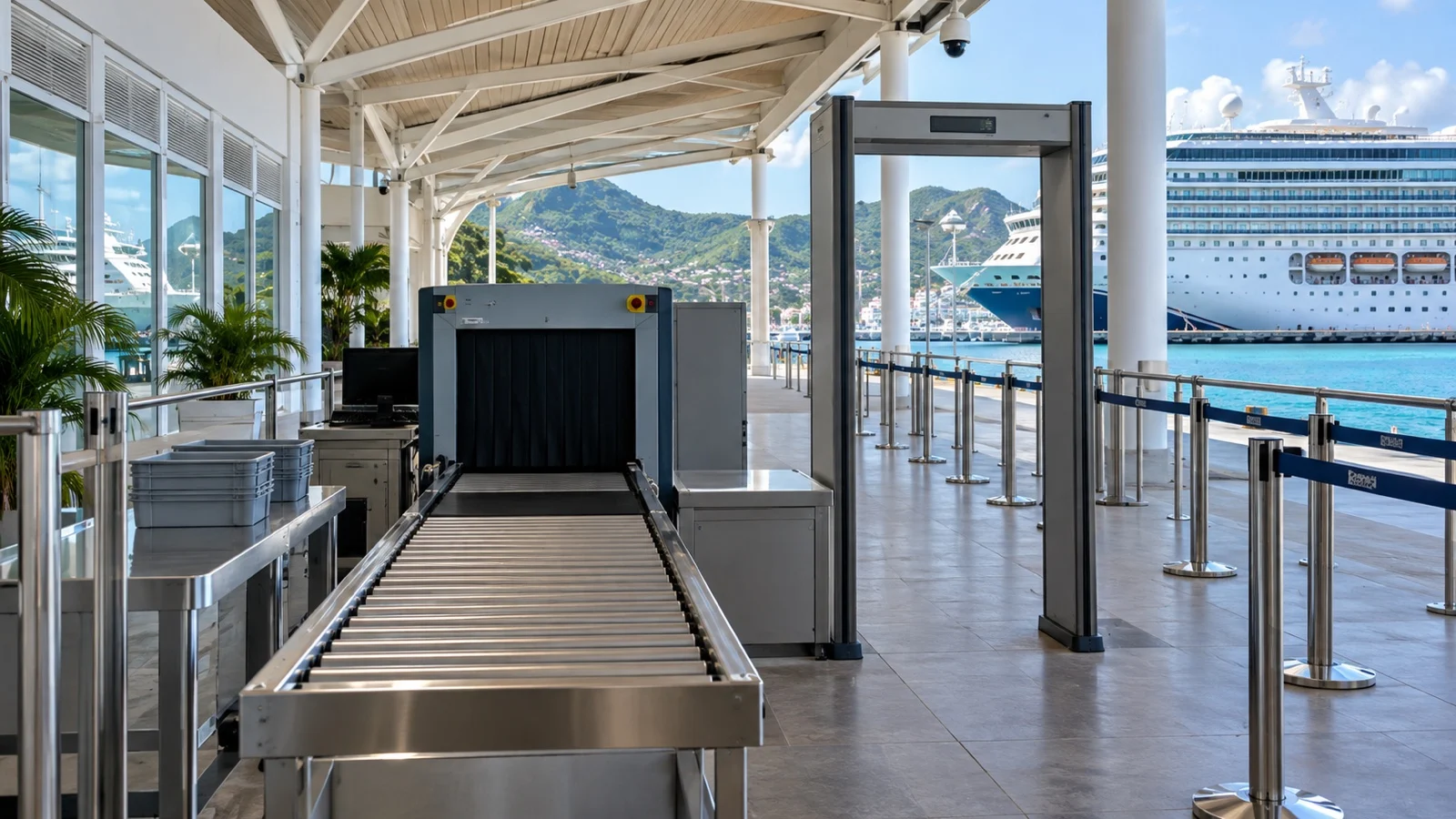
Expect bags to be screened when you reboard. The cruise line applies its own prohibited-items, alcohol, and food policies, which may be stricter than local law.
Many lines prohibit fresh food from being brought back onboard, but the exact rule is operator-specific. Ask security before buying anything perishable instead of assuming sealed or locally legal means accepted.
Alcohol is the other reliable stop. Most lines will take the bottle, tag it, and return it on the final night of the cruise rather than confiscating it outright.
What the ship will almost always take
- Alcohol: Often held until the end of the cruise, subject to the line’s quantities and exceptions.
- Fresh fruit and produce: Commonly prohibited by cruise-line food-safety rules.
- Knives and tools: May be prohibited or held by security, even when sold legally in port.
- Live plants or animals: Usually prohibited and also subject to wildlife and agricultural law.
- Flammable items: Fuel, lighter fluid, and gas canisters commonly appear on prohibited-item lists.
Shipping an item home does not bypass US customs, agriculture, wildlife, or tax rules. Use that option only after confirming the item is importable and understanding the carrier’s documentation and fees.
Rulebook two: getting back into your own country
US import rules carry legal consequences. Depending on the port and program, CBP may collect a paper or electronic declaration or ask questions during inspection.
Customs and Border Protection explains that travelers must declare purchases and agricultural products even when no paper form is used. Keeping receipts together makes valuation and questions easier.
The exemption is generous enough that most cruisers never owe anything. It is the undeclared items, not the expensive ones, that cause problems.
How much can you actually bring home?
An eligible returning US resident commonly receives an $800 personal exemption after a trip of at least 48 hours, subject to timing and destination rules. CBP’s exemption guide explains the $200 short-trip rule and the higher allowance connected with Guam, American Samoa, and the US Virgin Islands.
Family members who live in the same household and return together can generally combine eligible exemptions on a joint declaration. Alcohol, tobacco, age, and destination restrictions still apply individually.
Alcohol and tobacco have separate quantity, age, federal, and state rules. An excess may be dutiable, taxed, restricted, or refused, so payment is not always the only issue.
The fruit rule is stricter than you expect
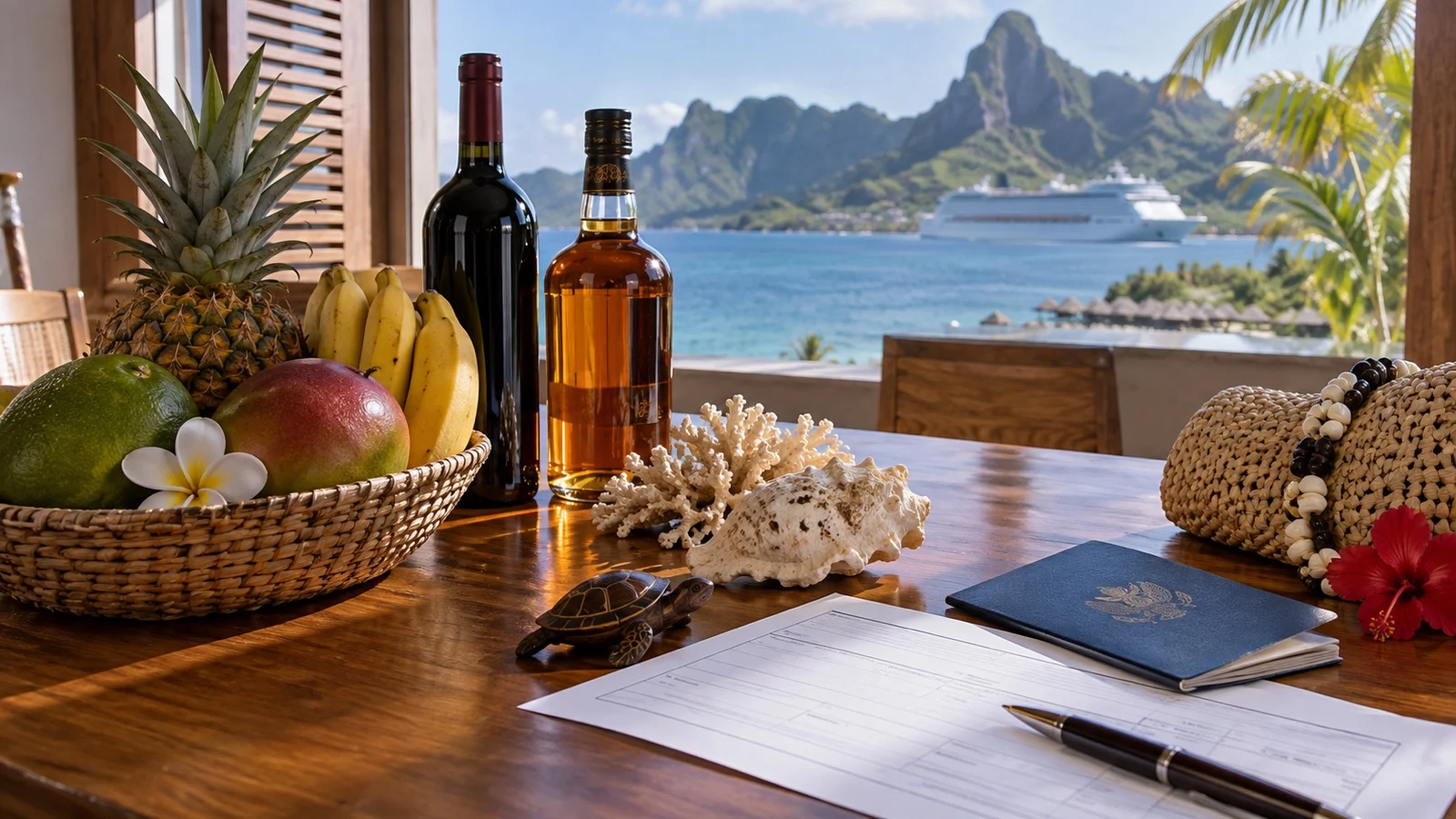
USDA’s Animal and Plant Health Inspection Service states that almost all fresh fruits and vegetables are prohibited from entering the United States, and specifically includes fruit given to you on your cruise ship. The apple from the buffet counts.
Freezing does not automatically make produce admissible. Some dried fruits, nuts, beans, and spices may be allowed, but origin, processing, pests, and current restrictions matter, and every item must still be declared.
The practical version is easy: eat it ashore or leave it behind. Nothing on a market stall is worth a civil penalty.
Declaring costs you nothing
This is the single most useful thing in this entire guide. CBP confirms that declared agricultural items found to be prohibited can simply be abandoned at the port of entry, while undeclared prohibited items are confiscated and can trigger a civil penalty.
In other words, honesty is free and guessing is expensive. If you are unsure whether something qualifies, declare it and let the specialist decide.
The agriculture question on the form also asks whether you visited a farm or were near livestock. Plenty of shore excursions qualify, so read that line rather than reflexively checking no.
The souvenirs that are actually illegal
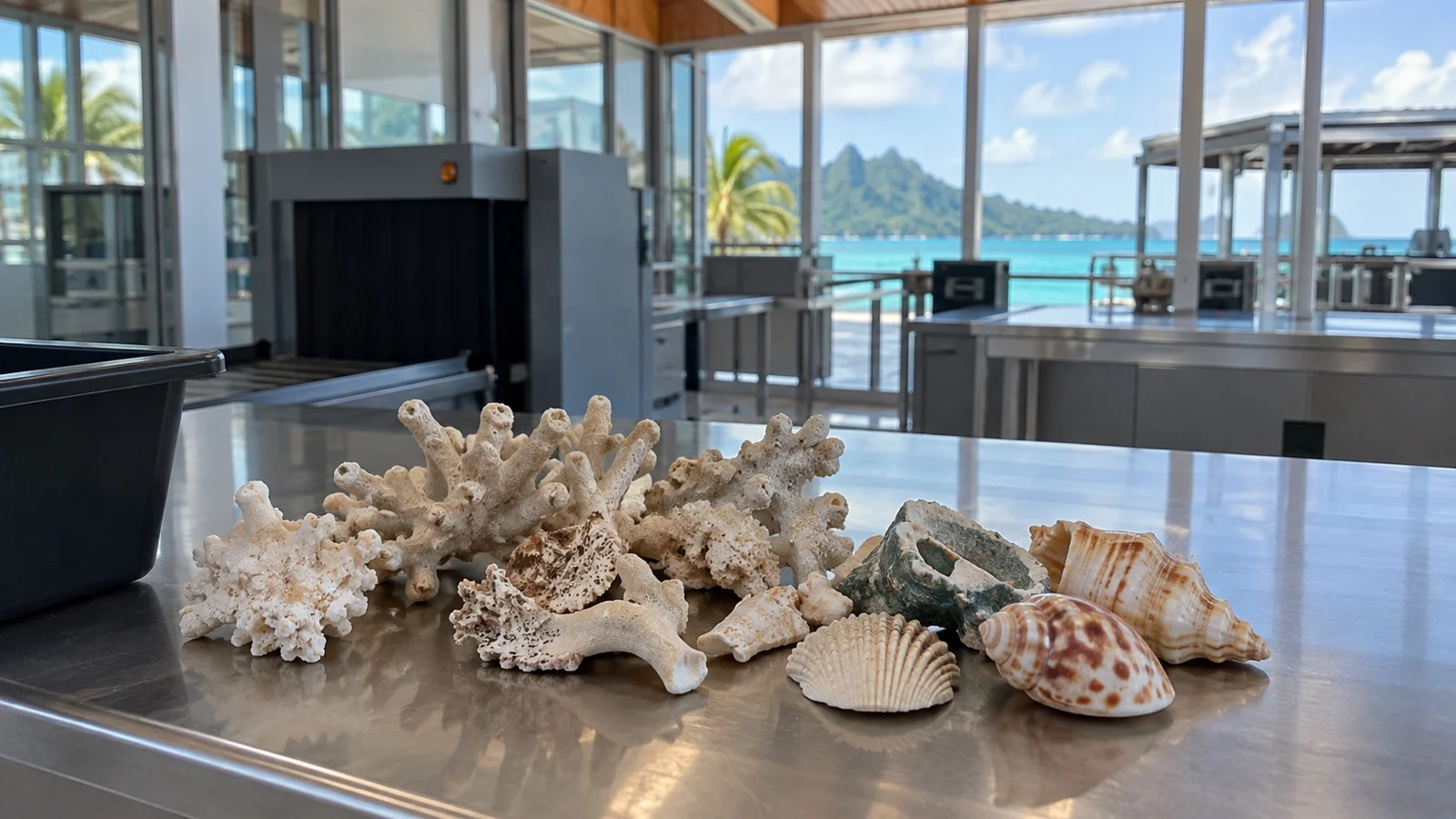
Some wildlife souvenirs sold openly abroad are prohibited or require permits to enter the United States. US Fish and Wildlife Service guidance covers coral, sea turtle shell, ivory, reptile skins, shells, feathers, and traditional medicines that can trigger wildlife controls.
Being sold legally in the country of origin does not make it importable. Vendors will tell you it is fine, and they are answering a different question than the one you are asking.
The safest choice is to photograph natural finds and leave them where they are. Local law may prohibit removal, and identifying the species or proving lawful origin at the border can be difficult.
Duty-free shopping is not customs-free shopping
Duty-free means you did not pay that country’s tax on the way out. It does not mean the item is exempt from your own country’s rules on the way in.
Liquor bought in a Caribbean duty-free shop still counts against your alcohol allowance at home. It also still gets held by the ship until your last night.
Keep the receipts for anything substantial, because the declared value is supposed to be what you paid. Guessing high wastes your exemption and guessing low is a bad idea.
Medication deserves its own paragraph
Carry prescriptions in original labeled containers, and bring a copy of the prescription itself for anything unusual. Some medications that are routine at home are controlled or banned in other countries.
Be especially cautious about buying medication abroad because ingredients, labeling, counterfeits, and US personal-import rules differ. FDA generally restricts personal importation of unapproved drugs, with narrow enforcement exceptions that should not be treated as permission to stock up.
What I do on the last sea day
- Gather receipts: One envelope, everything in it, no exceptions.
- Total the purchases: Actual paid prices, converted honestly.
- Eat or ditch the produce: Including anything from the buffet.
- Check the agriculture question: Did any excursion involve a farm or animals?
- Pack the alcohol carefully: It comes back to your cabin that night.
Ten minutes on the last sea day makes disembarkation morning painless. That morning is already tight enough, as my guide to port day timing and buffers gets into.
Quick answers
Can I bring fruit back onboard from a port?
Many lines say no, but the ship’s current policy controls. Ask before buying and expect prohibited fresh produce to be refused at the gangway.
What happens to alcohol I buy in port?
Most lines tag it at the gangway and return it to your cabin on the final night. Policies vary, so check your line’s rules.
How much can I bring home duty-free?
An eligible returning US resident commonly receives an $800 exemption. Short trips and returns involving Guam, American Samoa, or the US Virgin Islands follow different rules, so check CBP’s current eligibility details.
What if I declare something that is not allowed?
A properly declared prohibited agricultural item can usually be surrendered without an agriculture penalty. Declaration does not legalize contraband or erase every possible violation, so ask CBP when unsure.
Can I bring home coral or a sea turtle shell souvenir?
Do not buy them unless the US Fish and Wildlife Service confirms the species, permits, and port of entry make import legal. Sea turtle products are generally prohibited, while coral rules vary by species and documentation.
Cash has a reporting rule too
If you are carrying more than $10,000 in currency or monetary instruments into or out of the United States, CBP requires a report. It is a disclosure requirement, not a tax or a cap.
For family members living in one household who file a joint or family declaration, CBP applies the threshold to the combined amount. Structuring the money among people to avoid reporting can create a separate problem.
Almost no cruiser is anywhere near this. It is worth knowing anyway if you are heading somewhere that runs heavily on cash, which is most of the ports in my guide to resort day passes near Caribbean cruise ports.
Non-US passengers, different rules entirely
Everything above describes the US system, because that is where most of my readers disembark. Canadian, British, Australian, and EU allowances are all structured differently, with their own thresholds and their own prohibited lists.
The categories often look similar, but the legal treatment does not. Fresh food, wildlife products, alcohol, tobacco, medication, and cash each need to be checked against the country where you will clear customs.
Check your own border agency’s traveler page before you sail rather than assuming the American numbers apply. The habits transfer, but the dollar figures do not.
The things people genuinely forget
- Gifts you were given: Value counts even though you did not buy it.
- Items you had shipped home: Separate mail and courier exemptions may apply, but shipment does not avoid customs.
- Cheese and cured meat: Charming in Italy, complicated at the border.
- Wooden carvings: Untreated wood can carry pests and gets inspected.
- Sand and rocks: Local law may prohibit removal, and US agriculture or wildlife rules can still apply.
Declare these items and be ready to show receipts, packaging, and permits. If an item is illegal to possess or import, declaration may not prevent seizure or other consequences.
Final word
None of this is difficult once you know there are two separate rulebooks operating on the same suitcase. The ship cares about safety, and your government cares about pests and revenue.
Keep receipts, skip questionable natural or wildlife products, and declare all required items. When in doubt, ask the cruise line about reboarding and the relevant border agency about bringing it home.
How this guide was researched: This guide was checked in September 2026 against current CBP guidance on exemptions, cash, declarations, and agriculture; USDA APHIS traveler rules; FDA personal-import guidance; and US Fish and Wildlife Service import guidance. Cruise-line policies vary, so confirm with your operator and see our Editorial Policy.
There is more on this in our guide to What Actually Happens on Cruise Embarkation Day.
More on this topic: browse every guide on port logistics and timing.