Shore Power at Cruise Ports: The Plug That Is Changing Port Days
The ship ties up, a thick cable comes off the pier and into a hatch in the hull, and the engines go quiet for the day. That cable is quietly deciding which ships get which berths, and almost nobody on board knows it exists.
My quick take
Shore power is the least glamorous thing changing cruising right now, and one of the few that will genuinely alter your port day. You will never see it advertised, and it is starting to decide where your ship parks.
I do not pick a cruise over this and I would not pay extra for it. I do pay attention when a port has one wired berth and three ships booked, because that is the day somebody gets the long walk.
The quick facts
- What it is: The ship shuts down its diesel generators at the berth and runs on electricity from the local grid.
- Other names: Cold ironing, onshore power supply and alternative maritime power all mean the same thing.
- Who requires it: California already requires emission control at the dock for cruise ships, and the main EU ports follow from 2030.
- The catch: A wired berth is useless if the ship’s voltage, frequency or connection side does not match.
- What you notice: Less noise, less vibration and no diesel haze, and honestly that is about it.
What the plug actually does
A cruise ship tied to a dock is still a power plant. Lights, elevators, galleys, air conditioning, laundry and every pump on board need electricity, and normally that comes from diesel generators running the whole time you are ashore.
Shore power swaps those generators for a cable from the local grid. The crew brings the shore supply online, shuts the generators down, and the hotel load runs on the same electricity that runs the town.
You will hear it called cold ironing, onshore power supply, OPS, high voltage shore connection or alternative maritime power. Those are all the same idea wearing different acronyms.
Why your balcony is quieter
The generators are why a docked ship hums, and why there is sometimes a faint diesel smell on the lower aft balconies on a still day. Turn them off and both largely go away.
Vibration through the deck drops too, which is the part people notice without being able to name it. If you have ever wondered why one docked day feels restful and the next feels like napping next to an idling truck, this is often the reason.
It matters more to the people who live there than to you. A port that has spent a decade arguing with residents about ship exhaust has every reason to reward the ships that plug in.
The 2030 rule the whole industry is planning around
From January 1, 2030, passenger ships and container ships at berth in the covered European ports will have to connect to onshore power. A companion rule pushes the larger ports on the main European transport network to build the connection by the same date, and leaves out ports with only a handful of calls a year.
There are outs, and they are sensible ones. A stay under two hours does not trigger it, and neither does an unscheduled call, a safety situation, an emergency, maintenance testing, or a berth where the supply is unavailable or incompatible with the ship.
From 2035 the requirement widens to more European ports and the exemptions get rationed to a capped number of calls per ship per reporting period. That is the step that turns a nice idea into a berth planning problem, and it is why ports are building now rather than in 2029.
California has been doing this for years already
California is not waiting for 2030 and never was. Cruise, container and refrigerated cargo ships have had to control their emissions for the entire time they are alongside since the start of 2023, and the state has been regulating ships at the dock in some form since 2007.
In practice the rule for ships at berth means shore power, or an approved capture system that hoods the funnel and scrubs the exhaust, or paying into a remediation fund. A ship that can do none of those does not simply get waved through.
Every cruise berth at the San Pedro terminals in Los Angeles is wired, and San Diego has been plugging cruise ships in at its downtown pier since 2010. This is why the same ship can feel noticeably quieter on a California call than it does on the next stop down the coast.
Norway is asking for something much harder
Two fjords on the world heritage list, Geirangerfjord and Naeroyfjord, are moving to a zero direct emissions standard for the ships that sail into them. Smaller vessels are on the hook first, and the big ships have until 2032.
That is a bigger ask than a plug at a pier. It means running clean while underway, which for now points at batteries or hydrogen rather than cleaner fuel.
Shore power still sits underneath the whole thing, because a battery vessel has to charge somewhere. My write up of what the zero emission fjord rules change for Geiranger gets into the exemptions, and the short version is that a fjord village of a few hundred people does not have that kind of grid sitting spare.
The ports that already have a working plug
The honest answer is fewer than you would guess, and the list moves every season. A working cruise connection is a very different thing from an announcement about one.
- Los Angeles: Every cruise and container berth is equipped, and has been for years.
- San Diego: The downtown cruise pier has been connecting ships since 2010, with extra connection points added since.
- Bergen: Three cruise ships can connect at once, and most calls already do.
- Hamburg: Altona has run shore power for years, with the other cruise terminals being wired now.
- Southampton: The Horizon terminal was the first cruise shore power facility in the UK.
Around ten US ports run high voltage systems serving cruise, container and refrigerated ships, and further cruise projects are planned on the Gulf coast and in Florida. Alaska and the Canadian Pacific coast are patchier than their scenery leads you to expect, and a busy Norwegian port like Bergen is well ahead of ports twice its size.
The ship has to be able to plug in too
A wired berth is only half the equation. The ship needs the switchgear, the transformer, the cable handling gear and the trained crew, and plenty of hulls built before any of this was a policy question simply do not have them.
Then there is the electricity itself. Shore grids are not interchangeable, North America runs at 60 hertz and most of Europe runs at 50, and a ship wired for one needs conversion equipment on board to take the other.
There is an international standard for the connection, and new ships and new berths are built to it. Retrofitting an older ship is a shipyard job rather than a port day job, and it competes for money with every other capital project a cruise line has on the list.
The plug is not always on the right side of the ship
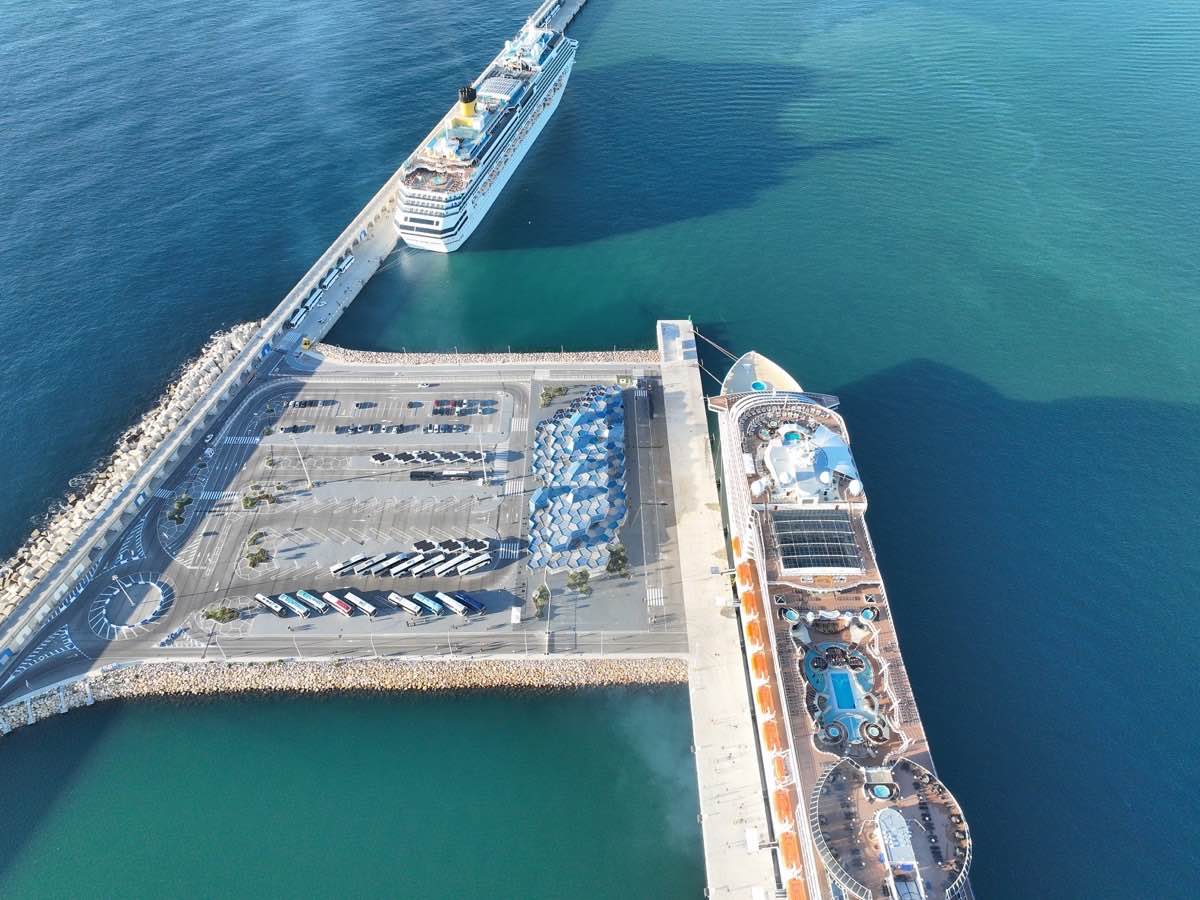
This is my favorite detail in the whole subject because it is so gloriously mundane. The shore connection point sits on one side of the hull, and if the berth’s cable comes up on the other side, the ship cannot connect.
Ports have spent serious money fixing exactly that. One California cruise pier put a six figure contract out purely to add a connection on the starboard side of the berth so that ships plumbed the other way could use it.
Multiply that by every pier and every hull design and you get the real picture. Compatibility, not ambition, is what keeps shore power from being used on days when it exists.
How this decides who gets the good berth
Ports have always assigned berths on a mix of ship length, arrival time, terminal capacity and commercial relationship. Shore power is now in that mix, and in a few places it is near the top of it.
If a port has one wired berth and two ships that want it, the ship that can actually use it gets it. That is rarely written down as a rule anywhere, it is just what a port does when its air quality performance is being measured and published.
For you it shows up as a walk rather than a headline. The wired berth is not always the one closest to town, and I would not assume the cleaner ship automatically lands the better spot, in the same way I do not assume a port with a daily passenger cap will be the emptier one.
The city has to have the power to give
A large cruise ship alongside draws roughly what a small town draws, and it wants all of it at once, on a summer afternoon, on the same grid as everyone’s air conditioning. That is a substation problem, not an extension cord problem.
One Canadian cruise port worked the numbers all the way through and then stopped. The build needed a new substation on the terminal plus roughly 4.5 miles (7.5 km) of cable across the city, and the estimate landed at around three times the funding that had been lined up.
That is the constraint nobody puts in a sustainability brochure. Plenty of ports want shore power and cannot get enough electricity to the pier at a price anybody is willing to pay.
What it costs and who quietly pays
The port buys the power and sells it to the ship, usually at something close to a local industrial rate plus a connection charge. Whether that beats burning marine fuel depends entirely on local electricity prices, which is why uptake varies so much between countries.
None of it lands on your onboard folio. It sits inside port fees, port fees sit inside your fare, and that is as far as anyone is ever going to trace it for you.
Ports increasingly tie berth discounts and environmental scores to things they can measure, and connection time is very easy to measure. That is a cleaner lever than a fine, and it moves schedules faster than a regulation dated 2030, in the same way that the newer caps and day taxes have already changed which ships call where.
What you honestly notice on the day
Not a lot, and I would rather say that plainly than oversell it. The ship is quieter, the deck moves less, and the air over the aft decks is cleaner.
- Sound: The background hum at the pier drops away almost completely.
- Smell: No exhaust drifting onto the balcony when the wind sits wrong.
- Feel: Less vibration through the deck and through the cabin floor.
- Timing: Connecting and disconnecting takes real time, so very short calls often skip it.
Nobody announces it, and there is no light in the cabin that tells you. If you want to know, look down from the rail for a heavy cable running out of a pit in the quay and up into a hatch in the hull, usually around midships.
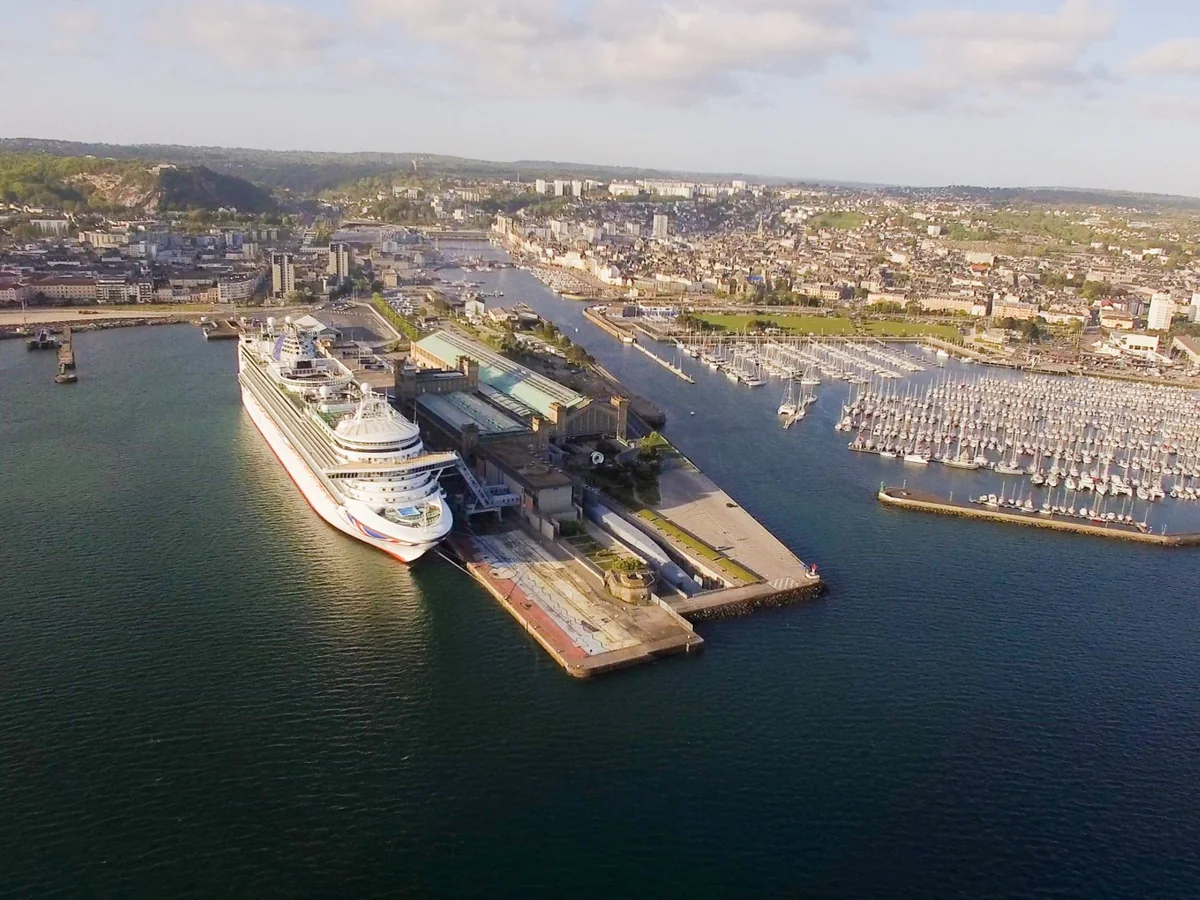
What changes by 2030, and what does not
Expect more wired berths, more ships able to use them, and more ports treating the plug as a condition of the good berth rather than a bonus. The direction is not in doubt even where individual project dates slip, and some of them will slip.
What will not change is the mismatch. There will still be ships that cannot connect, berths that were never wired and calls too short to bother with, which is exactly why the exemptions were written into the rules in the first place.
I check the itinerary rather than the technology. If a port matters to me I look at which berth the ship is assigned, because that is the thing that actually changes how my day goes.
Quick answers
What is cold ironing on a cruise ship?
Cold ironing is simply the older name for shore power, and it describes the same thing. The modern version is a high voltage cable from the pier that runs the whole ship while it sits at the dock.
Do cruise ships turn their engines off in port?
Only where shore power exists and the ship can use it, which is still a minority of calls worldwide. Everywhere else the generators run all day to keep the lights, elevators and air conditioning going.
Which cruise ports have shore power?
The California cruise ports, several northern European ports including Bergen, Hamburg and Southampton, and a growing list elsewhere. Assume it is the exception rather than the norm until a port says otherwise.
Does shore power make the ship quieter?
Yes, and the vibration drops as well, which is the part most people register first. It is a genuine comfort difference on a long docked day, especially in an aft or lower deck cabin.
Will all cruise ships have to use shore power in 2030?
No. The 2030 requirement applies to covered European ports, with exemptions for short stays, unavailable supply and incompatible ships, and the rest of the world runs on its own timetable.
Final word
Shore power is infrastructure, so it is boring right up until the moment it decides where your ship ties up. That moment is arriving faster in Europe and California than anywhere else.
You do not need to track any of it to have a good port day. Just know that when a docked ship goes suddenly, strangely quiet, somebody on the pier plugged it in, and the berth you are standing on cost a fortune to wire.
How this guide was researched: Regulations, compliance dates and port by port shore power installations were checked against official regulatory and port authority material in September 2026. Which berths are wired, which ships can connect and which projects are funded all change quickly, so confirm the detail for your own sailing before you plan around it. See our Editorial Policy.
More on this topic: browse every guide on port logistics and timing.