Getting Sick in Port: Pharmacies, Clinics and What Insurance Covers
Getting sick in port is stressful because you are juggling symptoms, an unfamiliar health system, and a ship schedule at once. The safest plan is to sort the medical urgency first and the itinerary second.
My quick take
For a medical emergency, call the local emergency number or seek the nearest appropriate emergency care without detouring back to the ship. Contact ship security, the medical center, or the port agent as soon as it is safe, but do not delay urgent treatment to make all-aboard.
For a mild problem, a licensed pharmacy may help with an over-the-counter product or direct you to a clinic. Report vomiting, diarrhea, fever, or respiratory symptoms to the ship’s medical center because the crew may need to manage infection risk onboard.

The quick facts
- Emergency ashore: Call the local emergency number or go to appropriate emergency care, then notify the ship or port agent when you can.
- Minor problem: A licensed pharmacy can advise on over-the-counter options or tell you when a clinic is needed.
- Onboard care: Ship medical capabilities vary, and examinations, tests, and medications are typically charged separately.
- Insurance: Check overseas and shipboard coverage before sailing because many plans require payment first or have network and authorization rules.
- Evacuation: Medical evacuation is a separate benefit, and the policy may cover transport only to the nearest suitable facility rather than home.
Emergency, urgent, or uncomfortable?
Call the local emergency number for warning signs such as trouble breathing, chest pain, signs of stroke, severe allergic reaction, uncontrolled bleeding, loss of consciousness, confusion, or a major head or spine injury. If you are unsure and symptoms are severe, sudden, or rapidly worsening, treat the situation as urgent.
Do not take a long taxi ride back to the pier when an ambulance or nearby emergency department is the safer option. A companion can call the ship, port agent, and insurer while care is underway.
If the problem is uncomfortable but stable, call the ship’s medical center or insurer assistance line for direction. They may recommend returning onboard, visiting a local clinic, or using a pharmacy for a simple over-the-counter need.
What a local pharmacy can do

Pharmacists’ authority and available medicines vary by country, so a pharmacy is not a universal substitute for a doctor. A licensed pharmacist can often help with minor symptoms, check for interactions, and refer you when the problem needs a clinic.
Do not self-treat a severe allergic reaction, breathing difficulty, major injury, high-risk infection, or rapidly worsening illness. Avoid market stalls and unlicensed sellers because counterfeit and incorrectly labeled medicines occur in some destinations.
Show the pharmacist the generic names, doses, allergies, and medical conditions on your health card. Save an offline translation, since the phone tips in the guide to managing ship time and your phone also apply when you have no data signal.
When to use the ship’s medical center
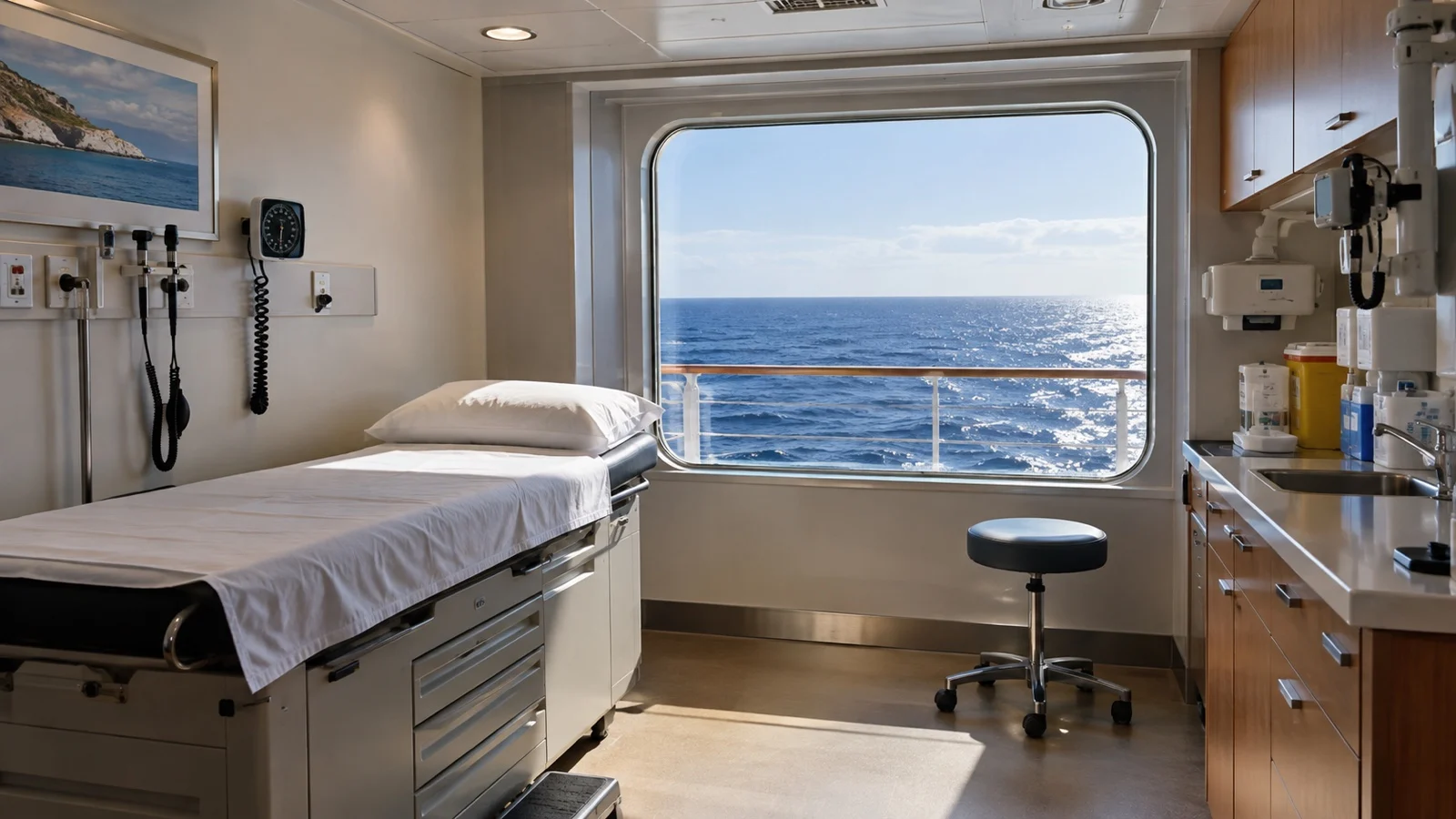
The CDC Yellow Book says ship medical capabilities vary widely by vessel, itinerary, cruise length, and passenger population. Medical centers can generally provide ambulatory care, while some ships can offer higher-level services.
Onboard teams can assess illness or injury, provide treatment within their capability, stabilize a medically unstable patient, and help arrange shoreside care or evacuation. They are not a replacement for a full hospital, so ask your line what the specific ship can and cannot provide if you have complex needs.
CDC advises passengers to report illness to the ship medical center, including gastrointestinal and respiratory symptoms. Prompt reporting helps the clinician treat you and lets the ship use appropriate infection-control measures.
If you cannot return before sailing
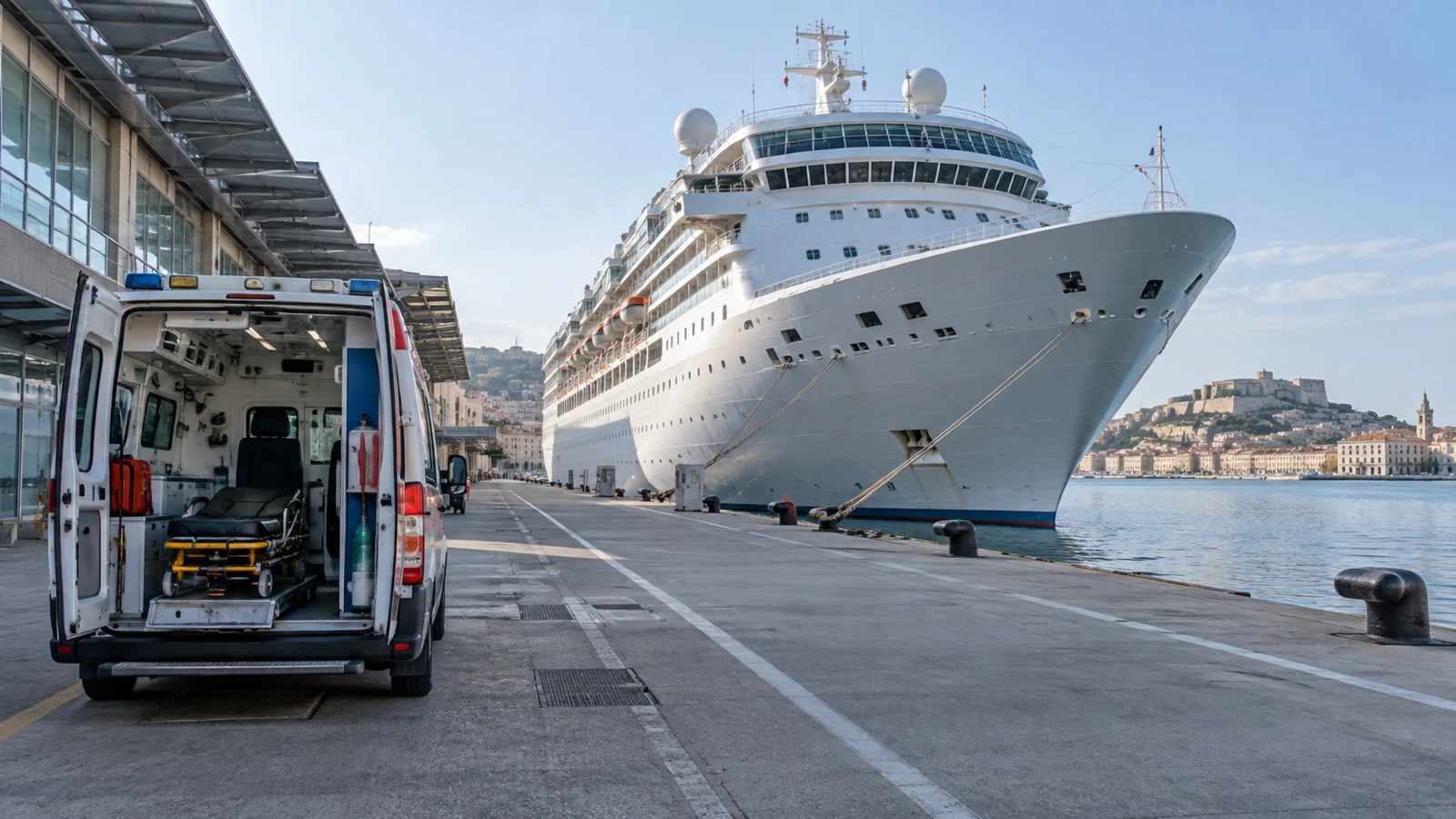
The ship may need to depart while you are receiving care ashore. Your health comes first, so do not leave needed treatment just to reach the gangway.
Call the port agent using the number in the daily program and contact the ship if possible. Ask how your travel companion, medication, passport, luggage, and onward arrangements will be handled, since the exact assistance varies.
Call the insurer’s emergency-assistance line and keep the hospital informed of the ship’s departure. The guide to missing the ship at a port of call covers the travel side once the immediate medical problem is under control.
A passport book may be essential if you must fly internationally, while a passport card cannot be used for international air travel. Follow the ship’s document instructions, carry copies separately, and know how to retrieve any passport held onboard.
What insurance may cover
Do not assume your home health plan, credit card, or trip-cancellation policy pays medical bills abroad. The United States Department of State says the government does not pay citizens’ overseas medical costs and recommends checking coverage for routine and emergency care before travel.
Ask whether the policy covers treatment in foreign countries, shipboard care, pre-existing conditions, planned activities, prescriptions, and an extended hotel stay. Also ask whether it pays providers directly or reimburses you after you submit a claim.
Trip cancellation insurance usually protects prepaid travel costs and is not the same as travel medical insurance. Read the certificate of insurance rather than relying on a short benefits summary.
Medicare has narrow exceptions
Medicare says it usually does not cover health care outside the United States, but there are limited exceptions. Part B may cover medically necessary shipboard services when the ship is in a United States port or no more than six hours from one and the other requirements are met.
Some Medigap policies may cover emergency care abroad, and Medicare Advantage rules vary by plan. Confirm the details directly and do not assume a Medicare card is enough overseas.
How evacuation coverage really works
Travel medical and medical evacuation benefits are related but not interchangeable. Evacuation can be extremely expensive, particularly when the traveler needs a medically equipped aircraft or must be moved from a remote region.
Check who decides whether transport is medically necessary, whether the insurer must arrange it, and whether the destination is the nearest suitable facility or a hospital near home. Look for limits, exclusions, deductibles, pre-existing-condition rules, and coverage for a companion.
CDC travel guidance recommends considering health-care and emergency-evacuation coverage, especially for remote areas. Buy based on the itinerary and policy wording, not a scary sales pitch.

Paying for care and protecting the claim
CDC says travelers are usually responsible for paying hospital and medical expenses out of pocket at most destinations. Some providers can bill an insurer directly, but you should be ready for a deposit or payment at the time of care.
Call the insurer before nonemergency treatment if the policy requires authorization or referral. In an emergency, get care first and have a companion call as soon as practical.
Request an itemized bill, diagnosis, clinical notes, prescriptions, test results, proof of payment, and any discharge or fitness-to-travel letter. Photograph everything and keep the originals for the claim.
Bring two usable payment methods without carrying them in the same wallet. The guide to carrying cash and cards in port explains why that small backup matters.
What an embassy or consulate can do
A United States embassy or consulate can help locate medical services and notify family, friends, or an employer during an emergency. It can also explain options if a passport is lost or held on the departed ship.
Consular staff do not provide medical treatment, guarantee a provider’s quality, or normally pay your bills. The Department of State lists emergency contact routes and recommends enrolling in STEP for alerts and help with emergency contact.
Bring medication safely
Bring enough prescription medication for the trip plus extra for delays, and keep essential medicine in your carry-on. Use original labeled containers when possible and carry a copy of each prescription with the generic drug name, dose, and prescriber’s contact details.
A medicine that is routine at home can be restricted abroad, so check every country’s embassy or health authority before departure. The Food and Drug Administration’s travel guidance also warns travelers not to assume a drug approved in one country is approved in another.
Do not replace an important prescription with an unfamiliar product based only on a matching brand name. Ask a licensed clinician or pharmacist to confirm the active ingredient and strength.
Medicines bought ashore must also be legal to bring onboard and home. The guide to what you cannot bring back onboard or home covers the customs side.
Make a medical information card
CDC recommends carrying essential health information, including allergies, blood type, chronic conditions, medications, and clinician contacts. Keep a paper copy and an offline digital copy, with a translation for the destination when practical.
Add the insurer’s policy number and emergency-assistance number, your ship and cabin, and your emergency contact. A medical alert bracelet can help if a serious condition or allergy could affect emergency treatment.
Traveling with a chronic condition
Contact the cruise line before booking if you need dialysis, oxygen, refrigerated medication, mobility equipment, sharps disposal, or other medical support. CDC specifically advises confirming what services are and are not available on the chosen ship.
Do not assume a ship supplies oxygen, accepts every concentrator, provides dialysis, stores medicine in a cabin refrigerator, or can support a particular device. Ask about forms, notice deadlines, approved vendors, power requirements, backup plans, and any cost in writing.
Choose port days that match your capacity and leave room for heat, hills, uneven paving, and longer-than-expected walks. The guide to planning a port day when someone cannot walk far helps with that honest calculation.
The five-minute plan before you sail
- Verify coverage: Ask about foreign, shipboard, urgent, emergency, prescription, and pre-existing-condition benefits.
- Read evacuation terms: Check who authorizes transport, where it takes you, the dollar limit, and exclusions.
- Save the contacts: Insurer assistance, ship, port agent, emergency contact, and consular emergency numbers.
- Carry health information: Conditions, allergies, medicines, doses, clinicians, policy number, and emergency contact.
- Pack a personal kit: Bring only medicines and supplies that are safe for you and legal at every destination.
Ask your clinician or pharmacist which over-the-counter items belong in your kit, especially if you take prescription medicine or have allergies. The right kit is personal, not a one-size-fits-all shopping list.
Quick answers
Does my health insurance work abroad?
Maybe, but overseas and shipboard benefits vary widely. Ask the insurer directly about the countries, cruise medical center, payment process, network, and authorization rules.
Is the ship’s doctor free?
Usually not, because examinations, tests, treatment, and medicine are typically separate charges. Ask the line and your insurer how shipboard claims are handled.
Should I see a doctor ashore or return to the ship?
For an emergency, call the local emergency number or seek appropriate nearby care without delaying for the ship. For a stable minor problem, call the ship medical center or insurer for guidance.
Will the ship wait if I am hospitalized?
Do not count on it, because the ship may have to depart on schedule or as operations require. Notify the ship and port agent and let your insurer help coordinate the next steps.
Do I need medical evacuation insurance?
It is especially important when care is limited or the itinerary is remote. Compare the covered destination, authorization rules, limits, exclusions, and pre-existing-condition terms.
Final word
Most minor port-day problems are manageable, but a pharmacy is not a magic door and the ship is not always the safest first stop. Match the response to the urgency, then call the people who can coordinate the medical and travel pieces.
Verify insurance, carry your health card, save the port-agent details, and know the local emergency number. With that unglamorous homework done, you can get back to the much nicer business of enjoying the port.
How this guide was researched: This general travel information was checked in September 2026 against the CDC Yellow Book, CDC Travelers’ Health, Medicare, the Food and Drug Administration, and United States Department of State guidance. It is not medical, insurance, or legal advice, so use local emergency services and qualified clinicians for care, review your own policy documents, and see our Editorial Policy.
More on this topic: browse every guide on port logistics and timing.