Los Angeles Cruise Port: San Pedro Berths, Parking and Traffic
The Los Angeles cruise port is not beside Hollywood, Santa Monica, or downtown. Ships use the Los Angeles Cruise Terminal in San Pedro, a harbor community at the southern edge of the City of Los Angeles.
That location is excellent for ships and surprisingly interesting for travelers, but it changes every transfer calculation. Treat San Pedro as the destination, leave room for freeway traffic, and the port becomes much easier.
Quick Facts
- Official terminal: Los Angeles Cruise Terminal, also widely called the World Cruise Center.
- Address: Berths 91 to 93, 100 Swinford Street, San Pedro, California 90731.
- Seaport code: US LAX for Los Angeles, distinct from US LGB for Long Beach.
- Arrival type: Cruise ships berth alongside at the terminal.
- Nearest major airport: Los Angeles International Airport, listed by the port at approximately 18 miles away.
- Closer airport option: Long Beach Airport, listed by the port at approximately 10 miles away.
- Parking: Secured overnight parking is available near the cruise facilities.
- Currency: United States dollar.
- Time zone: Pacific Time, with seasonal daylight saving changes.
- Best low-stress advice: Arrive in the Los Angeles area at least one day before embarkation.
Where cruise ships dock in Los Angeles
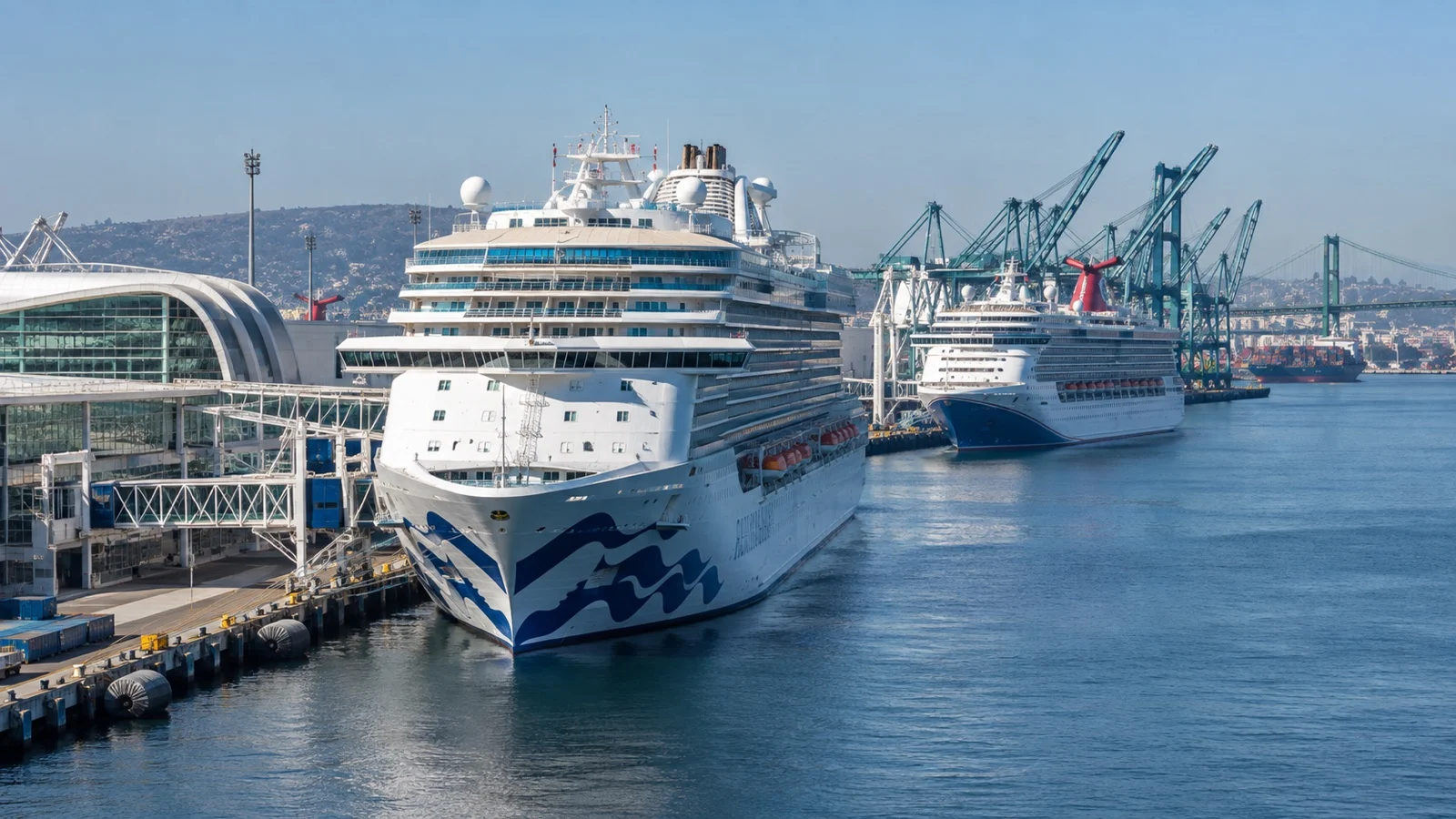
The Port of Los Angeles places the cruise terminal at Berths 91 to 93 on Swinford Street in San Pedro. The facility has two terminal buildings, two berths, more than 100,000 square feet of passenger-processing space, and direct access from Interstate 110.
Your berth number matters because processing, curb access, and pickup instructions can differ across the site. Check the final cruise line documents and repeat the exact berth or terminal building to the driver.
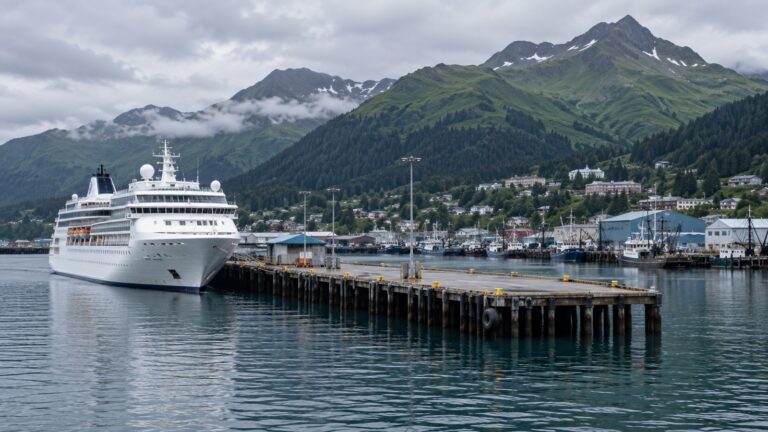
The view is pure working harbor, with container terminals, tugboats, bridges, and ships moving through the Main Channel. It may not look like the Los Angeles on a postcard, but sailaway is a memorable lesson in the scale of the country’s busiest port complex.
Ships normally dock alongside, yet the gangway layout still depends on the vessel and berth. Travelers who need assistance should arrange it with the cruise line before embarkation rather than relying on a general description of the terminal.
Los Angeles and Long Beach are separate ports
The cruise terminals in Los Angeles and Long Beach are close geographically but belong to different ports and cities. A driver who goes to the wrong one creates a stressful transfer across the harbor.
The Port of Los Angeles tells passengers to check the seaport code on the itinerary. US LAX means the Los Angeles Cruise Terminal in San Pedro, while US LGB means the Long Beach Cruise Terminal.
Do not choose the terminal based on the airline airport code or a search result that says only “LA cruise port.” Use the address printed by the cruise line, especially on a morning when several ships are turning around.
Getting from LAX to San Pedro
The port lists Los Angeles International Airport at approximately 18 miles from the cruise terminal, but mileage is not the same as travel time. Freeway and airport traffic can turn a straightforward drive into a long transfer with little warning.
Taxi, prearranged car, authorized ride app, hotel shuttle, or cruise line transfer are the most practical options with luggage. Public transportation exists, but multiple connections make it less appealing when a ship has a firm cutoff.
LAX pickup locations change as construction and ground-transportation operations evolve. Check the airport’s official ground transportation guidance after landing rather than walking toward an old rideshare sign from memory.
Long Beach Airport is closer, and the port lists it at approximately 10 miles from the terminal. Its smaller size can make arrival simpler, although flight schedules and fares determine whether it is practical.
Flying in on embarkation morning creates unnecessary risk at any port, and Los Angeles traffic magnifies it. Arrive at least one day early whenever possible and spend the night in San Pedro, Long Beach, or another location with a dependable terminal transfer.
Parking at the Los Angeles Cruise Terminal
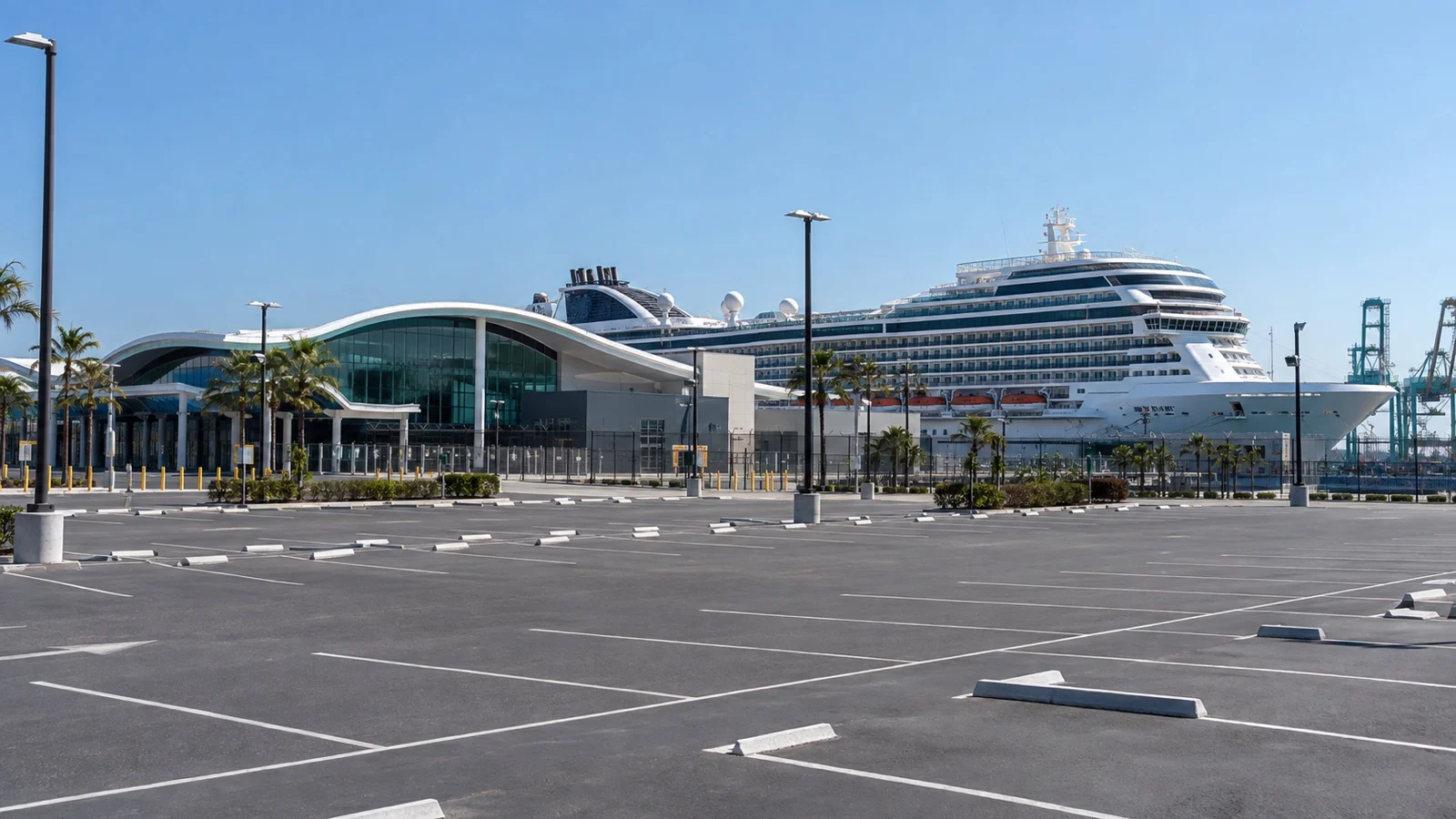
The port provides secured overnight parking managed by its contracted operator. Its published rates currently include a free first hour, an hourly charge after that, and separate daily maximums for standard and oversized vehicles.
Because rates and operating arrangements can change, check the official cruise terminal page shortly before driving. Confirm oversized-vehicle treatment, payment options, lot location, and any accessibility requirements.
The port lists 2,560 parking spaces and courtesy passenger shuttles between the terminal and parking areas. Spaces closest to the building may fill first when more than one ship is turning around.
Drop passengers and checked bags according to the cruise line’s curb instructions before parking if that suits your group. Keep passports, medication, valuables, and boarding documents out of any bag handed to a porter.
The Outer Harbor cruise development
The Port of Los Angeles is planning new cruise capacity in the Outer Harbor while also pursuing improvements to the existing Main Channel facilities. The project is significant, but an announced development is not a new passenger address until the port and cruise line make it operational.
Travelers should keep using the location on current sailing documents rather than a rendering, news story, or future terminal map. For near-term departures, the official cruise page remains the best source for the active address and parking instructions.
Construction can still affect roads, pedestrian routes, and pickup zones before a project opens. Allow extra time and follow temporary signs when work is active around the waterfront.
San Pedro is worth exploring
San Pedro is not simply the place between the freeway and the gangway. The waterfront has a museum ship, public spaces, marine exhibits, harbor views, and a strong community identity shaped by fishing and shipping.
A local day removes the worst freeway uncertainty and works especially well for a port call. Distances between attractions still require thought, but the itinerary remains within a few miles of the ship.
Downtown San Pedro sits uphill from parts of the waterfront and has cafes, restaurants, shops, and historic buildings. The walk is possible for many passengers, although industrial edges, road crossings, and slope make it different from a polished resort promenade.
Battleship IOWA
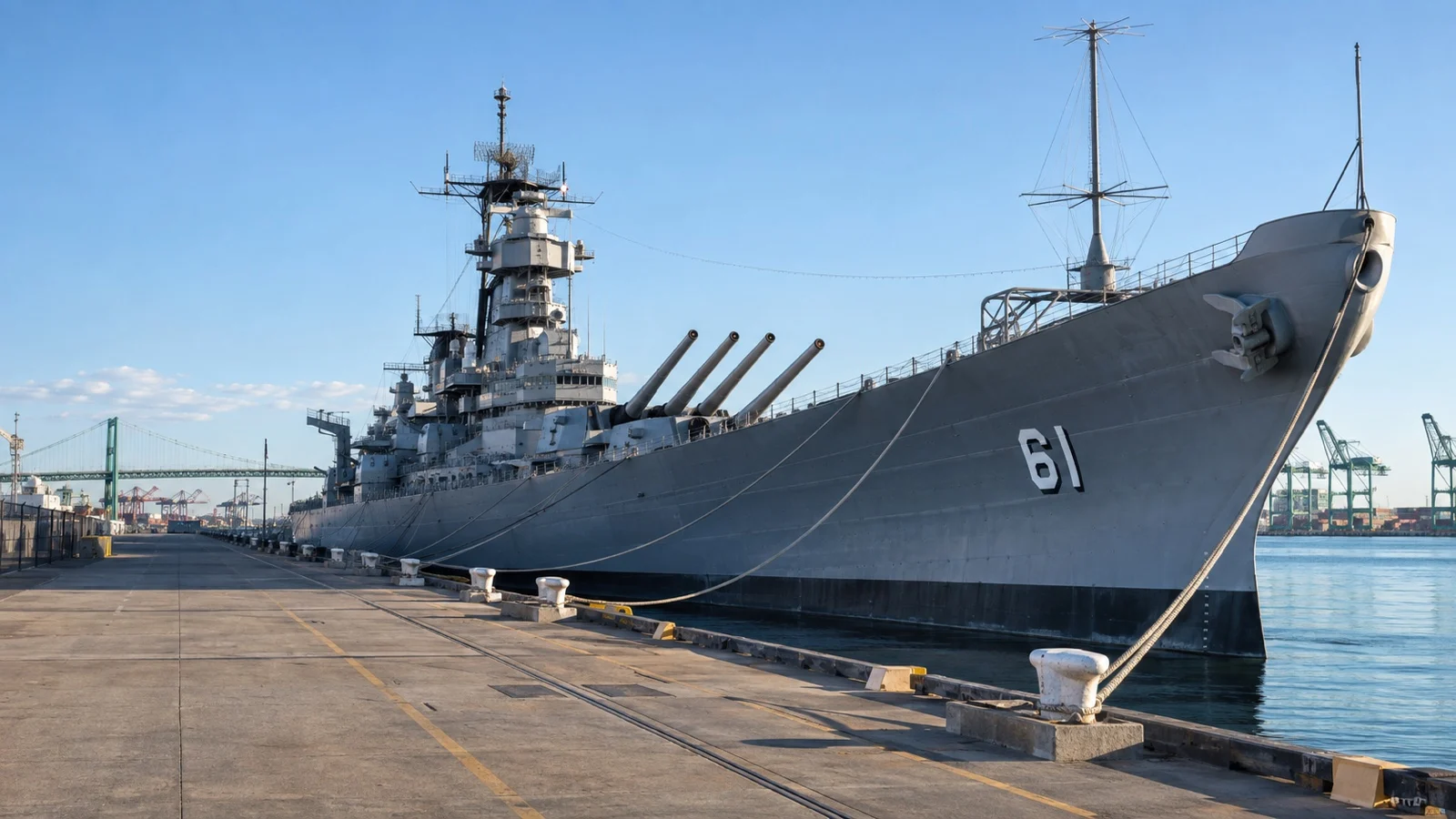
Battleship IOWA is berthed at Berth 87, close to the cruise terminal, and serves as the home of the National Museum of the Surface Navy. Its decks and exhibits tell a broad naval story through one enormous ship.
This is the easiest major attraction to pair with embarkation or a short San Pedro call, but luggage complicates the plan. The port says baggage cannot be stored at the cruise terminal, so arrange storage elsewhere or visit before collecting bags only when your cruise line permits it.
Historic vessels involve ladders, thresholds, steep stairs, and tight passages even when accessible routes are provided. Check the museum’s official information for current hours, tickets, bag rules, and the route appropriate to your mobility.
West Harbor and the LA Waterfront
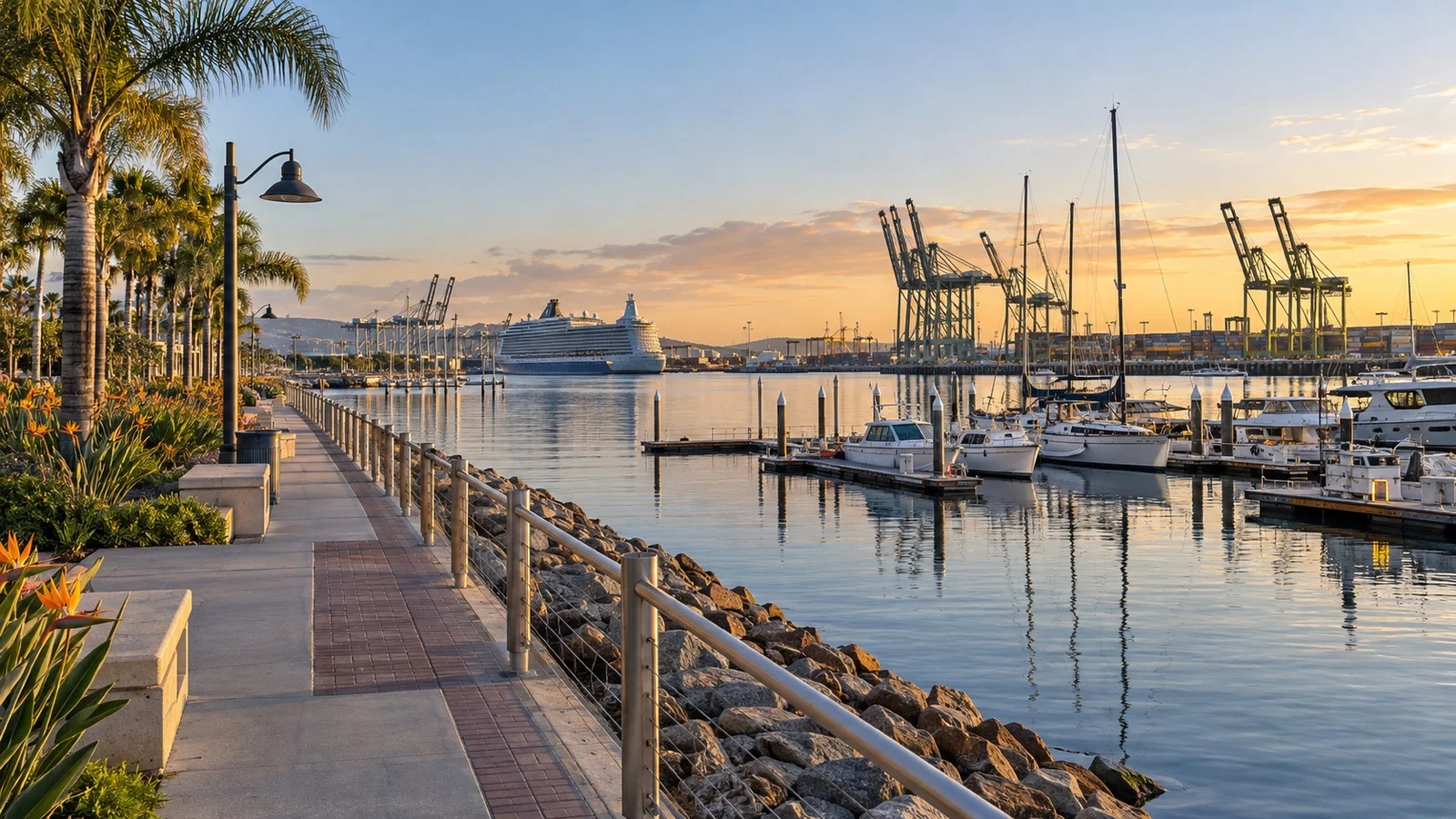
West Harbor now welcomes visitors with an open promenade from Berth 84 Park to Berth 77 Park, plus a growing set of dining, recreation, harbor cruise, and public-space options. More restaurants and attractions are still opening in phases, so check what is operating on your sailing date.
Use the official LA Waterfront and West Harbor pages to see what is actually operating. A waterfront walk and meal can still make a satisfying pre-cruise afternoon even when a particular venue has not opened.
Construction zones may redirect pedestrians or vehicles around the development. Follow current signs and avoid planning a tight connection through a route that appears open on an older map.
Cabrillo Marine Aquarium and Point Fermin
Cabrillo Marine Aquarium focuses on Southern California marine life and sits near Cabrillo Beach. It is a strong family option and a useful indoor stop when coastal cloud lingers.
The aquarium is south of the cruise terminal, so most passengers will want a taxi, ride app, or local transit. Check the official aquarium visitor page for current hours, admission policy, programs, and accessibility.
Point Fermin Park and its historic lighthouse occupy the bluff nearby. The park provides broad ocean views, while tours of the lighthouse depend on current schedules and may involve historic-building limitations.
Korean Friendship Bell

The Korean Friendship Bell stands in Angels Gate Park above the Pacific, sheltered by an ornate pavilion. It is one of San Pedro’s most photogenic landmarks and pairs naturally with Point Fermin.
The bluff is exposed, and wind can be stronger than it feels beside the terminal. Bring a layer and secure hats before stepping into the open park.
Reaching the bell is easiest by car, taxi, or ride app because the park sits several miles from the cruise berth. Arrange the return before lingering if a ship departure sets the deadline.
Catalina Island from San Pedro
Catalina Express sails from Berth 95, close to the cruise terminal, and lists the San Pedro to Avalon trip at approximately one hour and fifteen minutes. The proximity makes Catalina look easy, but the round trip consumes substantial time before any island sightseeing begins.
Use Catalina Express for current schedules, fares, terminal hours, baggage rules, and notices. A canceled or delayed independent ferry does not obligate the cruise ship to wait.
Catalina works best before or after the cruise, or during an unusually long port call with multiple safe return sailings. If the itinerary already includes Avalon, save the island for that dedicated stop.
Hollywood, downtown, and Disneyland
The port lists downtown Los Angeles at approximately 25 miles, Disneyland at approximately 30 miles, Santa Monica at approximately 32 miles, and Universal Studios Hollywood at approximately 33 miles. Those distances cross some of the region’s most unpredictable traffic.
For a port call, a cruise line excursion provides the strongest protection when visiting a distant attraction. Independent travelers must build the return around freeway conditions, attraction entry times, and security at the terminal.
A short Hollywood visit often delivers more driving than sightseeing, while Disneyland deserves a full day. These destinations make far more sense during a pre-cruise or post-cruise stay.
If you do travel inland independently, set a conservative departure time and monitor live traffic throughout the day. The ship’s all-aboard time matters more than the optimistic estimate displayed when the roads are clear.
Public transit around San Pedro
The port lists Metro service between San Pedro and downtown Los Angeles, LADOT Commuter Express service toward Long Beach, and DASH routes around San Pedro. Current lines, stops, payment systems, and operating days must be checked with the transit agencies.
Transit can work well for a local waterfront day when luggage is not involved. It is less attractive for an airport transfer or distant excursion with a cruise deadline.
Never assume a waterfront trolley or seasonal circulator is operating because an older visitor map shows it. Verify the live schedule and keep enough time to switch to a taxi if service changes.
Accessibility at the terminal and beyond
The cruise terminal occupies a broad, paved site with accessible parking and passenger-processing facilities. Conditions on the ship’s gangway remain a separate question, so request cruise line assistance in advance.
The port lists courtesy shuttles between parking areas and the terminal, but travelers should confirm lift or mobility-device capacity. A vehicle described as a shuttle is not automatically suitable for every wheelchair.
Local waterfront routes vary from smooth promenades to industrial crossings, slopes, and older sidewalks. Ask each attraction about the exact accessible route, especially aboard Battleship IOWA and inside Point Fermin Lighthouse.
Passengers disembarking with luggage should know that the port does not provide terminal baggage storage. Arrange a hotel, tour operator, rental car, or other verified solution before planning a day of sightseeing.
Weather and the marine layer
San Pedro is milder than inland Los Angeles, with ocean influence moderating both summer heat and winter cold. The harbor can feel cool in the morning even when the afternoon forecast looks warm.
Low coastal cloud is common in late spring and early summer, often called May Gray or June Gloom. It may clear later in the day, but travelers should not count on immediate blue sky for a morning sailaway.
Rain is concentrated in the cooler months, while summers are generally dry. Bring a light jacket for wind and air-conditioned interiors, plus sun protection for exposed parks and decks.
A calm embarkation plan
Arrive in the region the day before, confirm that the itinerary says US LAX, and save 100 Swinford Street with the berth number. Recheck the cruise line’s arrival appointment before leaving the hotel.
If driving, verify the current parking page and follow signs for the active cruise lot. If arriving from an airport, book enough transfer time for baggage collection, pickup-location changes, and freeway traffic.
Keep travel documents and essential medication with you, then hand checked bags to authorized staff only at the instructed point. After boarding, the harbor view is part of the experience rather than something to hurry past.
The best way to use a Los Angeles call
For a short port call, stay in San Pedro and combine Battleship IOWA, the waterfront, or Point Fermin with a relaxed meal. For a longer call, use a ship excursion if Hollywood, downtown, or a theme park is essential.
For embarkation or disembarkation, put major Los Angeles sightseeing on a separate hotel day. That turns traffic from a threat to the cruise into an ordinary travel inconvenience.
Travelers comparing regional departures can use our California cruise ports guide and West Coast cruise ports guide. San Pedro is a strong homeport once its geography is treated honestly.
How this guide was researched: This guide was desk-researched on September 12, 2026 using current official port, airport, transit, museum, attraction, and ferry information, and it does not claim a personal sailing, terminal inspection, transfer, or attraction visit. Confirm the berth, terminal access, parking, transportation, opening hours, accessibility, weather, and all-aboard time before travel, and see our Editorial Policy.