Timaru Cruise Port: Berths, the Walk and Caroline Bay
Timaru is the kind of port that becomes more appealing when you stop searching for a blockbuster excursion. Ships dock in a working harbor close to a relaxed South Canterbury city, with Caroline Bay, Stafford Street, museums, gardens, and Ngāi Tahu rock art interpretation all within an easy local day.
The important detail is your assigned wharf and passenger route. PrimePort may allow a direct marked walk or use a shuttle to Heritage Place, so follow the ship’s port briefing before setting off.
My quick take
I would stay in Timaru on a first visit and enjoy how little logistics the day requires. Caroline Bay, Te Ana, the center, and one museum make a thoughtful itinerary with room for coffee and weather.
Lake Tekapo is the inland trip that can fit a long call, but it still uses several hours on the road. Aoraki Mount Cook is farther and belongs on a protected excursion, not an independent race against all-aboard.
Check the day of the week before you plan anything indoors. Several local attractions close on Monday, and Te Ana currently opens Tuesday through Saturday only.
Quick Facts
- Where ships dock: PrimePort Timaru, usually at Number 1 Wharf or the North Mole according to the live cruise schedule.
- Dock or tender: Cruise calls normally berth alongside rather than tender.
- Into town: The port is close to central Timaru, with a cruise day shuttle to Heritage Place and walking access controlled by the assigned berth.
- Best easy day: Caroline Bay, central Timaru, Te Ana, and one museum or gallery.
- Best inland option: Lake Tekapo on a long call with organized transportation.
- Currency: New Zealand dollar, with cards and contactless payments widely accepted.
- Languages: English and te reo Māori.
- Time zone: New Zealand Standard Time, changing to daylight time during the warmer season.
- Entry planning: Cruise passengers may need a visa or NZeTA based on nationality, and New Zealand enforces strict biosecurity declarations.
- Weather: Summer conditions can change quickly, and strong ultraviolet exposure matters even on cool or cloudy days.
What docking at PrimePort means
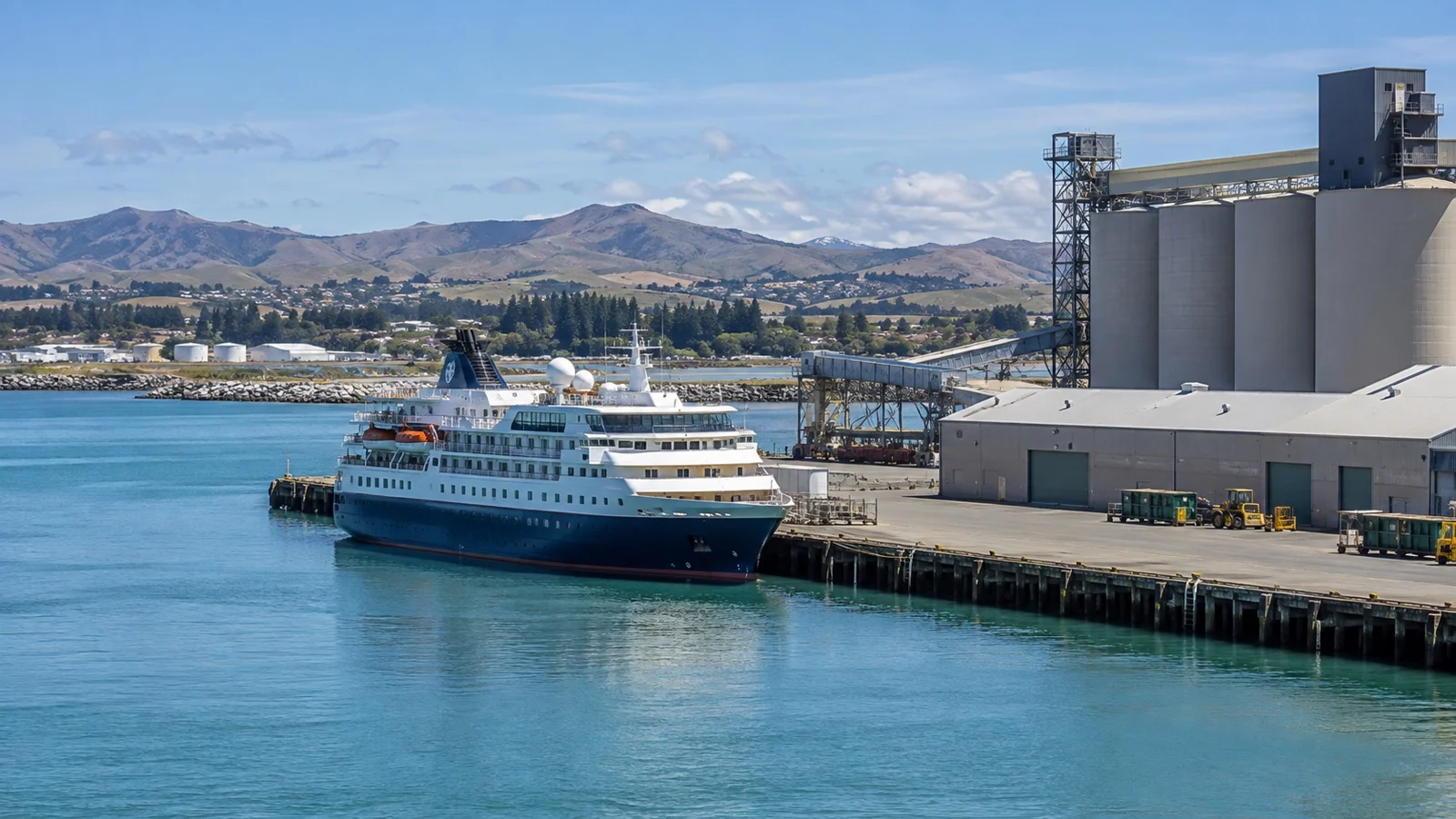
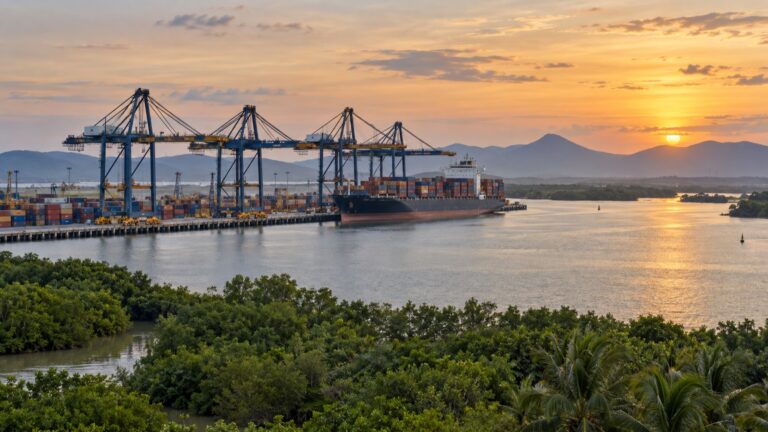
PrimePort Timaru is a commercial harbor handling cargo as well as cruise ships. Passengers see working wharves, rail tracks, service vehicles, sheds, and controlled routes rather than a purpose-built resort terminal.
The official PrimePort cruise information says visitors can walk from the ship toward the city and that a shuttle operates to Heritage Place in the central business district on cruise days. The precise arrangement still depends on berth safety and live operations.
Number 1 Wharf sits closer to the inner harbor, while the North Mole handles many larger ships. Neither name tells you automatically whether unrestricted walking will be available on your day.
Use the marked route, high-visibility instructions, and shuttle points provided by port staff. Never cut across rail lines, cargo areas, or vehicle lanes because a public map appears shorter.
The port’s current schedule lists the assigned wharf, arrival, and departure for each ship while warning that details are subject to change. Check the live PrimePort cruise schedule and the daily program together.
Walking or taking the shuttle
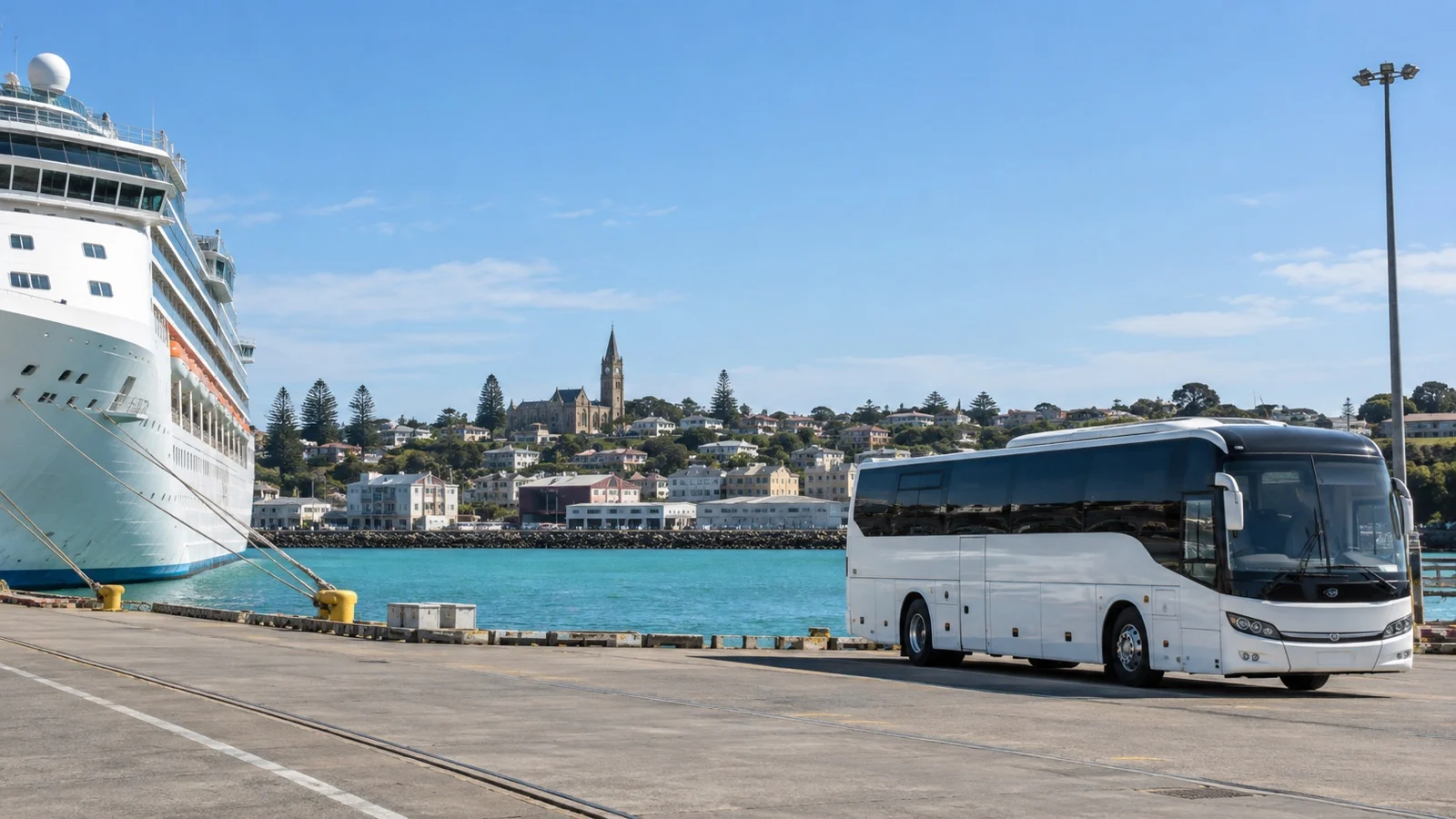
Keen walkers may find the city pleasantly close once the authorized route opens. The less pleasant part is the industrial stretch, not the distance.
The shuttle to Heritage Place is the sensible default for limited mobility, uncertain weather, or a North Mole berth. Confirm whether it is a low-floor bus, motorcoach with steps, or accessible vehicle before relying on it.
Heritage Place puts you near Stafford Street and the central attractions. Photograph the return stop and timetable because the same corner can look different when excursion buses arrive.
If you walk one way, keep the shuttle as a backup for the return. A cool morning can turn windy, wet, or much warmer by afternoon.
Caroline Bay is the easy win
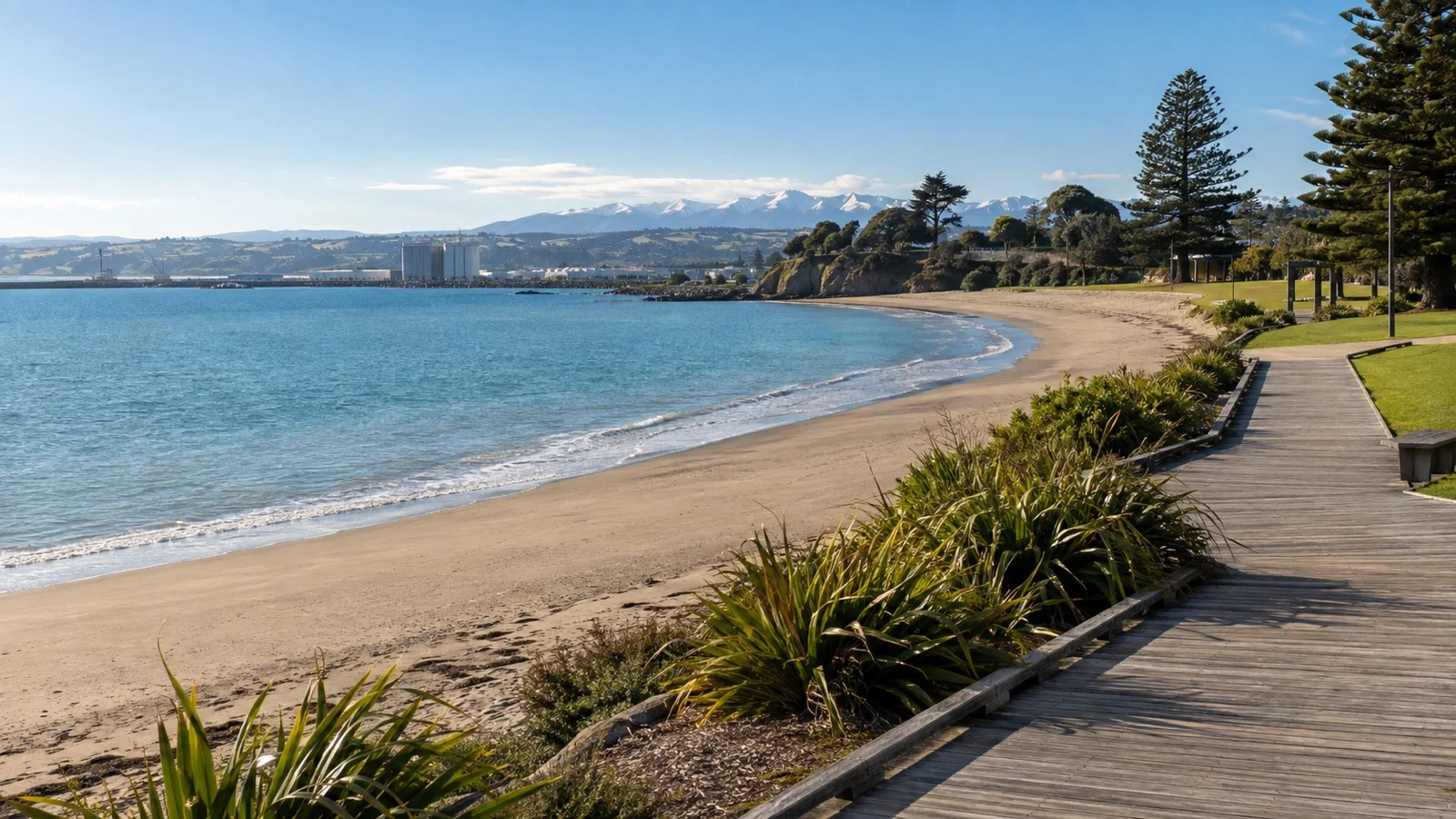
Caroline Bay lies immediately north of the harbor and gives Timaru its best local stroll. The reserve combines a sandy beach, lawns, gardens, paths, recreation areas, and views back toward the port.
The Trevor Griffiths Rose Garden is a highlight when flowers are in season, and the broad lawns make the bay a good low-pressure start after a long stretch at sea. It is free, flexible, and close enough to shorten if the weather changes.
The beach owes part of its shape to harbor engineering and the way sand accumulated beside the breakwaters. That makes the view back toward PrimePort more interesting than an ordinary town beach.
Swimming conditions depend on weather, water quality, and local flags. On a port day, I would treat Caroline Bay as a walk and picnic stop unless lifeguard information clearly supports a swim.
Wind is the detail visitors underestimate. A sunny South Canterbury morning can still need a light jacket along the exposed water.
Stafford Street and central Timaru
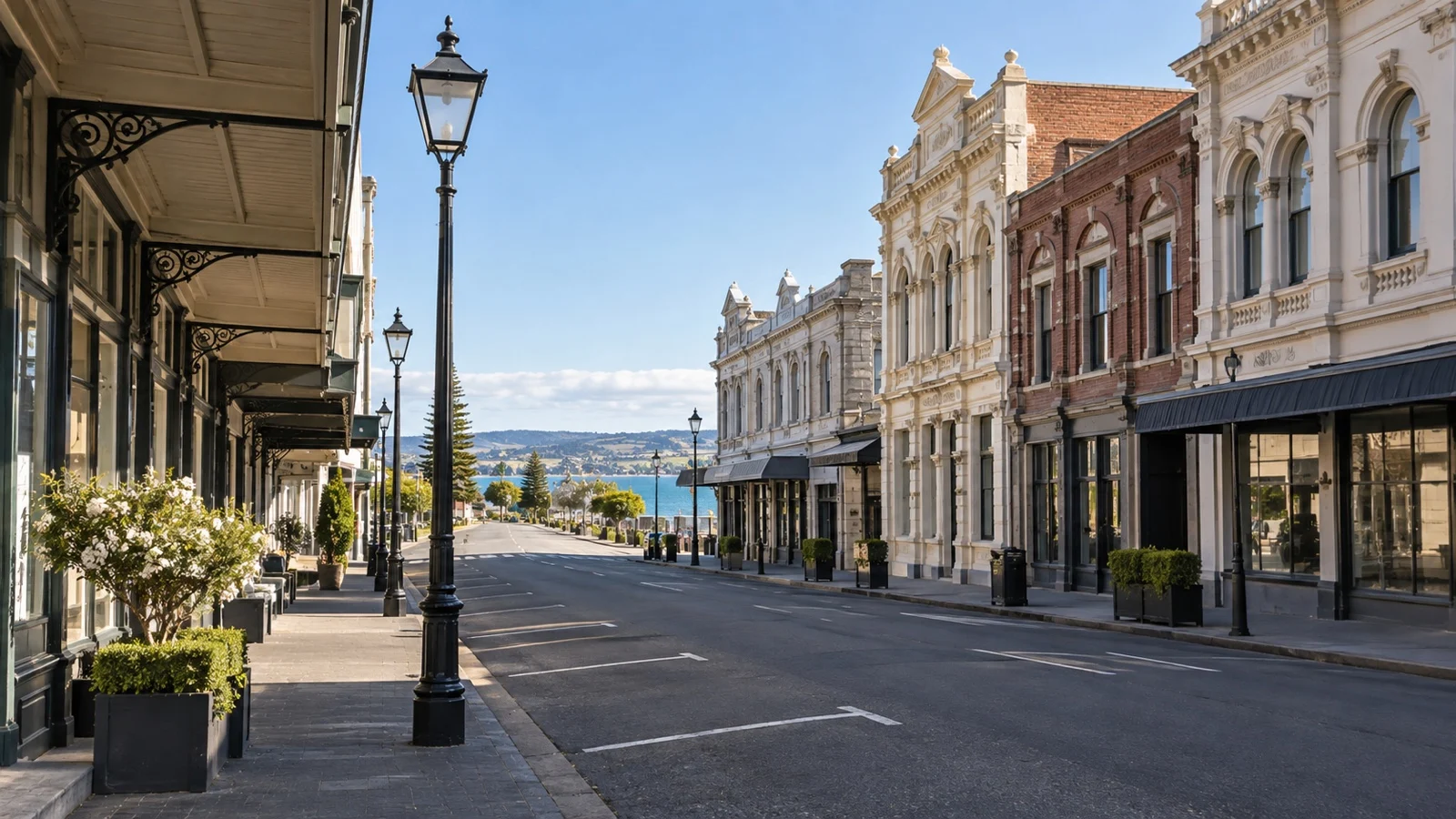
Stafford Street runs through the city center with historic commercial facades, shops, cafes, and everyday local life. It is not a stage set, which is exactly why the walk feels pleasant.
Pause for a bakery, coffee, or casual lunch rather than trying to fill every minute with attractions. Timaru works best at the pace of a small regional city.
Side streets rise away from the coast, and the gradient becomes more noticeable toward the art gallery. Plan by elevation as well as distance if walking is limited.
Cards are widely accepted, and there is little reason to carry large amounts of cash. Keep the ship’s return instructions available offline in case mobile service or battery becomes a problem.
Te Ana Ngāi Tahu Māori Rock Art
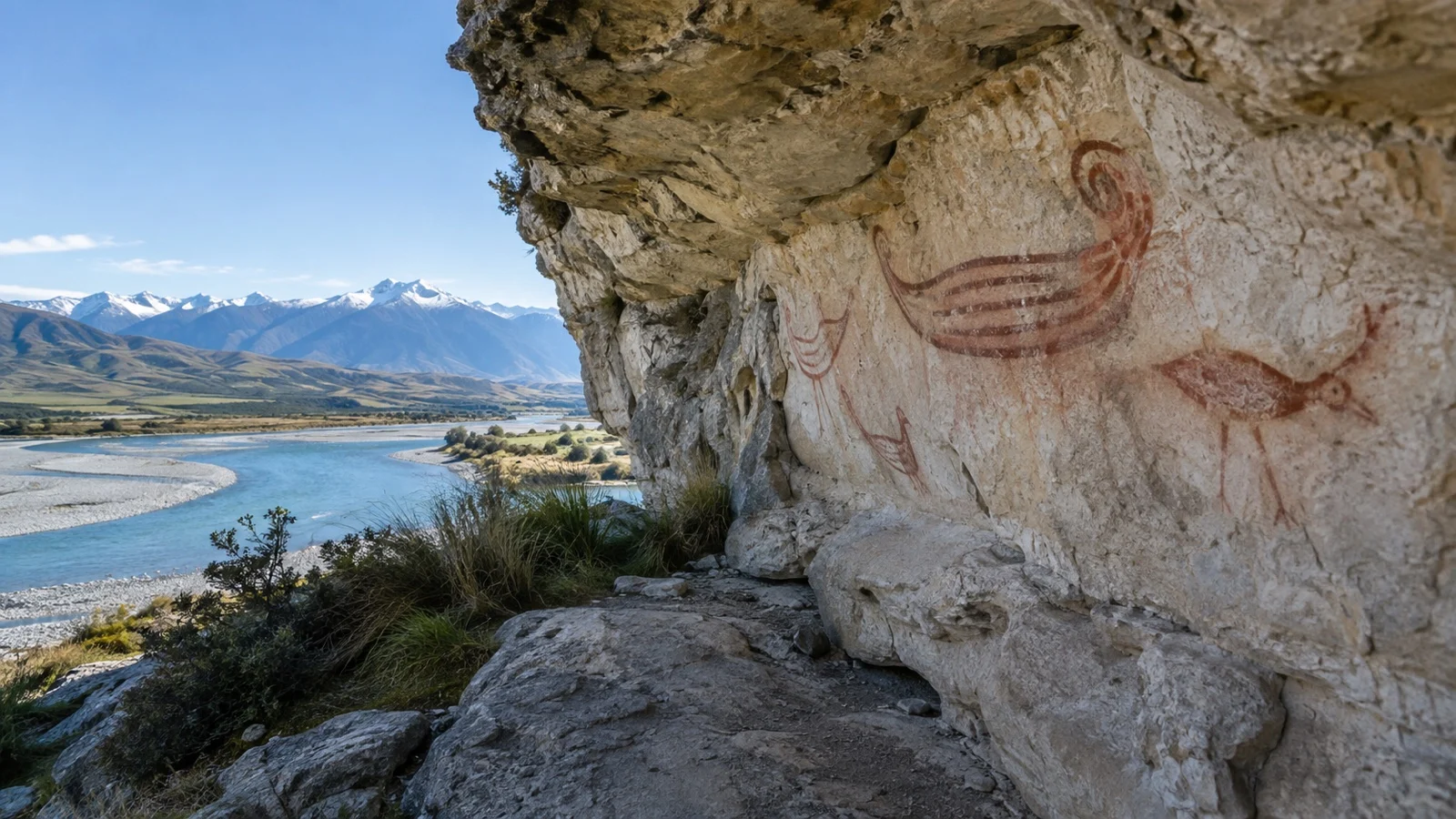
Te Ana occupies the historic Landing Services Building at 2 George Street and is the most distinctive cultural stop in Timaru. It is operated by Ngāi Tahu and introduces the rock art, seasonal journeys, stories, materials, and guardianship of Te Waipounamu.
The official Te Ana site currently lists center hours of 10am to 3pm Tuesday through Friday and 9am to 2pm Saturday. It recommends booking online because private groups can fill capacity weeks or months ahead.
A visit to the center is not necessarily the same product as a guided field trip to rock art sites. Confirm duration, transport, terrain, photography rules, and what your reservation includes.
The value is not simply seeing an image on limestone. Ngāi Tahu interpretation centers living relationships, whakapapa, travel, food gathering, and kaitiakitanga rather than presenting the art as an isolated mystery.
Follow every instruction about distance, touching, and photography at cultural sites. Limestone and pigment are fragile, while the places themselves remain significant to the people who care for them.
Aigantighe Art Gallery
Aigantighe Art Gallery holds South Canterbury’s public art collection in a historic house and later gallery spaces. Its grounds and sculpture garden make the walk worthwhile even for visitors who prefer outdoors to long indoor visits.
The gallery sits uphill from the center, so the route feels longer than a flat map suggests. A taxi up and a downhill walk back is an easy adjustment.
Opening days and access can change during building work or exhibition installation. Check Timaru District Council or the gallery’s official information for your call date before climbing.
Allow enough time for the garden as well as the rooms. The setting is part of the experience, particularly in summer.
South Canterbury Museum during its transition
The South Canterbury Museum covers the region’s natural history, Māori heritage, settlement, industry, agriculture, and social life. It has long been Timaru’s dependable wet-weather option, but the museum is preparing to move to a new home.
The museum’s official page currently lists Monday closed, weekday hours from Tuesday to Friday, weekend afternoon opening, and extra hours on cruise ship days. It also warns of a staged closure during the transition.
That combination means you should check the South Canterbury Museum immediately before sailing. Do not use it as the only rain plan until the active galleries and hours are confirmed.
If it is open, the museum is a useful one-hour stop rather than an all-day institution. Pair it with Stafford Street and Caroline Bay.
Lake Tekapo from Timaru
Lake Tekapo is the inland excursion most likely to justify leaving town. Glacial flour gives the water its pale blue color, and the basin opens toward the Mackenzie Country and Southern Alps.
The Church of the Good Shepherd is the familiar image, but the wider value is the landscape, dry grassland, sky, and mountain horizon. A guide helps move attention beyond the single photograph.
PrimePort presents Lake Tekapo as a regional excursion from Timaru, yet road time remains substantial. A long call can support it with a reserved driver or ship tour, while a short call should stay local.
Weather in the Mackenzie Basin can differ sharply from the coast. Cloud may hide the mountains, strong wind may arrive, or road conditions may slow the return.
Use a protected excursion if the ship departure leaves little margin. An independent rental only works with an early pickup, conservative route, and turnaround that feels almost too soon.
Geraldine and a gentler inland option
Geraldine sits closer than Tekapo and makes a softer regional day. PrimePort describes it as about a 40-minute drive from Timaru, with museums, galleries, and food tastings.
This is a good choice for travelers who want countryside without committing the whole day to alpine roads. It also pairs more comfortably with a short city stop before returning.
Confirm attraction hours because small-town businesses can close on particular weekdays. A driver should understand the port gate and final shuttle time, not just the road distance.
Oamaru and the Moeraki Boulders
Oamaru is known for Victorian limestone architecture and a historic precinct with galleries, shops, and steampunk flourishes. It lies south of Timaru and can work on a long organized excursion.
The Moeraki Boulders sit farther south again, so combining both increases road time. Tides, beach access, and weather affect what you actually see at the boulders.
I would choose Oamaru only if Victorian architecture is the priority. Otherwise, Timaru offers an easier day with far less return risk.
Aoraki Mount Cook is not a casual port trip
Aoraki Mount Cook National Park is closer to Timaru than to many New Zealand cruise ports, but closer does not mean close. Reaching the park and returning uses a large share of a normal call before any walk, viewpoint, meal, or delay.
Mountain weather changes quickly and can erase the view that justified the drive. Roadworks, farm vehicles, and visitor traffic add uncertainty even in summer.
Book the ship’s excursion if seeing Aoraki is nonnegotiable and the itinerary offers it. The protected return matters far more than saving a little money on a rental car.
For independent travelers, Lake Tekapo is the more realistic ceiling. Caroline Bay and local culture are the wiser fallback when weather looks poor inland.
Walking or cycling locally
Timaru’s coastal paths and town streets suit an independent walking day. Choose a loop that keeps the final stretch near Heritage Place or the marked port entrance.
Cycling can cover more coastline, but rental availability is limited when a ship arrives. Reserve equipment and ask about helmets, route surfaces, and a secure return.
New Zealand traffic drives on the left, which changes every road crossing and turn for visitors from countries that drive on the right. A protected trail is more relaxing than learning the rule in city traffic.
Do not plan a long one-way ride with no recovery transport. Wind direction can make the return much harder than the outward leg.
Accessibility from berth to attraction
An alongside berth avoids the tender transfer, but gangway slope can change with ship position and tide. Ask the cruise line about steps, landings, handrails, and mobility device limits.
Inside the working port, paving, rail tracks, curbs, and shuttle steps matter. Request the complete route from cabin to Heritage Place rather than asking only whether the port is accessible.
Central Timaru has usable sidewalks and many curb cuts, while hills rise away from the water. Caroline Bay offers broad paths, but beach sand and some garden surfaces remain barriers.
Aigantighe involves an uphill approach, and field visits from Te Ana may use uneven rural ground. Confirm the actual vehicle and walking conditions for any off-site tour.
The museum transition may also affect entrances or gallery access. Current information from the attraction is more reliable than a general accessibility symbol.
New Zealand entry and biosecurity
Cruise passengers may need a visitor visa or NZeTA depending on nationality and itinerary. Use Immigration New Zealand and the cruise line’s documentation instructions for the exact rule.
New Zealand biosecurity checks are strict because food, plants, soil, and outdoor equipment can carry pests or disease. Declare items honestly when asked rather than deciding that a snack or muddy shoe cannot matter.
Clean hiking boots, walking poles, bike gear, and other outdoor equipment before travel. Keep required declarations, passports, and approvals accessible for inspection.
A cruise transit is still an international arrival. The ship can deny embarkation if required documents are missing, even when the first New Zealand port lies days away.
Weather and sun
Timaru cruise calls fall in the warmer months, but the coast rarely promises steady heat. Summer can deliver bright sun, cool wind, showers, and rapid changes within one port day.
New Zealand ultraviolet levels are strong, including on cloudy days. Use high protection sunscreen, a hat, sunglasses, and shade rather than waiting to feel hot.
Carry a light waterproof layer and something warmer for the waterfront. Inland conditions around Tekapo or Aoraki can be cooler and more exposed than Timaru.
Secure loose hats near the harbor and North Mole. Wind off the Pacific can turn a small item into port litter instantly.
A realistic five-hour local plan
Take the shuttle to Heritage Place or follow the authorized walking route. Begin at Te Ana if it is open and booked, then walk through central Timaru toward Stafford Street.
Continue to Caroline Bay for the beach, gardens, and harbor views. Stop for lunch or coffee before returning through the center.
Add South Canterbury Museum only if its current transition schedule confirms access. If the weather is good, spend the extra time outdoors rather than forcing another indoor stop.
Return on the earlier practical shuttle. A last-minute port route change or full bus is easy to absorb when the schedule still has room.
Common mistakes to avoid
The first mistake is assuming every berth has the same walk off route. Follow the ship and port instructions for Number 1 Wharf or the North Mole.
The second is planning Te Ana on a day it is closed or already booked. Check the weekday and reserve the correct center or field experience.
The third is treating South Canterbury Museum as guaranteed during its move. Confirm the galleries and hours close to the call.
The fourth is driving independently to Aoraki on an ordinary schedule. Use a protected excursion or choose Lake Tekapo as the more realistic inland limit.
The fifth is underestimating New Zealand sun because the air feels cool. Protect exposed skin from the start of the day.
Quick answers
Do cruise ships tender at Timaru?
Ships normally berth alongside at PrimePort, with the live schedule assigning Number 1 Wharf or the North Mole.
Can I walk into Timaru?
PrimePort describes walk-off access and also runs a cruise day shuttle to Heritage Place, but the authorized route depends on berth operations.
What is the best local attraction?
Te Ana provides the most distinctive cultural visit, while Caroline Bay is the easiest flexible stop.
Can I visit Lake Tekapo?
Yes on a long call with organized transport and a conservative return, though the road time takes a substantial part of the day.
Can I visit Aoraki Mount Cook?
Only treat it as a serious full-day excursion with protected return rather than a casual independent drive.
The last word
Timaru is at its best when you resist the urge to leave immediately. The port, bay, city center, and cultural attractions sit close enough to give you a full day without watching the clock from a highway.
Book Te Ana, check the museum transition, and let the weather decide how long you spend at Caroline Bay. Choose Tekapo only when the inland landscape matters more than the easy hours by the coast.
Return before the final shuttle and keep the pace gentle. Timaru’s charm is precisely that it does not need to be conquered.
How this guide was researched: This guide was checked against PrimePort Timaru, Te Ana Ngāi Tahu Māori Rock Art, South Canterbury Museum, Timaru District information, Immigration New Zealand, and New Zealand biosecurity guidance.
No firsthand Timaru port visit is claimed. Operational details were reviewed September 12, 2026; confirm the live berth, shuttle, attraction access, entry rules, accessibility, and cancellation terms before travel, and see our Editorial Policy.