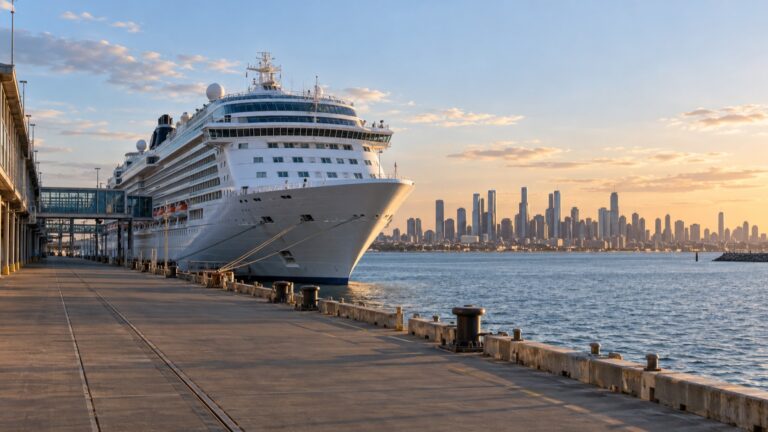
Muscat Cruise Port: Berths, the Mosque and Muttrah
Muscat gives cruise travelers two very different experiences in one day. Port Sultan Qaboos opens onto the traditional waterfront of Muttrah, while the Grand Mosque, Royal Opera House, and newer districts stretch west along a long coastal city.
The most important planning decision comes first. Non-Muslim visiting hours at Sultan Qaboos Grand Mosque end at 11:00 a.m., so a morning call can include it while a later arrival usually calls for a Muttrah and Old Muscat plan.
Muscat cruise port quick facts
- Port: Port Sultan Qaboos in Muttrah
- Usual arrival: Alongside at a working multipurpose port
- Closest sights: Muttrah Corniche, Muttrah Souq, and Muttrah Fort
- Key timed attraction: Sultan Qaboos Grand Mosque, 8:00 to 11:00 a.m. for non-Muslims from Saturday through Thursday
- Currency: Omani rial, divided into 1,000 baisa
- Language: Arabic, with English widely used in visitor services
- Time zone: Gulf Standard Time, UTC plus four
- Best simple plan: Muttrah waterfront and Old Muscat
Where cruise ships berth
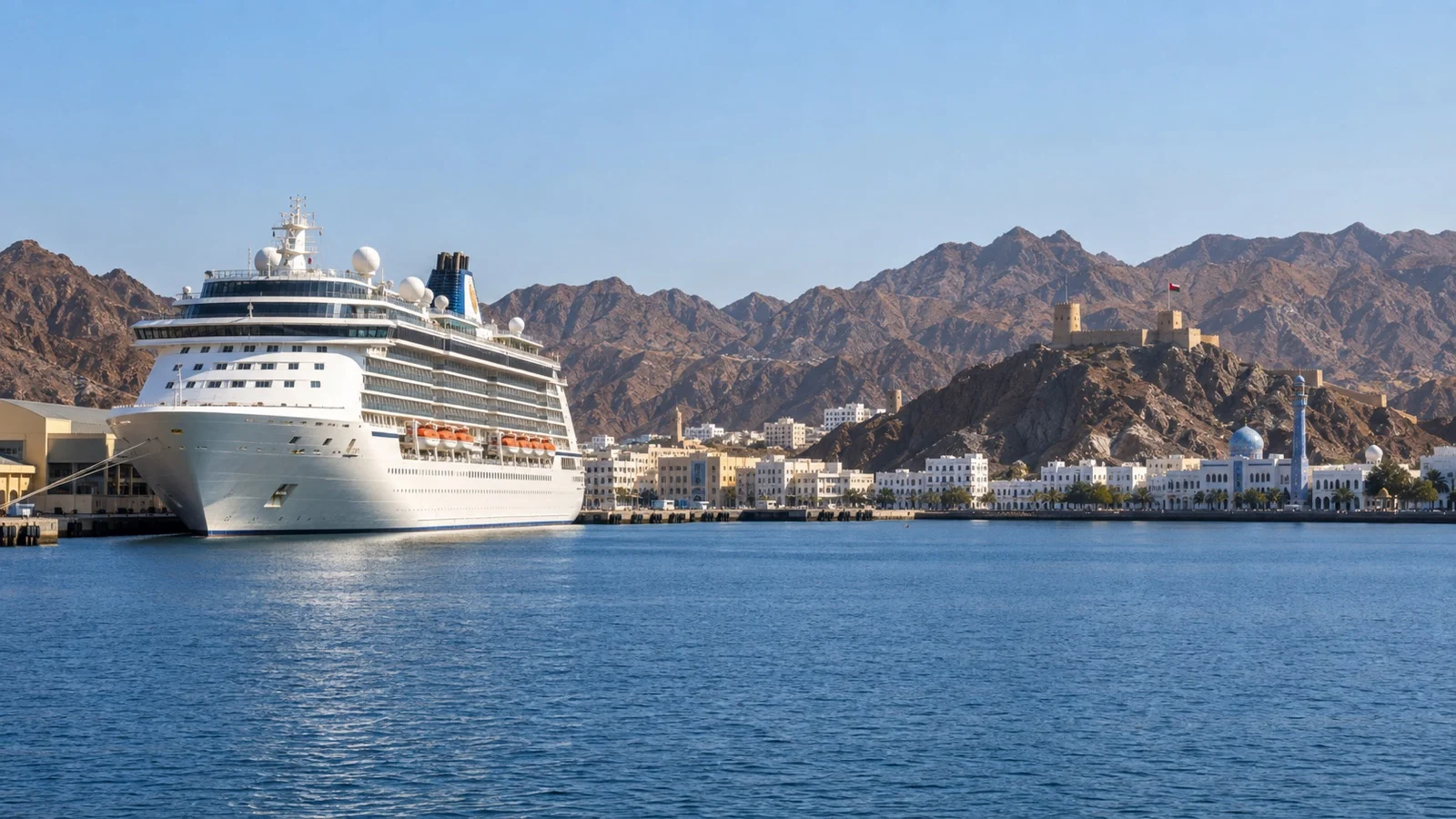
Port Sultan Qaboos is a working multipurpose harbor as well as Oman’s principal tourism gateway. Asyad Ports operates a modern passenger terminal and berthing facilities alongside commercial activities that include bulk grain, liquid cargo, dhows, and visiting naval vessels.
Cruise ships normally berth alongside, but that does not mean passengers can always walk directly across the secure quay. The port or cruise line may provide transport to the gate, so use the ship’s instructions for the exact exit point and return procedure.
Beyond the controlled port area, Muttrah Corniche follows the harbor toward the souq and fort. This is the part of Muscat that works naturally on foot, although heat, traffic crossings, and uneven surfaces can make short map distances feel longer.
Getting around Muscat
Muscat is spread along the coast rather than gathered around one center. Old Muscat lies southeast of Muttrah, while the Royal Opera House and Grand Mosque are progressively farther west, so a vehicle becomes useful as soon as the day extends beyond the harbor district.
A half-day taxi with an agreed itinerary can be more efficient than negotiating several separate rides. Confirm the price, currency, waiting time, final drop-off, and payment method before departure, then keep the ship’s port contact details with you.
Official tourism information links to licensed local taxi and public transport services, but app access and pickup zones can change. A cruise excursion offers less flexibility, yet it adds coordinated transport and return support for distant sights.
Sultan Qaboos Grand Mosque
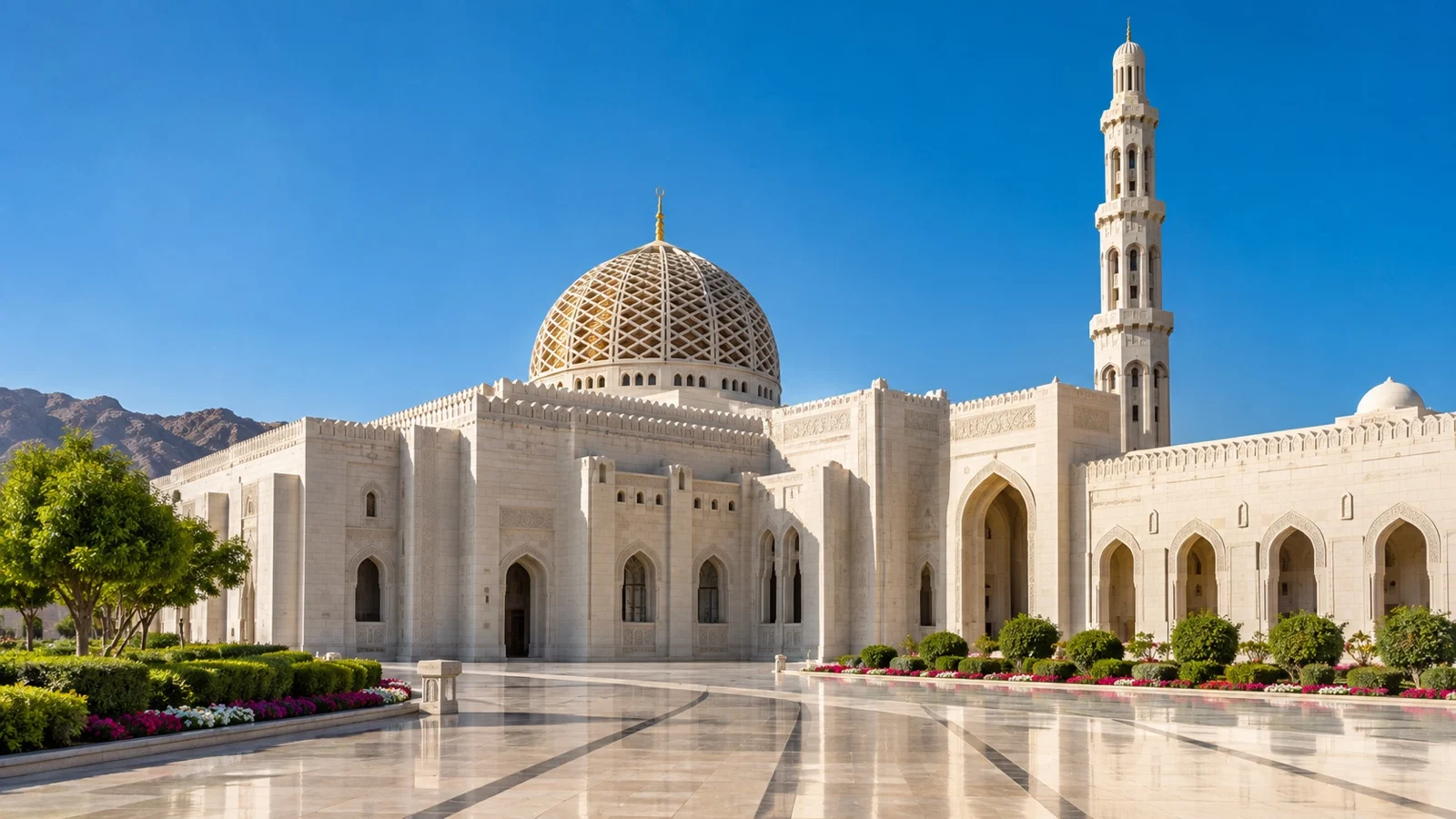
Sultan Qaboos Grand Mosque is the time-sensitive stop. Oman’s official tourism portal says non-Muslim visitors are welcome from Saturday through Thursday between 8:00 and 11:00 a.m., with an admission fee of 8 Omani rials.
The mosque was inaugurated in 2001 and built with nearly 300,000 tons of Indian sandstone. Its main prayer hall holds about 6,500 worshippers, while the whole complex can accommodate roughly 20,000.
Modest dress is required, with shoulders and knees covered for all visitors and head coverings for women. Appropriate coverings may be available on site, but arriving properly dressed protects a short visiting window from delays.
Visitors remove their shoes before entering the prayer hall, and respectful photography is permitted only where allowed. The official tourism listing describes the site as wheelchair accessible, though it is still wise to confirm the route, available assistance, and any temporary restrictions.
Muttrah Corniche and souq
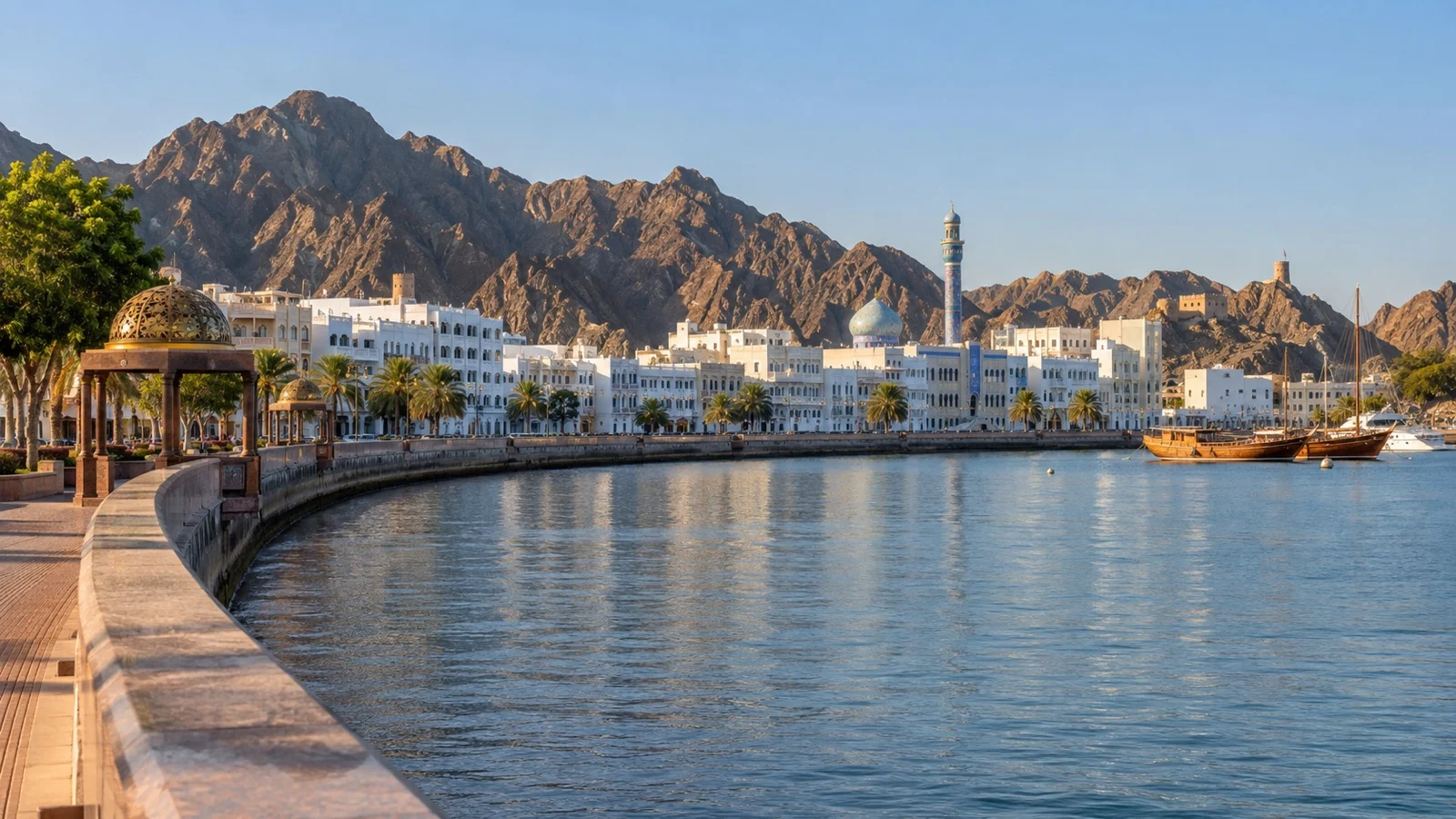
Muttrah is the easiest independent choice because it begins outside the port. The corniche frames a harbor backed by rugged brown hills, with traditional buildings, mosques, fishing boats, and commercial vessels sharing the scene.
Muttrah Souq is a covered network of lanes selling frankincense, perfumes, textiles, silver, spices, souvenirs, and everyday goods. Some stalls close during the hottest part of the day, so do not assume every shop will remain open throughout a cruise call.
Prices may be negotiable in smaller shops, but bargaining should remain friendly. Carry small rial notes for modest purchases, ask before photographing people, and check whether an item can legally be brought back through your ship and home customs.
Muttrah Fort
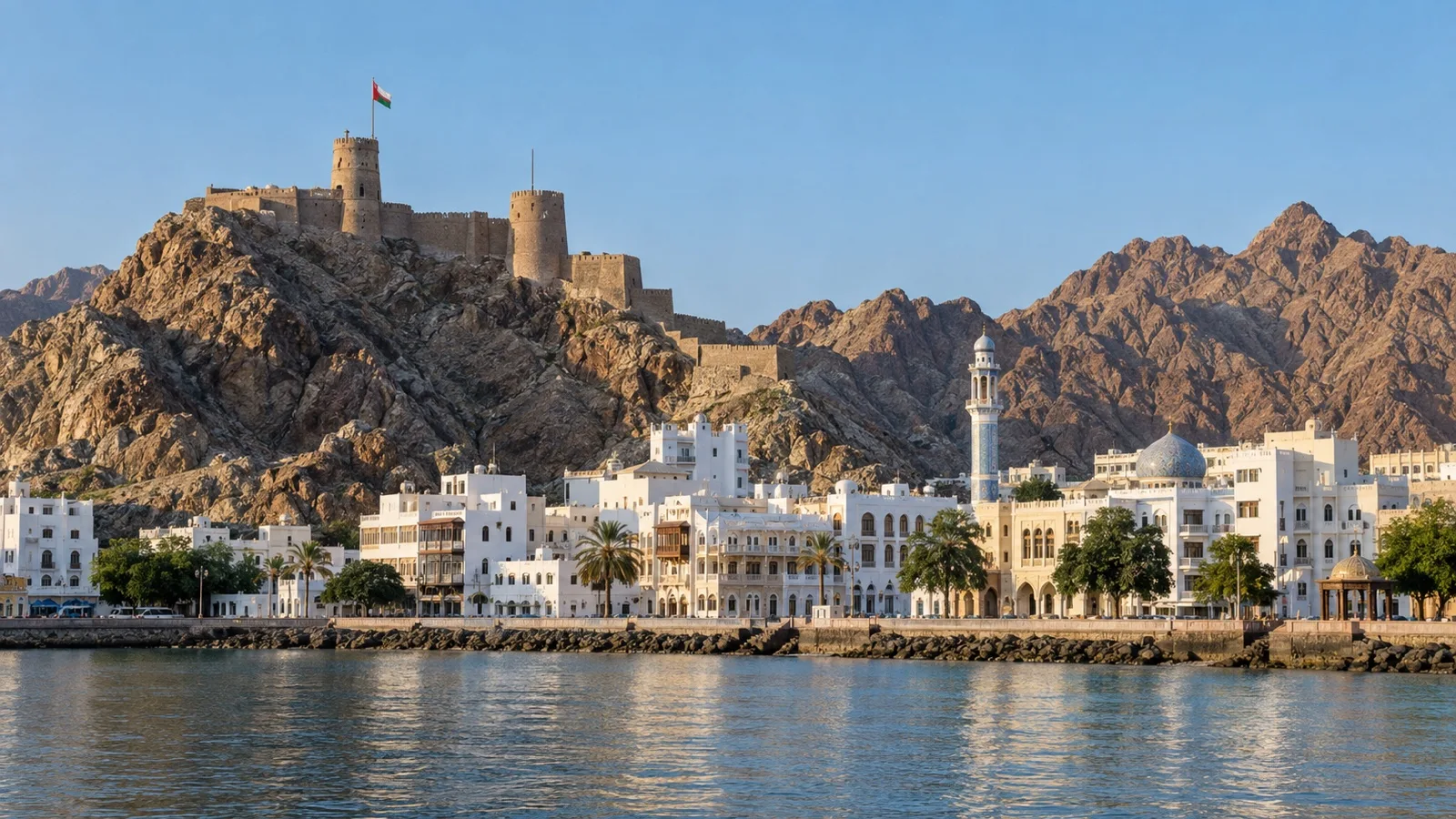
Muttrah Fort rises above the corniche and rewards the climb with a broad view across the port. The historic structure reflects Portuguese and later Omani control of a harbor positioned on old maritime trading routes.
Steps, slopes, exposed stone, and summer heat make the ascent more demanding than its short distance suggests. Check current hours and admission before climbing, and allow extra time for photographs without letting the descent become a rush.
Old Muscat and the National Museum
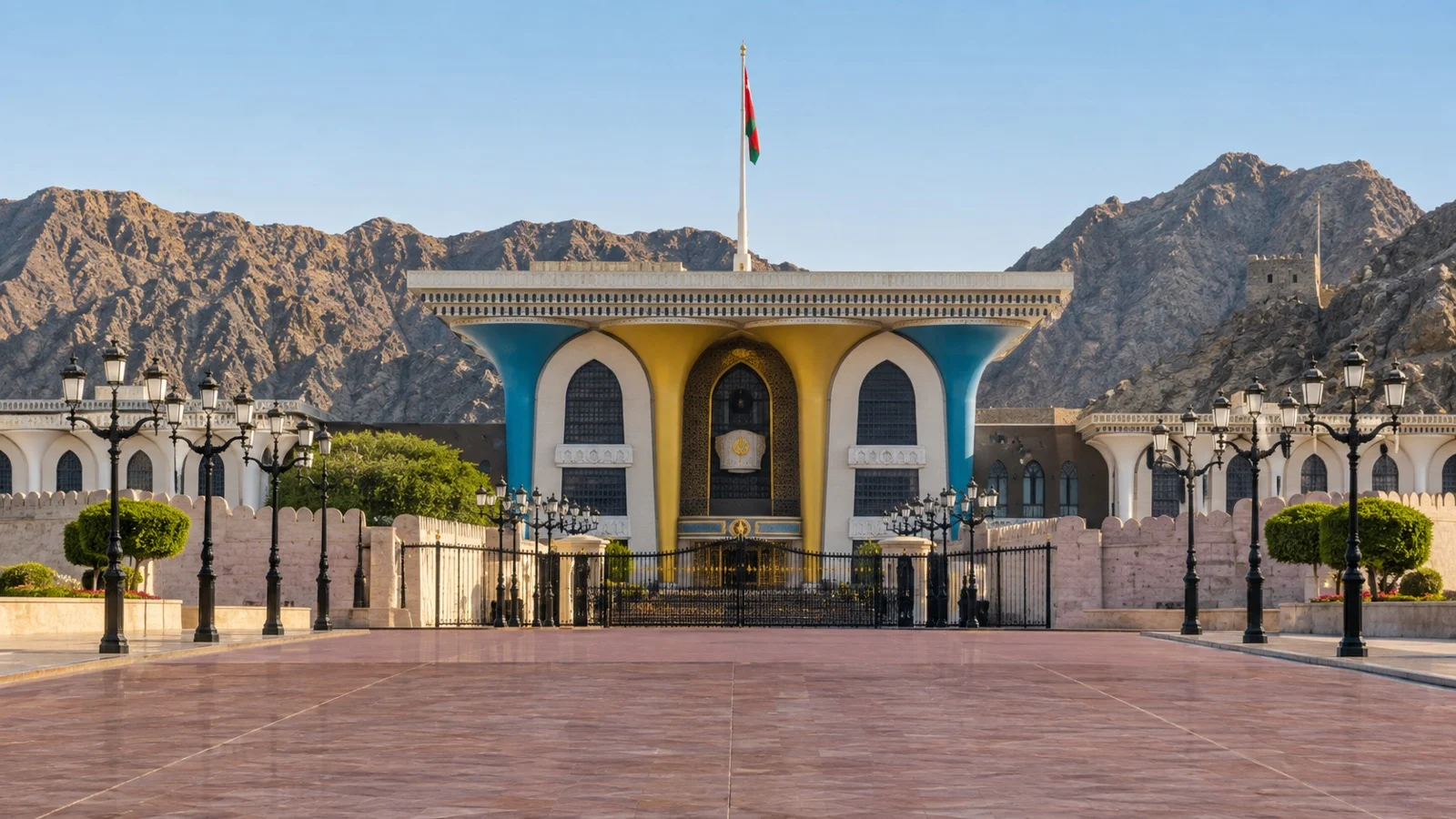
Old Muscat is a short drive beyond Muttrah and feels distinct from the commercial waterfront. Al Alam Palace provides the visual anchor, while the forts of Al Jalali and Al Mirani stand on either side of the small bay.
The palace is viewed from public areas rather than toured as a visitor attraction. The setting still makes a worthwhile stop, especially when paired with the National Museum directly across the ceremonial space.
The National Museum presents Oman’s history, maritime connections, art, arms, currency, and cultural traditions across 14 galleries. Its official visitor information should be checked for current hours and admission, particularly on Fridays and public holidays.
Royal Opera House Muscat
The Royal Opera House brings another side of modern Oman into the day. Its architecture, formal gardens, performance spaces, and cultural displays can pair naturally with the Grand Mosque because both lie west of the old harbor.
Tour access can be affected by rehearsals, performances, private events, and seasonal programming. Check the opera house’s own schedule before departure instead of building a tight plan around a general daytime opening window.
Dress, etiquette, and local customs
Oman welcomes visitors, but conservative clothing is appropriate in public places. Lightweight garments that cover shoulders and knees help with both cultural respect and strong sun, while mosque entry calls for stricter coverage.
Public affection, loud behavior, and intrusive photography are poor choices. Ask permission before photographing individuals, avoid directing a camera toward sensitive government or military facilities, and follow posted rules at religious sites.
During Ramadan, eating, drinking, and smoking in public during daylight can be restricted, and business hours often change. The cruise line and official Omani sources should be the final reference for conduct during your sailing dates.
Weather and what to carry
Muscat’s cruise season favors the cooler months, but even a winter day can feel warm in direct sun. Summer heat can be severe, and coastal humidity adds strain when walking long stretches without shade.
Carry water, sunscreen, a hat, and breathable modest clothing. Air-conditioned interiors may feel cool after the waterfront, so one light layer can be useful without taking much space.
Accessibility
An alongside berth avoids tender boats, but the gangway angle and secure port transfer still depend on the ship and berth. Ask the cruise line for specific information about step-free transport between the vessel and port exit.
The Grand Mosque and modern museums may provide accessible routes, yet historic Muttrah presents uneven paving, narrow lanes, curbs, and crowded passages. Muttrah Fort requires a climb and is unlikely to suit every traveler with limited mobility.
An accessible vehicle arranged in advance can connect the mosque, opera house, and Old Muscat with fewer uncertainties. Confirm lift dimensions, tie-downs, companion seating, and the exact pickup point in writing.
Longer trips beyond the city
Nizwa, mountain villages, desert landscapes, and wadis reveal extraordinary parts of Oman, but they demand meaningful road time. A standard port call may not provide enough margin for an ambitious independent trip, particularly when traffic or weather affects the route.
For a distant destination, a cruise line excursion or a reputable operator with a protected return plan reduces risk. Verify drive times for the actual day, vehicle suitability, walking conditions, and the point at which the group will turn back.
Three practical port day plans
Morning mosque and Muscat highlights
Leave promptly for the Grand Mosque, then continue to the Royal Opera House or Old Muscat before returning to Muttrah. This plan depends on the official mosque window, ship clearance time, and traffic, so it works best with transport secured in advance.
Muttrah and Old Muscat
Walk the corniche and souq, visit the fort if the climb suits you, then take a taxi to Al Alam Palace and the National Museum. It is a balanced first visit with short travel legs and several easy points where the plan can be shortened.
A relaxed waterfront day
Stay near Muttrah, browse the market, pause for coffee or lunch, and enjoy harbor views without crossing the city. This is especially sensible after a late arrival, in strong heat, or when mobility makes multiple transfers tiring.
Entry documents and ship timing
Oman visa requirements depend on nationality, passport details, length of stay, and itinerary. Check the Royal Oman Police eVisa portal and the cruise line’s documentation instructions rather than relying on another traveler’s experience.
Carry the port contact information supplied by the ship and return well before all aboard. Muscat’s long urban layout means a delay in the western districts can consume more time than expected.
Common questions
Can I walk from the cruise port to Muttrah?
Muttrah Corniche and the souq are close to the port exit. Whether passengers walk or ride through the secured quay area depends on port and ship operations that day.
Can non-Muslims visit the Grand Mosque?
Yes, the official tourism portal lists visiting hours from 8:00 to 11:00 a.m., Saturday through Thursday, with modest dress required. Confirm the current fee, holiday closures, and last entry before your call.
Do cruise ships tender in Muscat?
Port Sultan Qaboos has cruise berths and passenger facilities, so ships normally arrive alongside. Operational changes remain possible, and the ship’s daily notice is always the final word.
Is Muscat easy to explore independently?
Muttrah is straightforward once outside the port, while the wider city requires transport. An agreed taxi itinerary makes independent sightseeing easier when several distant attractions are involved.
Final thoughts
Muscat works best when the day respects its geography and the mosque’s short visitor window. Decide whether that morning visit fits, then build a measured route through Muttrah, Old Muscat, or the western cultural district.
Port arrangements, attraction hours, fees, entry rules, and local transport were reviewed against Asyad Ports, Experience Oman, the National Museum, Royal Opera House Muscat, and Royal Oman Police sources on September 12, 2026. Reconfirm the essentials before sailing because operations can change, and note that this independent guide is not affiliated with the port, government, attractions, or cruise operators.