Yangtze River Cruise Ports and the Three Gorges Ship Lift
A Yangtze River cruise is less about strolling through a string of pretty ports and more about moving through a vast engineered landscape. Chongqing and Yichang anchor the journey, while gorges, tributaries, temples, dams, locks, and floating landings create the days between them.
The ship lift gets the headlines, but it is not something every passenger rides on the main cruise vessel. Ask exactly how the experience is operated, whether it uses a smaller sightseeing boat, and what happens if traffic, water, weather, maintenance, or security changes the plan.
Quick take
Choose the itinerary by schedule quality rather than assuming downstream or upstream is automatically better. Compare the actual hotel nights, embarkation point, scenic sailing times, included excursions, optional programs, and arrival transfers.
Treat accessibility as a deciding factor before booking. The river ships can be comfortable, but floating pontoons, changing ramp angles, long stairs, and uneven heritage sites make many shore days harder than the cabins suggest.
Quick Facts
- Main endpoints: Chongqing on the upper route and the Yichang area near the Three Gorges project.
- Typical arrival: River ships use varying piers, floating pontoons, and gangways rather than one fixed terminal at every stop.
- Signature scenery: Qutang Gorge, Wu Gorge, Xiling Gorge, and tributary excursions.
- Signature engineering: The Three Gorges Dam, five stage ship locks, and vertical ship lift.
- Currency: Renminbi, commonly called yuan.
- Language: Mandarin is standard, while English support is strongest aboard internationally oriented ships.
- Time zone: China Standard Time, eight hours ahead of UTC across the country.
- Planning caution: Confirm the exact pier in Chinese characters, visa rules, stair count, lift arrangements, and airport transfer before travel.
Chongqing and Yichang are the anchors
Most classic Three Gorges itineraries connect Chongqing with the Yichang region. The exact cruise duration, hotel package, dam transfer, and endpoint vary by operator, so the city name alone does not tell you where the ship will be.
Chongqing
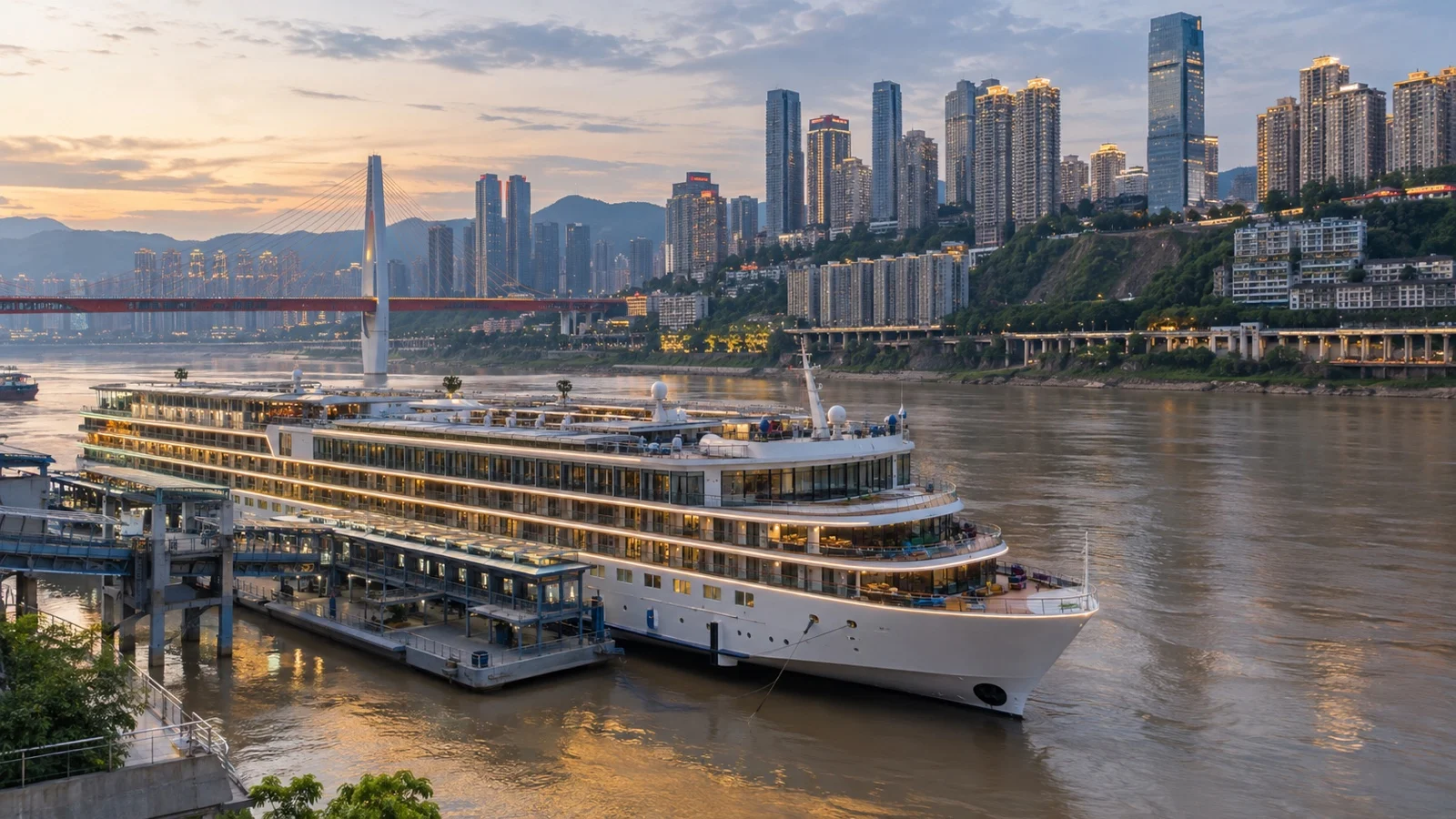
Chongqing is a huge, steep, visually thrilling city where the Jialing River meets the Yangtze. Traditional cruise departures have used piers around the Chaotianmen area, but river level, construction, traffic, and local operations can change the assigned embarkation point.
Ask for the exact pier number, Chinese address, check in window, and emergency contact before leaving your hotel. A driver needs Chinese characters and a current location pin because an English ship name may not solve a last minute pier change.
Give Chongqing at least one hotel night if flights allow. Hotpot, elevated roads, river views, hillside neighborhoods, and illuminated towers deserve time beyond a rushed transfer from the airport.
Yichang
Yichang serves as the downstream gateway to the Three Gorges project, but some cruise packages use a pier or road transfer above or below the dam rather than sailing to a city center berth. This distinction can materially change the distance to a hotel, rail station, or airport.
Request the disembarkation location by name and address, plus the scheduled coach endpoint. Avoid a tightly timed same day flight because locks, river traffic, road conditions, and group unloading can all move the arrival.
Upstream or downstream
Downstream voyages often cover the river faster because the ship travels with the current, while upstream programs may add time. That broad pattern does not guarantee identical stops, daylight scenery, or value.
Compare the detailed schedule line by line. A shorter trip is not a bargain if Qutang Gorge passes before sunrise, and an extra night is not useful if it is mostly a late embarkation.
Ask which scenic reaches are planned in daylight and whether announcements are made in English. Cabin location matters less than being awake and outside when the gorge begins.
How the Three Gorges locks work
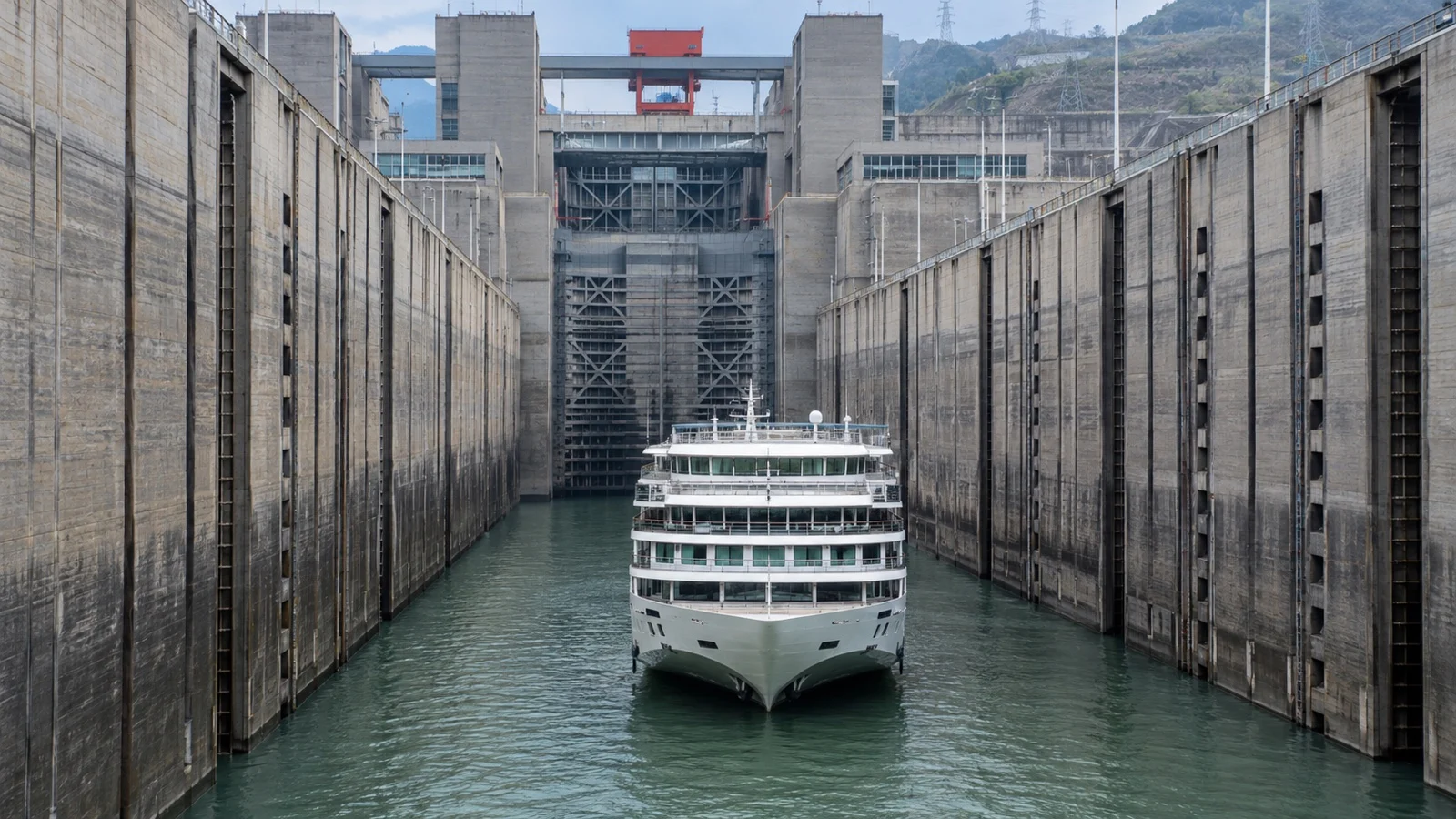
The dam complex uses large ship locks to move vessels between different water levels. Ships enter a chamber, gates close, the water level changes, and the vessel advances through a sequence until it reaches the river level on the other side.
The system is arranged as dual five-tier lock lines, allowing traffic in both directions. A transit can take hours because commercial vessels queue and move as organized groups.
Cruise ships may pass during the night, and schedules can shift after passengers go to bed. Ask the cruise director for the best estimate if watching a lock transit matters to you.
A lock passage is quieter and slower than people imagine. Bring a layer, respect crew barriers, and never lean beyond the rail for a photograph.
How the Three Gorges ship lift differs
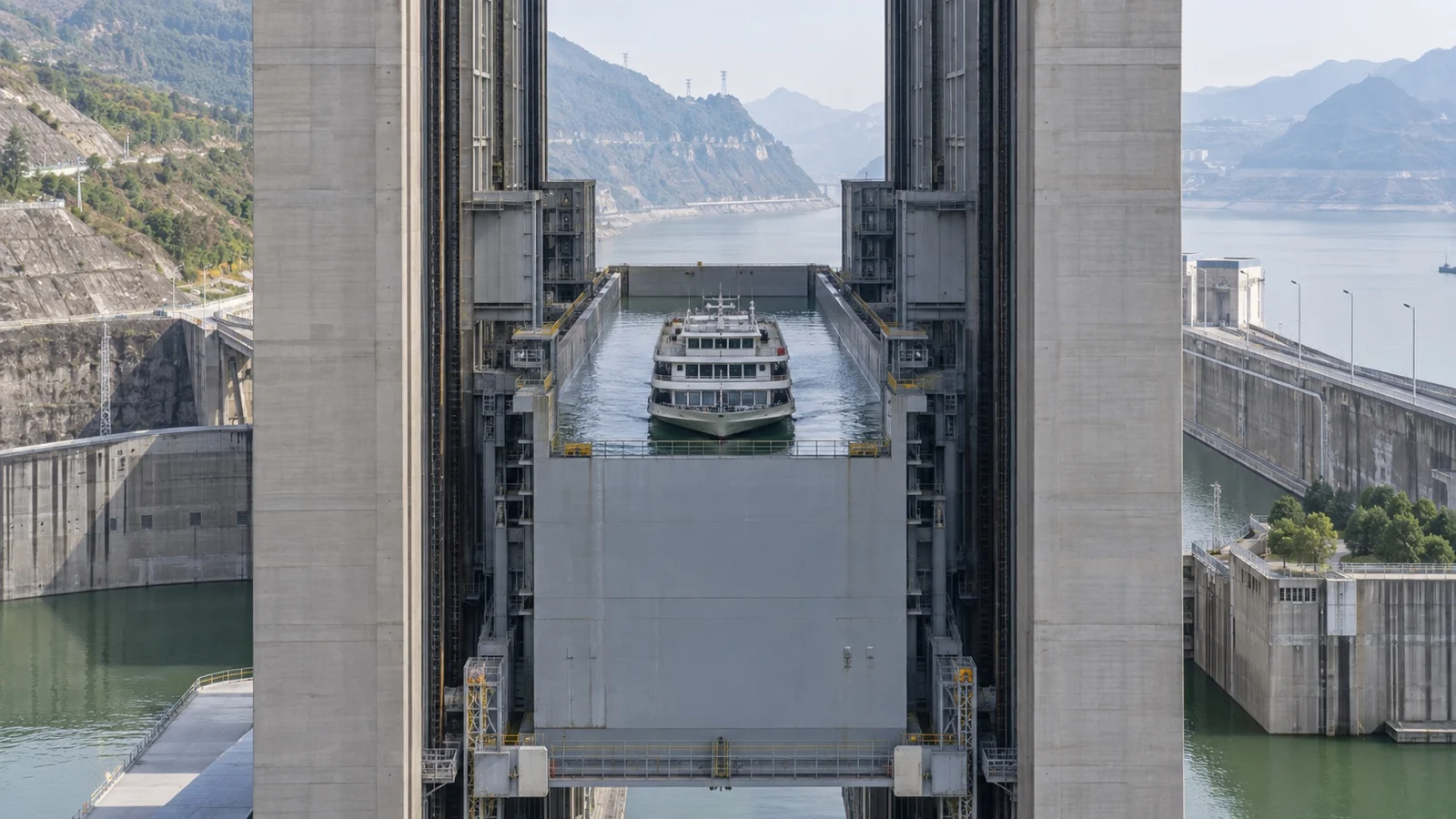
The ship lift moves a vessel vertically inside a water filled chamber, which is a very different engineering idea from stepping through several locks. It provides a faster route for vessels that meet its operating limits.
Many hotel style river cruise ships cannot simply use the lift as part of their regular passage. Operators often package the experience on a smaller sightseeing vessel while the main ship follows its assigned navigation route.
That transfer can involve a coach, another gangway, security, waiting, and steps. Ask whether the lift is included, optional, or unavailable on your sailing, and get the boarding details in writing.
The facility is working transport infrastructure rather than a ride with a guaranteed reservation. Maintenance, traffic, river conditions, fog, safety rules, or official controls can cancel or alter the experience.
Why floating landings matter
River levels and local shorelines make floating pontoons common along the route. The pontoon follows the water while a ramp, stairs, or temporary walkway connects it with the bank.
The angle and length of that connection can change with reservoir level. A landing that felt easy to a traveler last month may be steeper during your cruise.
Ships may also raft alongside another vessel, requiring passengers to walk through a neighboring lobby before reaching shore. Follow crew directions and keep noise down because people on the other ship may be resting.
Ask the evening before about the next landing, not after the gangway opens. The useful questions are the number of steps, ramp steepness, distance, handrails, elevator or cable car availability, and whether remaining aboard is allowed.
The Three Gorges themselves
Qutang Gorge
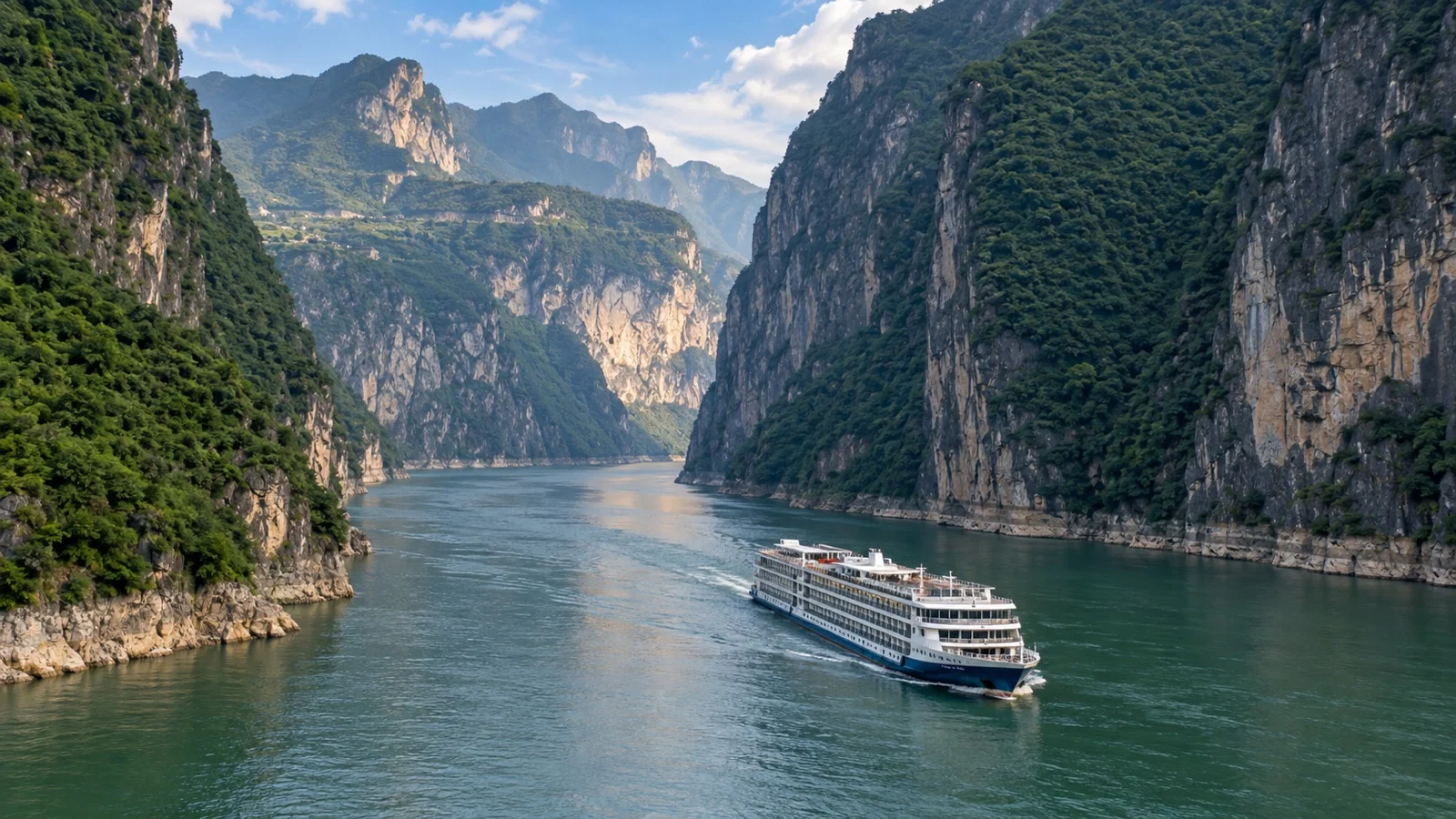
Qutang is the shortest and most dramatic of the three, with steep walls narrowing the river and famous views around the Kuimen entrance. It can pass quickly, so this is the moment for an alarm and an early place on deck.
Wu Gorge
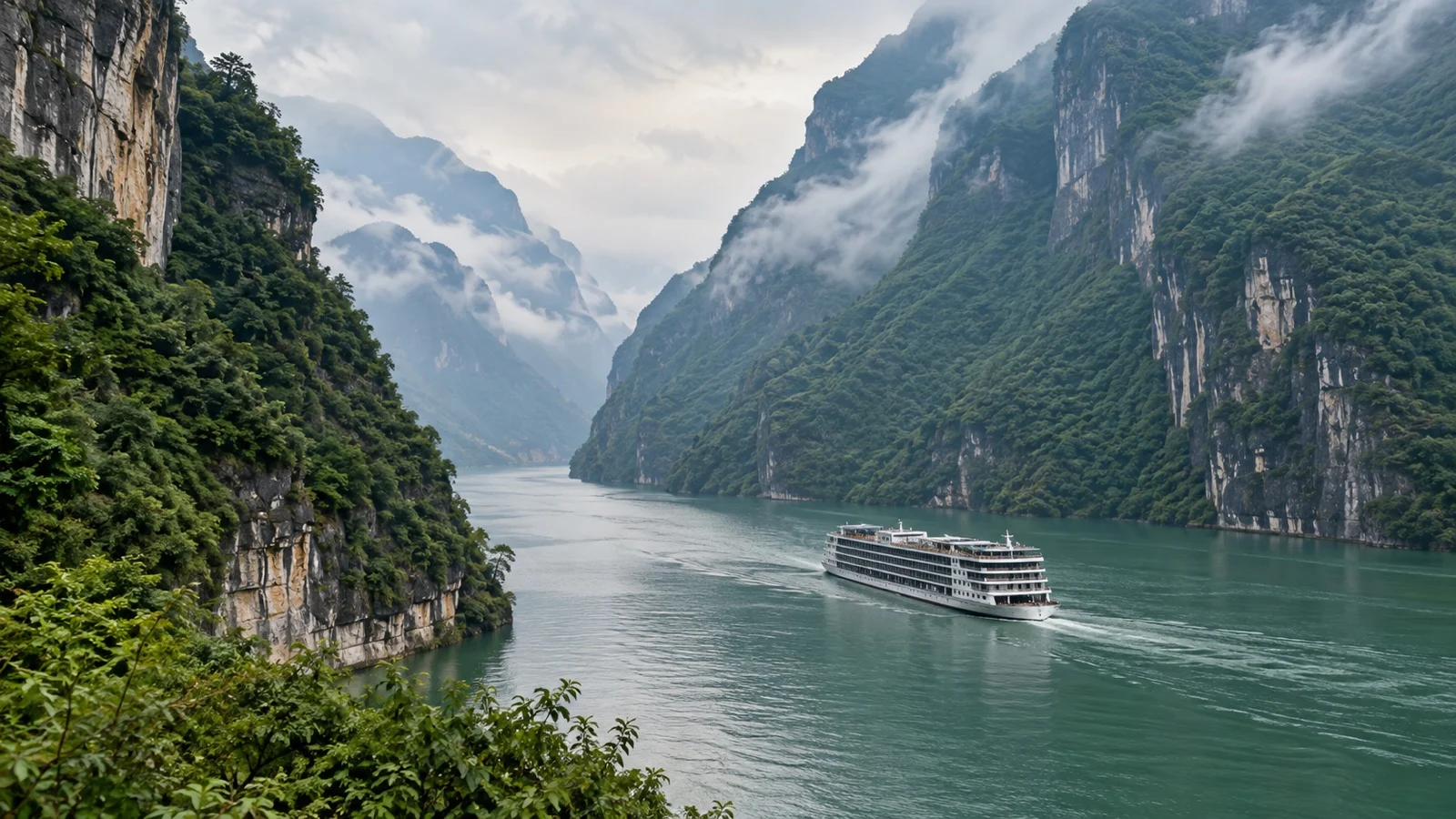
Wu Gorge feels longer and more layered, with peaks appearing and disappearing through cloud. Mist can soften the view rather than ruin it, especially when the river becomes quiet.
Xiling Gorge
Xiling stretches through the reach nearest the major dam works and ties scenery to the river’s engineering story. Announcements and exact daylight timing vary, so ask the cruise director rather than trusting a generic route diagram.
Weather can hide every famous peak, and no operator controls that. Pack a waterproof layer and let changing light become part of the experience.
Tributary excursions
Many itineraries transfer passengers to a smaller boat for a side gorge or tributary experience. These programs can reveal narrower water, greener walls, local settlements, and a scale the main ship cannot enter.
Some excursions require another change into an even smaller craft. That can be charming, but it also adds steps, low seats, unstable surfaces, and boarding gaps.
Ask how many transfers are involved and whether a restroom is available. Travelers who cannot manage the boarding can often enjoy an excellent scenic morning from the main ship, but the operator must confirm the alternative.
The shore stops that appear often
Fengdu
Fengdu’s temple complexes are associated with ideas about judgment, spirits, and the Chinese afterlife. Excursions generally involve a hill, stairs, and a guided interpretation that helps distinguish religion, folklore, and theatrical display.
The old settlement along the former riverbank was affected by the reservoir, while the modern city stands across the water. The visit therefore links older belief with the immense physical changes created by the dam.
Shibaozhai
Shibaozhai is famous for a tall red pavilion built against a steep rock outcrop. Reservoir changes transformed its immediate setting, and a protective structure now separates the site from the surrounding water.
Reaching the pavilion can involve a bridge, town streets, and many steps. You do not need to climb every level to appreciate the architecture and river view.
Baidicheng
Baidicheng, often translated as White Emperor City, stands near the entrance to Qutang Gorge and carries deep associations with Chinese history and literature. The site occupies elevated ground reached by a bridge and substantial climbing.
This is a stop where the step count should decide your participation. A scenic sail through Qutang may deliver more joy than pushing through a climb that exceeds your comfort.
The Three Gorges Dam visitor area
Organized visits use controlled transportation and security screening to reach observation points around the project. Carry the passport or identification requested by the operator and obey restrictions on bags and photography.
The viewing area interprets the dam, locks, ship lift, power generation, and reservoir system from land. It is not the same experience as traveling through a lock or riding the lift.
Dazu Rock Carvings from Chongqing
The Dazu Rock Carvings are a superb precruise or postcruise excursion for travelers with extra time in Chongqing. UNESCO describes hillside carving groups dating from the ninth to thirteenth centuries, combining Buddhist, Taoist, Confucian, secular, and everyday subjects.
Dazu is not a casual add on during embarkation day because road transfers and the site itself require time. Schedule it from a Chongqing hotel and keep the cruise check in day uncomplicated.
Visa, entry, and registration
China’s entry policies differ by nationality, purpose, route, and date, and they have changed frequently. Do not rely on a fellow passenger’s visa free experience unless the passport and itinerary are identical to yours.
The National Immigration Administration publishes official visa free, transit, and entry policy information. It also operates the 12367 immigration service hotline, while your nearest Chinese embassy or consulate remains an important source for visa applications.
Check whether your hotels and cruise operator handle accommodation registration correctly. Carry the passport requested for trains, flights, hotels, tickets, and controlled visitor sites.
Dual nationals and travelers with former Chinese citizenship should obtain tailored official guidance. China applies its own nationality law, and assumptions based on another country’s rules can cause serious problems.
Money, mobile service, and language
Mobile payments dominate many parts of China, while foreign card acceptance and cash practices vary. Set up the payment method recommended by current official visitor guidance and still carry a modest amount of yuan for backup.
Download offline translation and maps before travel. Save the ship name, pier, hotel, airport, and emergency contact in Chinese characters as well as English.
International roaming and app access can work differently from home. Confirm your carrier, secure any permitted connectivity tools before arrival, and do not wait until the pier to solve phone service.
Accessibility and realistic expectations
The ship may have elevators and spacious public rooms, yet shore access remains the difficult part. Pontoons, sloping ramps, stairs, bus steps, rough paving, and frequent transfers can appear on the same day.
Ask the operator for step counts and specific assistance at every named stop. A statement that the ship is accessible does not describe the pier or excursion.
Power chairs and scooters may face weight, width, storage, or battery restrictions. Get written confirmation before booking flights and request the actual gangway and coach policy.
Travelers who remain aboard can still see remarkable scenery, engineering, and river life. A cruise should not be judged by the number of stone staircases completed.
Weather and seasonal tradeoffs
Spring and fall generally offer the kindest balance for touring, while summer around Chongqing can be extremely hot and humid. Winter is cooler and may bring fog or a reduced schedule.
The river and reservoir operate within a seasonal water management system, which can affect landing conditions and routes. Heavy rain, fog, heat, maintenance, and navigation controls may change excursions even when the ship continues sailing.
Pack layers, rain protection, sun protection, water, and shoes with dependable grip. A small day bag is easier during multiple gangways and security checks than a large backpack.
Three practical ways to plan the trip
Plan one: classic downstream
Begin with at least one night in Chongqing, board with the exact pier confirmed, and let the operator manage the river sequence toward Yichang. Protect the final day with a flexible hotel or train plan rather than a tight flight.
Plan two: slower upstream
Start near Yichang and choose an itinerary that clearly identifies the dam transfer, lift option, and scenic sailing times. Use the extra time to enjoy the gorges rather than comparing only the night count.
Plan three: accessibility first
Choose the ship for elevators, cabin design, medical support, and clear excursion descriptions. Decide in advance which landings are optional and treat deck scenery as a central part of the vacation.
Common mistakes to avoid
The first mistake is booking a city name instead of a pier. Obtain the exact Chinese address for embarkation and disembarkation.
The second is assuming the main cruise ship will ride the ship lift. Confirm whether the experience requires a smaller boat and an extra transfer.
The third is believing that included excursions are automatically easy. Ask about stairs, ramps, coaches, walking distance, and restrooms.
The fourth is choosing a direction without reading the clock. Daylight gorge timing matters more than a simple upstream or downstream label.
The fifth is arranging a flight too close to disembarkation. River traffic and road transfers do not care about an airline ticket.
Frequently asked questions
Does the cruise ship use the Three Gorges ship lift?
Often the lift experience uses a smaller sightseeing vessel rather than the main hotel ship. Ask the operator for the exact arrangement on your departure.
Does the ship use the five stage locks?
Many vessels navigate through the lock system according to traffic and operating instructions. Timing may move into the night and can change without much notice.
Should I choose upstream or downstream?
Choose the schedule that gives you the right hotel nights, daylight scenery, excursions, and airport transfers. Direction alone does not guarantee a better trip.
Do I need a visa?
That depends on your passport, route, and travel date. Use China’s National Immigration Administration and the relevant embassy or consulate for current official guidance.
Are the shore excursions accessible?
Some are manageable and others involve extensive stairs or small boat transfers. Request the landing and excursion details for every stop before booking.
Can I explore independently?
Chongqing and Yichang can support independent hotel stays, but most intermediate calls are easiest through organized excursions. Pier names and return logistics may not be obvious to a visitor.
Final take
The Yangtze is a cruise through geology, belief, displacement, modern cities, and infrastructure on an astonishing scale. Go for the gorges and engineering, then let the smaller shore stories surprise you.
Build the trip around a clear pier plan, an honest mobility assessment, and written confirmation of the ship lift arrangement. Those details protect the moments you actually came to see.
No firsthand sailing or site visit is claimed. This guide was independently checked September 12, 2026, against current information from China’s National Immigration Administration and Ministry of Transport, Chinese government reporting on the Three Gorges system, and UNESCO.
Piers, ship lift access, locks, visas, river levels, excursions, transportation, and accessibility can change, so confirm live details with your cruise line and official providers before travel.