Cruise Caps, Bans and Day Taxes: The 2026 Rules Changing Port Days
A port can limit calls, cap daily passengers, redirect large ships, or charge each visitor without closing to cruises. Several important rules are in force in 2026, and the details matter more than the word “ban.”
My quick take
Most measures are handled in the schedule before you sail, but a call can still move or disappear. Expect fewer available calls, tighter arrival planning, a different terminal or nearby substitute, and passenger levies shown among your taxes and fees.
The rules also move quickly, so treat any list including this one as a starting point. Confirm with your cruise line before you build a day around a specific port.
The quick facts
- Cannes: Daily cruise visitors capped at 6,000 in 2026, with one ship over 3,000 passengers per day and 34 such calls for the year.
- Santorini: Roughly 8,000 cruise passengers a day, plus a per-person landing fee.
- Juneau: 16,000 passengers Sunday through Friday, 12,000 on Saturdays.
- Amsterdam: Cap of 100 sea-cruise calls a year and a per-passenger day tax.
- Venice: Large ships excluded from the historic lagoon since 2021.
Why this is happening now
Ports built for a few thousand visitors a day started receiving entire fleets at once, and residents pushed back. The measures are a mix of crowd management, emissions policy, and local politics.
They arrive as passenger caps, ship size limits, call limits, and per-person levies, and most cities use more than one at a time. The pattern is remarkably consistent across otherwise very different destinations.
For travelers, the effect depends on the rule. A daily cap changes scheduling, a size restriction changes where a ship can go, and a levy changes the trip price even when the port day itself looks the same.
Cannes limits volume, not every large ship
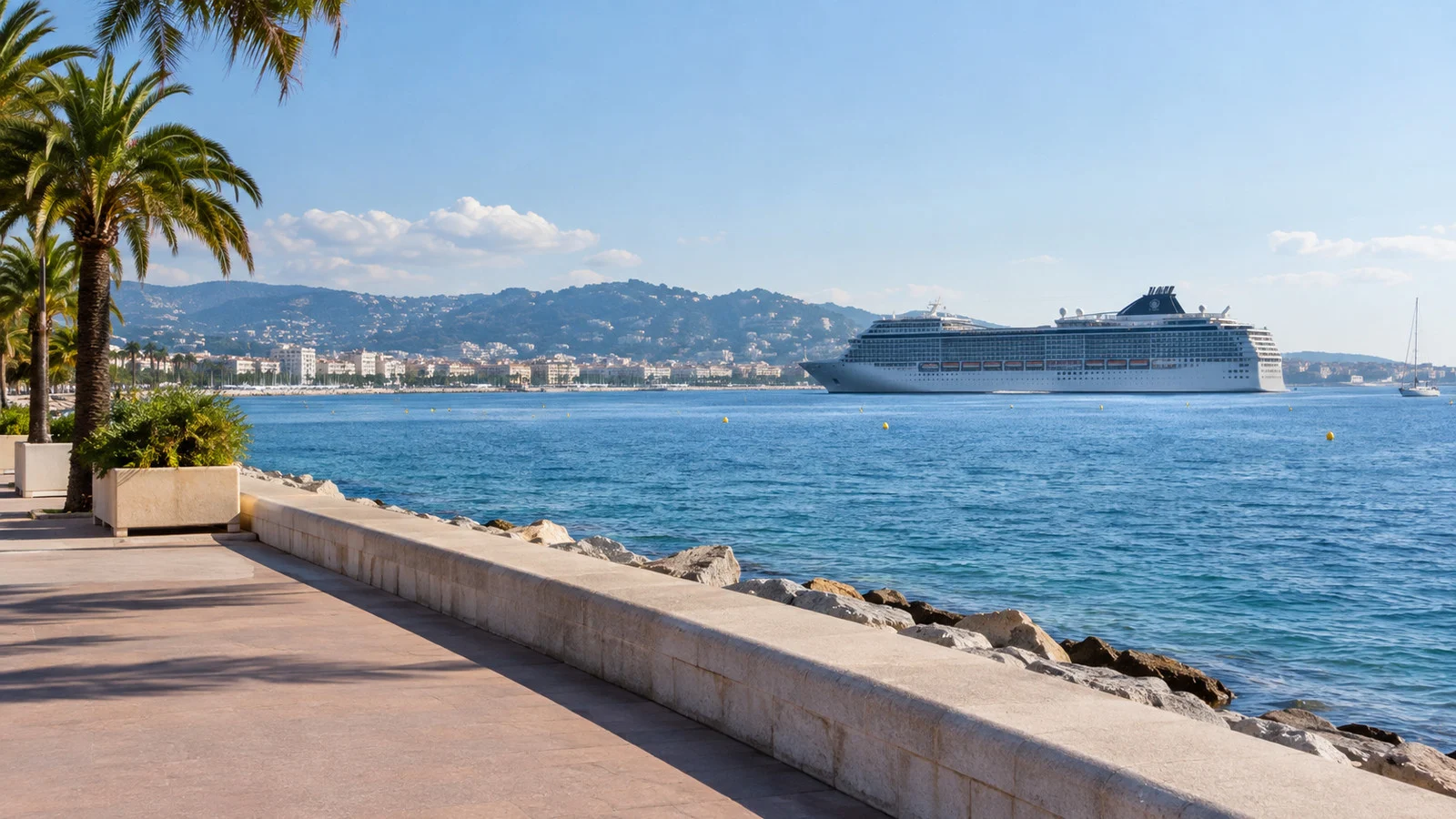
The City of Cannes says its 2026 plan cuts calls by ships carrying more than 3,000 passengers by 48 percent, permits no more than one such ship in the bay per day, limits those calls to 34 for the year, and caps daily cruise visitors at 6,000.
Cannes is already primarily a tender call for cruise ships, so the rule is about how many guests can come ashore rather than a new 1,000-passenger docking ban. The city’s stated 1,300-passenger objective belongs to 2030, not 2026.
Practically, confirm that Cannes is still listed and whether your line controls tender priority before booking a long independent excursion. My guide to how tendering changes your time ashore explains the buffer you need.
Greece: a cap plus a landing fee
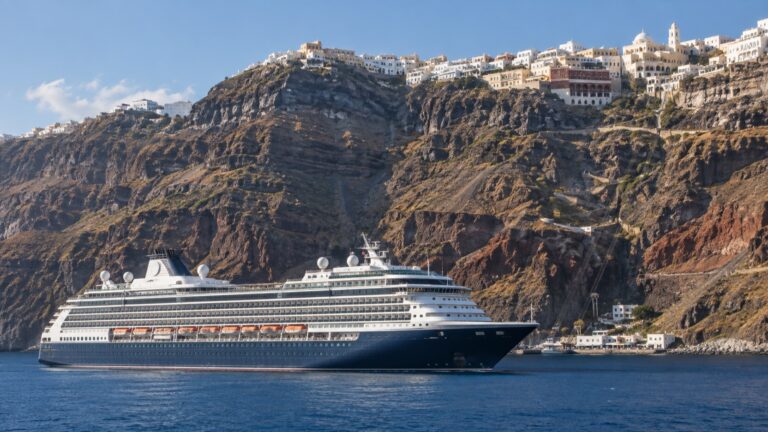
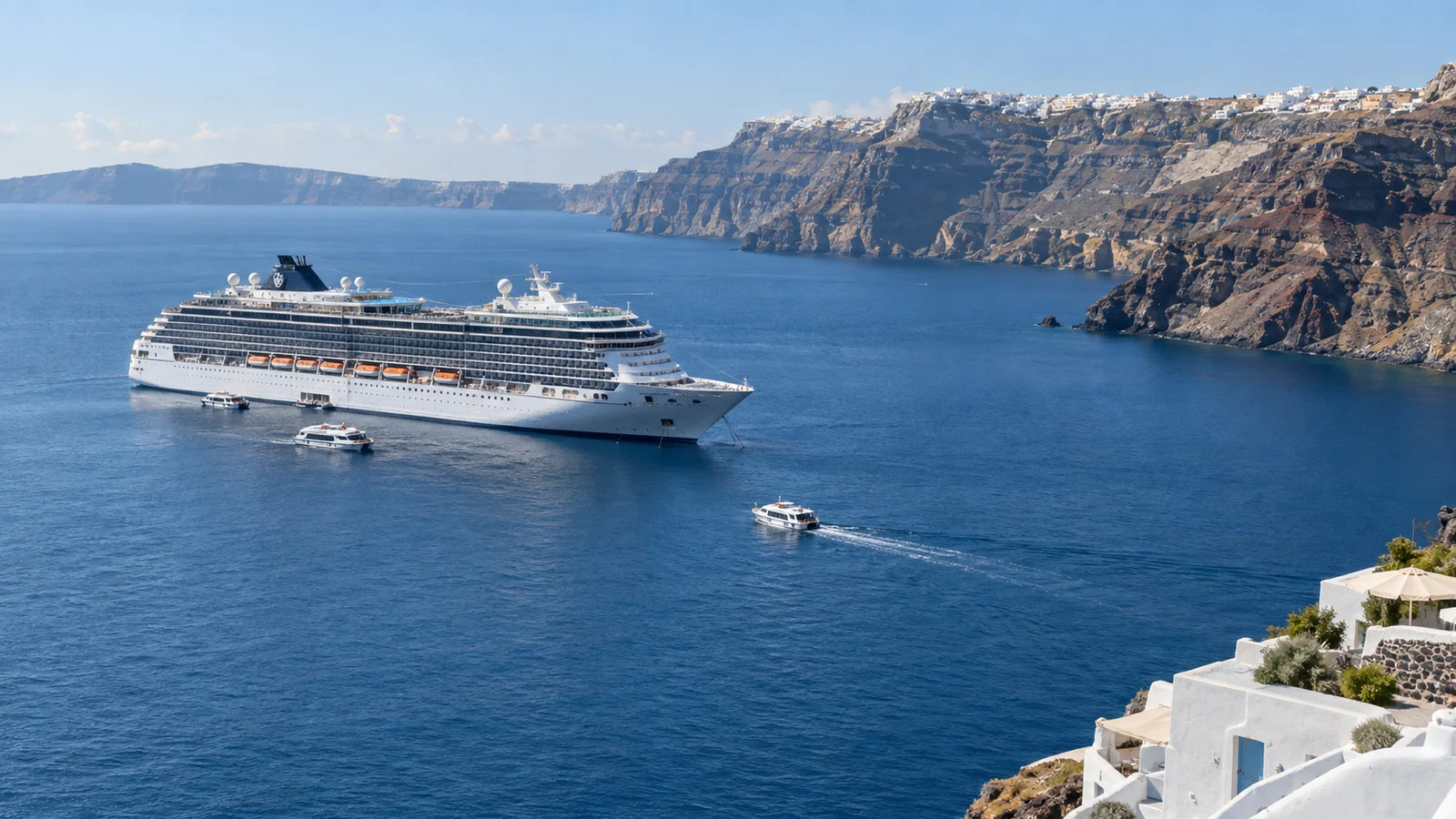
Santorini manages cruise arrivals through an advance berth-allocation policy built around the island’s carrying capacity, commonly described as about 8,000 cruise visitors per day. That planning can change which ships receive a date long before passengers arrive.
Under Greece’s cruise-fee rules, a passenger who goes ashore in Santorini or Mykonos owes €20 from June through September, €12 in April, May, and October, and €4 from November through March. The cruise company or agent remits the fee, so check your invoice rather than expecting a cash booth at the pier.
For a family, those levies add up across an itinerary. They are small individually and worth knowing about collectively.
Amsterdam is limiting calls outright
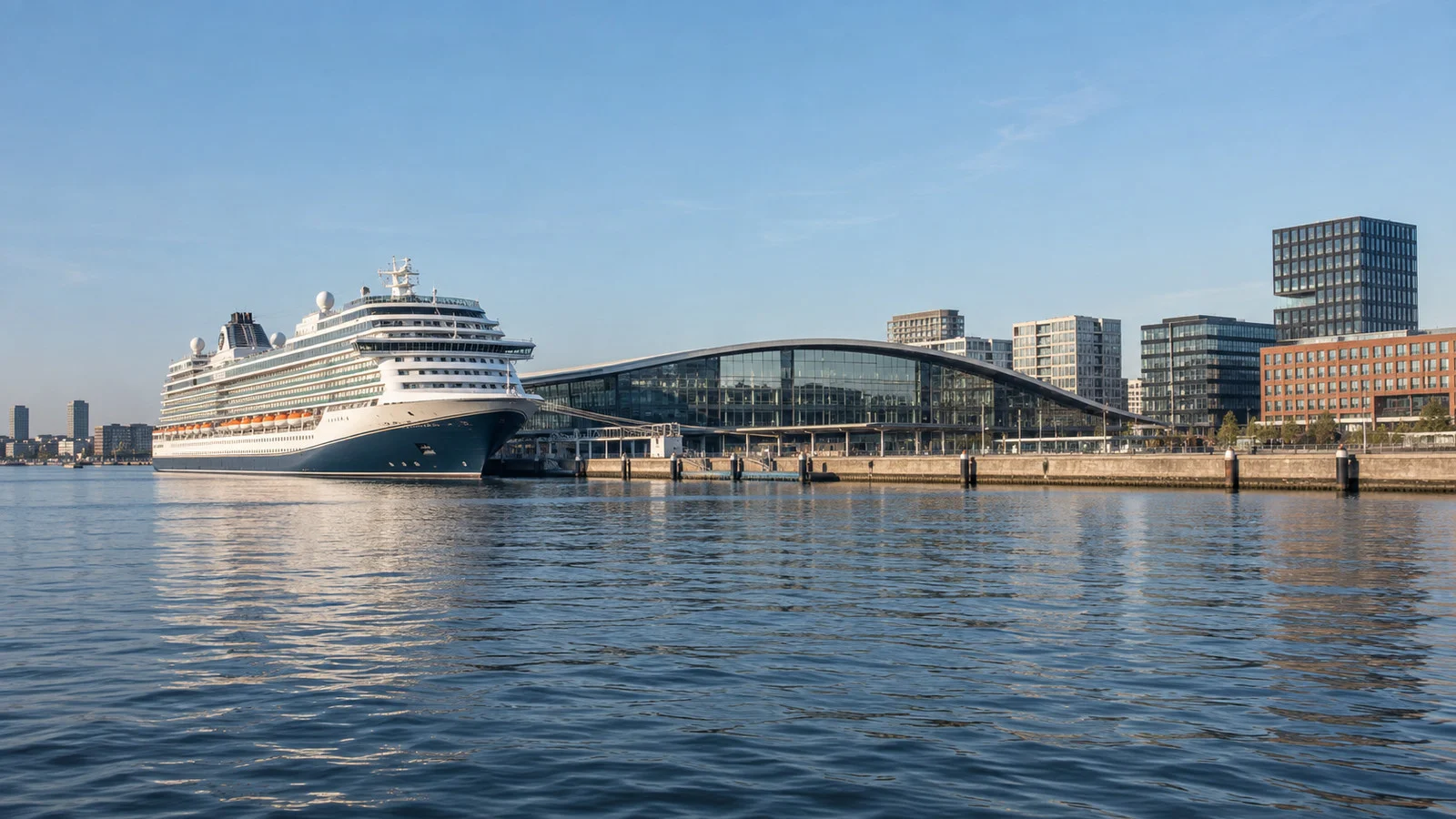
Amsterdam’s 2026 policy reduces the maximum to 100 sea-cruise calls a year, down from 190, while the city’s day-visitor tax for sea-cruise passengers is €15. River cruising is governed separately, so do not apply the sea-cruise figure to an Amsterdam river itinerary.
Longer-term proposals for the sea-cruise terminal have changed more than once and are not the rule for a 2026 call. Use the terminal in your cruise documents instead of treating a future policy announcement as today’s address.
The likely near-term outcome is a swapped port rather than a canceled cruise, with itineraries substituting Rotterdam or IJmuiden. That substitution turns a walk into a transfer day.
Juneau negotiated rather than legislated
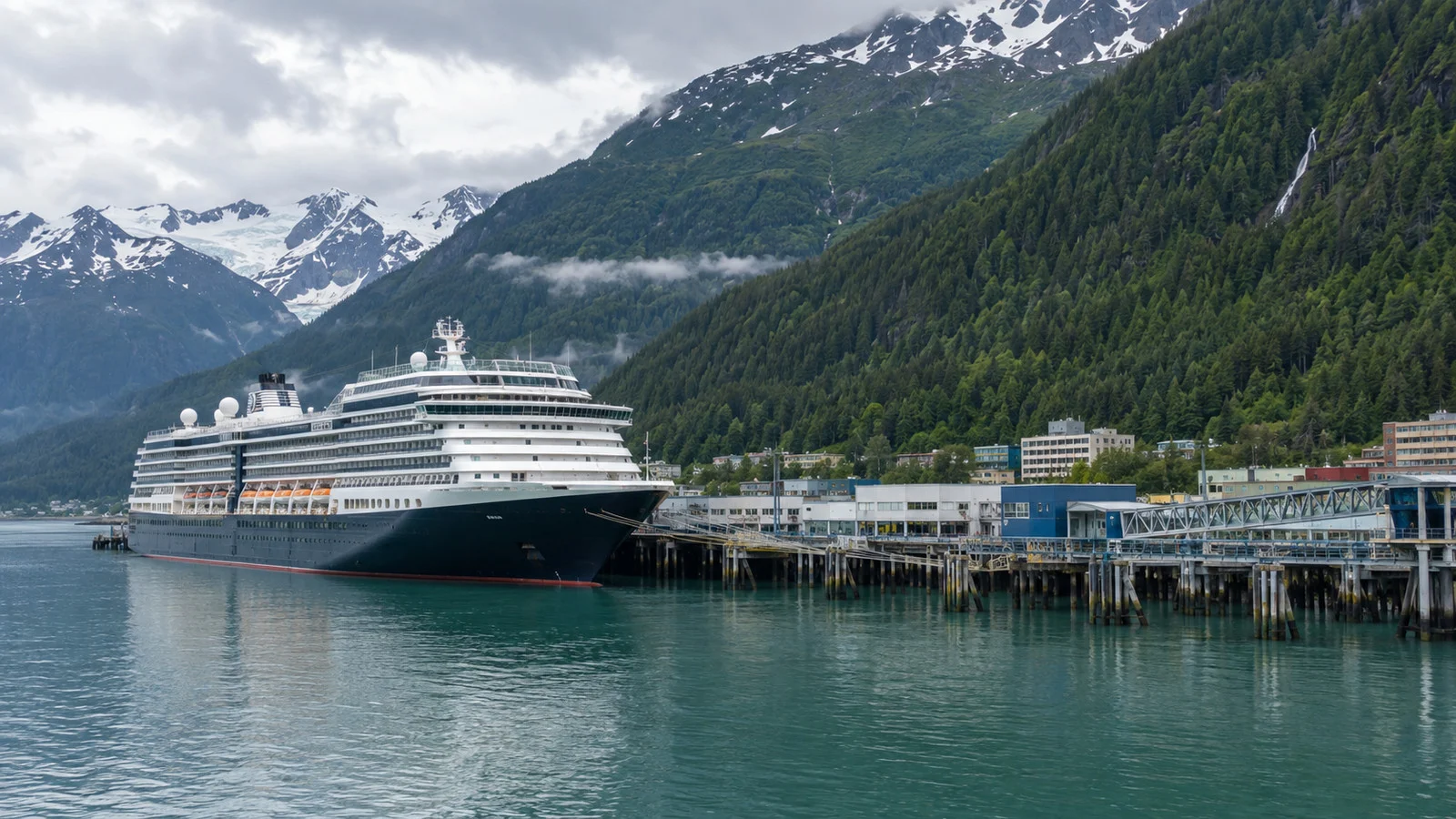
Juneau’s approach is an agreement rather than a ban. The City and Borough of Juneau sets 2026 limits of 16,000 lower berths Sunday through Friday and 12,000 on Saturday, alongside the existing five-large-ship daily limit.
That is a meaningful reduction in the busiest days rather than a shrinking of the season. Juneau received well over a million cruise passengers in 2025.
For passengers the practical effect is fewer genuinely overwhelming days downtown. That is a benefit, not a restriction, once you are actually there.
The size limits that reshaped itineraries
Venice remains the landmark case, with ships above 25,000 gross tons excluded from the Giudecca Canal and historic lagoon since August 2021 and redirected to Marghera. Length and height limits apply alongside the tonnage threshold.
Barcelona is consolidating ocean-cruise activity on the Adossat wharf and is scheduled to close WTCB South at the end of 2026. Palma and Dubrovnik also manage daily ship volumes, but your practical answer still comes from the dated port schedule for your sailing.
Where you dock within those ports matters as much as whether you dock at all, which my guide to finding out which berth your ship will use covers.
What this actually does to your trip
- Fewer scheduled calls: Annual or daily limits are usually resolved before the season.
- Port swaps: A nearby alternative may replace the famous name.
- Different terminals: Size and environmental rules can redirect ships away from a central berth.
- Higher trip cost: Levies are commonly passed through among taxes and fees.
- More value in small ships: Some size-restricted ports remain available to them, although no central berth is guaranteed.
That last point is the quiet winner in all of this. Small-ship itineraries retain access that big ships are losing, which my guide to small-ship cruising gets into.
How to check before you book
Check the cruise line itinerary, the official port schedule, and the terminal or tender label for each marquee call. Compare the arrival time with attraction opening hours because a valid call can still be too short for the excursion you had in mind.
If one port is the reason for the trip, avoid nonrefundable independent arrangements until the schedule is firm and read the line’s itinerary-change terms. A call shown in a brochure is still not a guarantee, even when the port has allocated space.
Remember that an itinerary change is generally permitted under your ticket contract. My guide to what you actually get refunded when a port is skipped explains why that matters.
Where the rules are heading
The direction of travel is clear even if individual measures are not settled. More ports are adopting caps, more are charging per-passenger levies, and shore power requirements are spreading as emissions rules tighten.
Some announced measures are later softened, delayed, or challenged, so a headline about a ban is not the same as a rule in force. Check the adopting government or port authority for the effective date, threshold, and whether the measure is final.
Book the itinerary you want and hold the specific port loosely. That has always been good cruise advice and it is better advice now.
Shore power and the emissions layer
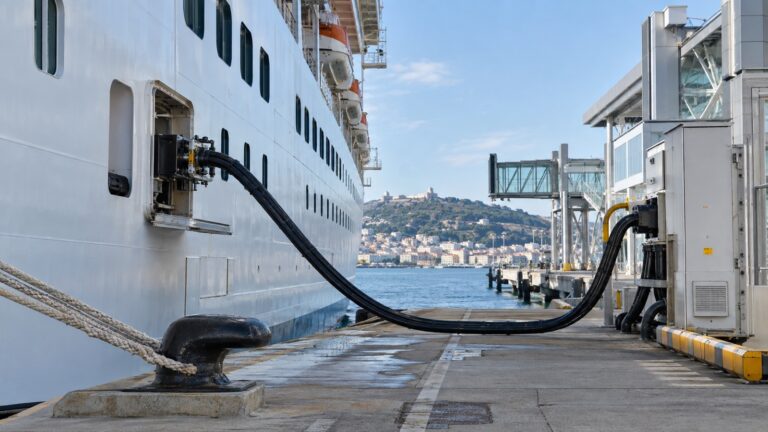
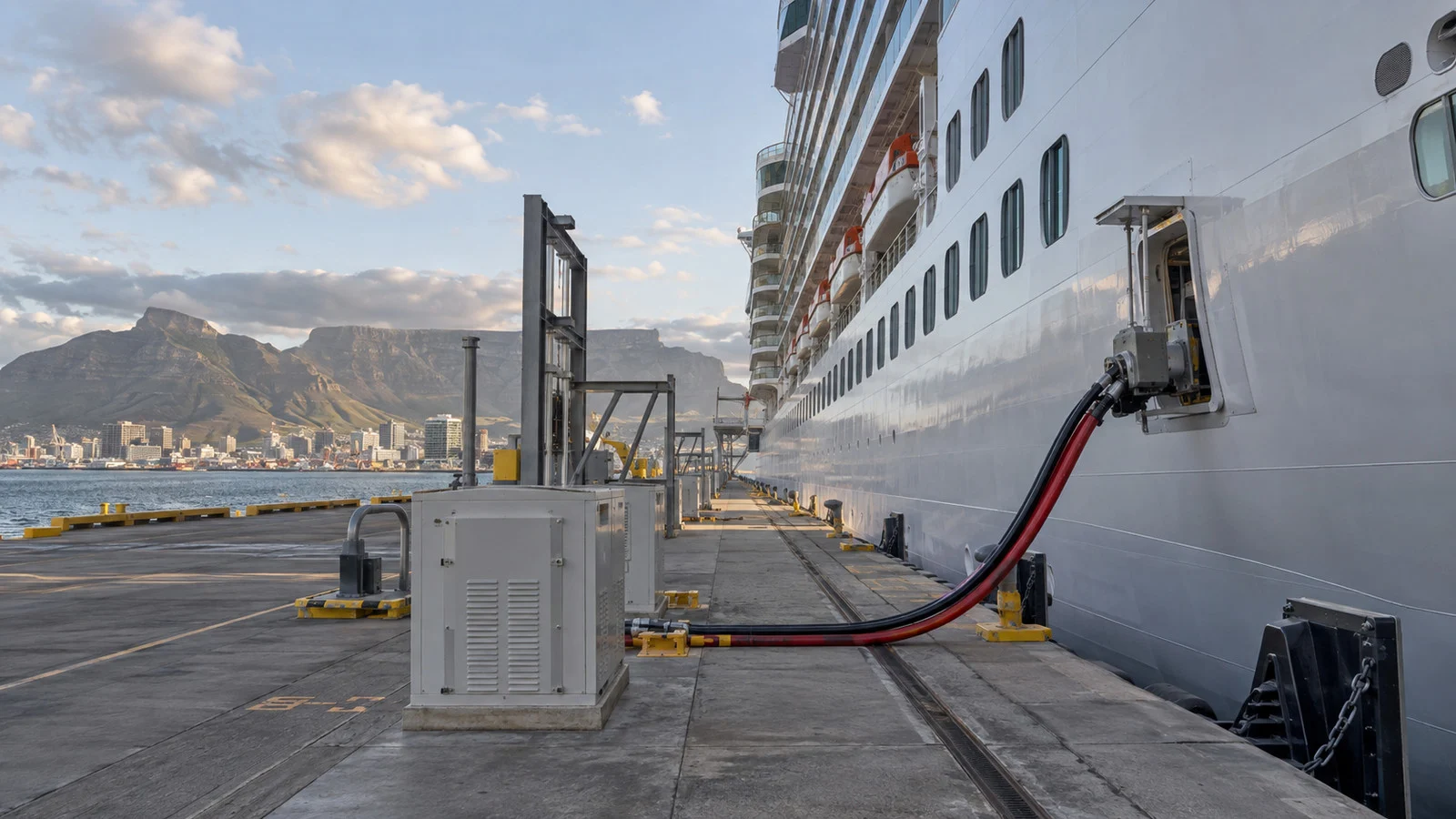
Alongside passenger caps, several ports are mandating shore power so ships switch off engines while alongside. Marseille and Barcelona are among those pushing it, and the requirement is spreading under European emissions targets.
For passengers this is mostly invisible, which is the point. Where it shows up is in which ships can call at which berths, since not every vessel is equipped to connect.
Shore power can influence terminal investment and future deployment, but it does not let a passenger predict which ship will keep a berth. Treat it as an operational factor, not a booking guarantee.
Book for the itinerary, but price the fallback
Booking early can improve cabin choice and refundable options, but it does not secure a particular berth. The port and cruise line manage that allocation, not the order in which passengers bought cabins.
Compare the substitute-port language and transfer cost before paying. A Rotterdam call marketed as an Amsterdam alternative, for example, creates a very different day even when the cruise still visits the Netherlands.
The upside nobody advertises
Caps are meant to reduce crowding and local impacts, which can make a port day easier for residents and visitors. The tradeoff is fewer available calls and less certainty for anyone booking around one famous stop.
The trade is fewer opportunities to visit against a better experience when you do. My guide to the most crowded cruise ports covers what those days used to look like.
Quick answers
Will these caps cancel my cruise?
Usually not, because annual and daily limits are normally built into schedules. A port can still be substituted or removed, so the cruise contract and current itinerary control.
Do I pay the cruise passenger levies directly?
Usually not at the pier. They are typically embedded in your fare as taxes and fees.
Can my ship still visit Venice?
Large ships have been excluded from the historic lagoon since 2021 and dock at Marghera instead. Smaller vessels are treated differently.
Is Cannes closed to cruise ships?
No. Cannes caps daily cruise visitors at 6,000 in 2026 and limits ships carrying more than 3,000 passengers, while most cruise guests already come ashore by tender.
How do I find out what applies to my sailing?
Check your itinerary for docked versus tendered calls and confirm with your cruise line. Rules change often enough that any published list ages quickly.
Final word
These ports are using different tools, not following one global ban. You are more likely to see a controlled schedule, a different terminal, a levy, or a nearby substitute than to lose the whole cruise.
Check whether your marquee ports are docked or tendered, confirm anything you are booking the whole trip around, and keep an open mind about substitutions. The quieter ports these rules are protecting are frequently the better day anyway.
How this guide was researched: This guide uses official rules and authority notices on cruise port restrictions in the Mediterranean, Northern Europe, and Alaska. Caps, levies, and effective dates change frequently and are set by local authorities, so confirm current rules with your cruise line and the relevant port authority before booking around a specific call; see our Editorial Policy.
More on this topic: browse every guide on port logistics and timing.