Tunis Cruise Port (La Goulette): A Cruiser’s Guide
Ships calling on Tunis dock at La Goulette, the port about 6 to 7.5 miles from the city. From here I can reach Carthage, Sidi Bou Said, and the Medina, three of North Africa’s great sights, in one day.
Here is how I would plan a smart, honest day ashore in Tunisia, using only what I can verify.
My quick take
Tunis is one of the Mediterranean’s best-value ancient-history days, pairing a UNESCO archaeological site with a photogenic clifftop village. If you enjoyed Valletta or the ruins around Naples, this belongs on your list.
It is also a place where a little planning matters, so I would sort transport and a rough route before I step off the ship.
A current safety note (verify before you sail)
The U.S. State Department lists Tunisia at Level 2, Exercise Increased Caution, because of terrorism, crime, and civil unrest; the current advisory was issued May 21, 2026. Named Level 4 border, mountain, desert, and military zones are far from the normal La Goulette, Carthage, Sidi Bou Said, and central Tunis route.
The UK Foreign Office likewise places no blanket warning on Tunis or the main coastal areas. Advisories change, so confirm the current wording before your cruise.
The quick facts
- Where you land: La Goulette (Halq al Wadi), the cruise and ferry port of Tunis, on the spit between the Lake of Tunis and the sea.
- Dock or tender: Ships berth alongside here rather than anchoring, so you walk off.
- Into town: Central Tunis is roughly 6 to 7.5 miles away, about 15 to 25 minutes by taxi depending on traffic.
- Currency and language: The Tunisian dinar (TND), plus Arabic and French; the dinar is a closed currency you generally cannot buy in advance.
- Time zone: Central European Time (CET, UTC+1) all year.
- How often the call is missed: Low (roughly 1 to 2%): the sheltered berth is rarely limited by local weather.
Heads up: some links below are affiliate links. If you book through one, I may earn a commission at no extra cost to you. It never changes which hotels or tours I recommend. Full disclosure.
Getting around from the port
The TGM suburban train can be the budget alternative from La Goulette toward Carthage, Sidi Bou Said, and Tunis. Service patterns and station conditions can change, so check a same-day local schedule and keep taxi money rather than trusting an old online timetable.
Taxis are the easy door-to-door choice. Ask the driver to run the meter, or agree a fare first, and carry small dinar notes.
Many cruisers simply book a guided tour or a private driver for the day. It is the most efficient way to string together Carthage, Sidi Bou Said, and the Medina without navigating connections.
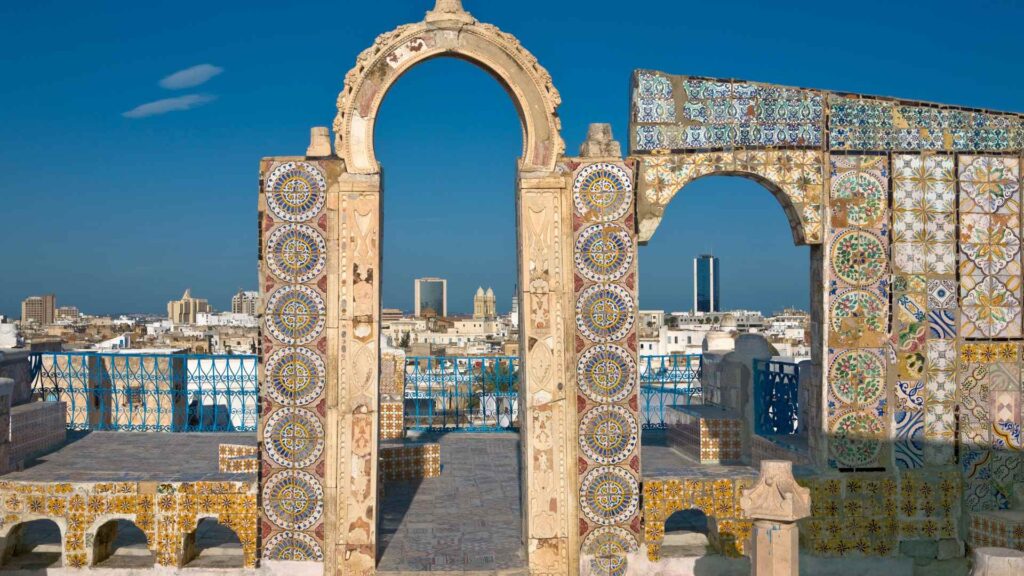
From the berth to Carthage or Tunis
The passenger facilities are inside the Port of La Goulette, so use the marked exit or ship shuttle and meet drivers only at the approved pickup point. Confirm whether your vehicle is waiting inside or outside the gate, because a vague “cruise terminal” meeting place can waste the best part of the morning.
Carthage and Sidi Bou Said pair naturally, while central Tunis and the Bardo form a separate city day. Trying to combine all four creates too much traffic and too little time, especially if the Bardo’s current opening day or hours do not match the ship call.
Use a licensed taxi, private guide, or ship excursion if timing matters, and agree on the total fare before departure. Keep the final hour near La Goulette because rail disruption and Tunis traffic are both poor reasons to watch the ship leave.
The stops I’d actually spend time on
1. The Archaeological Site of Carthage
Carthage is a collection of separate archaeological zones, and the ticket combination or included sites can change. Check the current pass at the official ticket window and keep enough time for transport between Byrsa Hill, the Antonine Baths, and the Punic Ports.
Fun fact: Rome so feared its rival that it razed Carthage in 146 BC, then rebuilt it as a grand Roman capital, which is why the ruins you walk are mostly imperial Roman, not Punic.
2. Byrsa Hill
The heart of ancient Carthage, with excavated Punic-era foundations and a commanding view over the Gulf of Tunis. It is the best single vantage point to grasp the site’s scale.
3. The Baths of Antoninus
These were among the largest Roman baths built anywhere in the empire, set in a seafront archaeological park. Even at foundation level, the surviving columns hint at the original scale.
4. The Punic Ports
The distinctive circular and rectangular harbors were the naval base of ancient Carthage. Today they read as quiet lagoons, but the layout is still clear from the bank.
5. Sidi Bou Said
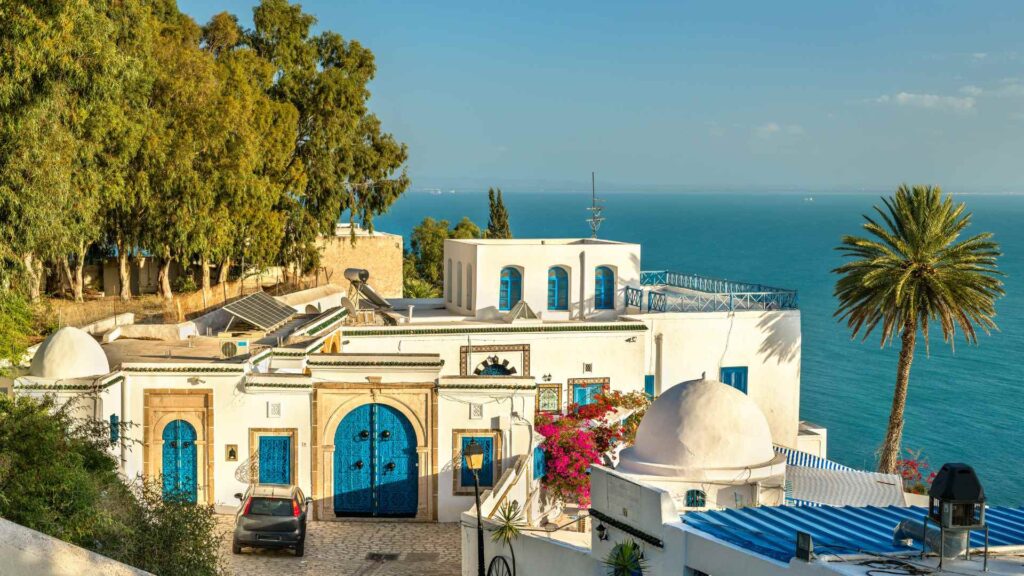
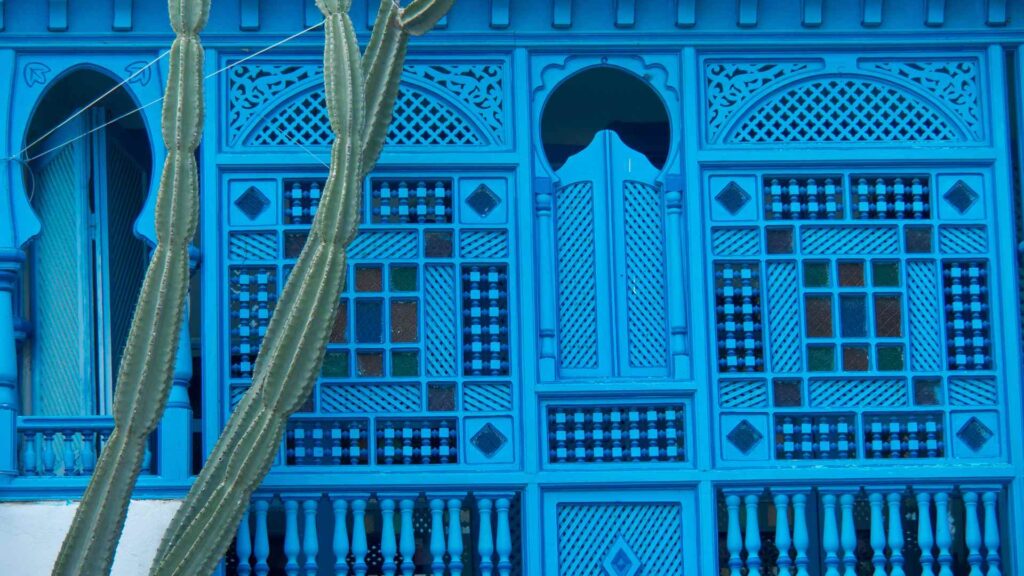
This clifftop village of blue-and-white houses is Tunisia’s most photographed spot, tumbling toward the sea above a small marina. Come early to beat the crowds and the heat.
Fun fact: the signature blue-and-white palette was effectively made official in the early 20th century by a French-born baron, Rodolphe d’Erlanger, who championed the look.
6. Ennejma Ezzahra (the d’Erlanger Palace)
That same baron built this palace in Sidi Bou Said, now a museum of Arab and Mediterranean music with lavish interiors and gardens. It is a calm, beautiful counterpoint to the busy lanes above.
7. The Medina of Tunis
A separate UNESCO World Heritage Site, this walled old city is a maze of souks, mosques, and courtyard palaces. Wander with a rough exit point in mind rather than a fixed route.
8. The Zitouna Mosque
The great mosque at the Medina’s core is Tunis’s spiritual anchor and one of the oldest in North Africa. Non-Muslims are typically limited to the courtyard, but it is worth finding.
9. The Bardo National Museum
The Bardo reopened in September 2023 after a two-year closure and holds Tunisia’s great collection of Roman mosaics. Verify its official opening calendar shortly before the call because government operations and special closures can change independently of cruise schedules.
10. La Goulette town and its Kasbah
Right by the ship, the port town has a seafront promenade and a squat Ottoman-era fortress. It is an easy stretch of the legs if your day runs short.
11. Avenue Habib Bourguiba, central Tunis
The city’s grand tree-lined boulevard, lined with cafes and the neo-Romanesque Cathedral of St Vincent de Paul. It is the modern face of the capital, a short walk from the Medina’s main gate.
12. Kairouan (for a longer day)
About two hours south, this UNESCO city holds the monumental Great Mosque and is one of Islam’s most revered centers. Only attempt it on a long call, ideally on an organized tour.
How I’d plan the day
Short call (about 4 hours): taxi straight to Carthage for Byrsa Hill and the Baths of Antoninus, then up to Sidi Bou Said for a quick wander and a mint tea before heading back.
Classic day (about 6 hours): add the Medina of Tunis after Carthage and Sidi Bou Said, allowing time for the souks and the Zitouna Mosque courtyard.
Full day (8 hours plus): fold in the Bardo National Museum, or trade the Medina for the drive to Kairouan on a guided tour. Build in a generous return buffer for Tunis traffic.
Whichever you choose, aim to be back at La Goulette well before all-aboard. Cross-referencing your other stops, like those on a wider Mediterranean or Africa itinerary, helps you judge how hard to push.
A realistic word on accessibility
Be honest with yourself about mobility here. Carthage is spread over uneven, unpaved archaeological ground, and Sidi Bou Said is steep and cobblestone.
The Medina’s lanes are narrow and busy, with steps and uneven surfaces throughout. A private car with a driver is the most comfortable way to manage the day if steps are a concern.
When to go, and the weather
Spring and fall are the sweet spots, with warm, comfortable days for walking ruins. Summer calls are hot, so carry water, sun cover, and a hat.
Most Mediterranean cruise itineraries hit Tunis between April and October. For context on the wider region, see my guide to cruise ports in Europe.
Quick answers
Where do cruise ships dock in Tunis?
At La Goulette (Halq al Wadi), roughly 6 to 7.5 miles from central Tunis, alongside the dock rather than at anchor.
Is the Bardo Museum open?
It reopened in September 2023 after a long closure, but hours have varied since, so confirm before you plan a visit around it.
What currency do I need?
The Tunisian dinar, which is hard to obtain outside the country, so exchange or use an ATM after you arrive and carry small notes.
How this guide was researched: Unless a first-hand visit is explicitly identified above, this guide is based on independent research using official port, tourism, transit, government, and attraction sources where available. Logistics and time-sensitive details were reviewed on September 10, 2026; see our Editorial Policy.