Pula Cruise Port: Arena, Roman City, Brijuni and Rovinj
Pula is one of those cruise calls where the headline landmark is genuinely as convenient as it is impressive. The Roman Arena rises near the waterfront, and a compact route can continue through ancient gates, lively streets, the Forum, and the Temple of Augustus without a long transfer.
The bigger choices, Brijuni National Park and Rovinj, require more discipline because they add road travel, fixed boat schedules, or both. Confirm the ship’s exact berth or tender landing first, then choose one geographic direction and protect the return margin.
Quick Facts
- Port: Pula on the southern Istrian coast of Croatia
- Arrival: Berth or anchorage with tender, depending on the ship and port plan
- Main landmark: Pula Arena, close to the central waterfront
- Old-city route: Arena, Twin Gates, Arch of the Sergii, Forum, and Temple of Augustus
- Brijuni gateway: Official park boats depart from Fažana, not central Pula
- Rovinj: A separate road excursion that should be treated as the main event
- Local transit: Pulapromet buses, with official schedules and live tracking in the Mobility Plus app
- Currency: Euro
- Language: Croatian, with Italian and English also common in tourism
- Best easy day: Roman Pula on foot, plus lunch or a short museum visit
- Weather: Hot and sunny in summer, with wind or storms able to affect marine plans
- Return rule: Leave extra time for tendering, Fažana boat connections, Rovinj traffic, and the correct port gate
First identify the real passenger landing
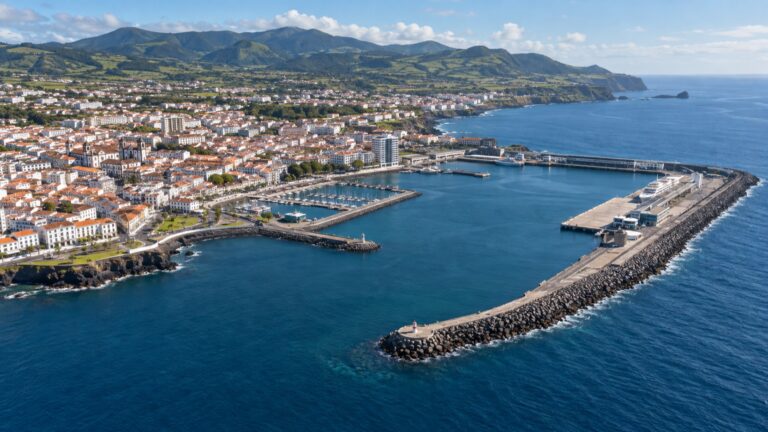
Pula’s harbor is broad, sheltered, and still connected to working maritime activity. Your ship may use an assigned berth or remain at anchor with passengers brought ashore by tender, and the practical difference is large.
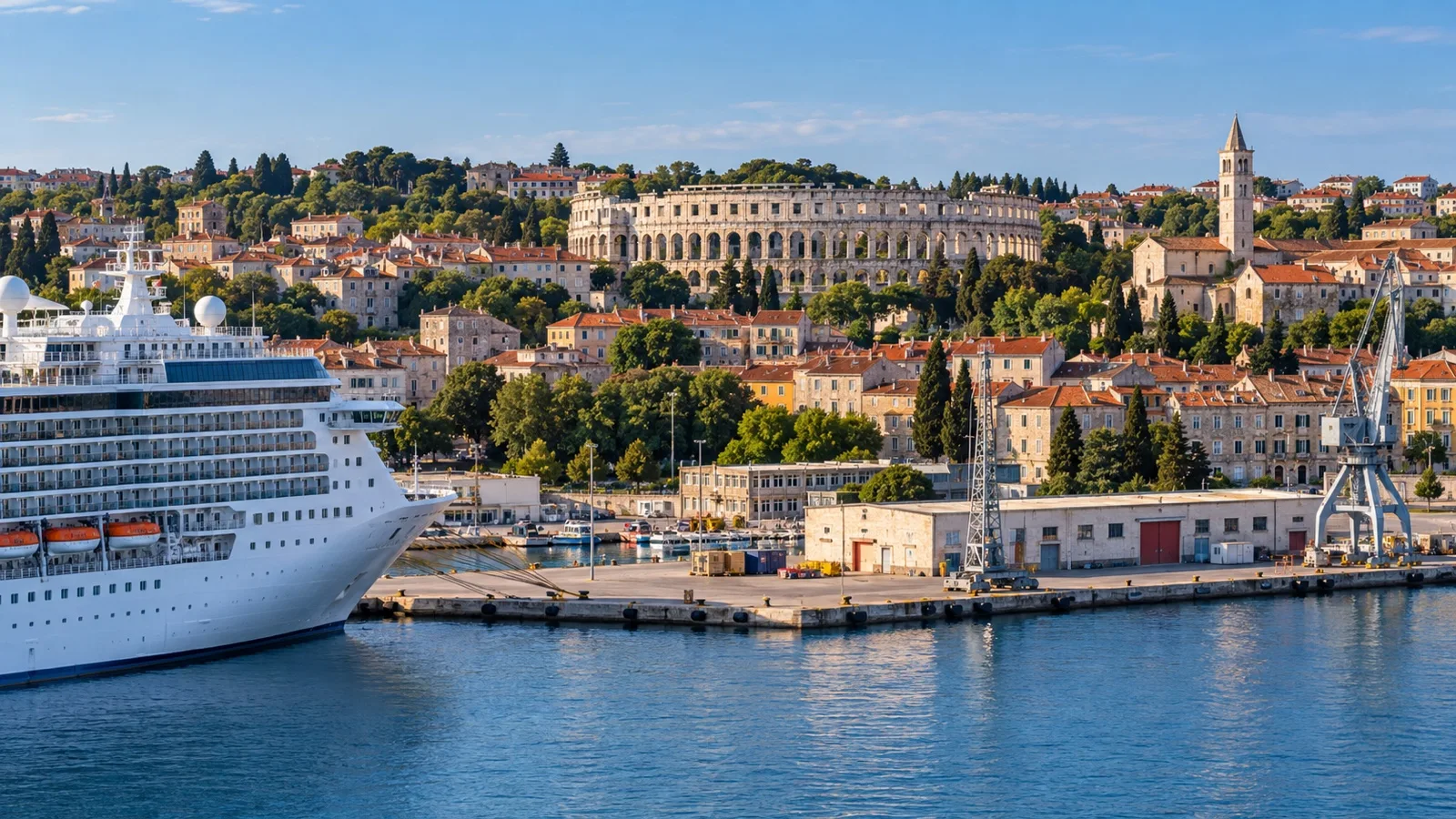
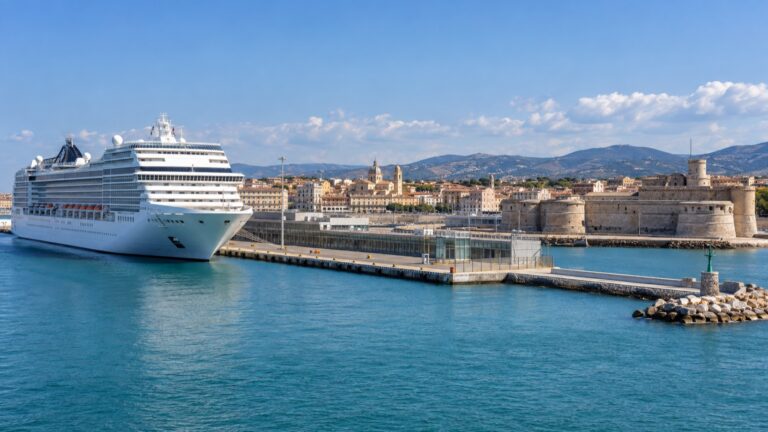
An alongside call can put you near the central waterfront, but the distance from the gangway to the authorized exit still depends on the quay. Follow marked passenger routes and do not cross operational port areas because a landmark looks close on the map.
Tendering adds queues, boat loading, priority groups, sea conditions, and a last tender deadline. Recalculate any independent Fažana or Rovinj plan after the ship announces the actual tender process.
Pula’s regional port authority manages passenger and cruise activity while major infrastructure projects continue around the harbor. Construction and traffic arrangements can change the route you remember from a previous call, so live instructions outrank old port maps.
The Arena belongs at the start of most visits
Pula Arena is the city’s unmistakable Roman landmark and one of the best reasons to keep the day local. The Archaeological Museum of Istria manages the amphitheater, its underground exhibition spaces, and several other ancient sites in the city.
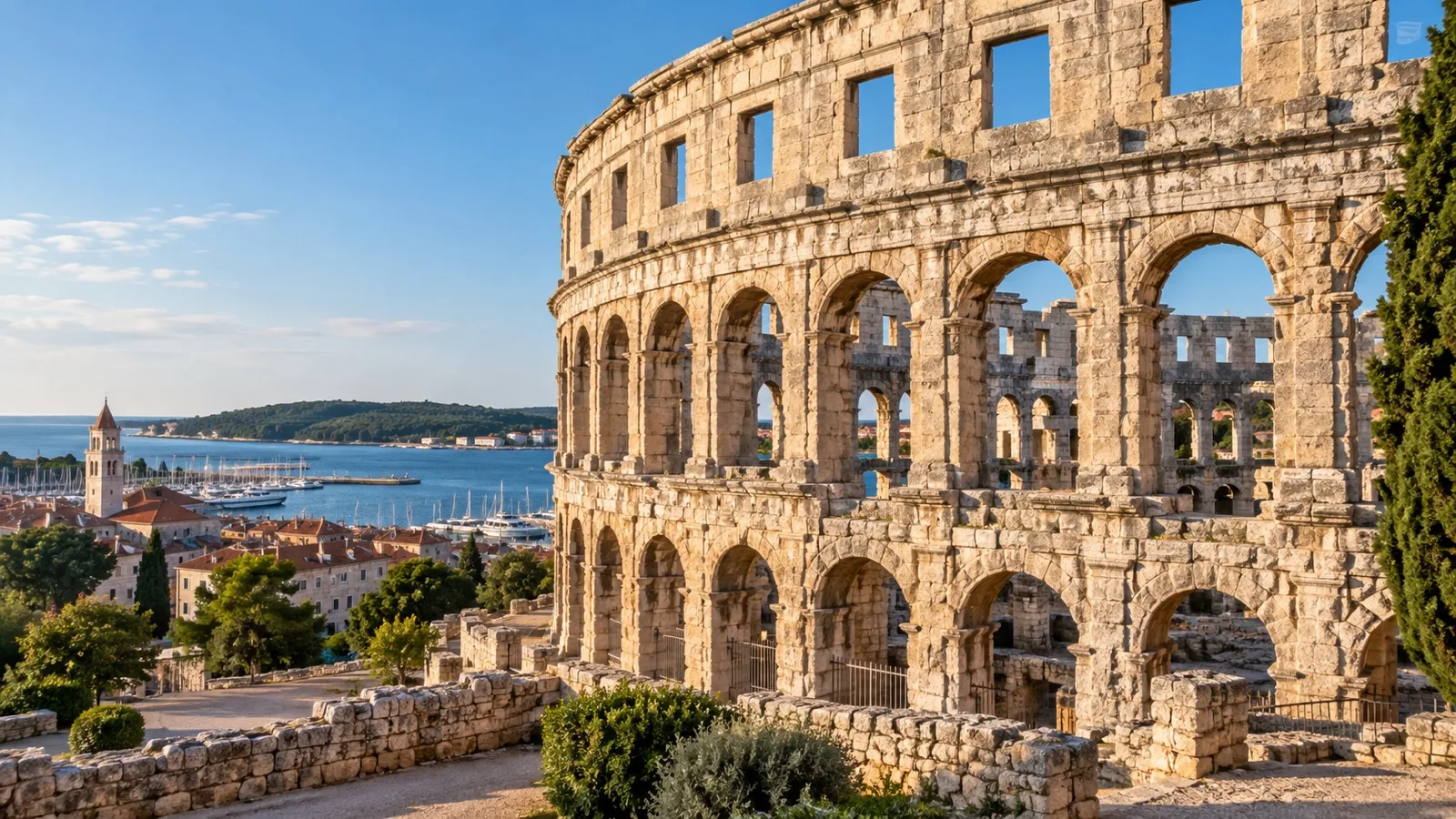
The structure’s full outer wall makes the first view memorable even before you enter. Inside, the seating, arena floor, arches, towers, and subterranean spaces help explain both Roman spectacle and the engineering that supported it.
Opening hours, admissions, and event access can change, especially when the Arena hosts concerts or festivals. Check the museum’s official visitor information for your date and enter early if seeing the interior is a priority.
Stone surfaces, stairs, heat, and crowd movement matter more than the short distance suggests. Ask the ticket office about the current accessible route and which levels can be reached without steps.
Walk through Roman Pula in a logical order
Pula works best as a connected story rather than a race between isolated monuments. From the Arena, you can move toward the Twin Gates and remaining city walls, cross the old center, pass the Arch of the Sergii, and finish at the Forum and Temple of Augustus.
Twin Gates and the old walls
The Twin Gates mark one of the surviving entrances associated with the ancient city. They provide a useful transition from the amphitheater toward Pula’s archaeological museum area and central streets.
Nearby remains can be subtle compared with the Arena. Slow down enough to notice fragments of walls, gates, street alignment, and later buildings layered over the Roman plan.
Arch of the Sergii
The Arch of the Sergii stands at the edge of one of Pula’s liveliest pedestrian areas. It was erected in the late first century before the common era and once faced a city gate, which helps explain why one side carries the richer decoration.
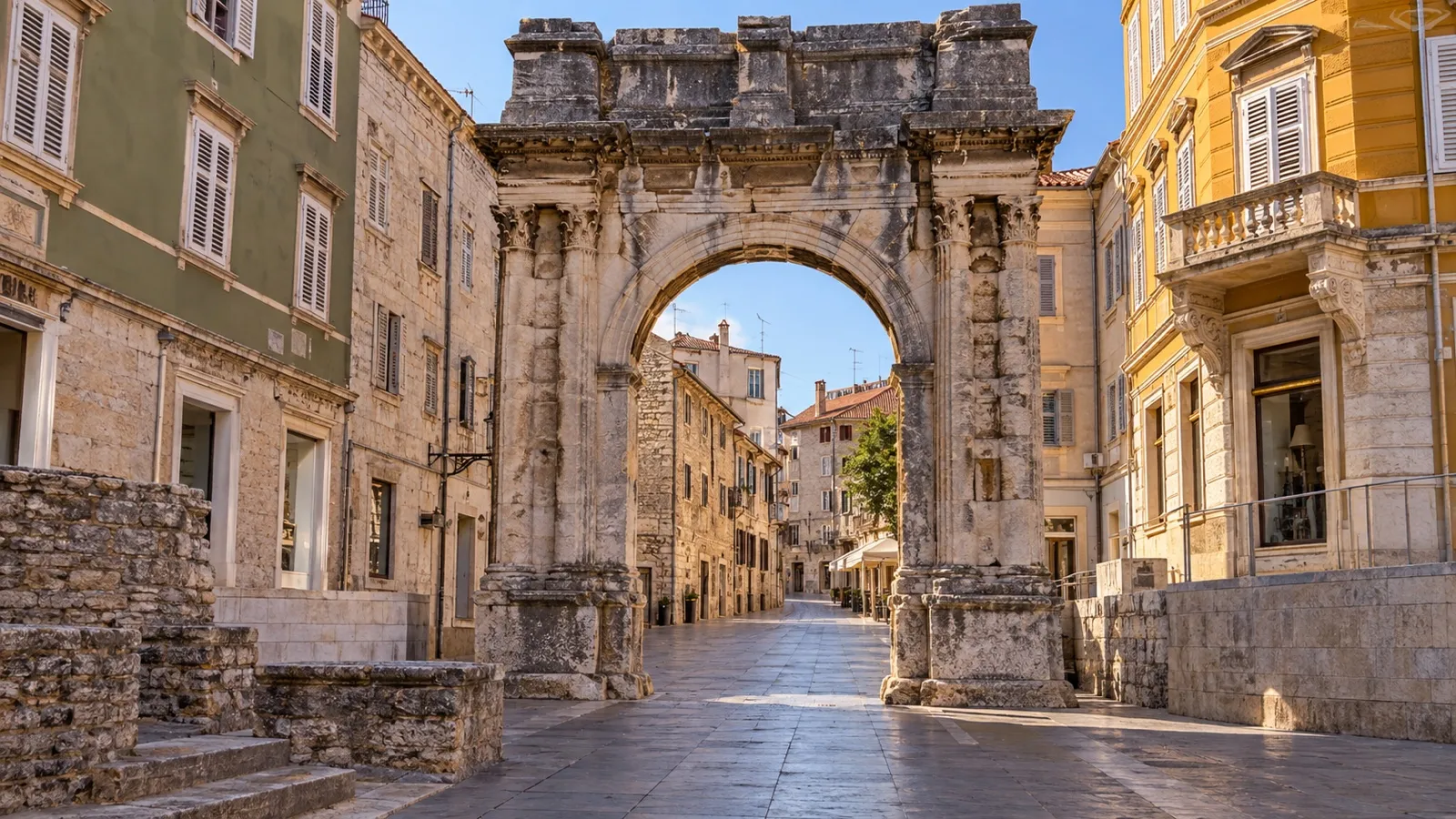
The arch is an outdoor monument, so you can see it even when formal attractions are closed. Give residents room to move through the space and watch for café furniture, bicycles, and delivery traffic while looking upward.
Forum and Temple of Augustus
The Forum remains a civic gathering place surrounded by layers of Roman, medieval, Venetian, Habsburg, Italian, Yugoslav, and modern Pula. The Temple of Augustus anchors the square beside the Communal Palace.
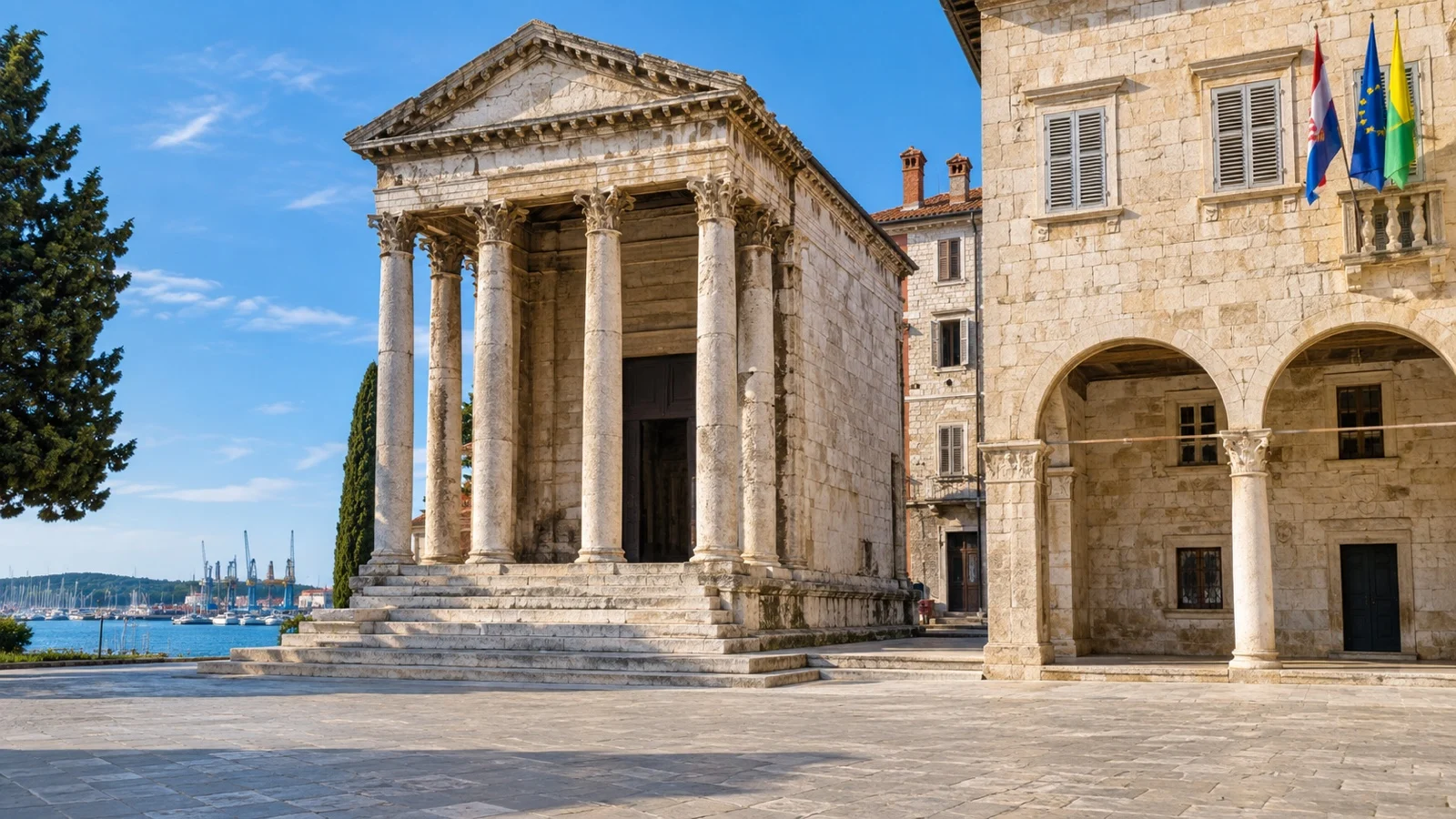
The Archaeological Museum of Istria operates the temple as an exhibition space, and the interior schedule may differ from simply viewing the façade. Verify current hours if the sculpture collection matters to you.
This is the right place to pause for coffee or lunch rather than saving every break for the last hour. A measured city loop leaves room for the details that distinguish Pula from a generic Mediterranean old town.
Kaštel adds a second high point
Pula’s hilltop fortress, commonly called Kaštel, offers a broad look across the city’s roofs and harbor. It also houses the Historical and Maritime Museum of Istria, making it a useful choice for travelers who want the naval and Habsburg story alongside the Roman one.
The ascent involves slopes and can feel demanding in summer heat. Check the museum’s current access, opening day, and lift or step arrangements before relying on it as an accessible viewpoint.
If time is limited, choose either a full Arena visit or the hilltop museum rather than rushing both. You can still see the Arena exterior while giving one interior the attention it deserves.
Brijuni begins with a transfer to Fažana
Brijuni National Park is not reached by walking onto a boat beside Pula Arena. The park’s regular visitor boats depart from Fažana, so a successful independent plan needs a road transfer, check-in time, the official boat schedule, the island program, and a protected return to the ship.
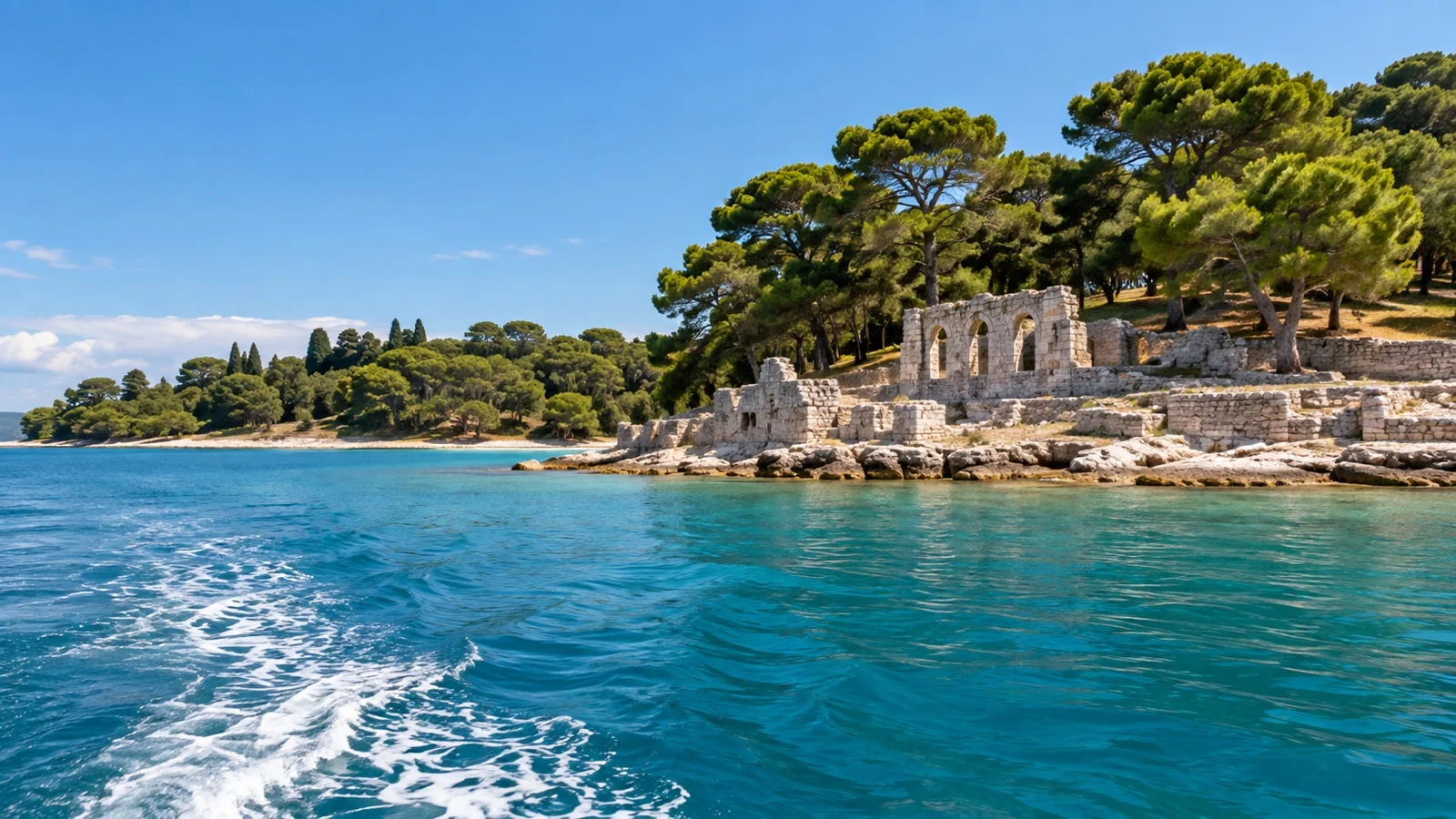
Buy only through the national park’s official channels or an authorized excursion. The park publishes current working hours, boat schedules, tickets, codes of conduct, and details for excursions to Veliki Brijun and other programs.
The classic Veliki Brijun excursion combines the short crossing with an organized island experience that can include a tourist train, natural areas, archaeological remains, and the safari park. Exact inclusions and languages vary by departure, so read the product description for your date.
The islands contain Roman and Byzantine sites, dinosaur footprints, Mediterranean landscapes, museum collections, and 20th-century political history. Treat Brijuni as a protected cultural landscape rather than a quick wildlife attraction.
Why independent timing can fail
A delayed road transfer can make you miss the outbound park boat, while a late island return can compress the drive back to Pula. The sailing you need is not simply the last public boat of the day, but the one that returns you before the cruise line’s deadline.
Fažana itself is pleasant, yet adding a long waterfront meal after Brijuni spends the safety margin twice. Decide before departure whether the priority is the national park or the town, and turn back early when the schedule slips.
Accessibility on Brijuni
Ask the park about boarding steps, gangways, the tourist train, accessible restrooms, and the surfaces at each stop. An island tour can reduce walking without guaranteeing that every archaeological site or vehicle is step-free.
Passengers bringing a wheelchair or scooter should confirm dimensions and assistance directly with both the road operator and the park. Do not assume a cruise excursion label guarantees compatibility with your specific device.
Rovinj is a separate destination
Rovinj’s old town, waterfront, and hilltop church create one of Istria’s most recognizable scenes. It is a worthwhile excursion, but it belongs in the plan as the day’s main destination rather than a bonus after several hours in Pula.
Road time varies with traffic, season, and construction. A taxi or organized tour should use a fixed turnaround time based on the ship’s all-aboard, not on an optimistic one-way estimate.
The old core has polished stone, slopes, narrow lanes, and steps. Travelers with limited mobility should choose a specific drop-off point and a flatter waterfront route rather than assuming the full climb to Saint Euphemia is easy.
Rovinj rewards unstructured wandering, which is also why it can consume more time than expected. Set an alarm for the return, save the driver’s details offline, and do not wait until the last moment to look for transportation.
Pula’s beaches need a transport plan
The best-known swimming areas sit south of the old center around Stoja, Lungomare, Verudela, and nearby coves. They are not a natural extension of the Roman walking loop, so use a taxi or a verified Pulapromet route.
Pula Tourism highlights locations such as Valsaline, Valovine, Ambrela, Gortan Cove, Verudela, and the Lungomare. Beach character varies, with pebbles, rock platforms, concrete access, ladders, shade, and facilities changing from place to place.
Clear water does not remove the need for water shoes, sun protection, and attention to boat traffic or local warnings. Never dive from an unfamiliar rock or swim beyond marked areas during a short port call.
A beach day needs a dry return plan, time to change, and a reliable ride. Salt water and wet footwear can make a long tender queue or historic-city walk much less comfortable than expected.
Use Pulapromet for current bus information
Pulapromet operates public transportation across Pula and its suburbs. Its official site publishes lines, timetables, and ticket information, while the Mobility Plus app includes journey planning and real-time bus positions.
Single QR tickets can be purchased through the operator’s online shop and at named kiosks, but validation rules and fare products can change. Check the current official instructions before boarding rather than relying on an older forum post.
For a cruise call, the important details are the stop location in both directions, Sunday or seasonal frequency, and the backup taxi plan. A route number without a live timetable is not a complete return strategy.
Accessibility across the city
Central Pula is compact, but ancient paving, curbs, slopes, heat, and monument steps can add difficulty. Build the route around the surfaces and entrances that work for you, not around the maximum number of famous stops.
Ask the cruise line about the gangway, distance to the port exit, shuttle accessibility, and tender policy. Tender transfers can depend on sea state, chair type, crew assistance limits, and safe step transfer.
The Arena, Temple of Augustus, museums, beaches, park boats, and tour coaches each require separate access checks. Get specific answers about ramps, lifts, restrooms, seating, and mobility-device storage before purchasing a nonrefundable excursion.
Heat, storms, and wind change the day
Pula can be intensely hot and bright in summer, especially inside pale stone monuments and across open squares. Carry water, a hat, sunscreen, and breathable clothing while keeping shoulders or knees coverable for religious sites.
Thunderstorms and strong wind can affect tenders, Brijuni boats, beaches, and outdoor events. Check Croatia’s official meteorological service and the ship’s operational message on the morning of arrival.
In bad weather, keep the day central with the Arena if open, an archaeological or historical museum, cafés, and a shorter old-town loop. Do not force a marine excursion after the official operator changes or cancels it.
Food and Istrian identity
Pula is a good place to taste Istrian olive oil, seafood, pasta, truffles, local produce, and regional wines, but quality matters more than trying every signature ingredient. Choose a restaurant that fits the route and tell staff about allergies clearly.
Market stalls and specialty shops can be useful for packaged gifts. Check ship and customs restrictions before buying meat, fresh produce, plants, or unsealed foods for later travel.
Italian influence is visible in local food and language, but Pula is not simply a small Italian city across the Adriatic. Its Roman, Venetian, Habsburg, naval, Croatian, and Yugoslav histories overlap in ways worth understanding on their own terms.
Documents, money, and mobile service
Croatia is in the Schengen Area and uses the euro, but cruise document requirements depend on nationality and the full sailing itinerary. Follow your cruise line and official government or European Union sources for any border system, visa, passport, or identification requirement.
Cards are widely accepted, though a modest backup payment method helps with small vendors or network failures. Use bank-linked ATMs with clearly displayed terms and decline unnecessary currency conversion when your card issuer offers a better rate.
Download the port pin, tickets, maps, and all-aboard time before leaving the ship. English and Italian are common in visitor settings, but saving Croatian place names helps a driver or bus passenger confirm where you are going.
Return timing for each kind of day
A central Roman Pula loop needs the smallest buffer, but you still have to reach the correct port entrance and possibly walk a long quay. Return earlier than required and never use the scheduled sailing time as your target.
Brijuni needs the largest chain of protected connections because you must combine an island boat with road transport between Fažana and Pula. Choose a return boat that leaves room for a delayed transfer and port controls.
Rovinj needs a firm road turnaround and a known driver or tour operator. Beach plans need time to find the bus or taxi, dry off, and cross the port without rushing.
Three Pula plans that make sense
The Roman city day
Visit the Arena, walk through the ancient gates and central streets, continue to the Arch of the Sergii, and finish at the Forum and Temple of Augustus. Add lunch or one museum only if the schedule remains comfortable.
The Brijuni day
Use a ship excursion or reserve official park tickets and reliable transport to Fažana around a conservative boat schedule. Make Brijuni the main event and save only a short Arena exterior stop for the return.
The Rovinj day
Travel directly to Rovinj with a firm return time, choose a manageable old-town route, and come back to Pula early. See the Arena exterior near the port if there is genuine time left.
Common Pula cruise questions
Can I walk to the Arena?
Often yes from a central passenger landing, and it is one of Pula’s most convenient major sights. The exact walk depends on your assigned berth, authorized exit, or tender landing.
Does every ship dock?
No, Pula can receive ships at berth or by anchorage and tender. Use the daily program for your sailing’s final arrangement.
Can I visit Brijuni on my own?
Yes when the Fažana transfer and official park boat schedule fit with a generous margin. A ship excursion reduces the risk created by combining road and boat connections.
Can I combine Brijuni and Rovinj?
I would not recommend it on a normal cruise call because they require different directions and transport chains. Choose one and experience it properly.
Is Pula accessible?
A tailored central route can work, but ancient surfaces and individual monument entrances vary. Confirm the gangway or tender, museum access, and the exact drop-off point before committing.
What if the Arena is closed for an event?
The exterior remains impressive, and the Roman route still includes gates, the Arch of the Sergii, Forum, and Temple of Augustus. Check the Archaeological Museum’s current notices and choose another managed site for an interior visit.
My bottom line for Pula
Pula is easiest to enjoy when you begin with its Roman city and add complexity only for a clear priority. The Arena, ancient gates, Forum, temple, market streets, and waterfront can fill a satisfying day without a coach.
Choose Brijuni for a protected island landscape or Rovinj for a separate historic coastal town, then build the return around the real transport chain. Verify berth or tender, port exit, tickets, weather, accessibility, boat or bus schedules, and the all-aboard time before leaving.
Continue planning with our Croatia cruise ports guide and our Rijeka cruise port guide. Our excursion versus DIY guide helps compare independent transport risk.
How this guide was researched: This guide was independently checked on September 11, 2026, against the Pula Port Authority, Pula Tourism Office, Archaeological Museum of Istria, Brijuni National Park, Pulapromet, and current official cruise-line instructions. Reconfirm the berth or tender, documents, transport, accessibility, weather, attraction access, and final return before sailing because live conditions can change.