Gythion Cruise Port: Tender, Kranai, Mystras and Mani
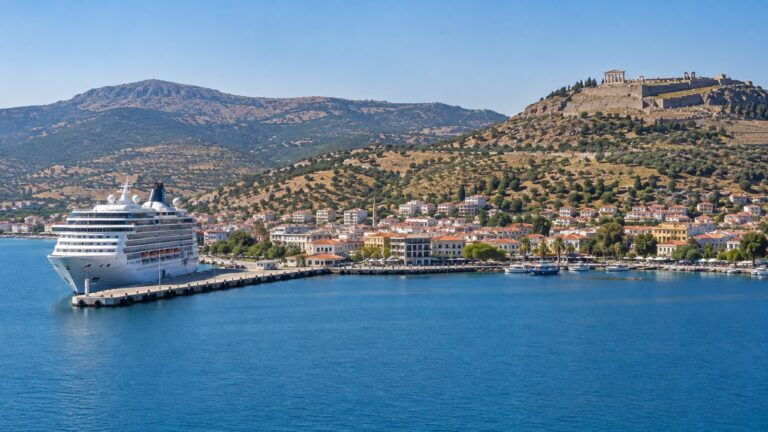
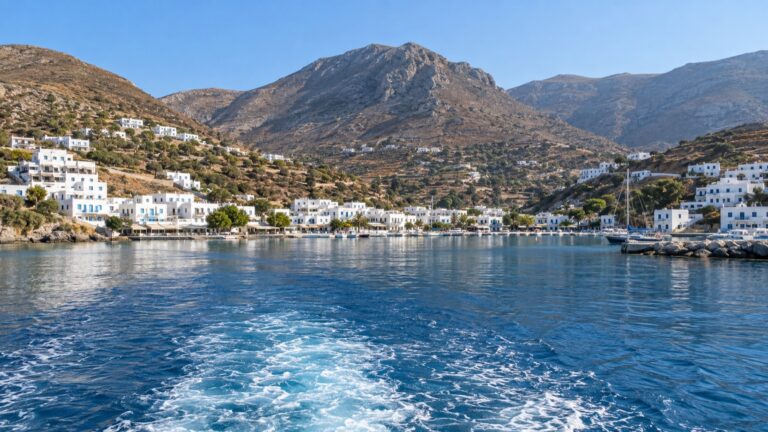
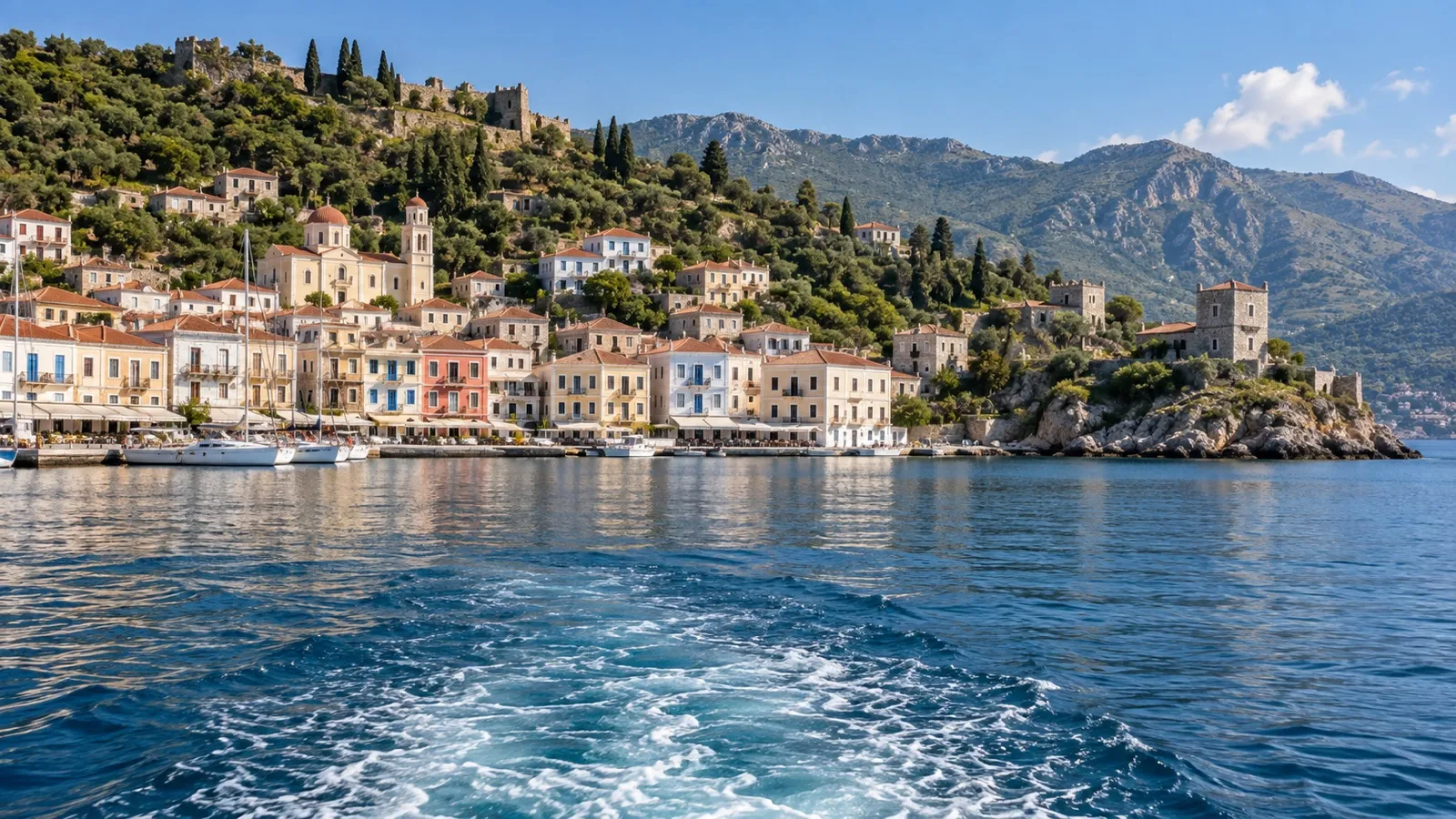
Gythion is the kind of Greek port that can make you forget the famous destinations beyond it. Pastel waterfront buildings, fishing boats, the causeway to Kranai, and the mountains of Mani create a complete sense of place before any excursion vehicle starts.
Mystras and the Diros Caves are genuine prizes, but they pull the day in opposite directions. Choose the port town, Byzantine ruins, or Mani landscape as the main story and the whole call becomes easier.
Tender first, but not tender certain
Many cruise calls anchor off Gythion and bring passengers ashore by tender. A berth may be possible for some vessels or operating conditions, so the ship’s daily program is the authority for your exact arrival.
If tenders are used, note the ticket system, landing point, final boat, and any change announced during the day. Wind and harbor conditions can affect the sequence even when the sky looks bright.
If your ship comes alongside, identify the secure pedestrian route and gangway location before exploring. A different arrival method changes the schedule, but it does not change the need for a personal return buffer.
Quick facts
- Port style: Tender arrival is common, but a berth may be used when ship and port conditions allow
- Shore base: Gythion waterfront, with the exact landing or berth confirmed onboard
- Currency: Euro
- Language: Greek, with English commonly used in visitor settings
- Best easy day: Harbor promenade, Kranai, lighthouse exterior, town lunch, and a nearby beach
- Best historic excursion: Mystras with a driver or ship tour and time for steep walking
- Best Mani outing: One focused route to Areopoli, Limeni, or Diros rather than an oversized circuit
- Main risks: Tender delays, mountain-road timing, heat, cave operations, and late return
The town works without a tour bus
Gythion’s waterfront offers a relaxed independent day with cafes, neoclassical facades, working boats, local shops, and views across the Laconian Gulf. It is compact enough to explore without turning transportation into the main activity.
Begin with the promenade and let the day expand toward Kranai or an inland street according to weather and mobility. The port’s charm comes from daily life, so leave space for fishermen, deliveries, and local traffic.
Waterfront walk
The waterfront is the natural orientation route because it keeps the sea, tender landing, and town together. Save the landing as a map pin, then verify that the pin matches the actual return point.
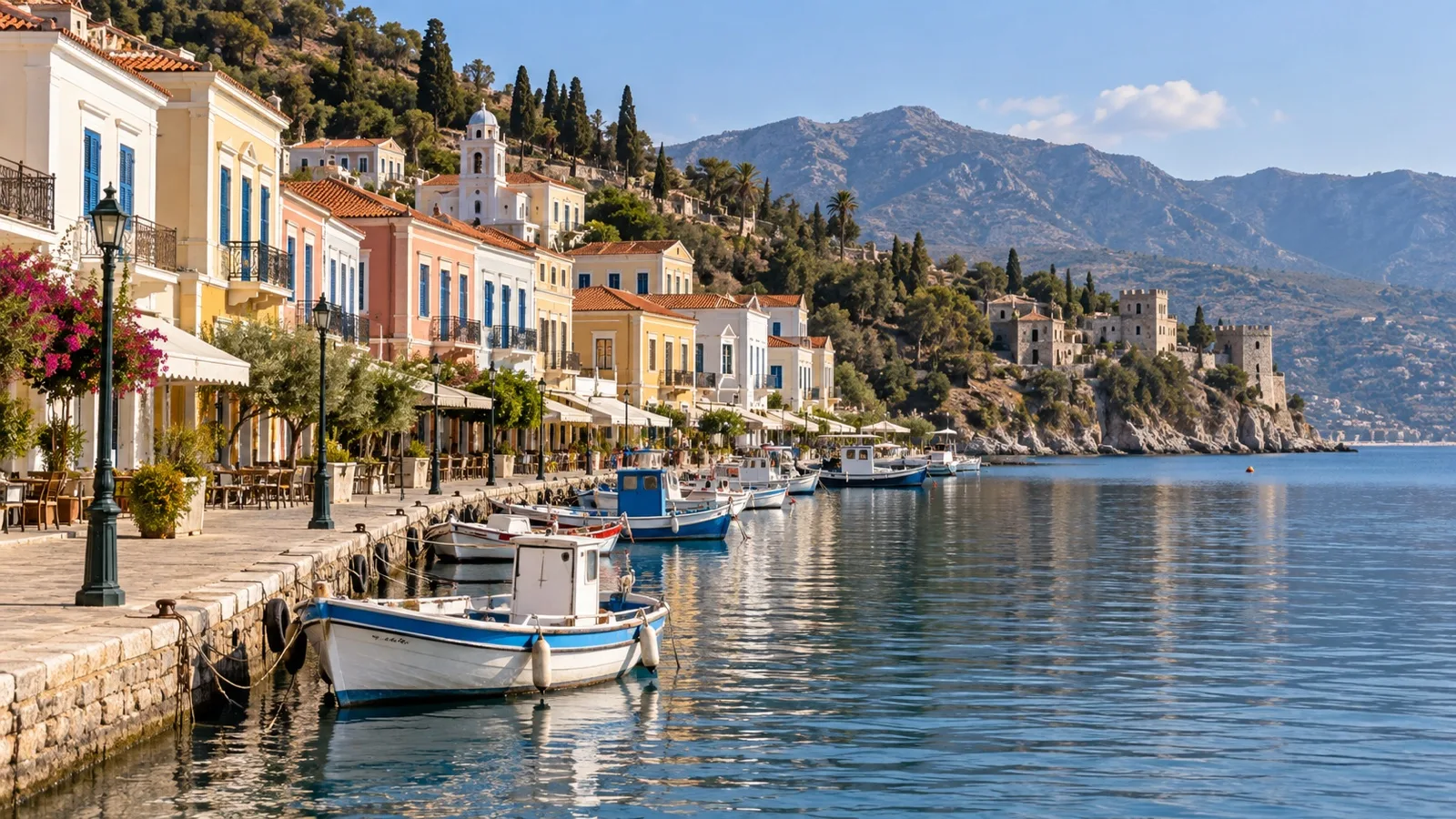
Cafe tables and restaurant terraces can narrow the path at busy times. Walk patiently, cross carefully, and do not assume every vehicle will yield because the street feels leisurely.
Town streets and architecture
Gythion’s nineteenth-century and later buildings reflect its development as a regional port. Look for balconies, rooflines, shutters, and the way streets climb away from the harbor rather than chasing a single famous monument.
Uphill lanes add views but also heat and effort. Turn back before the climb steals the energy you wanted for Kranai or lunch.
Local museums and churches
Small museums, religious sites, and cultural spaces may have limited or seasonal opening. Check municipal or official visitor information near your call and treat any interior stop as confirmed only when the door is open.
Active churches require respectful clothing and quiet behavior. A short visit can add context, but a service or local event takes priority over sightseeing.
Kranai is the natural first extension
Kranai lies just off the southern waterfront and is connected by a causeway, making it the easiest landscape and heritage addition to a town day. The walk changes the perspective from looking at the sea to looking back at Gythion.
Greek tradition connects Kranai with Paris and Helen before their journey to Troy, while later history appears in the Tzannetakis Tower and lighthouse. Treat mythology as story and memory rather than a modern travel fact.
Tzannetakis Tower
The stone tower is associated with Mani’s fortified domestic architecture and may house cultural interpretation when open. Verify current museum access because restoration, staffing, or seasonal schedules can change.
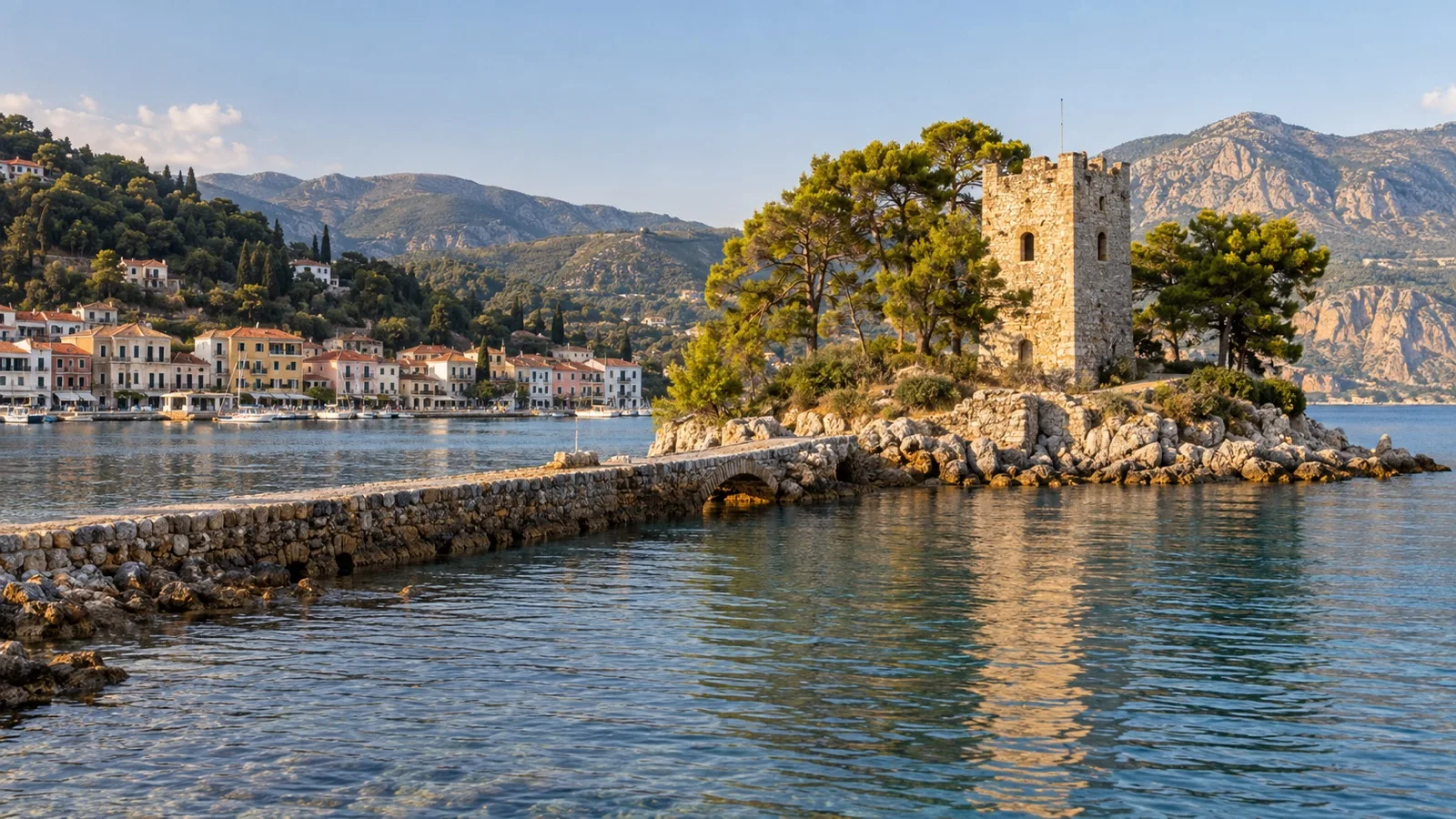
Even if the interior is closed, the exterior and island setting remain worthwhile. Do not cross barriers or treat a locked historic building as permission to improvise access.
Kranai lighthouse
The lighthouse is a recognizable landmark at the island’s edge and creates a fine turnaround for the walk. Access to the structure itself may be limited, so plan for an exterior visit unless official information says otherwise.
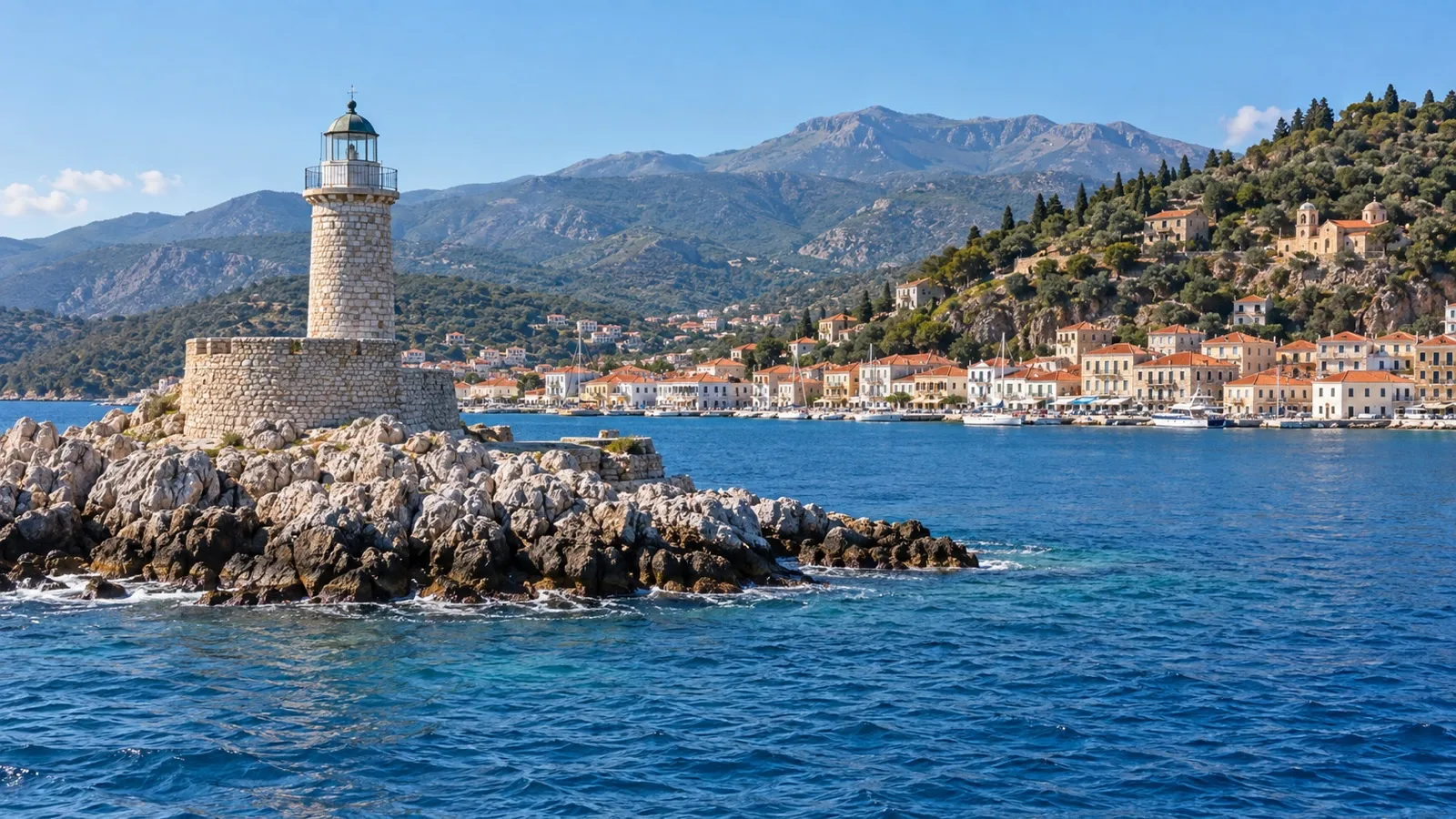
Rock, wind, and salt spray can make footing less forgiving than the town promenade. Keep children close to the path and avoid exposed edges for photographs.
How long to allow
Kranai can be a short walk or a slow hour depending on heat, photography, and open sites. The causeway makes it easy to pair with lunch, but do not underestimate the return if your tender deadline is close.
Carry water and sun protection because shade can be patchy. A morning visit is usually more comfortable than a hot midafternoon dash.
Lunch can explain Mani
Gythion is an excellent place to taste the region without driving deep into it. Olive oil, local cheeses, vegetables, seafood, and meat dishes can bring Mani and Laconia to the table while the ship remains nearby.
Ask what is local and available rather than ordering from an imagined checklist. Menus, catch, and opening hours change, while a sincere recommendation from the kitchen is often the better choice.
Build a restaurant meal into the return plan and allow for unhurried Greek service. If time is short, choose coffee, a bakery, or a quick plate rather than asking a busy kitchen to race the tender clock.
Mystras is magnificent and time hungry
Mystras is a UNESCO World Heritage archaeological site built across a steep hillside below a fortress. UNESCO describes a late Byzantine city of fortifications, palaces, churches, monasteries, houses, streets, and squares.
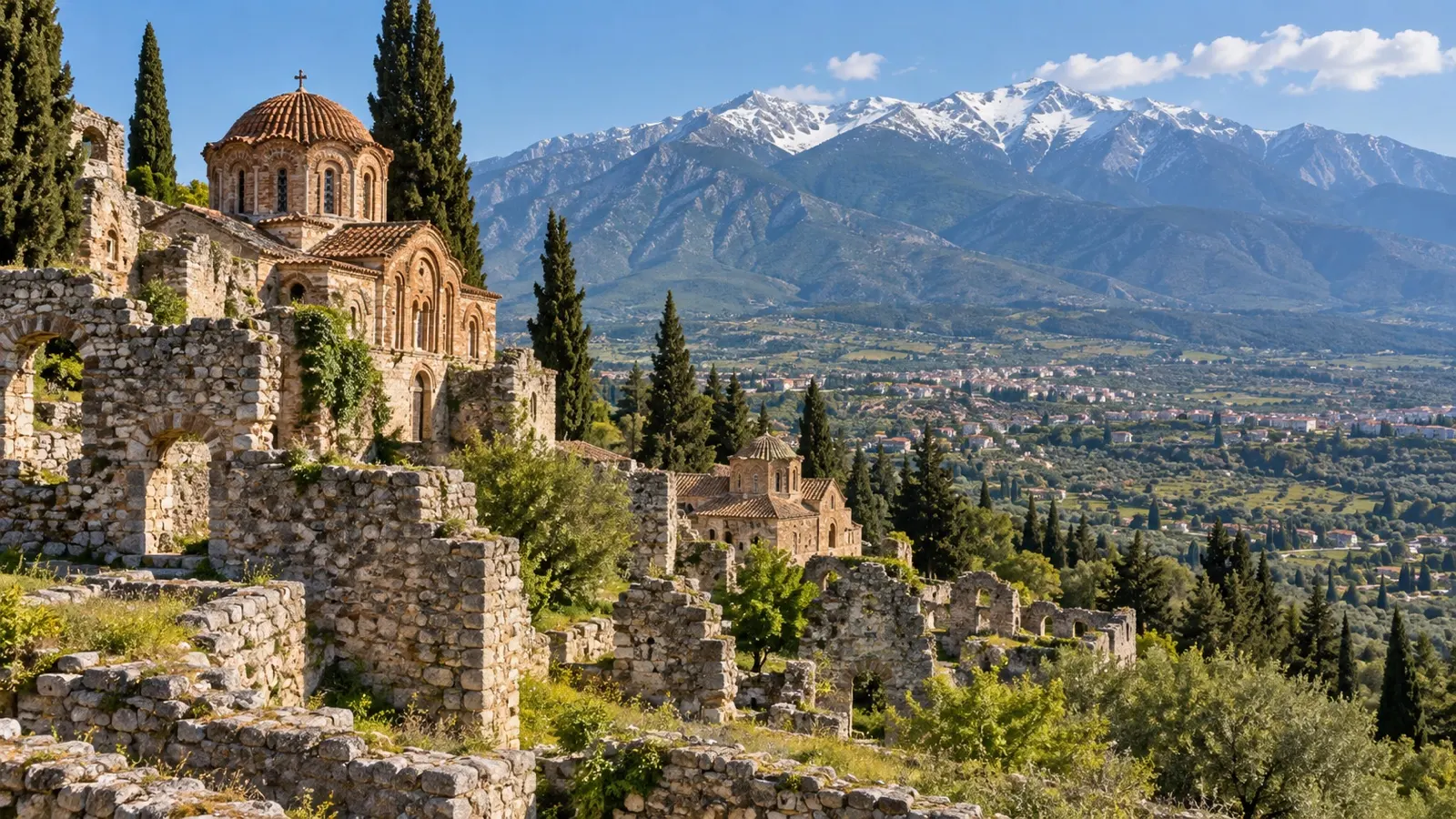
This is not a single level monument where a coach stops for fifteen minutes. The landscape, gradients, heat, stone surfaces, and distance from Gythion require time and physical judgment.
Getting there
Use a ship excursion or a cruise-aware private driver who understands the port return. Confirm travel time on the day, the entrance you will use, and where the vehicle will meet you after the visit.
Mystras has more than one access area, and a well-planned vehicle route can reduce unnecessary climbing. Discuss mobility before departure rather than after arriving at the least convenient gate.
What to prioritize
The churches and frescoes are central to Mystras’s importance, while the fortress and broad hillside views reward stronger walkers. Choose a realistic section instead of treating the entire site as compulsory.
Official opening, ticketing, conservation closures, and entry arrangements can change. Check the Hellenic heritage ticket platform and Ministry of Culture guidance for your date.
Heat and surfaces
Exposed climbing can feel severe in summer, and historic stone may be slick after rain. Wear secure shoes, carry water, use sun protection, and turn around before fatigue compromises the descent.
Travelers with reduced mobility should ask about vehicle access and the most manageable monuments. The UNESCO value of the site does not mean every route is barrier free.
Can Mystras combine with Sparta?
Some organized tours add modern Sparta or the archaeological museum depending on hours. The combination works only if transport and admissions are coordinated without weakening the Gythion return.
Independent travelers should make the second stop optional. If Mystras takes longer than expected, head back to the coast and enjoy Gythion instead.
Diros adds boats inside the mountain
The Diros cave experience is one of Mani’s most distinctive attractions, using small boats through an underground landscape when conditions and operations allow. It also adds a long road journey from Gythion, timed entry, cave procedures, and another controlled boarding process.
Use an official or cruise-specific plan and verify current opening, ticketing, route length, and safety rules. Cave access can change because of water, maintenance, weather, or conservation needs.
What the visit involves
Expect boat boarding, close spaces, low light, cool cave air, and instructions about body position or touching formations. The exact visitor route may change, so work from the operator’s current briefing.
Carry only what you can secure and keep electronics protected. Follow the boat operator without leaning, standing, or reaching toward the cave walls.
Who should reconsider
Travelers uncomfortable with confined spaces, small boats, low ceilings, or limited independent movement should ask detailed questions before booking. Mobility and medical concerns must be discussed with the operator, not assumed from a photograph.
Diros is also a poor choice when the call is short or tendering begins late. The road and cave schedule leave fewer ways to recover from delay than a town day.
Mani rewards one village, not six
The Mani Peninsula is a landscape of stone villages, dry mountains, coves, tower houses, and powerful local identity. A cruise call offers a glimpse, not a complete circuit.
Areopoli
Areopoli makes a strong main stop for stone streets, squares, cafes, and regional atmosphere. Use a driver, confirm the return, and allow time to walk rather than viewing the village through a windshield.
Shops and small sites may keep varied hours. The town itself is the experience, so a closed interior does not ruin the visit.
Limeni
Limeni offers a compact coastal scene with clear water, stone buildings, and dining beside the bay. Parking and restaurant timing can become complicated in busy periods, so a local driver adds value.
A swim or long lunch should be planned deliberately. Do not add it casually after another slow stop when road time back to Gythion still matters.
Caves or villages, not both by default
A carefully organized long call may combine Diros with Areopoli or Limeni. The cave must remain the fixed element, while the village stop stays removable if entry or road timing shifts.
The most satisfying Mani day often contains one cave or one village, one good meal, and enough landscape to understand the region. More stops usually produce less attention.
Choose Mystras, Diros, or Mani
Mystras tells a Byzantine story on a demanding hillside. Diros offers an underground natural experience with small-boat logistics, while a Mani village route focuses on landscape, architecture, and food.
Choose according to interests, call length, weather, and mobility rather than fame. Trying to combine northbound Mystras with a deep southbound Mani route wastes the day on roads.
Four plans matched to real time
Three to four useful hours
Stay in Gythion, walk the harbor, continue to Kranai and the lighthouse exterior, then have an early meal. Keep the tender landing in sight for the final part of the day.
This is the best response to late clearance or uncertain weather. Nothing important depends on a distant road.
Five to six useful hours
Choose a focused Mystras excursion only if transport and opening are confirmed, or combine Gythion with one nearby beach or village. Do not attempt Diros unless a reputable operator demonstrates the timing works.
A town and beach day gives more flexibility than a major archaeological excursion. Build around what your group values rather than what seems most famous.
Seven or more useful hours
Mystras, Diros, or a focused Mani drive can fit with a cruise-aware operator and a generous return buffer. Let the chosen excursion own the middle of the day.
Use any spare time in Gythion only after returning safely. The waterfront is a gift precisely because it does not require another commitment.
Weather-changed day
If tendering is delayed or a cave cancels, switch to Gythion and Kranai without trying to rebuild the entire region. A leisurely lunch and harbor walk are a genuine destination, not a consolation prize.
Accessibility has a marine and land half
Tender transfer is the first question for wheelchair users and travelers with reduced mobility. Steps, vessel movement, narrow boarding points, and crew procedures can determine whether a passenger is permitted to transfer.
Ask the cruise line before sailing and the onboard team after conditions are known. Crew members make the safety decision, and it can change on the day.
Gythion’s waterfront is the most manageable part of the destination for many visitors, though curbs, traffic, uneven surfaces, and heat still matter. Kranai’s causeway and paths should be assessed locally before committing.
Mystras has steep, uneven archaeological terrain, while Diros involves small boats and controlled cave access. Request exact details about entrances, steps, restrooms, seating, vehicle drop-off, and assistance from each operator.
A private accessible vehicle can create a meaningful Mani overview without difficult interior sites. Confirm lift or ramp, wheelchair securement, storage, and the actual distance from each stop to the viewpoint.
Weather changes tenders and ruins
Summer sun and heat can make stone sites exhausting, while wind can disrupt tendering and small boats. Carry water, sun protection, a light layer, and shoes with dependable grip.
Spring and fall may bring cooler rain that changes roads and archaeological surfaces. A waterproof layer helps, but the ship and site operator decide whether marine or heritage access remains safe.
Do not mistake a calm town street for proof that the anchorage is calm. Continue monitoring ship announcements throughout the call.
Money, safety, and the road back
Greece uses the euro, and cards are common in established businesses. Cash remains useful for small purchases, but carry a backup rather than relying on one wallet or phone.
Greek immigration and Schengen procedures depend on nationality and the ship’s route. Follow the cruise line and official government instructions for passport, visa, and landing documents.
Roads through Mani can be winding, and seasonal traffic or a slow vehicle can alter timing. Use a licensed operator, wear the seat belt provided, and do not pressure a driver to speed because your plan was unrealistic.
Save the tender landing, ship contact, operator number, and all aboard time offline. A screenshot is faster than trying to restore a booking page with weak data.
Return timing
Start with the final tender or all aboard time, then move your personal deadline earlier. Add more margin for every road segment, ticketed site, boat, meal, and uncertain pickup.
For Gythion, be near the correct landing before the cutoff and account for the queue. For Mystras or Mani, schedule the vehicle to reach town well before the ship’s deadline, not at it.
If the outbound tender runs late, shorten or cancel the distant plan immediately. Borrowing from the return buffer is not how you recover time.
Carry your cruise card, required identification, ship contact details, and funds for alternate transport. Contact the operator or port agent early if a delay develops.
Frequently asked questions
Do cruise ships dock in Gythion?
Many calls use tenders, while some vessels or operating days may use a berth. The ship’s daily program provides the final arrangement.
Can I walk from the tender landing?
The Gythion waterfront and central town are walkable for many visitors from the usual landing area. Confirm the exact point and save it before exploring.
Is Kranai worth visiting?
Yes, because it combines an easy coastal walk, town views, mythology, historic structures, and the lighthouse exterior. It is the best natural extension of a local day.
Should I choose Mystras or Diros?
Choose Mystras for Byzantine history and demanding hillside ruins, or Diros for a cave and small-boat experience. Both require organized transport, so do not attempt both on an ordinary call.
Can I explore Mani independently?
A licensed taxi or private driver can create a good focused route when booked in advance. Limit the number of villages and agree on a firm return.
Is Gythion enough for a full call?
Yes, especially for travelers who enjoy harbor towns, food, a gentle walk, and Kranai. Staying local also gives you the strongest tender margin.
What if the cave or tender cancels?
Keep a Gythion and Kranai plan ready. Museums, cafes, the waterfront, and a nearby beach can create a satisfying day without another long-distance gamble.
Sources and update note
This guide was checked against the official Visit Greece destination guidance, the UNESCO World Heritage Centre entry for Mystras, the official Diros Caves site, the Hellenic Heritage ticket platform, and current ship operating guidance. Tender points, heritage hours, cave routes, weather decisions, tickets, and road conditions can change, so verify them for your call.
Gythion is most memorable when you let one landscape tell the story, whether that is the harbor and Kranai, the Byzantine hillside of Mystras, or the stone villages of Mani. Confirm the landing, choose the scale honestly, and protect the return so the day ends with the easy pleasure this port promises.