Trapani Cruise Port: Small Ships, Erice and Salt Pans
Trapani is the kind of Sicilian port that makes independent exploring feel wonderfully simple. The working harbor opens almost directly into a compact old town, while Erice, salt pans, and ancient Segesta wait just beyond the city.
Small and midsize ships suit this call best, which keeps the arrival more intimate than Palermo or Messina. Stay local for an easy day, or choose one larger outing and protect the return with plenty of time.
Quick Facts
- Port: Port of Trapani, managed within the Western Sicilian Sea port system.
- Arrival type: Ships generally berth alongside at the commercial harbor, but always follow the cruise line’s final instructions.
- Old town access: Central Trapani begins within a short walk of the passenger quays.
- Signature excursion: Erice, reached by road or by the cableway from its lower station outside the historic center.
- Nature option: The Trapani and Paceco salt pans south of the city.
- Ancient site: Segesta, an inland archaeological park requiring road transport.
- Currency: Euro.
- Language: Italian, with English common in many visitor businesses.
- Time zone: Central European Time in winter and Central European Summer Time during the seasonal clock change.
- Weather concern: Strong wind can affect the Erice cableway and fast ferry services.
Where cruise ships dock in Trapani
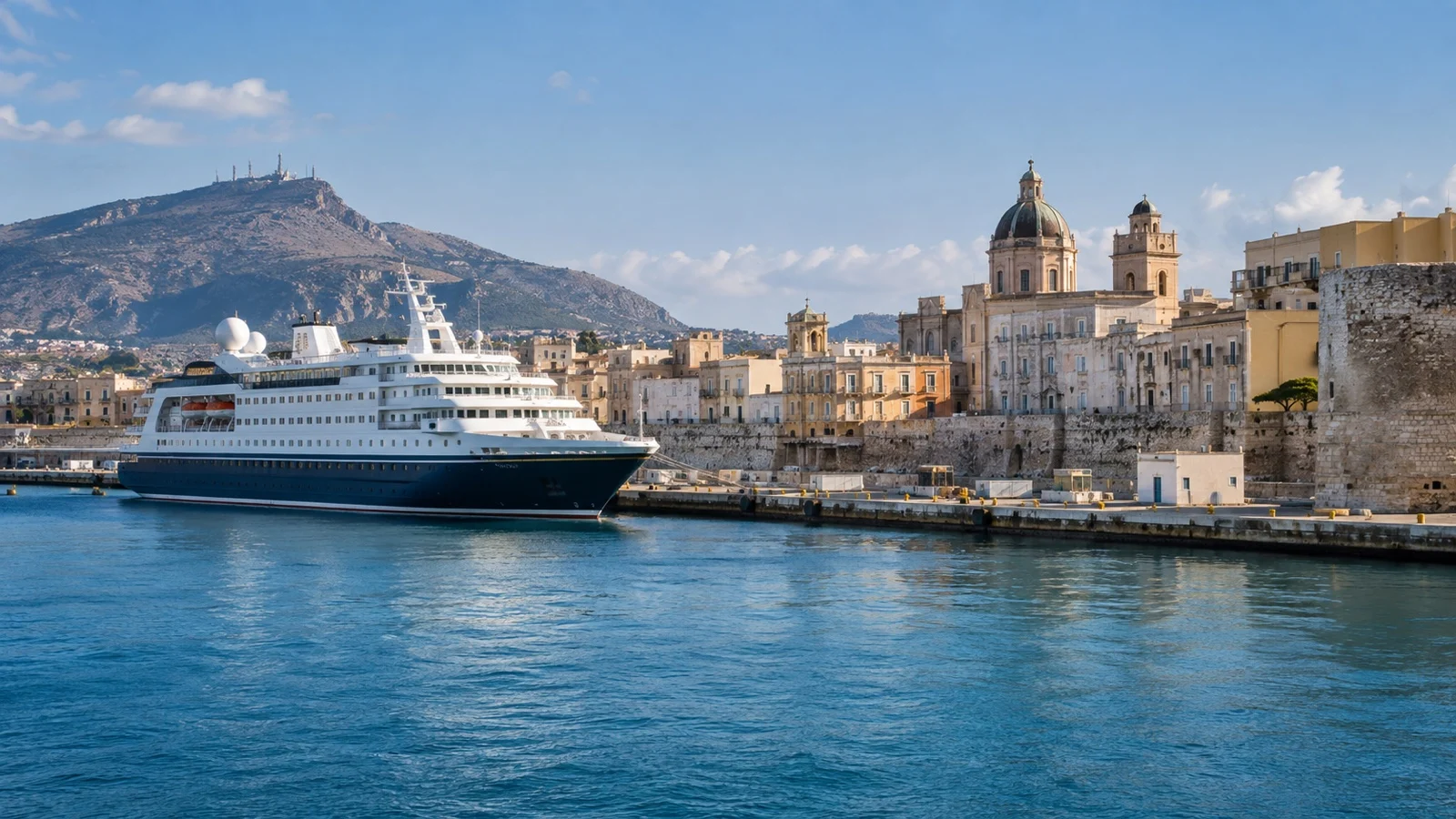
Cruise calls use the Port of Trapani, a commercial and ferry harbor managed by the Western Sicilian Sea Port System Authority. The old town occupies the narrow peninsula immediately west of the main port activity.
The exact gangway and exit can vary with ship size and daily operations. Follow the onboard map through the secure port area rather than assuming the route taken by ferry passengers is your route.
This is a working waterfront with hydrofoil gates, fishing activity, vehicle traffic, and commercial operations. The first few minutes are practical rather than beautiful, then the streets quickly become recognizably Sicilian.
Routine cruise calls are normally alongside, yet operational decisions always belong to the harbor and ship. Avoid treating any general guide’s claim about berthing or weather reliability as a guarantee for a specific arrival.
Walking into Trapani old town
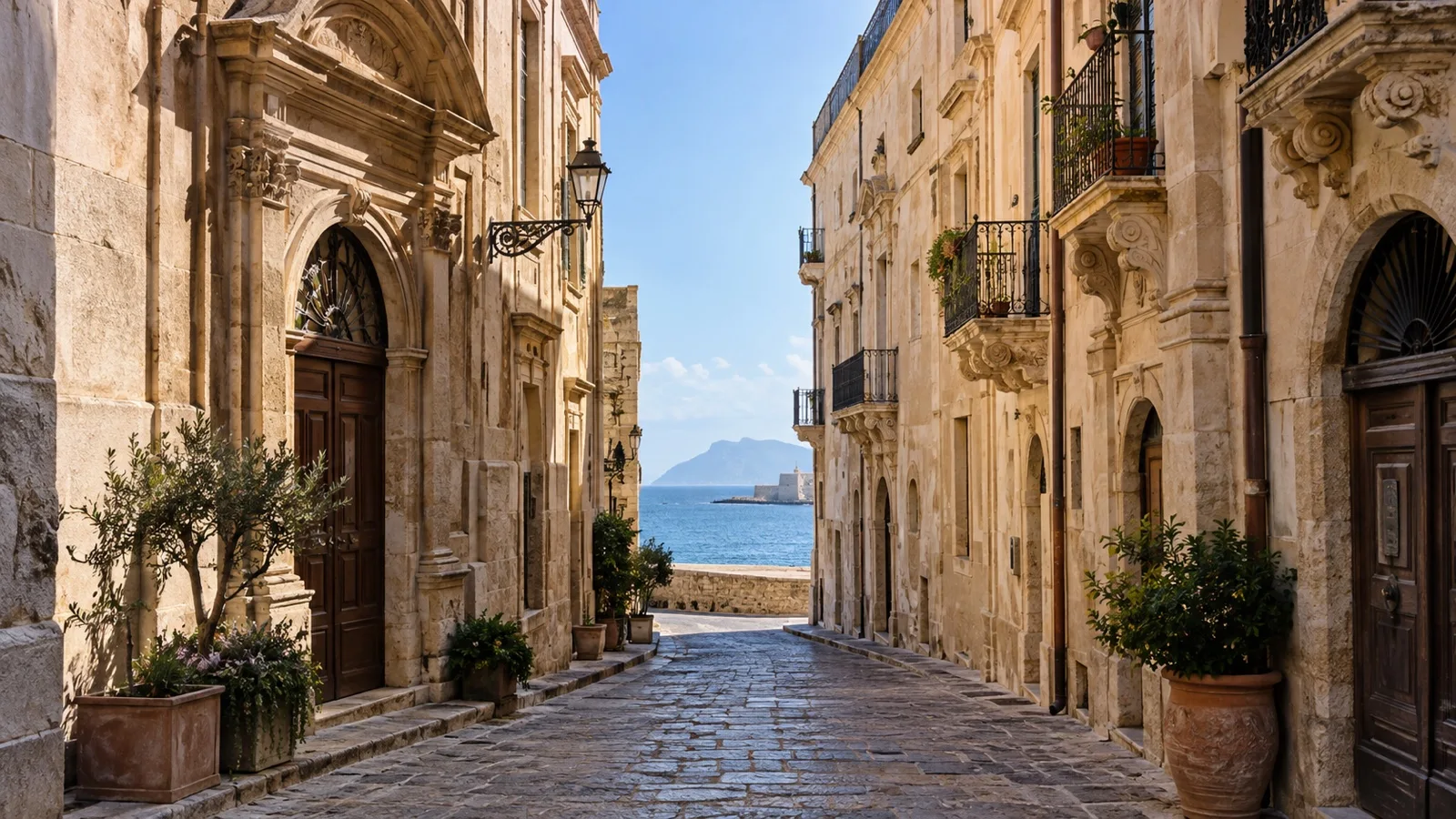
Trapani’s historic center is one of the easiest in Sicily to reach from a cruise berth. Once outside the controlled port zone, Corso Vittorio Emanuele, Via Torrearsa, and Via Garibaldi create a natural walking route along the peninsula.
The center is long and narrow, so navigation rarely becomes complicated. Sea views appear at both edges, and the harbor remains a useful reference point for the return.
Allow more time than the short distance suggests because churches, courtyards, cafes, and shop windows create constant detours. The pleasure of Trapani comes from the spaces between named attractions rather than one blockbuster monument.
No shuttle is usually needed for a town-only day, though travelers with limited mobility may prefer a taxi from the gangway area if permitted. Confirm the pickup point because vehicles cannot wait in every section of the secure port.
Erice by cableway
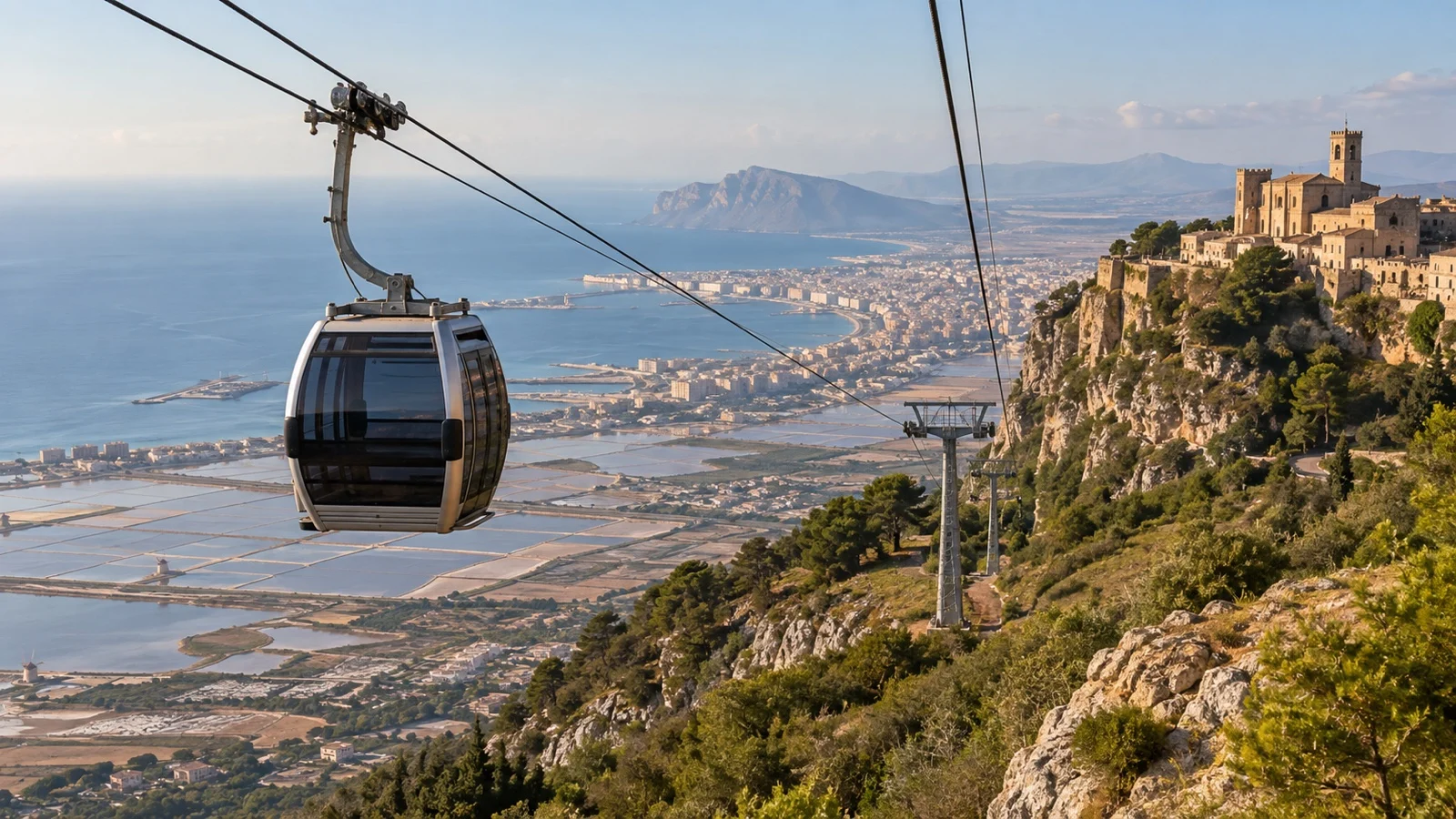
Erice crowns the mountain above Trapani, with stone lanes, churches, defensive walls, and broad views across western Sicily. On a clear day, the height turns the coast, salt pans, city, and Egadi Islands into one sweeping panorama.
The lower cableway station is outside Trapani’s old town, so reaching it requires a local bus, taxi, excursion vehicle, or another planned transfer. Do not confuse the short ride up the mountain with the total travel time from the ship.
The official Trapani to Erice cableway says the journey takes about ten minutes. Its eight-seat cabins climb from the lower station at roughly 40 meters above sea level to the upper station at 703 meters.
Wind, maintenance, seasonal operations, and special events can alter service. Check the operator’s live notice and timetable before leaving the port, then keep a road alternative in mind.
Erice can be noticeably cooler, windier, or cloudier than Trapani below. Carry a layer even when the quay is warm, and recognize that mist may erase the famous view without making the medieval lanes any less atmospheric.
What to see in Erice
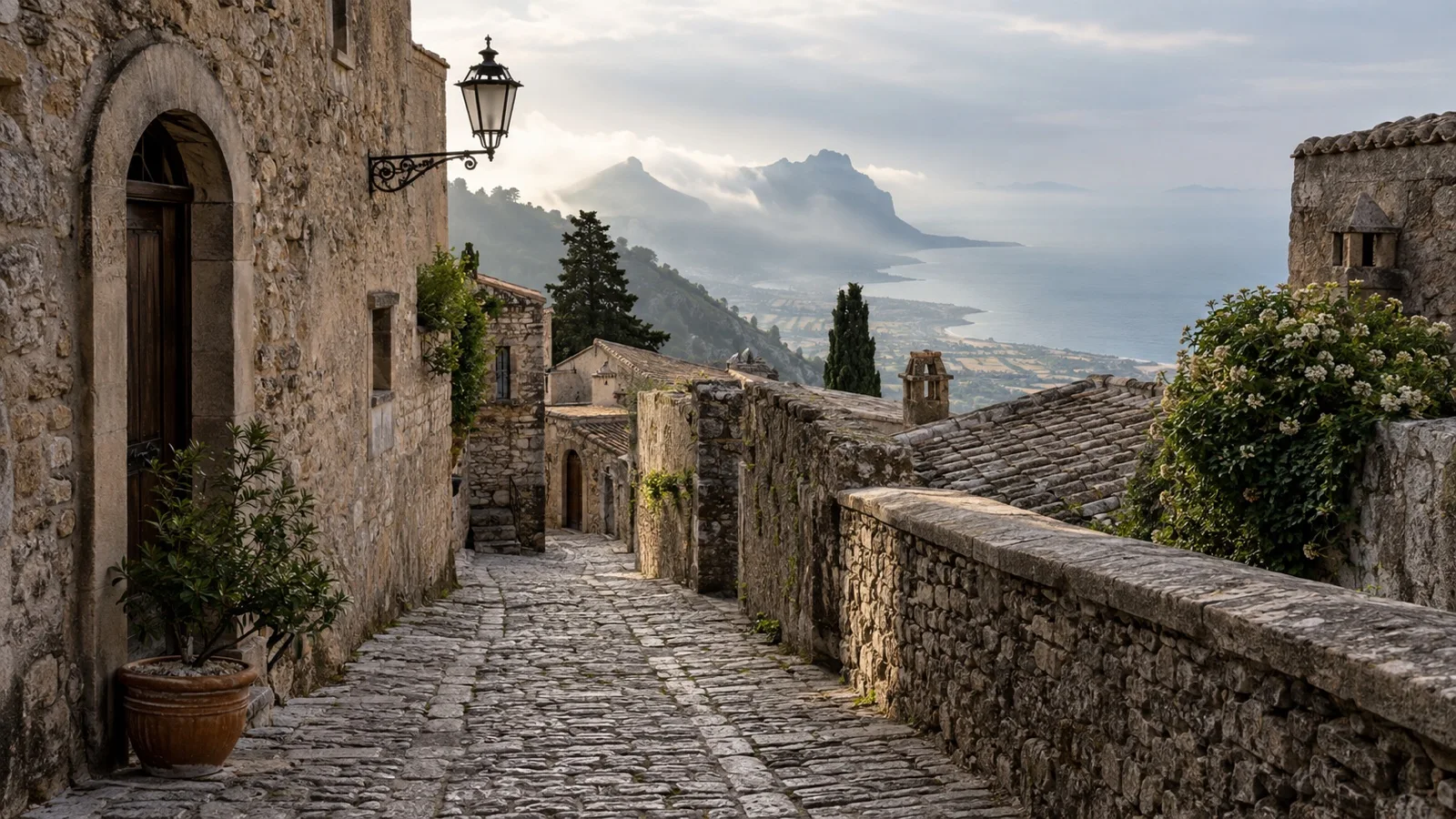
The town rewards wandering, but steep polished stones make a casual stroll more demanding than it looks. Comfortable shoes matter more here than a perfect sequence of landmarks.
The cathedral, known as the Mother Church, stands near Porta Trapani and makes a natural first stop. From there, lanes climb toward gardens, walls, and the castle area at the edge of the mountain.
Pastry shops are another Erice tradition, with almond sweets, genovesi pastries, and cassata among the familiar choices. A cafe stop is also a useful way to wait for cloud to lift or a busy cableway line to ease.
Set a firm downhill departure time before getting absorbed in the upper town. The cableway ride is short, but a queue, service pause, or traffic on the road can stretch the return.
A walking route through old Trapani
For a relaxed local day, begin near the port and walk west through the central streets toward the cathedral of Saint Lawrence. Baroque facades, balconies, and small squares appear without requiring a detailed itinerary.
Continue toward the western end of the peninsula for open sea and the Torre di Ligny area. The full route is level by Sicilian standards, though historic paving and curb transitions still require attention.
The fish market area and harbor edges reveal Trapani’s working identity, while the northern waterfront opens to beaches and sunset views. Cruise-day timing determines whether the evening light is available, but the sea breeze is present much earlier.
Church and museum hours often include closures that do not match a ship’s schedule. Enjoy the architecture from outside first, then treat any open door as an invitation rather than an entitlement.
The salt pans of Trapani and Paceco
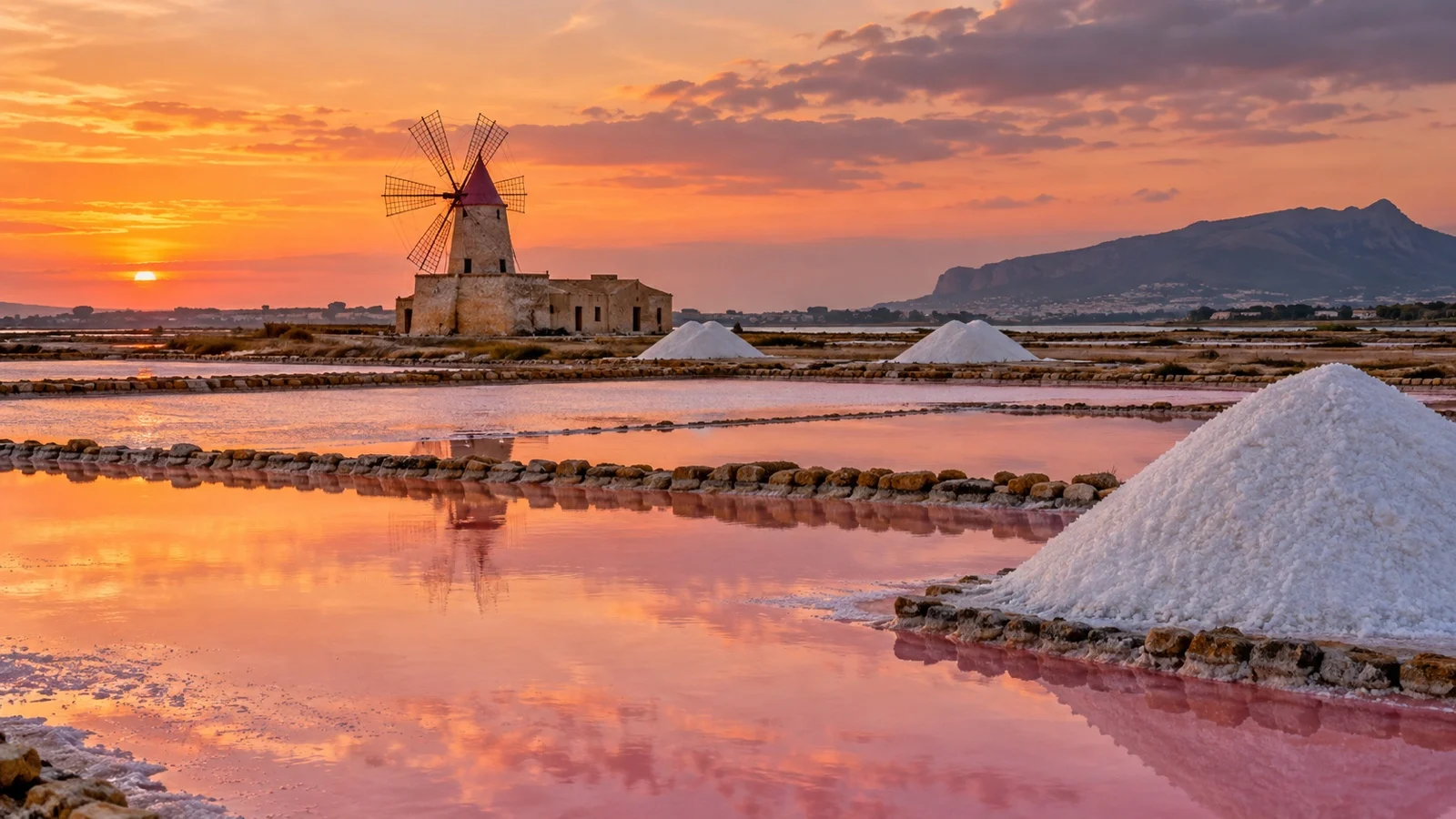
South of the city, shallow salt pans, channels, windmills, and white salt mounds form one of western Sicily’s defining landscapes. The reserve also provides habitat for migratory and resident birds.
The area is protected rather than an open industrial shortcut, so use designated visitor routes and follow current access rules. The WWF Italy network provides official conservation context for the Trapani and Paceco reserve.
A taxi, private driver, rental car, or organized excursion is much more practical than trying to improvise local transit. Arrange the return before entering a sparsely served part of the coast.
The scenery is most comfortable outside the hottest part of a summer day because shade is scarce. Wind can be strong, which is part of the landscape’s history and the reason traditional windmills belong here.
Segesta as a cruise excursion
Segesta offers a beautifully positioned Doric temple and an ancient theater on the inland slopes of western Sicily. It is the strongest archaeological excursion from Trapani, but it needs road transport and disciplined timing.
The site spreads across hilly terrain, and the temple and theater do not sit beside one another. Current shuttle arrangements, opening hours, ticketing, and access should be checked through the Segesta Archaeological Park.
A ship excursion offers the safest schedule protection, while an independent driver provides more flexibility. Public transport can work for longer stays but usually adds too much uncertainty to a port call.
Do not combine Segesta with Erice unless a well-timed organized tour is designed to do exactly that. Each destination deserves time, and the road links quickly consume the margin between them.
Can you visit the Egadi Islands?
Fast passenger vessels leave Trapani for Favignana, Levanzo, and Marettimo, making the islands look temptingly close. Liberty Lines publishes live departures, fares, notices, and booking information for these routes.
An island trip can fit only when the call is long, the sea is settled, and the return schedule leaves more than one safe option. A canceled or delayed independent ferry does not oblige the cruise ship to wait.
Favignana is generally the most realistic choice because it has the broadest visitor infrastructure, but even that outing requires a careful plan from gangway to ferry gate. Keep identification, ticket rules, and boarding cutoffs in mind.
For most first-time visitors, Trapani and Erice provide a richer day with far less schedule risk. Save the Egadi Islands for a land stay unless the ship’s hours are unusually generous.
Getting around beyond the center
Trapani has local buses, but routes are designed for residents and may not align neatly with a cruise day. Check current stops and tickets through the local operator rather than relying on an old blog timetable.
Taxis are the simplest option for the cableway station and can also work for the salt pans. Agree on the approximate fare, waiting arrangement, payment method, and return time before setting off.
A private driver becomes more valuable for Segesta or a combination of distant stops. Ask for licensed transport and build the schedule backward from the cruise line’s all-aboard time.
The railway station is useful for regional travel during a longer Sicilian stay but rarely improves the classic cruise-day routes. The old town is easier on foot, while the headline excursions need different last-mile connections.
Accessibility in Trapani and Erice
An alongside arrival avoids tender transfers, but the ship’s gangway can still be steep or stepped. Arrange assistance with the cruise line and confirm whether transportation can meet passengers inside the controlled port.
Central Trapani is largely flat, which makes it more manageable than many Sicilian hill towns. Historic stone, narrow sidewalks, parked vehicles, and inconsistent curb cuts remain real obstacles.
The cableway operator says special vehicles are available for people with disabilities, but individual needs and boarding conditions vary. Contact the operator before travel and ask specifically about the mobility device being used.
Erice itself is steep, with irregular and sometimes slippery stone surfaces. A panoramic road drive, salt-pan visit, or gentle Trapani waterfront route may offer a more comfortable day.
Weather and what to bring
Trapani has hot, dry summers and milder winters, but the exposed coast is famous for wind. The same breeze that makes a warm waterfront pleasant can suspend a cableway or disrupt fast ferries.
Bring sun protection, water, and a light outer layer that works in wind. Erice can feel much cooler than the port, especially when cloud wraps around the mountain.
Rain is more likely outside summer and can make Erice’s stone lanes slick. Shoes with dependable grip are useful even on a day that begins with sunshine.
Check both the city forecast and operator notices before leaving the ship. A pleasant sky at the quay does not prove the cableway or island ferries are running normally.
Three realistic port-day choices
The easiest choice is an old-town day with churches, harbor views, a waterfront walk, and an unhurried Sicilian lunch. It needs almost no transport and leaves the strongest margin for the ship.
The classic choice is Erice by cableway, followed by a shorter walk in Trapani after returning downhill. Start early, check wind status first, and leave the upper town before the final comfortable descent.
The ambitious choice is Segesta or the salt pans with organized road transport. Pick one main destination and resist adding an island ferry or a second distant site.
Trapani makes spontaneity feel easy, but transport beyond the peninsula still deserves planning. A simple day here can be every bit as memorable as a long excursion.
The best way to approach Trapani
Choose between the mountain and the city before leaving the ship. Erice offers the grand view, while Trapani offers the slower rhythm, food, architecture, and close contact with the sea.
Use current operator information, keep wind in the plan, and return through the port with time to spare. That is enough structure for a destination that rewards wandering.
Travelers continuing around Sicily can compare this intimate call with our Palermo cruise port guide. The wider Mediterranean cruise ports guide also helps identify which later stops require advance excursions.
How this guide was researched: This guide was desk-researched on September 12, 2026 using current official port, cableway, ferry, archaeological, conservation, and destination information, and it does not claim a personal sailing, port inspection, cableway ride, or attraction visit. Confirm the berth, cableway, ferry notices, attraction hours, accessibility, weather, and all-aboard time before travel.
See our Editorial Policy.