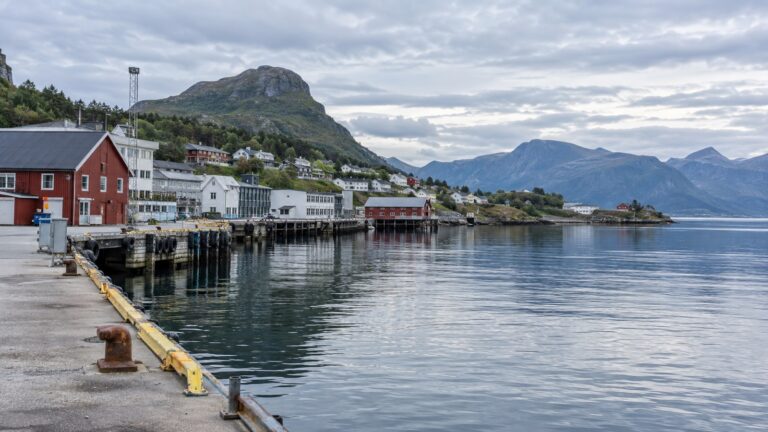
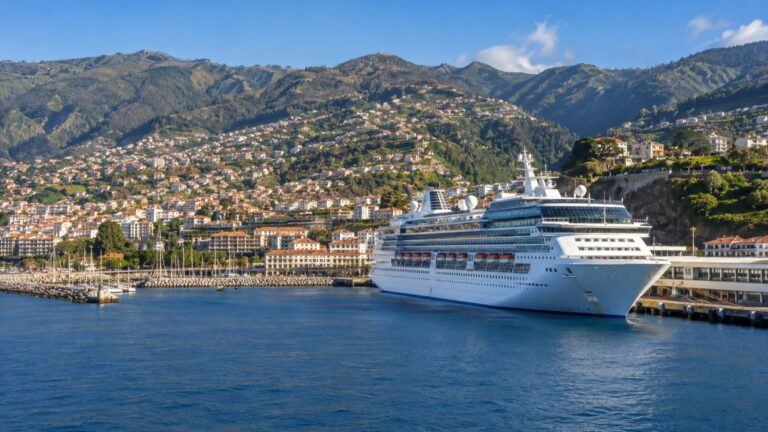
Dikili Cruise Port: Berth, Pergamon and Beach Town
Dikili gives you a choice that feels almost unfair: spend the day beside the Aegean, or head inland to one of the ancient world’s great cities. The waterfront is relaxed and easygoing, while Pergamon and its healing sanctuary turn a port call into a remarkable journey through Hellenistic and Roman history.
The decision is simpler when you start with the practical details. Your ship may berth or use tenders, Pergamon requires a real road transfer, and the archaeological sites demand more walking and sun exposure than a quick glance at the map suggests.
Quick Facts
- Port: Dikili, on Türkiye’s northern Aegean coast in İzmir Province
- Arrival: Berth or tender, according to the ship’s confirmed plan
- Main attraction: Pergamon and its multilayered cultural landscape
- Key ancient sites: The Acropolis and Asklepion
- Easy alternative: Dikili waterfront, town center, cafes, and beach time
- Currency: Turkish lira
- Language: Turkish, with English available unevenly in visitor areas
- Climate concern: Strong sun and heat during much of the cruise season
- Accessibility: The waterfront is easier than the steep, uneven archaeological sites
- Return rule: Work from the ship’s all-aboard or last-tender deadline
Where cruise ships arrive in Dikili
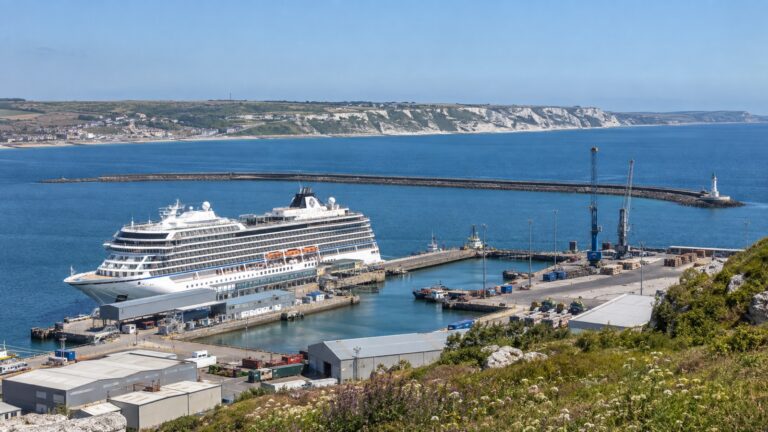
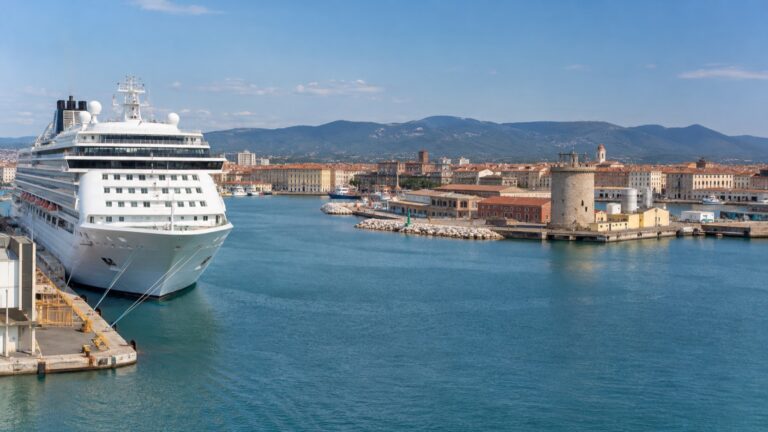
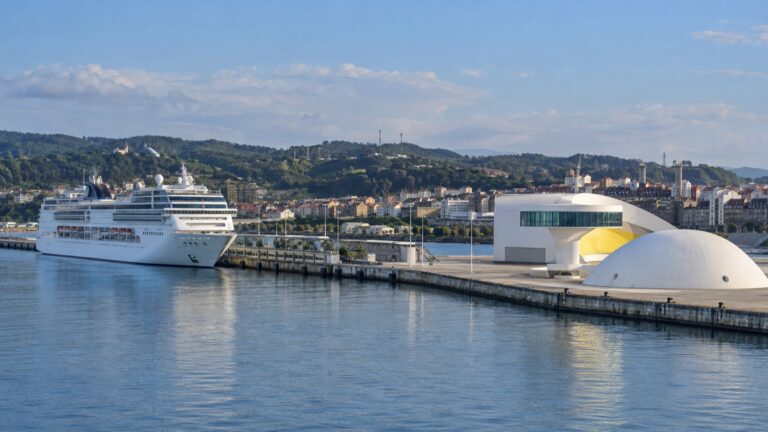
Cruise calls at Dikili can use an alongside berth or tender boats, depending on the vessel and the day’s operating plan. Do not assume that an itinerary label or an older passenger report guarantees your arrival method.
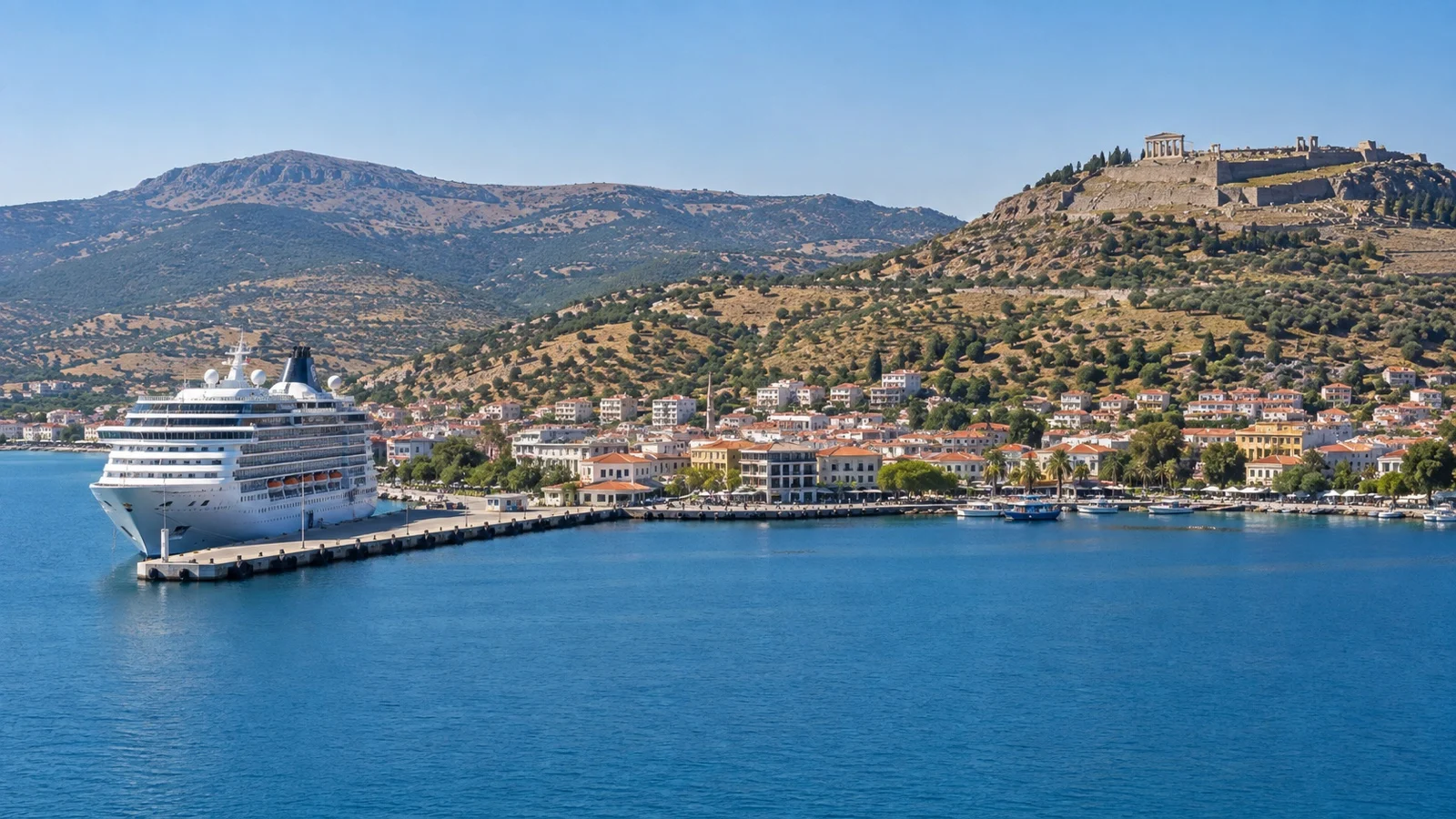
When the ship berths, the town and waterfront are generally convenient for an independent visit. When tenders operate, the transfer adds time at both ends of the day and can create queues during the busiest disembarkation period.
Check the cruise line’s daily program as soon as it is available. It should provide the confirmed meeting point, tender procedure if applicable, last-tender time, and any port-specific identification requirements.
Travelers using wheelchairs, scooters, or other mobility equipment should ask the cruise line about the assigned berth and tender policy before disembarking. Even an alongside call can involve a sloping gangway or temporary surfaces that vary with operations.
The essential choice: Pergamon or the coast
Most first-time visitors choose between a history-focused trip to Bergama and a low-key day in Dikili. Trying to combine a complete Acropolis visit, the Asklepion, town sightseeing, lunch, and beach time often turns a beautiful call into a race.
Pergamon is the right choice if ancient history is the reason you booked this itinerary. Dikili itself is the better choice if you want flexibility, minimal transport, sea views, a swim in suitable conditions, or an easy return to the ship.
A longer call may allow one major archaeological site plus a shorter second stop. Read the actual tour schedule carefully because “Pergamon” can describe very different combinations of the Acropolis, Asklepion, Bergama Museum, the Red Basilica, and shopping time.
The most satisfying plan gives one place enough time to make sense. Ruins become much more memorable when you understand the landscape and purpose of the buildings instead of hurrying between photo points.
Pergamon and the Acropolis
Pergamon rises above the Bakırçay Plain near modern Bergama. UNESCO lists Pergamon and its Multilayered Cultural Landscape for the way Hellenistic, Roman, Byzantine, and Ottoman layers remain visible across the city and surrounding terrain.
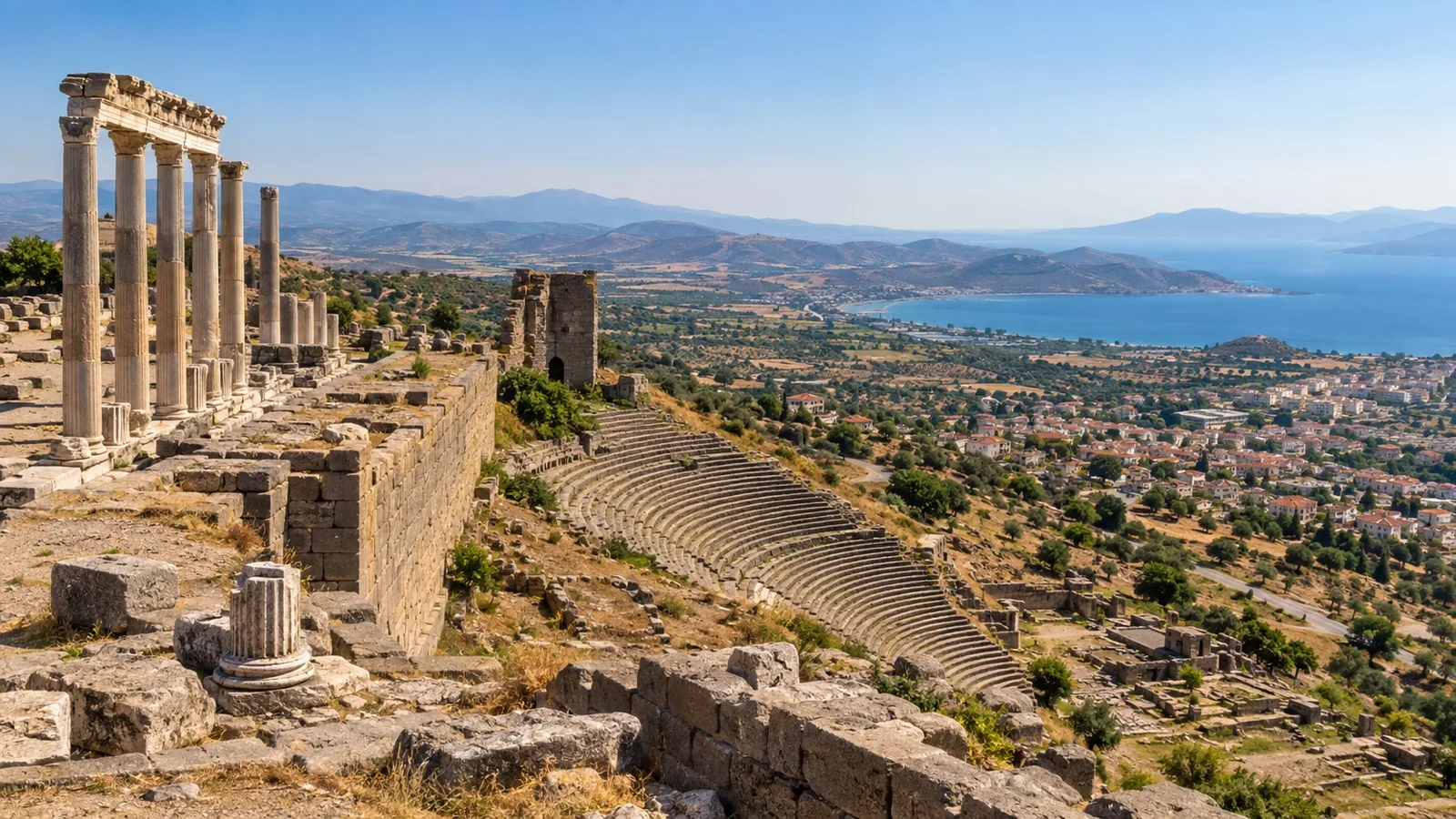
The Acropolis was the capital of the Hellenistic Attalid dynasty and a major center of learning, culture, science, and politics. Temples, terraces, a theater, gymnasium, city walls, water systems, and the great altar complex were fitted into the steep hill.
The setting explains the city’s power as clearly as any surviving stone. From the upper levels, the view reaches across the plain, while the steep theater demonstrates how ancient builders used the natural slope as part of the design.
Expect uneven ground, exposed sections, steps, and gradients. Shoes with secure soles, water, a hat, and sun protection matter far more here than a polished sightseeing outfit.
Some visitors arrive by organized coach and continue by local site transport according to current operations. Do not rely on an old description of a cable car, parking arrangement, or entrance sequence because access procedures can change.
The famous sculptural frieze associated with the Great Altar is not standing complete on the hill. The archaeological landscape still has enormous value, but set expectations around foundations, surviving structures, terraces, and views rather than a fully intact monumental building.
Current opening hours, admission, audio guidance, and access notices should be checked on the Turkish Ministry of Culture and Tourism’s official museum site. Published hours and ticket rules can change seasonally or for conservation work.
The Asklepion healing sanctuary
The Asklepion offers a different side of ancient Pergamon. It developed as a healing sanctuary associated with Asklepios, and the surviving Roman-period complex helps visitors imagine how religion, medicine, rest, water, and performance came together.
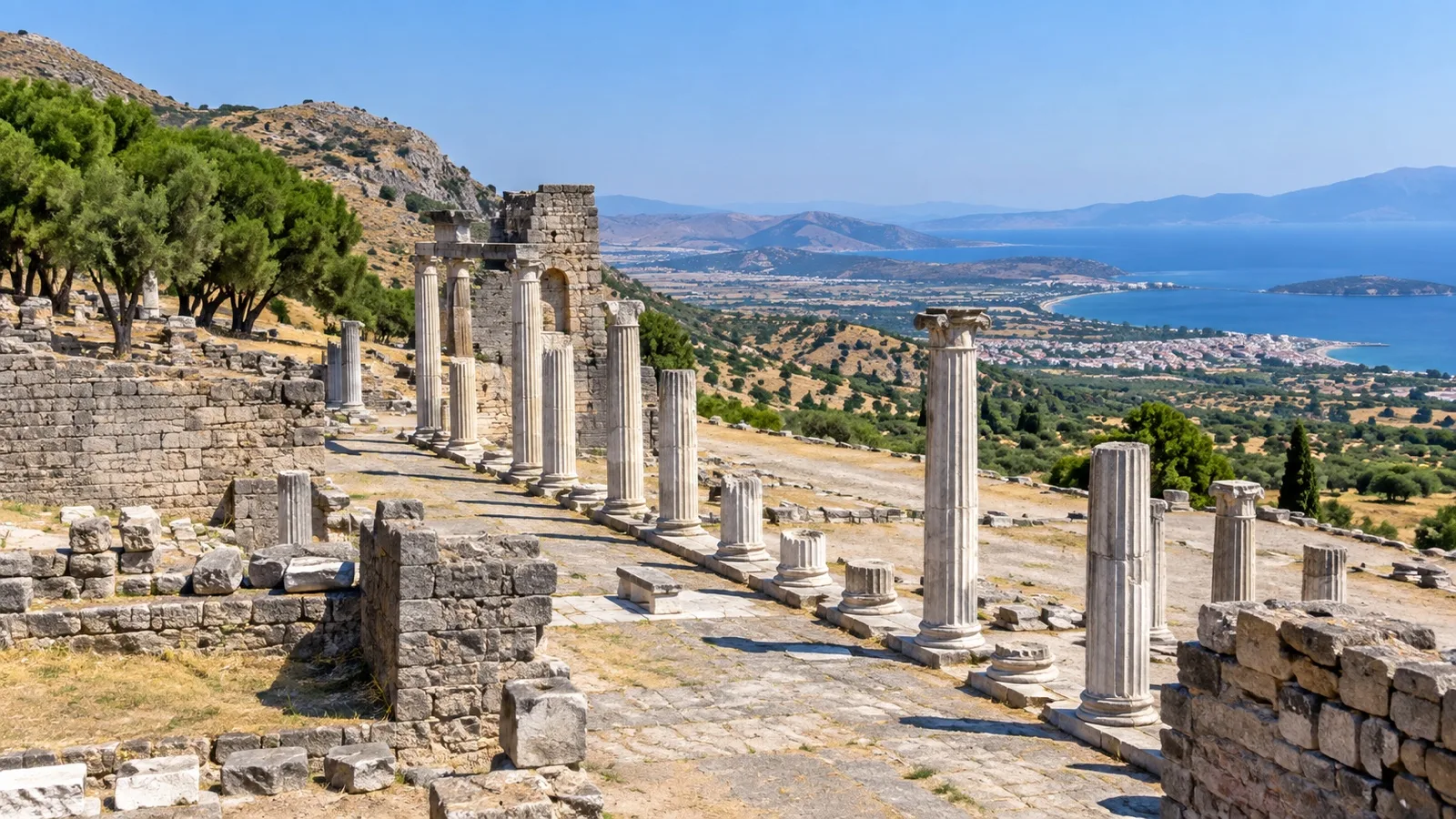
The official site description highlights the sacred approach, monumental entrance, temple, theater, treatment spaces, water sources, and sleeping areas. It also connects Pergamon with Galen, the influential physician and philosopher born in the city.
This is not simply a smaller version of the Acropolis. The Asklepion tells a more intimate story about illness, ritual, observation, and the ancient search for healing.
Walking is still required, and shade may be limited. Ask a guide where the group will pause, how long the visit lasts, and whether seating is available if heat or stamina is a concern.
If your excursion includes both major sites, expect a full and active outing. The transfer between locations, entry procedures, and guided walking can use most of a medium-length port call.
Other Bergama sights
Modern Bergama contains much more than the hilltop ruins. The Red Basilica, Ottoman-era streets, markets, historic houses, and Bergama Museum reveal additional layers of the UNESCO landscape.
The Red Basilica began as a monumental Roman sanctuary and later acquired Christian significance. Its scale is striking, but whether it fits your cruise-day itinerary depends on current access, traffic, and how much time you want at the Acropolis or Asklepion.
Bergama Museum can provide helpful context through objects from regional excavations. It is most useful when the day includes enough time to look carefully rather than adding it as a rushed final stop.
A short walk through the town can show living traditions alongside ancient remains. If your tour includes shopping, ask how much time is genuinely free and whether the stop is optional.
Organized tour or independent trip
A ship excursion is the simplest way to manage the inland journey and multiple archaeological entrances. It also reduces the stress of coordinating a vehicle back to Dikili within a fixed port window.
A private tour can be excellent for travelers who want a slower pace, a specialist guide, or a route tailored to mobility. Confirm the vehicle, pickup location, included admissions, licensed-guide arrangements, and return guarantee in writing.
Independent travelers should not depend on a casual taxi being available for the return. Arrange round-trip transport or a reliable driver, agree on the price and waiting plan, and keep the operator’s contact details offline.
Public transportation may be inexpensive, but transfers and timetable uncertainty can consume a short call. Use it only after checking current official schedules and building a generous margin before all aboard.
Whatever method you choose, give the driver or guide the ship’s all-aboard time rather than only its sailing time. Ask what alternate route or recovery plan exists if traffic, vehicle trouble, or site closure disrupts the schedule.
A relaxed day in Dikili
Staying in town is not a second-rate choice. Dikili’s waterfront, coastal promenade, cafes, everyday streets, and long relationship with the sea create an easy day with very little logistical pressure.
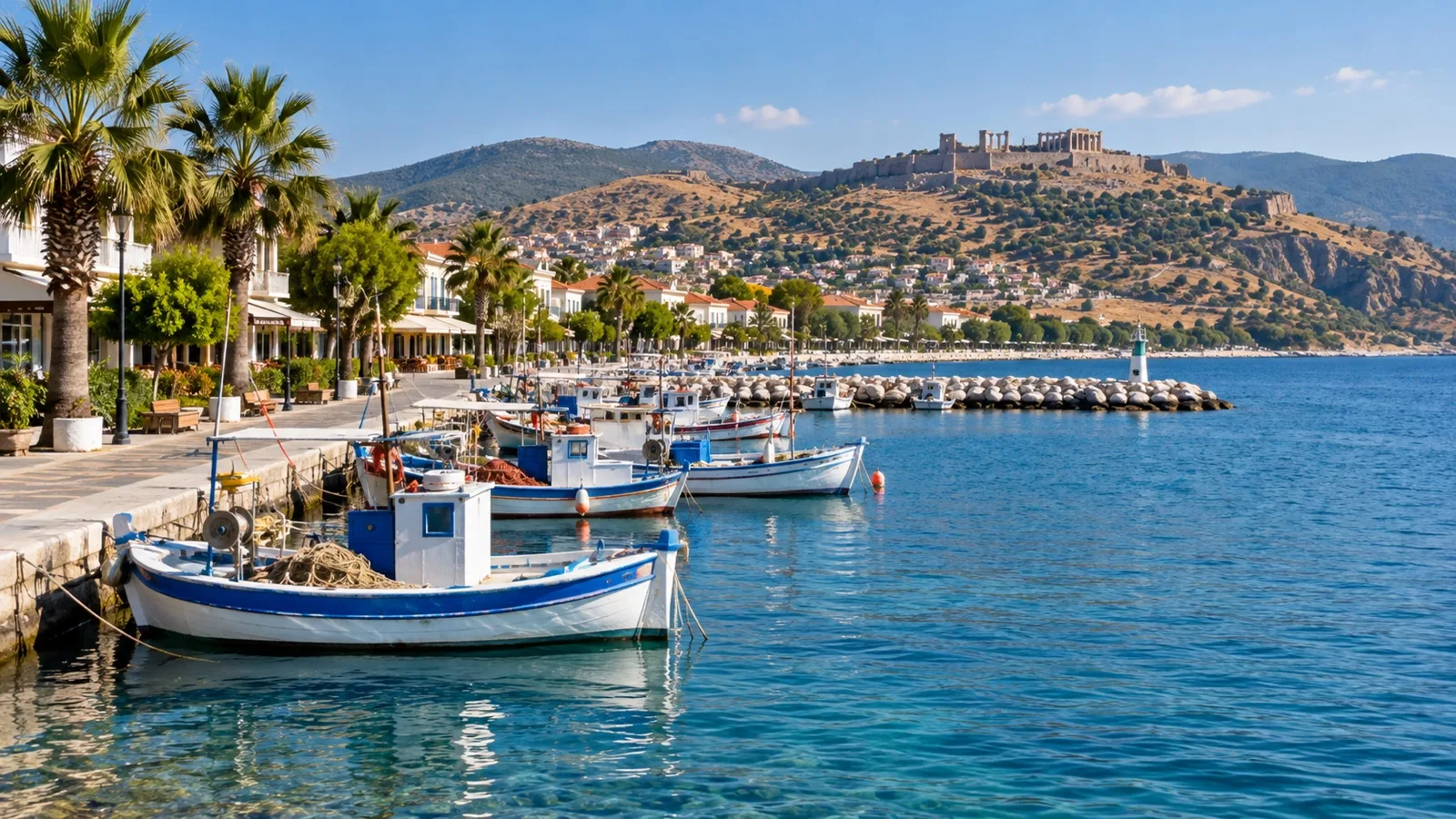
Start with a slow orientation walk and note the route back to the landing or pier. Once you understand the distances, decide whether to continue along the shore, stop for food, or settle near the water.
The mood can change when a cruise ship is in port, but Dikili remains a lived-in town rather than a purpose-built attraction. Be patient with seasonal opening hours and appreciate the ordinary details that larger ports often hide.
A local day also gives you control over weather and energy. If the afternoon becomes hotter or windier, you can shorten the plan without abandoning a prepaid inland tour.
Beach time and swimming
Dikili is known for its Aegean coastline and public beaches. Visit İzmir describes the district as a place of clear water, bays, beach communities, and boat outings, with central options that can suit a simple cruise-day swim.
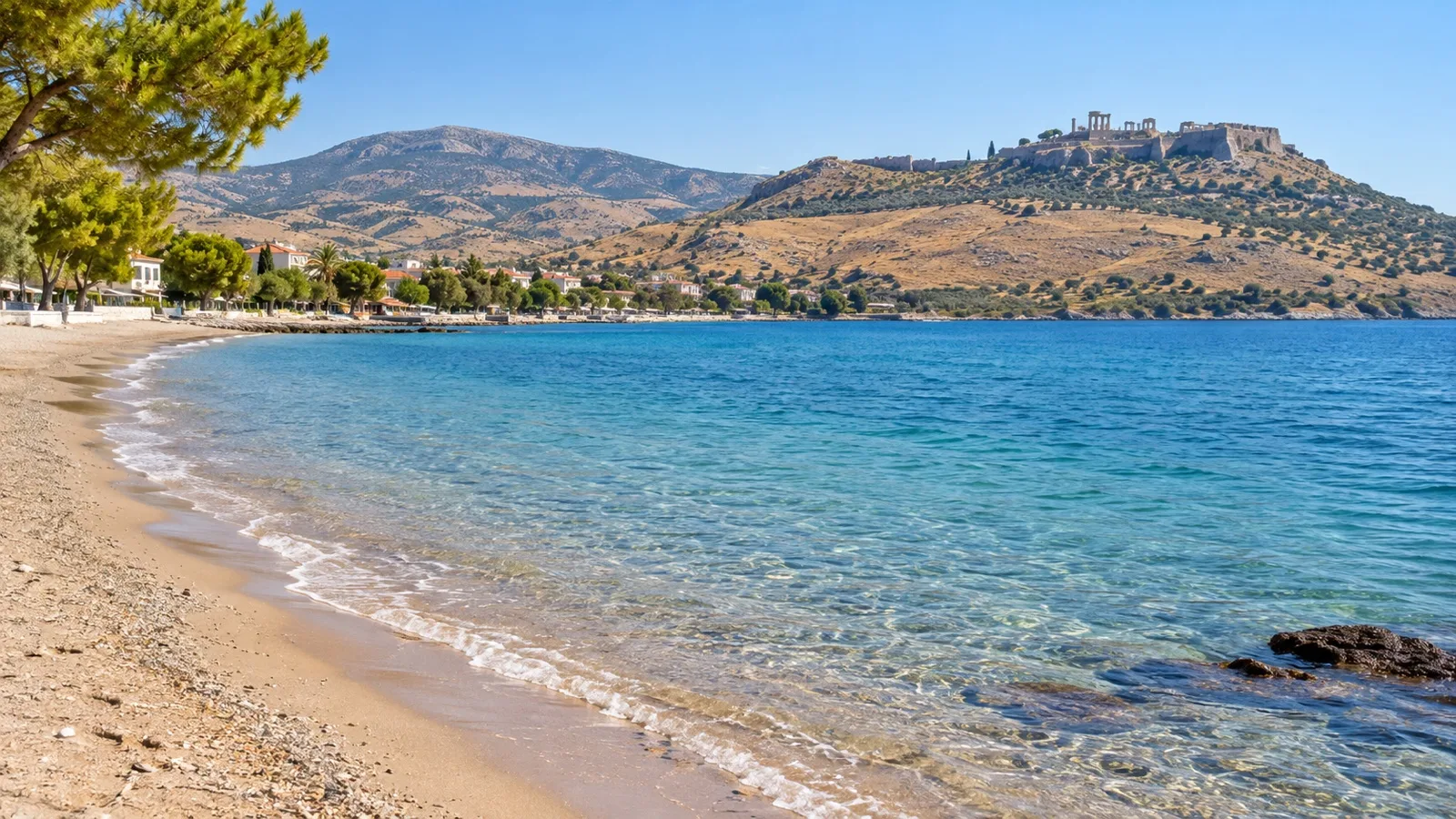
Choose a beach only after checking current water conditions, access, facilities, and the route back. A place that looks close on a map may have an awkward entrance or limited shade.
Bring a towel if the ship permits, sun protection, secure footwear, and a dry pouch for your boarding documents. Do not leave valuables unattended while swimming.
The sea can feel cool even on a hot day, and wind can change surface conditions. Follow local flags and lifeguard instructions, never swim outside marked areas, and avoid entering the water if you are unsure of currents or boat traffic.
Allow time to rinse, change, and walk back without hurrying. Sand, heat, and wet footwear make the return slower than the outbound stroll.
Bademli, bays, and boat trips
The wider Dikili district includes Bademli, small bays, islands, and coastal scenery that may appear in local excursion descriptions. These places can be lovely, but they require more planning than a walk along the central waterfront.
For a boat trip, confirm the exact departure harbor, trip duration, swimming arrangements, safety equipment, and return time. Do not assume a local excursion is timed for cruise passengers unless the operator explicitly confirms it.
Weather and sea state can alter the route or cancel a sailing. Keep a waterfront backup plan so that a responsible safety decision does not leave you unsure what to do.
If hiring a taxi to reach a bay or village, arrange the return before setting off. Mobile coverage, language, and vehicle availability can be uneven away from central Dikili.
Heat, sun, and weather
The northern Aegean can be intensely sunny during the main cruise season. Archaeological sites have exposed stone surfaces that reflect heat, while the hilltop Acropolis may also be breezy.
Carry more drinking water than you expect to need, apply sunscreen before leaving the ship, and add a hat with a secure fit. Light clothing that covers the shoulders can feel better than bare skin in prolonged sun.
Check the Turkish State Meteorological Service forecast close to arrival. Wind, thunderstorms, extreme heat, or poor sea conditions can affect tenders, boat tours, archaeological comfort, and beach safety.
Use shade whenever the guide pauses and tell someone early if you feel dizzy, nauseated, or unusually tired. Heat illness can develop quickly, and pushing through symptoms is not a sensible way to protect an itinerary.
Accessibility and limited-mobility planning
Dikili’s flatter waterfront is generally the easiest option for travelers with reduced mobility. Surface quality, curbs, heat, and the route from the actual berth or tender landing still need to be considered.
Pergamon’s Acropolis presents a more demanding environment with slopes, steps, ancient paving, loose surfaces, and limited shade. Ask the tour provider for the accessible route actually used, not a generic statement that the site welcomes visitors.
The Asklepion may be less steep in parts, but it is still an archaeological landscape with uneven ground and walking distances. A vehicle-based scenic tour with selected photo stops may be a better choice when balance or endurance is limited.
Tendering can be the deciding factor for wheelchair and scooter users. Cruise lines set their own transfer rules based on equipment, sea conditions, and crew assessment, so confirm your specific situation in advance.
If you need an adapted vehicle, reserve it before sailing. Do not expect a suitable taxi to be waiting at a small port without prior arrangement.
Families and multigenerational groups
Pergamon can be fascinating for children when the visit has a clear story. The steep theater, ancient healing practices, water systems, and hilltop setting are easier to grasp than a long sequence of dates.
Keep the archaeological plan focused and protect time for shade, water, and snacks. Young children may enjoy one major site far more than a marathon covering every ruin.
For a mixed-age group, consider splitting plans. History lovers can travel to Bergama while others enjoy the beach and waterfront, then everyone can meet near the landing well before the return deadline.
Watch children closely near drops, roads, hot stone, and the water. Barriers at archaeological sites and beach safety flags are rules, not suggestions.
Food, shopping, and local etiquette
Dikili’s cafes and restaurants can make a relaxed coastal day feel complete. Look for Aegean vegetables, salads, seafood, grilled dishes, pastries, and cold drinks, while remembering that menus and opening hours change.
Ask the price before ordering seafood sold by weight and review the bill calmly. Use bottled or properly treated water if local guidance recommends it, especially during extreme heat.
Bergama is known for regional crafts, including carpets and textiles, but a purchase should never feel compulsory. Compare quality, understand shipping and return terms, and keep the ship’s schedule more important than a sales presentation.
Türkiye uses the Turkish lira, and cards are accepted in many established businesses. Carry a modest backup amount and use bank-affiliated ATMs when possible, because small vendors or temporary connectivity problems may require another payment method.
Dress respectfully at religious sites and follow posted photography rules. A light cover for shoulders can be useful if a tour includes an active place of worship.
Connectivity and practical preparation
Download your meeting instructions, tickets, map, and the ship’s contact information before leaving reliable service. Screenshots are useful because a roaming plan or local signal may not behave as expected inland.
Keep your passport or required identification according to the cruise line’s instructions, plus your cruise card and port-agent details. Store them securely rather than in an open beach bag or loose pocket.
Restrooms may be available at official sites and planned tour stops, but access can be spaced out. Use facilities when offered and carry tissues and hand sanitizer.
A small battery pack is valuable on a long excursion. Navigation, photography, translation, and messages can drain a phone much faster than a normal morning ashore.
Returning safely to the ship
The return plan begins before you leave the waterfront. Note the exact landing, identify a visible landmark nearby, and record the last time you must be back rather than the ship’s later departure time.
For Pergamon, build a substantial buffer around the road journey. Traffic, entrance lines, group delays, and unexpected closures are all easier to manage when the itinerary is not planned to the final minute.
If the ship is tendering, the last-tender deadline controls your day. Arriving at the shore when the ship is scheduled to sail is too late.
Do not let a driver add an unplanned shopping or photo stop unless you have checked the remaining margin. A polite refusal is better than watching the clock from the wrong side of town.
Simple plans for different call lengths
Short call
Stay in Dikili, walk the waterfront, enjoy a meal or beach time, and return early. A rushed independent run to Bergama is not worth sacrificing your safety margin.
Medium call
Choose one well-organized history excursion or a carefully timed coastal activity. If visiting Pergamon, prioritize the Acropolis or a thoughtfully paced combination rather than trying to check every box.
Long call
A longer stay can support the Acropolis and Asklepion with a guide, possibly with a brief look at Bergama if the timing remains comfortable. Keep the final hour protected from optional stops.
Common Dikili planning mistakes
The first mistake is assuming the ship will dock because another vessel did. Berth and tender arrangements can change, and that affects both accessibility and timing.
The second is treating Pergamon as a nearby walk-up attraction. It requires transport, site entry, and real time on uneven archaeological ground.
The third is underestimating heat. Water, shade, pacing, and appropriate clothing can determine whether an ancient-site visit feels inspiring or exhausting.
The fourth is trying to combine a full ruins day with a distant beach or boat trip. Choose one main theme and let anything else be a flexible bonus.
Frequently asked questions
Can I walk into Dikili from the ship?
An alongside call generally places you conveniently for the town, while a tender call brings passengers to a designated landing. Follow the ship’s current directions because the exact operating setup can vary.
Is Pergamon the same as Bergama?
Pergamon is the ancient city and cultural landscape associated with modern Bergama. Cruise excursions may use either name, so check which sites the itinerary actually includes.
Can I visit both the Acropolis and Asklepion?
Yes, a well-timed tour may combine them, especially on a longer call. The day involves transport and substantial walking, so confirm the pace and time at each site.
Is the Pergamon Altar still on the Acropolis?
The ancient complex survives primarily through foundations and archaeological remains, while major sculptural elements are not standing complete on the hill. Visit for the landscape, urban design, theater, terraces, and history rather than expecting an intact altar building.
Is Dikili good for an easy beach day?
Yes, the coastal setting makes a simple waterfront and beach plan attractive in suitable weather. Check current water conditions, facilities, and the walking route before settling in.
Do I need Turkish lira?
Cards work in many places, but a modest amount of lira is useful for small purchases or connectivity problems. Avoid depending on a single card.
What should I wear to Pergamon?
Choose breathable layers, sun protection, a hat, and sturdy shoes with grip. Bring a light cover if your route may include a religious site.
My take on Dikili
Dikili is one of those ports where two completely different days can both be right. Pergamon rewards curiosity and effort, while the waterfront offers the kind of unhurried Aegean pause that cruise itineraries often need.
I would choose the history trip if Pergamon has been on your list for years, but I would never apologize for staying by the sea. The smartest plan is the one that matches your energy, respects the clock, and leaves room to notice where you are.
Planning sources include the UNESCO World Heritage Centre, the Turkish Ministry of Culture and Tourism’s Pergamon Acropolis page, its Asklepion page, Visit İzmir, and the Turkish State Meteorological Service. Confirm the final berth or tender plan, site hours, transport, weather, and all-aboard time with your cruise line and official operators close to sailing.