Best Cruise Ports for Hop-On Hop-Off Buses in 2026
A hop-on hop-off bus earns its price when a port city is spread out, hilly, and served by a route that actually connects with the cruise landing.
Here are the cruise ports where a HOHO ticket genuinely earns its price, plus how I decide when to skip it.
How I judge whether a HOHO ticket is worth it
Distance and hills: A sightseeing loop earns attention when the headline sights are spread out or uphill from the waterfront.
Time pressure: The useful test is whether the live route can connect two or three chosen stops without repeated taxi pickups.
Pier access: Check whether a stop is near the terminal or whether the ship shuttle adds another transfer.
Loop logic: One or two clear circuits are easier to manage than a web of routes requiring changes.
Frequency: A missed bus must not threaten the return plan, so use the operator’s current timetable rather than an old blog or map.
Useful extras: Audio guides, boat combinations, or family tickets add value only when the core route already fits the port day.
Global brands like City Sightseeing run the red open-top buses in many of these ports, so the format feels familiar from one country to the next.
When those boxes line up I ride more and stress less. When they do not, a tram or a short taxi usually wins.
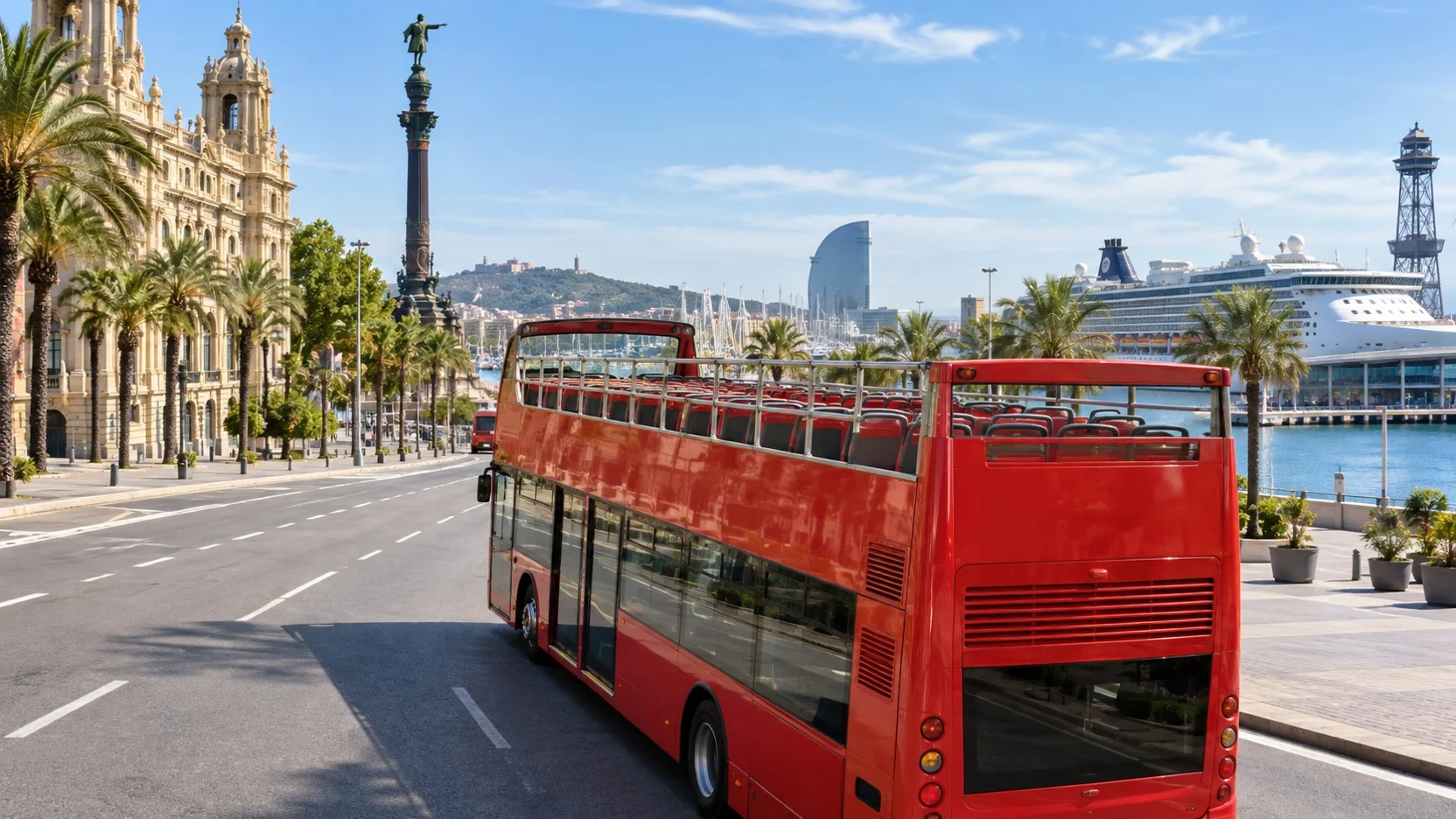
Barcelona, Spain: the slam dunk
Barcelona Bus Turístic operates city sightseeing routes whose stops, seasons, and frequency can change. Use its live map for Sagrada Família, Park Güell, Montjuïc, and other priorities instead of assigning every sight to an old route color.
That Tibidabo stop is not the mountaintop. You still need a local bus toward Plaça del Doctor Andreu and the Cuca de Llum funicular for the summit, so I would skip that detour on a short port call.
These sights sit on completely different arms of the city, so walking eats your whole day. I ride one loop for bearings, then hop for Sagrada Família and Montjuïc before coasting the beachfront back.
Most ships use Moll Adossat, so take the port shuttle or a taxi before joining a city loop near the Columbus Monument area. A bus saves distance only after that first transfer is included in the timing.
Rome via Civitavecchia, Italy: the distance fixer
Civitavecchia sits about 50 miles (80 km) northwest of Rome, so the day is really about crossing that gap efficiently. Some operators pair a port transfer with a Rome sightseeing loop, but confirm the Civitavecchia pickup, Rome drop, final departure, and late-return terms before treating the city bus as part of the transfer.
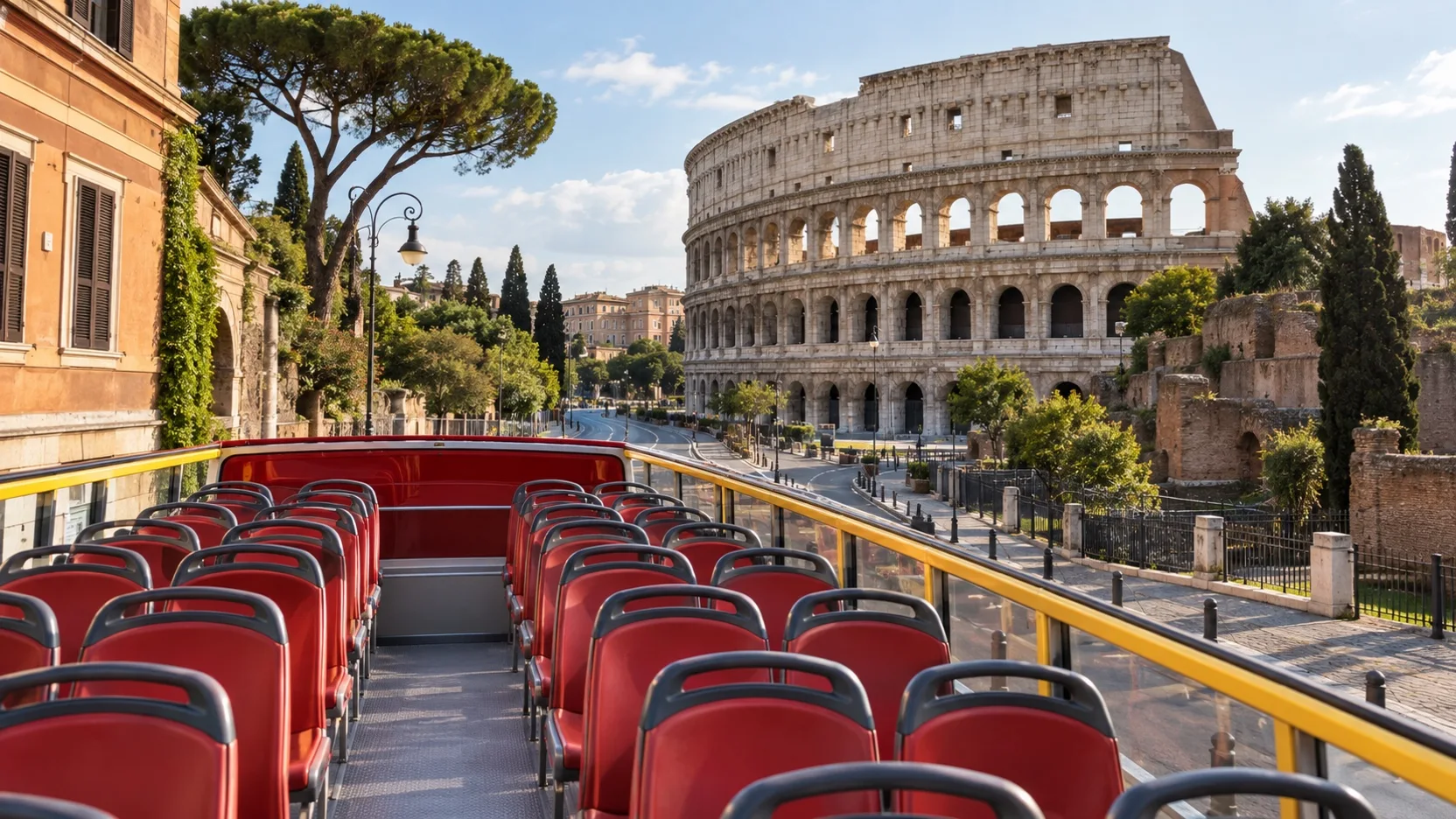
Once you are in the center, Rome’s monuments are genuinely spread out and the summer heat is real. A seated loop between the Colosseum and St Peter’s spares a lot of footwork on cobbles.
I lay out the train timings and the transfer trade-offs in my Civitavecchia cruise port guide. The key is buffering the return so a delayed bus never threatens all aboard.
Lisbon, Portugal: the hill saver
Lisbon challenges walkers with steep Alfama lanes and a long riverside stretch out to Belém. The official Yellow Bus operator currently sells separate Belém and Modern Lisbon bus routes, so choose the route that actually serves your priorities.
The cruise terminal sits centrally near Santa Apolónia, which makes reaching the first stop easy. I ride out to Belém early, tour the monuments, then hop back for a flat loop through the center.
My Lisbon cruise port guide maps the terminals and the tram alternatives. On a hot day the bus trades two or three transit changes for one ticket and a chair with a view.
Dubrovnik, Croatia: beyond the walls
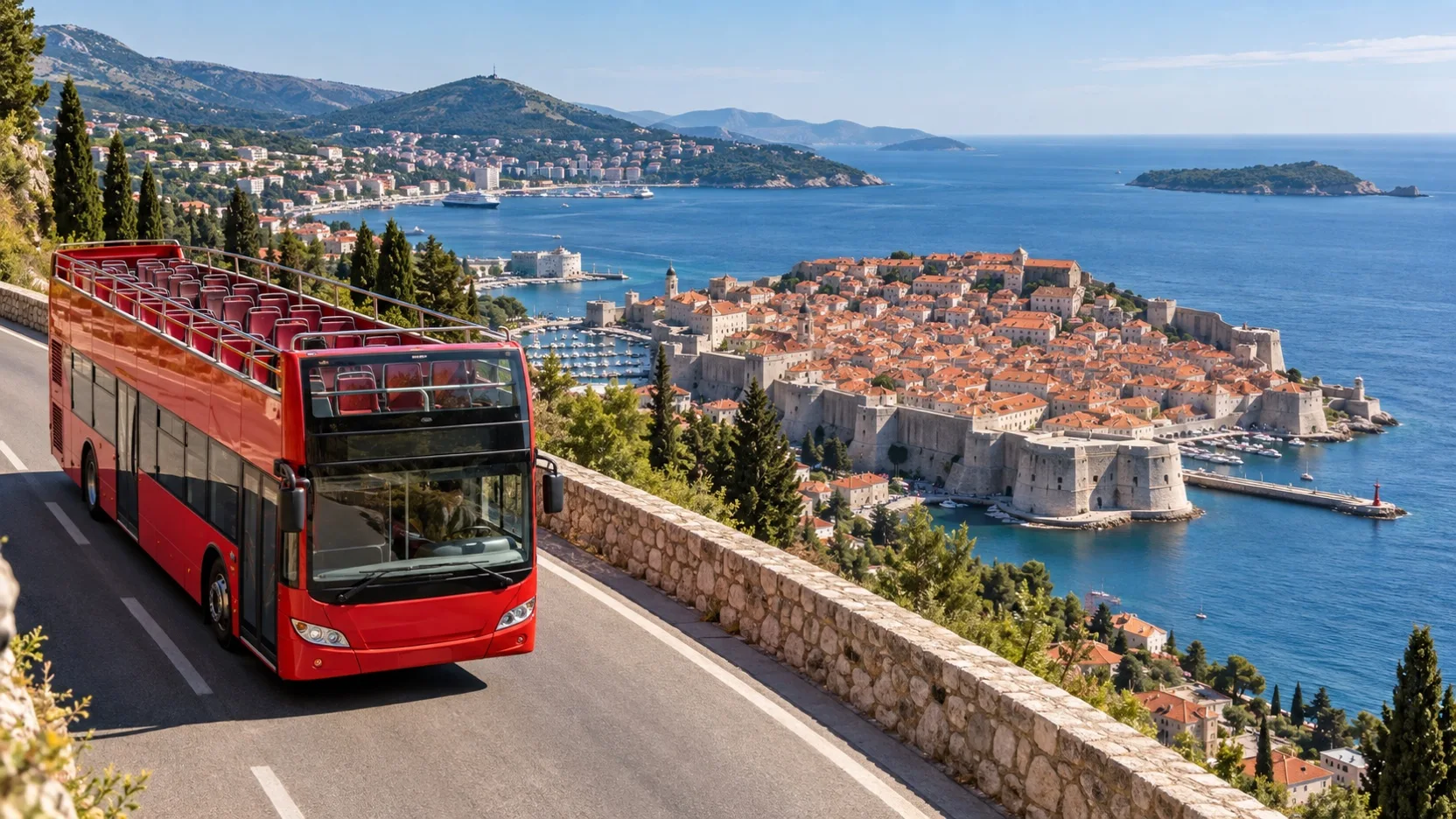
Ships dock at Gruž, roughly 2 miles (3 km) from the walled Old Town, so you already need transport before you start sightseeing. The hop-on hop-off loop links Gruž, the Pile Gate entrance to the city walls, and the Lapad and Babin Kuk beach peninsula.
The Old Town itself is compact and best walked once you arrive. The bus earns its price by adding a beach stop and a higher viewpoint without arranging two separate taxis.
Sydney, Australia: the Bondi connector
Big Bus Sydney publishes a city route and a separate Bondi route, and the beach leg is the strongest reason to buy a ticket. Recheck the live map and service notices because the connection between routes determines how much time remains for an actual stop.
When ships berth at the Overseas Passenger Terminal you step off at Circular Quay, steps from the Opera House and The Rocks. I walk that harbor core on foot and save the bus for the long run out to Bondi.
My Sydney cruise port guide explains the two terminals and how they change your plan. The White Bay terminal sits farther out, so the bus math shifts if you dock there.
Cape Town, South Africa: the scenery ticket
City Sightseeing Cape Town currently advertises three hop-on hop-off routes from its visitor hubs. Check the live route map for Table Mountain, Camps Bay, Kirstenbosch, and Hout Bay rather than relying on a color or stop number from a previous season.
Cape Town’s highlights sprawl around a mountain, which makes independent taxis pricey and fiddly. The official Cape Town Tourism site lists the red bus among its recommended ways to link those distant viewpoints.
I ride the Red City loop to the cableway first for clear morning air, then let the scenery roll by on the way back. My Cape Town cruise port guide covers the terminal shuttle to the Waterfront.
More ports that reward the ride
Palma de Mallorca, Spain
The cathedral rises above the marina, Bellver Castle climbs higher still, and the beaches lie the other way. I ride the uphill section early, hop for the castle and cathedral, then finish flat along the water.
Athens via Piraeus, Greece
Piraeus sits well south of the Acropolis and Plaka, so the first job is simply reaching central Athens. Once there, a full loop plus a hop for the Acropolis beats decoding metro transfers on a short call.
Copenhagen, Denmark
Langelinie berths, the Little Mermaid, Amalienborg and Nyhavn line the water yet still spread out over a long walk. I board near the waterfront, roll past the Mermaid before the crowds, then hop for Nyhavn and the palace.
Valletta, Malta
Mdina, Marsaxlokk and the Blue Grotto are nowhere near the Grand Harbour on foot. A HOHO loop that includes Mdina turns a scattered island into a rolling greatest-hits day.
Málaga, Spain
Gibralfaro Castle and the Alcazaba climb above the flat port park, and the steps up sap you fast in the heat. I ride to the castle lookout first for cool air and photos, then hop down for the old town.
Singapore
The MRT is superb, yet an open-top loop gives a breezy above-ground tour past Marina Bay and the heritage streets. I sit up top early for the photos, hop just twice, and ride the metro back if traffic builds.
Dubai, UAE
The marina, the old creek districts, and Downtown sit far apart across a very spread-out city. A sightseeing loop can connect them without repeated taxis, but confirm shade, lower-deck cooling, and the actual operating interval before buying.
Reykjavik, Iceland
Hallgrímskirkja, Perlan and the harbor sculptures are far apart, and the wind here can be fierce. A warm seat between indoor stops turns a raw weather day into an easy one, with quick hops for photos when the skies behave.
Edinburgh via Newhaven, Scotland
Newhaven is normally a tender landing, and any shuttle into Edinburgh depends on the cruise line or operator. Confirm that first transfer before buying a city sightseeing ticket for the castle, Royal Mile, and New Town.
Yokohama, Japan
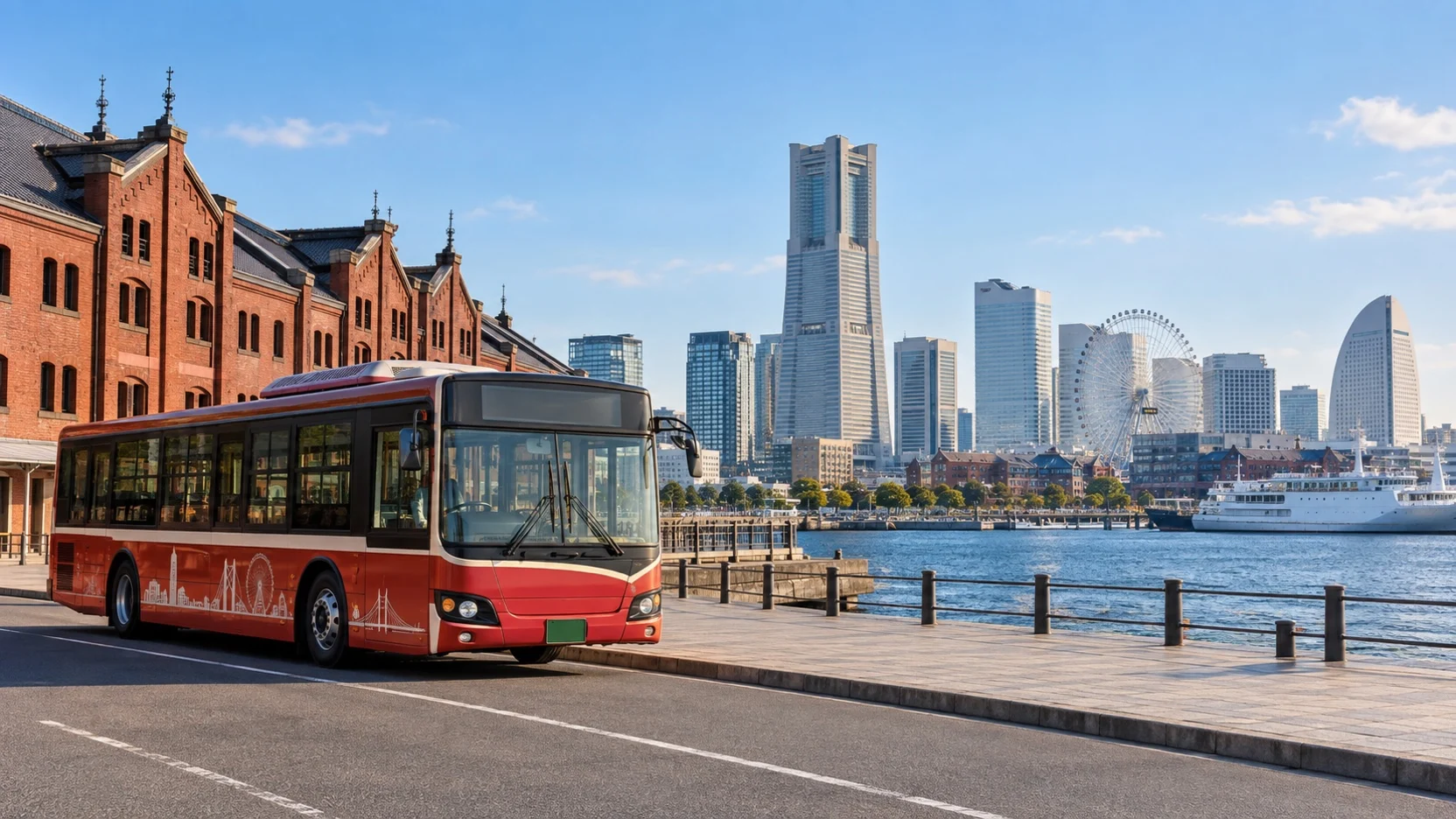
Osanbashi, the Red Brick Warehouse, Minato Mirai, and Chinatown form a broad waterfront circuit. Yokohama’s municipal sightseeing buses can save walking, but check the current route and fare because this is not always a classic open-top hop-on hop-off service.
When I skip the bus
Walk instead: Skip the ticket when the old town begins at the gangway and your must-see places sit within a compact circle.
Use public transit: One tram, ferry, or metro line may cover the same ground faster and more cheaply.
Protect a short call: With less than three hours ashore, I usually choose one neighborhood instead of gambling on a full loop.
Watch street conditions: Traffic, construction, a parade, or a demonstration can trap sightseeing buses while a waterfront walk keeps moving.
The quick facts
- Board early: An earlier start gives the route more time to recover from traffic or a missed bus.
- Skip the full lap: Ride the complete circuit only when its published duration still leaves time for your chosen stops and a safe return.
- Ride the longest leg first: Use your freshest hour for the greatest distance from the port.
- Choose the useful side: Ask staff which side offers the better view on the section that matters most.
- Bring headphones: Confirm whether the operator supplies disposable earbuds or expects your own.
- Watch the last usable bus: The final service of the day may be too late for your ship, so work backward from all aboard.
- Keep a fallback: Save the address of the terminal and a licensed taxi option in case traffic breaks the loop.
- Pack for the top deck: Water, sun protection, and a light wind or rain layer make the exposed seats much more comfortable.
The 2026 shortlist
Barcelona, Lisbon, Cape Town, Sydney, Singapore, and Dubai offer the clearest payoff when the route is running and the first stop is practical from the berth. Their major sights are spread out enough to justify the ticket, and each also has public transit or taxis as a useful fallback.
Rome from Civitavecchia is primarily a port-transfer decision, not a bus-loop decision. Secure the round-trip journey first, protect a large return buffer, and add a Rome sightseeing bus only if its live route fits the hours left after the roughly 50-mile transfer.
Dubrovnik, Copenhagen, Palma, Athens, Valletta, Málaga, Reykjavik, and Edinburgh are conditional buys. They work when the current route starts near your shuttle or landing and traffic is moving, but a city bus, taxi, or one-neighborhood walk can be faster on a short call.
Yokohama’s local sightseeing buses are useful, but they are not always sold or operated like a classic all-day hop-on hop-off product. Compare the current municipal route, fare, accessibility, and frequency rather than buying from an old generic listing.
Before you buy
Open the operator’s same-day route map and check the first stop, last usable departure, service interval, diversions, and whether the ticket is valid on every colored loop. Cruise pickups are seasonal in some cities and a “port stop” may be outside the secure terminal rather than beside the gangway.
A full lap is useful only when it leaves time for the places you care about. On a six-hour call, two planned exits plus a taxi fallback is usually safer than staying aboard for an entire circuit through traffic.
Wheelchair access depends on the individual bus and whether space is already occupied, while open top decks require stairs. Ask the operator about the stop surface and vehicle allocation, and keep the lower deck plan as the reliable one.
Final word
A good hop-on hop-off route is a small time machine for a port day.
The best ports on this list have sights spread far enough apart to justify the ride, plus a route that connects cleanly with the ship transfer. The conditional ports need a live timetable and fallback before the ticket earns its price.
It moves me cleanly between the sights I came for, spares my legs on the hills, and turns city sprawl into one simple loop. I pick two or three strategic hops, watch that last bus time, and enjoy the ride.
How this guide was researched: This guide was independently researched using official port, tourism, transit, government, attraction, and operator sources unless a first-hand visit is explicitly identified. Logistics and time-sensitive details were reviewed September 11, 2026; see our Editorial Policy.
More on this topic: browse every guide on shore excursions and DIY port days.