The Best Cruise Ports for European Christmas Markets
Sail in, and the whole town smells like cinnamon and roasting chestnuts.
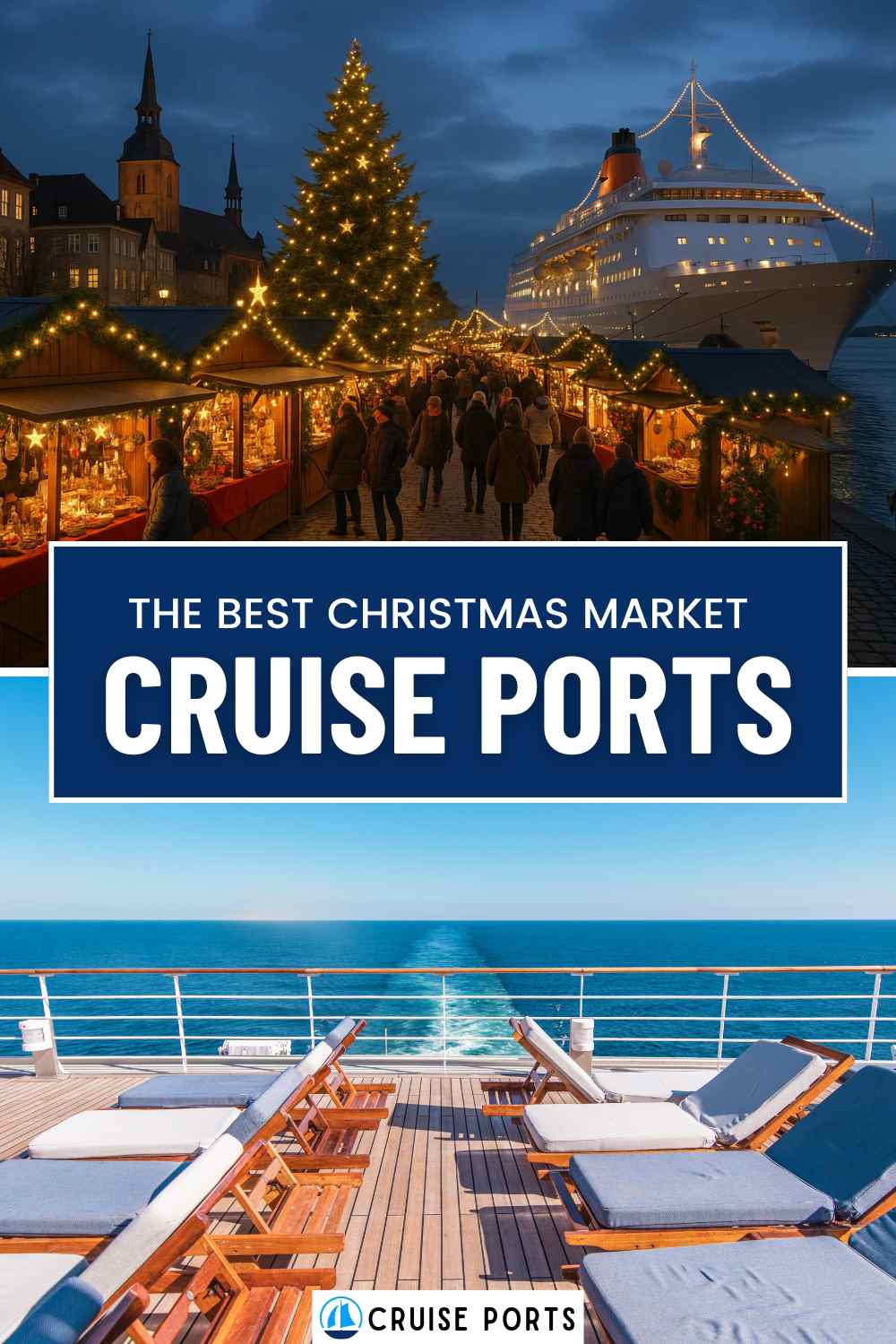
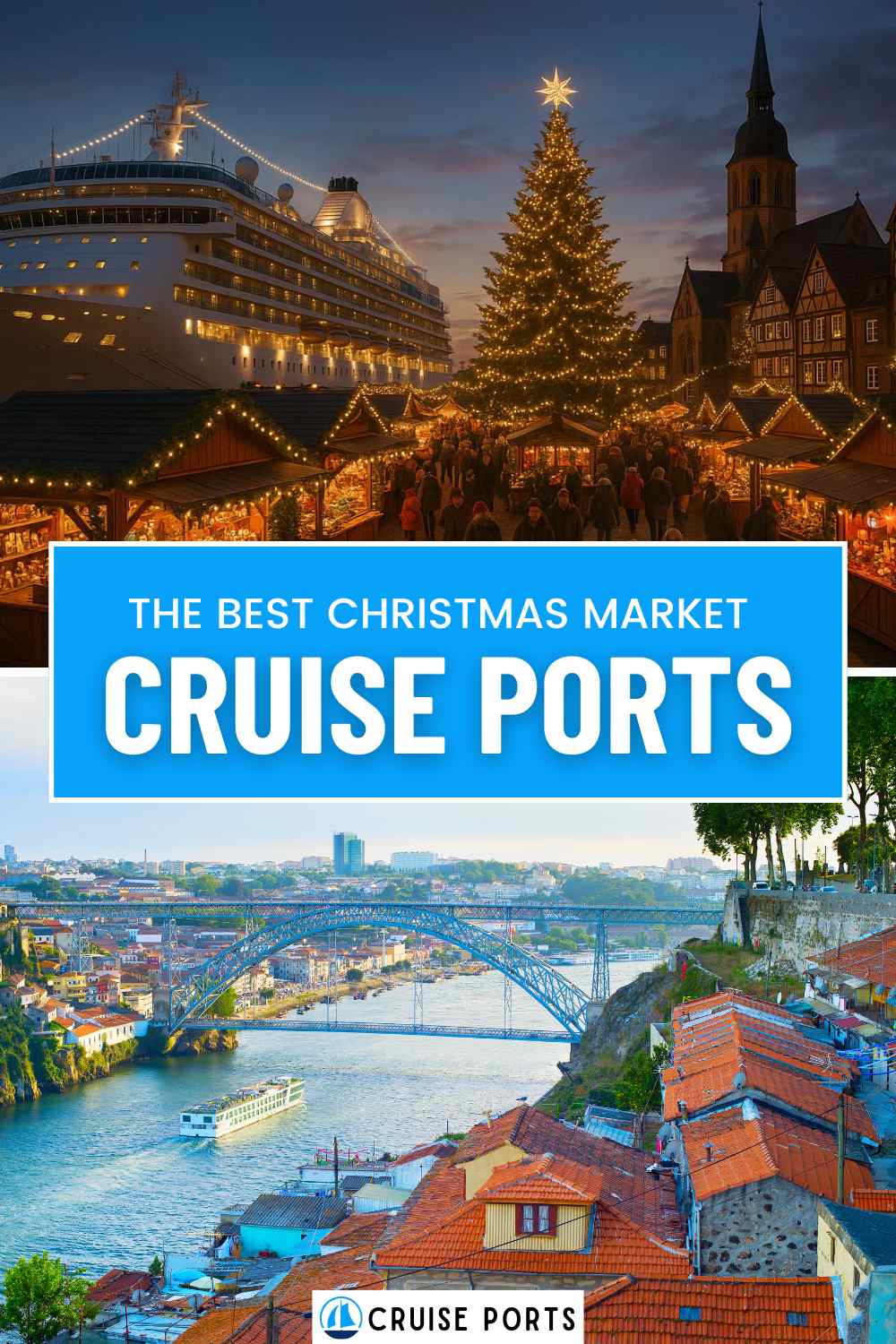
Some cruise and river ports turn December into a glowing storybook, with wooden stalls, choirs, and mulled wine steps from the gangway.
Here are my favorite festive ports, and how to work each into one easy day.
Quick Facts
The magic happens when the market sits close to where you step off. I lean toward ports where the stalls, the tree, and a warm-up spot all live inside one short loop.
- Proximity: the complete route from the berth or station to the first market
- Cluster density: several worthwhile markets within one compact walk
- Atmosphere: lights, choirs, skating, and traditional stalls
- Food and craft quality: local specialties and credible artisan stalls
- Easy navigation: clear routes and planned indoor warm-ups nearby
Dates shift a little each season, but most European markets run from late November to a few days before Christmas. If you are still mapping your route, my guide to Europe’s cruise ports is a good place to start.
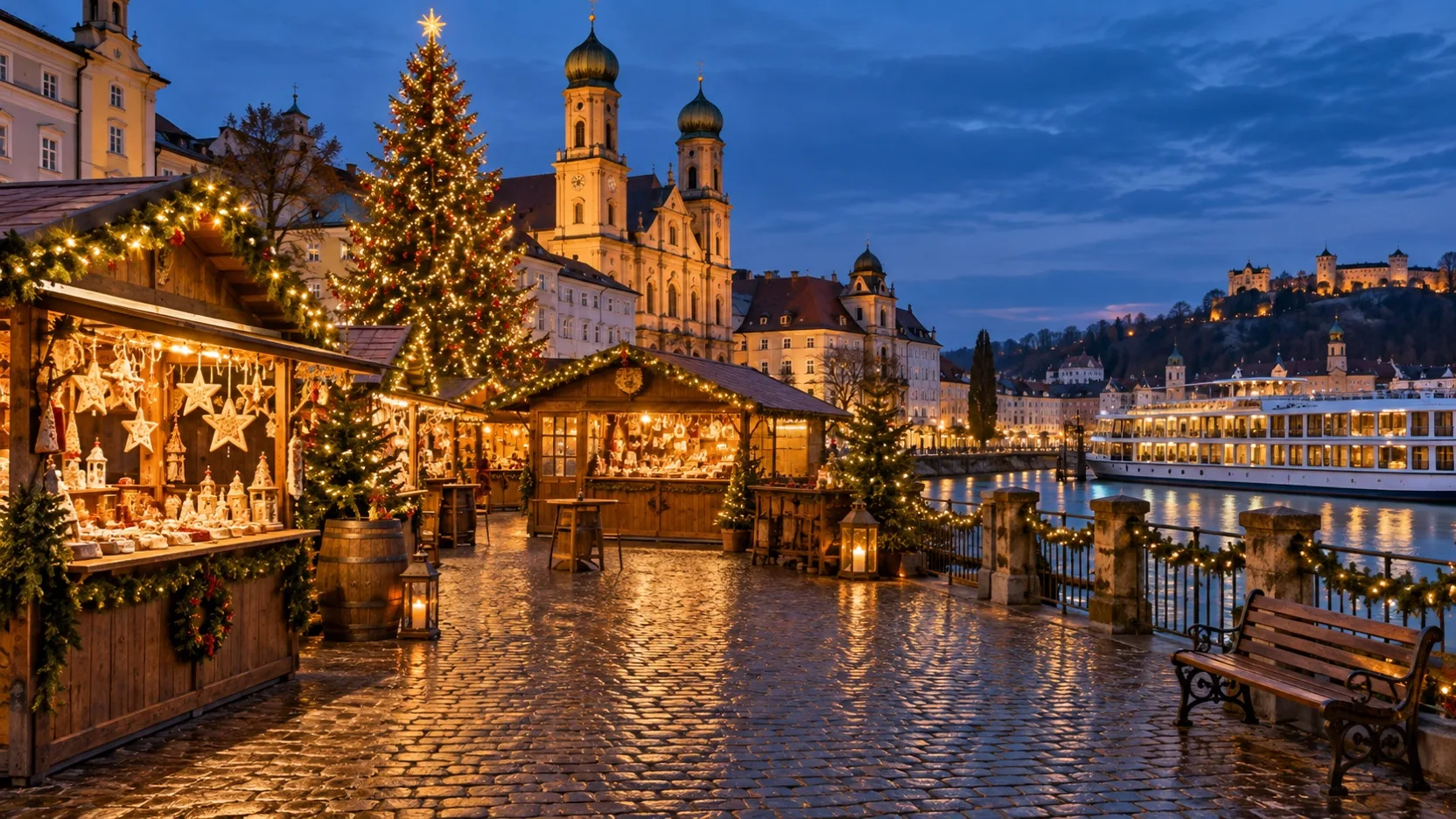
Danube river ports
The Danube is the classic festive river cruise, and its two grandest capitals both go all out for the season. If you only sail one river in December, I would make it this one.
1) Vienna, Austria
Vienna sits on the Danube, which makes it the crown jewel of a festive river sailing. The Rathausplatz Christkindlmarkt spreads across City Hall Square, with a tall arched gateway, a 40-foot (12 m) carousel, and the Vienna Ice World skating trail.
For quieter corners, I love Maria-Theresien-Platz between the two grand museums, plus the eco-minded stalls in the Biedermeier alleys of Spittelberg.
My tips: cup a hot Punsch, grab a bag of roasted chestnuts, and scan the full list of markets on the official Vienna tourist board site before you plan your loop.
Good to know: the Schonbrunn Palace market adds an imperial backdrop and a children’s program, so it is worth the short trip if you have the hours.
2) Budapest, Hungary
Budapest is the other Danube star, and its two headline markets sit a short walk apart. Vorosmarty Square hosts the classic Advent market, while the market around St. Stephen’s Basilica adds an ice rink and a light show projected onto the facade.
My tips: try chimney cake, kurtoskalacs, spun over coals and rolled in sugar, then warm up with forralt bor, the local mulled wine.
Good to know: the riverfront lights up beautifully, so leave a little time to stroll the Danube embankment after dark.
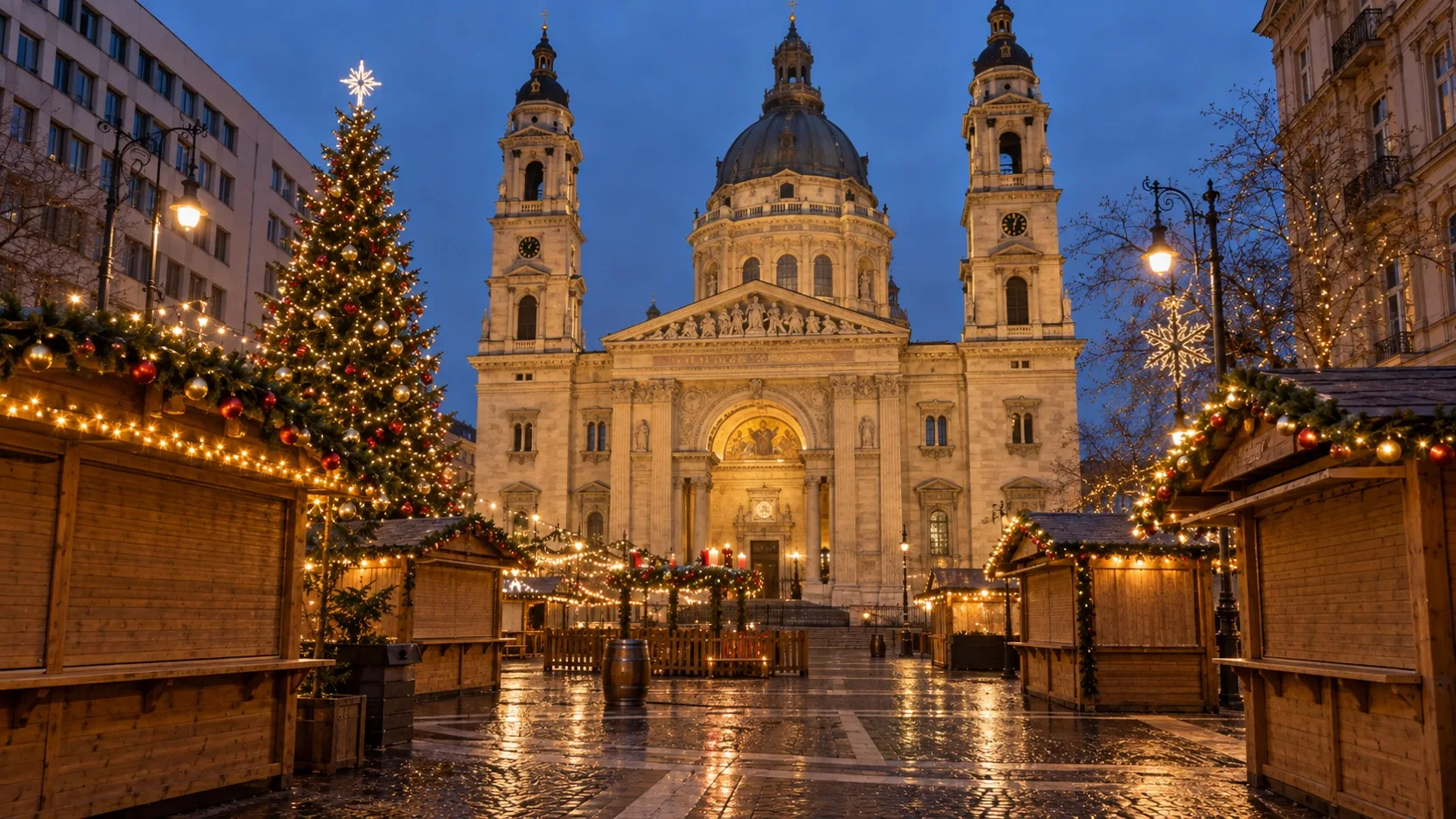
Rhine and Main river ports
The Rhine and the Main link a string of German towns that practically invented the Christmas market. These calls are compact, walkable, and packed with tradition.
3) Nuremberg, Germany
Nuremberg anchors many Main-Danube canal cruises, and its Christkindlesmarkt is one of the oldest and most famous in the world. Wooden booths fill the Hauptmarkt, the main square, in what locals fondly call the little city of wood and cloth.
A costumed Christkind opens the market each year, and the air smells of Lebkuchen gingerbread and small grilled Nuremberg sausages.
My tips: the market traditionally runs from late November to December 24, and you can confirm hours on the official Nuremberg Christkindlesmarkt site before your call.
Good to know: weekday mornings feel far calmer than weekends, when the square fills with shoulder-to-shoulder shoppers.
4) Cologne, Germany
Cologne is a Rhine cruise favorite, and its flagship market sits at Roncalliplatz right beneath the twin-spired Gothic cathedral. A giant decorated tree towers over the stalls, entry is free, and several more markets dot the old town within an easy stroll.
My tips: ride in on the U-Bahn to Dom/Hauptbahnhof, then market-hop between the cathedral, the old market square, and the riverside.
Good to know: the market runs a free stage program and children’s activities, so it is an easy win with kids in tow.
5) Strasbourg, France
Strasbourg calls itself the Capital of Christmas, and its Christkindelsmarik dates all the way back to 1570. Markets scatter across the Grande Ile, with the Great Christmas Tree crowning Place Kleber and traditional stalls filling Place Broglie.
My tips: nibble Alsatian bredele cookies and pain d’epices, sip vin chaud, and plan around the light trail listed on the official Strasbourg Christmas site.
Good to know: the whole Grande Ile glows after dark, so I like to start in daylight and linger as the streets light up.
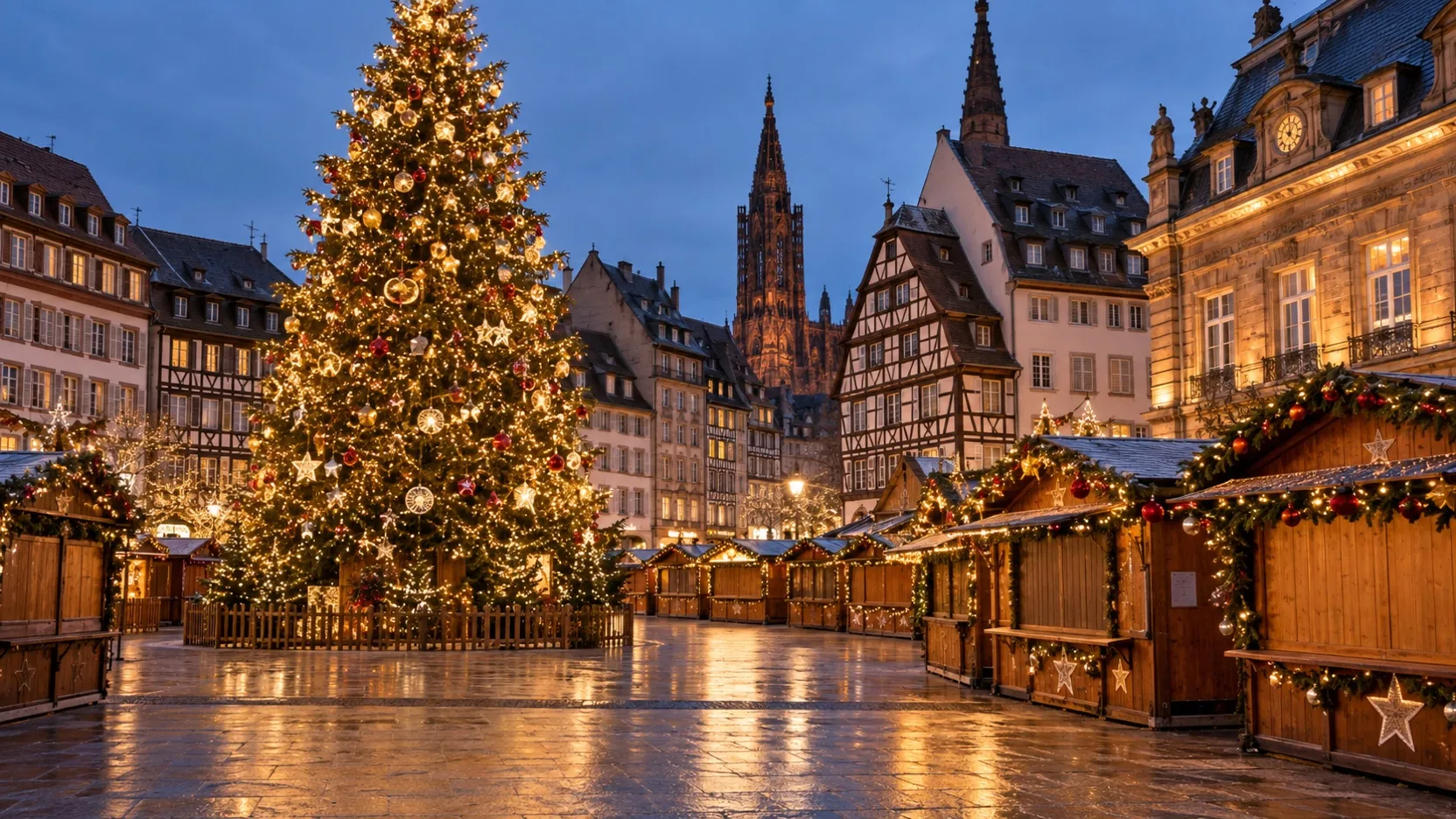
Baltic and North Sea ports
Ocean itineraries can reach excellent festive cities, but only Tallinn and some central Antwerp assignments offer a relatively direct port-to-market path. Copenhagen, Zeebrugge, and other secondary berths require a planned transfer.
6) Tallinn, Estonia
Tallinn is a Baltic cruise gem, and its market fills the medieval Town Hall Square with wooden huts around a towering tree. Estonians proudly trace their public Christmas tree tradition back centuries, and the choir music here is genuinely lovely.
My tips: warm your hands on a mug of glogi, shop for hand-knit wool, and read my Tallinn cruise port guide for the walk-off route.
Good to know: the cobbles turn slick when icy, so grippy soles make the old town far friendlier.
7) Copenhagen, Denmark
Copenhagen’s headline is ticketed Christmas at Tivoli, supported by smaller seasonal markets whose locations can change. Langelinie is closer to the center than Oceankaj, so confirm both the berth and Tivoli’s 2026 opening hours before building the day around it.
My tips: sip gloggen, snack on aebleskiver pancake balls, and see my Copenhagen cruise port guide to plan the flat walk into town.
Good to know: late afternoon is the sweet spot, catching daylight over the harbor as it fades into Tivoli’s evening sparkle.
8) Bruges via Zeebrugge, Belgium
Bruges, reached from the cruise port at Zeebrugge, hosts its Winter Glow festival across the storybook center. Markets fill the Markt and Simon Stevinplein, and an ice rink plus the Minnewater light route round out the season.
My tips: order the thick Belgian hot chocolate, take short steps on the polished cobbles, and arrive early before the day-trippers.
Good to know: the train from Zeebrugge is straightforward, so build in a comfortable buffer for the ride each way.
9) Antwerp, Belgium
Antwerp is another easy Belgian call, with cathedral spires framing a lively market on and around the Grote Markt. A riverside Ferris wheel, choirs, and stylish chocolate stalls make the loop feel effortless.
My tips: pair frites with a winter sauce, grab speculoos cookies, and check my Antwerp cruise port guide for the walk in.
Good to know: evenings bring light shows and choirs to the Grote Markt, which makes a later return worth the extra planning.
10) Amsterdam, Netherlands
Amsterdam is a good winter city call, but its market program is more dispersed and changeable than Nuremberg, Strasbourg, or Cologne. Check the official events calendar for the Ice Village, light installations, and any dated market before promising a Museumplein rink or chalet layout.
My tips: hop the trams when temperatures drop, try oliebollen fritters, and use my Amsterdam cruise port guide to route your day.
Good to know: the markets here are more scattered than concentrated, so pick one anchor and build a relaxed loop around it.
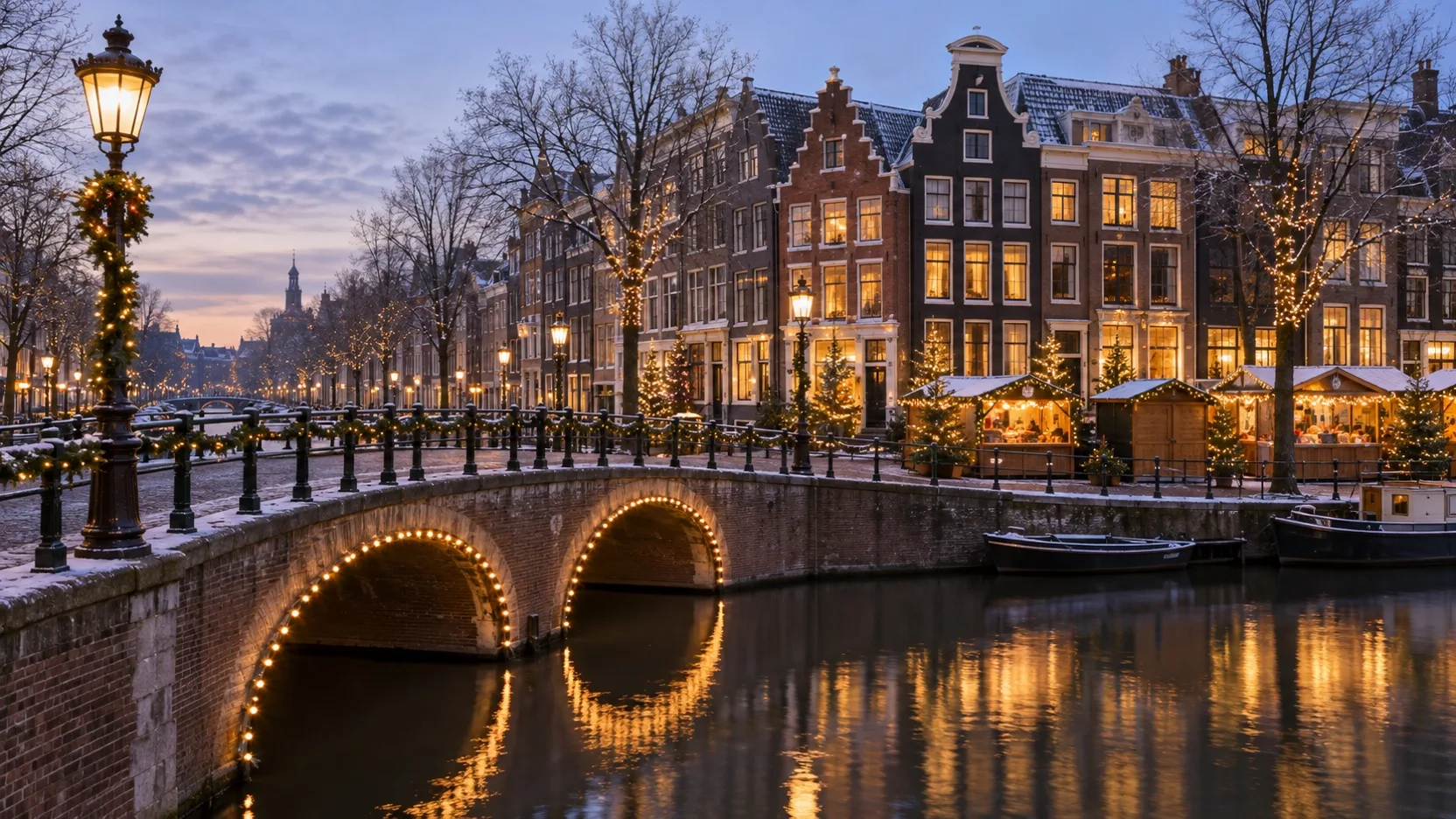
What to eat at the stalls
Austria and Germany: Punsch, roasted chestnuts, Lebkuchen, grilled sausages, spekulatius cookies.
Hungary: chimney cake, langos, forralt bor mulled wine.
France and Belgium: bredele cookies, vin chaud, thick hot chocolate, speculoos, waffles.
Baltics and Nordics: glogi and gloggen, gingerbread hearts, aebleskiver, cinnamon buns.
Netherlands: oliebollen fritters, poffertjes mini pancakes, stroopwafels.
Families and accessibility
Flatter market areas after the port transfer: central Copenhagen, Cologne, Museumplein in Amsterdam, and Budapest’s central squares.
Watch the cobbles: Tallinn, Bruges, and Strasbourg reward grippy, waterproof shoes.
Warm-up options: identify an open museum, café, or department store near each market rather than assuming one appears every 15 minutes.
Restrooms:use facilities where you are a customer or ticket holder, and carry coins because public access and payment rules vary.
One easy market day
Arrive near opening: The first part of the session often offers more room to browse and photograph stalls.
Loop the perimeter: Scan the crafts, food, exits, and indoor warm-up options before settling into the busiest lanes.
Warm up before you feel chilled: Choose a museum, café, or covered attraction that fits naturally into the route.
Catch the lights: If the ship schedule allows, arrive at the main square before dusk and watch the decorations switch on.
Protect the return: Work backward from the posted all-aboard time and add margin for transfers, winter traffic, or a missed transit connection.
Pack this, thank me later
Base layer, warm socks, hat, and gloves.
Small thermos for hot tea or cocoa.
Hand warmers and lip balm.
A foldable tote for gifts, kept zipped and cross body.
Coins and a card, since older huts and modern kiosks differ.
Itinerary ideas by vibe
Grand river capitals: Vienna and Budapest along the Danube.
Classic German tradition: Nuremberg, Cologne, and Strasbourg on the Rhine and Main.
Medieval old towns: Tallinn and Bruges, both wrapped in wooden huts.
Chocolate and canals: Bruges, Antwerp, and Amsterdam in one Low Countries loop.
Big-city sparkle with theme-park magic: Copenhagen with Tivoli Gardens.
The port-to-market chain matters
Budapest often offers the easiest river-cruise transition because many berths are central, while Vienna normally needs the U-Bahn, tram, taxi, or an included transfer from the Danube. Nuremberg river berths are outside the old town, so the Christkindlesmarkt is not a casual walk from the ship.
Cologne’s river berths vary, Strasbourg calls may use a transfer or tram from the port area, and Antwerp can be very close only at the central river berth. Read the operator’s final docking notice instead of using the city name as a distance estimate.
For ocean cruises, Tallinn’s Old Town is often walkable after exiting the port, but Copenhagen’s Oceankaj needs transit and Zeebrugge is roughly 10 miles from Bruges. A Bruges market day therefore needs a cruise transfer, train connection, or prebooked vehicle in both directions.
Market dates and hours are set locally and do not all cover the same weeks. Official 2026 schedules put Vienna’s Rathausplatz market from November 13 through December 26 and Nuremberg from November 27 through December 24, while Strasbourg had not yet posted final 2026 dates when this guide was reviewed.
Choose by tradeoff
Choose Vienna for variety and indoor warm-ups, Nuremberg for concentrated German tradition, Strasbourg for multiple old-town squares, and Cologne for several themed markets that reward a longer call. Choose Tallinn or Bruges for medieval atmosphere, accepting cobbles and a colder, potentially slower transfer.
Copenhagen is best when Tivoli is the priority and its ticketed opening hours fit the call. Amsterdam is stronger for canals, lights, and seasonal events than for one definitive traditional market, so it is the weaker choice if wooden craft stalls are the whole reason for sailing.
Weekday mornings are calmer for shopping, but the lights are best after dusk. Winter darkness helps the atmosphere, yet the ship’s all-aboard time and return transport still outrank one last cup of punch.
Final word
A Christmas market port day is all about atmosphere, short walks, and frequent warm-ups. The best calls let you wander, snack, and soak up the lights without ever feeling rushed back to the ship.
Pick a city with stalls near the water or the old town, arrive as the lights begin to glow, and save time for one last mug before you stroll back. Do that, and your December sailing will feel like a holiday movie you stepped right into.
How this guide was researched: This guide uses current official Christmas market, city tourism, port, and transit sources, including the published 2026 calendars for Vienna and Nuremberg and Strasbourg’s live planning page. Market dates, berth transfers, winter access, payment advice, and family logistics were reviewed on September 11, 2026; see our Editorial Policy.
More on this topic: browse every guide on weather, crowds and conditions.