Montevideo, Uruguay Cruise Port: A Walkable Old-Town Guide
Montevideo is one of South America’s easiest cruise mornings: you dock inside the working port, walk out, and Uruguay’s old town is right there. Here is exactly how I would plan a day in the Uruguayan capital.
Last Visited: December 2024 aboard Norwegian Star. This stop came near the end of my 17-day transatlantic sailing from Lisbon to Buenos Aires.
My quick take on Montevideo
This is a flat, walkable, low-stress port where you genuinely do not need an excursion to have a great day. If you like relaxed old towns and grilled meat, you will love it.
It pairs naturally with the region’s bigger names, so it is worth reading alongside my Buenos Aires cruise port guide and the wider South America cruise ports hub.
The quick facts
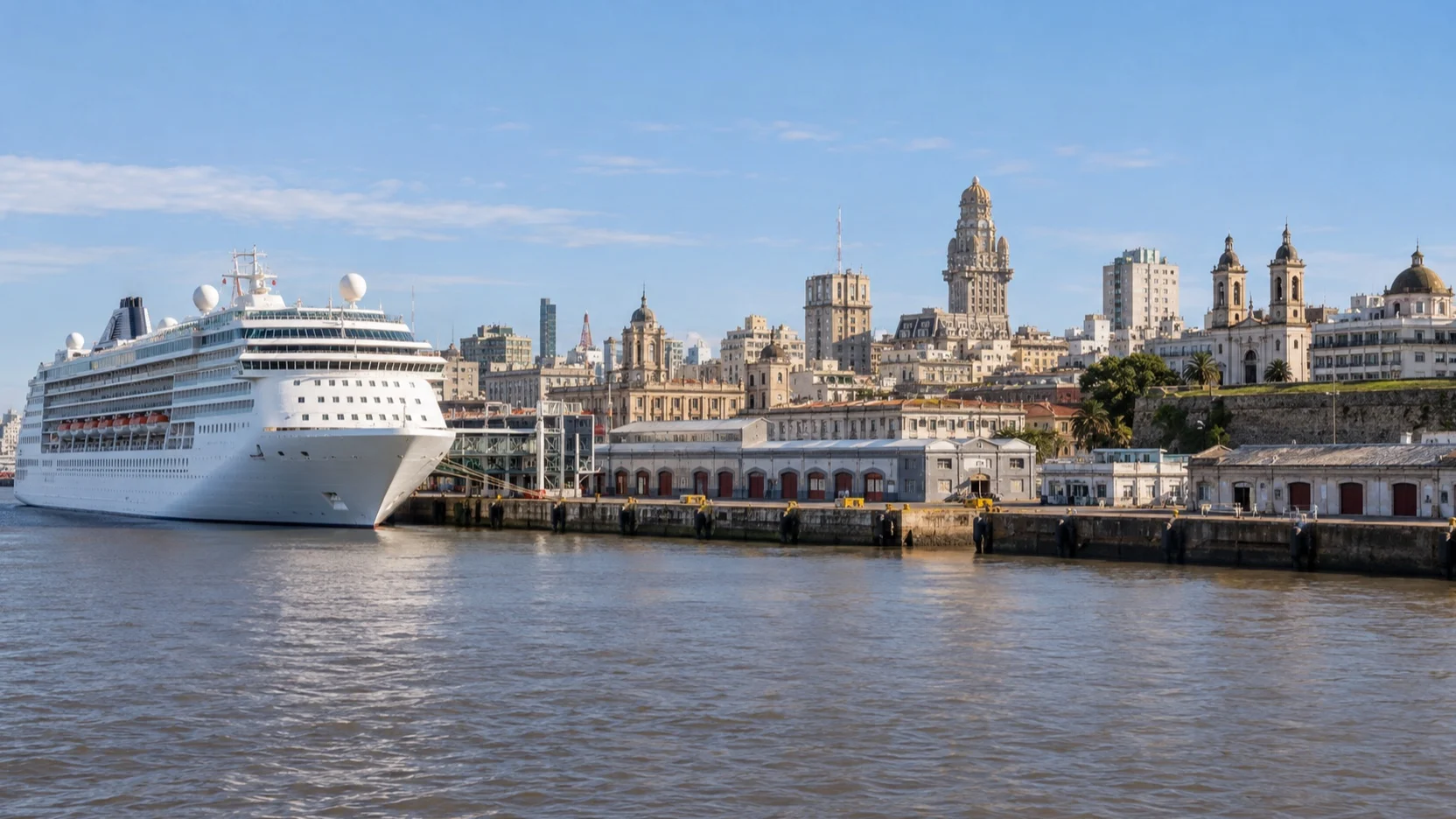
- Where you land: the passenger terminal in the Port of Montevideo, on the east side of the city bay near the Escollera Sarandí breakwater, right at the edge of Ciudad Vieja.
- Dock or tender: Ships almost always berth alongside here, so no tender.
- Into town: Mercado del Puerto is only a few minutes from the port gate, while Plaza Independencia is roughly a 15 to 20 minute walk through Ciudad Vieja.
- Currency and language: The Uruguayan peso (UYU) and Spanish; US dollars and cards are accepted in many tourist spots.
- Time zone: Uruguay Standard Time (UYT, UTC−3).
- How often the call is missed: Low (roughly 1 to 2%): the sheltered berth is rarely limited by local weather.
Getting around from the terminal
For the historic core, walking is the answer. Ciudad Vieja, Plaza Independencia and the Mercado del Puerto are all within an easy stroll of the pier.
For anything further out, such as Pocitos beach or the Mercado Agricola, grab a taxi or a ride-hailing app. That keeps things simple and avoids working out bus routes on a short port day.
Montevideo is one of the more relaxed stops in the region, which is why it earns a place on my list of genuinely walkable cruise ports.
The stops I’d actually spend time on
- Ciudad Vieja (Old Town): the historic heart, full of colonial facades, cafes and galleries. This is where I would spend most of a short day.
- Plaza Independencia: the grand square linking the old town to downtown, home to the Artigas mausoleum honoring national hero Jose Artigas.
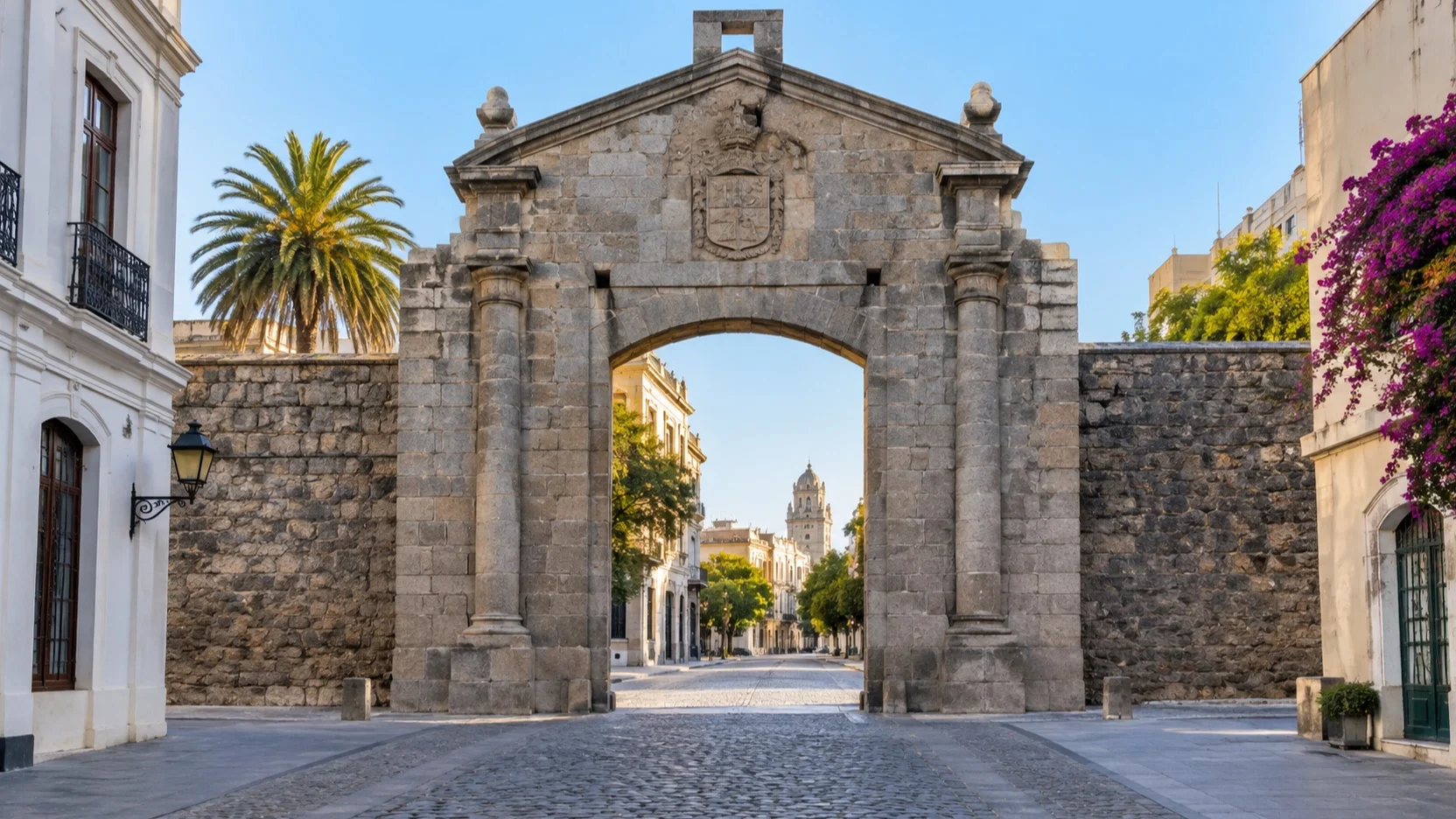
- Puerta de la Ciudadela: the surviving stone gateway of the old citadel, marking the entrance to Ciudad Vieja and an easy photo stop.
- Palacio Salvo: the eclectic 312-foot (95 m) tower on Plaza Independencia. Fun fact: when it opened in 1928 it was the tallest building in Latin America, and guided visits reach the rooftop mirador.
- Teatro Solis: the city’s most important theater, inaugurated in 1856. Guided tours run several days a week and are free on Wednesdays.
- Mercado del Puerto: the century-old grill market a couple of blocks from the pier, where parrilla (open-flame barbecue) is the star. Arrive early for a table.
- Peatonal Sarandi: the pedestrian spine of Ciudad Vieja, lined with shops, buskers and cafes, connecting the citadel gate toward Plaza Independencia.
- Museo Torres Garcia: a compact gallery celebrating Joaquin Torres Garcia, one of Uruguay’s most influential modern artists, right in the old town.
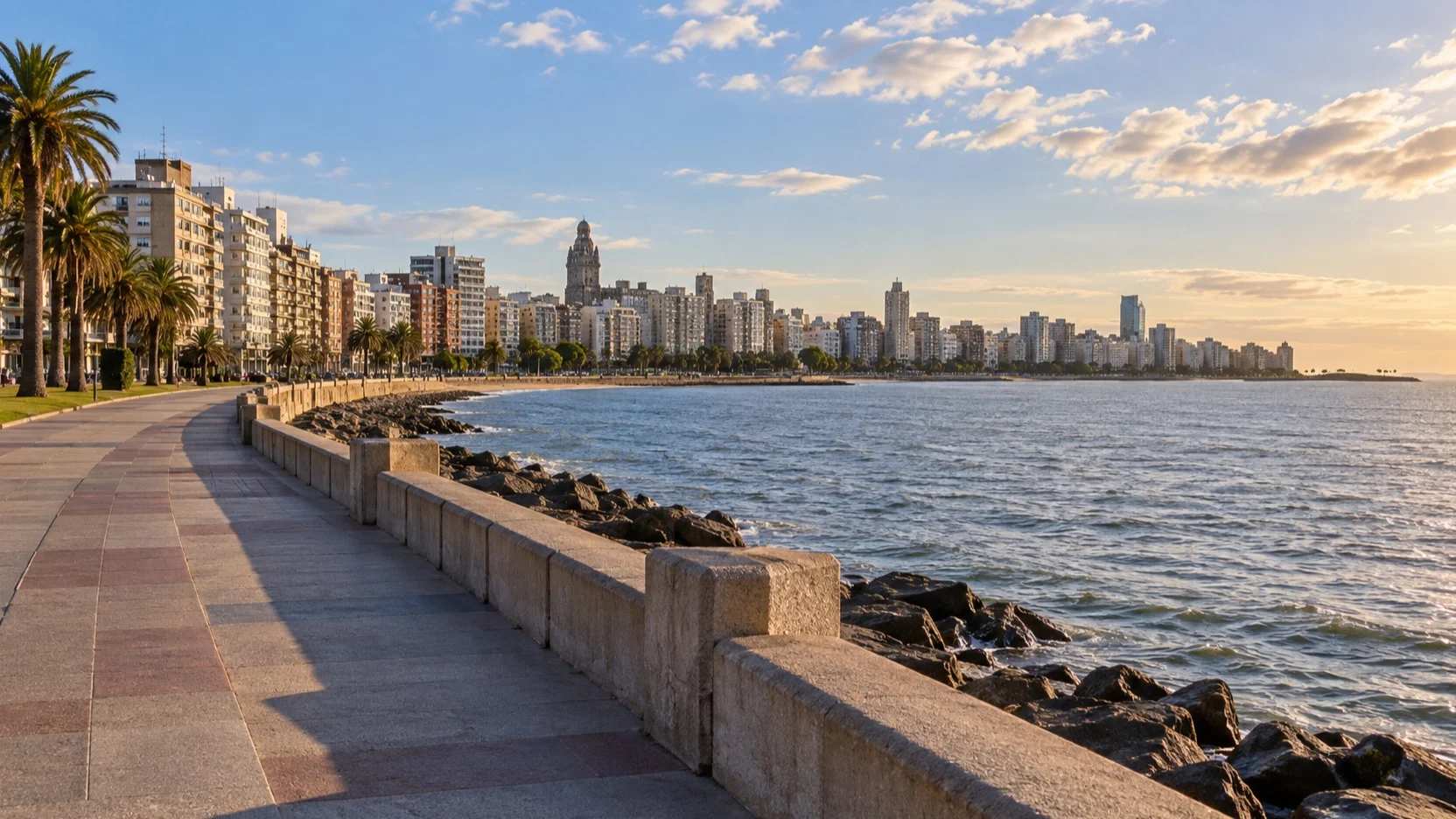
- Rambla de Montevideo: the long waterfront promenade along the Rio de la Plata, perfect for a slow walk with sea air and local life.
- Playa Pocitos: a short taxi ride east, this crescent city beach and its leafy neighborhood offer a relaxed, upscale change of pace.
- Mercado Agricola de Montevideo: a restored 1913 market hall packed with food stalls, produce and restaurants, great if you want a livelier meal away from the tourist center.
- Estadio Centenario: host of the first FIFA World Cup final in 1930, with a football museum on site for fans willing to take a taxi out.
Heads up: some links below are affiliate links. If you book through one, I may earn a commission at no extra cost to you. It never changes which hotels or tours I recommend. Full disclosure.
How I’d plan the day
Three hours: walk from the terminal into Ciudad Vieja, take in the Puerta de la Ciudadela and Peatonal Sarandi, reach Plaza Independencia for Palacio Salvo, then loop back for lunch at the Mercado del Puerto.
Five hours: add Teatro Solis and a stretch of the Rambla, with time to browse the old town’s shops and galleries at a slower pace.
Eight hours: tack on a taxi out to Playa Pocitos or the Mercado Agricola, and still be back with a comfortable buffer before all-aboard.
Whatever you choose, aim to be back at the ship at least an hour before departure. If it is your first cruise, my first-timer cruise ports guide covers the return-buffer basics.
A realistic word on accessibility
The old town is mostly flat, which helps, but its streets are frequently cobbled and uneven. That can be tiring for anyone with limited mobility.
Taxis line up right outside the terminal, so it is easy to ride to a landmark and explore on foot from there. Gangway steepness varies with the tide, so ask crew about conditions before you disembark.
When to go, and the weather
Montevideo’s cruise season runs through the southern spring and summer, roughly November to March. That is when the weather is warmest and the days are long.
Summers (December to February) are warm and good for the Rambla and beaches. Shoulder months are cooler and quieter, so pack a light layer either way.
Walk the old town in the right order
The Mercado del Puerto is only a few minutes from the port gate, while Plaza Independencia is closer to a 15 to 20 minute walk. Start with the market only if you want an early lunch, otherwise walk Sarandí toward the plaza and loop back to eat near the ship.
Teatro Solís and Palacio Salvo both run scheduled guided visits, so check the official day and language before building the route around an interior. The Solís tourism listing currently shows free Wednesday tours, but capacity and times can change.
Use a taxi or ride app for Pocitos, Estadio Centenario, or Mercado Agrícola because each pulls you away from the compact old-town loop. Carry a small amount of Uruguayan pesos for minor purchases, but ask to pay in pesos and review the card terminal before accepting currency conversion.
The port and old town are mostly level, but Ciudad Vieja has patched sidewalks and uneven paving. Teatro Solís lists accessible entrances, restrooms, circulation, and an elevator, while the Mercado del Puerto lists an accessible entrance but no accessible restroom.
Quick answers
How far is the cruise terminal from the old town?
Very close. The terminal sits at the edge of Ciudad Vieja, within an easy walk of Plaza Independencia and the Mercado del Puerto.
What currency should I bring?
The Uruguayan peso is official. Cards and U.S. dollars are accepted in many tourist spots, but a little peso cash is useful for markets and taxis.
Do I need an excursion here?
Not for the old town, which is very walkable on your own. An excursion mainly makes sense if you want a day trip further afield, such as Colonia del Sacramento.
How this guide was researched: Unless a first-hand visit is explicitly identified above, this guide is based on independent research using official port, tourism, transit, government, and attraction sources where available. Logistics and time-sensitive details were reviewed on September 10, 2026; see our Editorial Policy.