Cruise Ports With a Castle You Can Walk To
A castle you can actually walk to from the ship is rarer than the brochures suggest. Most of the famous ones sit an hour inland behind a tour bus, and the handful that stand within sight of the pier are the ones worth planning around.
My quick take
Walking distance is the easy part of this question. The part that decides your day is vertical, and almost nobody checks it before they leave the ship.
I would rather have a modest fort at the end of a flat mile than a spectacular one at the top of four hundred steps in August. That is a personal opinion and you may feel differently, but you should at least know which one you are signing up for.
The quick facts
- Flattest arrival: Rhodes, about five minutes on level ground from the Tourist Port to the Old Town gates.
- Shortest walk of all: Portoferraio, where the quay sits inside the historic center.
- Hardest climb: Kotor, roughly 1,350 steps from the town up to the fortress.
- Best shortcut: Alicante, where an elevator runs up through the inside of the rock.
- What actually decides it: The last two hundred feet of elevation, not the first mile of pavement.
What walkable really has to mean
For a castle to make this list, you have to be able to reach it on foot from the berth in under half an hour, or take a short ride that runs constantly. No bus tour, no all day commitment.
The second test is the surface. A mile of flat seafront and a mile of polished medieval stone at a twelve percent grade are not the same mile, and your knees will tell you so around hour three.
So every port below gets a straight answer on the climb. I would rather tell you a fortress is brutal than have you discover it halfway up in ninety degree heat (32 C).
Rhodes is the one that requires almost nothing of you
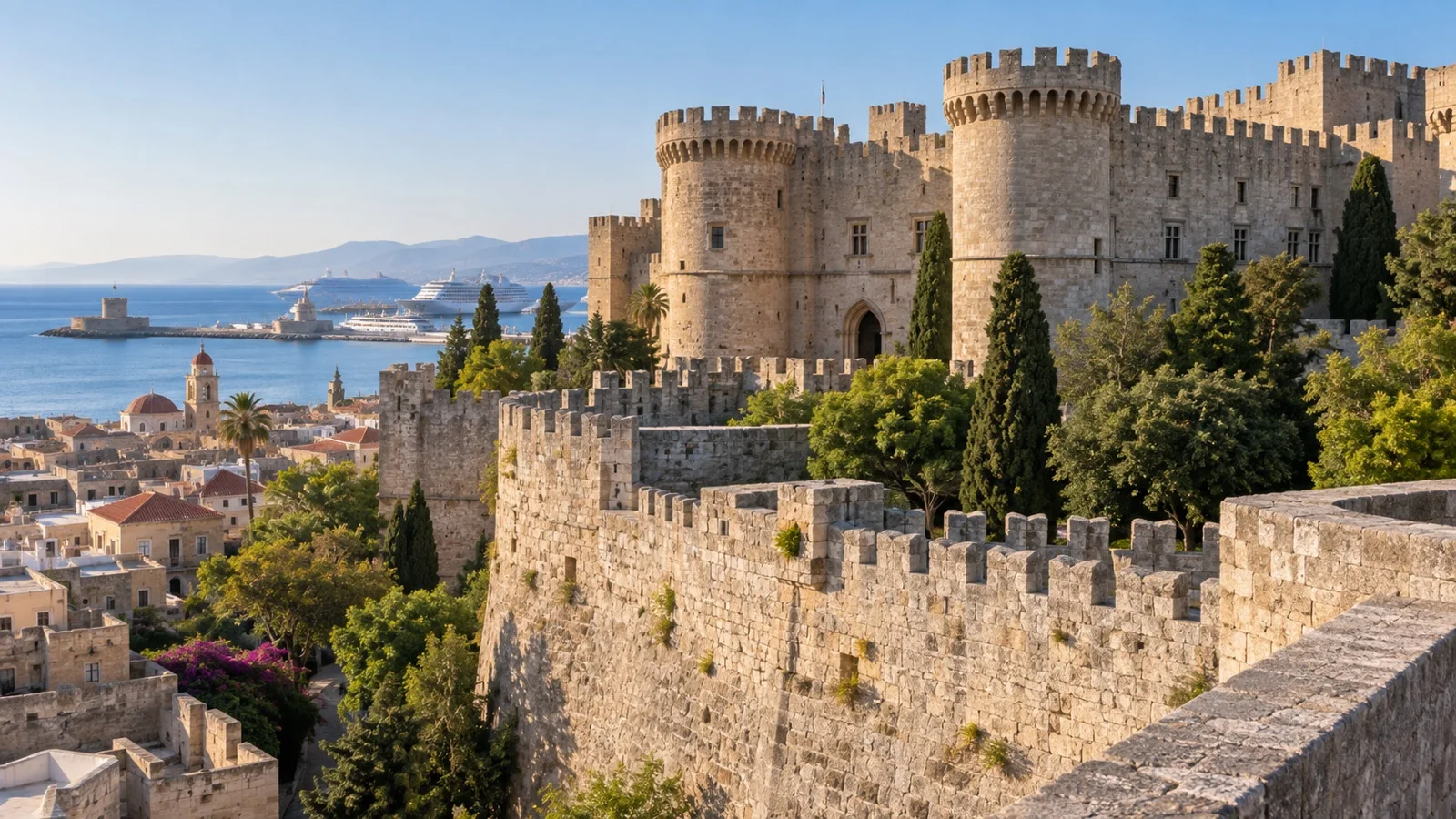
From the Tourist Port it is a flat five minute walk to the Old Town gates, and the Palace of the Grand Master sits a few hundred yards inside. The Rhodes cruise port guide notes that Akandia berths sit further out and may need a shuttle.
This is a walled medieval city with world heritage status, and the fortifications are the whole point of the place. You are walking through a castle rather than up to one.
Climb rating, easy: the cobbled lanes inside have gentle slopes and nothing you would call a hill. The one real hazard is leaving through the wrong gate, and there are eleven of them that all look identical.
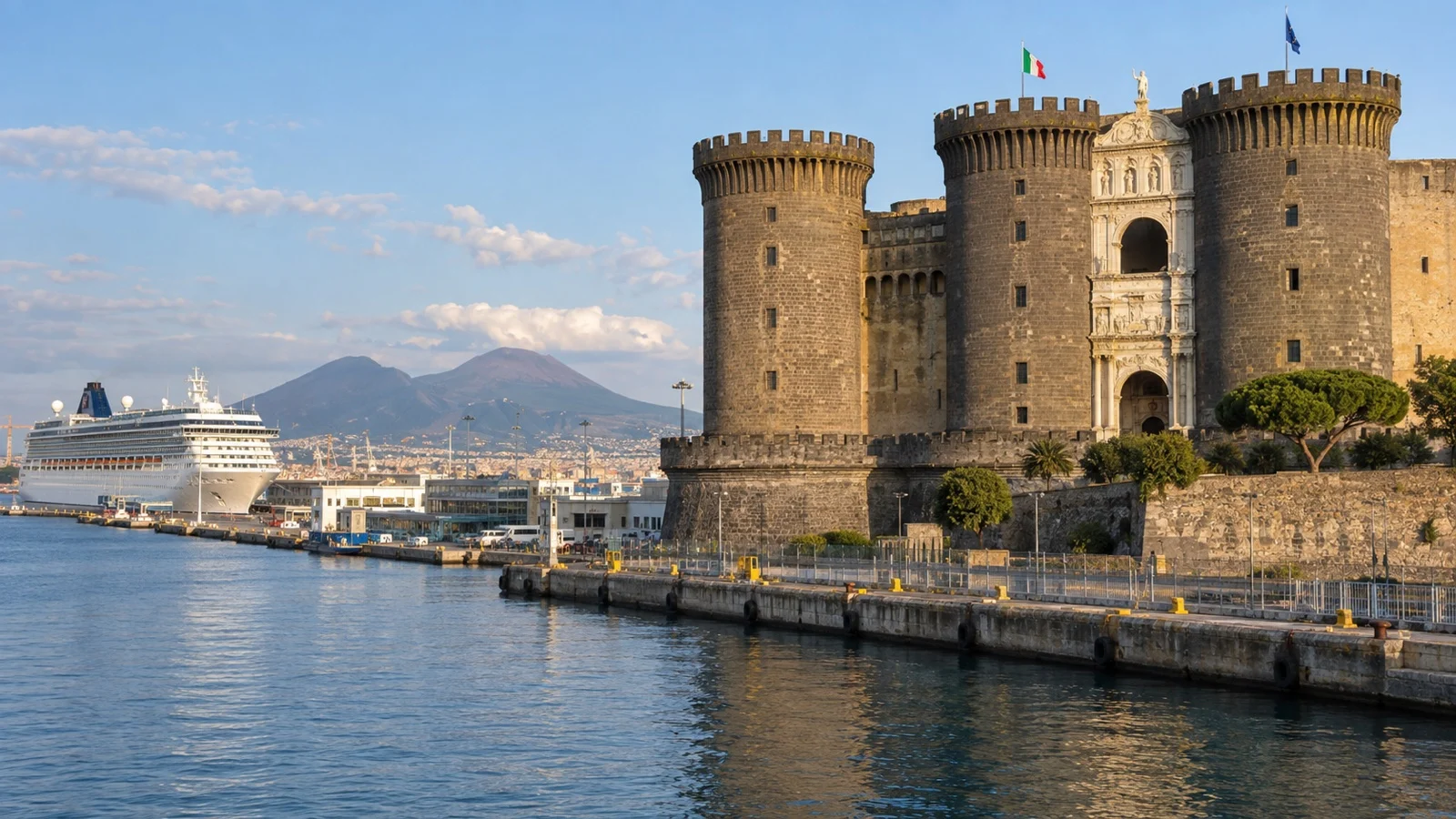
Naples puts a castle at the end of the gangway
Ships berth at Molo Beverello or the Stazione Marittima, which is one of the few Italian ports where the berth is genuinely in the city. Castel Nuovo is right there on the walk toward Piazza del Plebiscito.
That walk is a flat ten to fifteen minutes up Via Nuova Marina, level and well signed, and it beats waiting for transport. The Naples cruise port guide covers the terminal layout in more detail.
Climb rating, easy: the approach is level, though the historic center beyond has cobbles, uneven sidewalks and the occasional step. Wear real shoes and you will be fine.
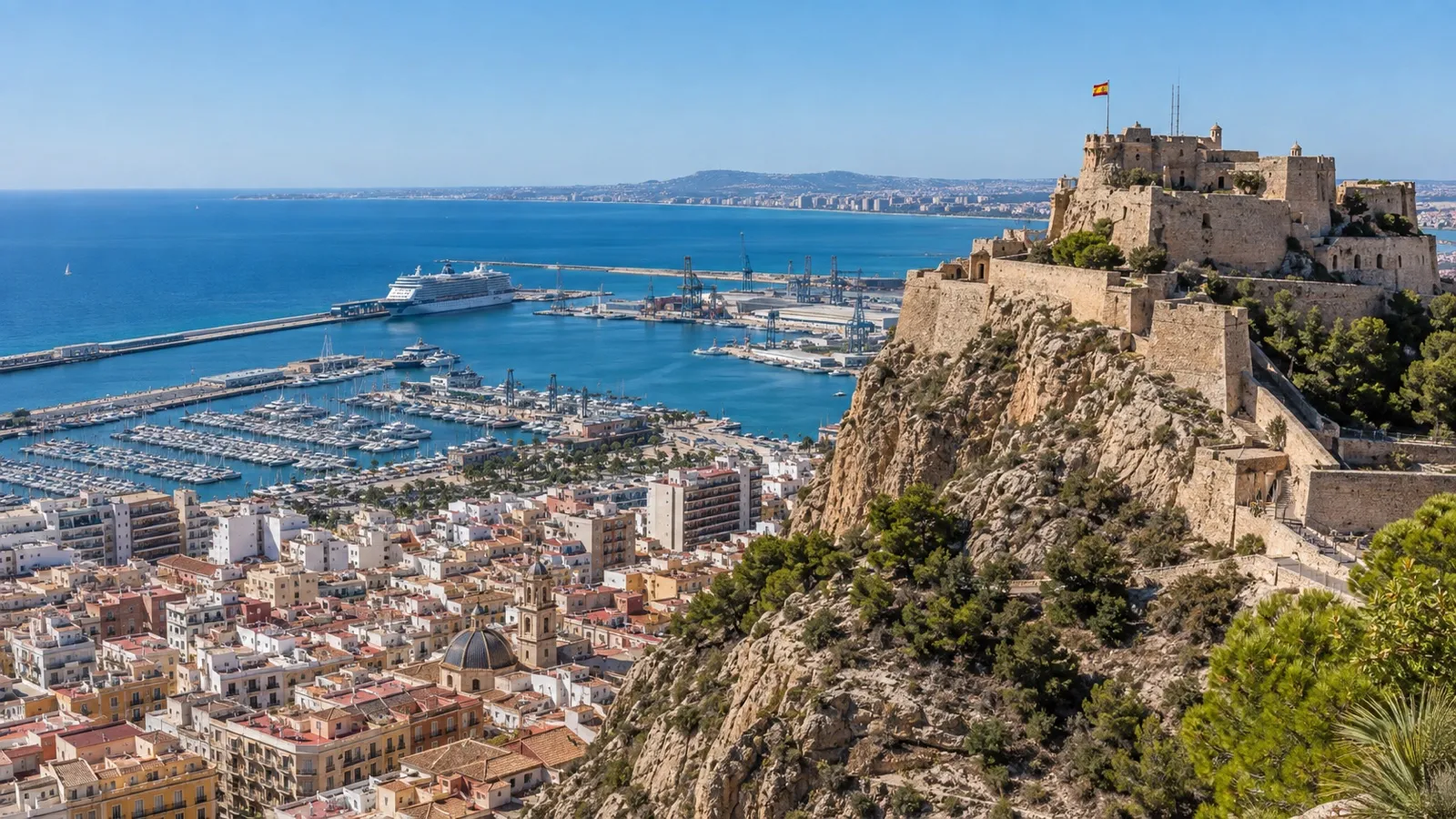
Alicante has an elevator inside the mountain
Santa Barbara Castle sits on a rock above the city, and there is an elevator entrance near Postiguet Beach that takes you most of the way up. This is the single best piece of engineering on the list for anyone who does not want to climb.
From the terminal it is about a ten minute walk to the Explanada, with a shuttle across the working port on some days. The Alicante cruise port guide explains how the berth assignment changes that first leg.
Climb rating, easy with the elevator and hard without it: the walking ascent is steep and exposed, and the elevator reduces the climb without making every part of the fortress step free. Our guide to port day activities that work with limited mobility is the companion piece to this one.
Malaga gives you two forts and one honest hill
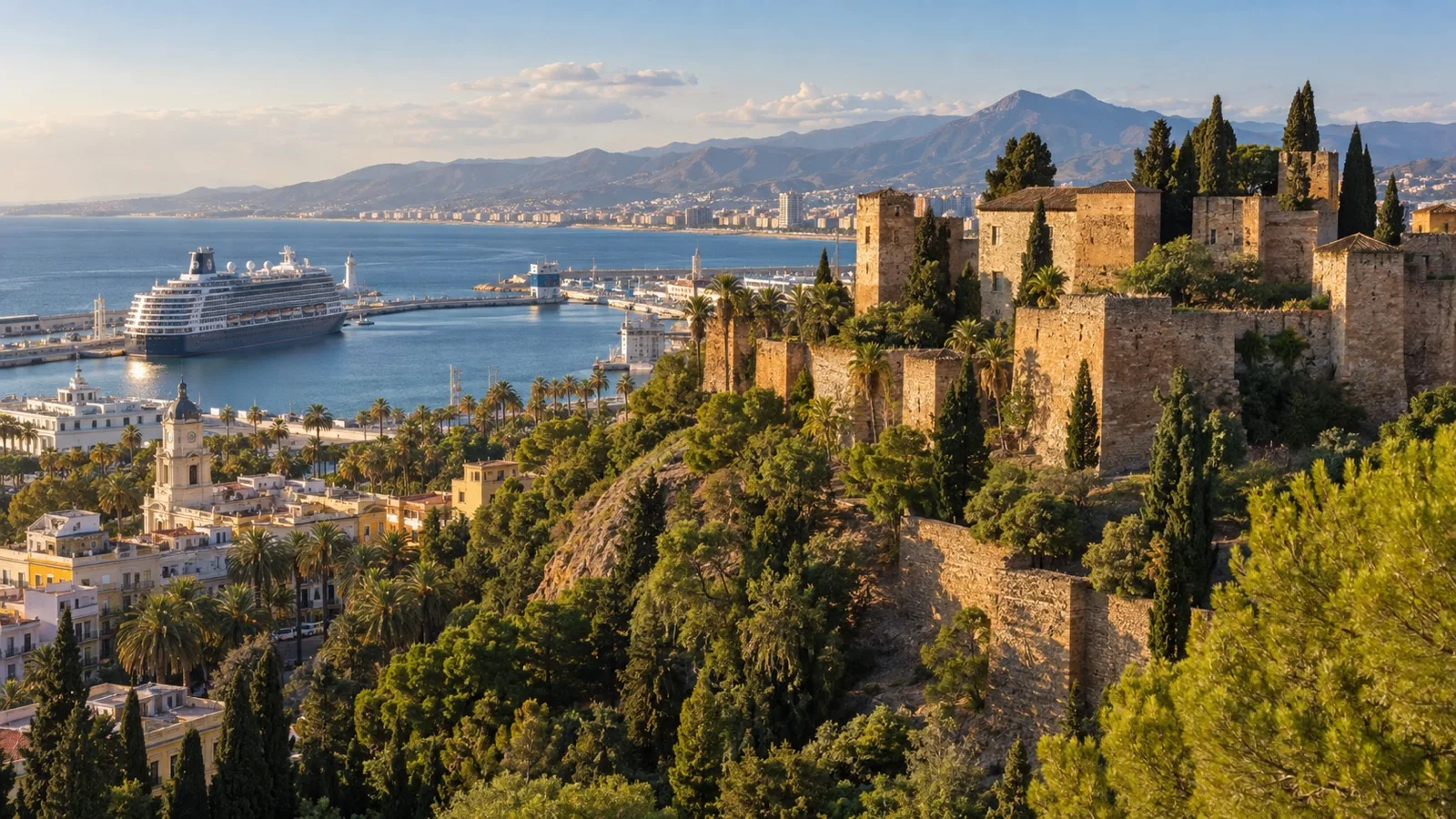
Most ships use the Levante berths, and the walk into town along the Palmeral de las Sorpresas and Muelle Uno runs fifteen to twenty minutes, flat, paved and step free. That is one of the better walk off ports anywhere in the Mediterranean.
Then the ground changes. The Alcazaba is an eleventh century Moorish fortress on the slope above the old town, and Gibralfaro sits higher again on the same hill, with a combined ticket covering both.
Climb rating, moderate to the Alcazaba and hard to Gibralfaro: both are steep and uneven, and the Malaga cruise port guide suggests taking a taxi up and walking down. I would do exactly that and spend the saved energy on the old town.
Saint-Malo is a castle you live inside for the afternoon
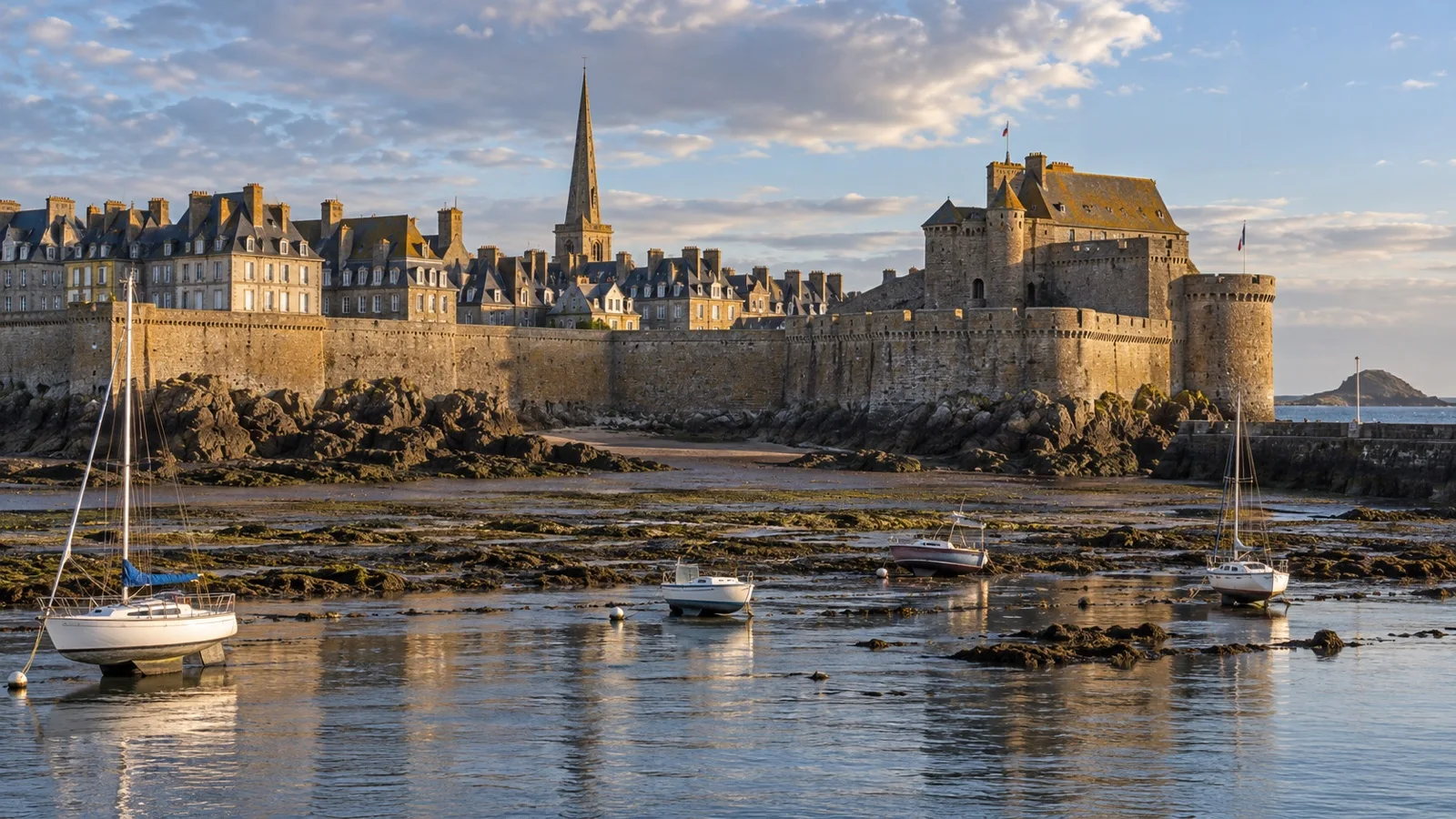
Smaller ships go alongside the quay and larger ones use offshore moorings and tender in, but either way the walled city is a few hundred yards away. A five to ten minute walk through the nearest gate puts you inside Intra-Muros.
The rampart circuit is free, runs the full perimeter and takes roughly forty to sixty minutes at a wandering pace. The Saint-Malo cruise port guide is honest about what that walkway is actually like.
Climb rating, moderate: the ramparts are uneven granite with steps up at every gate, no elevator anywhere and no handrail on the outer edge in places. That makes the wall walk effectively closed to wheelchair users, which is worth knowing before you build a day around it.
Portoferraio wins on distance and loses on stairs
The Alto Fondale quay sits inside the historic center, which is why no shuttle bus runs here. You are already where you were trying to get to, and the Portoferraio cruise port guide covers the alternative Calata Italia piers.
Cosimo I de Medici founded this town in 1548 and the fortifications are still the shape of the whole place. Forte Stella, Forte Falcone, the restored Forte Inglese and the Martello Tower ring the headland above the harbor.
Climb rating, hard: everything up there involves climbing, on stairs and ramps built for defense rather than for visitors. The route to Napoleon’s town house runs through streets laid out in the sixteenth century, so the surfaces are stone and cobble the whole way.
Kotor is a five minute walk and then a mountain
Ships dock or tender depending on the vessel and the day, and either way it is a flat five minute walk from the quay to the Sea Gate. Getting to the walled town could not be simpler.
Getting above it is another matter. The fortress of San Giovanni stands at roughly 985 feet (300 m) up a steep zigzag, and the Kotor cruise port guide puts the count at about 1,350 steps with a seasonal ticket in summer.
Climb rating, genuinely hard: there are no water fountains on the way up and the stone throws heat back at you. The bay is a protected region of walled towns and fortifications that looks nearly as good from a third of the way up, so stopping early is not a failure.
Tallinn asks for cobbles rather than stamina
Ships berth alongside at the Old City Harbour and you walk off, with the medieval center about three quarters of a mile (1.2 km) away. That is an easy signed walk of fifteen to twenty minutes to the Old Town gates.
The upper town on Toompea is a short steep climb, rewarded with viewing platforms over the red rooftops, and you can walk sections of the wall itself. The Tallinn cruise port guide lays out the route from the pedestrian exit.
Climb rating, moderate: the distance is trivial and the hill is short, but the streets are cobbled and Toompea is steep. Wheelchair and stroller users should plan a flatter Lower Town route instead.
San Juan has two forts and a lot of hills between them
The Old San Juan piers put you at the edge of the historic district on foot, and the two Spanish forts guarding the entrance are the reason most people are there. One ticket covers both and stays valid for a full day.
The historic core is compact and most of the big sights are a ten to twenty minute stroll away. The catch is that Old San Juan is built on hills with uneven cobblestone streets, which the San Juan cruise port guide does not sugarcoat.
Climb rating, moderate and hotter than it looks: a short taxi to the fort entrances saves real effort if the uphill sections are hard for you, and the Paseo de la Princesa is the flat option along the water. If your ship uses the Pan American piers across the bay, you need a ride into the old city first.
Arrecife is the easiest castle on this whole list
Castillo de San Gabriel sits on a small islet reached by a causeway called the Puente de las Bolas, and it holds a local history museum. There is no hill involved at any point.
From the Puerto Naos berth it is about a twenty to twenty five minute flat seafront walk toward the Charco de San Gines, and the Arrecife cruise port guide notes that Los Marmoles sits roughly two miles (3 km) further out. Castillo de San Jose is closer to the port and houses a contemporary art museum inside the old fort.
Climb rating, easy: the waterfront is relatively flat, but the sun and the trade wind make distances deceptive here. Carry water even on a walk this short.
Corfu, Dover and the ones that look closer than they are
Some ports put a castle on the horizon and then quietly put two miles between you and it. These are the four I get asked about most, and none of them is a clean walk off.
- Corfu: The terminal is roughly 1.25 miles from the Old Town, a flat but unlovely twenty to twenty five minute port road walk, and there are slopes and steps around the fortresses once you arrive.
- Dover: The Western Docks terminals are not in the town center, and the castle sits on the cliff above, so most people take a taxi up.
- Dubrovnik: Gruz is about two miles northwest of the walled Old Town, a thirty to forty minute walk along the water that is pleasant early and miserable at midday.
- Edinburgh: Leith is two to three miles from the center and the other berths are far worse, so the castle is never a walk from the ship.
Dover is the one people misjudge most, because the castle is visible from the deck. Visible and walkable are different words, and the fortress on the white cliffs is a good half day once you add the tunnels.
The Corfu cruise port guide and the Dubrovnik cruise port guide both have the transport options laid out. In Dubrovnik the walls are about 1.25 miles of ramparts with many steps, and in June through August they feel like an oven by midday.
How to read a hill before you commit to it
I look at three things before I decide to walk up to anything. None of them takes more than a minute on the ship’s wifi the night before.
- Elevation, not distance: Find the height of the castle above the water. Anything over about 300 feet (90 m) is a real climb, whatever the map says about the walking time.
- Surface: Polished medieval stone in the rain is a different problem from a paved switchback, and grippy shoes matter more than fitness on the way down.
- Shade and water: Some of the best climbs have neither, and the ones that sell water at the top are not the ones you need to worry about.
- The way down: Descending polished stairs is harder on most knees than climbing them, so budget the same time in both directions.
The other habit worth building is going up first and looking around second. Heat builds through the day in almost every port on this list, and the fortress is always the least shaded thing in town.
Quick answers
Which cruise port has a castle closest to the ship?
Portoferraio on Elba, where the quay sits inside the historic center and the Medici forts ring the headland above you. Rhodes is a close second at about five flat minutes from the Tourist Port.
Can you walk to Dover Castle from the cruise terminal?
Not sensibly. The terminals sit away from the town center and the castle is up on the cliff, so a taxi is the normal way up.
How hard is the climb to the Kotor fortress?
It is roughly 1,350 steps up a steep zigzag with no water along the route. Plenty of people turn around at the church partway up and still get the view they came for.
Is there a castle you can reach without climbing?
Arrecife, where Castillo de San Gabriel sits on a flat causeway, and Naples, where Castel Nuovo is on a level walk from the berth. Alicante counts too if you use the elevator through the rock.
Do I need a ship excursion to see a castle in port?
Not for any of the walkable ones on this list, since you are never far from the pier. Save the excursion budget for the castles that need an hour of driving each way.
Final word
If you want one port that delivers a castle with almost no effort, take Rhodes. If you want the best view and you are willing to pay for it in steps, Kotor is the one, and I would not attempt it after ten in the morning in July.
Everything else here is a trade between distance and gradient. Decide which of the two you are short on before you leave the ship, because deciding it halfway up is how a good port day turns into a taxi ride back.
How this guide was researched: Berth locations, walking distances, terrain and climb difficulty for every port listed here were checked in October 2026 against official heritage and port information. Opening hours, ticket prices, berth assignments and shuttle arrangements change often, so confirm the details for your own sailing date before you plan the day. See our Editorial Policy.
More on this topic: browse every guide on shore excursions and DIY port days.