Can You Visit Rome Independently From Civitavecchia?
Yes, you can visit Rome independently from Civitavecchia, but only if you plan the entire trip from gangway to gangway. The port exit, transfer to Civitavecchia station, train, Rome arrival, city transport, timed admission, return train, and final port connection all belong to one itinerary.
I would do it with a confident, mobile group on a long call and limit Rome to one major ticketed attraction plus nearby sights. I would choose a ship transfer, private driver, or local Civitavecchia day when the call is short, mobility needs are unresolved, or several timed commitments make the plan fragile.
Independent Rome quick facts
- Starting point: Your ship’s assigned berth inside the Port of Civitavecchia
- First connection: Follow the current port shuttle or authorized transport procedure before heading to the station
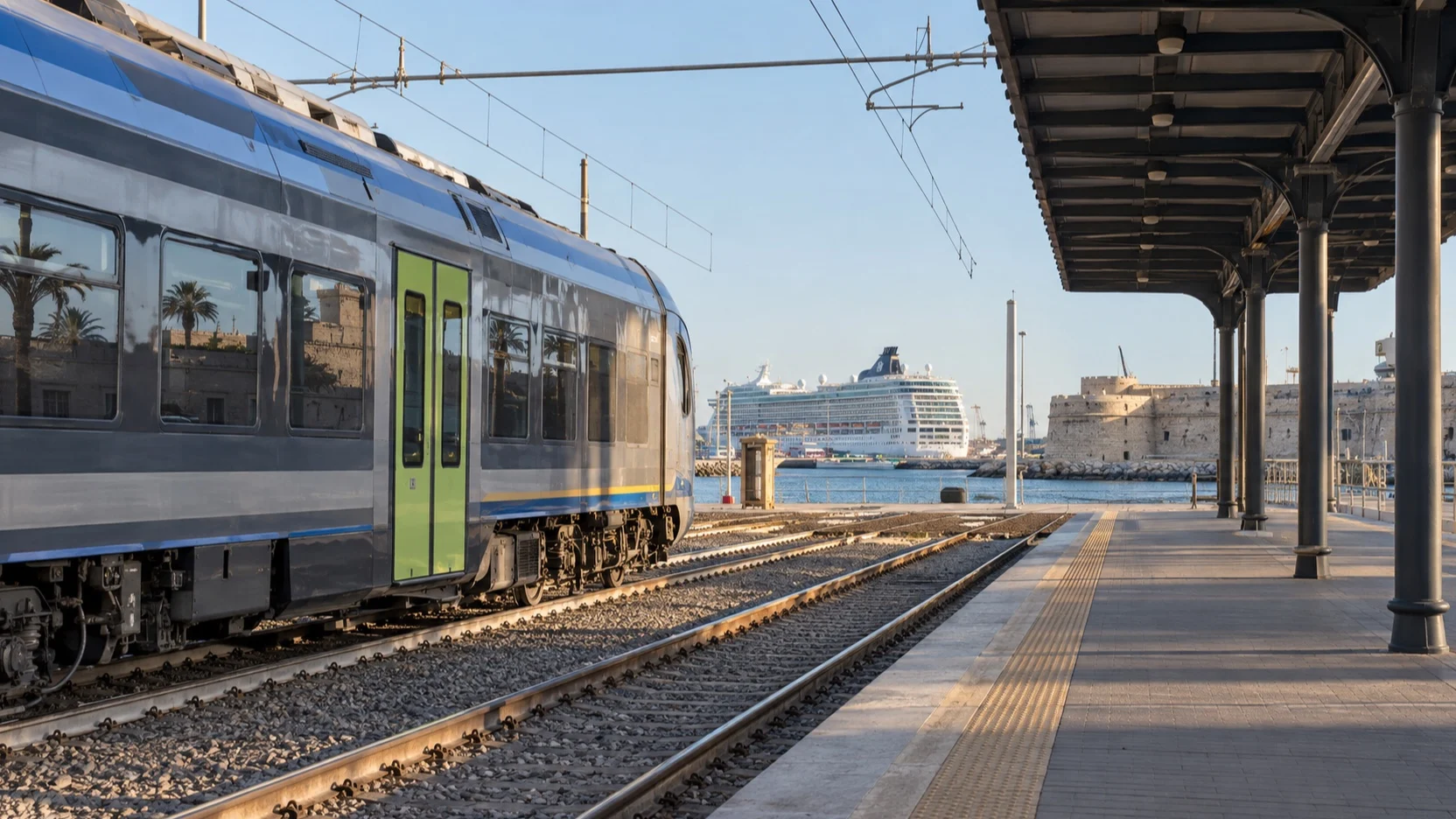
- Rail operator: Use Trenitalia for live Civitavecchia to Rome schedules and service notices
- Useful Rome stations: Roma Termini for broad connections and Roma San Pietro for some Vatican-area plans
- Best itinerary shape: One major reserved attraction, one nearby neighborhood, and a meal
- Tickets: Buy major attraction admission only from official sources after the transport plan works
- Return strategy: Select the return train first and keep at least one earlier backup
- Accessibility: Plan the port transfer, rail stations, vehicle access, paving, and venue entrance as one route
- Nonnegotiable rule: Do not make the last plausible train your planned train
The honest answer before you book anything
Rome is far enough from Civitavecchia that this is not a casual walk-off city day. A delay at the port, station, railway, metro, or attraction can consume the same buffer you were counting on for the return.
Independence works when the group can navigate signs, manage stairs or arrange accessible alternatives, walk substantial distances, and abandon optional sights without argument. The day fails when every element must happen exactly on time.
Build the return first, then add Rome inside the remaining hours. That approach feels less romantic than starting with a Colosseum ticket, but it is the difference between a flexible plan and a machine that breaks at the first delay.
Step one: understand the Civitavecchia port exit
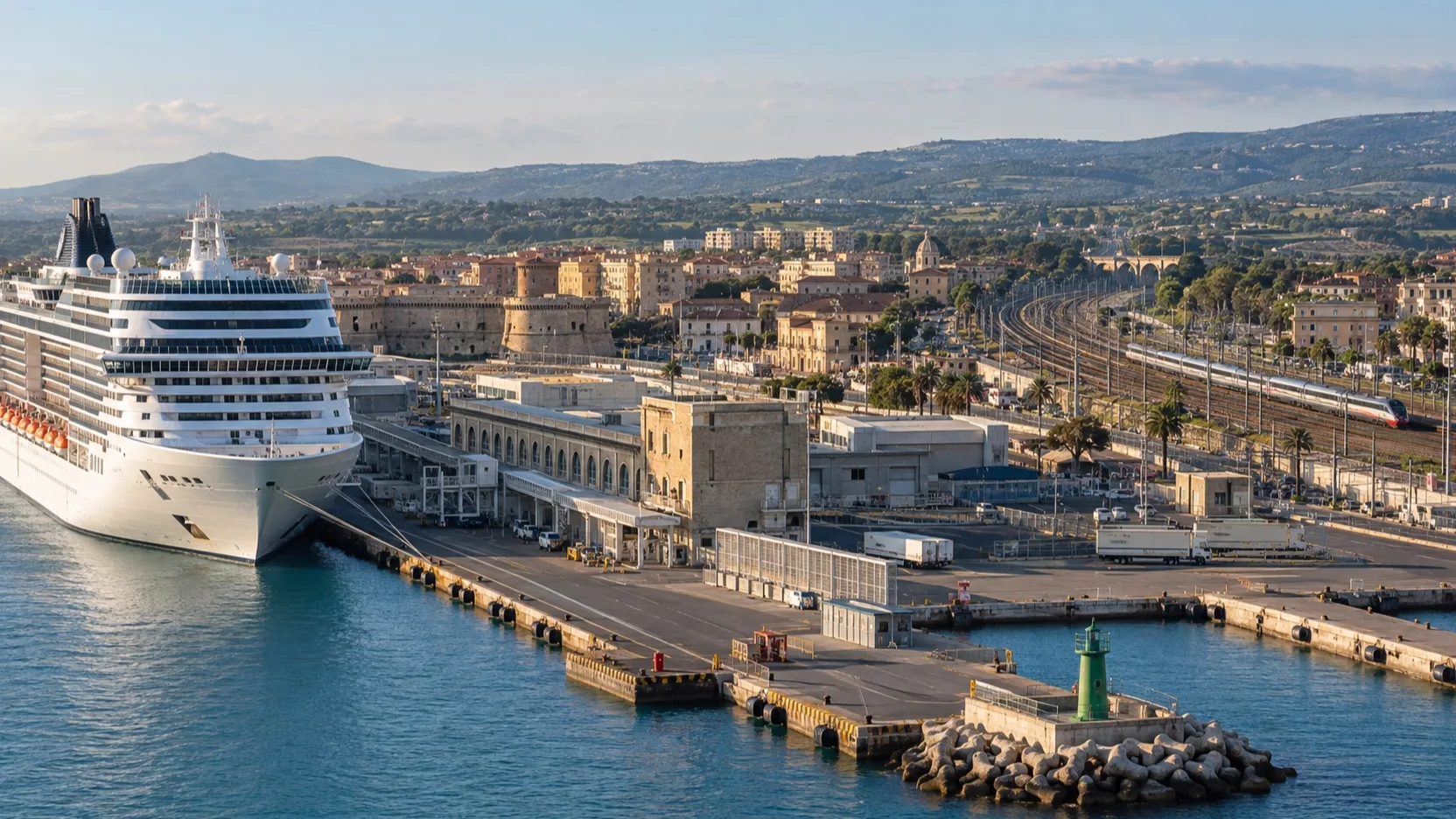
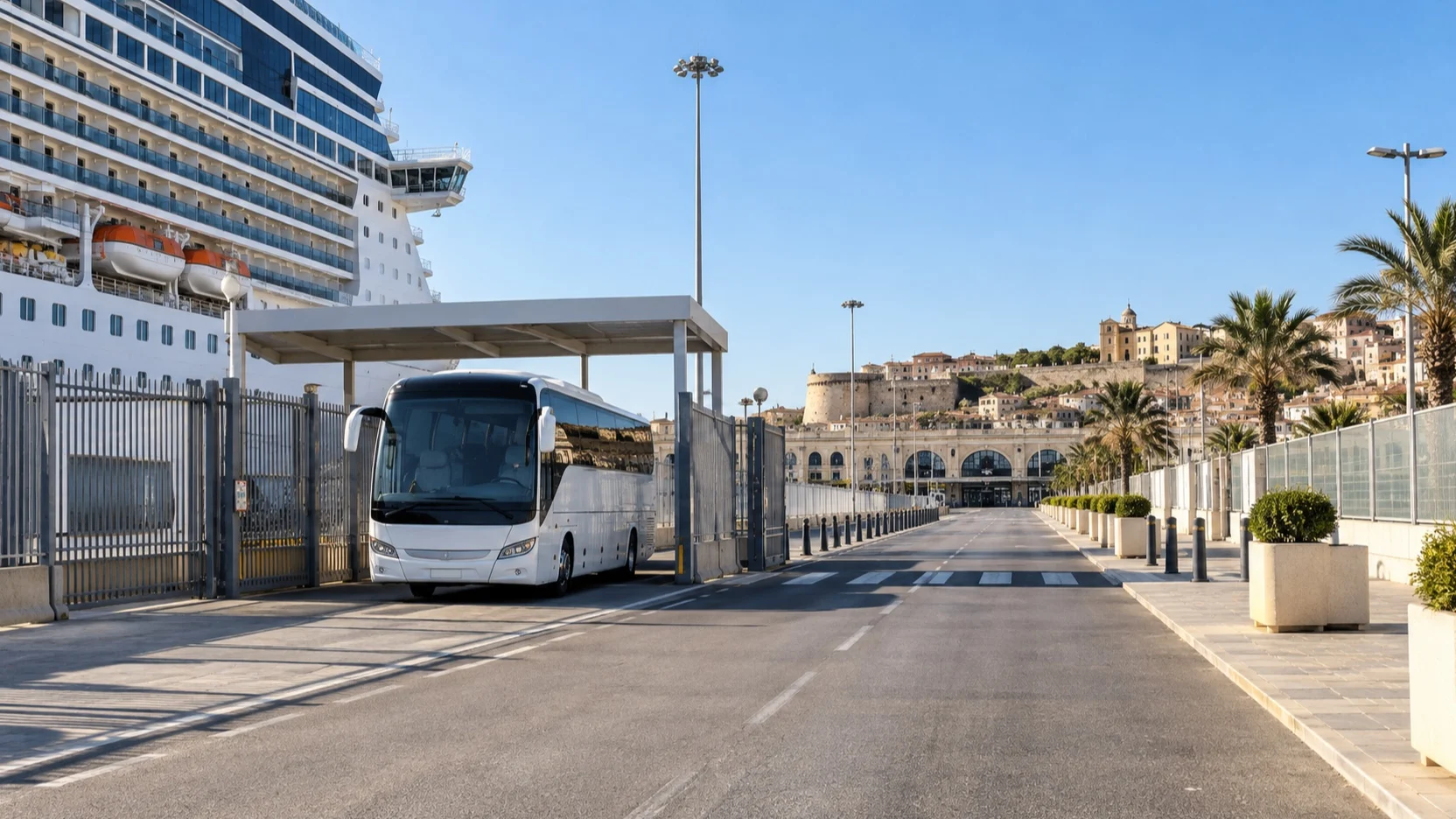
Cruise ships dock inside a large operational port, and passengers normally follow the current shuttle or authorized transport arrangement to a city-side point. The procedure can vary with berth, line, security, traffic, and port operations.
Do not calculate the day from the moment a train departs because you still need to leave the ship, reach the port exit, and travel or walk to Civitavecchia railway station. Repeat those steps in reverse after returning from Rome.
Read the ship’s daily program for the latest shuttle instructions and accessibility arrangements. Our Civitavecchia cruise port guide provides the broader port framework, but the onboard notice controls your sailing.
Save a map pin for the correct return entrance and photograph any shuttle sign. The harbor is not the place to discover that your driver, bus, and gangway are using three different meeting points.
Step two: choose the train with live information
Trenitalia operates rail services between Civitavecchia and Rome and provides live journey search, ticketing, and trip monitoring. Use the official site or app close to sailing because schedules, platform assignments, service types, and disruption notices can change.
Search both outbound and return options before buying attraction admission. Look beyond the fastest journey and identify which services create the best combination of arrival station, backup options, and return margin.
Regional trains can be crowded during commuter periods and cruise peaks. Give yourself time to locate the platform, understand ticket validation requirements for the product purchased, and board without running.
A strike, engineering work, or incident can change a normal day dramatically. Check for notices again before leaving the ship and be willing to cancel Rome if the safe return structure has disappeared.
Which Rome station should you use?
Roma Termini is the main rail hub and supports routes toward the Colosseum, central metro lines, and broad city connections. Its size also means more walking, crowds, platforms, and opportunities to lose time.
Roma San Pietro can suit a Vatican-area plan when the selected train stops there and the route aligns with your first attraction. Other urban stations may fit a specific itinerary, but the correct choice depends on live service rather than a universal recommendation.
Choose the station closest to the first anchor only after checking the full trip. A slightly longer train that eliminates a difficult cross-city transfer can be the faster door-to-door option.
For the return, confirm which Rome station your chosen Civitavecchia train serves and how long it takes to reach the platform from the final sight. Never assume the outbound station is automatically the smartest return station.
Step three: choose one Rome area
Rome is not one attraction cluster but several large experiences spread across a busy city. A cruise day becomes manageable when you pick one geographic theme and treat everything outside it as optional.
Ancient Rome
Center the day on the Colosseum, Roman Forum, Palatine Hill, or the exact combination included in one official ticket. Add nearby exterior views, the Capitoline area, or a meal only after the reserved visit and return route are protected.
The official Colosseum Archaeological Park publishes current opening times, ticket products, entry details, and visitor information. Verify the named entrance, identification rules, included areas, security restrictions, and last entry because similar-looking tickets can provide different access.
The Forum and Palatine cover extensive, uneven ground with limited shade. Strong walkers should still budget more time than a street map suggests, while travelers with mobility needs should contact the park about current accessible routes and entrances.
The Vatican area
Choose either the Vatican Museums or Saint Peter’s Basilica as the primary commitment instead of assuming both fit effortlessly. They have separate entrances, security procedures, crowd patterns, and access rules.
Buy museum admission through the official Vatican Museums portal and save it offline. Confirm the ticket holder’s name, identification requirement, entry point, bag rules, and current route before travel.
Saint Peter’s Basilica can involve long security lines, dress requirements, religious events, and closures that no ordinary sightseeing plan controls. A museum ticket does not create priority access to the basilica.
The Vatican Museums are enormous, so decide which collections matter before entering. Following the full route at museum pace can consume the entire usable portion of the port day.
The flexible historic center
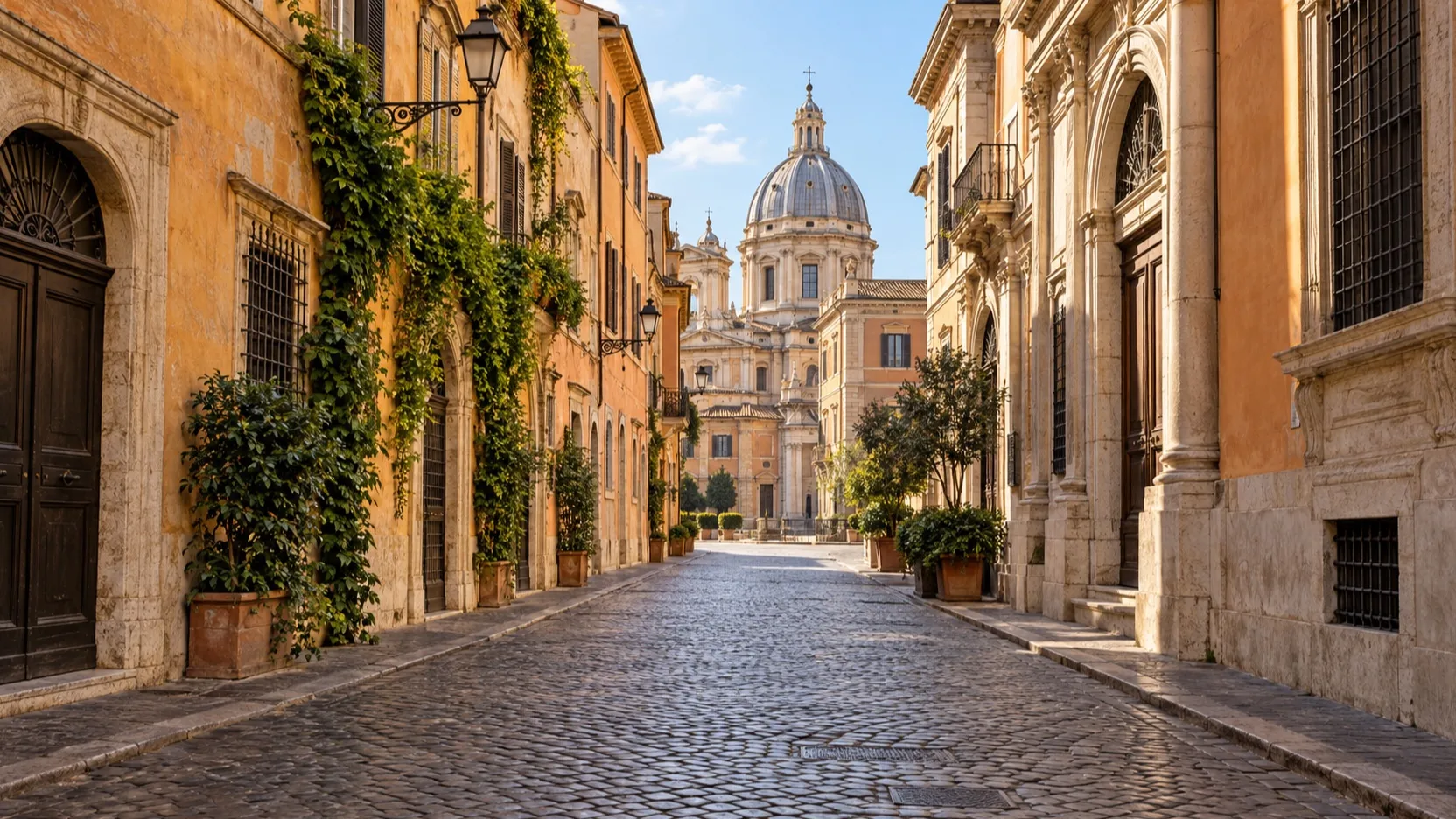
A route around Piazza Navona, the Pantheon area, Trevi Fountain, and nearby streets avoids one massive museum commitment. It remains physically demanding because the walking adds up and crowds can slow every approach.
Choose two anchors and a meal instead of turning every famous square into a compulsory checkpoint. Exterior sights still require transport from the rail station, and a flexible plan must include that time.
The Pantheon uses official ticketing and visitor procedures that can change, while churches may limit access during worship. Check any interior you consider essential and let the rest remain spontaneous.
How to place timed tickets
A timed ticket should sit in the middle of a generous arrival window, not immediately after the earliest train could reach Rome. Include the port exit, rail platform, Rome station, city transit, walking, navigation, and attraction security.
Buy admission only after confirming the ship’s local hours and a workable train pattern. A nonrefundable ticket is not useful if the gangway opens late or the return plan depends on a single service.
Use official attraction sites because third-party products may add fees, unclear meeting points, or language that implies access they do not provide. Read whether the purchase includes the correct monument, guide, headset, tower, arena, underground space, or only general admission.
Save the ticket barcode and confirmation offline, but also know whether the venue requires the live app or original identification. A dead phone should not be the most consequential part of your Rome day.
A realistic gangway-to-gangway framework
Leave the ship as soon as the current port procedure and your group comfortably allow, then complete the transfer to Civitavecchia station without adding a coffee detour. Use the ride to confirm the first city connection and any operational alert.
Arrive in Rome with a buffer before one reserved attraction. After the visit, eat nearby and choose one flexible exterior sight or neighborhood that points generally toward the return route.
Begin traveling back earlier than the last reasonable option. Reaching Civitavecchia station is not the finish because the port shuttle, security, berth distance, and gangway remain.
This framework deliberately avoids fixed times because ship calls, port shuttles, trains, attraction slots, and seasonal conditions vary. Fill it only with official information for your exact date.
Four focused Rome plans
The ancient-city plan
Arrive in the Colosseum area for one official timed product, then continue through only the archaeological areas included in that ticket and compatible with your energy. Add the Capitoline viewpoint, a nearby church, or lunch if time remains.
Do not add the Vatican simply because both names fit on a city map. Crossing Rome and joining another major queue turns two great sights into one anxious transit exercise.
The Vatican-area plan
Use the rail station and local route that best fit the Vatican, then make either the museums or basilica the anchor. Leave space for security, dress requirements, a seated break, and the walk back to transport.
If the museums are the priority, enter with a short collection list and accept that the exit route can be long. If the basilica is the priority, keep the rest flexible because queue time is less predictable.
The historic-center plan
Skip the largest timed interiors and create a shorter or longer walking version around two or three landmarks. Add one smaller church, museum, market, or lunch stop according to the day’s heat and crowds.
This version adapts best to a delayed arrival because you can remove the farthest stop instantly. It still needs a mapped route back to the station rather than a vague plan to find a taxi.
The food-and-neighborhood plan
Choose one central district, reserve no more than one small attraction, and make a researched meal the anchor. This can feel more personal than racing between icons and is easy to shorten if transport runs late.
Confirm restaurant opening and reservation terms directly. Do not cross the entire city for one famous business when several good options fit the protected route.
Rome transport after the train
Walking is often the simplest link between nearby sights, but distances, cobbles, heat, and crowds accumulate quickly. Rome’s metro, buses, trams, and licensed taxis can help when used as part of a defined route.
Check current local transport information and service changes rather than relying on a saved map. Demonstrations, road closures, maintenance, and major events can redirect vehicles or alter stations.
Licensed taxis should use official ranks or recognized booking channels, and traffic can erase any theoretical time advantage. A taxi is a transport tool, not a guaranteed rescue from poor scheduling.
Keep small flexibility in both route and payment method. If a metro elevator is unavailable or a bus is too crowded, the plan needs an alternative that does not threaten the return train.
Should you use a ship excursion?
A ship excursion can be worthwhile for travelers who value one coordinated pickup, prefer a guide, have limited confidence with rail, or want the cruise line’s current handling when its tour is delayed. Read the exact terms because policies and included protection vary.
Some ship tours spend substantial time loading groups and provide exterior drive-bys rather than admission. Review the minute-by-minute structure, walking level, meal, free time, headsets, and ticket inclusions before paying.
A product called Rome on Your Own may solve the port-to-city transfer while leaving the city route to you. Confirm the Rome drop-off, return meeting point, total free time, accessibility, and what happens if the ship changes its schedule.
Private transfer versus train
A private or small-group vehicle can remove the port-to-station connection and deliver you closer to the first attraction. It can also support luggage, mobility equipment, child seats, or a route designed around fewer steps.
Road traffic remains a serious variable, and a driver is not automatically a licensed Rome guide. Verify port pickup authorization, vehicle details, guiding credentials where relevant, cancellation, late-ship terms, and the planned return target.
Keep the driver’s name, company, phone number, meeting point, and vehicle information offline. Agree that the itinerary will be shortened before the return margin is sacrificed.
Accessibility from Civitavecchia to Rome
Accessibility must be evaluated door to door because a single broken link can make the rest of the route irrelevant. Ask about gangway slope, port shuttle boarding, station elevators, train gap, accessible restrooms, city paving, attraction entrance, and the final return.
Rome contains cobbles, uneven paving, curbs, stairs, security queues, long museum routes, and restricted vehicle zones. A short map distance can still require substantial energy and assistance.
The Colosseum Archaeological Park and Vatican Museums publish accessibility information, but equipment status and open routes can change. Contact venues directly for the entrance, companion policy, lift availability, and any reservation required for assistance.
A private accessible vehicle may make an independent day realistic without forcing the traveler onto a standard coach tour. Confirm ramp or lift type, securement, step height, vehicle clearance, equipment dimensions, and how close the driver can legally approach each stop.
Heat, crowds, religious events, and closures
Summer heat can reduce walking capacity long before the itinerary says it should. Carry water where permitted, wear sun protection, plan a seated break, and remove the farthest optional stop before anyone becomes unwell.
Rome also hosts major religious events, demonstrations, state visits, and maintenance projects. These can alter security, roads, entrances, and public transport, sometimes with limited notice.
Check official attraction alerts and city information close to the call. Do not answer a delay by walking faster through dangerous heat or cutting the return train margin.
Return safeguards that actually work
Choose the planned train home before choosing the final Rome stop, then identify at least one earlier alternative and understand the next later option. Your planned service should not be the final one that could theoretically reach the ship.
Start moving toward the station with enough time for city transit, a wrong entrance, ticket trouble, platform changes, and crowds. If disruption begins, leave Rome earlier instead of waiting for certainty.
When you reach Civitavecchia, follow the current port connection rather than assuming the route used in the morning remains unchanged. Preserve time for the shuttle, security, the long berth, and the gangway.
Save the cruise line’s port-agent contact from the daily program. If a serious delay occurs, contact the ship or agent immediately rather than spending the last margin searching social media for reassurance.
What to carry
Carry the cruise card, identification required by the line and attractions, offline tickets, rail details, port-agent contact, a backup payment method, and modest euro cash. Keep the phone or watch set according to the ship’s time instructions.
Bring water, comfortable shoes, weather protection, medication, and clothing that meets religious-site dress rules. A compact battery pack matters when tickets, maps, and emergency contacts live on one device.
Travel light because large bags can face attraction restrictions and make crowded transit harder. Check official bag rules before sailing rather than discovering them at the security line.
Who should not visit Rome independently
Avoid a fully independent Rome day when the call is short, the group cannot manage the port and rail connections, mobility needs remain unresolved, or the itinerary contains several inflexible timed entries. A coordinated transfer or local Civitavecchia plan may be wiser.
Families with very young children should account for naps, stroller access, restrooms, food, and train crowding. Travelers who find navigation stressful may enjoy Rome far more after paying someone to remove the connections.
There is no shame in staying near the ship. Civitavecchia offers waterfront, history, food, and a slower pace, while Rome will still be there for a land visit that gives it several days.
Common mistakes to avoid
The first mistake is treating the published train time as the complete journey. Port exit, station access, city transport, attraction security, and the return shuttle add significant time.
The second is booking the Colosseum and Vatican on one ordinary port day. Two major timed zones create cross-city travel and multiple failure points, even if a map makes the plan look tidy.
The third is choosing the last plausible train as the planned return. One cancellation, platform change, or metro delay then becomes a ship problem.
The fourth is buying admission before confirming the sailing and transport structure. A perfect ticket at the wrong hour is an expensive souvenir.
The fifth is using a private car without a written return target. Rome traffic is not under the driver’s control, so the itinerary must surrender stops before it surrenders buffer.
Frequently asked questions
Is the train from Civitavecchia to Rome easy?
It can be manageable for confident travelers, but the port shuttle, station access, live rail service, Rome arrival station, city route, and return all matter. Check Trenitalia on the exact date.
Can I see the Colosseum and Vatican in one day?
A rushed highlights version may be possible during a very long call, but it creates much more transit and timed-entry risk. One area usually produces a better and safer day.
Which Rome station should I use?
Roma Termini suits many central and ancient-Rome routes, while Roma San Pietro may suit some Vatican plans. Choose from live service and the location of your first anchor.
How early should I leave Rome?
Leave enough margin for city transit, rail disruption, station access, the Civitavecchia port connection, security, and all aboard. The last reasonable train should never be the planned train.
What if trains are disrupted?
Use current official information and turn back earlier rather than waiting for the situation to resolve. A taxi from Rome is expensive and still vulnerable to road traffic, so it is not a guaranteed backup.
Is Rome independent travel cheaper?
Rail and direct tickets can cost less than a tour, but price is not the only calculation. Navigation, walking, risk, accessibility, and the value of a guide should determine whether savings improve the day.
The bottom line
Rome independently from Civitavecchia is realistic for prepared travelers who accept a focused day and an early return. It is not the place to improvise several world-famous attractions after glancing at a station schedule.
Plan gangway to gangway, reserve one anchor, and treat every additional sight as optional. For embarkation planning, see our hotels near the Port of Civitavecchia, and compare the broader region in our Europe cruise ports guide.
Planning note: Berths, port shuttles, trains, strikes, tickets, security, attraction access, and local transit can change. Confirm time-sensitive details with your cruise line, port authority, Trenitalia, Rome transport, and each official attraction before travel.
How this guide was researched: This guide was checked against current official Trenitalia, Colosseum Archaeological Park, Vatican Museums, port, accessibility, and visitor information. Logistics and time-sensitive details were reviewed September 11, 2026; see our Editorial Policy.
More on this topic: browse every guide on shore excursions and DIY port days.