Cambodia Cruise Ports: Sihanoukville and the Mekong Calls
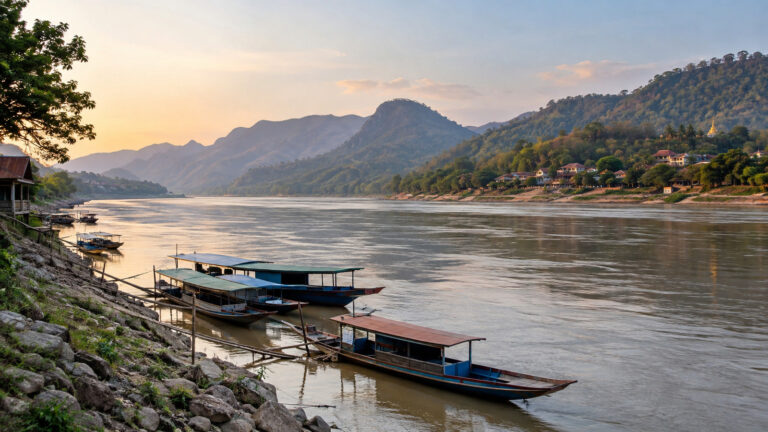
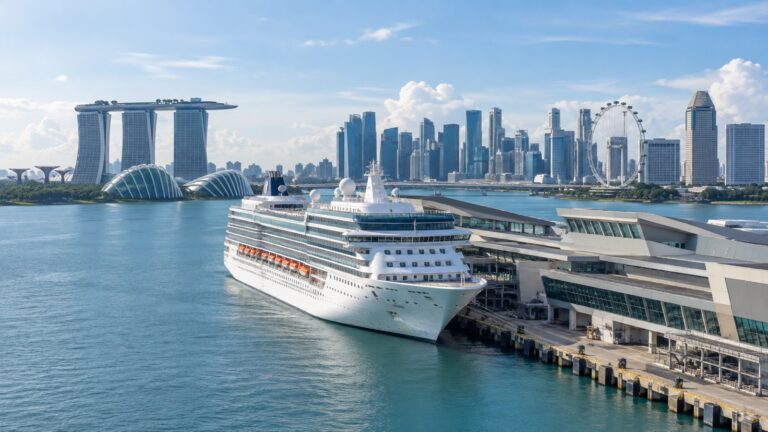
Cambodia shows up on two completely different kinds of cruise, and they share almost nothing. One is a single ocean call at Sihanoukville, a working cargo port with beaches somewhere past the fence, and the other is a week of small river landings on the Mekong.
My quick take
If Cambodia is the reason you are booking, book the river. The Mekong itineraries give you Phnom Penh, a string of village landings and, in the right season, a lake crossing toward Angkor, and none of that is reachable from a sea day at Sihanoukville.
Sihanoukville is a perfectly fine day out if your ship happens to stop there, but I would not build a Southeast Asia cruise around it. The port is industrial, everything good is a drive away, and the return timing is tighter than people expect on a first look at the map.
The quick facts
- Ocean calls: Sihanoukville is the country’s only deep water seaport and the only place a big ship ties up.
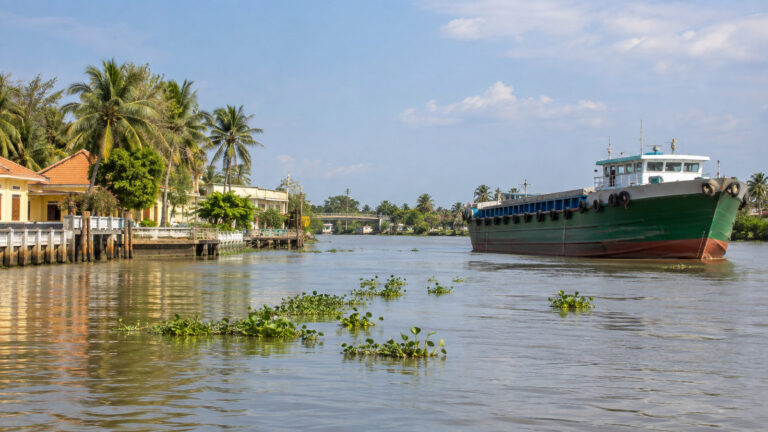
- River calls: Everything else is a small ship landing on the Mekong or the Tonle Sap, usually without a pier.
- Season: High water runs roughly June through November and low water December through May.
- Money: Riel is the official currency, US dollars circulate everywhere, and small clean bills matter.
- Excursions: Most river landings are ship organized because there is nothing independent waiting on the bank.
Ocean ships and river ships are two different vacations
Cambodia sits on two cruise maps at once. Ocean itineraries looping through Southeast Asia stop once at Sihanoukville, usually as a single day slotted between Vietnamese and Thai ports.
River itineraries are a different animal entirely. Small ships, often well under two hundred passengers, run between the Vietnamese delta and Cambodia, and the way high water and low water rewrite that route is the single biggest planning factor on the whole trip.
Most Mekong sailings pair Cambodia with the Vietnamese delta ports on the same ticket, so you are really booking two countries. The Cambodian half is the quieter half, and it is where the village landings live.
Sihanoukville is the call, not the reason
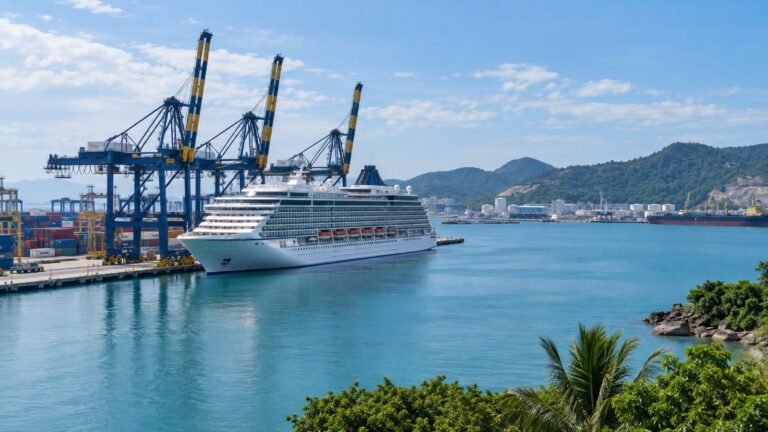
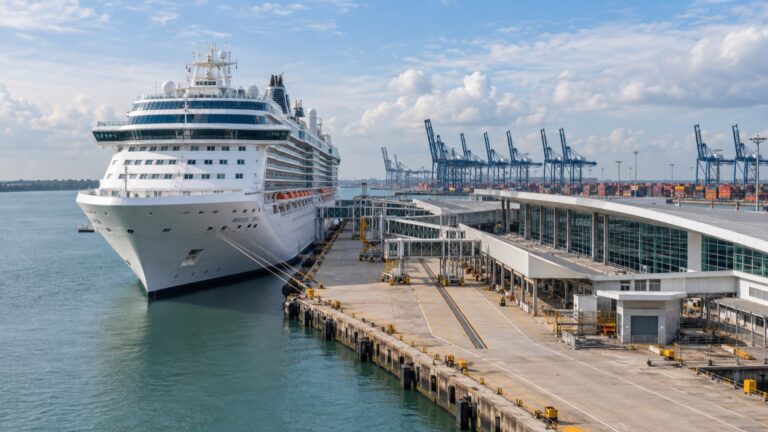
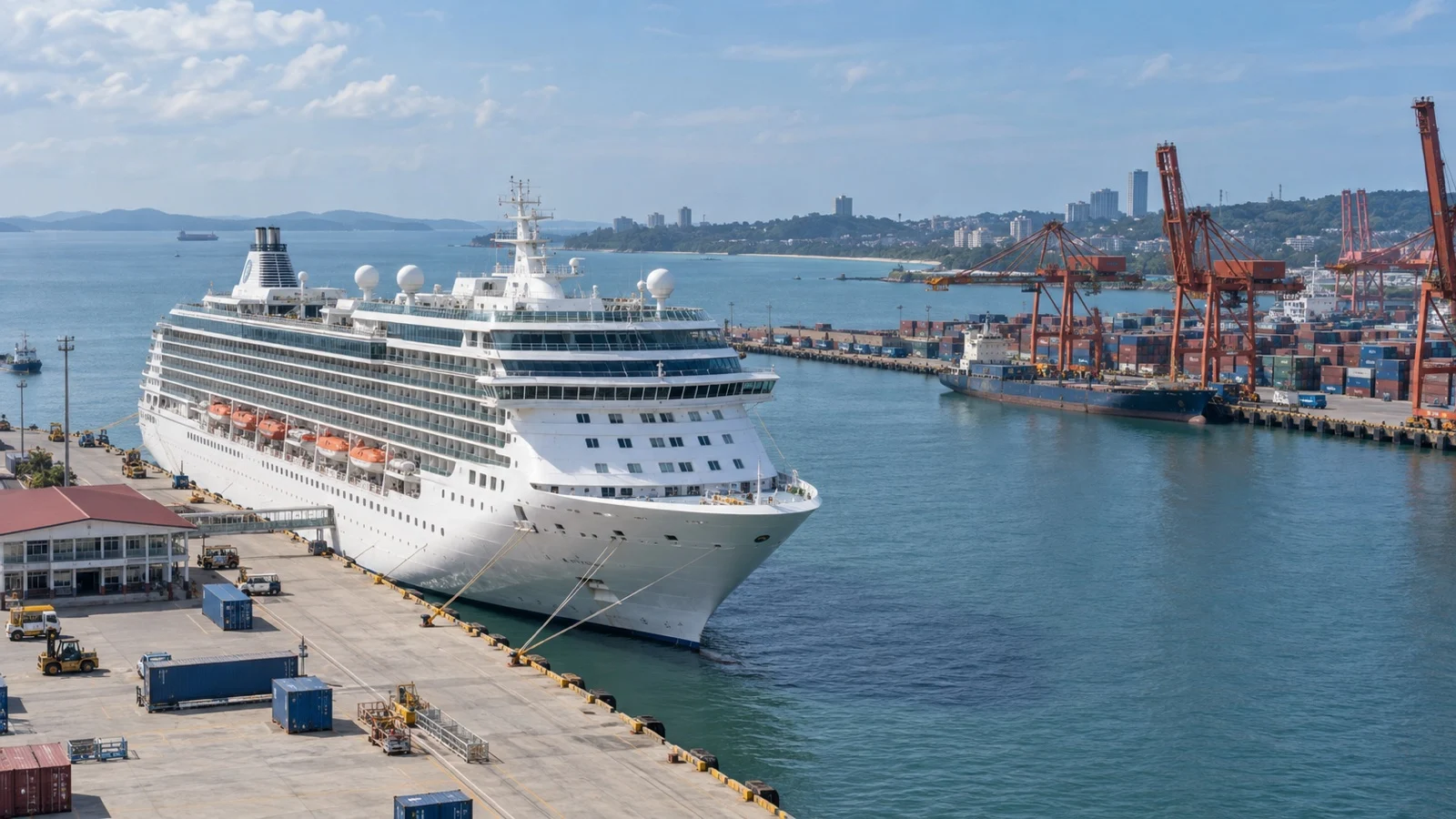
Ships normally berth alongside at the country’s one deep water commercial port, which handles containers and general cargo for the whole nation. That is exactly what it looks like from your balcony.
The port is fenced and access controlled, so you are not strolling out of the gate. A shuttle usually bridges the industrial zone, and from there a tuk tuk or taxi runs 15 to 30 minutes to the central sights and 30 to 45 minutes to the southern beaches.
Pick one direction and stay in it, because the temple and market loop around Wat Leu, Wat Krom and Phsar Leu works independently and a mainland beach fills a half day. What I would not do is chase an offshore island, and the Sihanoukville port guide explains why betting your ship on a return ferry is a bad trade.
Phnom Penh is the only real city stop
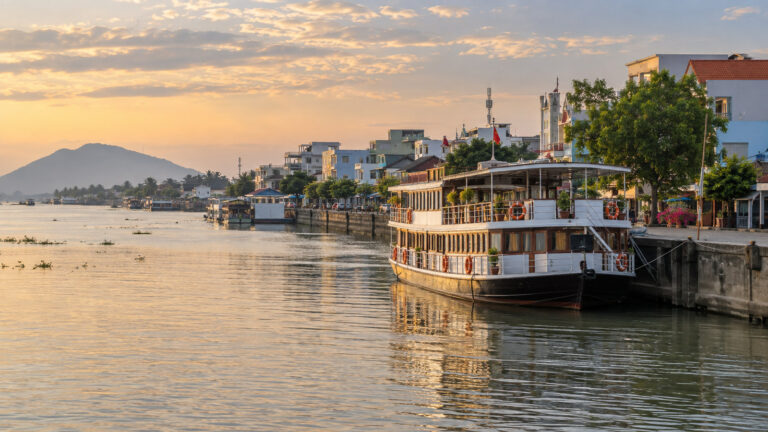
River ships use the passenger terminal on the Tonle Sap River along Sisowath Quay, north of the confluence, even when the brochure says Mekong. Boarding is by gangway onto floating pontoons, so the angle changes with the water level.
This is the one Cambodian call where walking out on your own genuinely works. The riverfront is immediate, Wat Phnom is 10 to 15 minutes inland on foot, and the Royal Palace, the Silver Pagoda and the National Museum are close enough together to be one tuk tuk stop.
The memorial sites are a different kind of day, and Choeung Ek sits about 9 miles (15 km) south, which means a reserved round trip driver rather than whatever you flag down. I would give the city one theme and stop there, and the Phnom Penh guide has the walking times if you want to build it yourself.
Koh Oknha Tey, the island everyone calls Silk Island
There is no pier. Crew either nose the ship against the bank and rig a gangway onto grass near Chong Koh village, or run small boats across depending on the water.
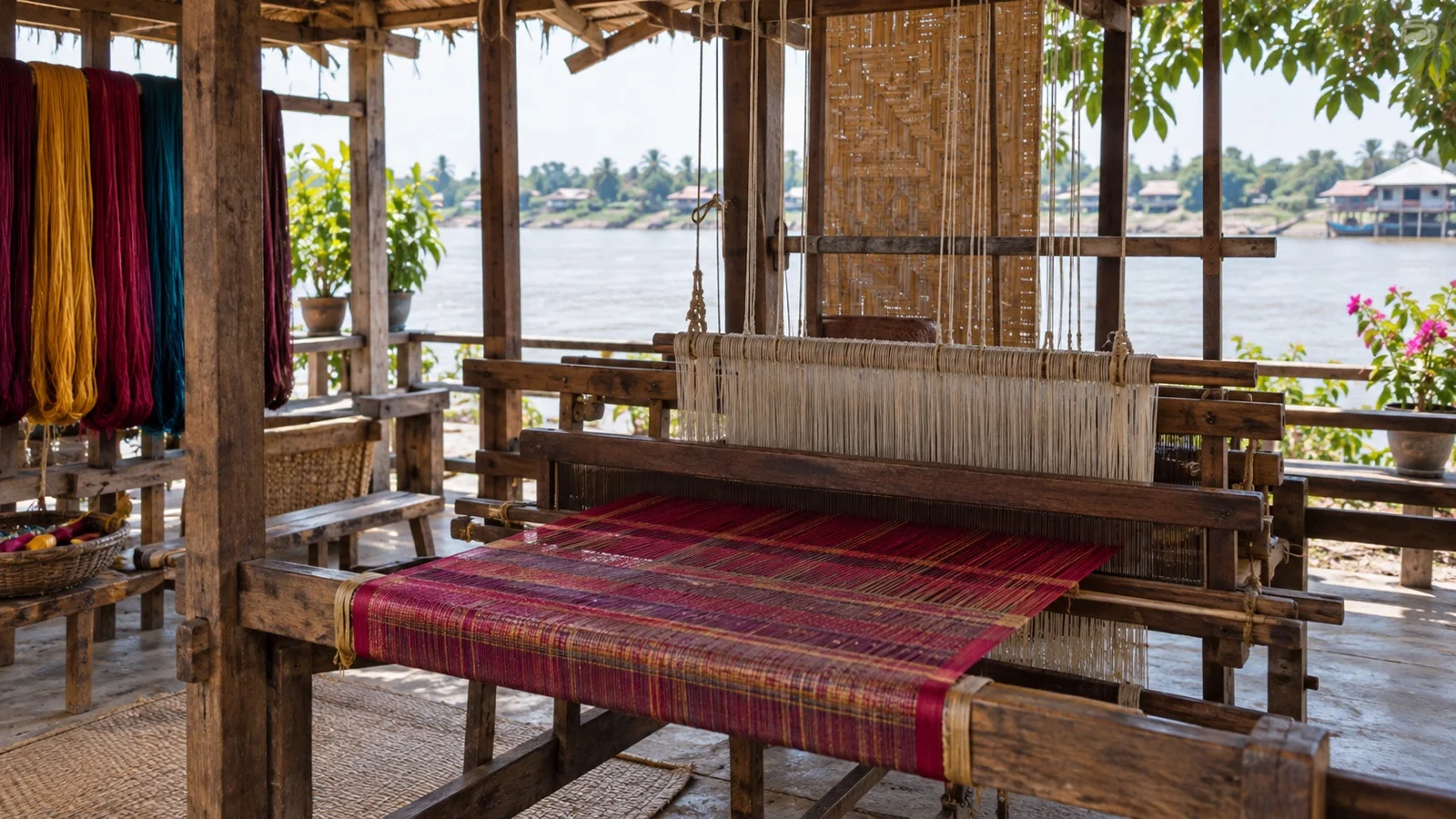
The whole stop is household silk production, which is more interesting than it sounds. Families raise the worms, spin the thread and weave under their stilt houses, and you can watch the chain from worm to finished scarf in one lane.
Buy the scarf from the loom rather than the stall at the end, and bring small bills. The Silk Island guide covers the two hour shape of the visit, which is about right for it.
Koh Chen sounds like silver being hammered
Koh Chen is a tender landing onto a muddy bank that moves with the season. Wear shoes you do not mind ruining, because the step down onto the bank or a plank is the hardest part of the day.
Once ashore it is a working silversmith village, not a demonstration. Artisans hammer bowls, betel boxes and offering vessels in open fronted homes, and nobody stops to perform for the group.
Cards are useless here and there is no shade to speak of. The Koh Chen guide has the landing details, and I would treat the last tender time as a hard wall rather than a suggestion.
Kampong Tralach hands you an ox cart, Oudong hands you stairs
Kampong Tralach has no pier either. Ships anchor in the Tonle Sap, tenders run to a plain riverbank, and wooden ox carts are waiting to take you through village lanes for 15 to 20 minutes.
It is bumpy, slow and completely unstaged, which is the point. There is nothing to hire at that landing, so this is a ship excursion or nothing.
The same day often continues to Oudong, the royal capital from 1618 to 1866, where stupas holding royal ashes run along a ridge. The climb is several hundred exposed stone steps, so it is a real physical ask in that heat.
Some itineraries reach Oudong from Phnom Penh instead, on a 45 to 60 minute road transfer north. Either way, the Oudong guide is worth reading before you decide whether the stairs are for you.
Kampong Chhnang is pottery, and the season decides if you get there
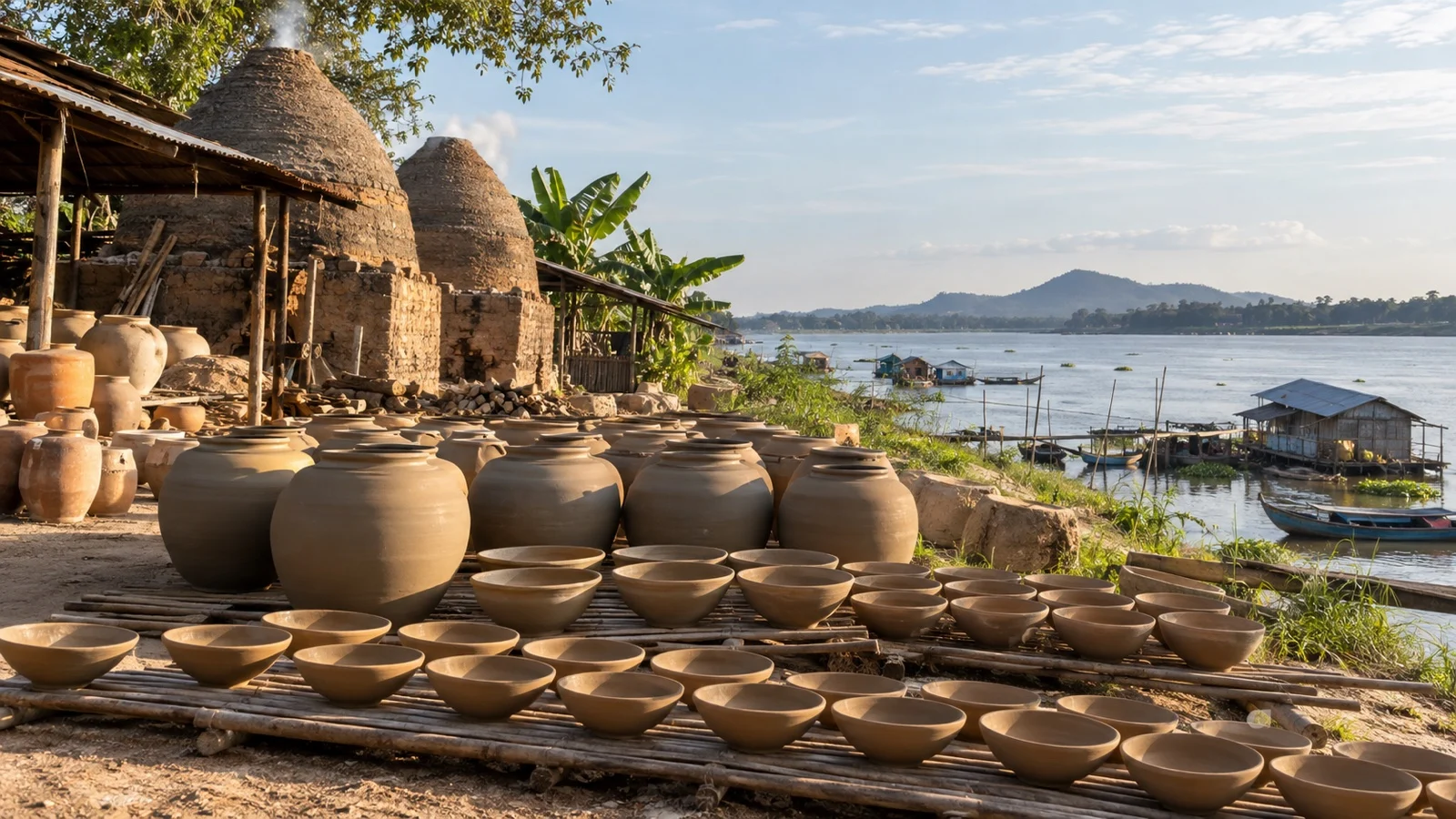
Ships anchor and tender to a floating jetty or a simple bank landing. The draw is Andong Russey, where potters hand build low fired clay vessels using techniques that have not changed much in generations.
Be careful with expectations about floating villages here. The ones at the town itself have largely been resettled onto permanent stilt housing, and any floating community on your itinerary is likely farther toward the lake.
This is also one of the first calls to disappear in low water, when ships reroute by road instead of running the corridor. The Kampong Chhnang guide explains which half day you realistically get, because you will not fit both the kilns and the town.
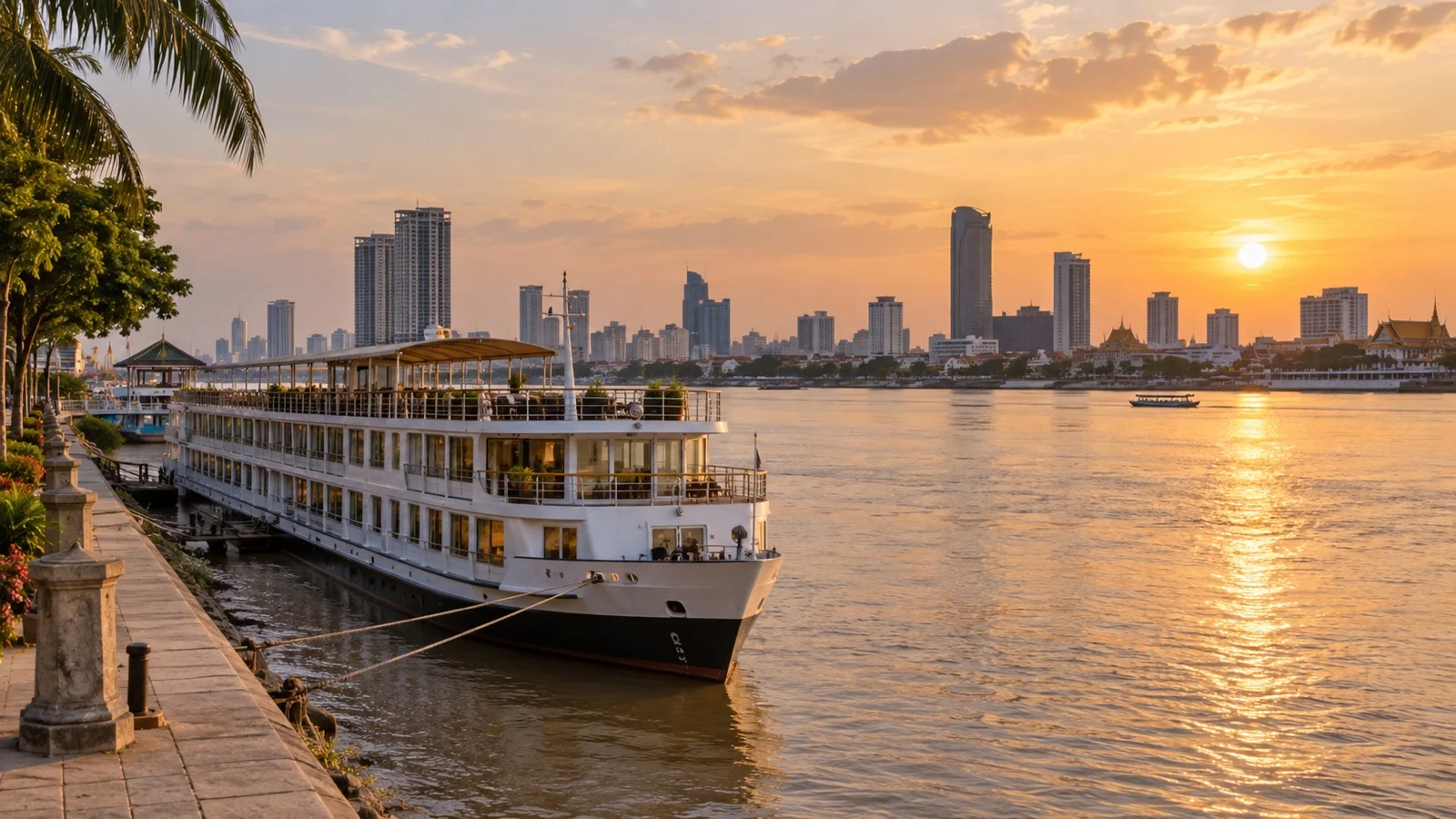
Kampong Cham is the hinge port
Kampong Cham uses variable riverfront moorings rather than a fixed terminal, so where you step ashore changes with the water. Town is 5 to 15 minutes on foot once you are up the bank, and the bank is usually the harder part.
The headline sight is Wat Nokor, a temple with 12th and 13th century bones, reached by a short vehicle transfer. The paired hills of Phnom Pros and Phnom Srei sit a few miles out, and the climb up Phnom Srei is a few hundred steps.
The reason I call this the hinge is the low water routing, because when the lake crossing is off, Kampong Cham becomes the end of the cruise and Siem Reap is four to five hours away by coach. That is a very different last day from the brochure photo, and the Kampong Cham guide has the temple logistics if you get the normal version.
Angkor Ban is the one people still talk about after
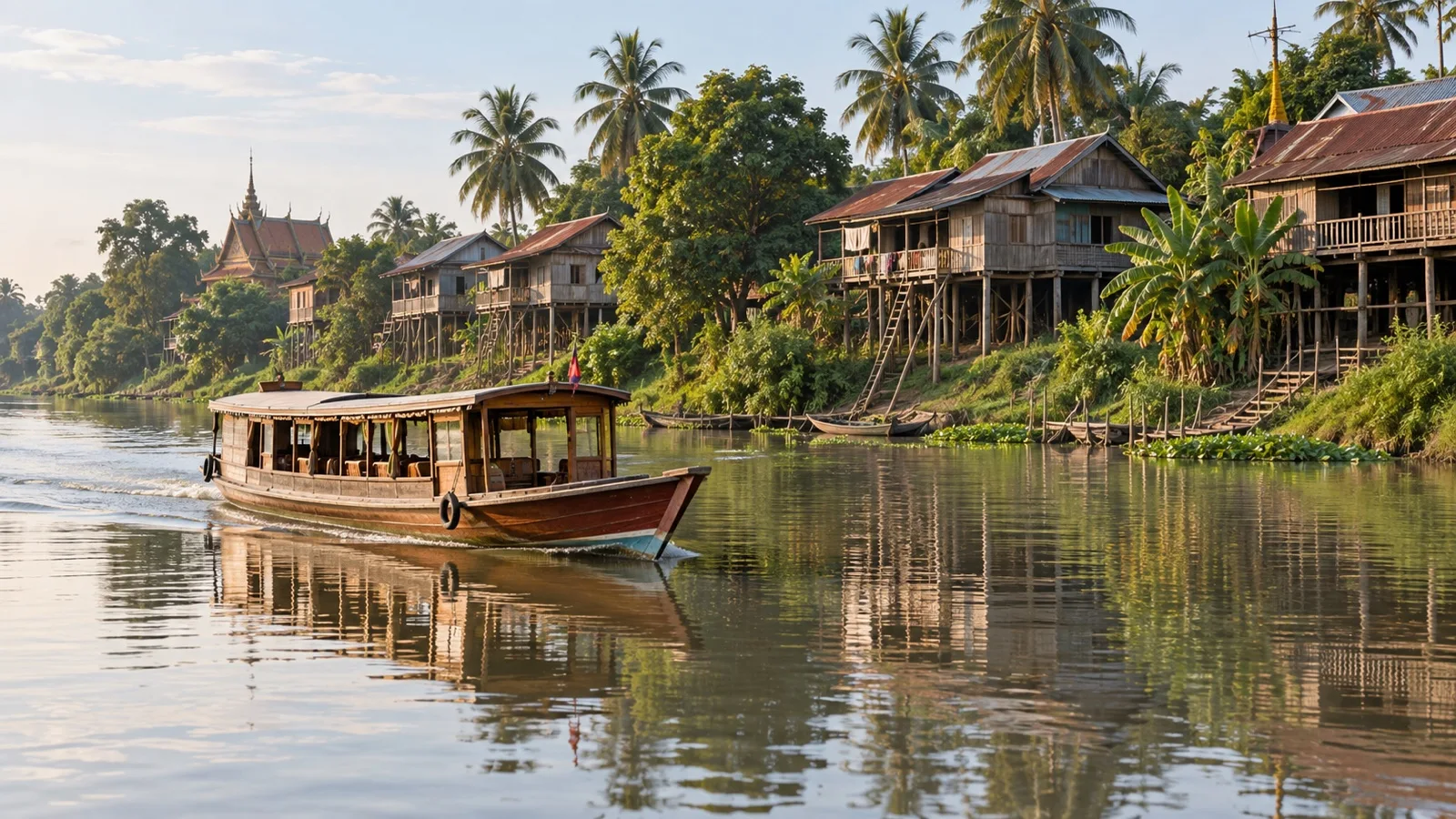
Angkor Ban is an anchor and tender call onto a sloped dirt bank, and only smaller ships can work it. The landing is gentler in high water and steeper and dustier when the river drops.
The village is a single main lane with side paths, wooden stilt houses that have stood for generations, and a pagoda. Rice dries on mats, kids walk home from school, and none of it is arranged for you.
Go with the guide, because there is no English signage and wandering off alone mostly means walking into somebody’s yard. Ask before you photograph anyone, carry small dollars, and note that the Angkor Ban guide pairs this call with Kampong Cham on the same day.
Tonle Sap Lake is the crossing that decides your flights
There is no pier on the lake. Ships anchor offshore and passengers transfer to floating platforms by small boat or gangway barge, which is exactly as improvised as it sounds.
The lake swells to several times its dry season size in the monsoon months, and that swelling is what makes the crossing possible. When it works, the landing near Chong Kneas puts Siem Reap 40 to 45 minutes away by road.
Treat the lake day as scenery rather than shopping. The Tonle Sap guide describes the floating schools, workshops and grocery boats you pass, and they are the reason to be on deck.
At the far end, Siem Reap is the gateway to Angkor, and the protected archaeological park covers roughly 155 square miles (400 sq km). One rushed afternoon there is a waste of a very long flight, so add nights.
Which Cambodian calls I would actually pick
If I could only keep two, I would keep Phnom Penh and Angkor Ban. One gives you the country’s history and the other gives you its present, and they do not overlap at all.
After those, Koh Chen and Koh Oknha Tey are the best craft stops, and Kampong Tralach is the one your family will ask about later. Kampong Chhnang and Kampong Cham are pleasant rather than essential, and both are more fragile in low water.
Sihanoukville is last on that list, and it is not close. It is a real port day in a real Cambodian town, but the ratio of driving to seeing is worse than anywhere on the river.
Money, language and what is different here
Riel is the official currency, but US dollars are used openly and prices are often quoted in them. You pay in dollars and get change in riel, which is why carrying small bills instead of large ones matters more here than in most of Asia.
Cards work in Phnom Penh hotels and bigger restaurants and essentially nowhere on a village landing. Assume cash for every river stop and you will never be caught out.
English is common in the capital and thin everywhere else, so download offline maps before you sail. App booked tuk tuks in Phnom Penh remove the fare argument, which is worth more than the couple of dollars it might cost you.
Most nationalities need a visa, and Cambodia runs an official online application with a tourist option in the low tens of dollars. Cruise lines often handle group clearance instead, so follow your ship’s written instructions before you buy anything yourself.
The heat is the other thing that is different. It is hot and humid all year, November through February is the kindest stretch, and planning around heat rather than through it is the difference between a good day and a miserable one.
It is also worth reading the current official travel advice for Cambodia before you book, since border areas and general safety guidance change. Petty theft in busy tourist areas is the practical everyday risk, not anything dramatic.
Quick answers
Do I need a visa for Cambodia on a cruise?
Most nationalities do need one, though many cruise lines arrange group clearance and collect passports for it. Follow the written instructions your ship sends rather than buying a visa on your own guess.
Can you see Angkor Wat from a cruise ship?
Not from the ship, and not really as a day trip either. Angkor is reached from Siem Reap at the end of a Mekong itinerary, and it deserves at least two full days of its own.
Is Sihanoukville worth a port day?
It is worth doing if your ship stops there, as long as you pick one direction and accept the drive. It is not worth choosing an itinerary for.
When is the best time to cruise the Mekong in Cambodia?
Roughly August through November gives you high water, the lake crossing and the shortest transfer to Siem Reap. December through February is drier and cooler ashore but more likely to send you the long way by coach.
Do you need cash in Cambodian cruise ports?
Yes, and specifically small US dollar bills in good condition. Village landings have no ATMs, no card machines and no way to break a fifty.
Final word
Cambodia is one of the few countries where the river cruise is clearly the better product. The ocean call gives you one fenced port and a drive, while the river gives you a week of places that have no other practical way in.
If you book the river, book it around the water level and give Siem Reap extra nights on the end. If you only get Sihanoukville, keep the day simple, keep the return buffer generous, and do not let anyone talk you onto an island ferry.
How this guide was researched: Berth and landing arrangements, transfer times, seasonal water levels, visa procedure and current travel guidance for Cambodia were checked in November 2026. River levels, terminal use, visa fees and excursion routing all change, so confirm the details for your own sailing date before you commit to flights. See our Editorial Policy.