Chau Doc River Cruise Port Guide: Market, Sam Mountain, and Tra Su
Chau Doc is a busy river city in Vietnam’s Mekong Delta, close to the Cambodian border and surrounded by waterways, religious sites, farms, and wetlands. A good port day starts with one clear choice: stay near the market, visit Sam Mountain, or make Tra Su forest the main excursion.
The landing, small-boat transfers, excursion order, and border procedures can vary by vessel and river conditions. Treat the onboard briefing as the live plan, then keep every independent idea comfortably inside the ship’s confirmed schedule.
Chau Doc Quick Facts
- Country: Vietnam
- Province: An Giang
- Region: Mekong Delta
- Nearby border: Cambodia
- Main local option: Chau Doc market and riverfront
- Popular excursions: Sam Mountain, religious sites, floating fish farms, and Tra Su cajuput forest
- Currency: Vietnamese dong
- Language: Vietnamese, with guide support useful outside major visitor-facing businesses
- Time zone: Indochina Time, UTC+7 throughout the year
- Key planning rule: Confirm the exact landing, transfer method, and all aboard time with the ship
Where River Cruise Ships Stop
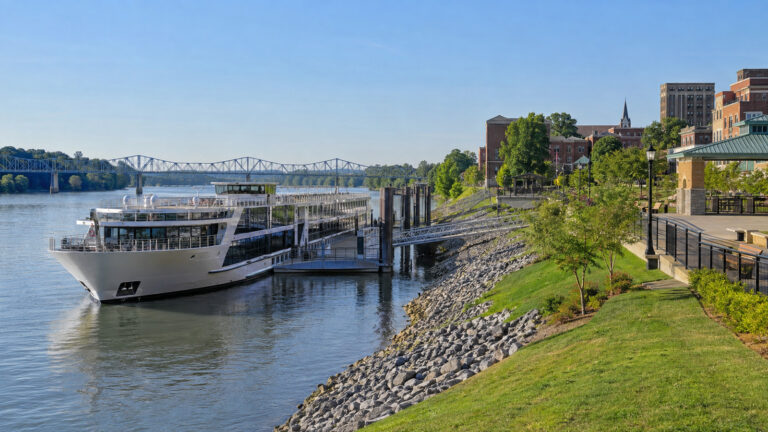
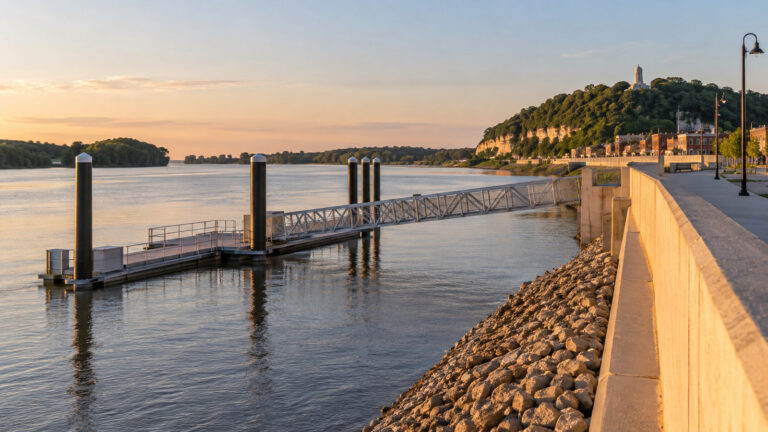
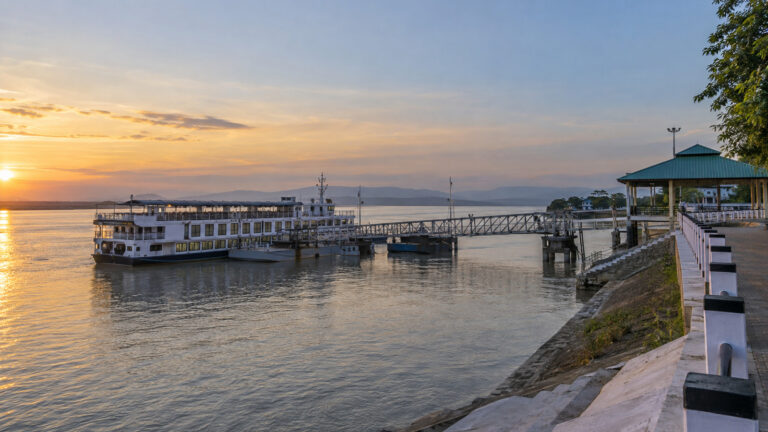
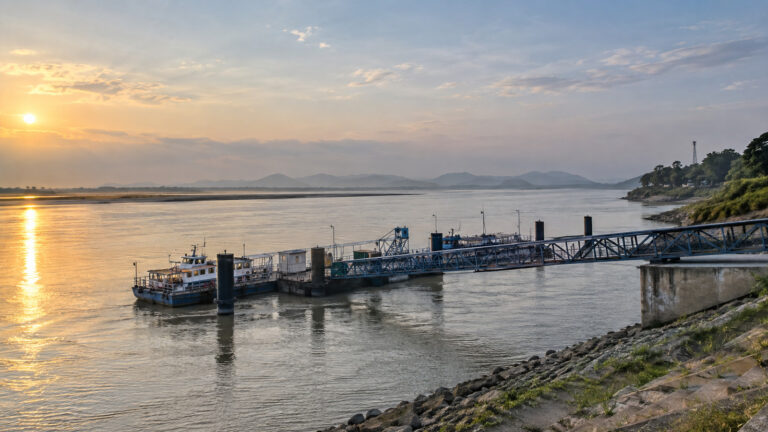
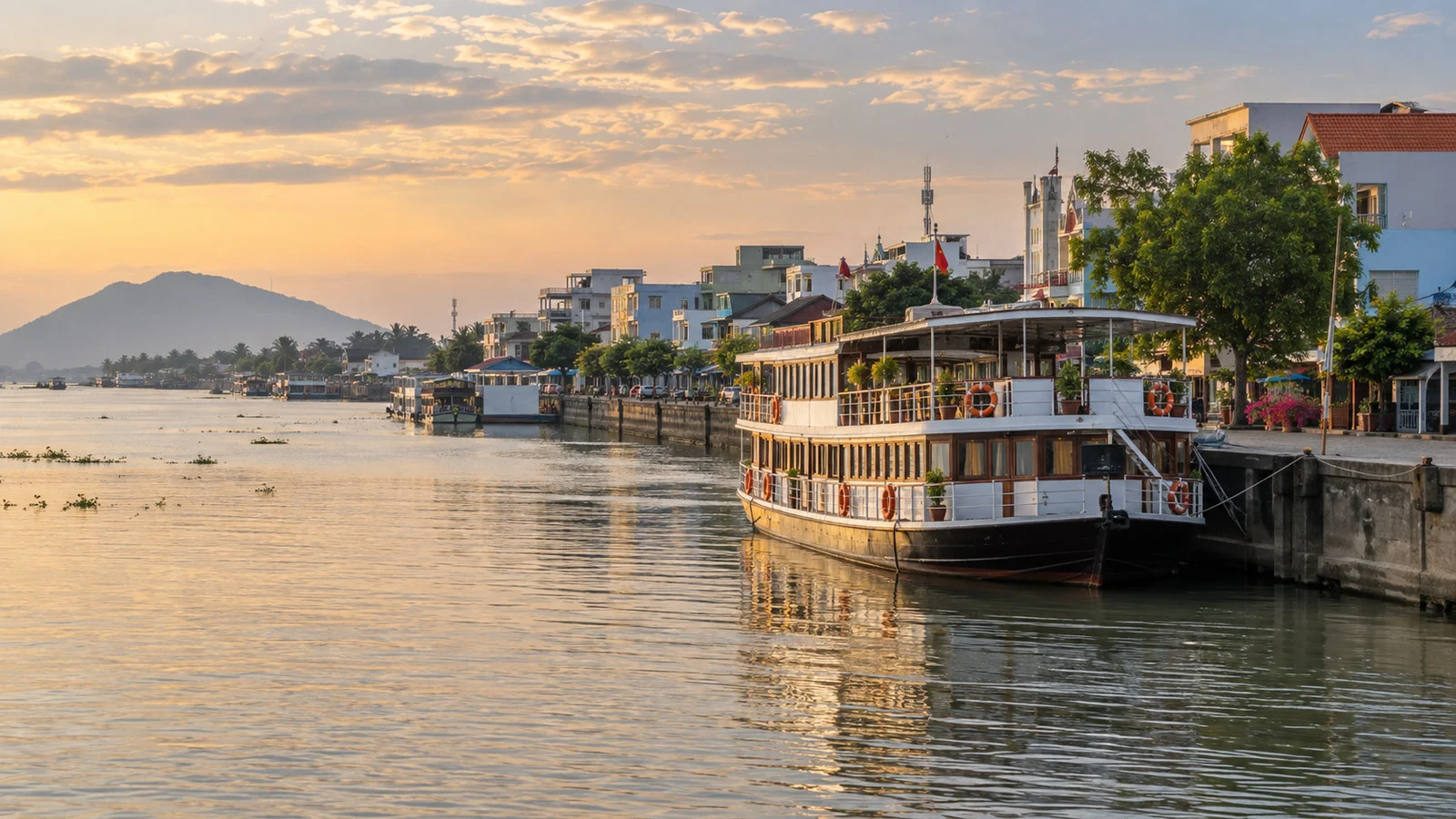
Chau Doc does not have one public cruise-terminal address that every vessel uses in every season. Operators may select a riverfront landing, pontoon, tender point, local boat transfer, or nearby vehicle pickup according to the ship and conditions.
Ask whether passengers walk directly ashore or transfer between boats. Confirm the return point, photograph the landing, and save the ship’s local contact information before you leave.
A map pin from another sailing may be wrong even when the itinerary uses the same city name. River level, bridge clearance, current, traffic, landing safety, and border operations can all affect the day’s arrangement.
The Easiest Independent Plan
If the ship confirms a central landing, the market and nearby riverfront are the simplest independent targets. This plan minimizes transportation risk and lets you adjust the outing to heat, rain, crowding, or a shortened call.
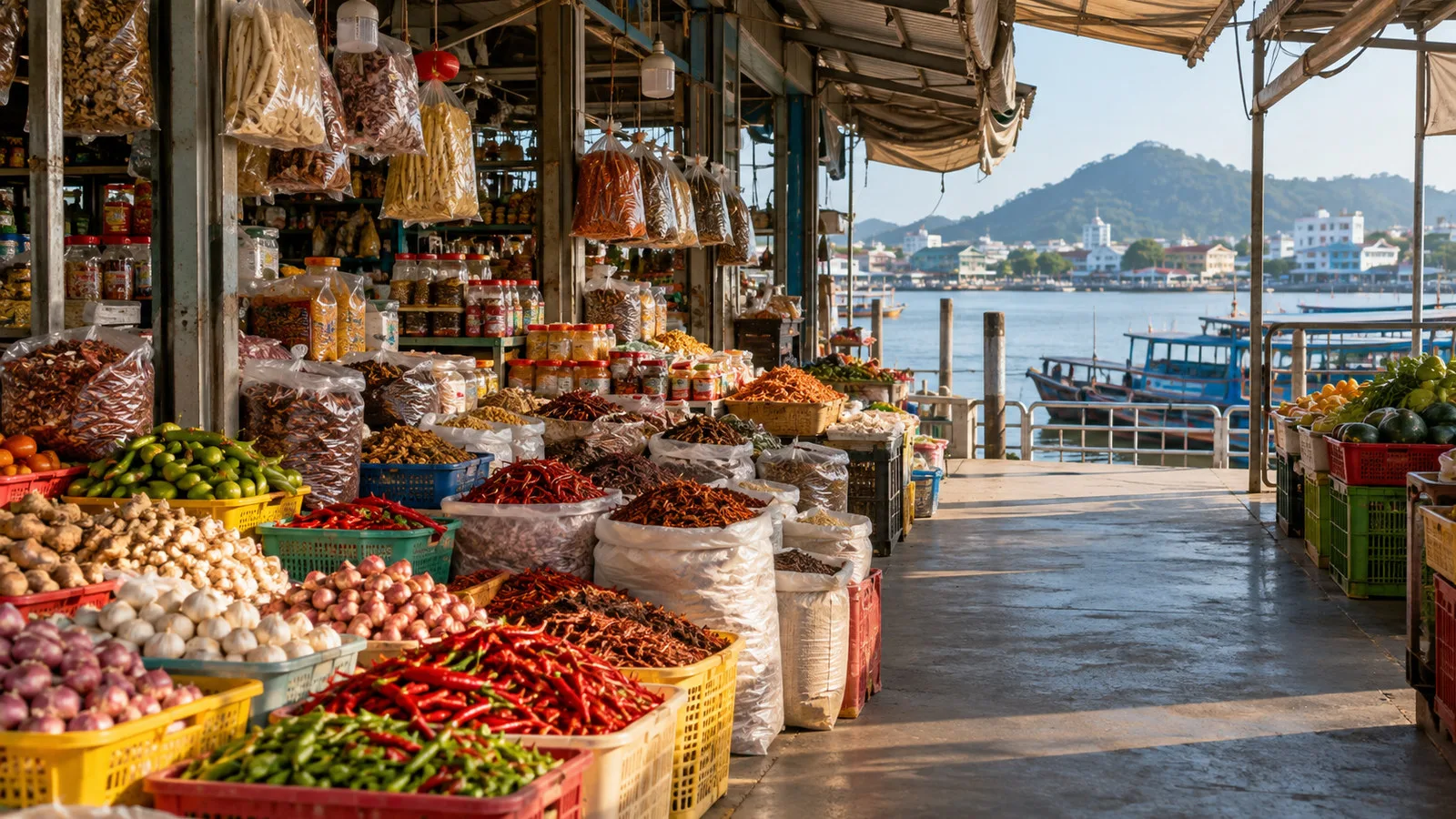
Chau Doc’s market is a working place where residents buy food and household goods. Walk slowly, keep out of busy aisles, ask before taking close photographs, and remember that vendors are working rather than performing for visitors.
Bring small Vietnamese dong notes because cards and mobile payments may not work for travelers at small stalls. Keep your wallet and phone secure, especially in crowded passages or near moving motorcycles.
Do not build the visit around one food stall or product mentioned in an older guide. Let the businesses open during your actual call determine what you taste or buy.
Sam Mountain
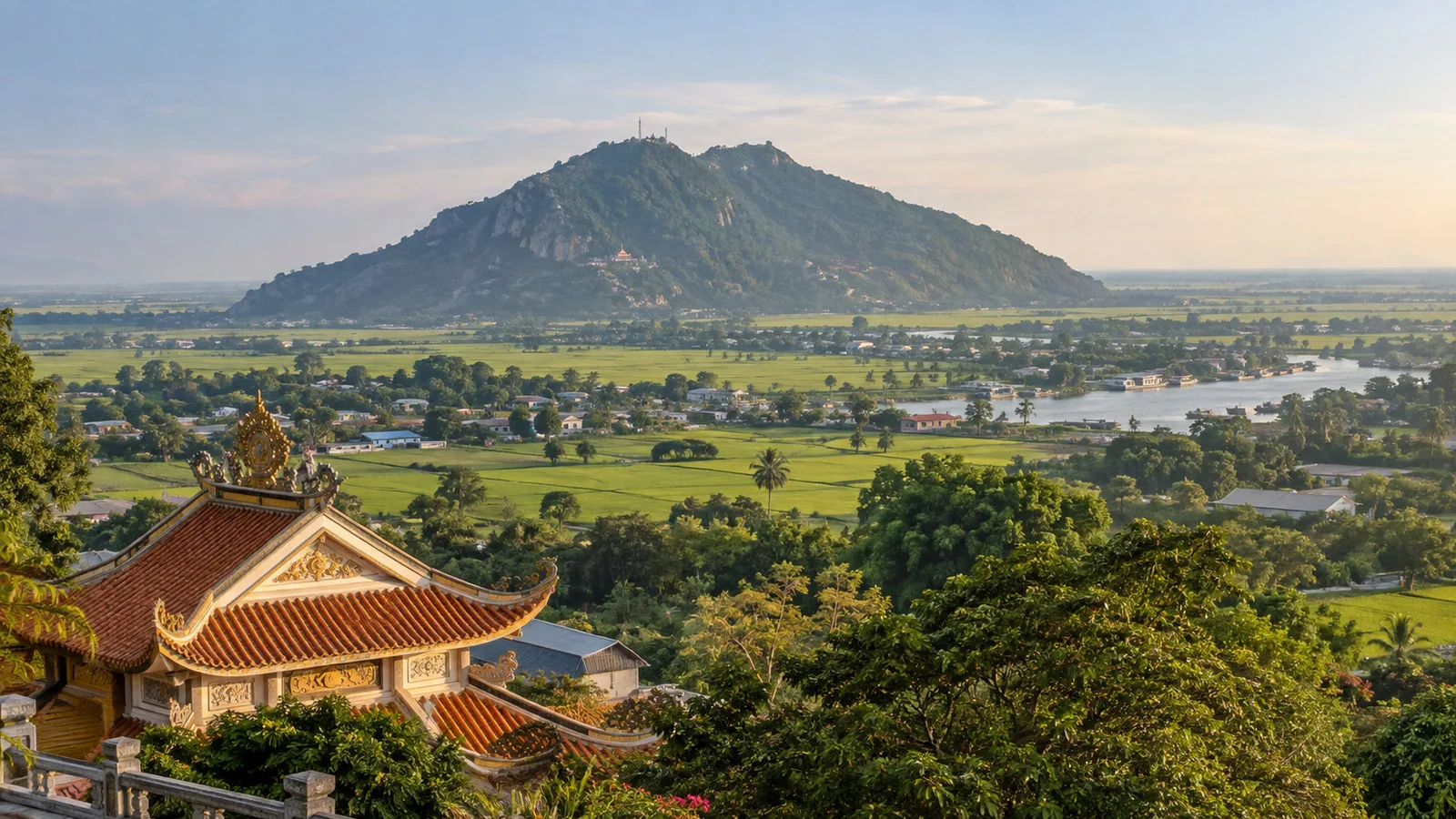
Sam Mountain lies outside central Chau Doc and is associated with temples, pagodas, pilgrimage traditions, and views across the surrounding lowlands. It is normally easier as a ship excursion or with prearranged transportation than as an improvised independent trip.
The Festival of Ba Chua Xu Goddess at Sam Mountain was added to UNESCO’s Representative List of the Intangible Cultural Heritage of Humanity in 2024. That recognition celebrates a living community tradition, not simply a monument or attraction ticket.
During festival periods, expect worshippers, traffic, access controls, and an atmosphere centered on religious practice. Dress modestly, follow local guidance, and avoid blocking people who are praying or making offerings.
The phrase Sam Mountain is not a complete accessibility description. Ask which sites are included, where the vehicle stops, how many steps or slopes are involved, and whether an alternative is available at the base.
Some programs may include a road ascent, cable car, or a combination of sites, while others stay low on the mountain. Use the excursion’s current wording rather than assuming every tour follows the same route.
Tra Su Cajuput Forest
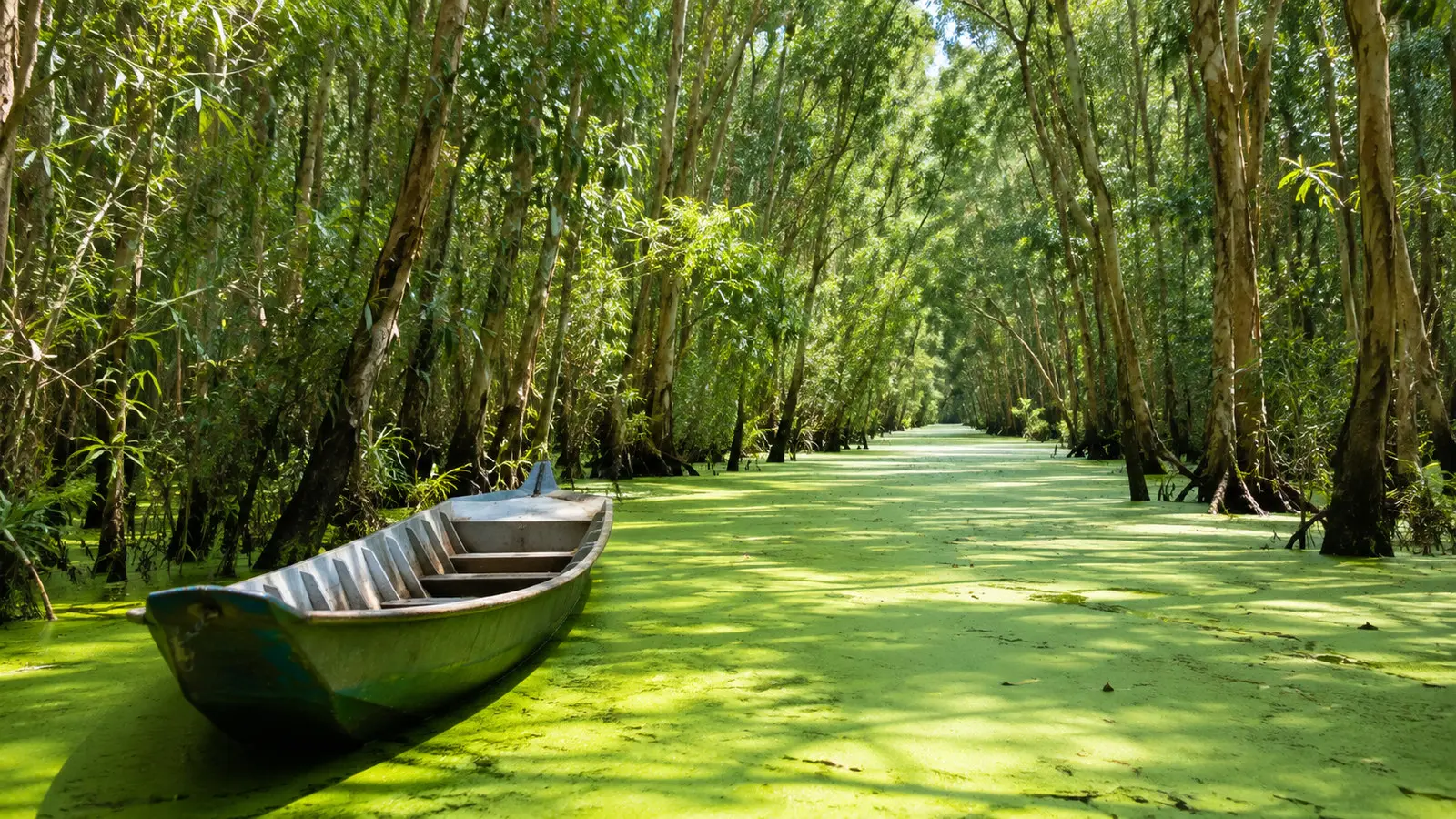
Tra Su is a wetland and ecotourism area outside Chau Doc, so the journey requires road transportation before the forest visit begins. The experience may combine motorized boats, smaller rowing craft, boardwalks, observation areas, or short walks depending on current operations.
Treat Tra Su as the main outing rather than a quick addition to the market and Sam Mountain. Road time, ticketing, boat queues, wildlife viewing, and the return journey can consume most of a short call.
Ask what the current package includes and whether a life jacket is provided for each boat segment. Also confirm shade, seating, restroom access, boarding steps, handholds, and the number of transfers.
Season, recent rainfall, water levels, vegetation, and wildlife movement change the appearance of the forest. No responsible operator can guarantee a particular bird, a bright green surface of duckweed, or a specific water depth.
Floating Fish Farms and Community Visits
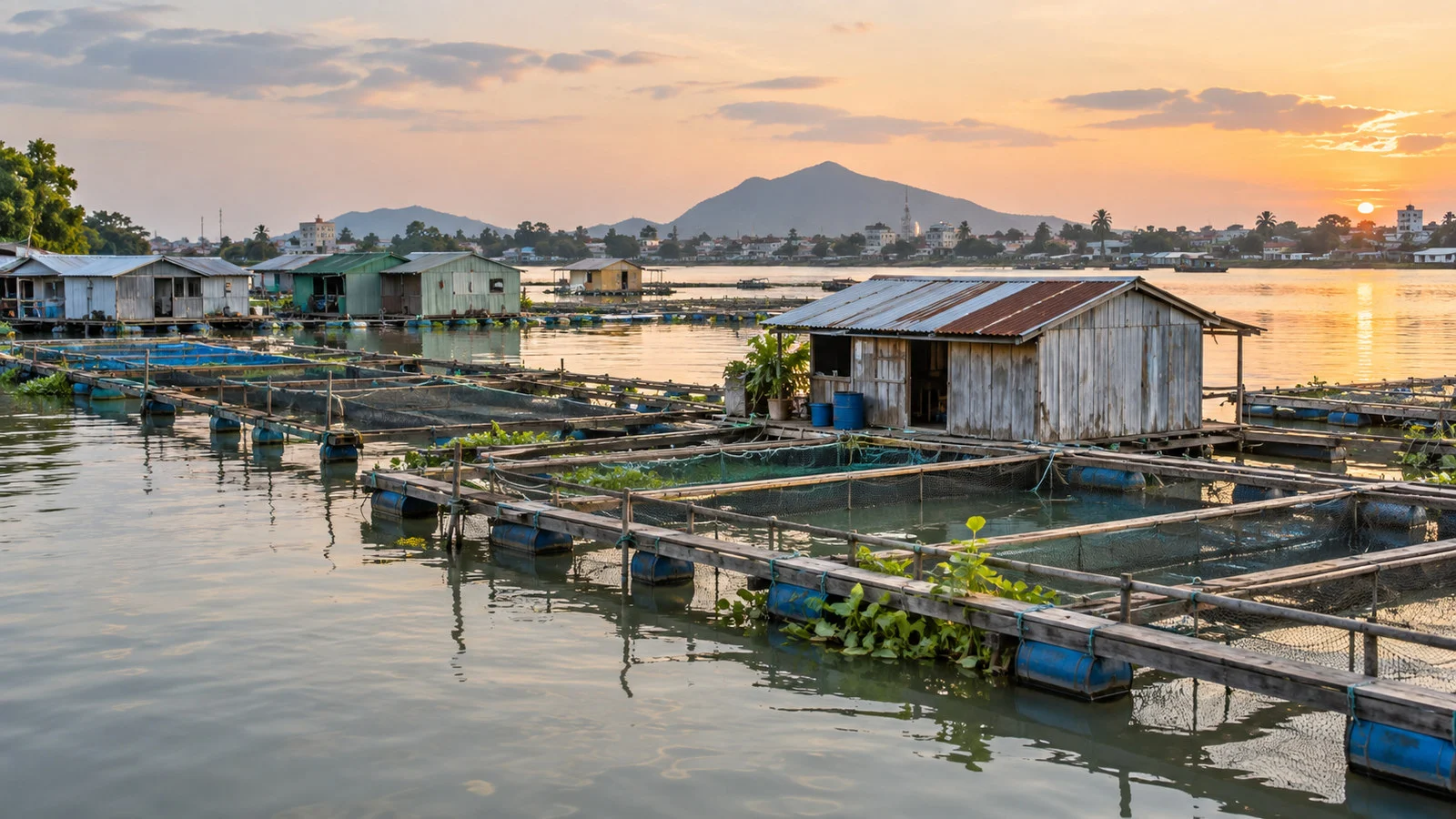
Some Mekong itineraries use a small local boat to visit floating fish farms near Chau Doc. Other sailings substitute a village, craft stop, religious site, or shore-based activity, so read your own program carefully.
For every small-boat trip, ask about the height of the step, stability, handrails, seating, shade, and life jackets. Travelers who cannot manage a transfer should request a shore-based alternative before paying.
A visit involving a Cham community or mosque deserves the same respect as any other community or religious call. Follow clothing guidance, ask before photographing people, and avoid entering prayer spaces unless invited.
Ship Excursion or Independent Visit?
Independent exploration works best for a short market and waterfront loop after the ship confirms a convenient landing. Keep the route close and use the vessel’s stated local time rather than relying on a phone that may have changed zones incorrectly.
Use an organized excursion or prearranged licensed driver for Sam Mountain and Tra Su. The greater distance and multiple transfers make those outings harder to improvise safely within a fixed river schedule.
If you use a taxi or app-based ride, verify the driver and vehicle before entering. Agree on the destination and return plan, and do not assume an immediate pickup will be available at a rural wetland or temple area.
Renting a scooter is a poor port-day shortcut because local traffic, licensing rules, insurance, navigation, and parking add unnecessary risk. A driver who knows the route is the more practical choice.
Accessibility
Accessibility begins with the ship-to-shore transfer, not the attraction. Ask about gangway slope, tender steps, gaps, handrails, surface stability, and whether a mobility device can remain assembled.
The market may involve narrow aisles, uneven paving, curbs, crowds, and motorcycles passing close to pedestrians. A central landing can reduce distance, but it does not make every route step-free.
For Sam Mountain, request details about the exact temple, drop-off point, stairs, slopes, crowds, seating, and restrooms. For Tra Su, ask separately about the vehicle, larger boat, small boat, boardwalk, and any transfer between them.
Passengers who cannot manage small craft should arrange a shore-only alternative before excursion day. General phrases such as easy activity or moderate walking do not describe every transfer precisely enough.
Heat, Rain, and River Conditions
Southern Vietnam is warm and humid, and sun exposure can feel intense even during a short outing. Carry water, a hat, sunscreen, and a light breathable layer that also respects religious dress expectations.
Rain can arrive quickly, so keep a compact waterproof layer and protect electronics. Shoes should handle wet boat steps and uneven ground without becoming slippery.
The Mekong River Commission monitors hydrology, floods, drought, water quality, and other basin conditions across the Lower Mekong region. A public gauge or forecast is useful context, but it cannot tell a passenger whether one vessel will use one particular landing.
Higher water is not automatically better for every itinerary because bridge clearance and local access can become more difficult. Follow the cruise operator’s final instructions and avoid nonrefundable independent bookings that do not cover a changed call.
Money, Food, and Practical Purchases
Vietnamese dong is the official currency, and small denominations are most useful in the market. Count change before leaving and keep larger notes separate from everyday spending cash.
Street and market food can be a highlight, but choose busy vendors with good food turnover and visible hygiene practices. Drink sealed or properly treated water, and use the ship’s advice if you have a sensitive stomach.
Simple souvenirs may include textiles, packaged foods, local specialties, and religious items. Check the import rules for your home country before buying plant, animal, or fresh food products.
English may be limited outside visitor-focused businesses. A translation app, the destination written in Vietnamese, and a photograph of the landing can prevent avoidable confusion.
Three Realistic Port-Day Plans
For the easiest plan, confirm the central landing, walk the market and riverfront, pause for a drink or snack, and return early. This is the strongest fallback when heat, rain, or a schedule change reduces the available time.
For a Sam Mountain day, use the organized transfer and visit only the religious sites named in the current description. Add the market only if the operator includes it or the final schedule leaves a comfortable window.
For a Tra Su day, treat the forest as the sole major outing and verify both road and boat logistics. Skip a rushed add-on across town and use the spare time as protection against delays.
Safety and Emergency Information
Use ordinary awareness in crowded markets and transport areas. Keep bags closed, carry only the cash needed for the outing, and avoid holding a phone loosely near the road edge.
Vietnam’s emergency numbers are 113 for police, 114 for fire, and 115 for ambulance, as confirmed by the current United States travel advisory. Save the cruise line’s local contact number because onboard staff can coordinate assistance and protect the itinerary’s border schedule.
Follow guide instructions around boats, road crossings, wildlife, and religious sites. If a life jacket does not fit or a boarding step feels unsafe, speak up before the boat leaves.
Crossing the Border into Cambodia
Many Chau Doc calls sit close to the international transition between Vietnam and Cambodia. Immigration is part of the ship’s operating plan, not free time, so follow every instruction about passports, visas, inspection, and required personal appearances.
An electronic visa or entry permission may be valid only at specified ports. The crossing named on your application must match the route used by the cruise, and generic advice about airport or land-border entry may not apply.
Do not book a separate boat to Phnom Penh simply because commercial services operate from Chau Doc. An independent service has its own departure point, border procedures, baggage rules, and timetable, none of which replaces the cruise line’s plan.
Passengers leaving the cruise independently should verify the exact operator, approved border points, visa eligibility, departure time, and arrival arrangements. Border rules can change faster than a port guide can be revised.
Returning to the Ship
Work backward from all aboard and include the longest road segment, traffic, boat transfer, walk, and time to locate the gangway. Border processing belongs to the vessel’s schedule and should never be treated as spare sightseeing time.
Return early enough to absorb a delayed driver or slow small-boat transfer. Do not depend on a fixed generic buffer because the correct margin changes with the day’s landing and outing.
If your excursion is ship-operated, remain with the guide and follow meeting instructions exactly. Independent travelers carry the risk of delays, and the vessel may be unable to wait during an international itinerary.
How Chau Doc Fits a Mekong Cruise
Chau Doc often appears near the transition between Vietnamese Delta calls and Phnom Penh. The sequence varies by operator, water conditions, border arrangements, and whether the itinerary uses larger ships or more flexible local craft.
Nearby names such as Tan Chau, Sa Dec, and Cai Be refer to distinct stops with different landings and excursion patterns. Check the itinerary carefully rather than treating them as interchangeable Mekong ports.
Chau Doc’s strength is not a monumental skyline. It is the chance to see how river commerce, markets, pilgrimage, wetlands, and international travel meet in one practical call.
Final Take
Chau Doc becomes easy to plan when you choose one anchor and respect the ship’s border schedule. Keep a local market visit close, let an organized transfer handle the mountain or wetland, and treat every small-boat transfer as a real part of the day.
Confirm the landing, carry small dong notes, protect yourself from heat and rain, and return with a generous margin. Those simple choices make this working Mekong city feel engaging rather than complicated.
Research note: This guide was reviewed in September 2026 using official information from the Mekong River Commission, UNESCO Intangible Cultural Heritage, the Tra Su tourism site, and the United States travel advisory. Port, border, and visitor details can change; confirm the live plan with your cruise line and the relevant official authority.