Poland Cruise Ports: Gdynia, Gdansk and Szczecin
Your ship says Gdansk on the itinerary. It docks in Gdynia, twenty miles away, and the city you came to see is a train ride at the other end of the morning.
My quick take
Poland is one of the best value days in the Baltic and one of the easiest to misjudge. The sightseeing is genuinely first rate, and the transfer is longer than almost anyone expects.
I would do Gdansk on any call over nine hours and I would not apologize for spending three of them on trains. If the call is shorter than that, I would stay in Gdynia and Sopot and enjoy not watching a clock.
The quick facts
- Where you dock: Most Poland calls tie up in Gdynia, about 20 miles (32 km) north of Gdansk.
- The transfer: Gangway to central Gdansk usually runs 75 to 100 minutes each way.
- Currency: The Polish zloty rather than the euro, and cards work almost everywhere.
- Season: Calls run from May into September, with July and August the busiest weeks.
- Best day trip: Malbork if your call is long, Sopot if it is not.
Where Poland lands on a Baltic itinerary
Poland is a midweek stop on a seven to fourteen night Baltic loop, and those loops usually start in Copenhagen, Kiel or Warnemunde. It is rarely anybody’s reason for booking, and it is regularly the port people talk about afterward.
The call shows up on the schedule as Gdansk, or as Gdynia for Gdansk, which are the same day described two different ways. It often sits a day away from Klaipeda, and it fits into the wider shape of cruise ports in Europe as a Baltic city day rather than a beach one.
The season is short and predictable. Calls cluster from May into September, daylight is generous in June and July, and the schedule thins quickly once the equinox passes.
Gdynia is the port, and it is not the city on the brochure
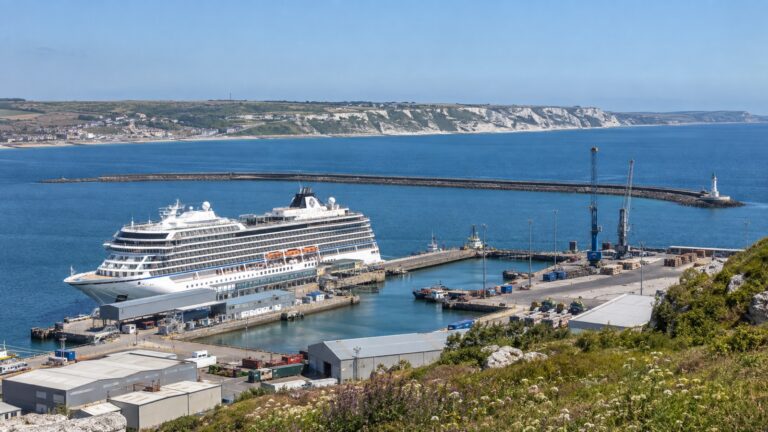
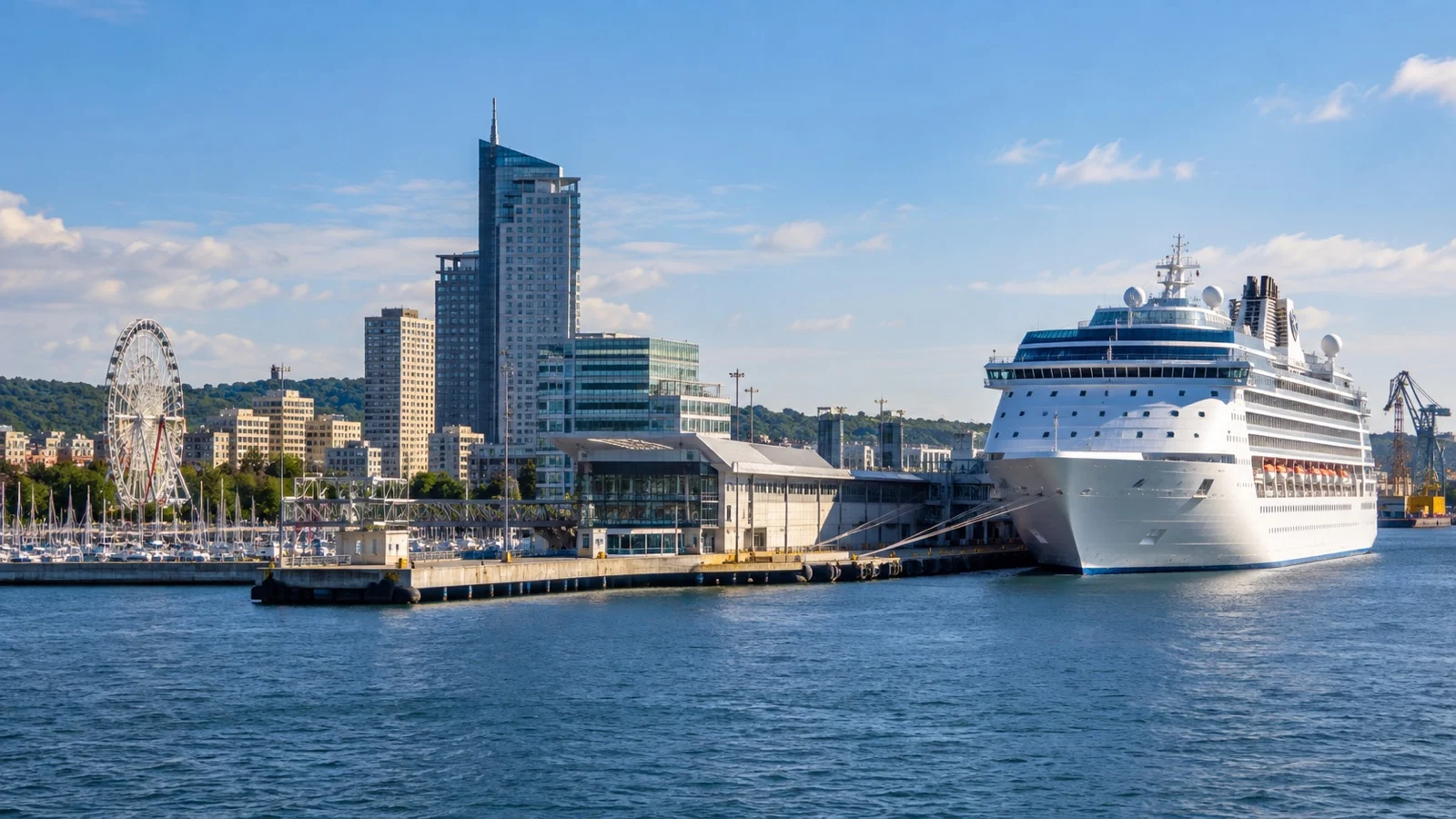
Ships berth alongside in Gdynia at the Francuskie and Pomorskie quays, inside a working commercial port. There is no tendering here, which is the first piece of good news.
The second is that Gdynia itself is walkable from the berth, usually 15 to 25 minutes depending on which quay you draw, and ships commonly run a shuttle to the gate or the city center. The site’s full Gdynia port guide is the place to check quay detail before you sail.
Gdynia is a young city, built from almost nothing in the 1920s as Poland’s own seaport, and its modernist core is taken seriously as architecture. Two museum ships sit off the main square, and the old marine terminal now holds an emigration museum.
None of that is why you came. It is a perfectly good half day if the weather turns or the call is short.
The Gdynia to Gdansk transfer is the whole decision
Gdansk sits about 20 miles (32 km) south of Gdynia, and the two are joined by a commuter rail line that runs all day. The train from Gdynia Glowna to Gdansk Glowny commonly takes 30 to 40 minutes.
That is the number people quote. The part they forget is everything on either end, and gangway to the middle of Gdansk usually works out at 75 to 100 minutes each way.
Call it three hours of round trip transit before you have looked at anything. On a nine hour call that still leaves a genuinely good afternoon, and on a seven hour call it leaves you rushing.
- Commuter train: Cheapest and most frequent, with a walk to the station at the Gdynia end.
- Ship excursion: Most expensive, and the only version that holds the ship if it runs late.
- Private car or taxi: Fastest door to door, and worth splitting between four people.
I would take the train, and I would take the earlier one in both directions. This is one of the better port days you can build around a train, as long as you treat the timetable as the plan rather than a suggestion.
What a Gdansk day actually gives you
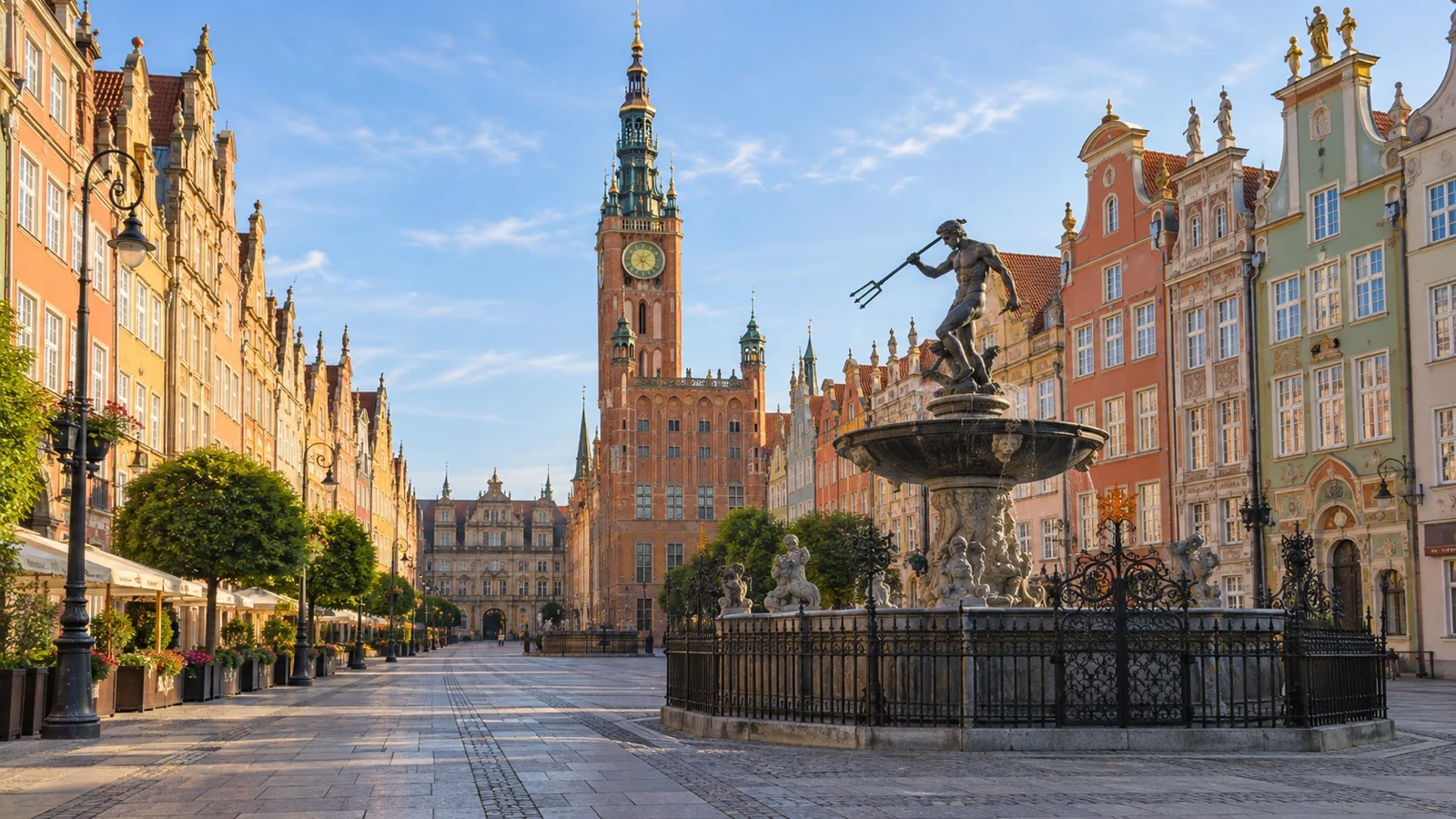
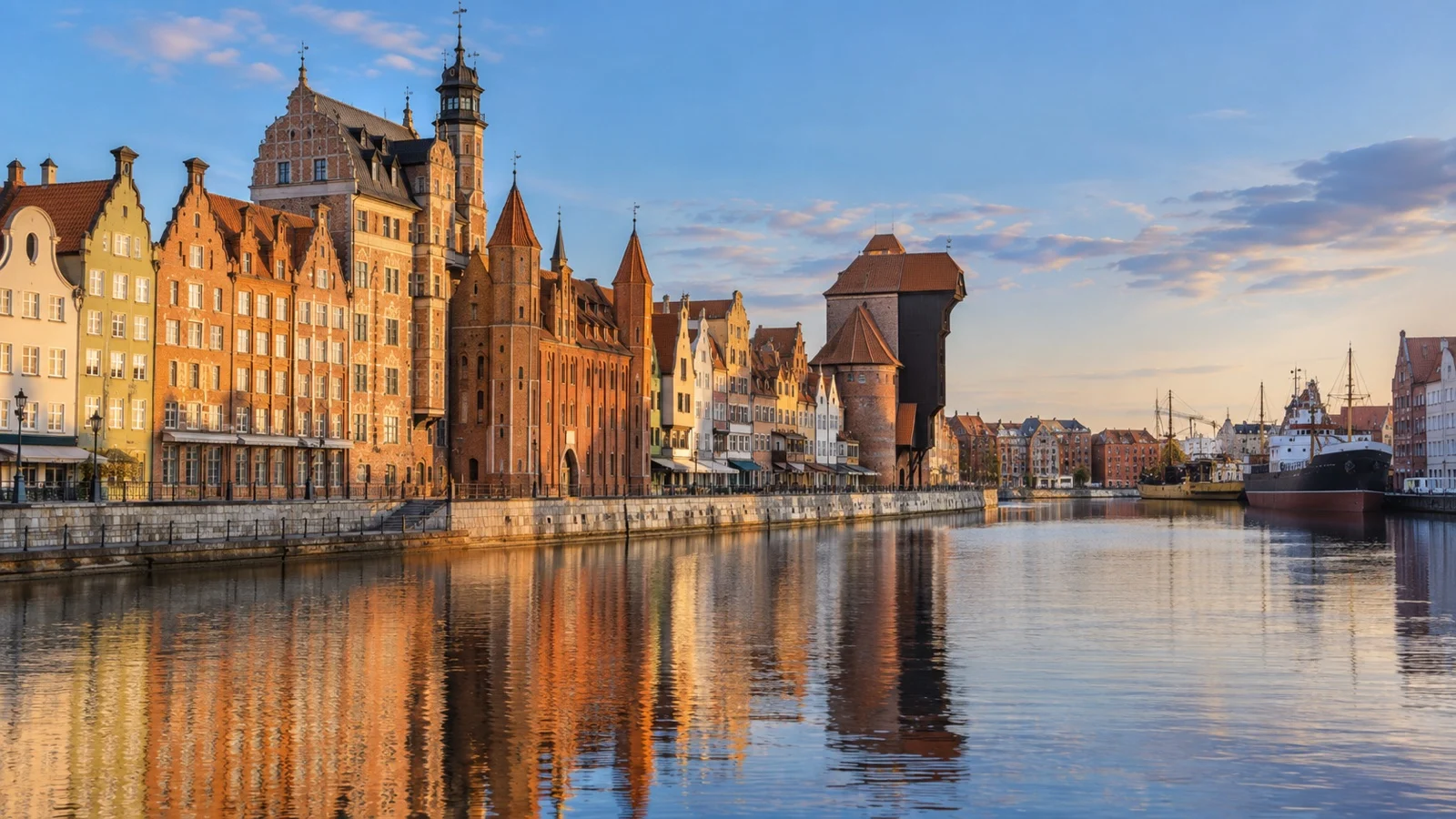
Gdansk is the payoff and it does not disappoint. The Long Market, the Neptune fountain, the brick bulk of St Mary’s and the medieval crane on the Motlawa all sit inside a compact, flat core you can cover on foot.
Mariacka Street is the amber street, and it is worth walking even if you buy nothing. Amber here is real, expensive and easy to fake, so buy from a shop that gives you a receipt or do not buy at all.
Four hours in the center is a satisfying visit. Six is luxurious, and anything under three is a photograph rather than a day.
Sometimes the ship docks in Gdansk itself
A minority of calls berth in the Port of Gdansk instead, at the Obroncow Westerplatte and WOC II quays, which take ships up to about 985 feet (300 m). That version puts you roughly 15 minutes by road from the city center instead of an hour and a half.
It is a much better day and you do not get to choose it. Check the port name on your cruise documents, because the itinerary line often just says Gdansk either way.
The Westerplatte berth sits at the harbor mouth, where the first shots of the Second World War were fired. Wisloujscie Fortress is close enough to reach on foot from there, which is a strange and useful bonus.
Sopot is the stop people skip and then regret
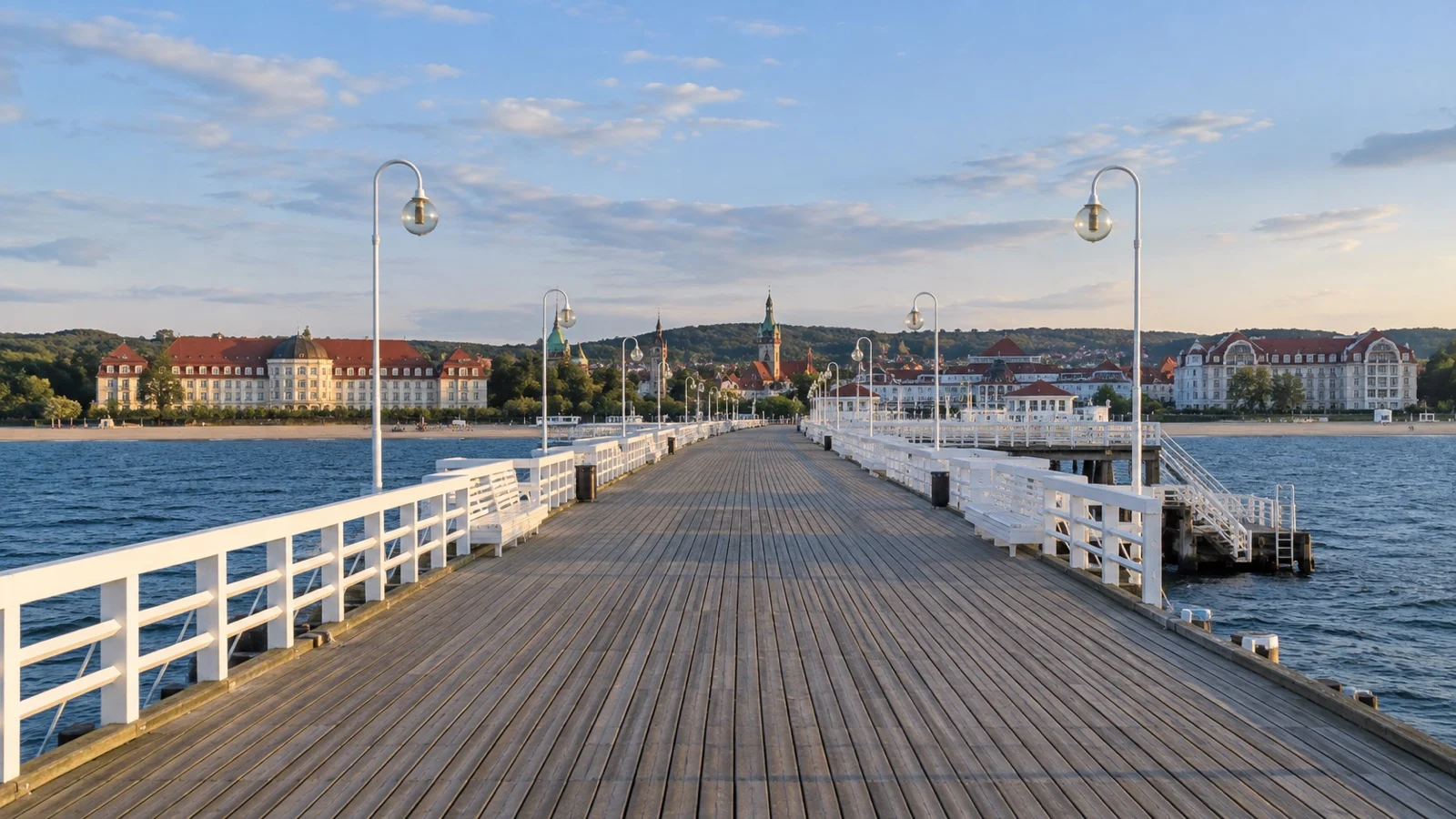
Sopot sits between Gdynia and Gdansk on the same rail line, which makes it the cheapest add on in the region. It is a beach and spa town with one long pedestrian street and one very long pier.
That pier is the longest wooden one in Europe at roughly 1,678 feet (511 m), and walking to the end of it is a real thing to do rather than a novelty. Monte Cassino street runs from the station down to the sand and is lined with cafes the whole way.
If your call is under eight hours, this is my recommendation over Gdansk. You get a proper Polish seaside afternoon and you are never more than a short train ride from the ship.
Malbork is the biggest thing in reach, and the biggest bet
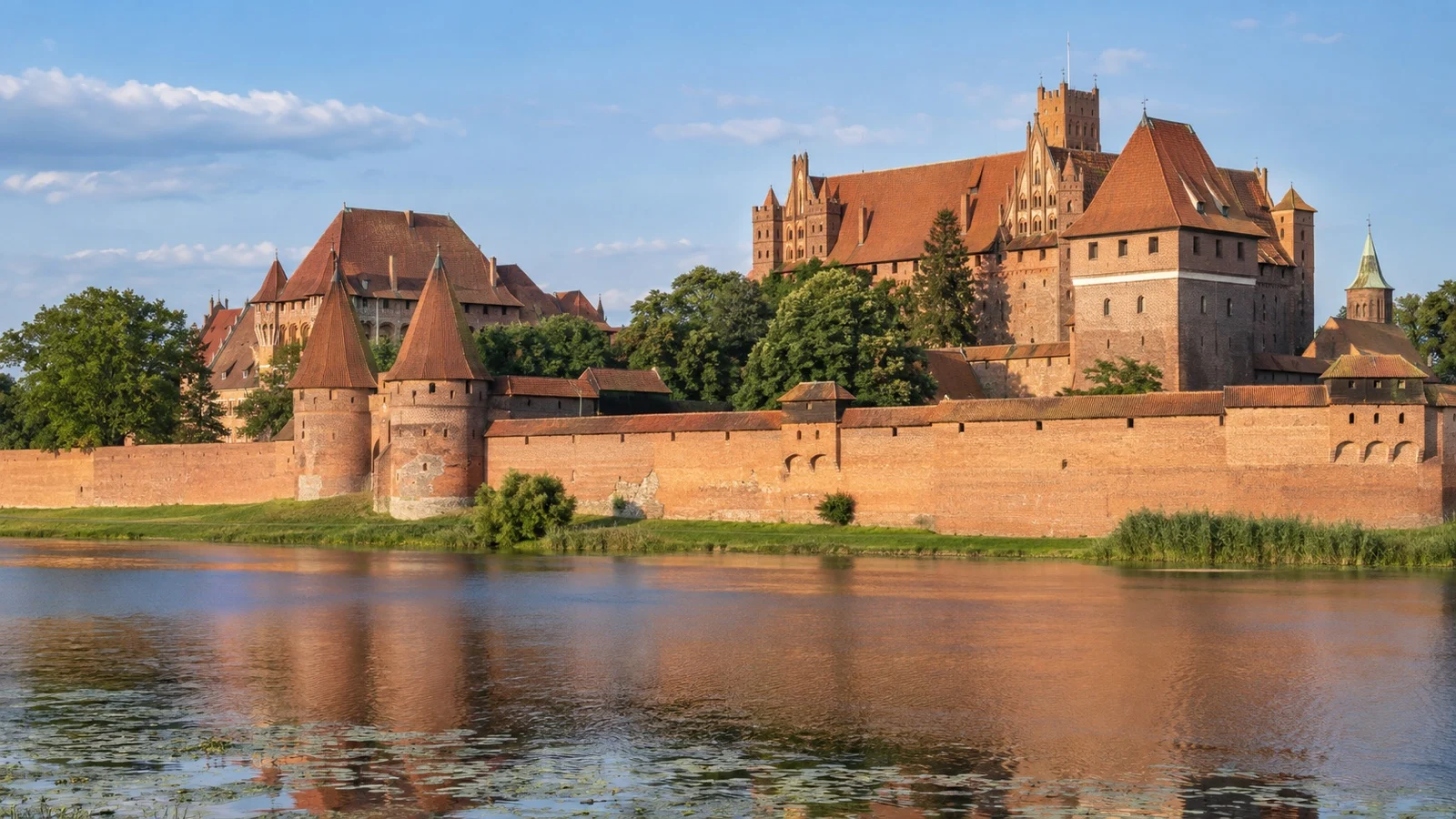
Malbork is a thirteenth century fortified monastery of the Teutonic Order and a World Heritage site, and it is enormous in a way photographs undersell. It sits roughly 40 miles (60 km) southeast of Gdansk.
From Gdynia that is a long day. You are adding the Gdansk transfer, then a second rail leg, then a castle that deserves two hours as a minimum, and the arithmetic gets tight on anything under ten hours in port.
This is the one Polish excursion I would book through the ship. The trains are not the difficulty, the distance is, because a missed connection that far out stops being an inconvenience and starts being a problem.
If the call is short, skip it without guilt. Gdansk plus Sopot is a better day than a stressed sprint to a castle and back.
Szczecin is a small ship port, and the quay tells you why
Szczecin sits at the other end of the country, inland on the Oder, and it is reached by a long channel passage up from the sea. That approach is measured in hours rather than minutes, which shapes the whole call.
The city’s passenger quay on the Chrobry Embankment runs about 1,030 feet (314 m) and takes drafts of up to about 16 feet (5 m). That draft figure is the whole story, because most modern cruise ships draw more than that.
So Szczecin gets expedition vessels, river sea ships and the occasional small luxury ship. The upside is that when one does get in, it ties up in the most photogenic part of the city, a short walk from the museums and the old town.
If Szczecin is on your itinerary, you are on a small ship and you probably already know it. Plan a walking day and do not expect a shuttle operation waiting on the quay.
Swinoujscie, Kolobrzeg and the names that appear once
Swinoujscie is Poland’s big ferry port, sitting on the German border at the seaward end of the channel that leads inland toward Szczecin. It runs scheduled Scandinavian ferries all year and takes cruise calls only occasionally.
Kolobrzeg and a handful of other coastal spa towns turn up on small ship itineraries and almost never on large ones. If one appears on yours, assume a modest vessel and a simple walking day.
None of these have Gdynia’s infrastructure behind them. Treat them as bonus stops rather than the reason you booked the sailing.
Which Polish port day I would pick
If I get one Polish call, I want it long and I want it in Gdynia with a train ticket already sorted. Gdansk is the best old town on this stretch of the Baltic and it repays the effort of reaching it.
If the ship berths in Gdansk itself, that is a gift, and I would spend the entire day in the center rather than going anywhere else. If the call is short, I would drop Gdansk without hesitation and do Gdynia and Sopot instead.
Szczecin I would not chase. It is a pleasant city with a lovely quay, and it is nobody’s reason to pick an itinerary.
Money, language and getting around
Poland uses the zloty and has not adopted the euro, which catches out people arriving from Lithuania a day earlier. Cards and contactless work almost everywhere, including ticket machines and small cafes.
Carry a small amount of zloty anyway for a market stall or a restroom, which is the same habit I argue for in my guide to carrying cash and cards in port. Do not accept euros as change, and do not pay in euros where a shop offers to let you.
Polish is hard and nobody expects you to attempt it. English is widely spoken across the three cities, and station signage is clear enough to navigate on your own.
Poland is in the Schengen area, so a day here counts against the same allowance as the rest of your European trip. The guide to Schengen days and entry rules for cruisers covers what that means if you are extending either end.
The all aboard math, and where people lose it
The trap here is never the outbound leg. It is the return, where a full train, a missed connection or a slow walk back through the port eats the buffer you thought you had.
From central Gdansk I would be on a train back three hours before all aboard. That sounds excessive until you remember the ship is 20 miles away and the last leg crosses a working cargo port.
From Sopot or Gdynia the margin is far kinder and an hour is plenty. Ports where a shuttle or a gate stands between you and the gangway deserve extra care, which is the argument behind my guide to ports where the shuttle is not optional.
Independent travel here is fine and I would do it every time. Just book the earlier train back, and treat the one after it as your emergency plan rather than your plan.
Quick answers
Do cruise ships dock in Gdansk or Gdynia?
Most dock in Gdynia, about 20 miles (32 km) north of Gdansk, even when the itinerary line says Gdansk. A minority berth in the Port of Gdansk itself, which cuts the ride into the center to roughly 15 minutes.
How do you get from Gdynia cruise port to Gdansk?
The commuter train from Gdynia Glowna to Gdansk Glowny commonly takes 30 to 40 minutes and runs frequently all day. Allow 75 to 100 minutes gangway to city center each way once you add the walk and the wait.
Is Malbork Castle worth it from a cruise ship?
Yes on a long call, and only on a long call, because it sits roughly 40 miles (60 km) beyond Gdansk. On anything under ten hours in port, Gdansk and Sopot are the better use of the day.
What currency do you need in Poland?
The Polish zloty, and cards are accepted almost everywhere including train ticket machines. Keep a small amount of cash for market stalls and restrooms.
Can big cruise ships dock in Szczecin?
No, the passenger quay there takes drafts of only about 16 feet (5 m), which rules out most modern cruise ships. Szczecin calls are expedition and small ship territory.
Final word
Poland is the port where the map lies to you in a friendly way. The itinerary says Gdansk, the ship says Gdynia, and the gap between them is the only real planning problem of the day.
Sort the transfer before you sail and everything after it gets easy. Gdansk is worth every minute of the train, and on the days when it is not, Sopot is sitting right there on the same line.
How this guide was researched: Berth and quay locations in Gdynia, Gdansk and Szczecin, the rail link between Gdynia and Gdansk, the Sopot pier and the World Heritage status of Malbork were checked in October 2026 against official port, city and heritage information. Quay assignments, train timetables, fares and excursion offerings change from season to season, so confirm the details that matter for your own sailing date. See our Editorial Policy.