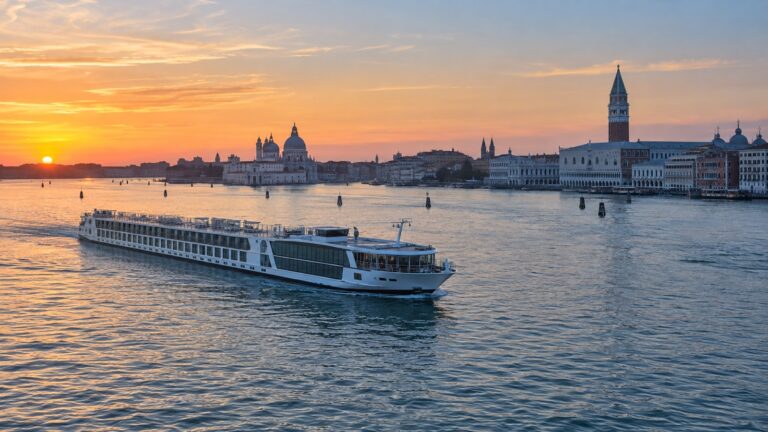
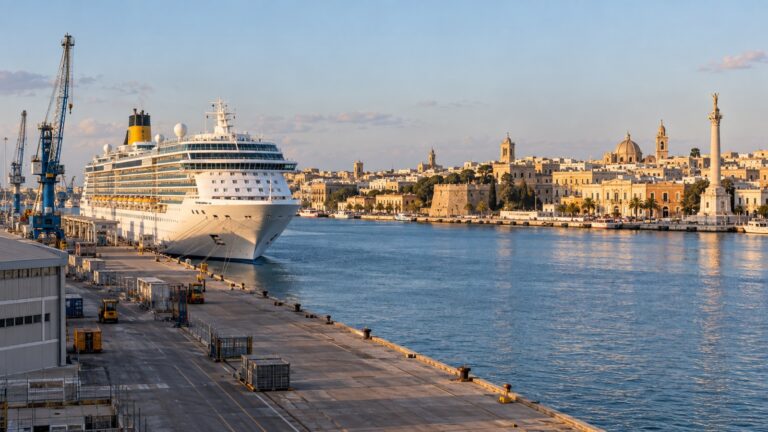
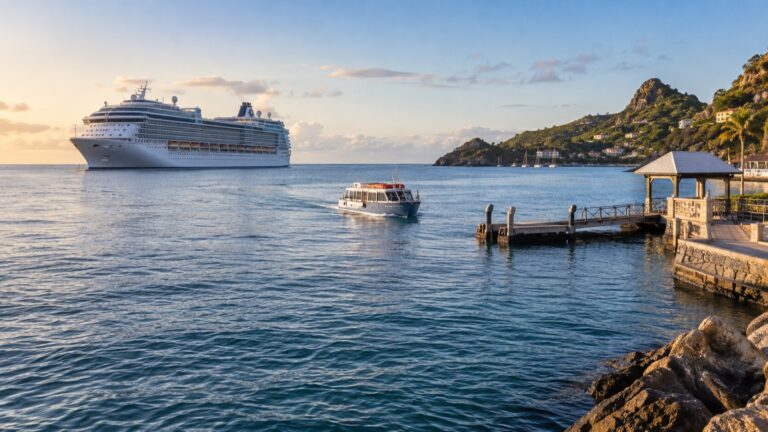
How Extreme Heat Should Change Your Mediterranean Port Plans
Extreme heat should change the plan, not merely increase the number of water bottles in it. I move outdoor priorities earlier, shorten the route, reserve air-conditioned recovery, and skip the famous sight if the safe version no longer fits.
Mediterranean Cruise Heat Quick Facts
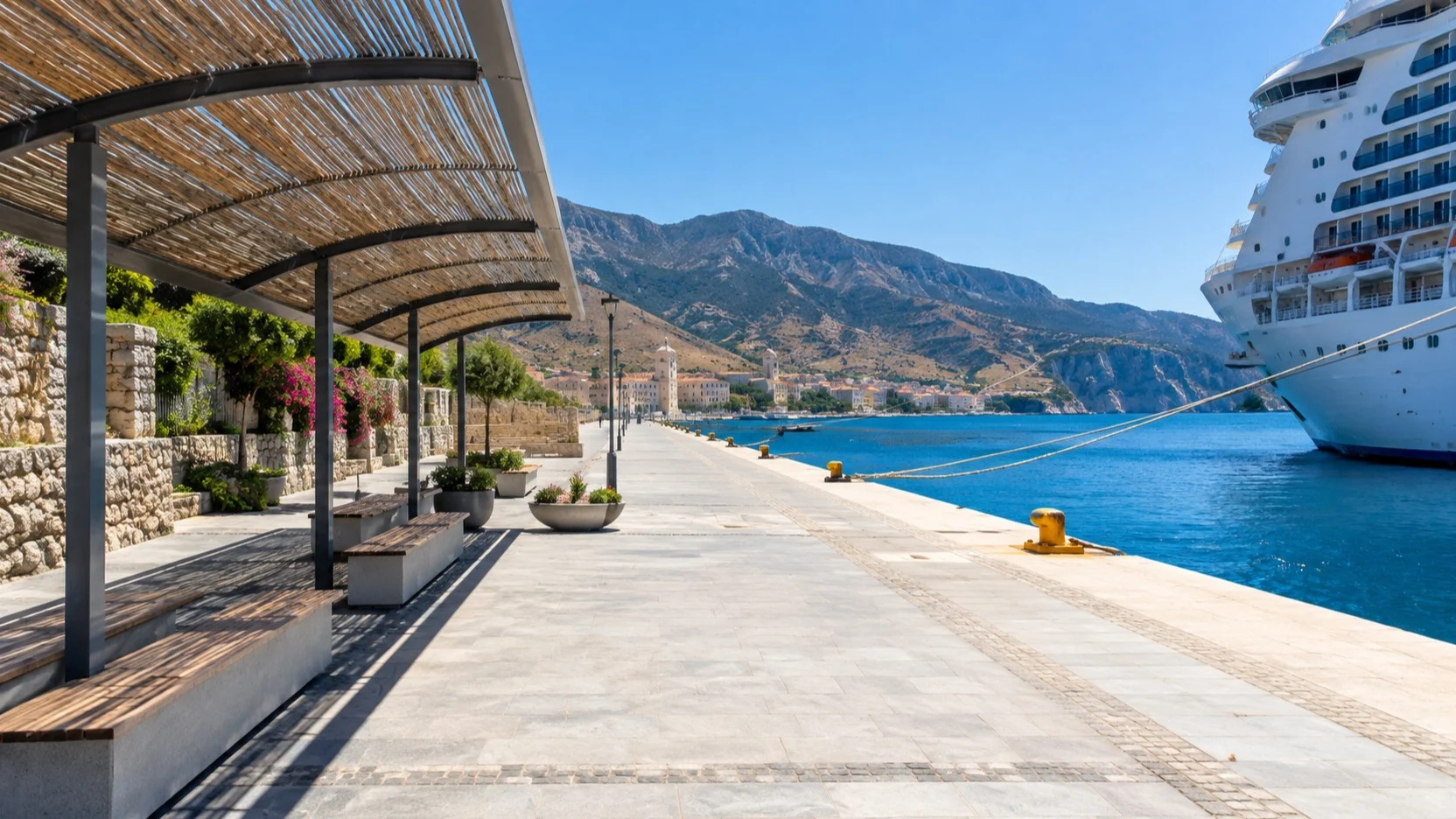
- Outdoor priority: Schedule one essential open-air sight as early as operations allow
- Midday plan: Protect a genuine air-conditioned recovery block during the hottest hours
- Transport: Verify vehicle cooling, boarding waits, drop-off distance, and early-return options
- Hydration: Drink water regularly and follow personal medical guidance
- Live checks: Review official heat alerts, UV conditions, and attraction notices on the day
- Emergency: Seek local medical help immediately for loss of consciousness or other signs of severe heat illness
My verdict
Choose one early outdoor anchor, one air-conditioned midday block, and a flexible late activity close to the ship. Replace long exposed walks with verified transport, check official heat warnings and attraction notices, and treat new confusion, fainting, or severe symptoms as a medical problem.
A port day is not successful because you completed every reservation. It is successful because everyone returned safely with enough energy to enjoy the cruise.
Why port heat feels harder
Cruisers often compare the forecast with temperatures at home. That misses sun exposure, humidity, radiant heat from stone, limited shade, crowds, steep streets, hot vehicles, and hours spent walking.
Tourists may arrive without acclimatization and try to compress several vacation days into eight hours. WHO Europe identifies tourists, older adults, young children, pregnant people, those with chronic conditions, and people with restricted mobility among groups that can face greater heat risk.
The thermometer is only one input. Check humidity, wind, official warnings, UV index, air quality, and the conditions at the actual attraction.
For the detail behind that, see Extreme Heat on a Cruise.
Use a heat-adapted day structure
Early: one outdoor priority
Leave promptly when ship clearance and transport make it safe, then go directly to the most exposed priority. Do not spend the coolest hour browsing terminal shops.
Reserve admission when possible. Standing in an unshaded ticket line can erase the value of arriving early.
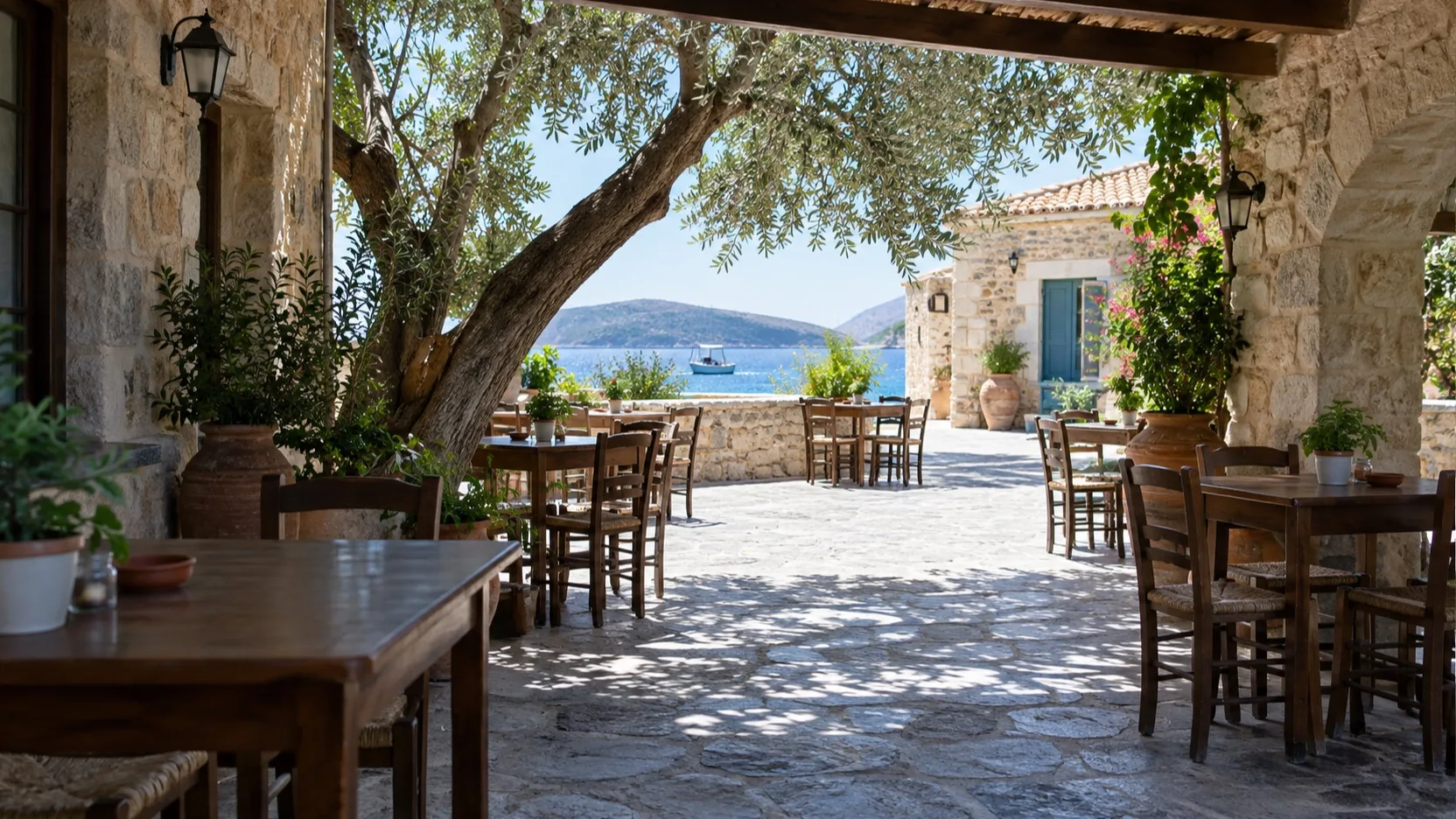
Midday: a real cooling block
Move indoors for a museum, long lunch, market, performance, or air-conditioned vehicle tour. WHO Europe advises avoiding strenuous activity during the hottest part of the day and spending time in a cool place when necessary.
A shaded terrace is not equivalent to air conditioning during severe heat. Choose a venue that can genuinely lower body temperature.
Late: optional and close
Add a short indoor or shaded activity only if everyone still feels well. Keep the route close to dependable return transportation.
Do not save a remote marquee site for late afternoon unless its hours, transport, and ship buffer are exceptionally clear. Heat slows the group and traffic may still be heavy.
How heat changes famous port plans
Piraeus for Athens
The Acropolis is exposed, steep in places, and extremely popular. Book the earliest realistic timed entry, arrange efficient transportation, and keep the Acropolis Museum or another indoor site as the midday anchor.
Use the Piraeus cruise port guide to understand the transfer before selecting an entry time. Always check official Greek culture notices because access can change during exceptional heat.
Civitavecchia for Rome
Rome involves a substantial transfer plus large distances among attractions. Extreme heat makes a three-site sprint far less reasonable.
Choose one major outdoor landmark early, one indoor or shaded priority, and a proper lunch. A private or ship tour may reduce walking, but confirm that the vehicle’s air conditioning works and that it can drop close to entrances.
The Civitavecchia cruise port guide explains the gateway transfer choices. Heat makes every missed connection or extra walk more consequential.
Naples
Pompeii and Herculaneum are outdoor archaeological sites with limited shade in many areas. Select a shorter guided route, bring approved water, and avoid combining ruins with another exposed afternoon marathon.
Naples itself offers churches, museums, food, and historic interiors. The Naples cruise port guide helps compare those options, and the inland site is not your only authentic choice.
La Spezia and Livorno
Long transport to Florence, Pisa, or Cinque Terre adds platform waits and walking. A heat delay or crowded train makes a tight independent plan more fragile.
The La Spezia cruise port guide helps compare regional choices. In extreme heat, a shorter coastal or city plan may provide more actual enjoyment.
Santorini
Tendering, vertical access, lines, white stone, and limited shade compound heat. Check the day’s ship traffic and do not schedule a route that assumes effortless cable-car access.
An island drive with controlled stops can reduce walking, but vehicle cooling and traffic matter. Bring water even for a “panoramic” excursion.
I treat shade and recovery time as itinerary items because the body certainly does.
Barcelona
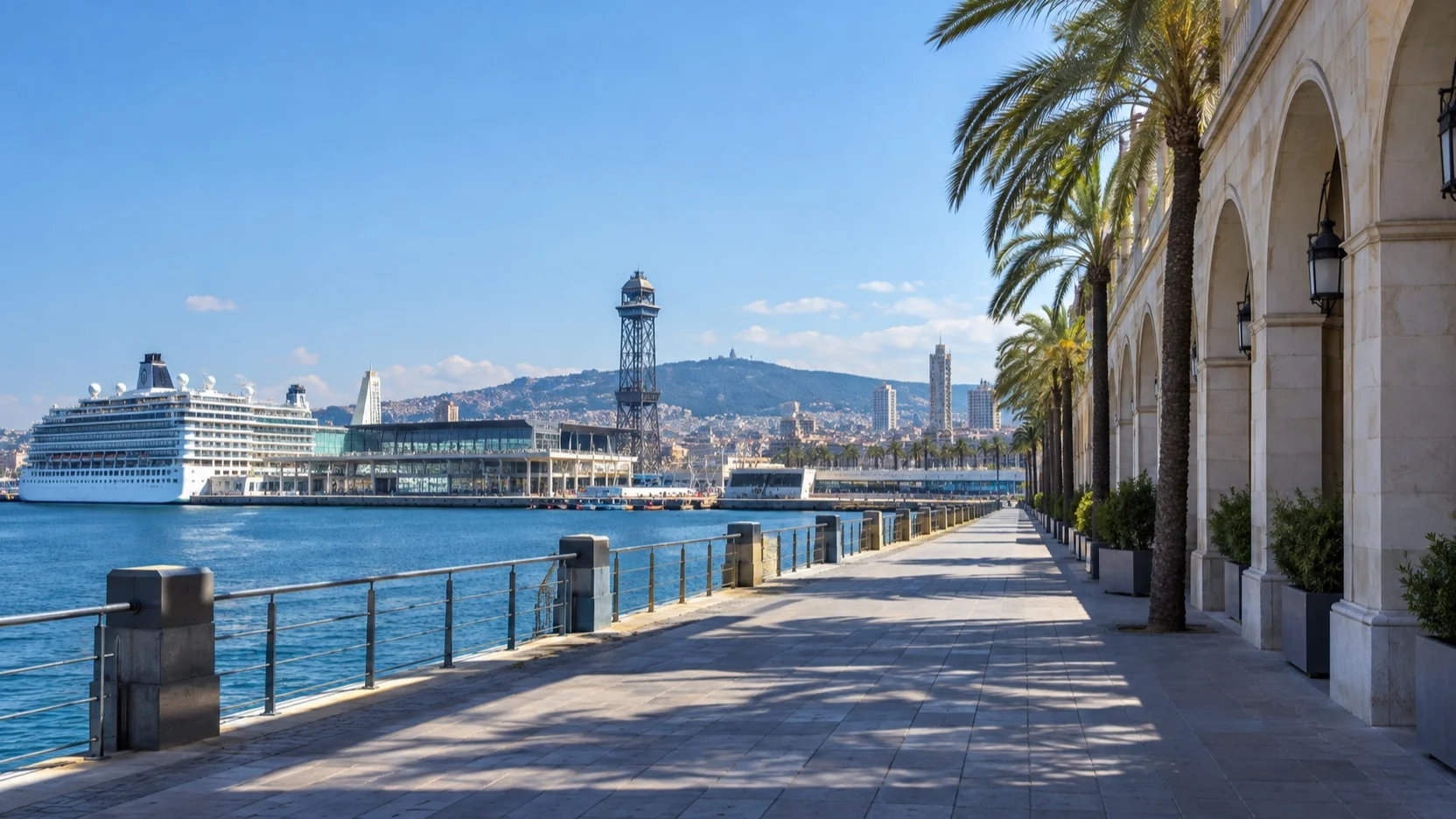
Barcelona offers air-conditioned museums, markets, architecture, food, and neighborhoods, which makes a mixed indoor-outdoor plan possible. Reserve major sites and avoid crossing the city repeatedly.
Use taxis or public transport to remove low-value walking. Save one compact neighborhood for the late portion of the day.
Activities to shorten, move, or replace
Archaeological sites
Move them to the earliest practical slot and choose a focused route. Check whether bags, water containers, umbrellas, or rest breaks have site-specific rules.
Never assume an attraction will remain open because your ticket is valid. Authorities may change access during dangerous conditions.
Walking food tours
Ask how much time is outside and whether every stop has indoor seating. A tasting tour can involve several miles and long periods standing in sun.
Consider a cooking class or seated tasting instead. You still get local flavor without turning lunch into endurance.
Open-top buses
The upper deck can be brutally exposed, while lower-deck air conditioning varies. Crowded stops may create long waits.
Use it only after confirming the vehicle setup and route frequency. A conventional air-conditioned panoramic tour can be more reliable.
Beach days
Water and breeze may feel cooling, but intense sun and reflected UV remain concerns. The EPA advises checking the UV Index, seeking shade, and using protective clothing and broad-spectrum sunscreen.
Reserve dependable shade and drink water. Alcohol is not hydration.
Long independent rail days
Platforms can be exposed, trains crowded, and station elevators unreliable. Heat also makes sprinting for a connection a poor plan.
Reduce the number of legs and identify a later train before departure. Keep a larger ship-return buffer.
Transportation questions that matter in heat
Ask:
Is the vehicle air-conditioned?
Does the cooling operate while parked?
How far is each drop-off from the entrance?
How long will the group stand before boarding?
Is bottled water provided or sold?
Can a guest remain in the vehicle during a stop?
Can the route be shortened?
Is an early return possible?
“Air-conditioned transportation” may refer only to a bus segment. It says nothing about a 45-minute exposed meeting point.
Pack for heat without carrying a suitcase
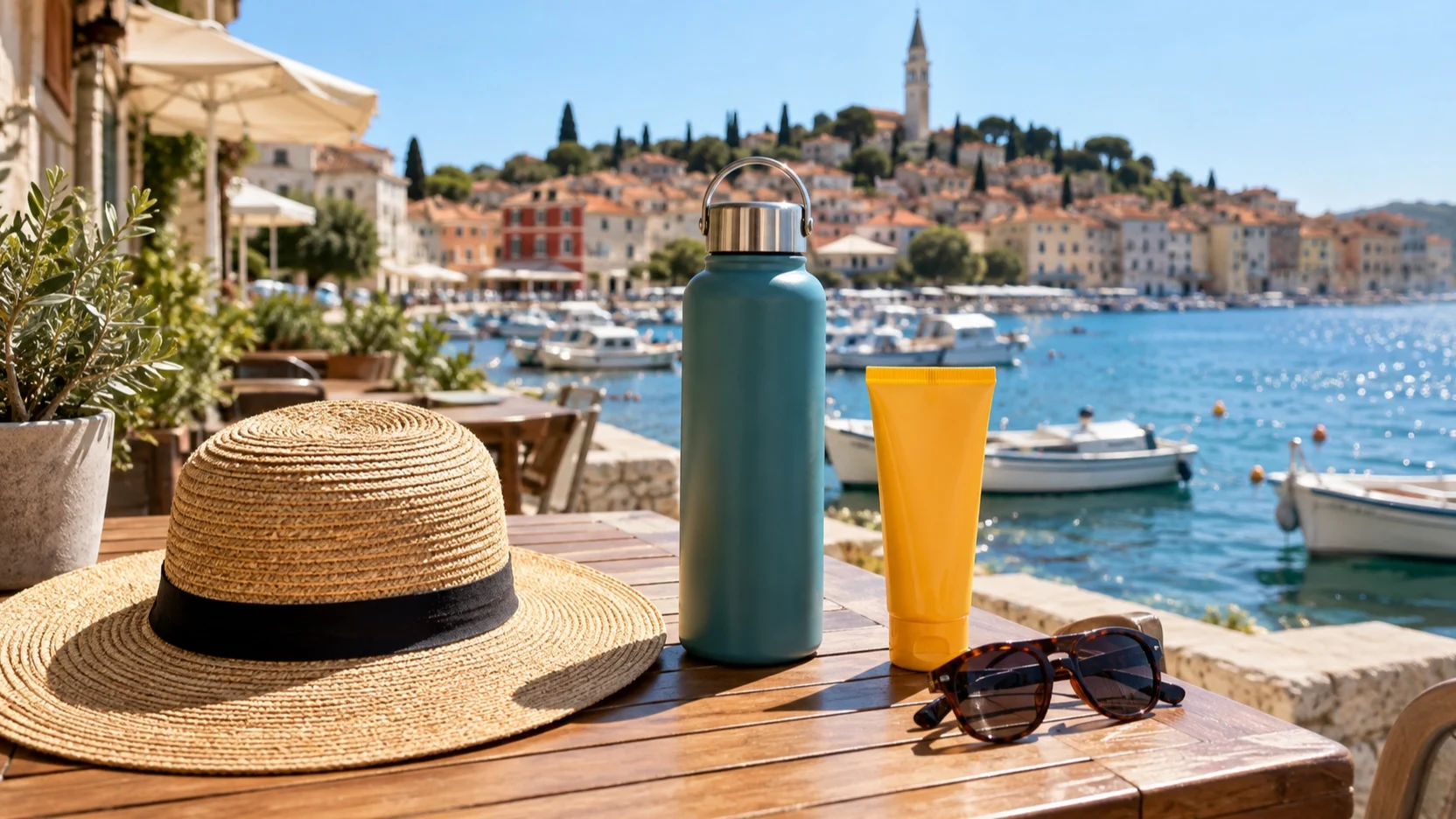
Bring:
Refillable water bottle where local rules allow.
Wide-brimmed hat or secure sun hat.
UV-protective sunglasses.
Broad-spectrum sunscreen.
Light, loose clothing with useful coverage.
Electrolyte product if medically appropriate.
Cooling cloth or small fan.
Necessary medication stored correctly.
Offline tickets and return information.
Do not change medication or fluid restrictions based on a travel article. Ask a clinician about heat, hydration, and medication storage before travel when relevant.
Some medications can increase heat sensitivity or require temperature control. WHO and CDC guidance emphasize advance planning rather than stopping medication independently.
Check official heat tools
Use the national meteorological service and local civil-protection alerts. In Italy, the Ministry of Health publishes warm-season heatwave bulletins for 27 cities with short-range risk forecasts.
Also check the attraction’s own website and your cruise-line messages. A general city alert does not explain whether a particular archaeological site, cable car, road, or tour has changed operations.
Save important notices offline. Mobile data can slow when thousands of passengers connect near the port.
Recognize when to stop
Heat exhaustion can involve heavy sweating, thirst, headache, dizziness, nausea, weakness, or confusion. Move to a cool place, seek appropriate help, and follow current medical guidance.
Heat stroke is a medical emergency. WHO advises urgent medical help for signs such as hot dry skin, delirium, convulsions, or unconsciousness.
Do not ask someone to “push through” confusion or collapse because a timed ticket was expensive. Call local emergency services and notify the ship or tour leader as appropriate.
Extra planning for higher-risk travelers
Older adults, infants, pregnant travelers, people with chronic heart, lung, kidney, metabolic, or mental-health conditions, and some medication users may need a clinician-guided heat plan. Restricted mobility can also make it harder to reach shade or cooling quickly.
Tell the tour operator about relevant access needs before booking. Confirm restrooms, seating, shade, vehicle access, and early-return options.
If the heat keeps rising, I reduce ambition before it reduces me.
Travel insurance and local care information deserve attention. Read the policy exclusions rather than assuming every heat-related disruption is covered.
How heat affects excursion refunds
A tour may operate even when you consider the day too hot. Voluntary withdrawal can fall under ordinary cancellation terms unless the operator changes or cancels the excursion.
Read the policy, monitor official notices, and ask what modifications are planned. Keep written answers.
If a site closes, the tour may substitute another stop rather than cancel entirely. Decide before boarding whether the alternative is acceptable under the contract.
For the detail behind that, see Thunderstorm Holds.
Sample heat-adjusted port days
Athens
Use prearranged transport to an early timed Acropolis visit, then spend midday in an air-conditioned museum and have a seated lunch. Return or take one short shaded stop if everyone feels well.
Rome
Choose one reserved landmark, one interior attraction, and lunch in the same district. Use transport between districts and remove the least important booking.
Naples
Visit a focused section of Pompeii early with a qualified guide, then return to Naples for an indoor museum or long lunch. Skip the second outdoor ruin.
Barcelona
Reserve one morning architectural site, use public transport to an indoor museum or market, then finish with a shaded neighborhood meal. Keep the final route near return transport.
Make the go, shorten, or stop decision early
Use the official hourly forecast and local heat alert for the attraction, not only the port or airport. If a site reduces hours, a vehicle lacks working air conditioning, or a traveler cannot cool down during the planned break, shorten the route before the group is committed far from the ship.
New confusion, loss of consciousness, or very hot skin can signal a medical emergency, and the current WHO and CDC guidance says to seek urgent help. Move to a cool place while help is arranged, notify the tour leader or ship, and do not continue sightseeing.
A cruise-line or independent tour may still operate during heat, so the seller’s written cancellation and modification terms control refunds. Ask what shaded waiting, water, restrooms, vehicle cooling, and early-return option are actually included.
Quick answers
Should heat cancel the tour?
Cancel or change it when official warnings, health needs, operator modifications, or the actual route make it unsuitable. Read the product’s cancellation terms before deciding.
A high temperature alone does not guarantee the seller will cancel. Ask how the tour will reduce exposure.
Is morning always cooler?
Usually, the early part of the day offers lower heat load than midday, but local humidity, wind, and overnight warmth matter. Check the hourly official forecast.
An early plan still needs water, shade, and a fallback. Do not overbook simply because the first stop is at 8 a.m.
How much water should I drink?
Individual needs vary with health, medication, activity, diet, and clinician instructions. Drink regularly and follow qualified medical advice, especially if you have a fluid restriction.
Do not rely on alcohol or highly sugary drinks for hydration. Refill where water is known to be safe.
Are museums guaranteed to be cool?
No. Historic buildings may have partial or no air conditioning, and lines can form outside.
Check the venue’s facilities and recent operational notices. Choose a second cooling location nearby.
How this guide was researched
Cruise Ports reviewed current 2026 guidance from WHO Europe, the Italian Ministry of Health heatwave bulletins, the CDC’s hot-climate travel guidance, and the EPA UV Index overview. Sources and internal guides were checked in September 2026; forecasts, warnings, attraction access, and personal medical needs require current confirmation; see our Editorial Policy for our sourcing, review, and corrections standards.
More on this topic: browse every guide on weather, crowds and conditions.