Eastern or Western Mediterranean: How to Choose Your First Med Cruise
Two Mediterranean cruises can cost the same and feel like completely different vacations, one running Barcelona to Rome on short city transfers and the other running Athens through the Greek islands and Turkey. Choosing between them is mostly a question of how you want to spend your days.
My quick take
If this is your first Mediterranean cruise, book the western loop and save the east for your second one. It asks less of you: bigger ports, walk-off berths almost everywhere, easy flights, and very few days that hinge on a tender boat behaving.
That is not a knock on the eastern side. The Aegean is the better scenery and by far the better swimming, but it comes with more moving parts, and moving parts are what wreck a first cruise.
The quick facts
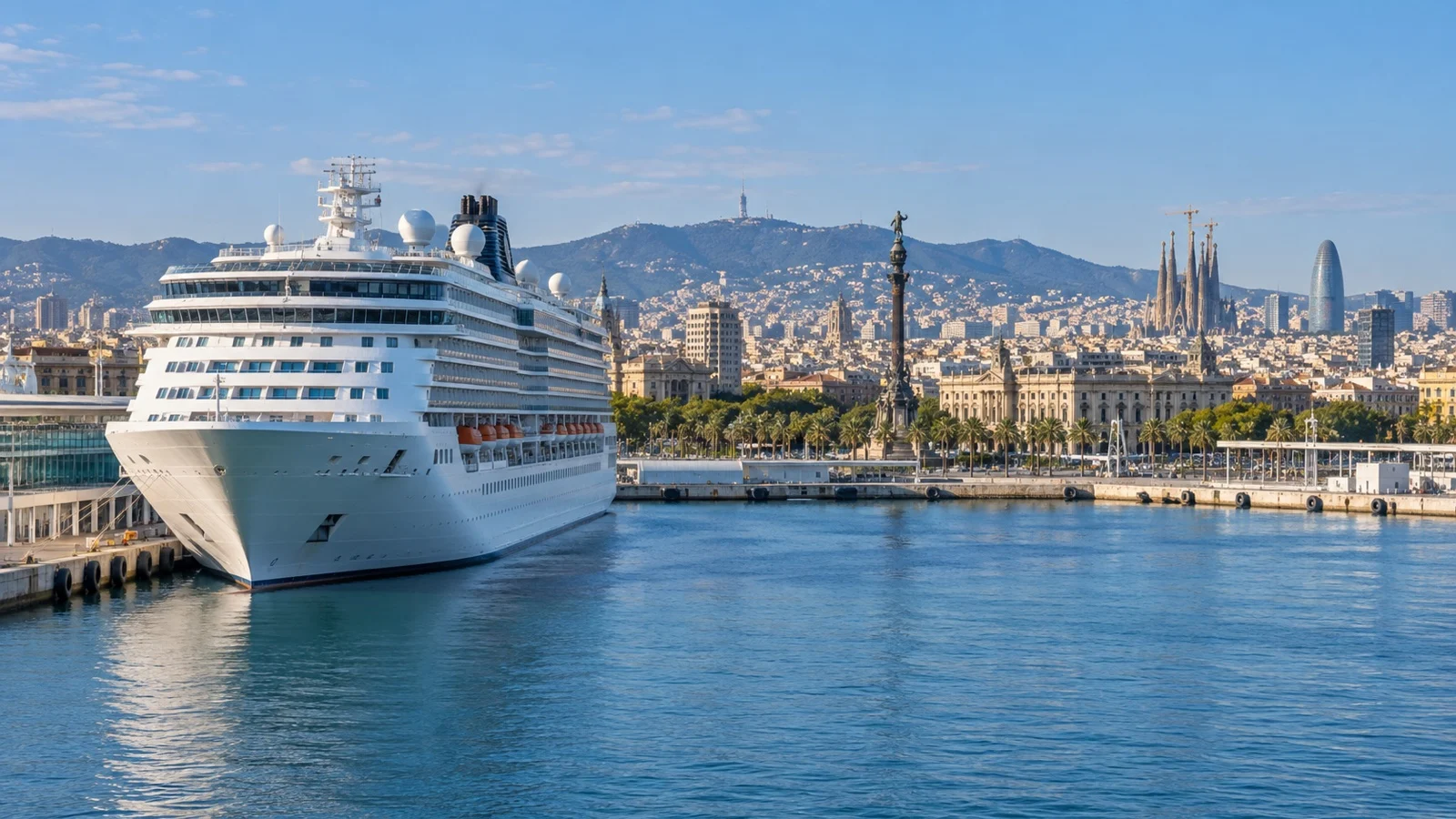
- Western Med: Barcelona, the Balearics, a French port, then Italy for Livorno, Civitavecchia and Naples, nearly all walk-off berths.
- Eastern Med: Athens, the Greek islands, the Turkish coast and often the Adriatic, with more tendering and smaller towns.
- Flights: Barcelona and Rome are the easiest gateways to reach from the US, Athens is the easiest eastern one.
- Season: Both run roughly April through October and both are hottest and most crowded in July and August.
- First timer pick: Western, because the transfers are known quantities and the berths are reliable.
What a western sailing actually looks like
The standard western loop runs Barcelona, an island stop like Palma or Ibiza, a French port such as Marseille or Toulon, then Italy for Genoa or Livorno, Civitavecchia and Naples. Seven nights usually buys you five or six ports and one sea day.
Almost every one of those is a berth you walk off. No tender ticket, no line on deck five, no morning where the captain comes on the PA to say the swell is too big.
The catch is that the headline sights are often inland. Civitavecchia is the port for Rome and sits roughly 45 to 80 minutes from the city by train depending on which service you catch, and Livorno is the port for Florence at about an hour and a half of train each way plus a mandatory port shuttle.
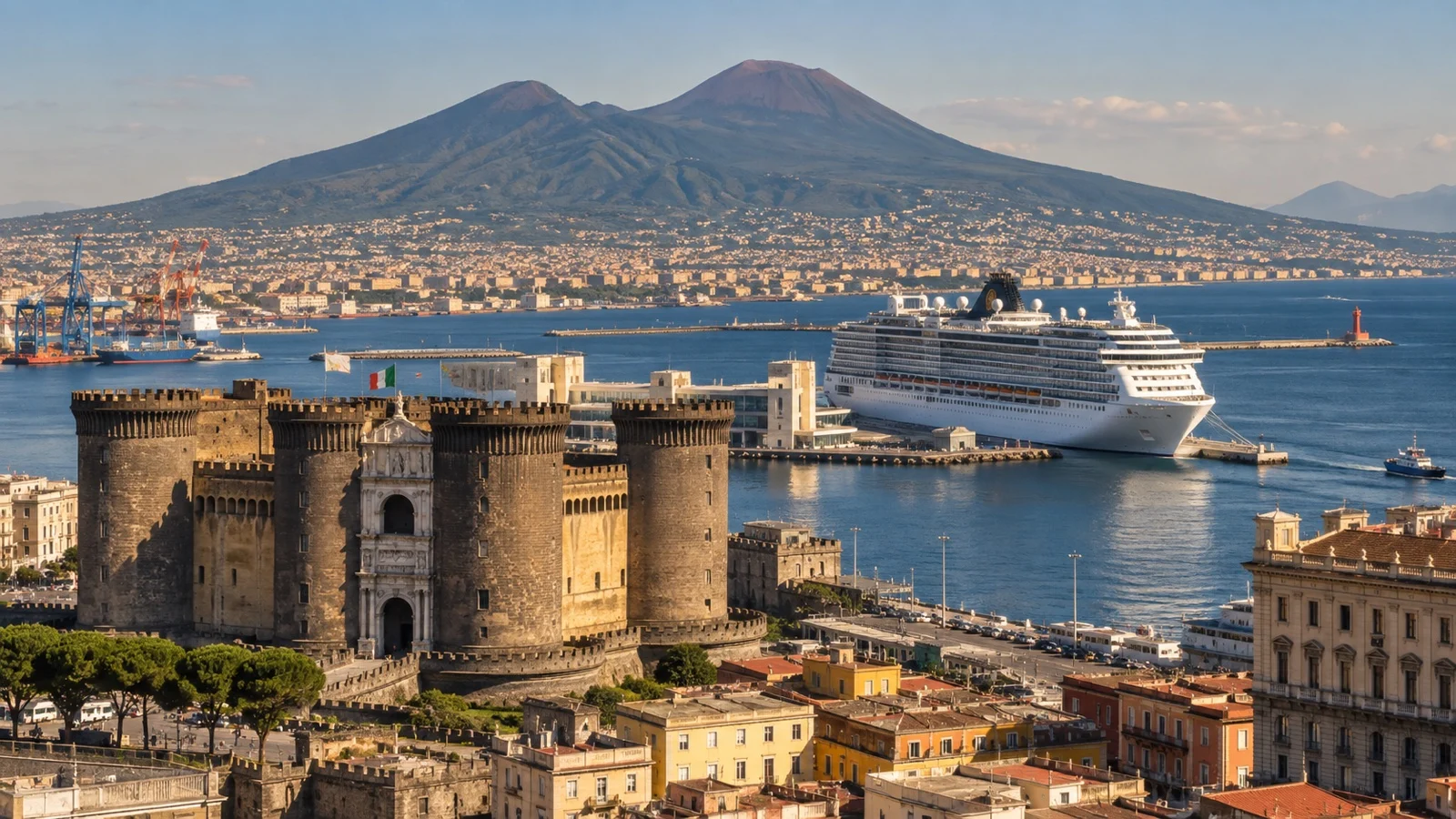
Two ports save the loop from being a coach tour. Naples puts you on the waterfront a flat 10 to 15 minute walk from the historic center, and Barcelona is a short shuttle or taxi from the Adossat piers into the middle of town.
What the eastern run gives you instead
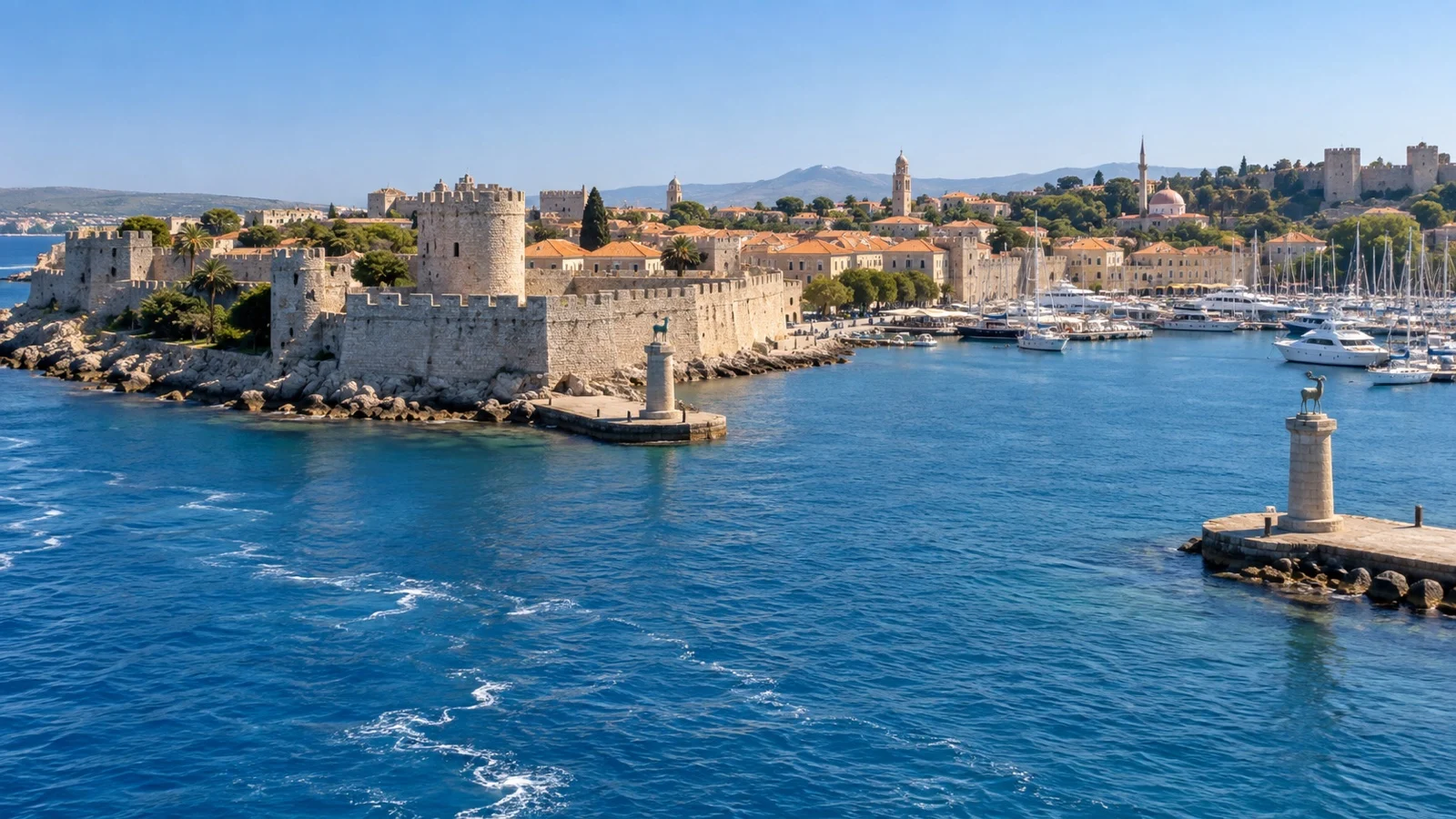
Eastern itineraries usually start in Athens, Venice or Trieste and string together Mykonos, Santorini, Rhodes, Crete and a Turkish call, often with Adriatic stops like Dubrovnik, Kotor, Split or Corfu attached. The towns are smaller, older and closer to the water than anything in the western loop.
The transfers are also shorter, which surprises people. Piraeus is 20 to 25 minutes from the Acropolis on the metro, and Kusadasi drops you a couple hundred feet from town with the ruins at Ephesus about 25 minutes up the road.
What you trade is certainty. More of these calls are tender ports or exposed anchorages, and a windy Aegean morning can turn the stop you booked the whole cruise for into a slow lap past the island.
The flight math is the first real difference
Barcelona and Rome are two of the easiest European cities to reach nonstop from the United States, with service from a long list of American hubs. Athens has a decent nonstop lineup in high summer and a thinner one in the shoulder months, and Adriatic homeports like Trieste and Ravenna nearly always mean a connection.
That is worth more than the fare difference. Every connection adds a delayed-bag scenario and a missed-connection scenario to a trip where the ship genuinely does leave without you.
I fly in a day early for any Mediterranean cruise and two days early when the routing has a connection in July or August. It is the cheapest insurance in cruising and I have never once regretted the hotel night.
Port intensity, and how hard each side works you
Western ports are cities. Rome, Florence, Barcelona and Naples all contain more than you can see in a week, so every port day becomes an exercise in cutting things you wanted to do.
Eastern ports are towns. You can genuinely finish Fira, or the walled part of Dubrovnik, or Rhodes Old Town, and get back aboard feeling like you saw the place rather than a slice of it.
Both sides tend to run six port days out of seven, which is a lot of alarm clocks. If your group includes anyone who fades by day four, look for an itinerary with two sea days rather than one, whichever region you pick.
How much of your day is a bus
This is the question I would actually build the decision around, and the answer runs against the stereotype. The western loop has the longer transfers, not the eastern one.
- Civitavecchia to Rome: Roughly 45 to 80 minutes by train each way, plus the port shuttle and the walk to the station.
- Livorno to Florence: About an hour and a half of train each way, so close to three hours of moving before you see anything.
- Naples to Pompeii: Around 35 to 40 minutes on the commuter train, one of the best ratios in the Med.
- Piraeus to the Acropolis: Roughly 20 to 25 minutes on the metro from the port station.
- Kusadasi to Ephesus: Around 25 minutes by road, longer when four ships are in and the coaches stack up.
Add it up across a week and the western itinerary can easily cost you six to ten hours of seat time that the eastern one does not. That is most of a port day spent looking at the back of a headrest.
The counterweight is what you get at the end of the ride. Nobody has ever come home disappointed that they spent three hours on trains to stand in front of the Duomo.
Heat is not a footnote in July and August
Both regions get seriously hot in midsummer, routinely into the 90s (mid 30s C) and sometimes well past that. The difference is where that heat lands on you.
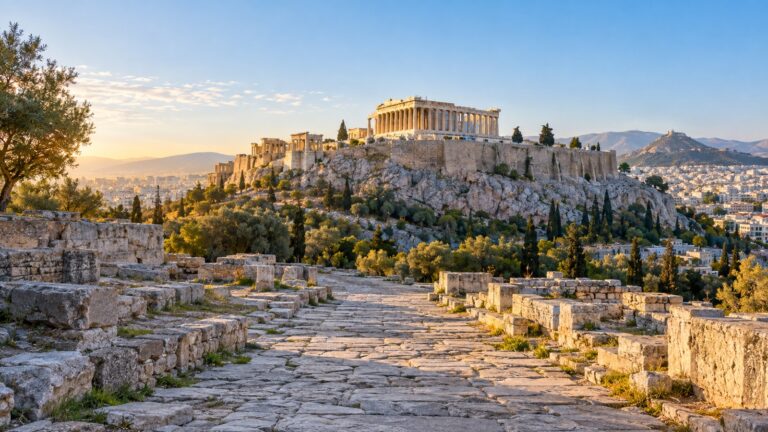
Eastern days are more often spent on open stone with no shelter, whether that is the rock the Parthenon stands on or a ruin field with no trees. Ephesus can sit near 95 degrees (35 C) with almost no cover, and the cliff walk in Santorini in the same conditions is a genuinely bad idea.
Western days give you more indoor outs. A museum, a church, a metro car with air conditioning, and my guide to reworking port plans around extreme heat covers how I reorder a day when the forecast turns ugly.
Crowds, and where they actually bite
Big western cities absorb cruise passengers. Two thousand people landing in Rome disappear into a city of millions, and you feel the crowd only at the ticket gate of whatever you came to see.
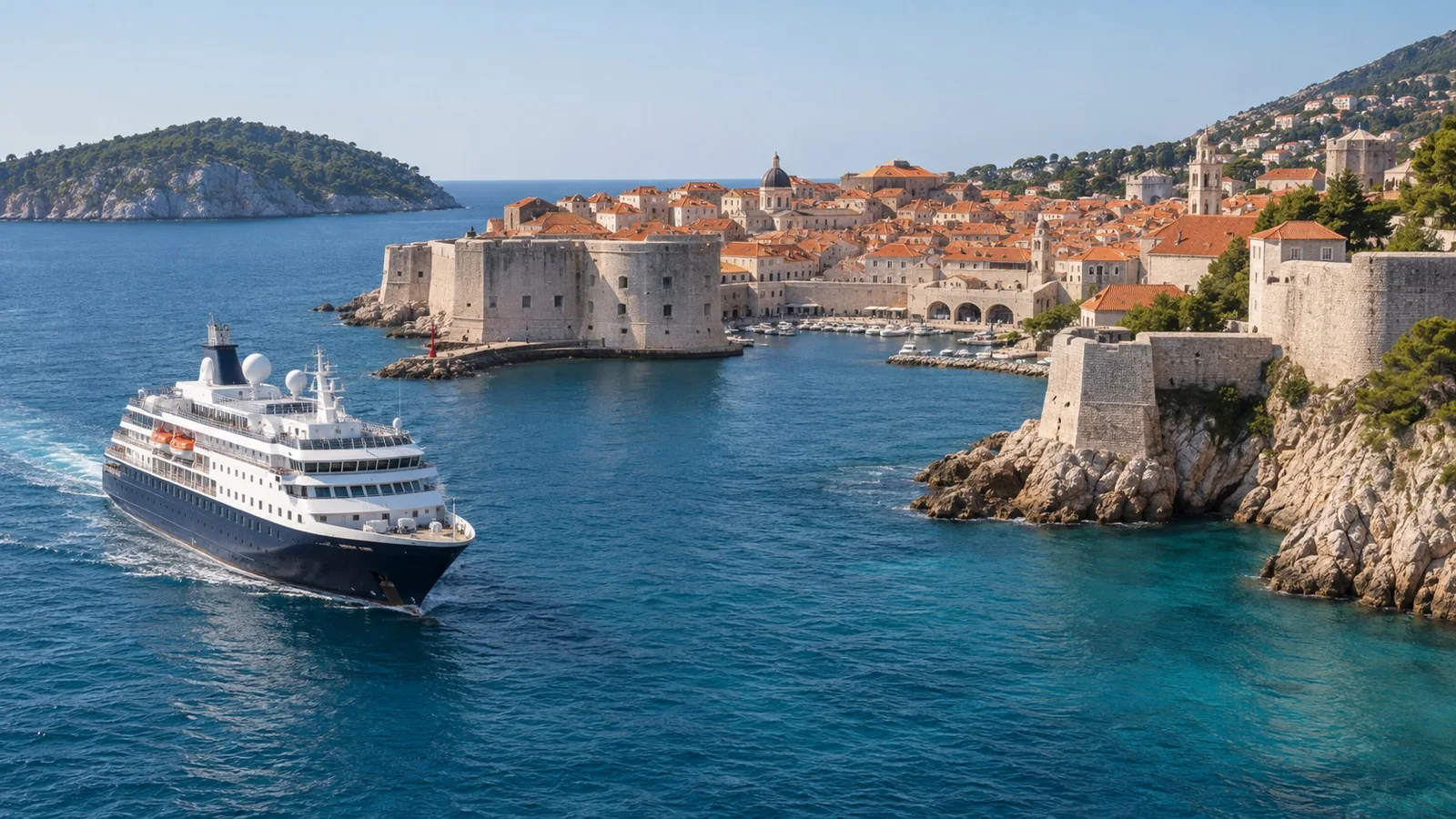
Small eastern towns do not absorb anything. Four ships anchored off Santorini puts the same number of people onto one clifftop lane, and Dubrovnik is at its heaviest from June through August inside a walled town you cannot make any bigger.
Shoulder season fixes far more of this than any clever trick. Late April through early June and late September into October give you the same ports with a fraction of the pressure, on both sides of the map.
Tender days are the eastern itinerary’s real risk
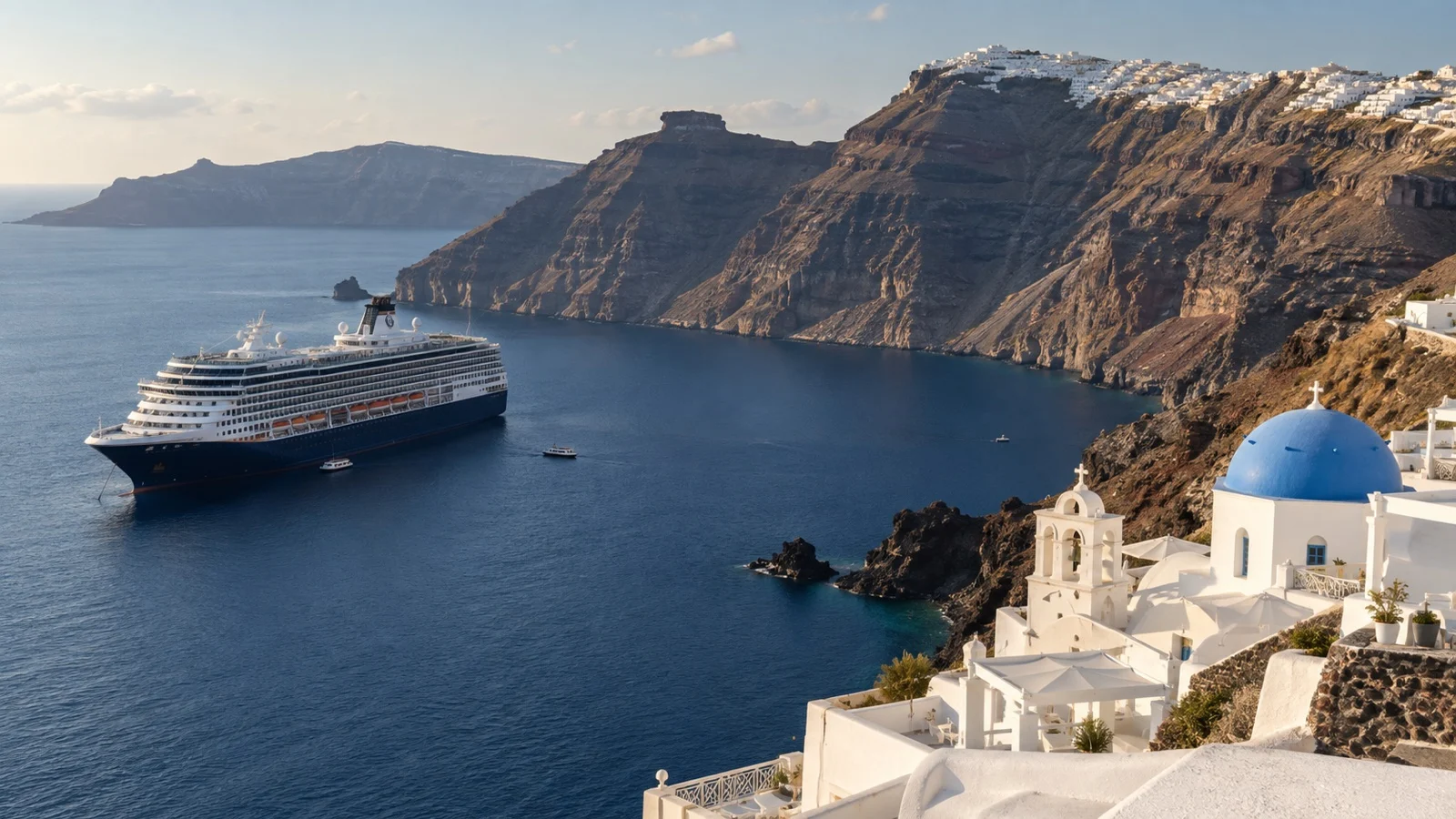
Santorini is a tender port, full stop. Ships anchor in the caldera and run boats to the old port below Fira, and from there it is the cable car, the steps, or a donkey path I would not use.
Tender operations depend on sea state and get canceled when the wind is up. That is not a rare event in the Aegean, and it is the single reason I tell first timers to keep their expectations loose about any one island.
Plan the return leg with real margin, because the line back down is worse than the line up. Ninety minutes of buffer before the last tender is not paranoid, it is the normal amount.
Money, entry rules and the small friction
The western loop is euros the whole way, which removes an entire category of decisions. Cards work nearly everywhere, though my notes on carrying cash and cards in port explain why small bills still matter at a market stall or a taxi rank.
The eastern run mixes currencies. Greece, Croatia and Montenegro all use the euro, while Turkey uses the lira and has its own entry rules that sit outside the European system, so check yours on the official e-visa portal well before you sail.
European entry procedures for visitors are in a period of change, and the rules have moved more than once. Confirm the current requirements for your passport a few months out rather than assuming last year’s answer still holds.
What the two actually cost
Cruise fares between the two regions land in similar territory for the same ship and the same week. The real spread shows up in the two things around the fare.
Flights usually run cheaper to Barcelona or Rome than to Athens, and much cheaper than to an Adriatic homeport that needs a connection. Shore excursions tend to go the other way, since a half day in a small Greek or Turkish town costs less than a full day coach to Florence.
If you plan to do the western ports independently the gap narrows fast. Trains from Civitavecchia and Livorno are inexpensive and my breakdown of which Mediterranean ports work without an excursion is where I would start before booking anything through the ship.
The thing first timers get wrong about this choice
People choose on the port list. They read Rome, Florence, Pompeii and Barcelona, decide that is obviously the better week, and never ask what those days will feel like at 7am with a train to catch.
The other common mistake runs in reverse. Someone books the Greek islands imagining a beach every afternoon, then discovers that a 7am to 4pm call on a tender island leaves very little swimming time once you have gone up the cliff and back.
Read the hours in port, not just the names. A stop that runs until 10pm is a completely different vacation from one that pushes off at 3pm, and the itinerary page tells you which one you bought.
Which one I would book for a first Med cruise
Western, and it is not especially close. The flights are simpler, the berths are dependable, the currency never changes, and the two ports most likely to intimidate a new cruiser both have a train that solves them.
Book it in late May or late September, take the train to Rome yourself, and buy the ship’s excursion for Florence if your call is under nine hours. That combination gives you the famous days without the version where you are sprinting for a platform.
Go east instead if you have already done Rome and Barcelona on land, if swimming and small towns matter more to you than museums, or if you actively enjoy the logistics. It is the more beautiful week, and it rewards people who have already learned how a port day works.
Quick answers
Is the eastern or western Mediterranean better for a first cruise?
Western, for easier flights, walk-off berths and one currency. The east is prettier but asks more of you on tender mornings and multi-country entry rules.
Which Mediterranean cruise has the least time on a bus?
The eastern one, by a wide margin, since most of its ports put you in town within half an hour. Western itineraries spend real hours getting to Rome and Florence.
Do I need a visa for an eastern Mediterranean cruise?
It depends on your passport and on which countries the itinerary touches, and Turkey is handled separately from the European stops. Check every country on your itinerary a few months before you sail, not at the pier.
Is July too hot for a Mediterranean cruise?
It is doable but it changes the day, especially at open ruins with no shade. If you have flexibility, late May, early June or late September gives you the same ports in far kinder weather.
Can you see Rome and Florence on the same cruise?
Yes, most western itineraries include both through Civitavecchia and Livorno on separate days. Just know that each one is a long round trip and neither is a leisurely afternoon.
Final word
This choice is not really about which region is better, because both are excellent and you will probably do both eventually. It is about which set of problems you want on your first try.
The western Med gives you long transfers to world famous places from berths that essentially never fail. Start there, learn how a port day actually runs, and the Aegean will still be waiting with better water and smaller streets when you are ready for it.
How this guide was researched: Terminal locations, transfer times, tender arrangements and seasonal patterns for the western and eastern Mediterranean were checked in October 2026. Sailing dates, port hours, entry requirements and transport schedules change often, so confirm the details for your own ship and itinerary before you book. See our Editorial Policy.
More on this topic: browse every guide on choosing a cruise.