Scotland Cruise Ports: Edinburgh, Invergordon and the Islands
Scotland puts more ports on a British Isles itinerary than anywhere else, and almost none of them drop you where you expect. Edinburgh has four possible berths, Kirkwall has two, and knowing which one your ship gets is most of the planning.
My quick take
Scotland is the part of the UK where the port name on your itinerary tells you the least. Edinburgh, Glasgow and Inverness all appear in cruise line marketing, and not one of them has a cruise berth.
So I read Scottish itineraries backwards. I find the actual berth first, then work out how much of the day the transfer eats, and only then decide whether the famous thing is worth chasing.
The quick facts
- Season: Sailings run spring into fall, and midsummer buys you daylight until very late in the evening.
- Berths: Several Scottish calls are tender or shuttle ports, so the walk off assumption fails more often than it holds.
- Money: Pounds sterling, cards and contactless almost everywhere, a little cash for rural sites and small ferries.
- Weather: Wind cancels far more Scottish port days than rain ever does.
- Booking: The headline sites in Orkney and Lewis use timed entry and fill up, so sort tickets before you sail.
What a Scottish call is actually doing on your itinerary
Most Scottish ports turn up on British Isles loops sailing from Southampton, Dover or Liverpool, and on Norway and Iceland runs that clip the north on the way through. Our overview of UK homeports and ports of call covers where those itineraries start.
Daylight matters more than temperature here. A June call gives you light late into the evening, which makes a long inland drive survivable in a way the identical drive is not in October.
Scotland splits cleanly in two. The mainland calls are almost all gateways to somewhere else, and the island calls are places where the island itself is the point.
Edinburgh is four ports sharing one name
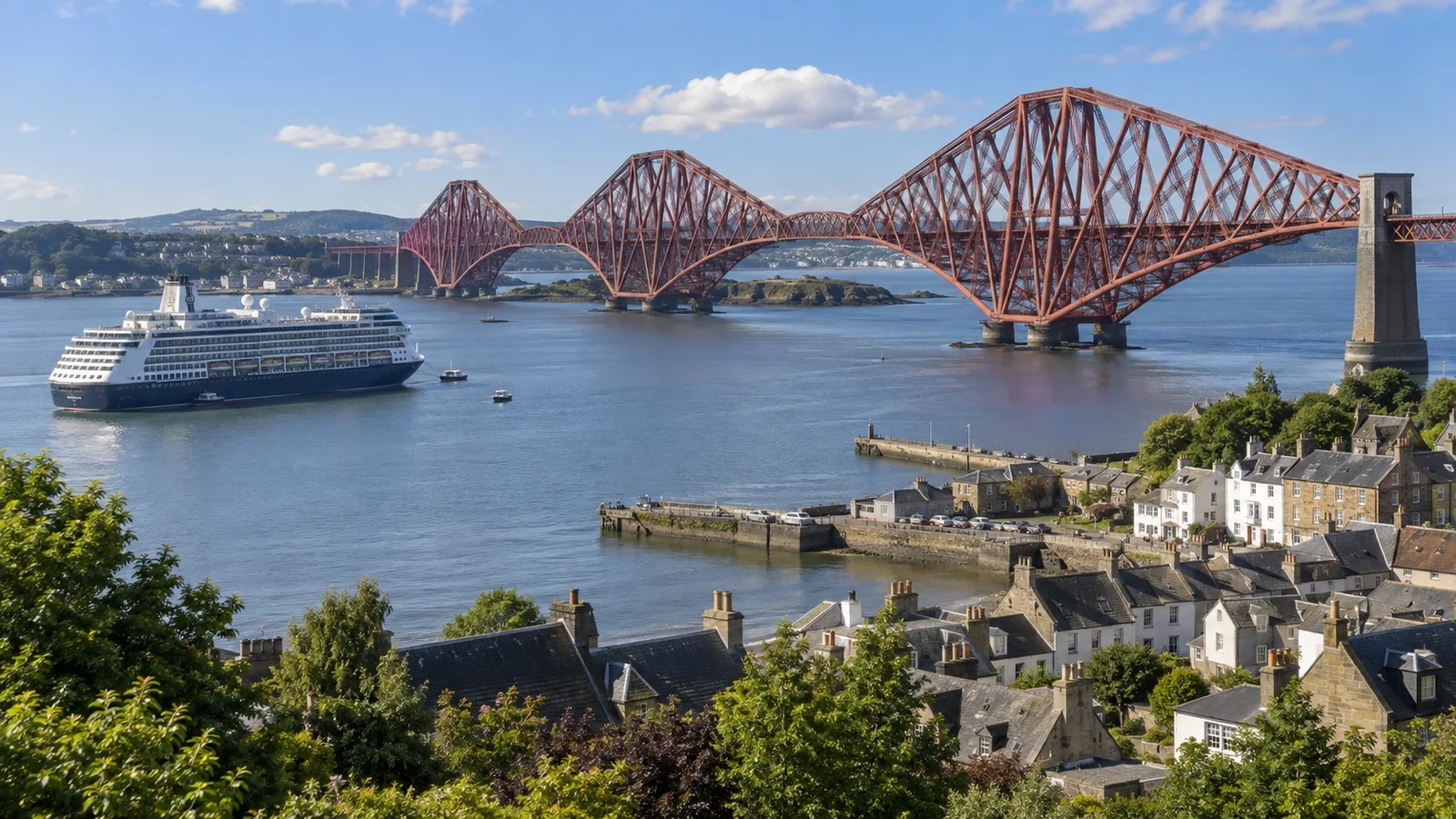
Start with the mainland, and start with the call that catches people out. Ships use Leith, the smaller berth at Newhaven, the deep water berth at Rosyth on the far shore of the Firth of Forth, or an anchorage off South Queensferry with tenders to Hawes Pier.
Leith and Newhaven sit roughly 2 to 3 miles (3 to 5 km) from the center, about 20 minutes by shuttle or taxi, and the tram line runs in from Newhaven through Leith. Rosyth is around 14 miles (23 km) away and needs a shuttle plus a train or coach, and the South Queensferry anchorage adds a tender ride before any of the ground transport starts.
From Leith a self guided day works fine. From Rosyth or the anchorage an organized tour stops being a luxury and starts being time management, as our berth by berth Edinburgh guide lays out.
Greenock is Glasgow, and the train does all the work
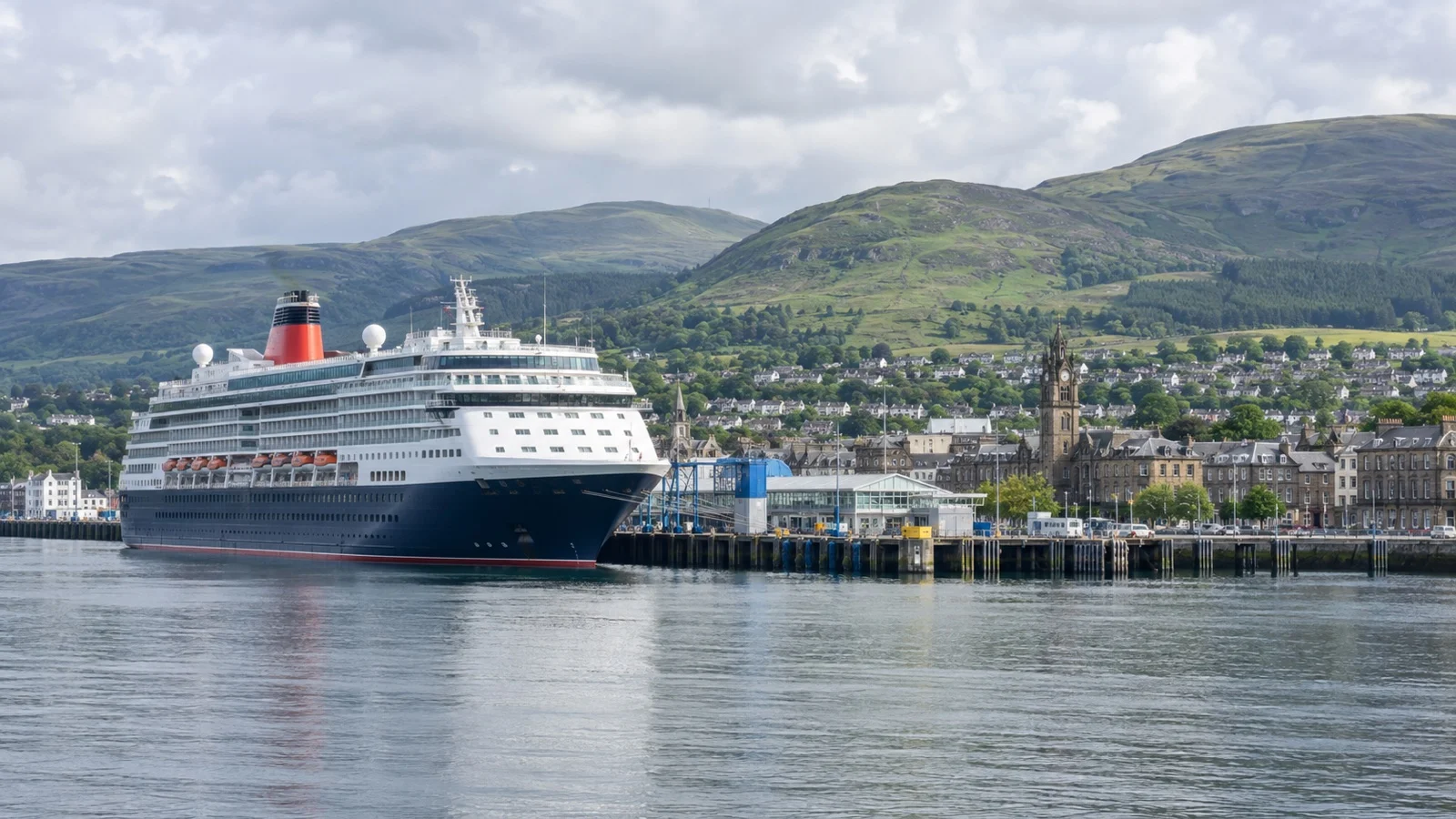
Glasgow has no cruise berth, so ships tie up alongside at Greenock Ocean Terminal on the Firth of Clyde, roughly 25 miles (40 km) west of the city. This is a genuine walk off port with a modern visitor center on the quay.
Greenock Central station is about a 15 minute walk from the terminal, with several trains an hour into central Glasgow and a run of about 40 to 45 minutes. That frequency is the whole reason this port is easy, because you are not timing your day around one departure.
Balloch and Loch Lomond sit around 40 minutes away and Stirling is close to an hour. If rail days are your style, read the Greenock port guide alongside our roundup of ports you can reach a real city from by train.
Invergordon exists so you can get to Loch Ness
Ships berth alongside on the Cromarty Firth, which is sheltered enough that the call rarely comes into doubt. The walk into Invergordon is about 10 minutes on flat pavement, with no industrial trek and no mandatory shuttle.
Nobody sails here for Invergordon itself. Inverness is roughly 45 minutes by train from an unstaffed station a 15 to 20 minute walk from the ship, so you buy your ticket on board or through an app.
Loch Ness and Urquhart Castle are not reachable by public transport in any sensible way, which makes this one of the few Scottish ports where a tour genuinely earns its price. Culloden works by train to Inverness plus a taxi, and the Invergordon guide walks through both.
Aberdeen and Ayr, the two mainland calls nobody plans for
Aberdeen usually puts large ships into South Harbour at Nigg Bay, a secure commercial facility about 2 miles (3 km) south of the center rather than a tourist pier. You reach town on the authorized shuttle, roughly 10 to 15 minutes, and smaller ships sometimes get the closer North Harbour quays instead.
The city itself is walkable once you are dropped off, and it is strong on maritime history and galleries. Dunnottar Castle near Stonehaven and the Deeside castles need a disciplined plan and are better booked than improvised, which the Aberdeen port guide is blunt about.
Ayr is the odder one, since ships anchor offshore and tender to a pontoon inside the harbor. Central Ayr, its shops and the beach promenade are all on foot from there, Burns country at Alloway is 3 to 4 miles (5 to 6 km) out by taxi or bus, and Culzean Castle is a tour.
The Ayr guide covers the tender side in detail. If either port assigns a mandatory shuttle, our piece on ports where the shuttle is not optional explains what to check.
Oban is on the mainland and still makes you tender
There is no berth for a cruise ship at Oban, so vessels anchor in the bay off the Dunollie light and run tenders across a short hop of about a third of a nautical mile. The landing is on the town waterfront, which is the best thing about the port.
Shops start within a few hundred yards, and the town center is roughly a third of a mile (0.5 km) away on flat, paved ground. McCaig’s Tower gives you the view, and it also gives you steep stepped lanes to get there.
The distillery in town runs small group tours that cap out quickly, so book that before you sail rather than on the day. Mull is a 45 minute ferry each way and Iona needs a second ferry plus a slow road across Mull, which is a ship excursion or nothing, and the Oban guide says the same.
Kirkwall is where you book Orkney before you sail
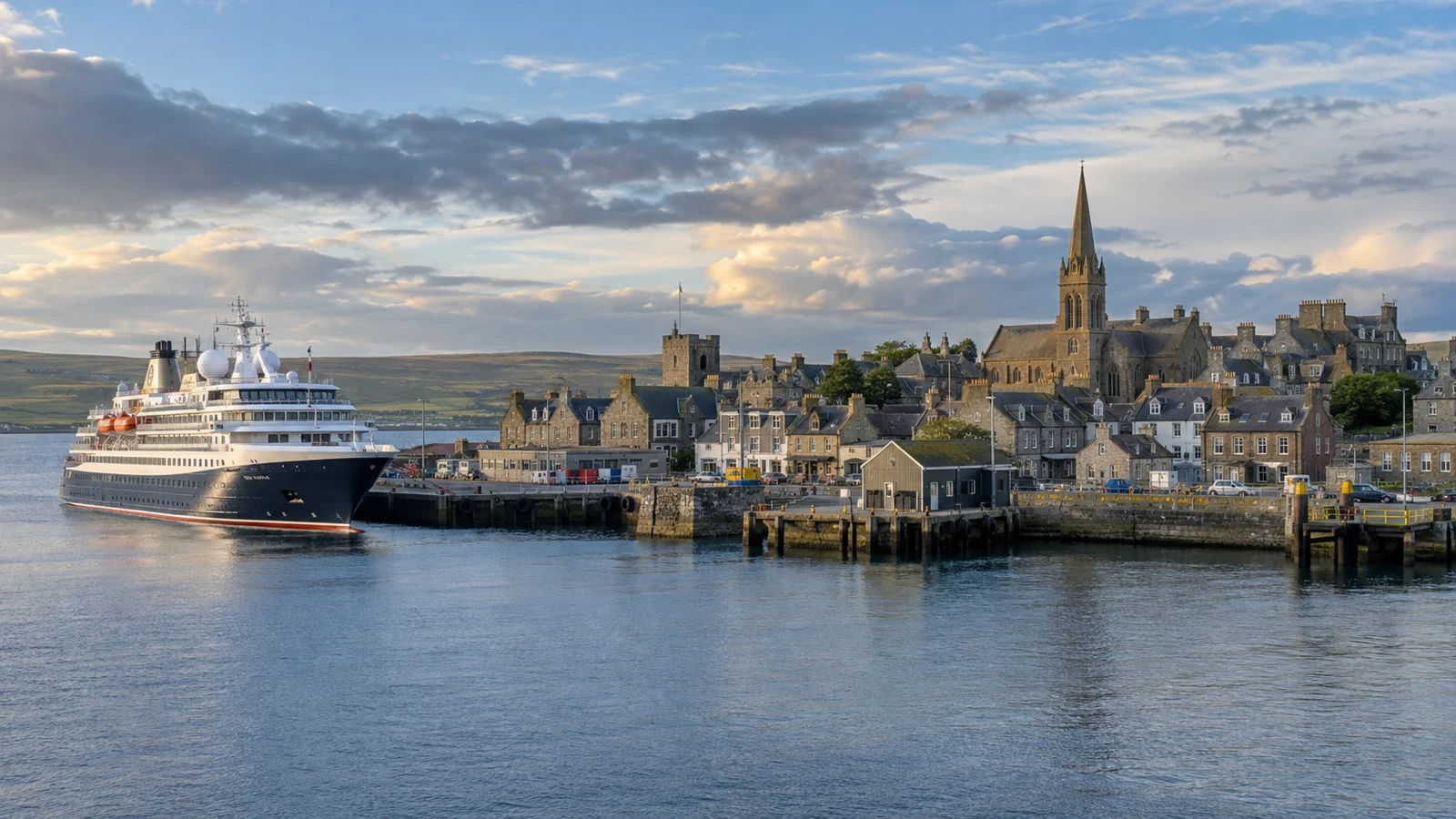
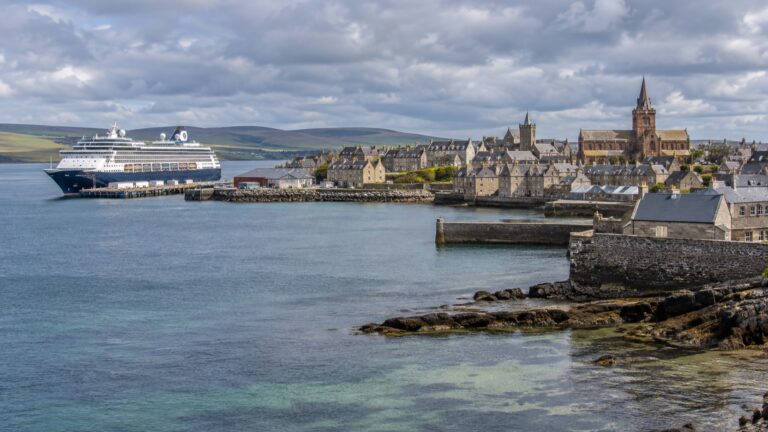
Now the island calls, and Orkney is the busiest of them by a wide margin. Large ships almost always use Hatston Pier just outside town and depend on a shuttle, because that road is not built for pedestrians on a schedule, while smaller ships get Kirkwall Pier in the harbor with the cathedral a short stroll away.
The reason to come is the Neolithic cluster on the west mainland. Skara Brae, the Ring of Brodgar and the Stones of Stenness sit close enough together to do as one loop, and that loop eats most of a morning.
Skara Brae uses timed entry with online booking, so turning up hopefully is a bad strategy. The harbor authority for the islands also handles pier access for private tours, worth knowing if you are arranging your own driver.
South of town lie the Churchill Barriers, the Italian Chapel and the water of Scapa Flow, a different day and a different mood. Our Kirkwall guide is direct about picking one loop and letting the other go.
Lerwick is the easiest island day in Scotland
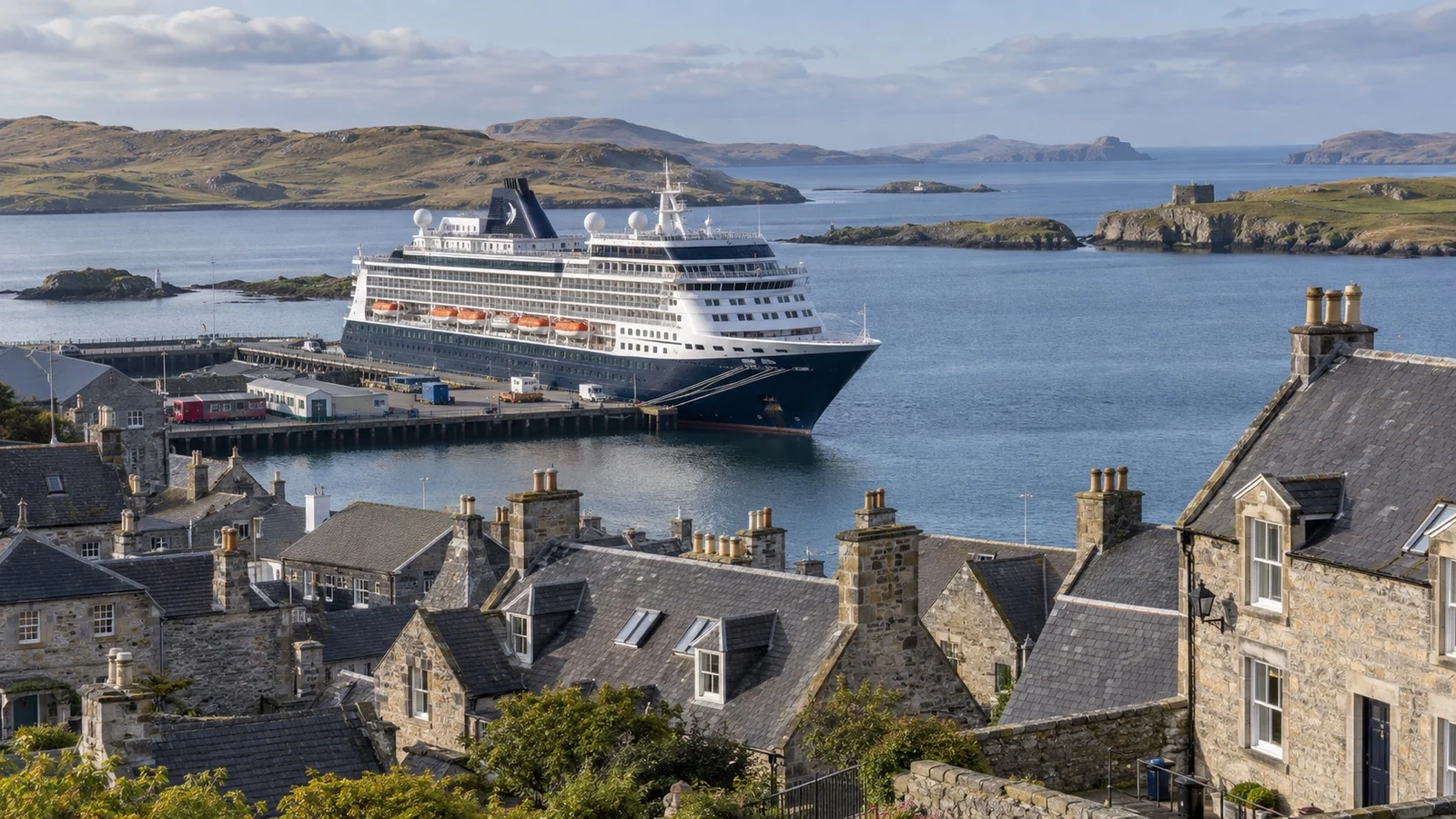
Shetland takes around a hundred cruise ships a season, and ships up to roughly 755 feet (230 m) can go alongside at Mair’s Pier or Holmsgarth 5 when conditions allow. Bigger vessels anchor in Bressay Sound and tender to the Victoria Pier landing in town.
That tender landing is the good news. It puts you on Commercial Street in about two minutes, which is a shorter walk to a real town than most alongside berths in Scotland manage.
Jarlshof and Sumburgh Head sit about an hour by road at the southern end of the mainland, and Scalloway is a much shorter drive west. The port authority page for Shetland confirms the berth limits, and our Lerwick guide argues for one landscape and one story rather than three.
Stornoway traded the walk for a berth
Lewis used to be a tender call for anything sizeable. The Deep Water Terminal at Glumaig changed that, taking ships up to around 1,180 feet (360 m) alongside, and tendering is not usually the default any more.
The trade is distance. The new terminal is about 3 miles (5 km) from town across the bay, served by shuttle buses of roughly 15 minutes, while smaller ships under about 490 feet (150 m) still use the town piers and step off two minutes from the shops.
This is an excursion port more than a wandering port. The Calanais standing stones are about 12 miles (19 km) west, roughly 30 minutes each way by coach, with the Gearrannan blackhouse village near Carloway on the same side of the island.
The road network is thin, local transport is stretched on cruise days, and Sunday closures in the Western Isles are real. Check your date against the Stornoway guide and the statutory harbor authority for the port.
Portree is the call I would not build a vacation around
Skye is the prettiest name on a Scottish itinerary and the least reliable stop on it. Ships anchor in Portree Bay about half a nautical mile out and tender to a pontoon and slipway, with no pier for the ship itself.
Calls here are missed something like 15 to 25 percent of the time, and it is wind rather than rain that does it. I would happily take Portree as a bonus, and I would never book the vacation because of it.
Assuming you land, the walk from the pontoon to the town square is about half a mile (0.8 km) and uphill. Skye’s roads are largely single track with passing places, so a coach, a camper van and a rental car meeting on a blind rise is a standard twenty minute delay.
Dunvegan is about 22 miles (35 km) each way and Talisker about 18 miles (29 km), which is half your day gone in either direction. Book transport before you sail, and read the Portree guide with our piece on what happens when rough seas cancel tendering.
Mainland or islands, and which Scottish port I would pick
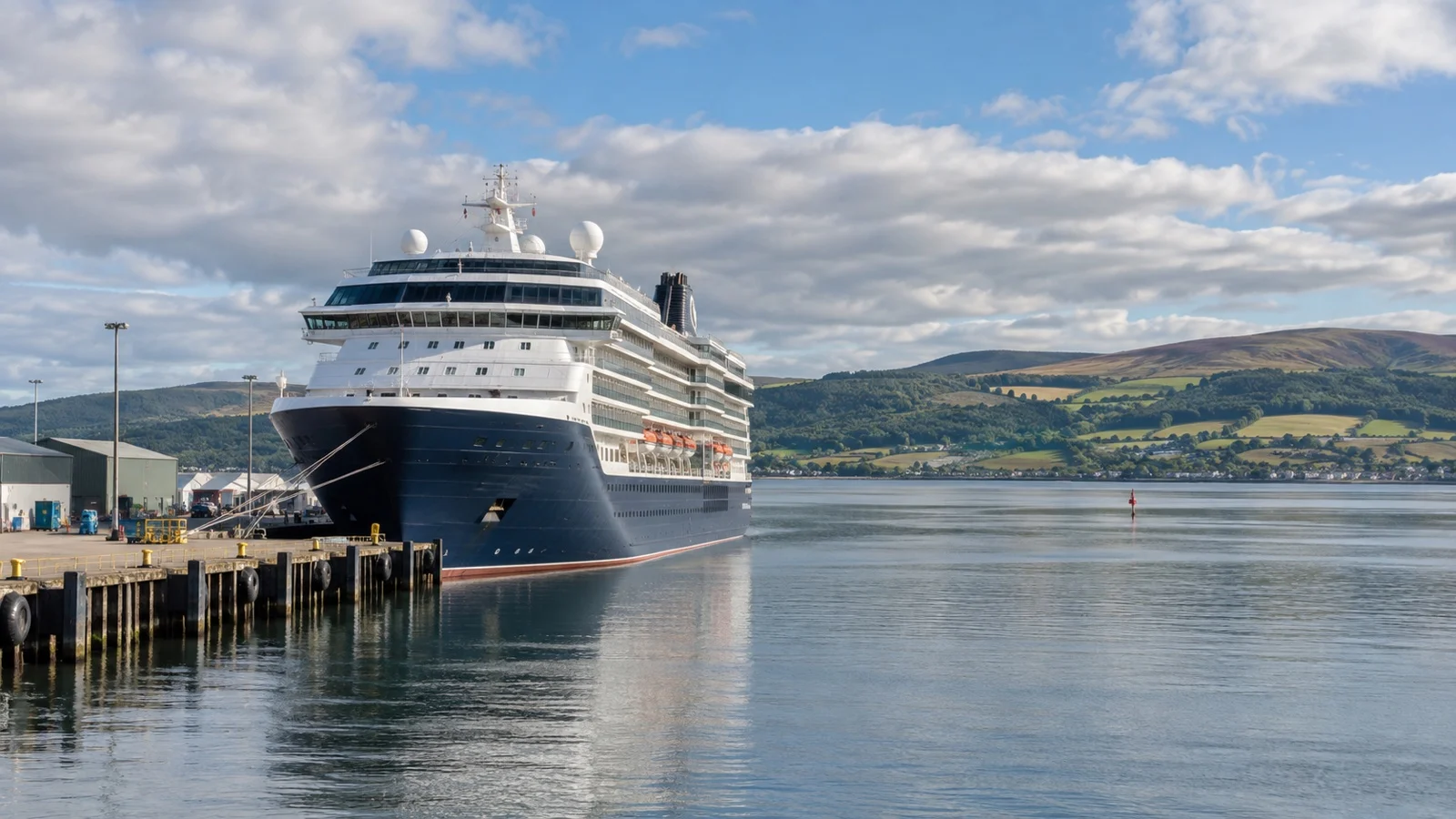
The mainland calls are gateways and they behave like it. Greenock is the easiest of the lot, Invergordon is the one where a tour is genuinely worth the money, Edinburgh is the one that punishes you for not reading the berth, and Aberdeen and Ayr are quieter days that reward low expectations.
The island calls are the opposite. Kirkwall, Lerwick and Stornoway are destinations in their own right, and Oban and Portree behave like islands even when the map disagrees.
If I could keep only one Scottish call, it would be Kirkwall, because nowhere else in Britain gives you five thousand year old houses, a stone circle and a sunken war grave inside one port day. For the lowest stress version I would take Greenock and the train to Glasgow without thinking twice.
The tender math is the real variable up north
Scotland has more tender exposure than most people expect from a European itinerary. Oban, Ayr and Portree are anchorages by default, Lerwick tenders whenever the ship is too big for the piers, and Edinburgh sometimes tenders from South Queensferry.
Wind is the thing that stops the boats, not weather that looks dramatic from your balcony. A bright patch above the town tells you nothing about conditions at the anchorage a mile out.
Tour passengers usually get the early tenders, which quietly costs independent travelers an hour on a short call. Our explainer on how tendering changes your time ashore has the arithmetic worth doing before you book anything with a fixed start time.
Money, weather and the Sunday problem
Scotland uses pounds sterling, and cards and contactless work almost everywhere, including on buses and trains in the cities. I still carry a small amount of cash for rural visitor centers, honesty boxes and the occasional cafe on an island where the card reader is at the mercy of the signal, which is the argument our guide to carrying cash or card in port makes at length.
Scottish banks issue their own banknotes, which are valid and come out of cash machines here, so do not be startled when your change looks different from what you drew in England. Tipping is lighter than at home, and a rounded up fare or a modest tip for a good driver covers it.
Dress for wind rather than cold. Summer highs in the low 60s (about 17 C) are normal, wind makes that feel a lot cooler on an exposed headland, and a waterproof layer earns its space on any island day.
The genuinely different thing about Scotland is Sunday in parts of the Western Isles. Observance there means shorter hours and closed doors, so check your date before you build a Sunday around one specific attraction.
Quick answers
Can you see Edinburgh Castle from a cruise ship day?
Yes, comfortably from Leith or Newhaven, which are about 20 minutes from the center. From Rosyth or the South Queensferry anchorage it is still possible but the transfer eats a serious chunk of your day.
Which Scottish cruise port is closest to Glasgow?
Greenock, roughly 25 miles (40 km) west, with several trains an hour taking about 40 to 45 minutes from a station a 15 minute walk from the terminal. Glasgow itself has no cruise berth.
Do I need an excursion for Loch Ness from Invergordon?
Effectively yes, because there is no sensible public transport link from the port to the loch. This is one of the few Scottish ports where the ship tour is the efficient choice rather than the lazy one.
Is Portree on Skye a tender port?
Yes, ships anchor in Portree Bay and tender to a pontoon, and calls are missed a meaningful share of the time because of wind. Treat it as a bonus stop rather than the reason you booked.
When is the best month for a Scotland cruise?
June through August for the longest daylight and the highest chance of tenders running, which matters most if your itinerary is island heavy. May and September are quieter and cheaper, with shorter days and a bit more weather risk.
Final word
Scotland rewards people who read the fine print and quietly punishes everyone else. The gap between a good day and a wasted one here is almost never the weather, it is whether you knew which pier you were arriving at.
Pick one thing per port and let the rest go. Orkney gives you the best single day, Greenock the easiest, and the islands the version of Scotland people still describe a decade later.
How this guide was researched: Berth locations, shuttle and tender arrangements, walking distances and transfer times for every Scottish port here were checked against official harbor authority and heritage site information in October 2026. Berth assignments, shuttle arrangements, opening hours and ticket rules change from season to season, so confirm the details for your own sailing date before you commit to a plan. See our Editorial Policy.