Stornoway Cruise Port: Berths, Shuttles and Standing Stones
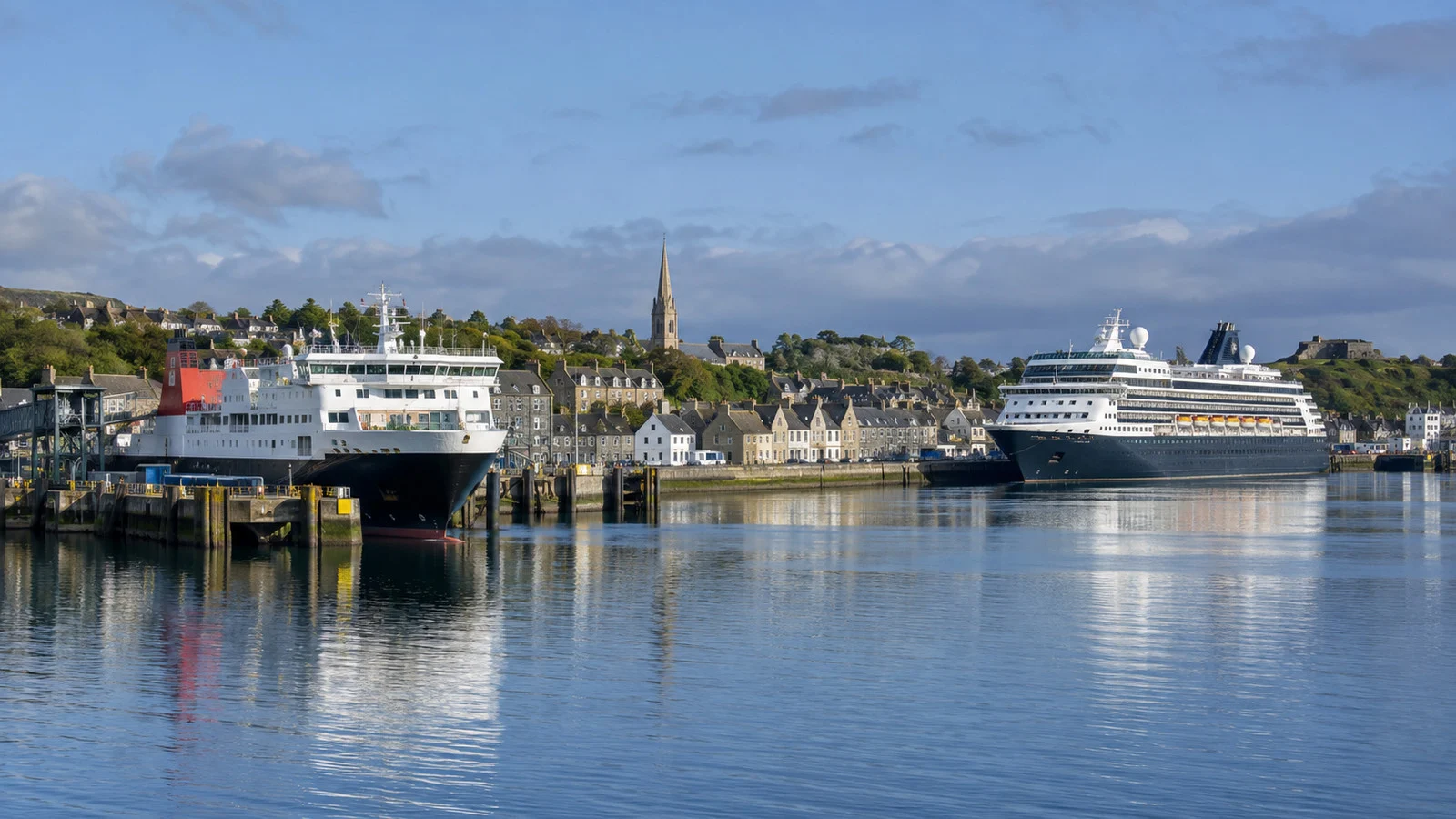
Stornoway is the practical gateway to Lewis and Harris, but the first thing to know is where your ship will actually arrive. A small ship may berth beside the town center, while a larger vessel may use the Deep Water Terminal across the harbor or, less commonly, operate a tender call.
That one detail changes the first and last part of your day. Confirm the berth, the ship shuttle, the opening day for your priority attraction, and your return margin before committing to an ambitious island loop.
My quick take
This is a port where a little advance planning pays off beautifully. Stornoway is easy to enjoy on foot, yet the headline landscapes and ancient sites sit beyond town on roads where transportation can become scarce when a large ship arrives.
If Calanais is your dream, reserve a ship excursion, local tour, or private driver before sailing. If you prefer a gentler day, the harbor, town center, Lews Castle Grounds, and Museum nan Eilean can make a satisfying local plan when their opening schedules align with your call.
Quick Facts
- Port: Stornoway, on the Isle of Lewis in Scotland’s Outer Hebrides.
- Arrival: Smaller ships can use inner harbor piers in the town center, while larger ships can berth at the Deep Water Terminal.
- Town access: Inner harbor arrivals are walkable. Deep Water Terminal passengers should follow the cruise line’s current shuttle instructions.
- Top excursion: Calanais Standing Stones, about 17.5 miles from Stornoway by the visitor center’s published route information.
- Currency: Pound sterling.
- Language: English is widely used, and Scottish Gaelic is an important part of local life and signage.
- Planning caution: Sunday transport and attraction schedules are limited, and Atlantic weather can affect operations.
Where cruise ships arrive in Stornoway
Stornoway Port Authority says its inner harbor piers can receive cruise ships under 156 meters, putting passengers directly in the town center. That is the simplest arrival because shops, cafes, the waterfront, and the route toward Lews Castle are close at hand.
The port’s newer Deep Water Terminal can handle vessels up to 360 meters. Its published berth information lists a 201 meter main berth, extending to 277 meters with the berthing dolphin, with a minimum depth of 10 meters.
Those engineering figures matter to captains more than visitors, but they explain why two people on different ships may describe completely different Stornoway arrivals. Your cruise daily program is the best source for the berth assigned to your call.
Anchorage options also remain available, so do not assume every itinerary will operate exactly like the previous ship’s visit. A tender changes timing because you must add the boat transfer and possible queues at both ends of the day.
Getting between the Deep Water Terminal and town
The Deep Water Terminal is not a useful place to begin a self guided walk. Follow the shuttle instructions provided aboard your ship, and ask where the last return departs before you head away from the town drop point.
Photograph the shuttle sign and note the final departure in your phone. It is a small habit, but it protects you from relying on a vague memory after a long day across the island.
Travelers with wheelchairs, scooters, or limited mobility should ask the cruise line whether the assigned vehicles have suitable access. Port infrastructure and attraction access are separate questions, so check both if you plan to leave town.

The smartest way to plan a Stornoway day
Choose one anchor experience first. For most first time visitors, that is Calanais, while travelers drawn to social history may prefer a west coast circuit that also includes a blackhouse village or broch.
Then add only what fits comfortably around it. Lewis looks compact on a map, but rural roads, single track sections, photo stops, coach traffic, and changing weather can turn a neat itinerary into a rushed one.
A cruise excursion is the easiest answer if you want guaranteed logistics. A reputable local tour can feel more personal, while a prebooked private driver gives you flexibility without asking you to navigate unfamiliar roads.
Calanais Standing Stones
Calanais is the island’s most celebrated ancient site, and it deserves more than a hurried photo. The stone setting rises on a low ridge above a landscape of water, moor, and sky, creating the kind of place that feels different with every passing cloud.
The official Calanais visitor information says admission now includes access to the standing stones and the immersive exhibition. Each admission also functions as an annual pass, although the conservation support behind the ticket is more relevant to a cruise visitor than the return privilege.
The visitor center currently publishes Monday through Saturday hours, with seasonal times that differ between April through September and October through March. Because hours, admission arrangements, and cruise group procedures can change, check the official Calanais visit page shortly before sailing.
The same official page says the W2 bus connects Stornoway Bus Station with Calanais village, but it also states that Outer Hebrides bus services do not run on Sundays. A public bus can work only when the timetable fits the ship, so do not build the day around a tight final connection.
Accessibility needs extra thought here. The visitor center has step free access and accessible facilities, but the hill leading from the center to the stones cannot simply be altered, so the monument approach may be difficult for some visitors.
Should you combine Calanais with the west coast?
A classic island tour may pair Calanais with Dun Carloway or Gearrannan Blackhouse Village. The combination is excellent because it moves from prehistoric ritual to Iron Age building and then to the domestic world of later crofting communities.
The danger is trying to include every famous name in one call. Choose a well-paced route with two substantial stops over a checklist that leaves you watching Lewis through a coach window.
Dun Carloway

Dun Carloway is a remarkably preserved broch set on rocky ground above the surrounding landscape. Its walls demonstrate the double skinned construction associated with these complex Iron Age towers, and the setting adds as much to the visit as the stonework.
Outdoor heritage sites can have uneven approaches and changing conditions. Check the official Historic Environment Scotland information if access is important to you, and wear shoes that handle damp grass and rough surfaces.
Gearrannan Blackhouse Village
Gearrannan preserves the look and texture of a traditional crofting township beside the Atlantic. The blackhouses, stone walls, weaving connections, and exposed coastal setting give context that photographs alone cannot provide.
Opening dates and services can be seasonal, so consult the village’s official site rather than assuming the museum, cafe, and demonstrations will all operate on your call date. Sunday planning deserves particular care across Lewis.

A rewarding day without leaving Stornoway
Do not treat staying in town as a consolation prize. Stornoway is the working center of the Outer Hebrides, and a slow day here reveals island life more honestly than a frantic circuit of distant landmarks.
Begin along the harbor, where fishing boats, ferries, work vessels, and cruise activity share the waterfront. Then browse the compact center for local food, books, crafts, and Harris Tweed sold by businesses that can explain what you are buying.
Museum nan Eilean and Lews Castle Grounds
Museum nan Eilean is behind Lews Castle in the castle grounds, about a 15 minute walk from central Stornoway according to the museum. Its galleries introduce the islands through archaeology, Gaelic culture, community life, land, sea, and objects connected with the Lewis chessmen.
The official museum site says entry is by donation and the building is on one level with wheelchair access. The council has announced a temporary closure for Wednesday, September 16, 2026, with reopening on Thursday, so verify the date-specific notice before walking over.
The route through the grounds is part of the pleasure, with wooded paths and broad harbor views. Some approaches include slopes or steps, so visitors with mobility concerns should use the museum’s published directions and contact staff about the best route.
An Lanntair
An Lanntair is Stornoway’s arts center and a useful counterpoint to the ancient sites. Exhibitions, performances, film, food, and contemporary island culture may all appear in the program, but check the official calendar because activity varies by day.
Harris Tweed shopping
Authentic Harris Tweed is protected by law and identified by the Orb mark. If you want fabric, clothing, or a smaller keepsake, take time to ask where it was woven and who made the finished item.
The best purchase is not necessarily the largest. A cap, bag, purse, or length of cloth can carry the story of an island industry without consuming your entire shore day budget.
Sunday calls need a different plan
Sunday remains a meaningful day of rest for many island communities, and services are more limited than visitors may expect. Calanais publishes visitor center hours only from Monday through Saturday, the local museum lists Sunday closure, and the bus information says services do not run on Sunday.
That does not mean you should remain aboard. It means you should use the cruise line’s confirmed excursion program, verify every private operator and attraction directly, and expect a quieter town with fewer doors open.
A scenic drive may still be possible through an organized provider, but availability is finite. Reserve early and avoid building a Sunday plan from weekday search results.
Weather and what to wear
Lewis weather can move from sun to rain and back again while you are deciding whether to put on a jacket. Bring a waterproof outer layer, a warm midlayer, and footwear with grip even when the morning looks bright.
Wind matters both on exposed visitor sites and during marine operations. The port and captain make operational decisions, so leave room for an altered berth, delayed tender, shortened call, or excursion change.
Carry a small dry bag or zip pouch for your phone. Salt spray and sideways rain have an impressive ability to find the one pocket you thought was protected.
Accessibility and comfort
A town day offers the simplest flexibility because you can adjust distance and return to shelter easily. The waterfront and shopping streets may still include curbs, slopes, older entrances, and wet paving, so ask locally for the most comfortable route.
Museum nan Eilean publishes detailed accessibility information, including accessible toilets, seating, a hearing loop, and wheelchair access throughout its one level building. Calanais describes its visitor center as wheelchair accessible but warns that the hill toward the stones remains a constraint.
For tours, give the operator specifics about steps, vehicle height, walking surface, and mobility equipment. The phrase accessible tour can mean very different things, while precise questions usually produce useful answers.
Three practical shore day plans
Plan one: Calanais as the priority
Take a reserved morning excursion or private tour to Calanais, allowing time for the monument and visitor experience. Add only one nearby heritage stop if the confirmed schedule leaves a generous return cushion.
Plan two: Lewis heritage circuit
Choose an organized route linking Calanais with Dun Carloway and Gearrannan when all sites are operating. This is the fullest introduction to the island, but it should be booked rather than improvised at the pier.
Plan three: an easy Stornoway day
Walk the harbor and town center, continue through Lews Castle Grounds, and visit Museum nan Eilean if open. Finish with lunch, a gallery stop, or Harris Tweed shopping close enough to keep the return relaxed.
Common mistakes to avoid
The first is assuming every ship arrives beside the town center. Confirm the berth and shuttle before you compare walking times or book a meeting point.
The second is trusting a generic opening schedule, especially on Sunday. Use the attraction’s own site and look for date specific notices, seasonal changes, and group requirements.
The third is treating the public bus like a cruise shuttle. It is a community service, and a timetable that works on paper can leave too little margin for a ship departure.
The fourth is packing too much into a west coast loop. Pick the experience you care about most, protect it with a reservation, and let the rest of the day breathe.

Frequently asked questions
Can I walk into Stornoway from the cruise ship?
Yes, if your ship uses an inner harbor pier in the town center. If it uses the Deep Water Terminal, follow the cruise line’s shuttle plan rather than setting out on foot.
Do I need a tour for Calanais?
Not in every circumstance, but advance transportation is the safest choice for a cruise call. Local buses are limited, do not run on Sunday according to the visitor center, and must fit your ship’s all aboard time.
Is Calanais free?
The official visitor center now describes admission as covering both the standing stones and the exhibition. Check current prices and booking procedures directly because older guides may still describe the former access arrangement.
What can I do on a Sunday call?
Confirm a ship excursion or prearranged scenic tour, then treat anything else as a bonus. Many regular services and important visitor attractions publish Sunday closures.
Is Stornoway worth exploring on its own?
Absolutely, especially if you enjoy working harbors, local shops, island culture, and an unhurried museum visit. Just verify Museum nan Eilean’s opening day before making it the center of your plan.
My final take
Stornoway rewards travelers who make one firm decision early. Book the island experience that matters most, then keep enough flexibility for weather, transportation, and the reality of a remote Atlantic community.
For a first visit, choose Calanais with dependable transportation or stay local for the harbor, castle grounds, museum, and town. Either plan can be memorable when it respects the berth, the clock, and the island’s operating rhythm.
Port information, admission rules, transportation, and opening schedules can change after publication. This guide was checked against current Stornoway port, Calanais, and council museum information on September 12, 2026, so confirm your berth and shore arrangements shortly before your visit.