Santo Domingo Cruise Port: Two Terminals, One Old City
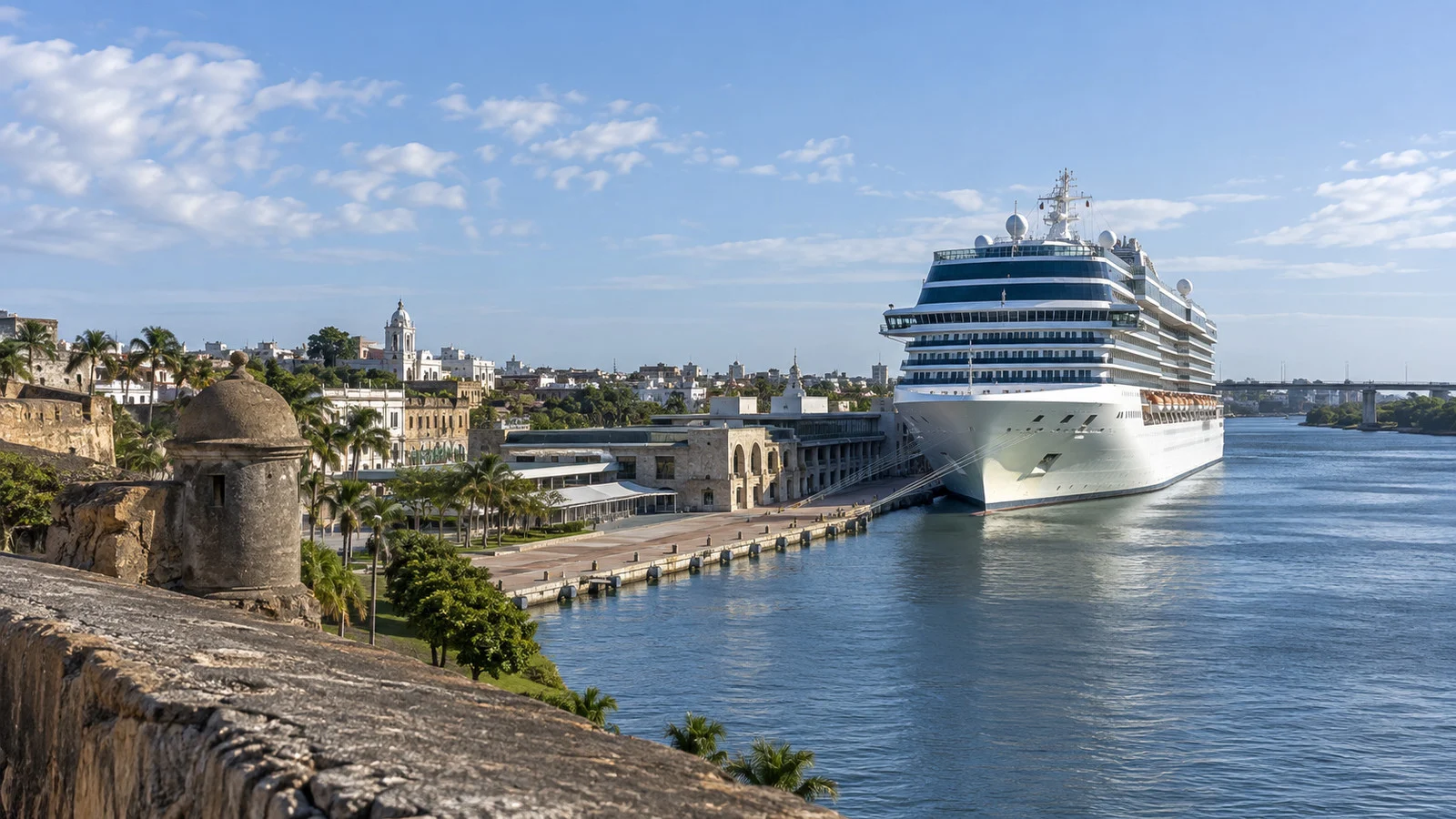
Santo Domingo gives cruise passengers two very different starting points on opposite sides of the Ozama River. Don Diego sits beside the Colonial City, while Sans Souci usually requires transportation across the river before a walking day can begin.
That terminal distinction changes nearly every practical decision, from taxi planning to accessibility. Confirm the name on the ship’s daily program before saving a route or booking an independent tour.
My quick take
I would make the Colonial City the center of the day and add only one attraction beyond it. The historic core contains enough architecture, museums, plazas, food, and street life to fill a call without spending hours in traffic.
Don Diego is the easy starting point because the old city is close. From Sans Souci, use a verified taxi, ship shuttle, or excursion and keep a larger return margin.
Quick Facts
- Country: Dominican Republic.
- City: Santo Domingo, the national capital.
- Cruise terminals: Don Diego and Sans Souci.
- Walkable terminal: Don Diego is beside the Colonial City.
- Main attraction: UNESCO listed Colonial City of Santo Domingo.
- Best first check: Confirm the exact terminal and all aboard time.
- Currency: Dominican peso, with cards accepted at many established businesses.
- Time zone: Atlantic Standard Time throughout the year.
Two terminals and why yours matters
The Port of Santo Domingo publishes two passenger terminals. Don Diego is on the west side of the Ozama beside the Colonial City, while Sans Souci is on the east side with larger passenger handling space.
The port describes Don Diego as capable of handling up to 3,000 passengers and Sans Souci as capable of handling up to 5,000. Those capacity figures explain scale, but they do not tell you which pier a specific ship will use.
Cruise documents may say Santo Domingo without making the terminal obvious. Ask the guest services or shore excursion team before leaving the ship, especially if an independent driver is meeting you.
Don Diego terminal
Don Diego is designed for convenient access to the Colonial City. The port’s technical guideline describes its north and south reception areas, secured circulation, bus parking, and direct relationship to the historic district.
This is the terminal that supports an easy independent walking plan for many passengers. You still need to follow the marked exit, account for the gangway, and confirm whether any road crossing or controlled gate affects the route.
A close terminal does not make every attraction step free. Cobblestones, curbs, heat, and historic entrances begin soon after the modern port facility.
Sans Souci terminal
Sans Souci is a larger homeport and multipurpose terminal with baggage areas, vehicle space, security systems, and room for buses and taxis. It sits across the Ozama from the Colonial City, so a transfer is the sensible first step.
Do not try to create a walking shortcut along unfamiliar port roads or bridge approaches. Use the transportation method named by the cruise line or a driver who knows the active terminal entrance.
On the return, say Sans Souci cruise terminal rather than simply Port of Santo Domingo. Showing the terminal name in writing can prevent a driver from heading toward Don Diego.
The Ozama River shapes the call
The port occupies the mouth of the Ozama, where river current, sediment, and vessel maneuvering influence operations. The official port guideline notes that depths can vary because the river continually deposits sediment.
Pilotage is compulsory for arriving vessels, and the port publishes operating procedures for the channel and turning areas. Passengers do not need the technical details, but they should understand why an arrival or departure may shift.
Rainy season river flow can be stronger, and a ship may need extra time or a revised sequence. Treat onboard announcements as the current plan rather than relying on the itinerary printed before travel.
Walking into the Colonial City
From Don Diego, the historic district begins close to the terminal and rewards a slow approach. Plaza España, the Alcázar de Colón, Calle Las Damas, Fortaleza Ozama, Parque Colón, and the cathedral fit naturally into a compact walking loop.
The grid is easy to understand, but older surfaces and partial pedestrian areas can slow progress. Save an offline map and mark the terminal exit, not merely the center of the old city.
Santo Domingo is a living capital rather than a sealed cruise enclave. Stay aware of traffic at crossings, keep valuables secure, and use ordinary city judgment without letting caution erase the pleasure of the visit.
Why the Colonial City matters
The UNESCO World Heritage Centre describes Santo Domingo as the site of the first cathedral, hospital, customs house, and university in the Americas. Its early grid plan became a model for later colonial towns across the region.
That history is concentrated in streets you can explore on foot. The value is not a single monument but the relationship among civic, religious, military, and residential buildings near the port.
Give yourself time to look up at stone facades, balconies, courtyards, and shaded plazas. A fast photo circuit misses the urban pattern that made the city influential.
Alcázar de Colón and Plaza España
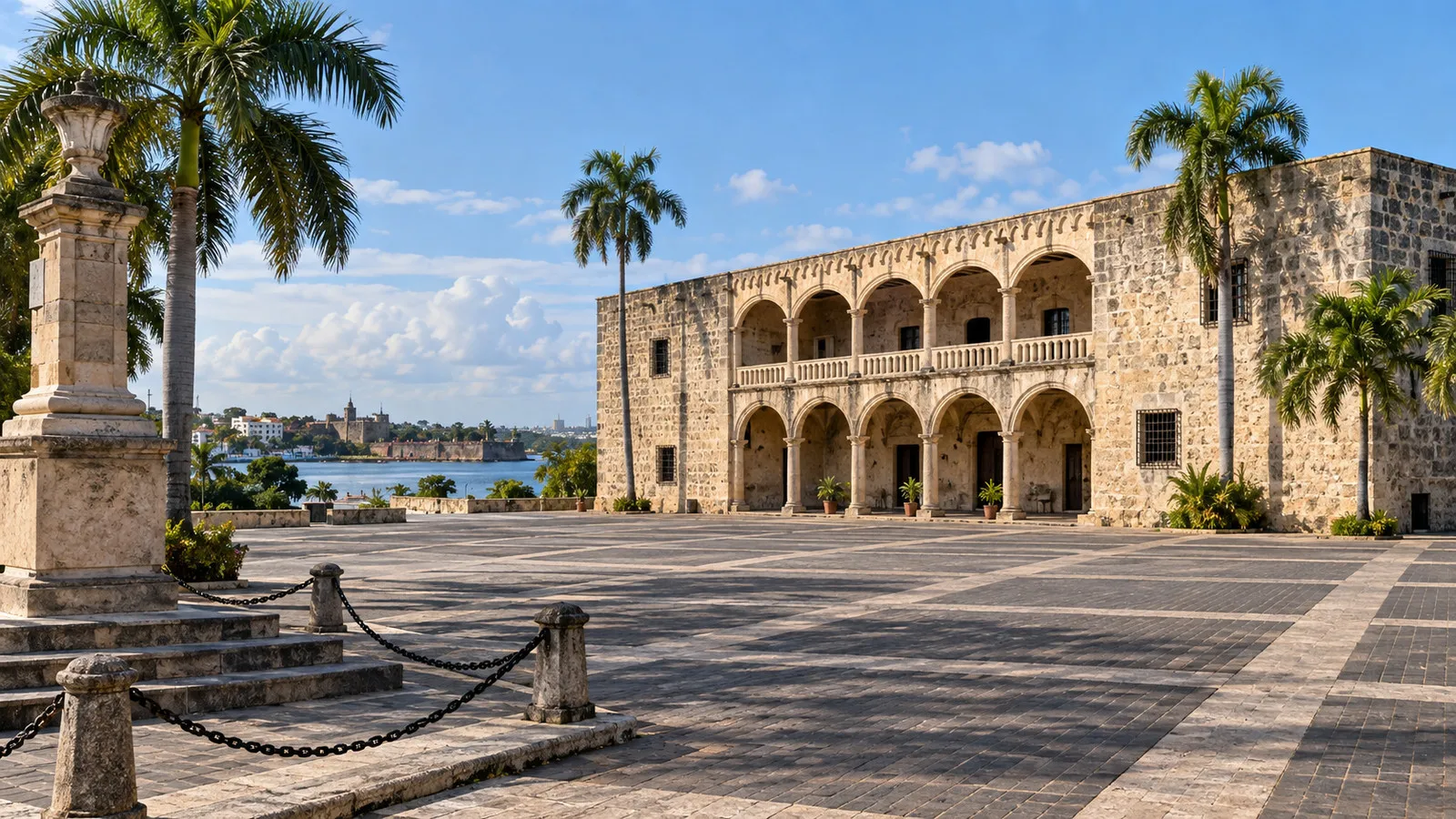
The Alcázar de Colón overlooks Plaza España near the river side of the historic district. Its arcaded stone exterior is one of the clearest visual anchors when approaching from Don Diego.
Interior access, admission, and opening hours can change, so check official local information or the ship’s excursion notes close to arrival. If the building is closed, the plaza and exterior still make the stop worthwhile.
Plaza España is also useful for orientation and a rest. From here, the route can continue toward Calle Las Damas, the fortress, or deeper into the grid.
The Catedral Primada de América
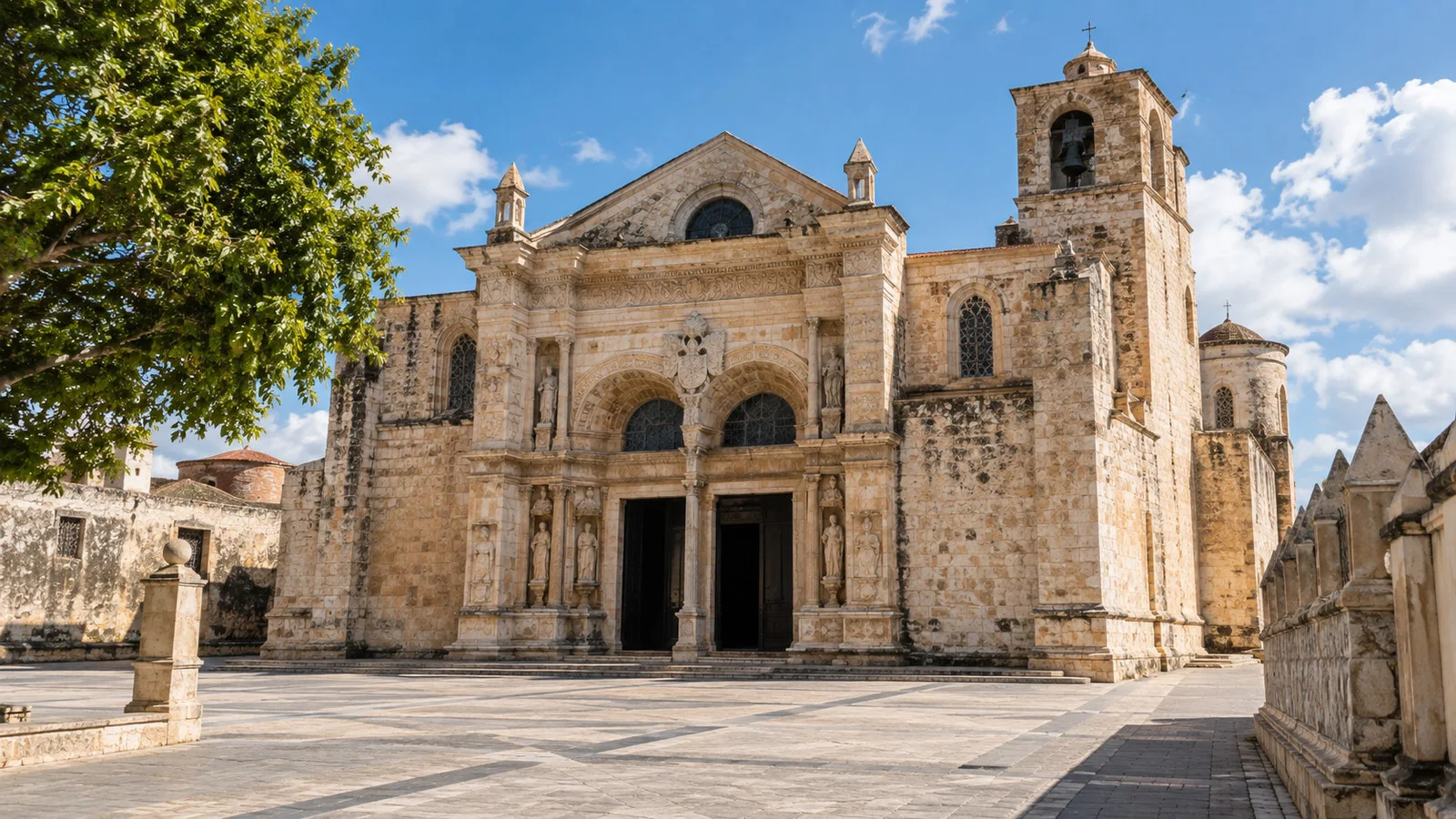
The cathedral stands beside Parque Colón and is one of the defining monuments of the Colonial City. UNESCO identifies Santo Domingo as the location of the first cathedral in the Americas, which gives the building importance beyond its architecture.
Dress respectfully and expect worship or church activity to affect visitor access. Shoulders and knees should be covered, voices kept low, and photography rules followed.
Parque Colón is a practical pause near cafes and pedestrian activity. It can also serve as a turnaround point when heat or walking fatigue begins to reduce the value of continuing.
Calle Las Damas and Fortaleza Ozama
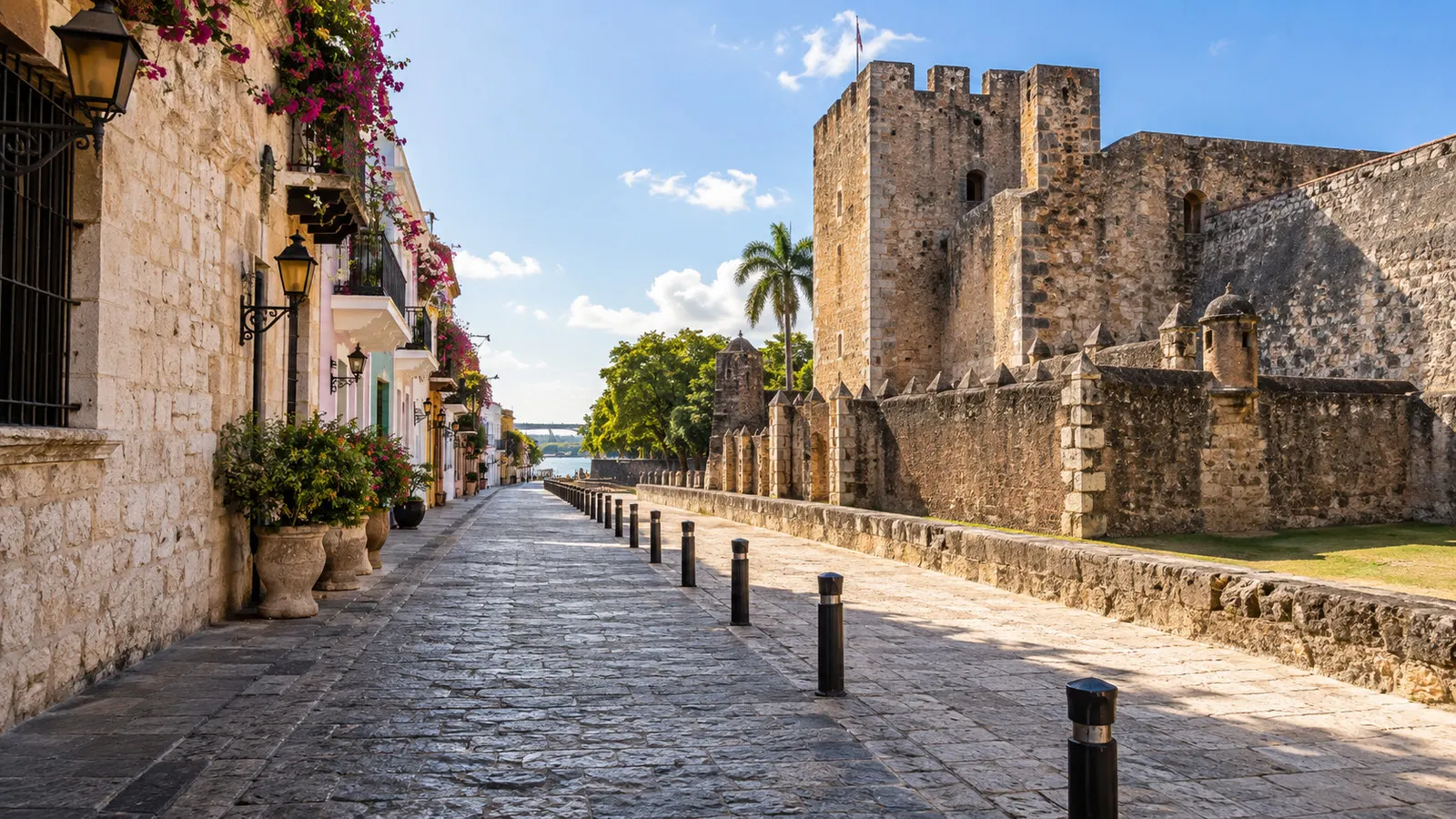
Official Dominican tourism guidance calls Calle Las Damas the first paved street in the Americas. The street connects important colonial buildings and gives a more coherent experience than jumping between distant map pins.
Fortaleza Ozama occupies a strategic position above the river. The tourism ministry describes it as the oldest European military structure in the New World, and its location helps explain control of the port and city.
Fortress surfaces, stairs, walls, and sun exposure can make the visit physically demanding. Check access and opening conditions before treating an interior climb as essential.
Museums or streets first?
Choose one major interior if your call is short. The Alcázar, Museum of the Royal Houses, cathedral, and fortress each offer different stories, but several ticketed interiors can consume the entire day.
I would use the streets and plazas as the fixed plan, then add the building whose doors and timing cooperate. That approach keeps the visit satisfying even when a museum closes unexpectedly.
Guided tours help connect the layers of history and can solve entry logistics. Independent travelers gain flexibility, especially when the ship’s arrival time changes.
Los Tres Ojos National Park
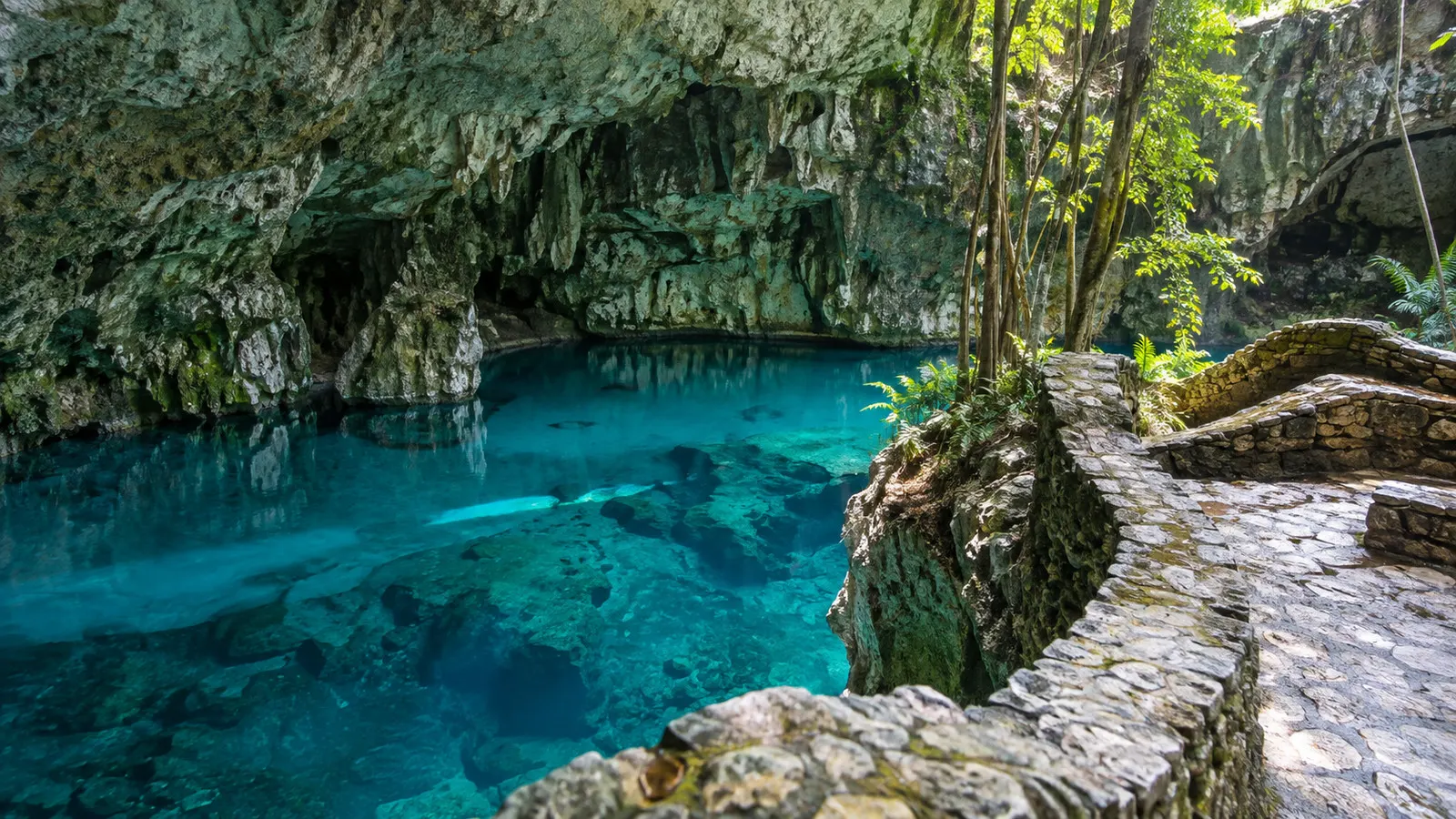
Los Tres Ojos is an inland cave and lake attraction outside the Colonial City. The official tourism ministry highlights its underground caves and clear lakes as one of Santo Domingo’s major natural sights.
This is not a walking extension from either cruise terminal. Use a ship excursion, hotel grade taxi, or prearranged driver, and agree on whether the vehicle waits or returns at a set time.
The experience includes stairs, humid conditions, and uneven surfaces. Travelers with mobility limitations should ask for a current route description before booking.
Can you combine Los Tres Ojos with the old city?
Yes on a longer call with dependable transportation, but choose the order carefully. A morning excursion to the caves followed by a shorter Colonial City walk can work when the return to the ship remains protected.
Do not place Los Tres Ojos at the end of an independent day with a tight deadline. City traffic and the time required to exit the park can turn a reasonable drive into a stressful return.
A ship excursion offers the simplest coordination. If going independently, keep the driver, terminal, and all aboard details written in Spanish.
The Malecón and modern city
The Malecón follows the Caribbean shoreline west of the Colonial City and offers sea views, monuments, hotels, and a different sense of the capital. It is best reached by vehicle rather than added to a hot midday walk.
A panoramic drive can work well for travelers who want city context with less walking. Ask which stops allow passengers to exit and whether restrooms are available.
The modern city is much larger than the historic core. Shopping centers, gardens, and cultural venues are possible, but they compete with traffic and reduce time in the area closest to the ship.
Taxi planning without guesswork
Taxi prices can change with traffic, demand, route, and whether the vehicle waits. Ask the terminal transportation desk or cruise line for the current official arrangement, and agree on the fare before departure when a meter is not used.
Use a licensed or port approved vehicle rather than accepting an unsolicited offer beyond the controlled area. Record the driver’s name or vehicle information if arranging a return.
Carry the terminal name and address in writing. Don Diego and Sans Souci are not interchangeable drop off points, even though both belong to the Port of Santo Domingo.
Ship excursion or independent day
Choose an independent day from Don Diego when the Colonial City is the priority and your mobility suits old streets. The route is flexible, easy to shorten, and rich enough without a vehicle.
From Sans Souci, even an independent historic visit begins with transport. A ship shuttle or organized walking tour can remove the most important uncertainty.
Use a ship excursion for Los Tres Ojos, a broad city panorama, or any itinerary crossing several districts. The value lies in coordinated timing and a protected return.
Accessibility at the terminals
Ask the cruise line about the exact gangway, pier, and terminal route for your vessel. Ship design, tide, security procedures, and berth position can change the walking distance and slope.
Modern terminal buildings do not guarantee that the entire shore day is accessible. Vehicle steps, cobblestones, historic thresholds, heat, and limited curb cuts may become the larger obstacles.
Request lift equipped transportation in advance if it is required. Confirm whether a mobility device remains with the traveler or is stored separately during the excursion.
Accessibility in the Colonial City
The old city includes cobbles, uneven paving, curbs, slopes, and historic interiors with stairs. A shorter exterior route around Plaza España, Calle Las Damas, and Parque Colón may be more comfortable than a full monument circuit.
Ask individual sites about accessible entrances and restrooms, because the public doorway may not be the step free route. Allow extra time rather than trying to match a standard walking tour pace.
Heat management is part of accessibility. Plan shade, water, seated breaks, and an earlier return for anyone whose stamina changes in tropical conditions.
A realistic two-hour plan
From Don Diego, walk to Plaza España, continue along Calle Las Damas, and choose either the fortress area or Parque Colón before returning. Skip Los Tres Ojos and avoid a long restaurant meal.
From Sans Souci, use the ship’s transfer to the Colonial City and follow the designated meeting time. Do not spend the first half of a short call negotiating independent transportation.
A realistic half-day plan
Spend the first part of the day on a Colonial City loop with one interior visit. Add lunch or a brief panoramic drive only when the remaining margin is generous.
Los Tres Ojos can replace part of the historic walk rather than simply joining it. Choose the cave park if natural scenery matters more than several colonial interiors.
A full-day plan
A long call can support Los Tres Ojos in the morning and the Colonial City in the afternoon with organized transportation. Keep the final segment close to the correct terminal.
Modern shopping or the Malecón can substitute for one of those priorities, but adding everything makes the day mostly traffic. Santo Domingo is better when one district receives unhurried attention.
Food, money, and practical comfort
Dominican food is part of the city’s pleasure, from rice and beans to plantains, stewed meats, seafood, and sweets. Choose a busy established restaurant and mention allergies clearly, since ingredients and cross contact practices vary.
The Dominican peso is the local currency, and cards work at many established businesses. Carry small local notes for minor purchases, but avoid displaying a large amount of cash.
Use staffed museums, restaurants, or terminal facilities for restrooms. Buy bottled water from a reliable source and keep it with you during outdoor walking.
Weather and when to go
Santo Domingo has a tropical urban climate, with heat and humidity throughout the year. Light breathable clothing, sun protection, water, and a compact rain layer belong in the day bag.
Heavy showers can flood low spots and slow traffic, while strong sun makes open stone plazas feel hotter. Build indoor stops and shaded breaks into the route rather than waiting until someone feels unwell.
Atlantic storm conditions can change itineraries during the wider hurricane season. Follow the cruise line’s operational decisions and avoid assuming a delayed arrival will preserve every excursion.
Entry forms and documents
The Dominican Republic uses an official electronic ticket system for entry and departure procedures. Requirements can differ for cruise transit passengers, homeport guests, and air arrivals, so use the Directorate General of Migration portal and cruise line instructions.
Do not pay an unofficial website that imitates a government form. Keep passport and travel documents secure, and carry only what the ship tells you to take ashore.
If an itinerary begins or ends in Santo Domingo, verify passport, visa, and health rules for your nationality well before travel. This guide cannot determine individual immigration eligibility.
Safety and return timing
Use normal big city precautions and keep phones, wallets, and jewelry discreet. Stay on active streets, use trusted transportation, and avoid entering restricted port or river areas.
Build the return backward from all aboard rather than departure. Include traffic, security screening, the walk through the terminal, and extra time if your ship uses Sans Souci.
Save the ship or port agent number and photograph the daily program. A map pin is useful, but the written terminal name prevents the most consequential mistake.
Quick answers
Which terminal is closest to the Colonial City?
Don Diego is beside the historic district and supports the easiest walking plan. Sans Souci is across the Ozama and usually requires transportation.
Can I walk from Sans Souci to the old city?
A vehicle is the sensible choice because the terminal sits across the river and port roads are not a sightseeing route. Use a ship shuttle, excursion, or trusted taxi.
Is the Colonial City a UNESCO site?
Yes. UNESCO lists the Colonial City of Santo Domingo for its early institutions, monuments, and influential grid plan.
Can I visit Los Tres Ojos on my own?
Yes with dependable transportation and enough time, but it is not near the cruise terminals. Confirm access, waiting arrangements, and a safe return margin.
Do I need the Dominican electronic ticket?
Requirements depend on how you enter or leave the country and your cruise arrangements. Follow the official migration portal and the cruise line’s instructions for your sailing.
The last word
Santo Domingo is a rewarding city call when the terminal leads the plan. Walk confidently from Don Diego, transfer deliberately from Sans Souci, and give the Colonial City enough time to be more than a row of photographs.
How this guide was researched: This guide was checked on September 12, 2026, against the Port of Santo Domingo and its technical guideline, UNESCO, the Dominican Republic Ministry of Tourism, and the official migration portal. Reconfirm the terminal, transportation, attraction access, entry requirements, weather, and all aboard time because port operations and visitor rules can change.