ETIAS, Schengen Days and Visas: A US Cruiser’s Europe Guide
Here is the European entry stack for a US passport holder, in the order you meet it: passport, Schengen, the Entry/Exit System, ETIAS, the 90 day count, and the ports that follow none of it.
The time-sensitive entry-system details were checked on September 10, 2026.
Why this is worth ten minutes
A cruise itinerary scrambles Europe’s entry rules in a way a land trip does not. One 10 night Mediterranean sailing can touch three Schengen countries, one EU country outside Schengen, and one country outside the EU entirely.
Your first border check may happen at the airport, the cruise terminal, or the first port where your ship crosses into the Schengen area from outside it. The itinerary decides where you meet the rules, so the embarkation city alone does not tell the whole story.
Two pieces of this moved in the last year, so a 2024 answer is now wrong in both directions. One system is live, one is not, and telling them apart keeps you off a scam website.
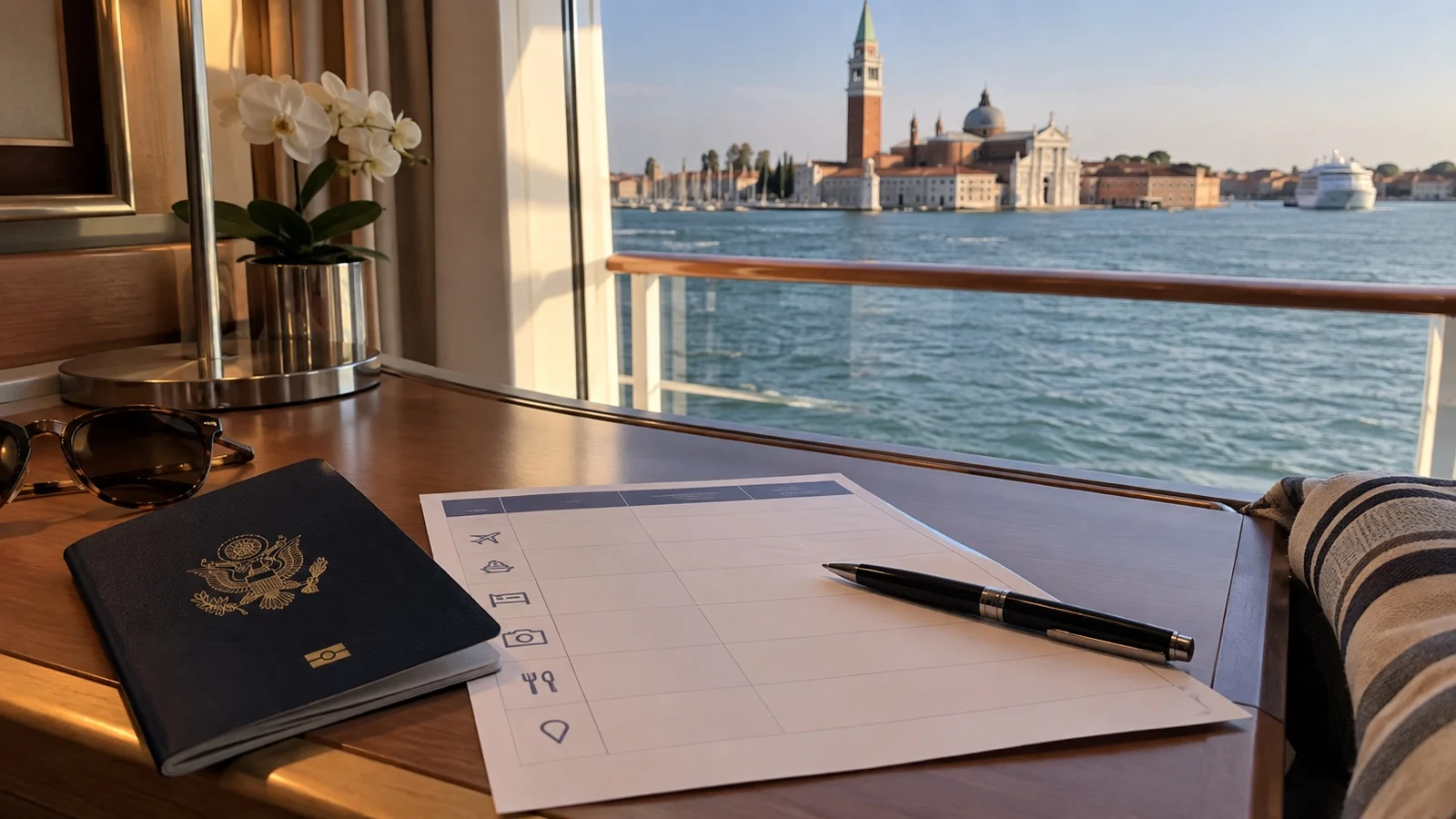
What you are actually looking at
There are four separate things people mash together, and untangling them is most of the work.
The first is your passport itself, which is a document requirement set partly by Europe and partly by your cruise line. The second is the Schengen area, which is the zone inside which you are allowed 90 days out of any 180.
The third is the Entry/Exit System, or EES, which now records eligible short-stay travelers at Schengen’s external borders. Most US tourists are covered, but holders of certain residence permits, long-stay visas, and qualifying family residence cards are among the exceptions.
The fourth is ETIAS, a future advance travel authorization for visa-exempt visitors. It is not live yet, and as of September 10, 2026, the EU is not accepting applications.
Step one: your passport, and the two dates that matter
Start with the book in your hand, because a European sailing is not a trip where a birth certificate stands in for a passport, and everything downstream keys off it. There are two dates on the data page and both of them can end your cruise before it starts.
For a short Schengen visit, official EU passport guidance says your passport must be valid for at least three months after you plan to leave and must have been issued within the previous 10 years on the day you enter. Ireland, Cyprus, the United Kingdom, and other non-Schengen stops have their own rules.
A cruise line may apply a stricter document rule than the legal minimum, and that is the rule its staff will use at check-in. Royal Caribbean, for example, tells guests to carry a passport valid for at least six months after the cruise, but you should check the written requirement for your own line and itinerary.
What I would do is treat six months of validity past your return flight as the floor, and renew anything that looks close. A renewal costs less than one missed sailing.
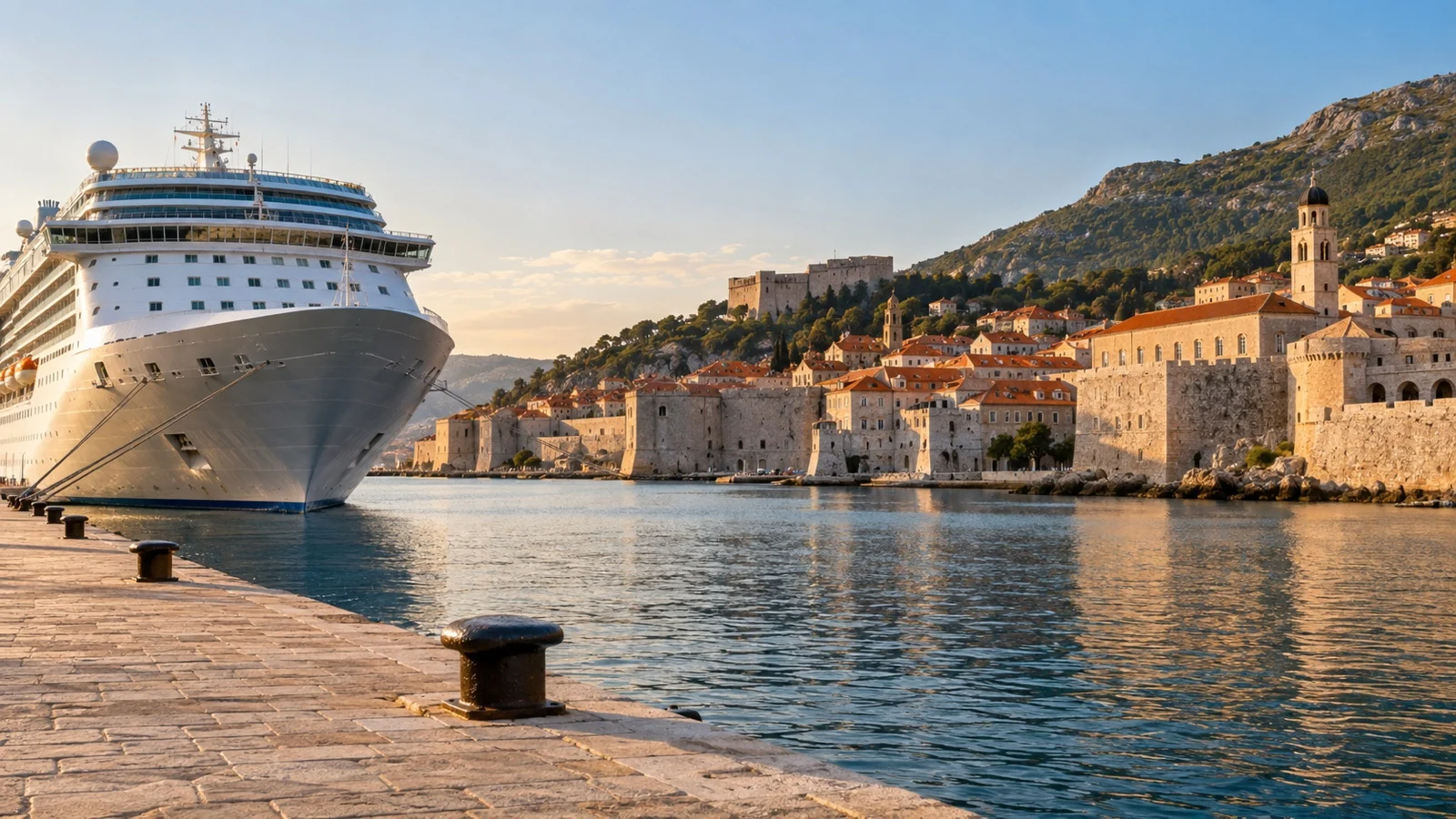
Step two: which of your ports are actually Schengen
This is the step almost everyone skips, and it is the one that determines the rest. Print your port list and mark each stop as Schengen or not.
The European Commission describes the Schengen area as 29 countries, being 25 EU member states plus Iceland, Norway, Switzerland and Liechtenstein. Bulgaria and Romania were the last to join, on January 1, 2025.
Croatia has been in since 2023, which is why Dubrovnik and Split now behave like Barcelona rather than like a separate border.
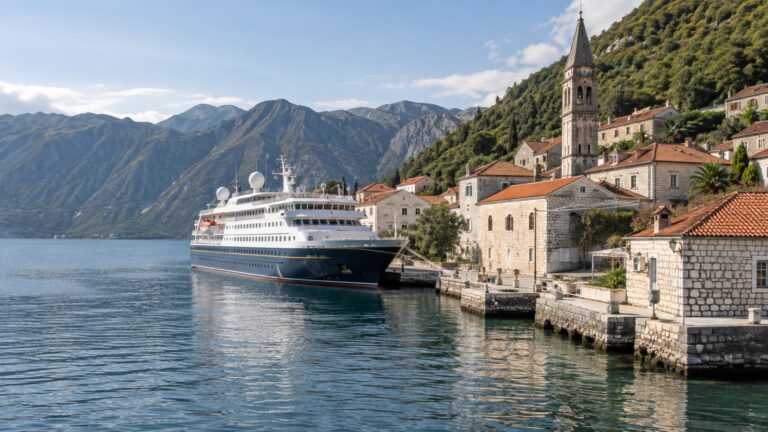
So a typical Adriatic run through Venice, Split, Dubrovnik and Kotor is three Schengen stops and one that is not. My guide to cruise ports in Europe is the fastest way to see which region you are actually sailing in.
Step three: the Entry/Exit System, and what happens at your first border
EES is the live one. The European Commission states that it has been fully operational since April 10, 2026, after a rollout that began in October 2025.
For eligible short-stay travelers, EES replaces routine passport stamping at participating external borders with a digital record. Initial registration includes your name, travel-document data, a facial image, fingerprints where required, and the date and place of entry or exit.
There is no EES fee or travel authorization to buy. Some participating countries support an optional official pre-registration app, but it does not replace the in-person border check.
At the border, eligible visa-exempt travelers normally provide a facial image and four fingerprints on first registration. Later crossings verify the stored data, although officers may need to collect data again or send you to a staffed check.
If you sail from Southampton or Istanbul without first entering Schengen, the first Schengen external-border call is where processing may happen. Follow the ship’s instructions and leave breathing room before a private tour, because the exact process depends on the route and the border authority.
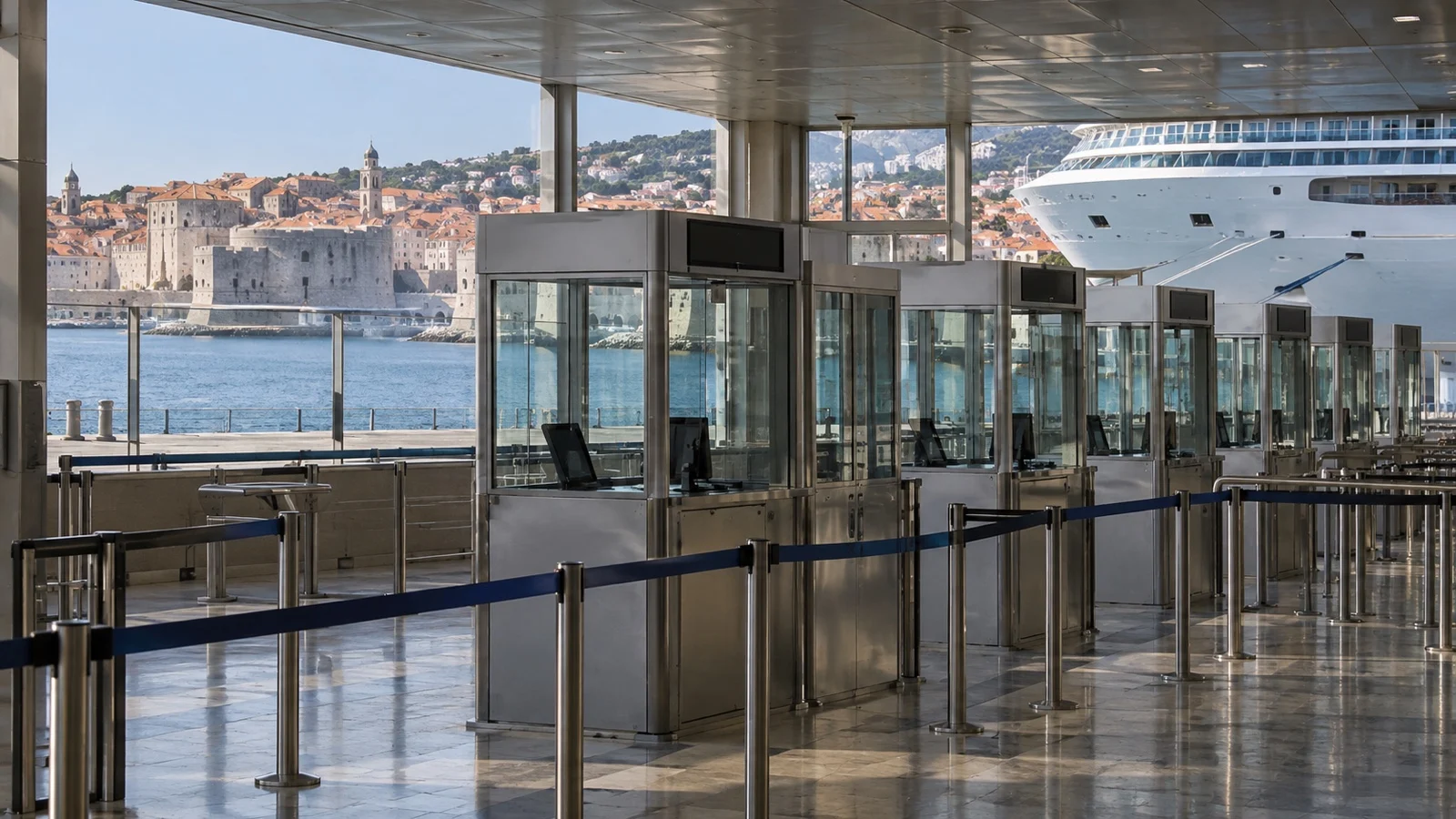
Step four: ETIAS, and what is true now
Here is the part I want stated plainly, because the internet is full of confident wrong answers. ETIAS is not in force.
The Commission’s own page says the system is currently not in operation and that no applications for travel authorizations are being collected. It also says the EU will announce the specific start date several months before launch.
The EU has not announced a specific start date and says it will give several months of notice. I would only trust the official EU page or a notice from your cruise line once applications actually open.
What is settled is the shape of it. The standard fee is €20, applicants under 18 or over 70 do not pay the fee, and an approved authorization lasts up to three years or until the linked passport expires, whichever comes first.
The law builds in a soft landing. ETIAS is optional during the initial six-month transition, which the EU can extend, and then a six-month grace period begins when the authorization requirement applies.
During that grace period, a traveler without ETIAS may be admitted only on their first external-border crossing since the transition ended and only if every other entry condition is met. That exception is not a reason to skip the application once ETIAS becomes required.
One cruise-specific detail: the ETIAS rules name sea carriers alongside airlines, so cruise lines will query the system before boarding once the requirement applies. During the initial transition, the carrier system is designed to return an approval response while travelers are still being informed about the new rule.
Step five: counting the 90 days, and whether a port call burns one

The allowance is 90 days in any 180 day period, and the 180 days is a rolling window rather than a calendar season. You count backward 180 days from any given day and the total inside that window cannot exceed 90.
A two-week cruise is only simple if you have enough days left from earlier travel. A back-to-back pair, a repositioning sailing plus a land trip, or a spring stay in Portugal can use far more of the allowance than the cruise length suggests.
For example, if 80 Schengen days from a spring trip are still inside the rolling lookback, a later 14-day stay wholly inside Schengen would bring the total to 94. Use the official dates of entry and exit, not the number of cruise nights printed in the itinerary title.
Schengen’s cruise rules include limited stopover procedures under which some passengers may not receive individual entry or exit checks. Whether that applies depends on the ship’s route, the previous and next ports, the passenger’s plans ashore, and the border authority’s instructions.
That stopover rule is about whether an individual check happens during the call, not whether a day counts toward an admitted stay. A ship arriving from outside Schengen, a cruise staying wholly inside it, and an itinerary that exits and re-enters can all produce different formalities.
The clean way to think about it is this. If you were formally admitted at the start of your trip, the days you spend in Europe are counted, and the fact that you slept on a ship does not pause the clock.

Step six: the stops that are not Schengen at all
Every Schengen guide stops here, which is exactly where cruise itineraries get interesting. Four countries turn up constantly on European sailings, none are covered by anything above, and each sets its own terms on whether a service dog can go ashore.
The United Kingdom is its own border. Most US visitors need a UK electronic travel authorization, including children, unless an exemption applies, so a Southampton embarkation or Dover call needs its own check.
Turkey is the one people most often get wrong, because the old e-visa is gone for Americans. The State Department’s country information for Turkiye now says no visa is required for stays of 90 days or less on a tourist passport, with six months of passport validity beyond arrival.
Turkey also still stamps, which matters more than it sounds. The advisory warns you can be refused entry if there is not enough blank space for entry and exit stamps, so a nearly full passport is a real risk at Istanbul or Kusadasi.
Montenegro and Morocco are outside Schengen and generally allow short tourist visits by US passport holders without a visa. For the Schengen calculation, use the actual recorded exit and re-entry dates around Kotor, Tangier, or Casablanca rather than automatically subtracting every scheduled port day.
The details that matter most
- EES is live, ETIAS is not: the Entry/Exit System has been fully operational at Schengen external borders since April 10, 2026. ETIAS has no announced start date and is not accepting applications as of September 10, 2026.
- Nobody can sell you an ETIAS today: any site charging you now for one is taking your money for a product that does not exist. When it launches there will be an official EU website and app, and the Commission has promised months of notice.
- The country counts differ by one: EES covers the 29 Schengen countries, while ETIAS will cover 30, being Schengen plus Cyprus. That single country is the difference, and it is why the two numbers you see quoted never match.
- The 90 days follow you, not your ship: a rolling 180-day window means a spring trip to Spain can reduce the allowance for a fall cruise. Count every Schengen day in the applicable 180-day lookback, not just the current sailing.
What I check first, in order
First, check the expiry date on every passport in the party against both the legal rules and the cruise line’s written requirement, infants included. Second, check that the passport was issued within the previous 10 years on the date you will enter Schengen.
Third, the port list, marked Schengen or not, one line per call. This takes four minutes and answers most of the remaining questions by itself.
Fourth, check each non-Schengen country on its official government or State Department page. Fifth, check ETIAS on the official EU page, which as of September 10, 2026, still says applications are not open.
What I would not do is pay a third-party site for ETIAS before the official EU application opens. If a port offers the optional official EES pre-registration app, use only the country’s instructions and expect to complete the border check in person.
A realistic word on accessibility
Biometric enrollment is not equally easy for everyone. EES uses a facial image and, where required, fingerprints, but the law exempts people for whom fingerprinting is physically impossible.
If you need seating, more time, or help reaching the equipment, tell the cruise line before the border appointment and follow the officer’s directions at the port. Do not assume every terminal uses a fixed kiosk or offers the same setup.
If your itinerary requires a port border check, arrive early and ask the ship about assisted disembarkation before that call. The Mediterranean cruise ports vary in shelter and seating, so tell guest services what help you need before the line forms.
Quick answers
Do I need ETIAS for a European cruise right now?
No. As of September 10, 2026, the European Commission says ETIAS is not operating, applications are not being collected, and a specific start date has not been announced.
What will ETIAS cost and how long will it last?
The standard fee is €20, with applicants under 18 or over 70 exempt from paying it. An approved authorization lasts up to three years or until the linked passport expires, whichever happens first.
Will I have to give fingerprints on a cruise?
Most visa-exempt US tourists age 12 or older give fingerprints when first registered at a Schengen external border. Children under 12, people for whom fingerprinting is physically impossible, and travelers in an EES-exempt category do not.
Do cruise port days count against my 90 days?
Treat them as counting, because the days you spend inside the Schengen area after being admitted are counted whether you sleep ashore or aboard. The stopover exemption is about who gets checked at the gangway, not about pausing the clock.
Is Croatia in Schengen, and is Cyprus?
Croatia is, which is why Dubrovnik and Split no longer feel like a separate border. Cyprus is in the EU and will be inside ETIAS, but its internal border controls have not been lifted, so it is not in the 29 country Schengen area.
The last word
The short version as of September 10, 2026, is that EES is operating and ETIAS is not. Your passport dates, prior Schengen stays, and every non-Schengen port still need their own check.
I would check this again about three months before you sail, because the ETIAS date is the one moving part left. When the EU names a launch day it will do so months ahead, and your cruise line will tell you long before the pier does.
How this guide was researched: Unless a first-hand visit is explicitly identified above, this guide is based on official government and EU sources. EES scope and operation, ETIAS status, fees, validity and transition rules, Schengen membership, passport rules, and the 90-in-180 calculation were checked against European Commission, Council of the EU, Your Europe, and EUR-Lex material current on September 10, 2026.
See our Editorial Policy.
More on this topic: browse every guide on choosing a cruise.