Where River Cruise Ships Dock: City Center or Transfer?
A river-cruise itinerary names a city, not a guaranteed berth. Your ship may stop beside the historic center, at an outer urban quay, across the river, or in another municipality.
The useful question is not “Does this line dock downtown?” but “Where is my exact vessel assigned for this call?” Berth allocation can change, so treat the final address as time-sensitive.
My quick take
Expect many small-town calls to be walkable, but never build a tight independent plan from that expectation alone. Major cities can have several central and outer berths with very different transport.
Ask for the embarkation address before traveling and check each port-call berth in the daily program. Map the pedestrian route, not only the straight-line distance, because fences, bridges, stairs, and roads can turn a nearby quay into a transfer.
If mobility, a timed ticket, or an independent tour depends on the location, ask what the line provides after a berth change. Get the shuttle, taxi, and accessible-vehicle details rather than assuming a standard solution.
The quick facts
- The itinerary does not guarantee a quay: one city can have several river berths, and the final assignment may be made close to arrival. Save the exact address when the line releases it.
- Ports and local authorities control berth availability: operators request space but may have to use another quay. Uniworld says local harbor authorities determine docking locations.
- Central is not the same as walkable: a berth can be inside city limits but separated from the old town by roads, slopes, construction, stairs, or an inaccessible embankment.
- Ships can raft side by side: passengers may walk through or across another vessel to reach the quay. This can add steps, gaps, ramps, and privacy considerations.
- Embarkation needs stricter planning than a day call: a taxi driver needs the ship name, operator contact, and street-level address. A city name or waterfront pin is not enough.
- A berth can change while you are ashore: follow the daily program and crew instructions, carry the ship’s contact details, and verify the return point before leaving independently.
Why berth assignments move
Riverfront space is shared by cruise vessels, ferries, excursion boats, cargo operations, local events, utilities, and public access. Ship length, draft, shore power, water supply, passenger handling, and the day’s traffic all affect which berth fits.
High or low water can make a planned quay unusable or change safe gangway geometry. Construction, maintenance, security restrictions, local events, and another ship’s delay can also move the assignment.
The cruise line may publish a normal or expected location well in advance. Treat it as planning context until the final documents or onboard program confirm it.
Uniworld’s current FAQ says local harbor authorities determine docking locations and notes that ships may moor next to one another. That is a useful general rule, but local arrangements still differ.
City-center, urban, and outer berths
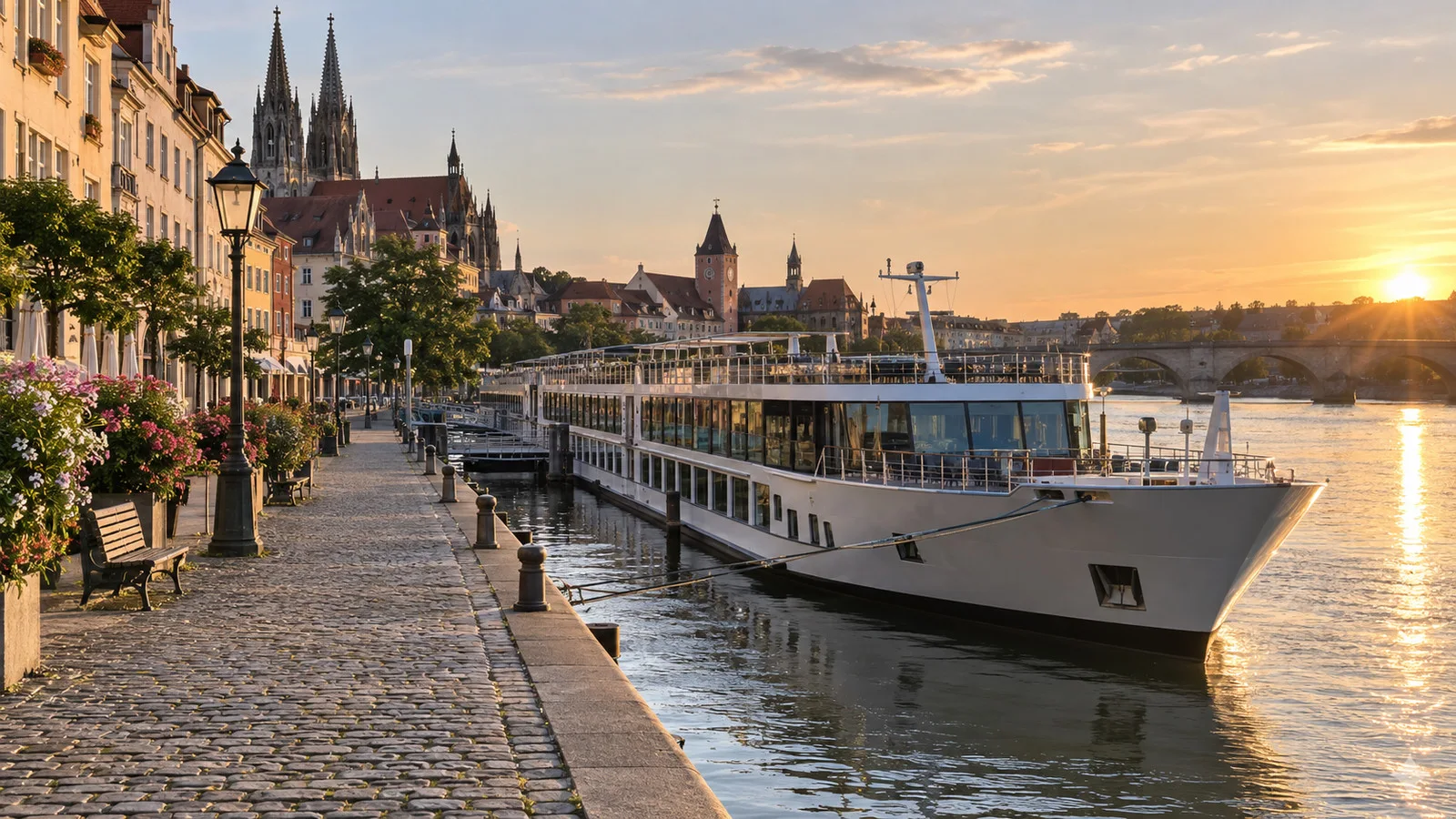
A true walk-off berth connects directly to the area most passengers want to visit. Even then, the route may include an embankment ramp, cobbles, traffic, or a climb to the historic center.
An urban berth sits within the city but may require a tram, metro, taxi, shuttle, or long walk. This is common where the attractive riverfront already serves other uses.
An outer berth may be in an industrial or mixed-use zone, near a lock, or in a neighboring municipality. It can still work well when the cruise line provides reliable transport.
Do not rank those categories only by miles. A farther berth with level access and frequent transit may be easier than a close berth below steep stairs.
Amsterdam shows why one city name is not enough
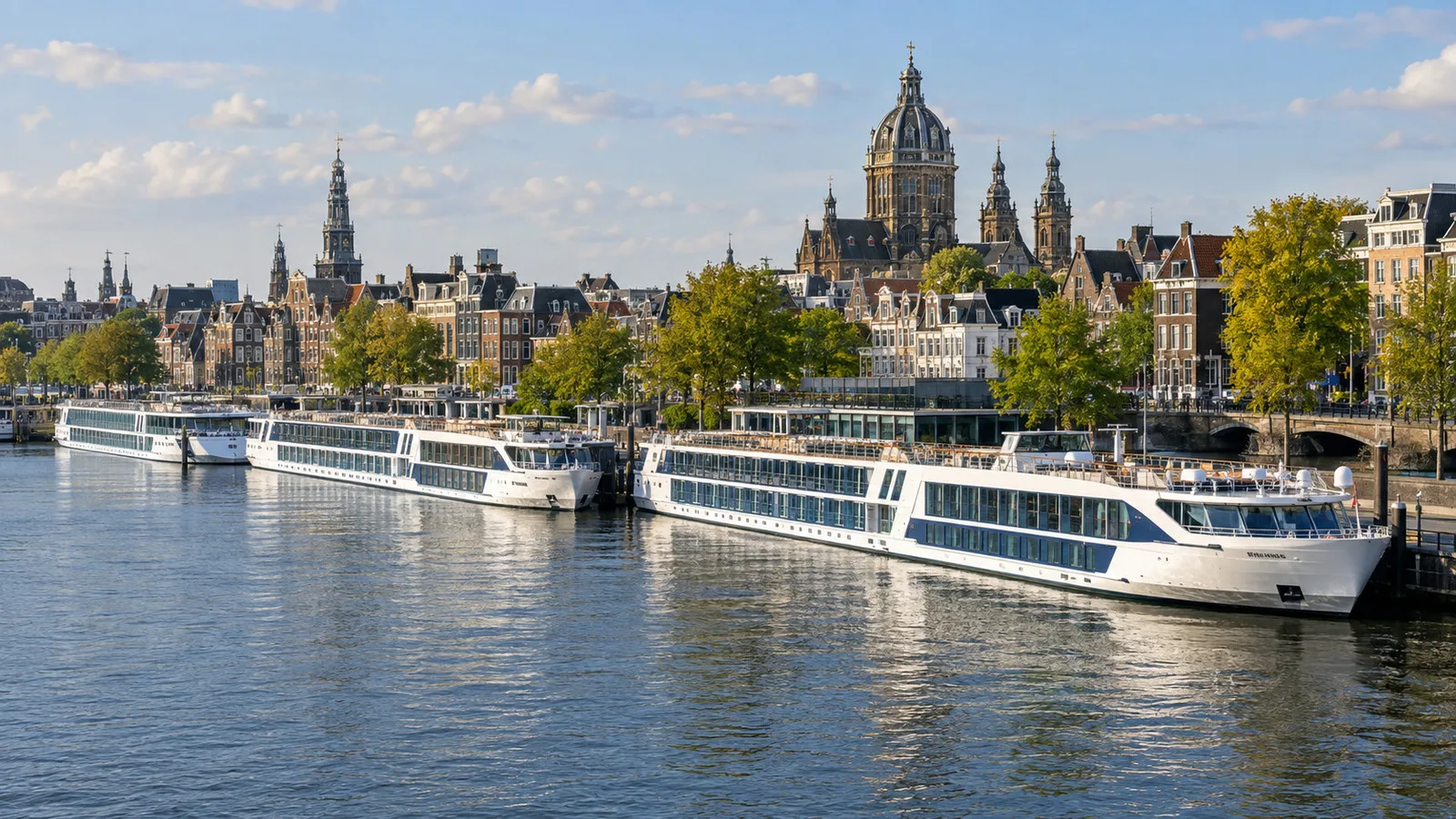
The Port of Amsterdam lists river berths around De Ruyterkade and other central areas. Its official inventory also lists turnaround capacity in Amsterdam, Zaandam, and Koog aan de Zaan.
That means two cruises labeled Amsterdam can begin from different municipalities and transport networks. The exact berth code and address decide whether you can walk from Amsterdam Centraal or need a longer transfer.
Turnaround-day logistics also differ from a daytime call. You will have luggage, a check-in window, and a ship that may not be open when you reach the quay early.
Use the Amsterdam river-cruise port guide for the location patterns, then replace every example with the address in your final documents. Recheck on travel day if the line provides an update channel.
The Rhine is a mix of easy and variable
Some Rhine towns have passenger quays close to their historic cores, which makes independent walking simple for many travelers. Busy cities and turnaround ports can use several locations instead.
Cologne, Rüdesheim, and other well-known walk-off examples still require a berth check. River traffic, events, high water, and local work can change the normal arrangement.
Basel has multiple river and harbor contexts, and the embarkation address matters more than the label “Basel.” Map the final quay to the airport, rail station, hotel, and accessible route before choosing transport.
A line’s berth history can suggest a pattern but cannot guarantee the next allocation. Ask for last season’s locations only as background.
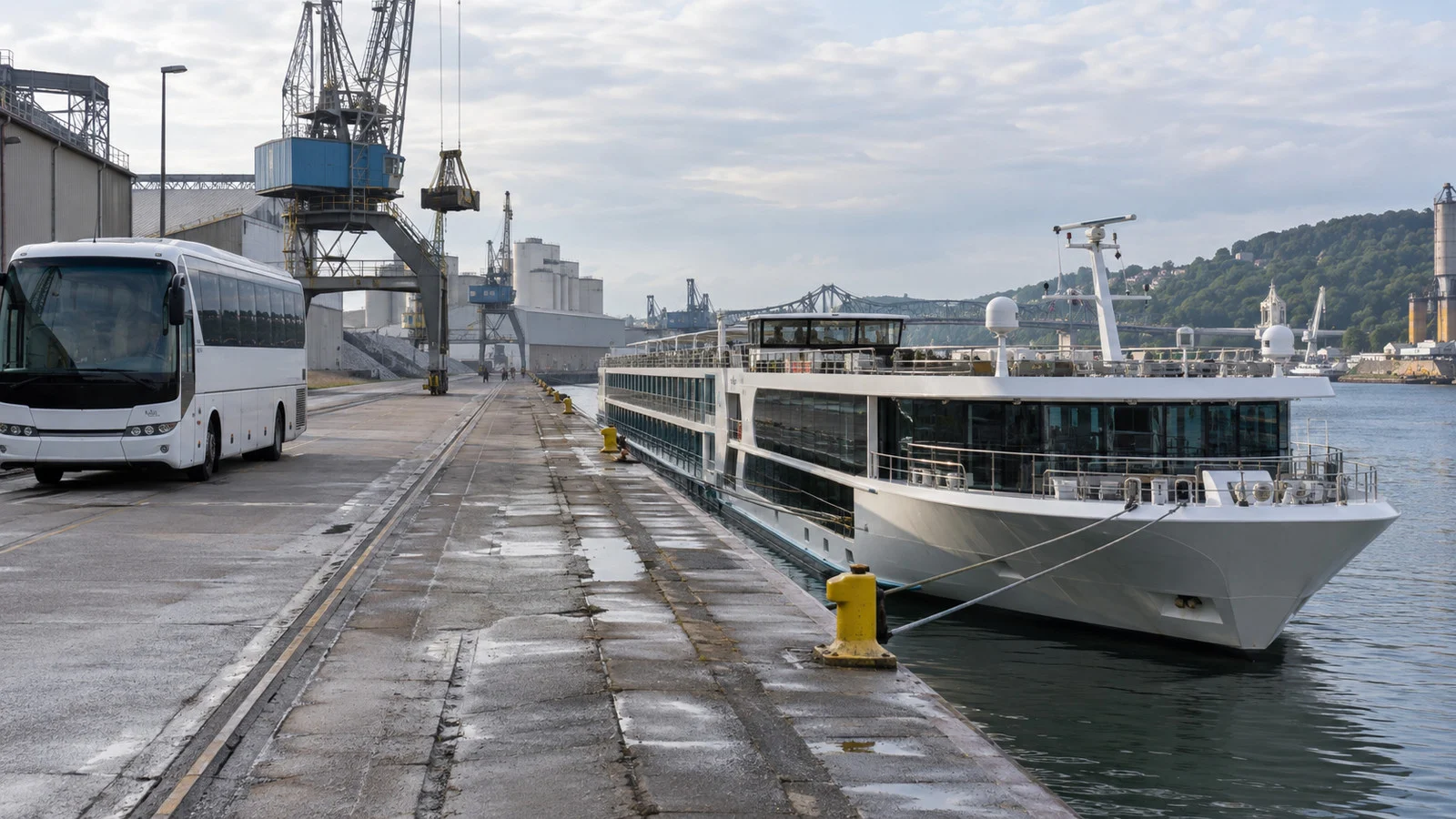
Vienna and the Danube
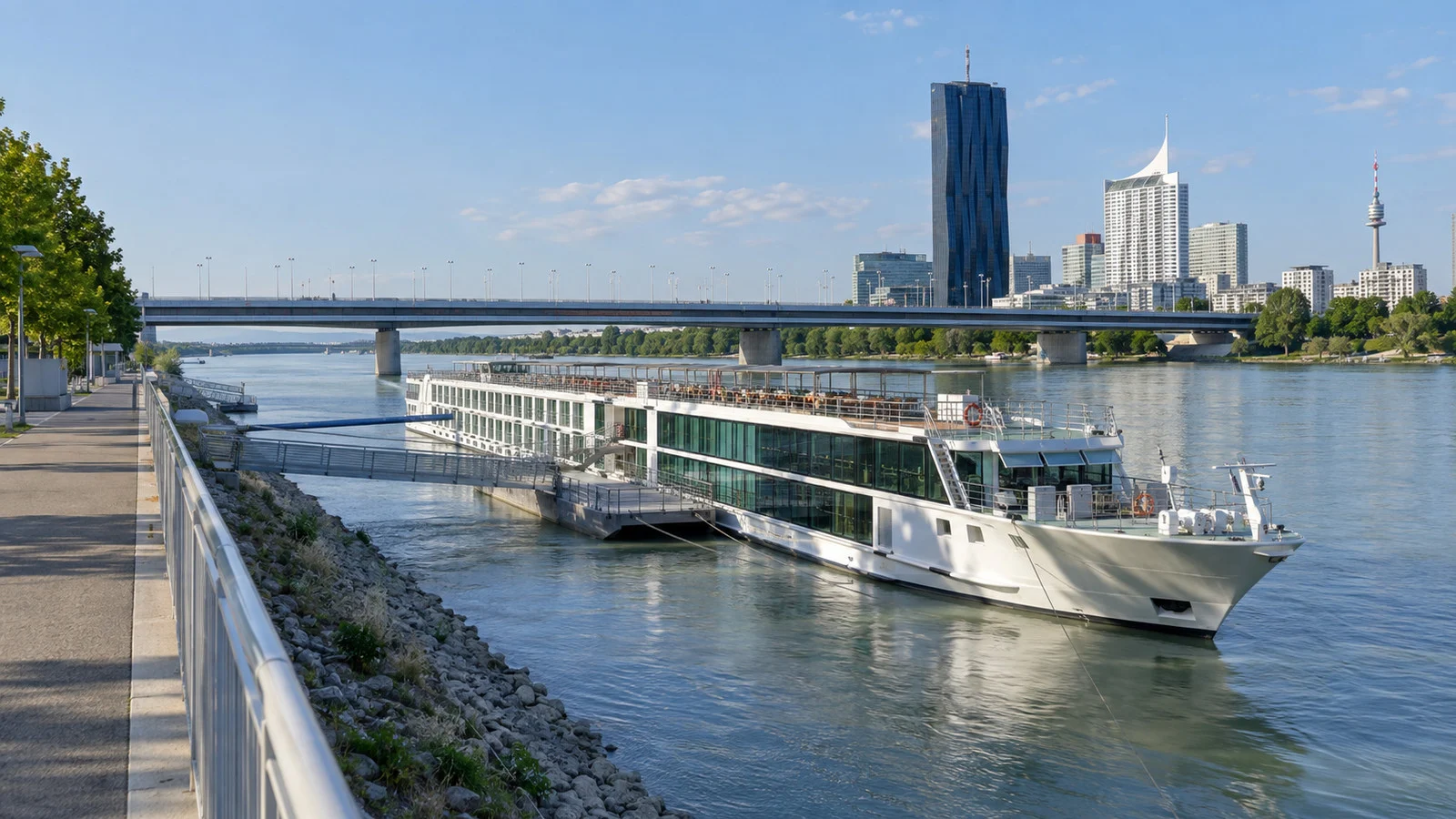
Vienna’s main visitor sights are not directly on the navigable Danube waterfront used by many river ships. A berth can therefore be within Vienna while still requiring public transport, a shuttle, or a taxi to the historic center.
Handelskai and Nußdorf are different starting points, and other assignments are possible. Do not publish one metro stop or walking time as the answer for every sailing.
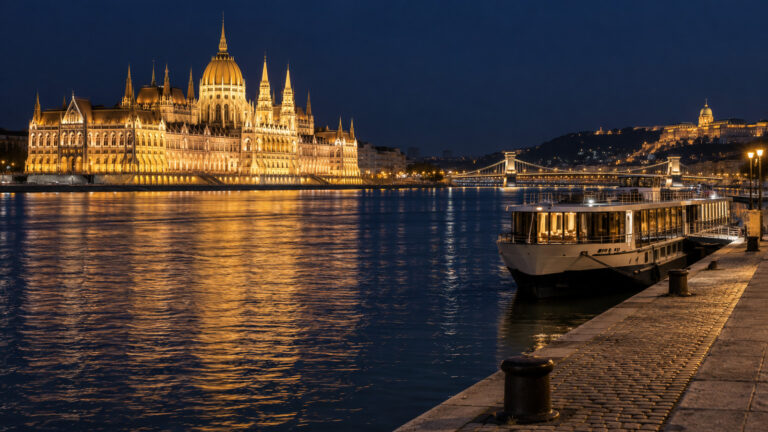
Budapest, Bratislava, and Passau often create a more immediate riverfront experience, but exact quays still vary. A central-looking berth can also be rafted outside another vessel.
For an overnight, ask whether the ship stays at the same berth. The guide to river-cruise overnights explains why evening access and return instructions matter.
The Vienna river-cruise guide covers the city’s berth areas and transit choices. Confirm the assigned location onboard before setting out independently.
The Douro: Porto versus Vila Nova de Gaia
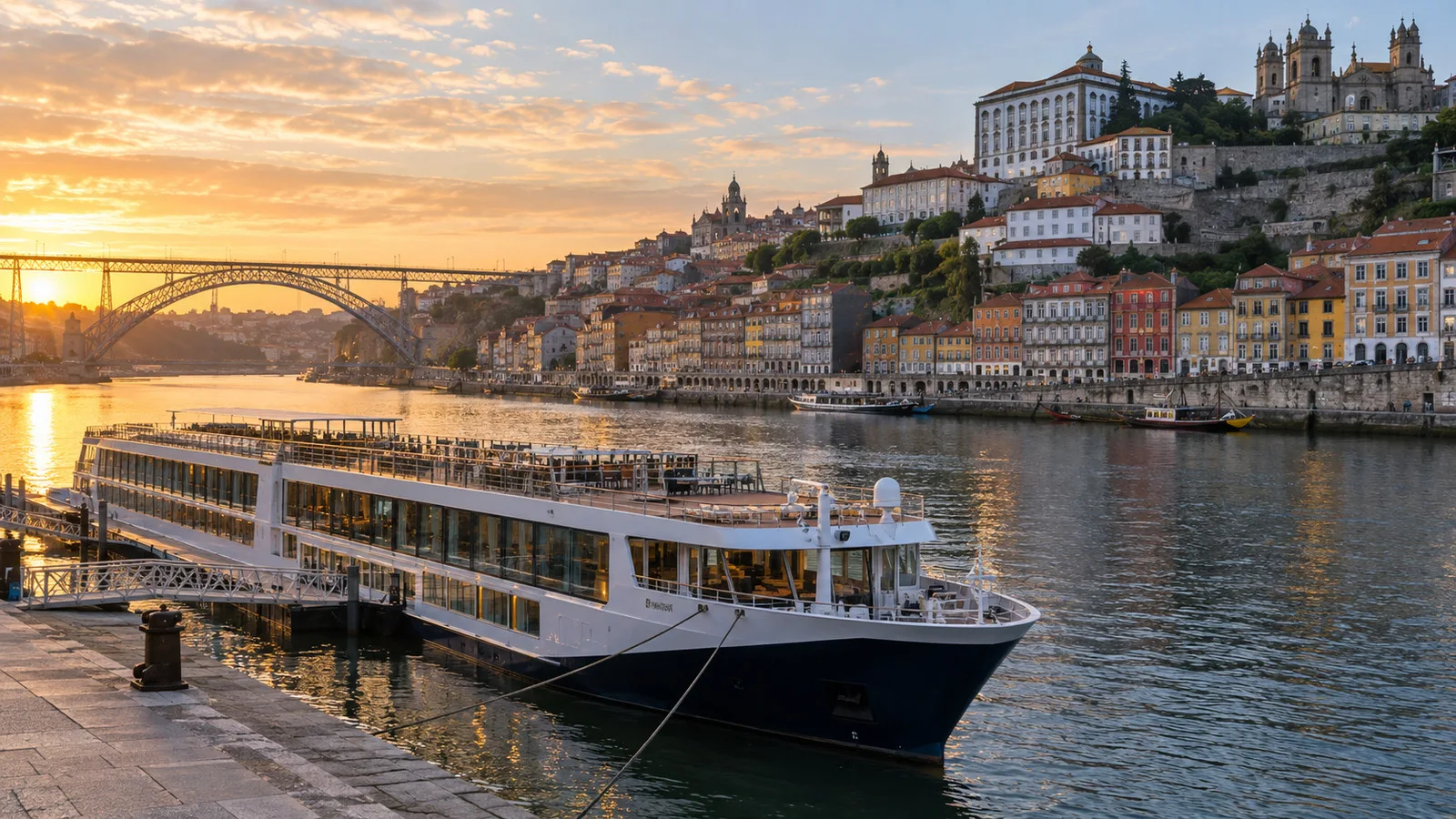
Many Douro itineraries use quays on the Vila Nova de Gaia side of the river rather than Porto’s Ribeira. That can still place passengers near the riverfront and port-wine lodges, depending on the exact berth.
Other quays sit farther upstream or away from the most visited waterfront. The words “Porto” and “Gaia” are not enough to calculate a walk.
Check which bank, which street access point, and which level of the riverfront the ship uses. A bridge may connect the two sides but can include slopes, stairs, or a long route to the accessible crossing.
The guide to Porto and Gaia river berths explains the usual areas. Use the final berth notice for transport and luggage decisions.
Lyon, Bordeaux, and the French rivers
French river cities can offer several mooring sites rather than one terminal. In Lyon, VNF has identified river-cruise sites around quai Rambaud, Musée des Confluences, place Antonin Poncet, and quai Claude Bernard, plus another site at quai Fillon.
Those names represent different positions on the Rhône and Saône and different routes into central Lyon. VNF’s location list is useful background, but the operator’s current address controls your day.
Bordeaux has central river pontoons, yet the assigned pontoon and tidal river level affect the gangway and street route. A central label does not guarantee a level step-free exit.
Paris-area Seine itineraries can use berths within the city or farther west. The Paris river-cruise guide covers common areas, including why Le Pecq requires different planning from a central Paris quay.
Do not attach one fixed mileage to every Paris itinerary. The berth, road route, traffic, and final destination determine the useful travel time.
How to find the right berth before embarkation
- Read the final documents: look for a berth name, code, street address, ship name, and local contact. Save the page offline.
- Confirm the date and time: a city may host several vessels from the same line. Match the information to your sailing rather than a generic port page.
- Contact the operator: if the address is missing, ask when it will be released and which channel carries last-minute changes. Request an accessible format if needed.
- Map the street-level entrance: a pin in the river may not show the vehicle access road, embankment ramp, or fence opening. Use the address a taxi can reach.
- Tell the driver the ship name: provide the vessel, line, berth code, and local phone number. Keep luggage with you until you identify the correct crew.
- Recheck before leaving the hotel: a current message from the line outranks a saved map from months earlier. Allow time for a moved berth.
Planning a port day from the berth
Ask reception for the day’s exact berth name and whether the ship will move. Photograph any map, shuttle schedule, or return card the crew provides.
Map the first attraction from the quay exit, not from the ship icon. Note stairs, elevators, road crossings, transit stops, service frequency, and the last practical return option.
For a timed independent tour, give the operator the berth and warn that it may change. Set a meeting point reachable by both parties rather than asking a driver to find any ship along the waterfront.
Build a return buffer from the all-aboard instruction, not the published departure time. Follow the ship’s stated time zone and carry the emergency contact.
The guide to river-cruise berth changes explains what to do when the ship relocates. Never assume the gangway will remain where you left it.
Fun fact: Amsterdam’s official berth list separates central locations, small-ship capacity, and turnaround sites. The inventory shows why a single city can produce very different passenger arrivals.
Shuttles, taxis, and public transit
A cruise line may provide a shuttle from an outer berth, include a coach tour that ends centrally, or leave independent transport to passengers. Ask whether the ride is continuous, scheduled, one-way, or tied to an excursion.
Photograph the pickup point and last departure time. A shuttle may stop earlier than the ship’s all-aboard time or move after traffic changes.
Public transit can be faster and more flexible, but ticketing, service hours, elevators, and platform access vary. Do not assume a nearby station is step-free in both directions.
Taxi and rideshare drivers need a road-access point, not a riverside berth number alone. In restricted port zones, meet at the gate or named street specified by the crew.
Weather can change the best choice even when the berth stays fixed. Heat, ice, rain, darkness, and flooding can turn a reasonable walk into a poor plan.
Accessibility starts at the gangway
Ask about the gangway slope, width, handrails, steps, and whether passengers must cross another ship. River level and rafting can change the answer from one call to the next.
A standard motorcoach may have several high steps and no lift. Request the vehicle type, wheelchair or scooter storage, securement, transfer requirements, and whether a separate accessible vehicle must be reserved.
Downtown berths can still sit below street level. Confirm ramps, elevators, cobbles, curb cuts, and the accessible path to the nearest transit stop.
If you cannot use the planned gangway or shuttle, ask what alternative the line will provide and whether advance notice is required. Get essential arrangements in writing before final payment.
For an independent day, share device dimensions and transfer needs with the transport provider. A vehicle that can carry a folded chair is not the same as one that boards and secures an occupied wheelchair.
Season and berth location
Busy weeks can put more pressure on central berths, but there is no reliable rule that shoulder-season sailings receive better locations. Local events, water levels, vessel size, construction, and traffic can outweigh the calendar.
Do not promise a central berth from May through September or an outer berth during Christmas markets. Check the city’s event calendar and the operator’s current notice instead.
Daylight and weather affect the practical value of a walk or shuttle. Use the short-range forecast and local transit schedule for the date of the call.
A holiday or weekend may reduce public transport even when the quay is unchanged. Verify the service day rather than copying a weekday journey time.
Quick answers
Whether river ships dock in the city center:
Many do, especially in smaller river towns, while others use urban or outer berths. The exact assignment for your vessel is the only dependable answer.
Where river ships dock in Vienna:
Several berth areas are possible, including locations along the main Danube and around Nußdorf. Check the daily program before choosing transit.
Where Douro ships dock around Porto:
Many use Vila Nova de Gaia, while the precise quay can be central or farther upriver. Confirm the bank and street-level access point.
Whether passengers can choose the berth:
No. Local availability and operational requirements determine the assignment, although the cruise line communicates the passenger plan.
Whether a Paris river cruise is actually in Paris:
Some berths are within Paris and others can be farther west. Use the final berth address rather than the destination label.
The last word
River cruising often delivers a wonderfully central arrival, but it never guarantees the cathedral will be outside the gangway. Berths are pieces of working infrastructure with changing availability.
Ask for the exact address, map the accessible street route, and recheck before every independent departure. That habit matters more than memorizing a list of supposedly downtown and out-of-town ports.
When comparing itineraries, use the Rhine, Danube, Douro, and Rhône guide alongside the list of river ports that may not be walkable. Then verify the current berth rather than treating either guide as a promise.
How this guide was researched: This guide is based on official port, waterway, and cruise-line information. Berth inventories and location examples were checked against the Port of Amsterdam and Voies navigables de France, while allocation and rafting cautions were checked against Uniworld; details were reviewed in September 2026 under our Editorial Policy.
More on this topic: browse every guide on river cruise planning.