Saudi Arabia Cruise Ports: Jeddah, Yanbu and the Red Sea Build Out
Saudi Arabia has been selling itself as a cruise destination for only a few years, and the gap between the renderings and the pier is still wide. What exists today is a converted terminal in Jeddah, a working commercial port in Yanbu, and a tender call at Al Wajh.
My quick take
This is the most interesting new cruise coastline in the world and also the least finished one. I would sail it now for the ports that are real and ignore every promise about the ones that are not.
What I would not do is book a Red Sea itinerary expecting polish. The infrastructure is thin, the deployments move around from year to year, and the reward is that you get famous places without the crowds that usually come with them.
The quick facts
- The ports: Jeddah and Yanbu on the Red Sea take ships alongside, Al Wajh is a tender call, and a terminal exists on the Gulf side at Dammam.
- Season: Red Sea sailings run through the cooler months, broadly late fall into spring, and the ships leave for summer.
- Entry: A tourist eVisa covers dozens of nationalities, and it is a real visa rather than a formality.
- Dress: Loose clothing covering elbows and ankles is the working standard, for men as well as women.
- Alcohol: It is illegal in the country, with no tourist exemption and no duty free workaround.
What a Saudi cruise itinerary actually looks like
The common shape is a Red Sea loop out of Jeddah that picks up Yanbu, then crosses to Jordan and Egypt for Aqaba and Sharm el-Sheikh. A Saudi owned line bases a large ship in Jeddah for part of the year, and international lines add calls when their deployments happen to swing this way.
That means the neighbors do a lot of the work on this itinerary. Our guides to Aqaba as the gateway to Petra and to the Egyptian cruise ports cover the two stops most people are really buying the cruise for.
Jeddah: the homeport and the only real city stop
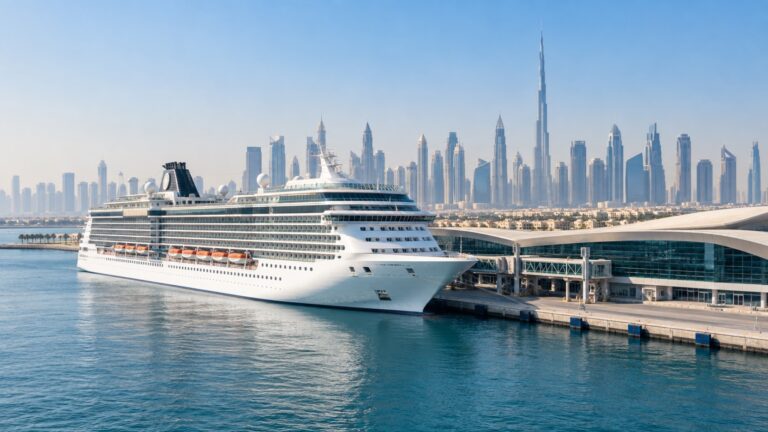
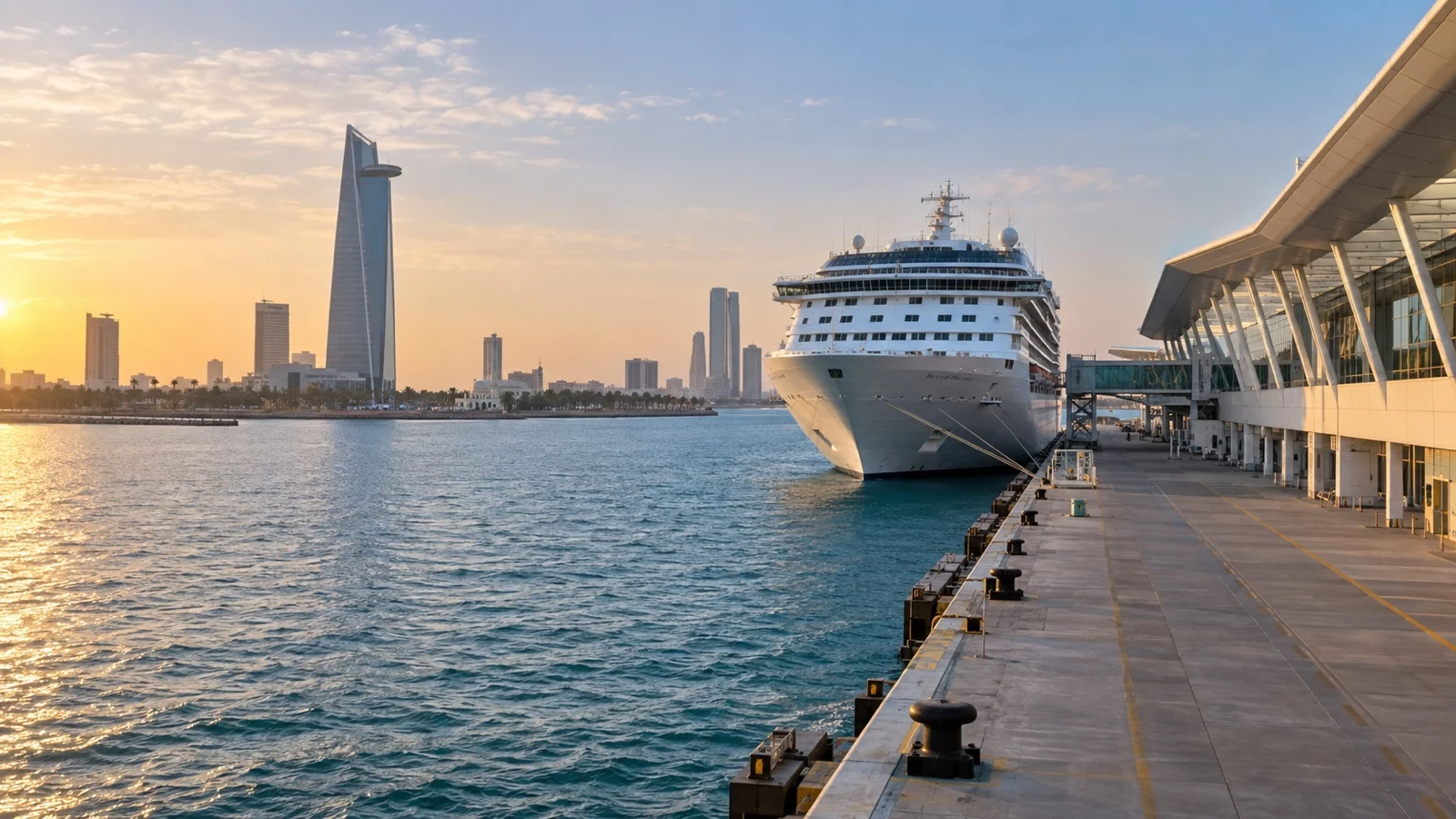
Jeddah Islamic Port is a large working commercial harbor, and the cruise facility inside it started life as a ferry terminal rather than a purpose-built passenger building. It handles homeporting, which is the important part, because this is where most Saudi itineraries begin and end.
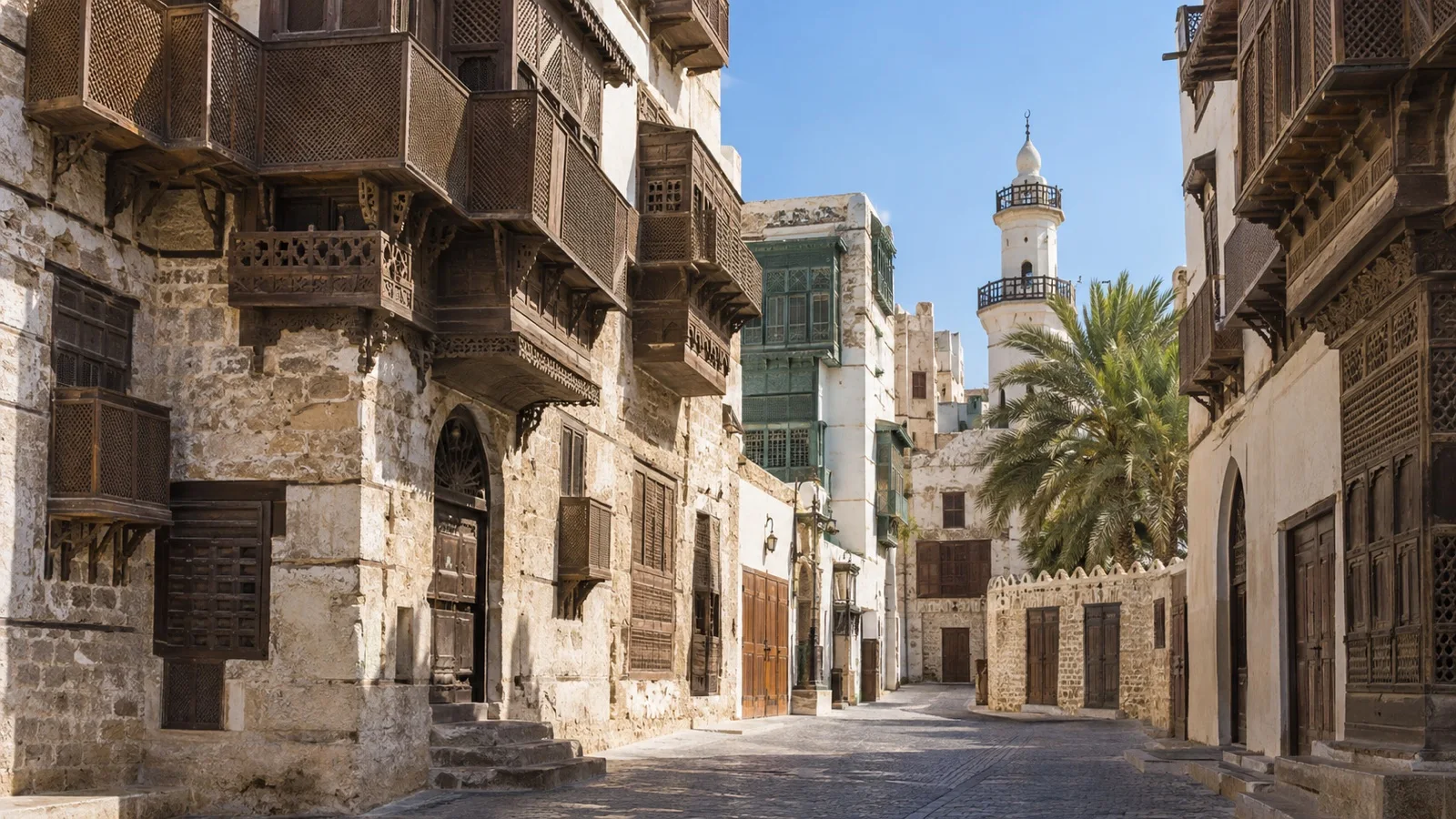
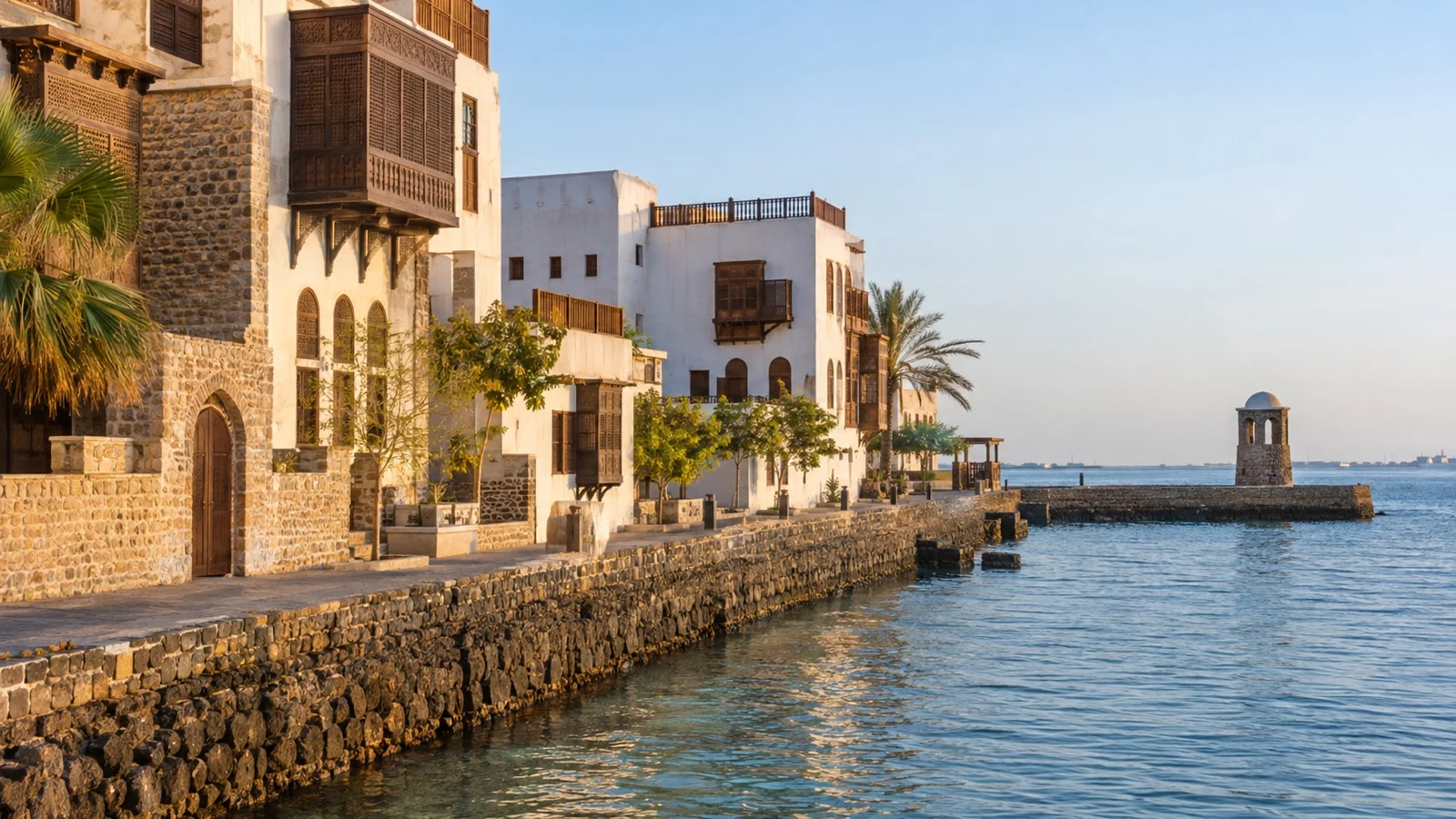
The reason to come ashore is the old quarter. The historic district known as Al Balad is a warren of coral-stone tower houses with carved wooden window screens, built by merchants who grew rich on the pilgrim trade, and it is a short drive from the port.
One hard limit matters more than any of this. Mecca is closed to non-Muslims entirely and the highway signs enforce it, so if you are not Muslim there is no version of this port day that includes it.
Yanbu: an industrial port with a restored old town behind it
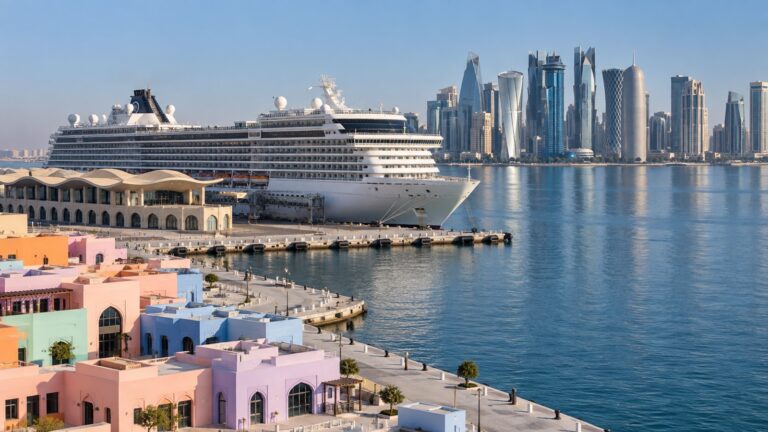
Yanbu Commercial Port is exactly what the name says, an ordinary working port that had berths and a passenger terminal added so cruise ships could call. You dock alongside, you are moved out through a gate, and the town is a short ride away.
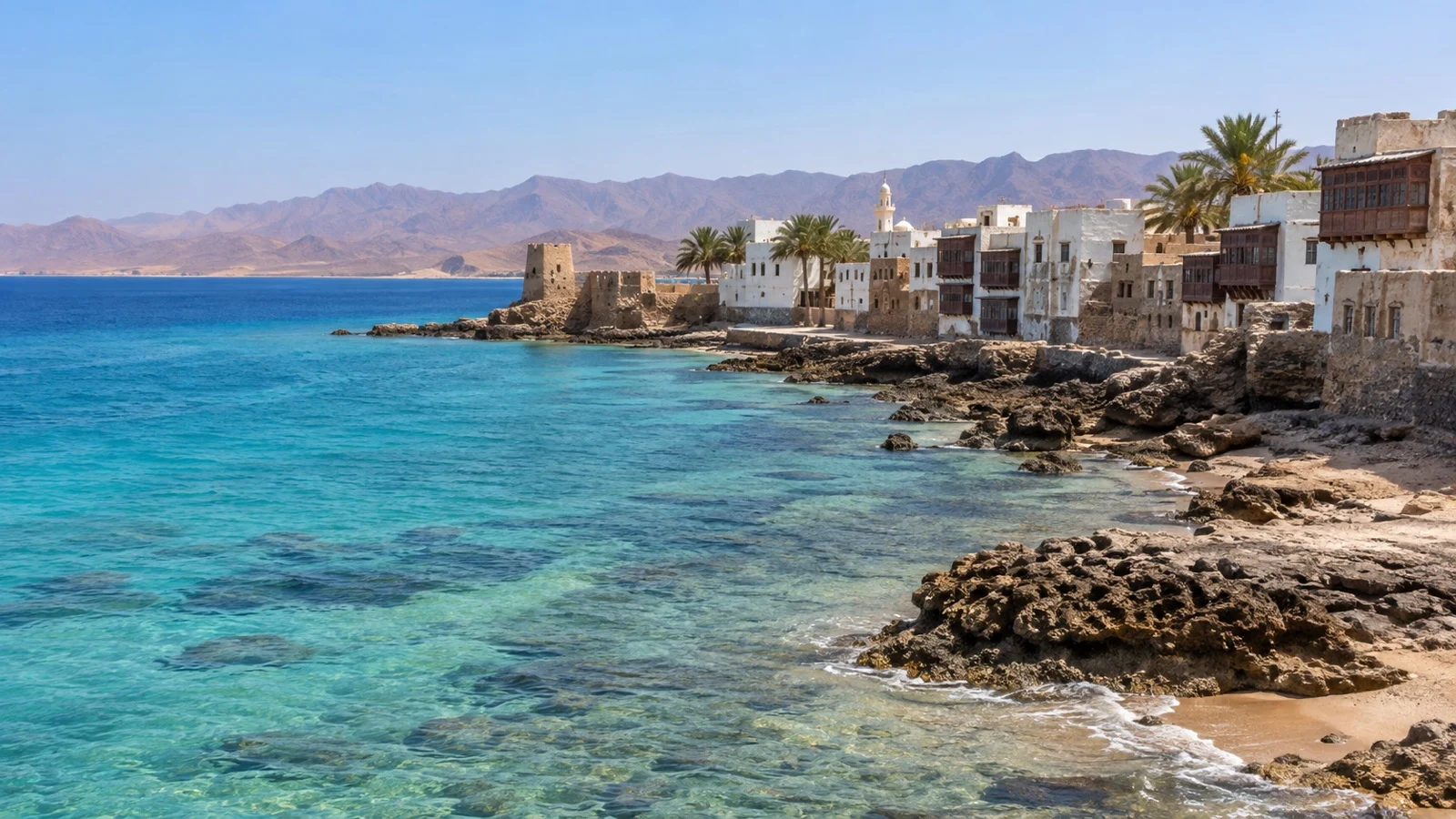
The old town of Yanbu Al Bahr is the reason to bother, a small restored quarter of coral houses and narrow lanes near the waterfront. It is a genuinely pleasant hour and it is not a full day, which is worth knowing before you buy anything expensive.
The other draw here is the water. Reef snorkeling and diving off this stretch of coast are the real local specialty, and a boat trip is a better use of a Yanbu call than another drive through another suburb.
Al Wajh: the tender call at the edge of the building site
Al Wajh has no cruise pier. Ships anchor off and run boats into the small harbor beside the old town, which puts you about five minutes on foot from the coral-stone lanes and the corniche.
That also makes it the most fragile call on the coast, because wind and swell stop tenders far more often than they stop a ship from docking. Our Al Wajh cruise port guide puts the missed-call risk in the high single digits to low teens, which is not a number to build a bucket list day around.
If tendering is new to you, read how tendering eats into your time ashore before you plan anything ambitious here. The clock starts later and ends earlier than the itinerary suggests.
AlUla and Hegra: the prize that is not a port
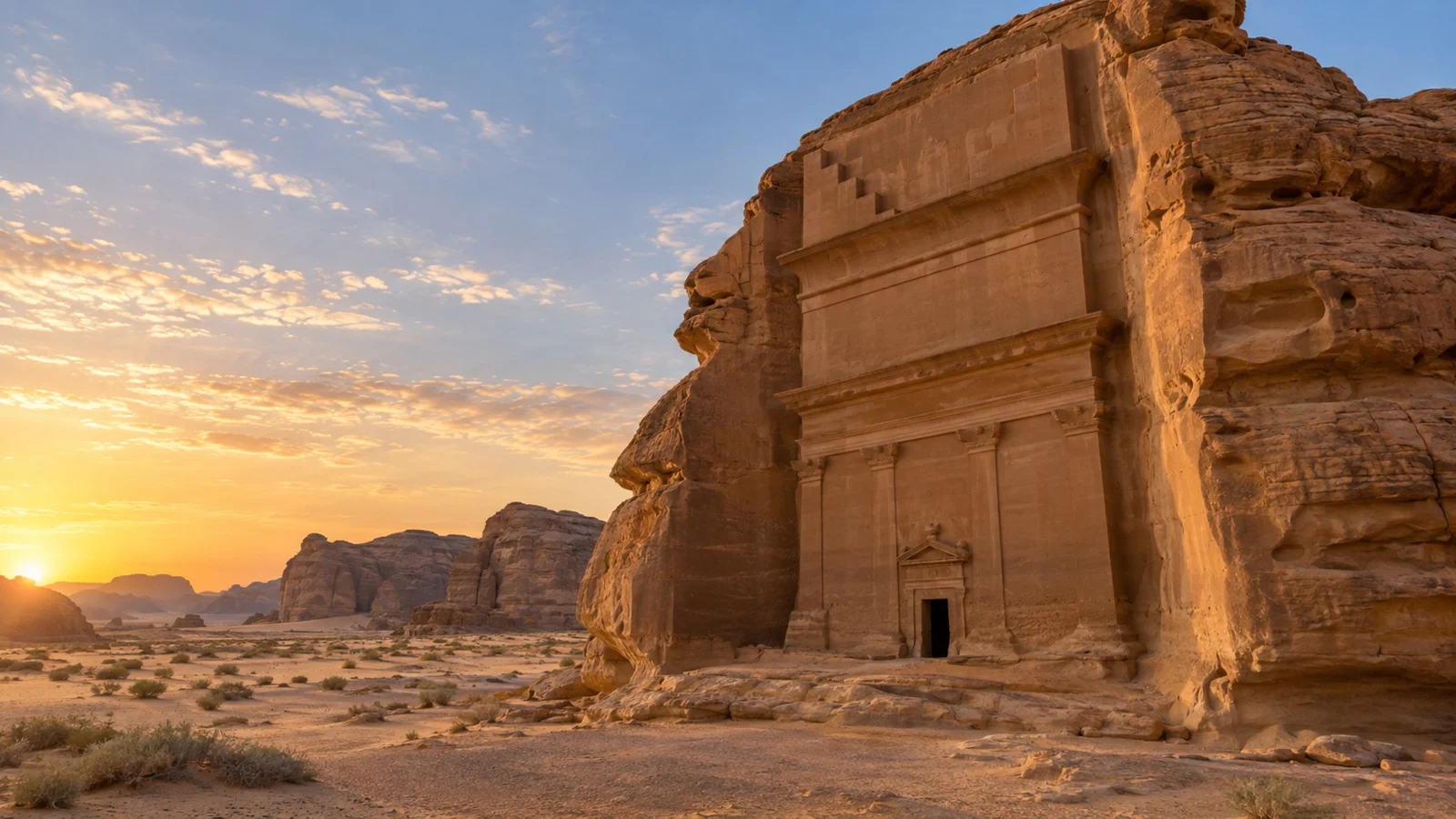
The single most extraordinary thing in Saudi Arabia is nowhere near the sea. The Nabataean tombs at Hegra number 111, with 94 of them carved and decorated, and they make up the largest surviving site of that civilization south of Petra.
Getting there from a ship is the problem. It is roughly four hours of driving each way from the coast, which means the entire port day disappears into a motorcoach and you see the tombs in the middle of it.
I would only do it as a ship excursion, and only on a long call. A private car with no guaranteed return on a route that long is the kind of gamble that ends with you watching your ship leave.
Built, building and announced: an honest scorecard
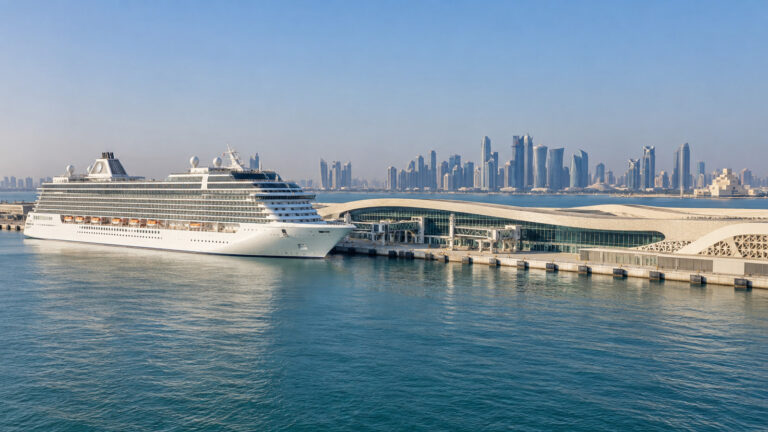
This is the part where a lot of cruise coverage goes soft, so here is the plain version. Cruise berths and passenger terminals exist at Jeddah, Yanbu and on the Gulf coast at Dammam, and they were built or refurbished quickly rather than lavishly.
A landmark terminal for Jeddah has been talked about for years and is not there. The one you will actually walk through is functional, which is fine, but it is not the building in the press images.
The giant coastal developments further north are a different story again. Large stretches of that coast are still construction sites, so treat any itinerary that names a brand new resort destination as a plan rather than a place until your line confirms the call.
Deployment is the other soft spot. Ships have come and gone from this coast season by season, so I would not book a flight around a specific Saudi call more than a year out.
The season is short and summer is not negotiable
Red Sea cruising here runs through the cooler months and then stops, with the ships repositioning away for the summer. October through April is the honest window, and the edges of it are hotter than the brochure photos suggest.
Summer on this coast combines high heat with high humidity, which is a worse combination than dry desert heat. Our piece on extreme heat in the Gulf and Red Sea explains why an 8am start is not an optional flourish here.
How the visa actually works
Saudi Arabia is not a passport-and-smile country. The tourist eVisa is issued online to citizens of around sixty-something eligible countries, it runs for a year with multiple entries, and it allows stays of up to ninety days.
Visa on arrival exists at airports for some travelers, and cruise arrivals are frequently handled as a group clearance by the ship. Neither of those is a promise, and the answer depends on your nationality and your line.
The document rules are stricter than most Mediterranean ports too, with six months of passport validity and two blank pages expected. Our guide to ports where your passport alone is not enough covers the habit of checking this at booking rather than at boarding.
Dress, alcohol and the rules that surprise people
The dress standard ashore is loose clothing that covers elbows and ankles, and it applies to men as well as women. Foreign women are not required to wear an abaya in most public settings now, and plenty still carry a light scarf for mosques and for the air conditioning.
Alcohol is illegal in the country, full stop. There is no duty free allowance to bring ashore and no bar to find, and what your ship does with its own bars while alongside is a question for the daily program rather than for me.
Photography is the rule people break by accident. Government buildings, military sites and personnel, and women in public are all off limits, so point the camera at architecture and ask before you point it at anyone.
Which Saudi call is worth an excursion
Jeddah is the one I would do independently. A taxi to the historic district and a couple of hours on foot is the whole plan, and it costs a fraction of the organized version of the same morning.
Yanbu is worth booking something for, but a boat rather than a bus. The old town is a short walk and a short visit, while getting onto the reef is the thing you cannot arrange easily from a port gate.
If your itinerary makes you choose one paid tour across the whole cruise, our notes on planning around a single paid excursion apply cleanly here. My money goes on the Petra day in Jordan before any Saudi call.
Money, language and getting around
The currency is the Saudi riyal and cards work in malls, hotels, restaurants and most established shops. Small cash is still the answer for taxis, market stalls and anything in a smaller town, which is the same pattern our guide to carrying cash and cards in port describes everywhere else.
Arabic is the language and English is common in Jeddah and thinner as you go north. Ride-hailing apps work in the big cities and I would still treat them as the backup rather than the plan at a port gate.
Prayer times close shops and restaurants briefly through the day, which surprises visitors on a tight schedule. Build slack into a Saudi port day rather than assuming a cafe will be open the minute you want lunch.
What people get wrong about booking this coast
The first mistake is buying the itinerary for Saudi Arabia when the itinerary is mostly Egypt and Jordan. Look at the port list and count the days honestly before you decide what you are paying for.
The second is treating a Gulf cruise and a Red Sea cruise as the same trip. They share a season and almost nothing else, and our comparison of the Emirates ports covers the other half of that confusion.
The third is assuming a young destination behaves like a mature one. Terminals here are functional rather than finished, signage is patchy, and the fallback plan you would improvise in Barcelona is harder to improvise at a Saudi port gate.
Quick answers
Do I need a visa for a Saudi Arabia cruise stop?
Usually yes in some form, whether that is a tourist eVisa applied for online or a group clearance arranged by your cruise line. Confirm which one applies to your nationality and your sailing well before you travel.
Where do cruise ships dock in Jeddah?
Ships tie up at a cruise terminal inside Jeddah Islamic Port, a large working commercial harbor, and the facility was converted from an existing ferry building. The historic district is a short taxi ride from the gate.
Can you visit Mecca on a cruise stop in Jeddah?
Not if you are not Muslim, and this is enforced rather than discouraged. Non-Muslims may visit Medina but cannot enter its main mosque.
Is AlUla doable on a cruise port day?
Only on a long call and only as a ship-organized coach trip, because it is roughly four hours of driving in each direction from the coast. The tombs are worth it if you accept that the day contains nothing else.
Can you drink alcohol on a Saudi cruise?
Not ashore, because alcohol is illegal in Saudi Arabia and there is no visitor exemption. Whether your ship serves it while alongside depends on the line, so check the daily program rather than assuming.
Final word
Sail this coast because you want to see Al Balad and Hegra before everyone else does, not because you want a smooth cruise product. The ports are functional, the rules are real, and the payoff is that you get remarkable places to yourself.
Book the eVisa question early, keep your expectations of the terminals modest, and spend your one big excursion on the day that cannot be replicated. That is Hegra if the call is long enough, and Petra across the water if it is not.
How this guide was researched: Port and terminal status, entry and visa rules, heritage site details and season patterns for the Saudi Red Sea coast were checked against official government, tourism and heritage listings in November 2026. Cruise deployments, terminal projects and visa eligibility on this coast change faster than almost anywhere else, so confirm the details for your own sailing before you book. See our Editorial Policy.