Cruise Ports With a Free Walking Tour
A stranger in a yellow shirt is holding a sign in a square you have never been to, and thirty people are drifting toward her. The sign says free, which is not quite true, and knowing why is the difference between a good port day and an awkward one.
My quick take
I like tip based walking tours a lot, and I think most cruisers use them wrong. They are an orientation tool rather than a substitute for a paid guide, and they work best as the first half of a long port day.
What bothers me is how many people treat the word free as if it described the guide’s income, which it does not. Santa Marta was where I first understood how much work that one word does at a cruise gate.
The quick facts
- What it costs: Nothing up front, and a real tip in cash at the end.
- How the guide is paid: Your tip is the whole paycheck, and the operator usually takes a cut per head.
- Typical length: Two to three hours on foot, ending somewhere other than where it started.
- The real risk: Timing, not money, since the walk back is never in the advertised duration.
- Where they shine: Compact old towns with an alongside berth close to the center.
What free actually means here
The tour is free to join. The guide is not free, and nobody is paying them a salary to stand in that square.
Under the common version of this model the guide works as a contractor and hands the operator a fee for every person who turns up, or buys the time slot outright. A guide can finish a three hour walk in the red if the group was small or the tips were thin.
That also makes a no-show something other than a neutral act. You reserved a place the guide counted on, and in many setups they have already paid for the seat you left empty.
What a fair tip actually looks like
Here is the plain version. Work out what a comparable paid walking tour in that city would cost, and pay a serious share of it.
In most of western and central Europe that lands somewhere around 10 to 20 dollars a person for a two to three hour walk, and I would go higher for an excellent guide or a small group. Where local wages and prices are much lower the number drops with them, but the principle does not change.
Bring small bills in the local currency, because most guides cannot take a card and a 50 euro note is not a tip you can break in a square. My guide to carrying cash and cards in port covers why the denominations matter more than the total.
If you cannot tip properly, pick a different plan. A self guided walk with a downloaded map costs nobody anything.
What you get, and what you give up
A good tip based walk gives you orientation, a rough timeline of the city, a few stories you will repeat, and a local who tells you where to eat. That is a lot for a morning.
What it does not give you is interiors. These walks stay on the street, because admissions cost money and in several countries only a licensed guide may lead a group inside a monument or museum.
You also give up flexibility, since a private guide will reroute around your knee, your lunch plan and your all aboard time and a group of thirty will not. If that trade matters on your itinerary, my breakdown of ship excursion, local tour or DIY is the better place to start.
Finding a real one before you sail
Do this at home, on real internet, weeks ahead. The pier is the worst possible place to research anything.
- A named start time: An actual clock time, not “daily”, and ideally more than one a day.
- A mapped meeting point: A statue, a fountain or a specific corner, with a photo of the spot.
- A named end point: The listing should say where you finish, not only where you start.
- Recent reviews: Guides rotate constantly, so a five year old review tells you nothing.
- A group cap: An operator who caps at 15 or 20 is telling you how they run.
Then screenshot the confirmation, the meeting point and the guide’s phone number, and download the offline map before you leave home wifi.
The meeting point problem when you have no data
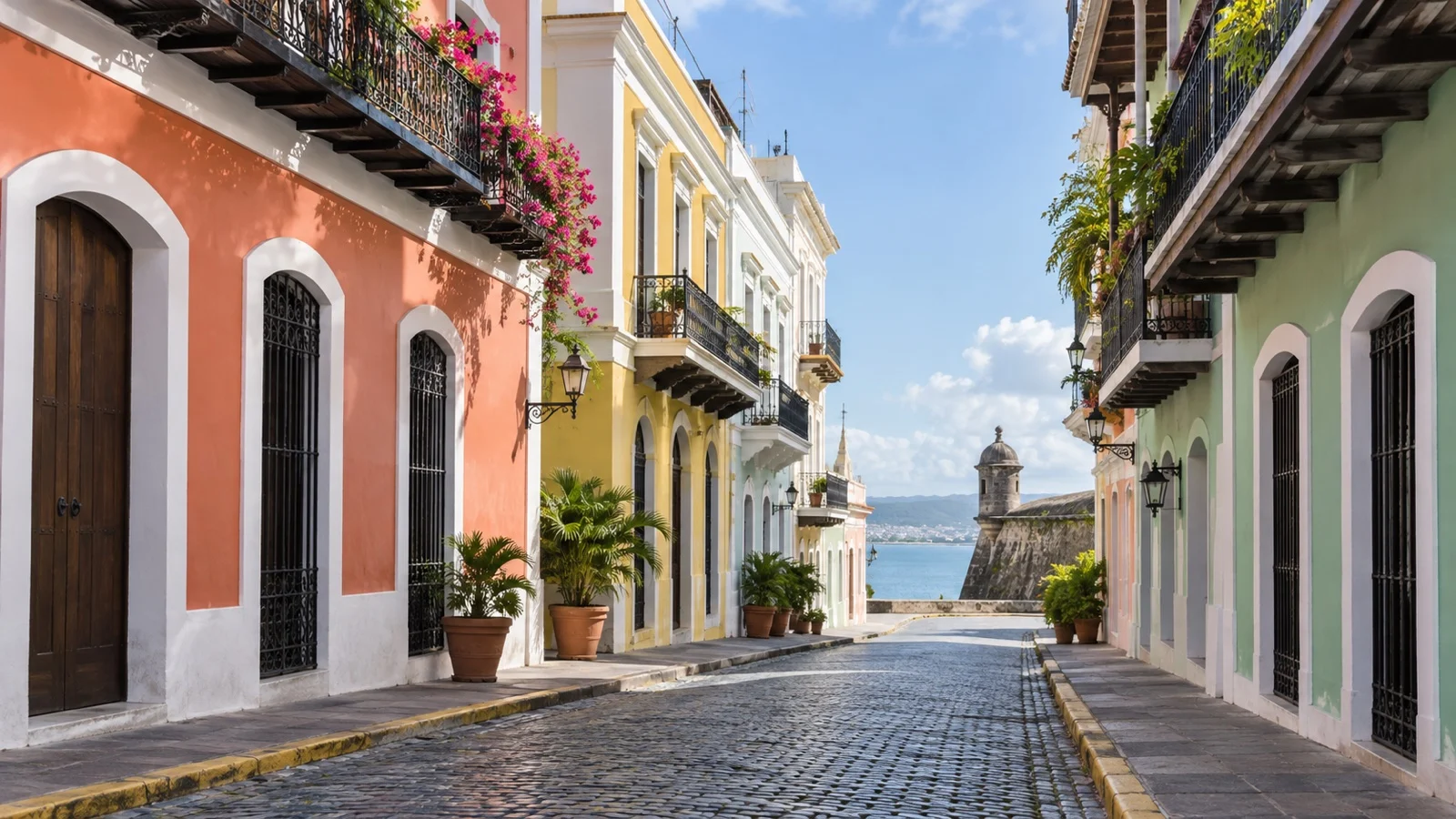
This is where cruisers lose these tours, and it is rarely the tour’s fault. You book by email, the guide messages the group that morning to say they moved across the square, and you never receive it.
Ship wifi is slow and expensive, and not everyone buys roaming for one port. Assume you will step off the gangway with a screenshot and nothing else.
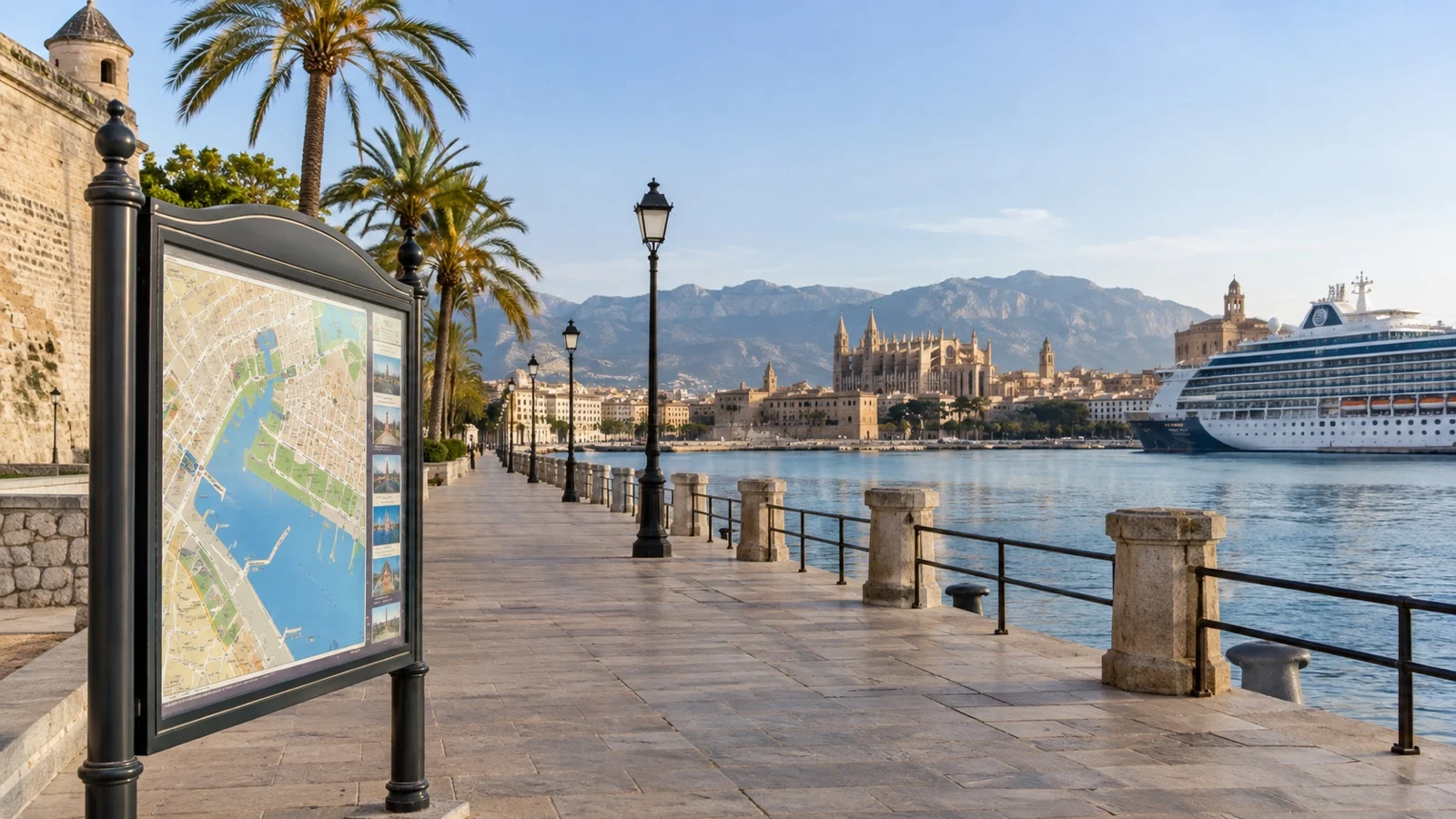
My workaround is dull and it works. I check messages once on ship wifi before walking off, I arrive 15 minutes early, and I only book tours whose meeting point I could find without a phone.
The timing math against your all aboard
A two hour tour is not a two hour commitment. It is the walk from the gangway to the meeting point, plus a buffer, plus two to three hours on foot, plus the trip back from wherever it leaves you.
An 8am arrival with a 5pm all aboard swallows a 10am tour easily. A 10am arrival with a 3pm all aboard does not, and no amount of optimism fixes that.
My rule is that the walk has to end at least 90 minutes before all aboard, with that 90 minutes being comfortably more than the return leg needs. If the math only works when nothing goes wrong, the math does not work.
That return leg is the part people forget, because these walks usually finish at a viewpoint or a market rather than looping back to the start. In a hill town the end point can be a mile uphill from your ship with no taxi rank in sight, so check it on a map and know the bus number before you commit.
These are independent tours, so the ship will not wait for you. That is the trade you accept for not paying excursion prices.
Group size and the back of the pack
On a cruise day in a popular port these groups get big. Forty people around one guide with no headsets means the back third hears traffic.
Two fixes, both easy. Take the earliest departure, which is usually the smallest, and walk near the front like it is your job.
If a big group is a genuine dealbreaker, pay for a small group tour instead of hoping. Spending one splurge well is the whole point of planning around a single paid excursion.
The ports where these walks genuinely shine
The pattern is simple. You want an alongside berth, a compact historic center within a short walk, a long call, and enough visitors to support real competition between guides.
- Lisbon: You walk off at a river quay straight up into Alfama, and the guide scene in Lisbon is deep and competitive.
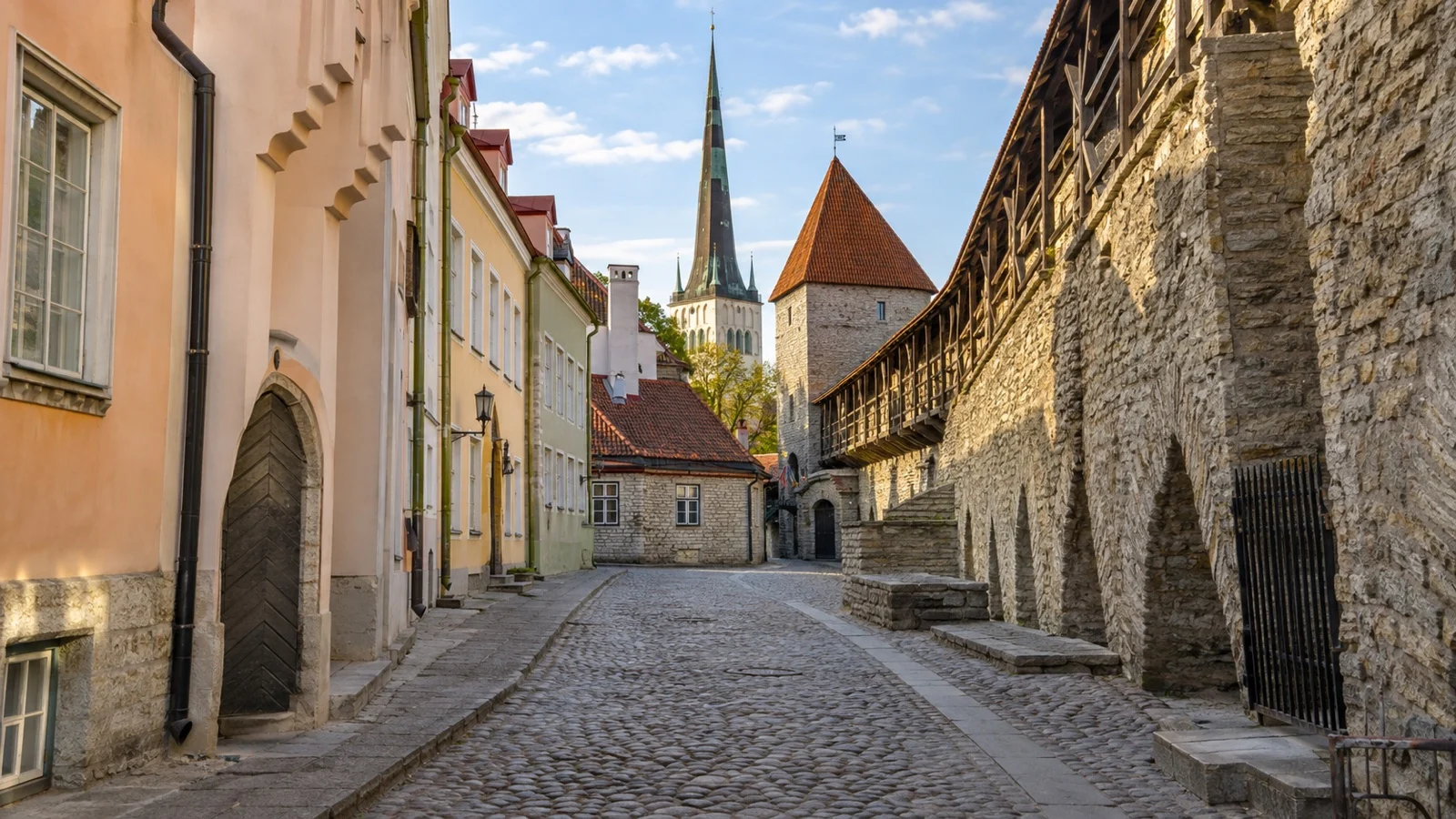
- Tallinn: The Old Town is 0.7 miles (1.2 km) from the quays on a signed 15 to 20 minute walk, and Tallinn is small enough that two hours covers it.
- Split: Ships tie up in the city harbor and Diocletian’s Palace is a flat 5 to 10 minute walk along the Riva, so Split has no transfer risk.
- Riga: Roughly a mile from the central passenger port into the old streets, and Riga rewards a guide who can explain the Art Nouveau district.
- Istanbul: Galataport is a walk-off berth with the Galata Tower right above it, and in Istanbul a local explaining the layout is worth real money.
- Montevideo: The terminal sits at the edge of Ciudad Vieja, and Montevideo is flat, compact and low stress on foot.
- Valletta: You climb from the waterfront by public elevator or stepped lanes, but Valletta itself is a grid you cross in an hour.
My roundup of the most walkable cruise ports is a decent filter for which days deserve a tour at all.
The ports where I would skip it
Tender ports are the obvious no. You do not control when you get ashore, and a fixed 10am start is not compatible with a tender line.
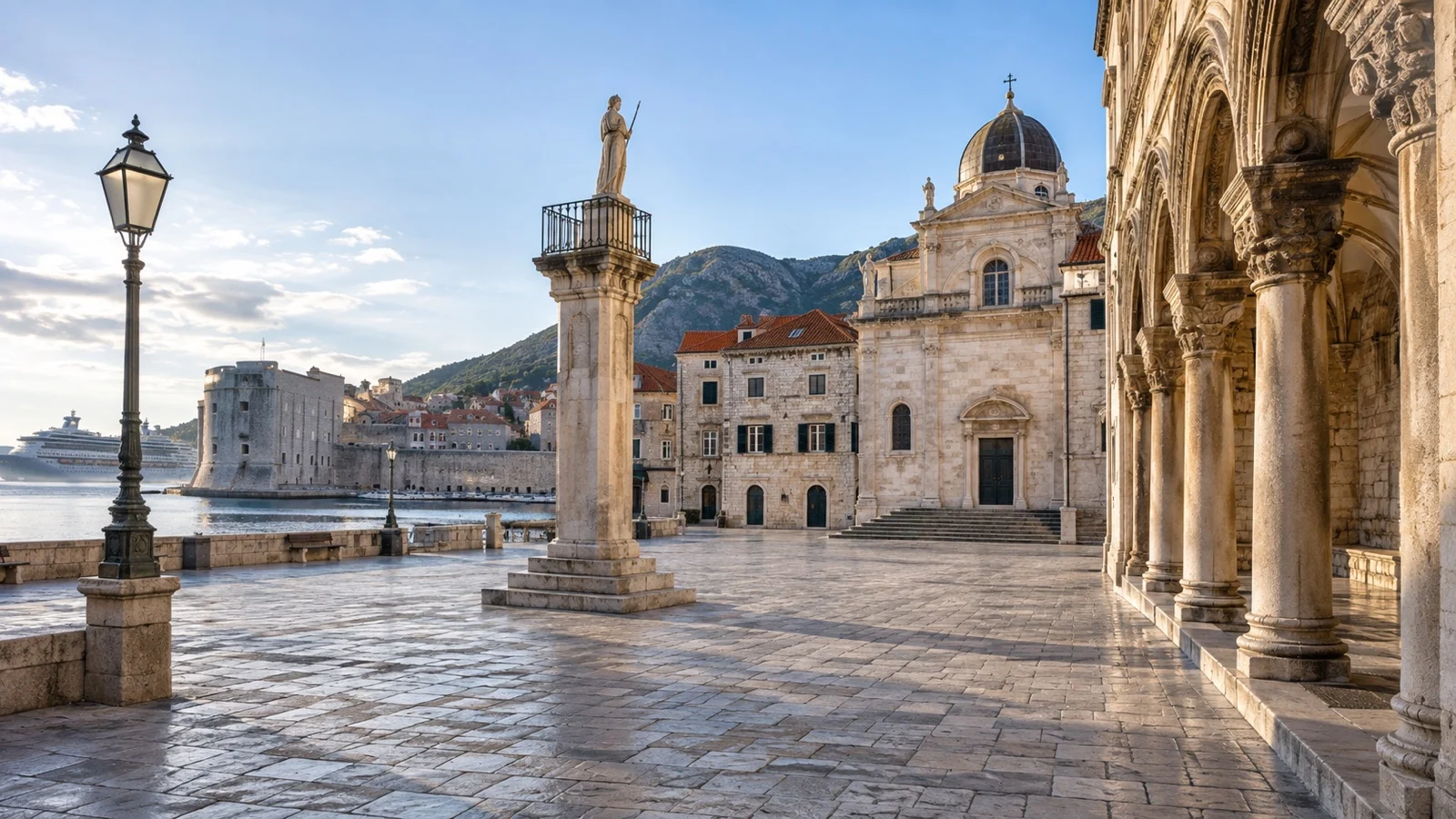
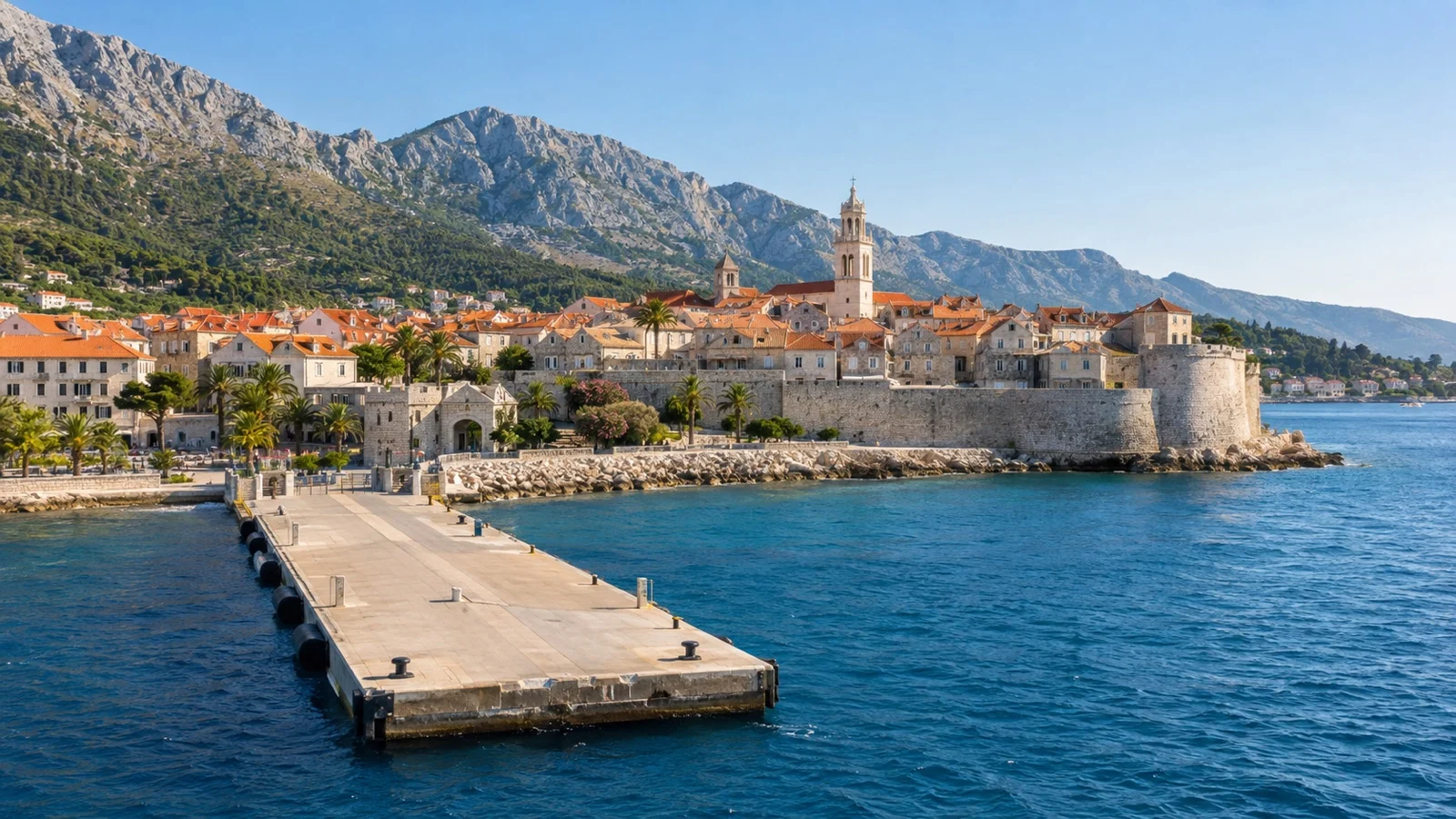
Ports with a real transfer are the second no. In Dubrovnik you berth at Gruz about 2 miles (3 km) from the walled town, and adding a bus at each end to a three hour walk turns a relaxed morning into a schedule.
Short calls are the third, and under about seven hours ashore I would rather see two things properly than give three hours to somebody else’s route. My guide to Mediterranean ports you can explore independently sorts out which days have the slack.
The tours that really are free
A separate category exists, and it confuses people because it uses the same word. These are run by governments, parks and volunteers, and there is no tip at the end.
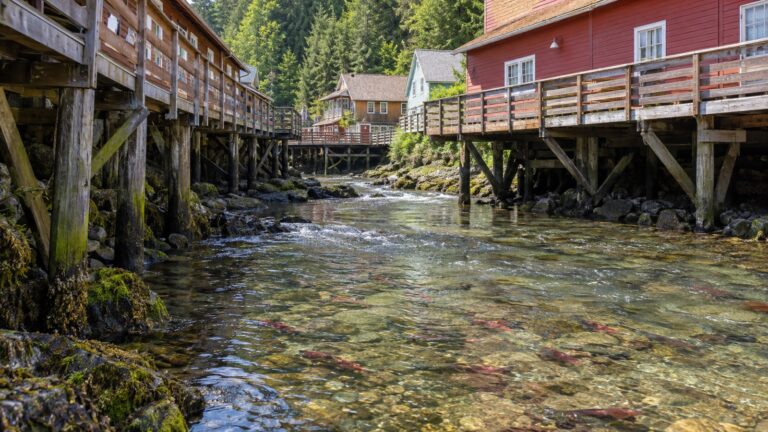
In Alaska, the ranger led walks through the Skagway historic district run daily from early May to late September, cover about four blocks, and are ticketed free at the visitor center on a first come basis with 30 places per tour. Sitka has its own free ranger programs through the summer, and they are free in the ordinary sense of the word.
Then there is the volunteer greeter model, where a local walks you around their own city and will not accept a tip. Groups are capped at about six people and walks run two to three hours, which is a very different morning from a group of forty.
The catch is lead time. Greeter walks and city run programs, like the one pairing visitors with an Athenian who shows you their neighborhood, want booking weeks out and cannot absorb an itinerary change.
The sales pitch wearing a tour badge
The third category is not a tour at all. It is a transaction with a walking segment attached.
You meet it at Caribbean and Mexican gates as a free island drive that ends at a vacation club presentation, and in some Asian ports as a free car tour that visits three gem and tailoring shops. The tell never changes, which is that a stranger is offering you transport and hours of their time without asking for anything.
The onboard version is politer and still not a tour. A shopping talk handing you a free map with certain stores circled is a paid placement, not a recommendation.
None of this is dangerous. It is just an hour of your port day sold to you as a gift.
How I would run the day
Book the earliest walk that starts at least an hour after the ship clears. Carry small local bills, a screenshot of the meeting point, and a downloaded map.
Treat the tour as the first half of the day rather than the whole thing. You finish around lunchtime with a mental map of the city, then spend the afternoon going back to the two things the guide made you want to see properly.
Tip before the goodbye scrum starts, look the guide in the eye, and go.
Quick answers
Are free walking tours actually free?
No, they are tip based, and what the group hands over at the end is the guide’s entire income. Free means no fixed price and no prepayment, not no cost.
How much should you tip a free walking tour guide?
Aim for a solid share of what a paid tour would have cost, which across most of Europe is around 10 to 20 dollars a person for two to three hours. Pay less where local prices are much lower, and more when the guide was good.
Can you book a free walking tour from a cruise ship?
Yes, but book at home before you sail, because you need the confirmation, the map and the meeting point saved offline. Ship wifi is not a research tool.
Will the ship wait if a free walking tour runs late?
No, independent tours carry no protection, so getting back on time is entirely your problem. Leave at least 90 minutes between the scheduled end and all aboard.
What happens if you do not tip?
Nobody will chase you and the guide will still smile. They will also have paid the operator for your place, so a zero tip means they worked for nothing and covered your spot themselves.
Final word
The tip based walking tour is one of the better deals in travel, and it only stays that way if people pay for it honestly. A guide who works three hours for a handful of coins is not giving you a bargain, they are subsidizing your morning.
Book one in a compact port with a long call, arrive early, carry small bills, and know how you are getting back before you set off. Do that and it is the best value orientation in a cruise port, and I would take it over a bus excursion in most walkable cities.
How this guide was researched: Berth locations, walking distances, and the seasons and ticketing of the publicly run ranger and volunteer walks named here were checked in November 2026. Tour operators, start times, meeting points and group caps change constantly, so confirm the details for your own sailing before you book. See our Editorial Policy.
More on this topic: browse every guide on shore excursions and DIY port days.