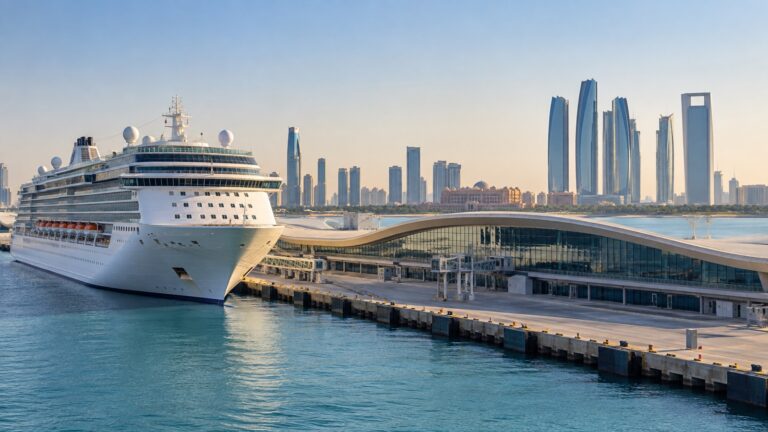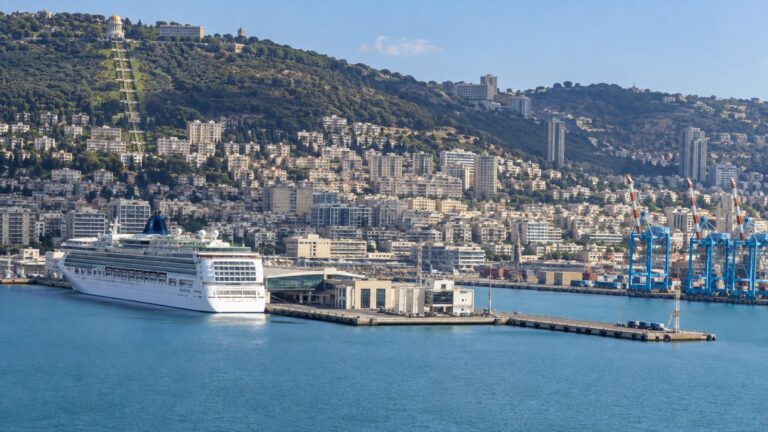
Oman Cruise Ports: Muscat, Salalah and Khasab Compared
Oman gives you three completely different port days that happen to share a country. One is a walk-off old harbor, one is a container terminal with frankincense country behind it, and one is a fjord town at the tip of the Arabian Peninsula.
My quick take
Oman is the stop I would look forward to most on a Gulf itinerary, and I say that as someone who finds a lot of that circuit interchangeable. Muscat puts you on a real corniche without a shuttle, which almost nowhere else in the region manages.
The mistake I would avoid is treating all three ports the same way. Muscat rewards walking, Salalah punishes it, and Khasab is a boat day that you should book before you sail rather than negotiate at the pier.
The quick facts
- The three ports: Muscat in the north, Salalah in the far south, and Khasab on the Musandam peninsula.
- Dock or tender: Muscat and Salalah are alongside, and Khasab depends on whether your ship fits the long berth.
- Money: The Omani rial, worth roughly 2.6 US dollars, which makes mental arithmetic a genuine hazard.
- Season: Roughly November through March, because summer here runs past 100 degrees (38 C).
- Dress: Shoulders and knees covered in public for everyone, with stricter rules inside the Grand Mosque.
What an Oman itinerary actually looks like
Oman turns up on three different kinds of sailing. Muscat and Khasab sit on Arabian Gulf winter loops out of Dubai or Abu Dhabi, Salalah sits on repositioning runs between the Mediterranean and Asia, and all three can appear on a world cruise segment.
The season is the cool half of the year. Ships work this coast roughly from November into March or April, and by May the heat has ended the conversation for anyone who wants to stand outside.
Geography matters more here than in most countries. Muscat and Salalah are about 600 miles apart on the same coast, and Khasab is on an exclave that you cannot reach overland without driving through the Emirates.
Muscat, where the ship parks next to the good part
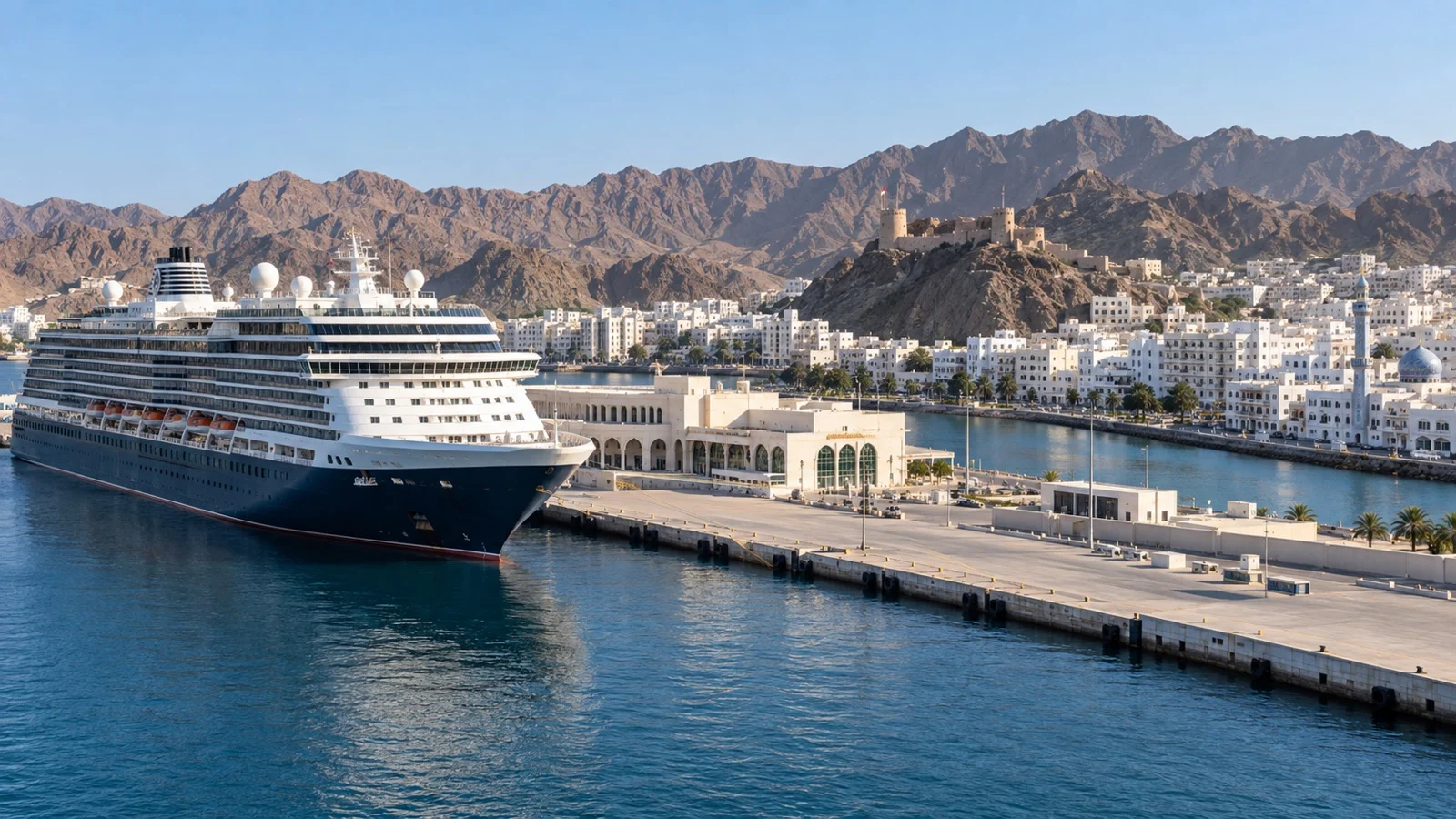
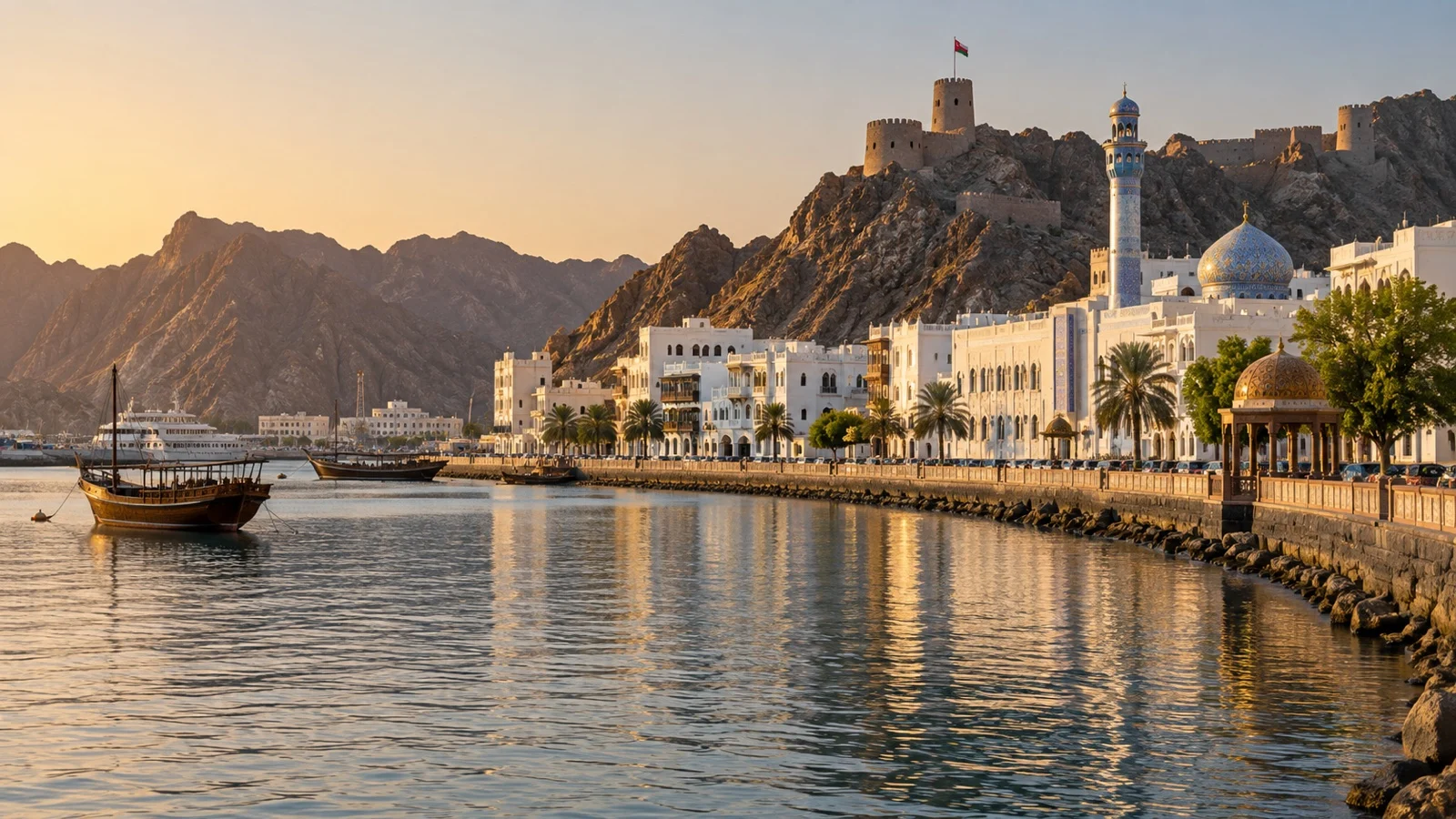
Ships tie up at Port Sultan Qaboos in Muttrah, on the north side of the city, and there is no tendering. It is a working commercial harbor as well as a cruise berth, so the walk from the gangway crosses an operational quay and some ships are shuttled to the gate instead.
Through the gate you are on the Muttrah Corniche. The souq entrance and the fort are on the same waterfront, which makes this one of the very few ports in the region where the good stuff is a walk rather than a bus ride.
The souq is a covered maze of alleys selling frankincense, silver, textiles and spices, and its only real trap is the clock. Many stalls open late morning, shut through the hot middle of the day and reopen late afternoon, so a ship sailing at 5pm can easily catch the wrong half of that cycle.
The one attraction with a hard window is the Sultan Qaboos Grand Mosque, which admits non-Muslim visitors from 8am to 11am Saturday through Thursday and not at all on Friday. If your ship berths after about 9am, I would let it go and give the time to Old Muscat and the National Museum instead, and our full Muscat cruise port guide works through how to sequence the two ends of a long, thin city.
Salalah, a cargo berth with frankincense country behind it
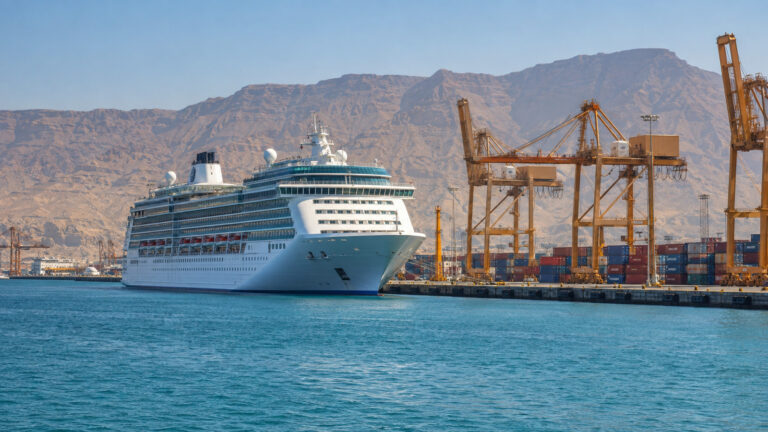
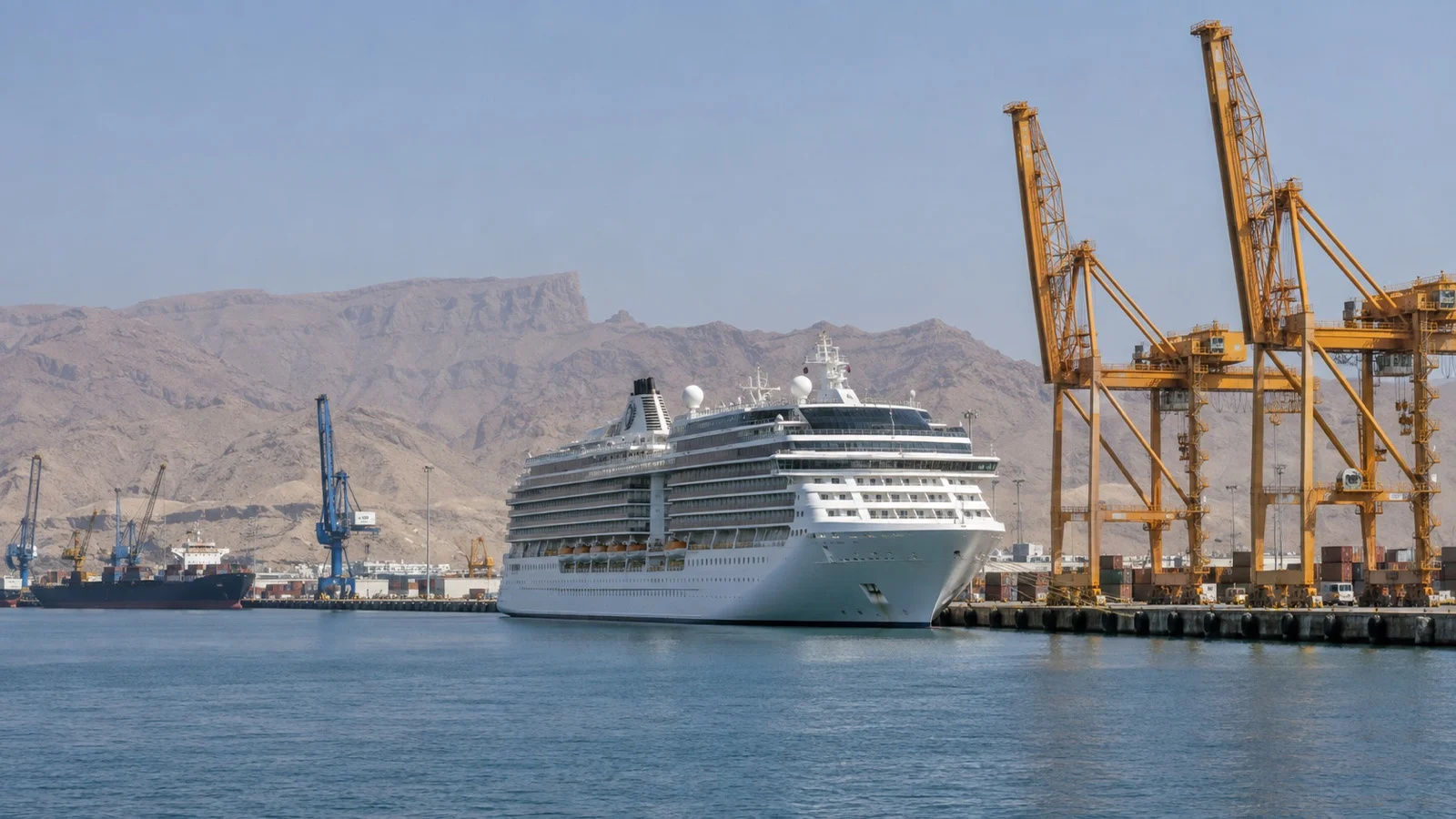
Salalah is the opposite arrival. Your ship berths inside the Port of Salalah at Raysut, one of the larger container transshipment ports in the Indian Ocean, worked on the general cargo side with gantry cranes for scenery.
There is no terminal building, no arrivals hall and no walking out of the gate. A shuttle runs from the ship to the gate area where taxis and tour vehicles wait, and the quay is long, so wear shoes you are happy crossing hot concrete in.
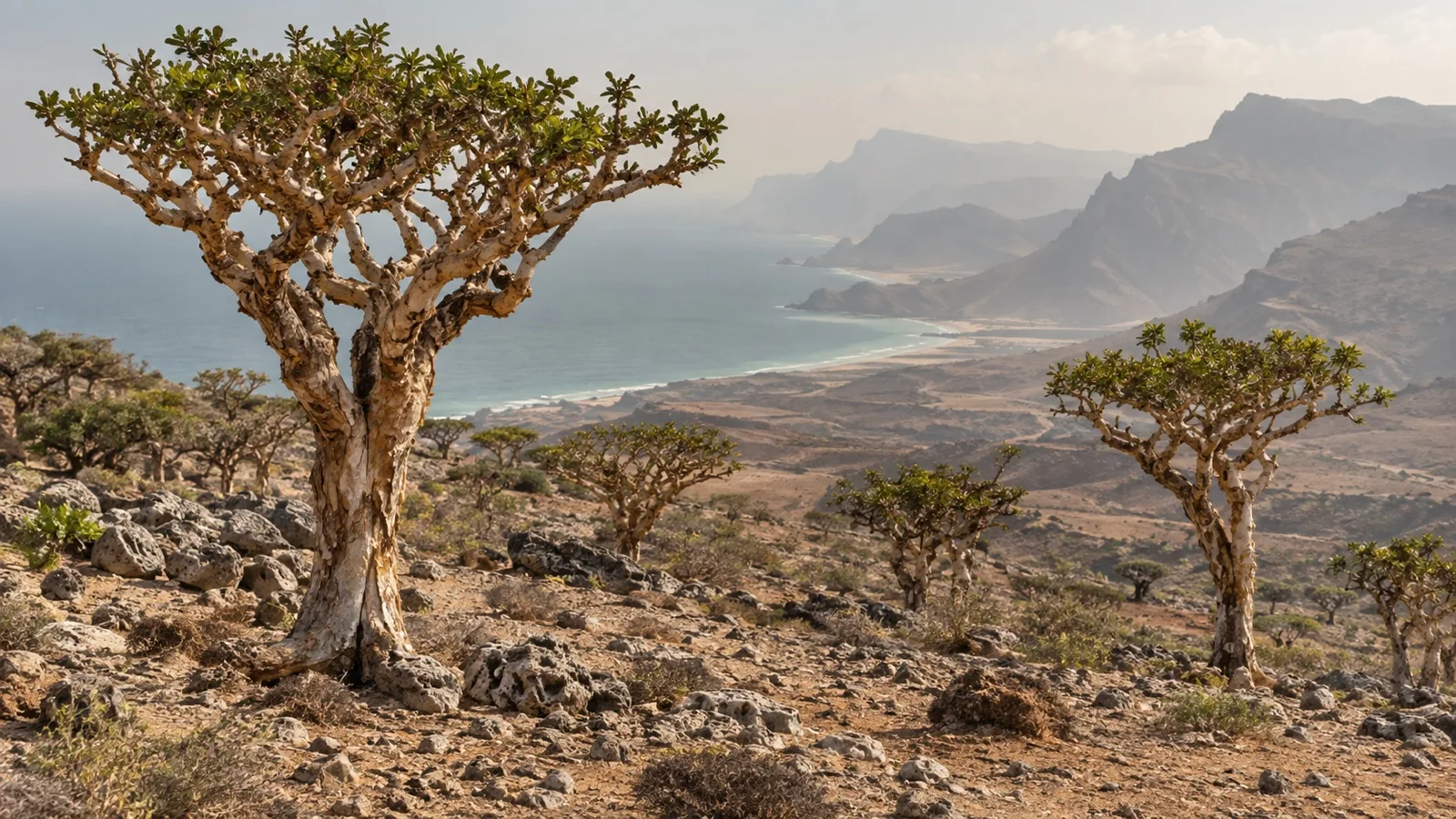
What that berth buys you is Dhofar, and Dhofar is the surprise of the Arabian Sea. Al Baleed is a ruined harbor on the eastern edge of the city that traded with Rome, and it sits on the same ticket as the frankincense museum.
Two of the four components of the Land of Frankincense World Heritage listing are within an easy drive, since Khor Rori sits about 25 miles (40 km) east of the city. Book a car and driver for four or five hours, agree the stops before you get in, and our Salalah cruise port guide lays out which combinations actually fit a port call.
Khasab, fjords and a berth that decides your morning
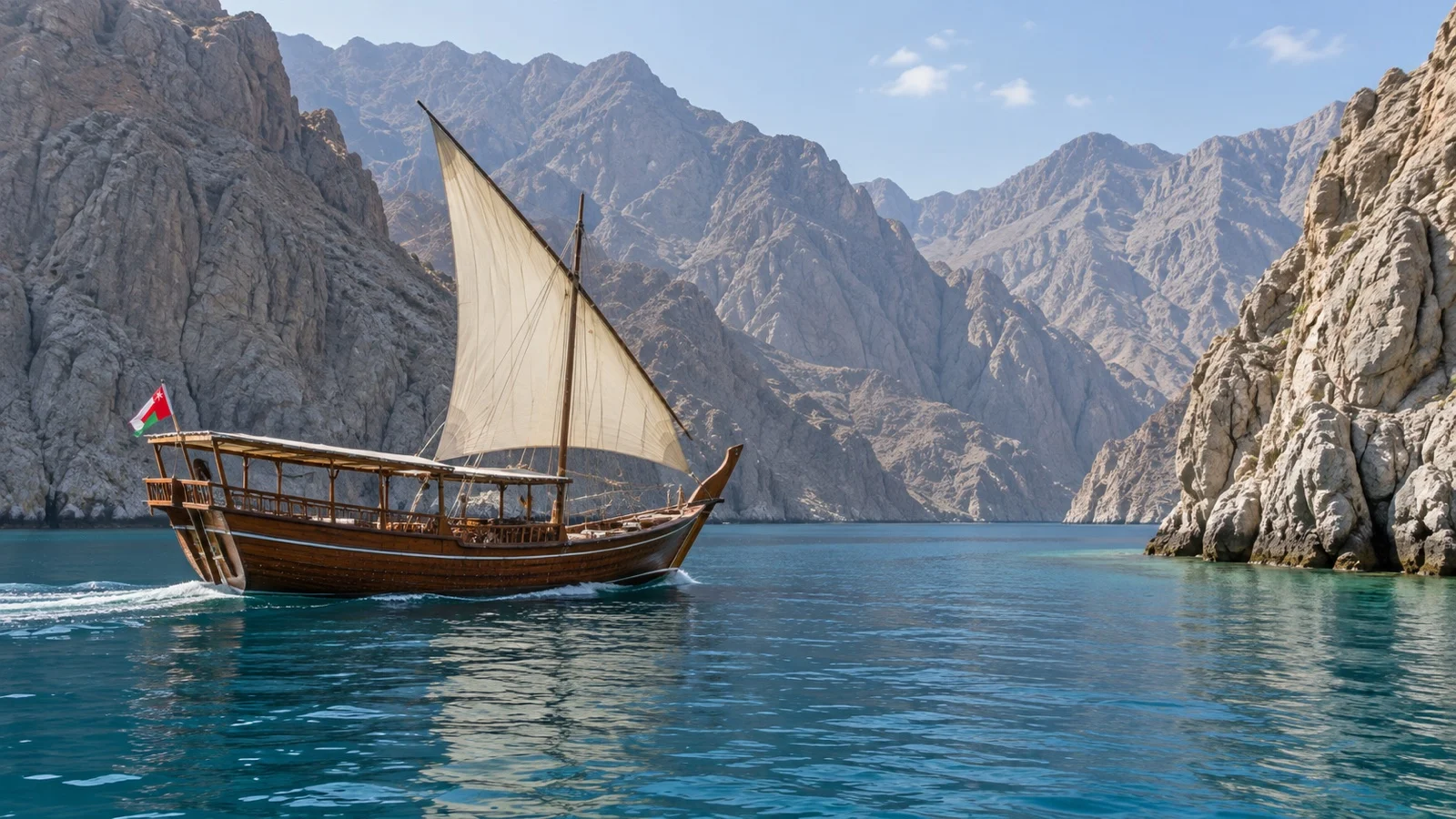
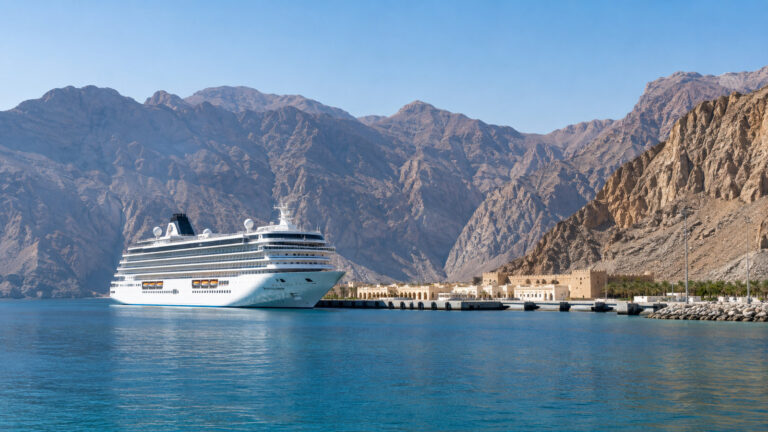
Khasab sits on Musandam, an exclave at the tip of the Arabian Peninsula separated from the rest of Oman by Emirati territory. It is a town of fewer than 20,000 people wrapped in mountains that drop straight into the water.
The port has three berths, and the longest runs about 985 feet (300 m). Small and midsize ships tie up and you walk off, and anything longer anchors in the bay and runs tenders.
Tendering here is usually calm, because the bay is sheltered by mountains on three sides. It still costs you time at both ends of a call that may only run eight or nine hours, so check your ship’s length against that berth before you plan anything tight.
The reason the ship stops is Khor Sham, the long inlet northwest of town, reached by traditional wooden dhow in about half an hour. The standard trip is a slow loop past cliff villages with no road access, a swimming stop and a hunt for humpback dolphins, and our Khasab cruise port guide covers the half day versus full day choice.
The town itself takes about ninety minutes to exhaust, fort and souq included. Khasab Fort is a square early seventeenth century structure with four corner towers and a small museum of Musandam life, open daily from 8am to 6pm, and it is a 45 minute visit rather than a morning.
The three compared, and which one I would pick
These ports are not interchangeable and they are not competing for the same traveler. Here is the honest split.
- Muscat: The only one you can do properly on foot, and the only one with a museum, a mosque and an opera house in the same day.
- Salalah: The best ancient sites and the worst arrival, so budget for a driver and you get the better day.
- Khasab: The best scenery by a distance, delivered entirely by boat, with a town thrown in as a footnote.
- Easiest with limited mobility: Muscat, since the quay is flat and the major sights are level, though the souq alleys are not.
- Most likely to vanish: Salalah, which carries the highest miss rate of the three.
If I could only keep one, it would be Khasab. Nowhere else on a Gulf itinerary puts you on green water between bare cliffs, and no amount of museum quality makes up for that view.
If I had to be back aboard without stress, it would be Muscat instead. It is the one port here where a plan falling apart still leaves you somewhere pleasant to walk.
The dress code, and why it is not a suggestion
Oman is relaxed by regional standards and firm about this one. Shoulders and knees covered in public applies to everyone, and it applies on the corniche and in the souq, not just at religious sites.
Official guidance puts it plainly: cover the tops of your arms and your legs below the knee, keep underwear out of sight, and keep swimwear to the beach or the pool. Tight clothing draws attention you do not want, and the same guidance on local laws covers photography and public behavior too.
At the Sultan Qaboos Grand Mosque the rule tightens further, to long sleeves, long pants or a long skirt, and a headscarf for women. Wraps are available at the entrance, but showing up hoping for one inside a three hour visiting window is a bad plan.
Two more small ones worth knowing. Do not photograph people without asking, and do not photograph government or military sites, which includes the fast boats working the harbor at Khasab.
If your call lands during Ramadan
Ramadan moves about eleven days earlier every year, so it drifts through the Gulf cruise season rather than sitting outside it. Check the dates against your sailing, because it changes the shape of a port day more than the weather does.
The rule that matters to a visitor is simple. Do not eat, drink, smoke or chew gum in public during daylight hours, and that includes a water bottle on the corniche in the middle of the afternoon.
Loud music, dancing and swearing in public are also out. None of this is difficult, and the practical version is to eat aboard, carry water discreetly and drink it out of sight.
Expect shorter opening hours everywhere, especially in the souqs and at government-run sites, and expect the city to come alive after sunset rather than at midday. If your ship is in port late, a Ramadan evening ashore is genuinely worth staying up for.
Money, taxis and agreeing the fare before the door shuts
The Omani rial is one of the strongest currencies you will ever hand over, at roughly 2.6 US dollars each. That means a fare quoted as five is not five dollars, and it catches people out on the first ride of the day.
Omani taxis are traditionally unmetered, so the fare is whatever you agree before the door closes. Agree the route, the stops, the waiting time and the total in rials, then repeat it back, and see our notes on carrying cash and cards ashore for why small denominations matter here.
Ride-hailing apps operate in Muscat and remove the haggling entirely, which is worth the setup time before you sail. They are not a reliable fallback at Salalah or Khasab, so do not plan a day that depends on summoning a car at the gate.
Heat, season and the khareef
Muscat in January averages highs near 77 degrees (25 C), and in June near 104 degrees (40 C). December through March is the comfortable window, with days in the mid to high 70s (24 to 26 C) and nights near 63 degrees (17 C).
By April typical daytime highs are already around 94 degrees (34 C). Rain is barely a factor at any point, and coastal humidity is the thing that actually makes an afternoon on the corniche hard work.
Salalah runs a little gentler in winter, near 80 degrees (27 C) by day and 67 degrees (19 C) at night. It also has its own weather system, the khareef, an Indian Ocean monsoon that wraps Dhofar in mist and drizzle from roughly June to September and turns the mountains green.
That is the reason Gulf families fly to Salalah in August while the cruise ships are somewhere else entirely. It also means the Wadi Darbat waterfall you saw in a photograph is a dry ravine for most of the cruise season, and our guide to extreme heat in the Gulf and Red Sea is the right read if your sailing runs into the shoulder months.
Where an excursion earns its price here
My answer is different at each of the three, which is unusual for one country. In Muscat I would skip the ship tour entirely and take a half day car with a driver, because the sights are strung out and three separate taxi negotiations is a worse day than one arrangement.
In Salalah the calculation shifts. The port is remote, the road out is a truck road, and the ship excursion costs more and removes the risk, which on a call this isolated is a defensible trade rather than a lazy one.
In Khasab it depends entirely on the tender. If you are tendering and your ship is the last one out of the bay, pay the premium for the ship’s dhow trip and let it own the return, and if you are alongside, the independent boat does the same route for less.
Our piece on choosing between a ship excursion, a local tour or a do it yourself day applies at Khasab more than at most ports, because the price gap is wide and the tender risk is real.
One rule holds everywhere in Oman. Do not book an independent trip that runs more than about two hours from the pier, because an independent operator does not owe you a ship that waits.
Advisories, tenders and calls that move
Two practical layers sit under any Gulf sailing. The first is the advisory picture, and Oman currently sits under a reconsider travel advisory with a higher level for the Yemen border area, which is a long way from any of these three ports but worth reading yourself.
The second is deployment. Several lines reshuffled their Arabian Gulf and Arabian Sea programs during 2026, so confirm that your Oman call is on the current version of your itinerary rather than the brochure you booked from.
The last layer only applies at Khasab, and it is the sea. Tender calls get canceled for reasons that have nothing to do with the region, which is what our explainer on rough seas delaying or canceling tendering is about.
How Oman fits the rest of the circuit
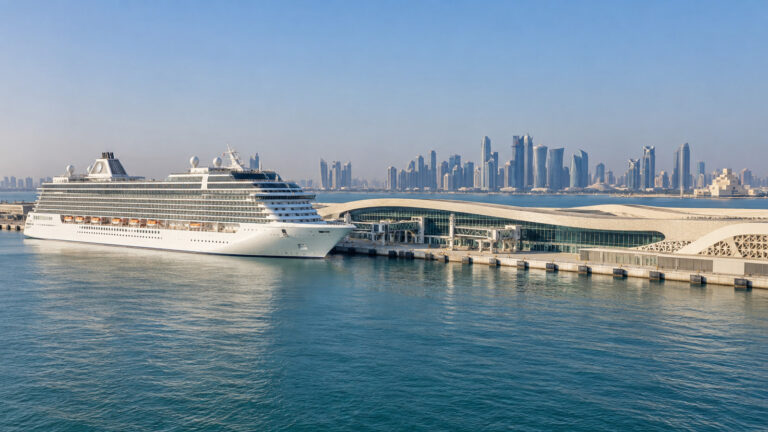
Most Gulf itineraries start and end in the Emirates, so Muscat and Khasab usually sit between Dubai, Abu Dhabi and sometimes Doha. Our United Arab Emirates cruise ports guide covers the turnaround ports that feed this loop.
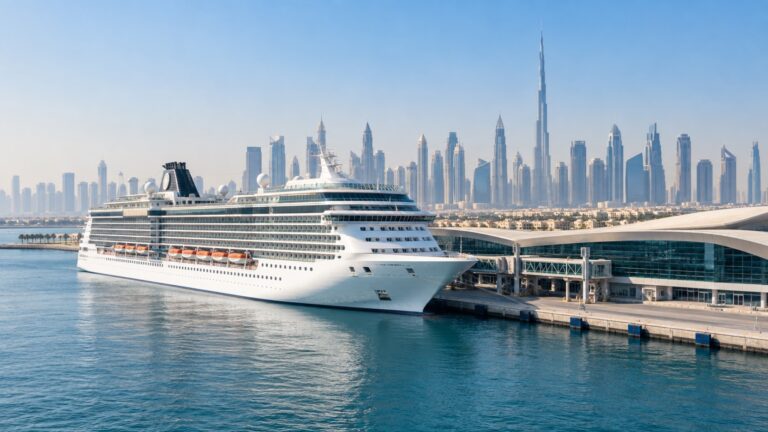
The contrast is the whole reason Oman is worth having on the itinerary. After two days of malls, skylines and air conditioned transfers, a corniche you can walk out onto reads as a completely different kind of vacation, and the Dubai cruise port guide shows exactly what you are contrasting it against.
Salalah belongs to a different route. It usually appears on a long repositioning run, often with a canal transit somewhere in it, and our Suez Canal transit guide covers what that day is actually like.
Quick answers
Can you walk into town from the Muscat cruise port?
Yes. Port Sultan Qaboos opens onto the Muttrah Corniche with the souq and the fort on the same waterfront, though whether you walk or are shuttled across the secured section depends on the ship and the day.
Can you walk out of the Salalah cruise port?
No. Ships berth inside a working container and cargo port at Raysut, and a shuttle takes you to the gate area where taxis, drivers and tour vehicles wait.
Does Khasab use tenders?
Sometimes. The longest berth runs about 985 feet (300 m), so small and midsize ships tie up alongside while longer ships anchor in the bay and run tenders.
What should I wear ashore in Oman?
Shoulders and knees covered in public, for everyone, with swimwear kept to the beach or the pool. Inside the Grand Mosque you need long sleeves, long pants or a long skirt, and a headscarf for women.
Which Oman cruise port is best?
Khasab for scenery, Muscat for an easy independent day, and Salalah for ancient sites if you are willing to hire a driver. If you only get one, Muscat is the least likely to disappoint you.
Final word
Oman is the part of a Gulf itinerary that people remember, and the reasons are different at each stop. A corniche in Muscat, a ruined frankincense harbor outside Salalah, and a wooden boat under cliffs at Khasab do not have much in common beyond the flag.
Plan each one on its own terms and the country is close to faultless. Sort the mosque window, the driver and the dhow before you sail, cover your shoulders and knees, and check the dates for Ramadan against your own itinerary.
How this guide was researched: Berth arrangements at all three ports, mosque visiting hours, World Heritage components, dress and Ramadan rules and the current government travel advisory for Oman were checked in November 2026 against official port, tourism and government sources. Cruise deployments, opening hours, taxi fares and advisory levels in this region change often, so confirm the details for your own sailing before you rely on them. See our Editorial Policy.